Interactive high-clarity glass electronic whiteboard
US20170168606A1
2017-06-15
15/262,012
2016-09-12
✅ Patent granted
US 10,372,275 B2
2019-08-06
-
-
Chanh D Nguyen | Karin Kiyabu
Prakash Nama | Global IP Services, PLLC
2036-10-25
Abstract:
An interactive high-clarity glass electronic whiteboard having a writing board body; the writing board body includes a base board and an ultra-thin tempered glass. The front of the base board attaches with the ultra-thin tempered glass. The attaching surface of the ultra-thin tempered glass attaching the base board is adhered with a non-transparent interlayer. A non-transparent coating is adhered to an attaching surface of the ultra- thin tempered glass attaching the base board A writing surface of the ultra-thin tempered glass is a matte surface with anti-glare treatment.
Applicant:
Interested in similar patents?
Get notified when new applications in this technology area are published.
Classification:
B32B3/12 » CPC further
Layered products comprising a layer with external or internal discontinuities or unevennesses, or a layer of non-planar form ; Layered products having particular features of form characterised by a discontinuous layer, i.e. formed of separate pieces of material characterised by a layer of regularly- arranged cells, e.g. a honeycomb structure
B32B17/06 IPC
Layered products essentially comprising sheet glass, or glass, slag, or like fibres comprising glass as the main or only constituent of a layer, next to another layer of a specific material
B32B17/061 » CPC further
Layered products essentially comprising sheet glass, or glass, slag, or like fibres comprising glass as the main or only constituent of a layer, next to another layer of a specific material of metal
B32B17/067 » CPC further
Layered products essentially comprising sheet glass, or glass, slag, or like fibres comprising glass as the main or only constituent of a layer, next to another layer of a specific material of fibres or filaments
B43L1/00 » CPC further
Repeatedly-usable boards or tablets for writing or drawing
B43L1/00 » CPC further
Articles for writing or drawing upon
B43L1/002 » CPC further
Repeatedly-usable boards or tablets for writing or drawing chemical details
B32B2307/40 » CPC further
Properties of the layers or laminate having particular optical properties
B32B17/10 » CPC further
Layered products essentially comprising sheet glass, or glass, slag, or like fibres comprising glass as the main or only constituent of a layer, next to another layer of a specific material of synthetic resin
G06F2203/04103 » CPC further
Indexing scheme relating to -; Indexing scheme relating to - Manufacturing, i.e. details related to manufacturing processes specially suited for touch sensitive devices
G06F3/044 » CPC main
Input arrangements for transferring data to be processed into a form capable of being handled by the computer; Output arrangements for transferring data from processing unit to output unit, e.g. interface arrangements; Input arrangements or combined input and output arrangements for interaction between user and computer; Arrangements for converting the position or the displacement of a member into a coded form; Digitisers, e.g. for touch screens or touch pads, characterised by the transducing means by capacitive means
B32B9/00 IPC
Layered products characterised by particular substances used
B32B9/00 IPC
Layered products comprising a layer of a particular substance not covered by groups -
B32B7/04 » CPC further
Layered products characterised by the relation between layers; Layered products characterised by the relative orientation of features between layers, or by the relative values of a measurable parameter between layers, i.e. products comprising layers having different physical, chemical or physicochemical properties; Layered products characterised by the interconnection of layers Interconnection of layers
B32B9/005 » CPC further
Layered products comprising a layer of a particular substance not covered by groups - comprising one layer of ceramic material, e.g. porcelain, ceramic tile
B32B15/043 » CPC further
Layered products comprising a layer of metal comprising metal as the main or only constituent of a layer, next to another layer of a of metal
B43L1/06 » CPC further
Repeatedly-usable boards or tablets for writing or drawing; Blackboards rigid
B32B27/06 » CPC further
Layered products comprising synthetic resin as the main or only constituent of a layer, next to another layer of a
B32B15/20 » CPC further
Layered products comprising a layer of metal comprising aluminium or copper
B32B2255/00 » CPC further
Coating on the layer surface
B32B2307/408 » CPC further
Properties of the layers or laminate having particular optical properties Matt, dull surface
B32B2307/4023 » CPC further
Properties of the layers or laminate having particular optical properties; Coloured on the layer surface, e.g. ink
B32B2307/41 » CPC further
Properties of the layers or laminate having particular optical properties Opaque
B32B2307/412 » CPC further
Properties of the layers or laminate having particular optical properties Transparent
B32B2307/50 » CPC further
Properties of the layers or laminate having particular mechanical properties
B32B2307/536 » CPC further
Properties of the layers or laminate having particular mechanical properties Hardness
B32B2307/584 » CPC further
Properties of the layers or laminate having particular mechanical properties Scratch resistance
B32B2307/732 » CPC further
Properties of the layers or laminate; Other properties Dimensional properties
B32B2307/75 » CPC further
Properties of the layers or laminate; Other properties Printability
B32B2457/208 » CPC further
Electrical equipment; Displays, e.g. liquid crystal displays, plasma displays Touch screens
B32B3/08 » CPC further
Layered products comprising a layer with external or internal discontinuities or unevennesses, or a layer of non-planar form ; Layered products having particular features of form characterised by features of form at particular places, e.g. in edge regions characterised by added members at particular parts
B32B15/04 IPC
Layered products comprising a layer of metal comprising metal as the main or only constituent of a layer, next to another layer of a
B32B5/02 » CPC further
Layered products characterised by the non- homogeneity or physical structure, i.e. comprising a fibrous, filamentary, particulate or foam layer; Layered products characterised by having a layer differing constitutionally or physically in different parts characterised by structural features of a layer
B32B15/08 » CPC further
Layered products comprising a layer of metal comprising metal as the main or only constituent of a layer, next to another layer of a of synthetic resin
B32B2250/05 » CPC further
Layers arrangement 5 or more layers
B32B2311/24 » CPC further
Metals, their alloys or their compounds Aluminium
B32B17/00 » CPC further
Layered products essentially comprising sheet glass, or glass, slag, or like fibres
Description
BACKGROUND OF THE INVENTION
Conventional whiteboards for water-based pen are mostly made of plastic material. Their smooth surfaces are light reflective and mono-functional. With the development of science and technology, whiteboards with projection function appeared on the market, which are made of special materials and the reflectance is increased by 20% compared with ordinary projection screens, making the image brighter and clearer and significantly improving projection brightness. However, their manufacturing cost is high and cannot be used as writing boards. It is difficult to promote their use. When the aforesaid materials are used for manufacturing interactive electronic whiteboards, the cheaper one made with a low cost has a poorer touch sensitivity; the more expensive one has a better touch sensitivity, but it has a higher cost. Also, subject to the limitations of materials available, existing whiteboards have many problems. For example, they are susceptible to scratches and breakage; when they are broken, they are totally unusable; their surface reflection is dazzling; they are mainly operated by touching at a single point; and the response is slow and lagged. The market urgently needs a new type of whiteboard which is light, thin, anti-glare and easy to slide, has a low manufacturing cost and a super-hard anti-scratch surface, thereby ensuring smooth writing and makes writing easy to clean.
BRIEF SUMMARY OF THE INVENTION
The present invention aims to provide an interactive high-clarity glass electronic whiteboard with a low manufacturing cost and equipped with a projection function.
The technical proposal achieving the aims of the present invention is an interactive high-clarity glass electronic whiteboard, which includes a writing board body. The writing board body includes a base board and an ultra-thin tempered glass. A front side of the base board attaches with the ultra-thin tempered glass. An attaching surface of the ultra-thin tempered glass attaching with the base board is adhered with a non-transparent interlayer or a non-transparent coating layer. A writing surface of the ultra-thin tempered glass is a matte surface with anti-glare treatment.
For better technical effect, the technical proposal of the present invention can also be modified as follows:
1. The thickness of the ultra-thin tempered glass is 0.3˜2mm, thereby preventing partial superimposition of a word over its shadow and thus achieving better display effects.
2. The front surface of the base board is adhered with the non-transparent coating layer.
2.1 Further, the non-transparent coating layer can be white paint or printing white ink. When the glass with non-reflective and non-transparent white film is attached to a white aluminum board, the screen has a more enhanced white effect.
3. An infrared sensor module is mounted around a surface of the ultra-thin tempered glass.
4. A touch sensing module is adhered between the non-transparent interlayer and the base board.
4.1 Further, the touch sensing module is a capacitive touch sensing module or inductive touch sensing module.
4.1.1 Preferably, the capacitive touch sensing module comprises a transparent plastic film. A front side and a back side of the transparent plastic film are provided with horizontal conductive film lines and vertical conductive film lines respectively.
4.1.1.1 Further, the horizontal conductive film lines and the vertical conductive film lines are made of any one of copper, aluminum, gold, silver and conductive carbon paste.
5. The non-transparent interlayer is a white or beige film which attaches with the ultra-thin tempered glass and the base board respectively. By using a beige or white film as a soft non-transparent interlayer to attach with such materials of high hardness as ultra-thin tempered glass and base board respectively, air bubbles will not be produced. It is therefore not necessary to carry out a process to remove air bubbles, thereby simplifying the manufacturing process.
5.1 Further, the white or beige film surface is a matte surface with anti-glare treatment. The rough white film surface can eliminate and reduce image reflection so that images are projected directly onto the white film and are therefore shown nearer to its original appearance, thereby improving clarity of the images.
6. The non-transparent coating layer is a white ink layer printed on the attaching surface of the ultra-thin tempered glass attaching with the base board. Since the white ink layer is printed on the back of the ultra-thin tempered glass, air bubbles produced during attachment can be directly covered during attachment.
7. The base board is a magnesia board, an aluminum honeycomb panel, a high-density extruded board or a fiber board; the magnesia board, the aluminum honeycomb panel, the high-density extruded board and the fiber board are all not easy to deform and have a high degree of smoothness, thereby lengthening the service life of the writing board.
8. The back of the base board is affixed with a green board for chalk writing.
9. The aluminum honeycomb panel surface is bonded with an aluminum plate. The ultra-thin tempered glass and the green board are attached with the aluminum plate respectively.
9.1 Further, a side that the aluminum honeycomb panel attaches only with the ultra-thin tempered glass is bonded with an aluminum plate. The green board can be directly affixed with the aluminum honeycomb panel to save materials.
10. A frame is also provided, on which the writing board body is mounted in a rotatable manner.
The present invention uses ultra-thin tempered glass with anti-glare treatment as the writing board body materials, which reach a surface hardness of 9H, which is three times the hardness of an ordinary whiteboard film. Therefore the glass is not prone to scratches and has a certain amount of tenacity allowing the glass to be bent to 90 degrees. Also, thinness of the glass can emphasize the fonts more effectively, the matte surface with anti-glare treatment can be used as the projector screen. When the back of the ultra-thin tempered glass is attached to the touch sensing module, the touch function can also be realized, thereby achieving a better interactive experience. When the non-transparent interlayer attached to the attaching surface of the ultra-thin tempered glass attaching with the base board (i.e. the back of the ultra-thin tempered glass) is a white or beige film, the flexible film and the ultra-thin tempered glass will not produce air bubbles; meanwhile, air bubbles produced during attachment when the ultra-thin tempered glass is attached to the base board can be covered; when the non-transparent coating is a white ink layer, air bubbles produced during attachment are directly covered. No additional process for removing air bubbles is required, thereby simplifying the manufacturing process and greatly improving production efficiency.
BRIEF DESCRIPTION OF THE DRAWINGS
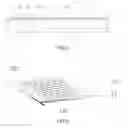
FIG. 1 illustrates the structure of an interactive high-clarity glass electronic whiteboard with capacitive touch sensing module according to embodiment 1 of the present invention;
FIG. 2 illustrates the structure of the capacitive touch sensing module of embodiment 1;
FIG. 3 illustrates the structure of an interactive high-clarity glass electronic whiteboard with infrared sensor module according to embodiment 2 of the present invention.
DETAILED DESCRIPTION OF THE INVENTION
The preferred embodiments of the present invention are further described in detail below with reference to the accompanying drawings.
Embodiment 1
As shown in FIG. 1 and FIG. 2, an interactive high-clarity glass electronic whiteboard includes a writing board body 1. The writing board body 1 includes a base board 11, an ultra-thin tempered glass 12 and a capacitive touch sensing module 13. The capacitive touch sensing module 13 is attached with a back side of the ultra-thin tempered glass 12. White ink 123 is printed on an attaching surface 121 of the ultra-thin tempered glass 12 attaching with the capacitive touch sensing module 13. A writing surface 122 of the ultra-thin tempered glass 12 is a matte surface with anti-glare treatment; a front side of the base board 11 attaches with the capacitive touch sensing module 13. A back of the base board 11 is affixed with a green board 14 for chalk writing.
Further, the capacitive touch sensing module 13 comprises a transparent plastic film 131. A front side and a back side of the transparent plastic film are provided with horizontal conductive film lines 132 and vertical conductive film lines 133 respectively.
Further, the base board 11 is an aluminum honeycomb panel. A side of the aluminum honeycomb panel that only attaches with the capacitive touch sensing module 13 is bonded with an aluminum plate 111. The green board 14 is directly affixed with the aluminum honeycomb panel.
Embodiment 2
As shown in FIG. 3, an interactive high-clarity glass electronic whiteboard includes a writing board body 10. The writing board body 10 includes a base board 101 and an ultra-thin tempered glass 102. An infrared sensor module 103 is mounted around a surface of the ultra-thin tempered glass 102. A white film 104 is attached between the ultra-thin tempered glass 102 and the base board 101. The writing surface 1021 of the ultra-thin tempered glass and a surface of the white film 104 are both matte surfaces with anti-glare treatment.
The film between the ultra-thin tempered glass and the base board of the present invention can be beige in color. By using a beige or white film as a soft non-transparent interlayer to attach with the ultra-thin tempered glass, air bubbles will not be produced, and then when the ultra-thin tempered glass is attached to the base board, covering by the non-transparent film blocks air bubbles produced in such attachment to produce a hard screen from being seen on a surface of the screen, so it is not necessary to carry out a process of removing bubbles; the white ink printed on the attaching surface of the ultra-thin tempered glass attaching with the base board directly covers the air bubbles produced in attachment. Therefore it is also not necessary to carry out a process of removing bubbles; when the back of the non-transparent interlayer attaches with the capacitive touch sensing module, the non-transparent interlayer also covers the lines on the film, so the diameter which the conductive film lines span across may be enlarged appropriately. Further, no additional blackening and hiding process is required. The non-transparent interlayer design does not only simplify the manufacturing process but also improve production efficiency.
A thickness of the ultra-thin tempered glass of the present invention is preferably 0.3˜2 mm, thereby preventing partial superimposition of a word over its shadow and thus achieving better display effects; a frame can also be provided to surround the outer boundaries of the writing board, making the writing board better in appearance and having a higher stability; the material of the base board is not limited to the aluminum honeycomb panel. It can also be a board material which is not easy to deform and have a high degree of smoothness, such as a magnesia board or a high-density extruded board; capacitive touch sensing module may have a structure not limited to the embodiments as well. It can be an ordinary ITO conductive layer or a GG touch panel. The horizontal conductive film lines and the vertical conductive film lines are made of any one of copper, aluminum, gold, silver, and conductive carbon paste; when the present invention uses an infrared sensor module to realize the touch function, the manufacturing cost can be greatly reduced; the interactive high-clarity glass electronic whiteboard of the present invention has a light weight. It can be directly mounted on a frame and flip sides manually. It can also be mounted on a support in a rotatable manner.
Claims
What is claimed is:1. An interactive high-clarity glass electronic whiteboard, comprising a writing board body, wherein the writing board body comprises a base board and an ultra-thin tempered glass; a front side of the base board attaches with the ultra-thin tempered glass; an attaching surface of the ultra-thin tempered glass attaching the base board is adhered with a non-transparent interlayer or a non-transparent coating layer; a writing surface of the ultra-thin tempered glass is a matte surface with anti-glare treatment.
2. The interactive high-clarity glass electronic whiteboard as described in claim 1, wherein a thickness of the ultra-thin tempered glass is 0.3˜2 mm.
3. The interactive high-clarity glass electronic whiteboard as described in claim 1, wherein the front side of the base board is adhered with the non-transparent coating layer.
4. The interactive high-clarity glass electronic whiteboard as described in claim 1, wherein an infrared sensor module is mounted around a surface of the ultra-thin tempered glass.
5. The interactive high-clarity glass electronic whiteboard as described in claim 1, wherein a touch sensing module is adhered between the non-transparent interlayer or the non-transparent coating layer and the base board.
6. The interactive high-clarity glass electronic whiteboard as described in claim 5, wherein the touch sensing module is a capacitive touch sensing module or an inductive touch sensing module.
7. The interactive high-clarity glass electronic whiteboard as described in claim 6, wherein the capacitive touch sensing module comprises a transparent plastic film; a front side and a back side of the transparent plastic film are provided with horizontal conductive film lines and vertical conductive film lines respectively.
8. The interactive high-clarity glass electronic whiteboard as described in claim 1, wherein the non-transparent interlayer is a white or beige film which attaches with the ultra-thin tempered glass and the base board respectively.
9. The interactive high-clarity glass electronic whiteboard as described in claim 8, wherein the white or beige film has a surface which is a matte surface with anti-glare treatment.
10. The interactive high-clarity glass electronic whiteboard as described in claim 1, wherein the non-transparent coating layer is a white ink layer printed on the attaching surface of the ultra-thin tempered glass attaching the base board.
11. The interactive high-clarity glass electronic whiteboard as described in claim 1, wherein a back side of the base board is affixed with a green board.
12. The interactive high-clarity glass electronic whiteboard as described in claim 1, wherein the base board is a magnesia board, an aluminum honeycomb panel, a high-density extruded board or a fiber board.
13. The interactive high-clarity glass electronic whiteboard as described in claim 11, wherein a surface of the aluminum honeycomb panel is bonded with an aluminum plate; the ultra-thin tempered glass and the green board attach with the aluminum plate respectively.
14. The interactive high-clarity glass electronic whiteboard as described in claim 12, wherein a side of the aluminum honeycomb panel that only attaches with the ultra-thin tempered glass is bonded with an aluminum plate.
15. The interactive high-clarity glass electronic whiteboard as described in claim 1, wherein a frame is also provided on which the writing board body is mounted in a rotatable manner.
Images & Drawings included:


Sources:
- United States Patent and Trademark Office - verify current appl. status at the USPTO↗
Recent applications in this class:
- » 20250278154 2025-09-04
TOUCH CONTROLLER WITH INTEGRATED RFID READ CAPABILITIES, INCLUDING RELATED SYSTEMS, APPARATUSES, AND METHODS - » 20250271970 2025-08-28
MICRO-LED TOUCH DISPLAY DEVICE - » 20250251834 2025-08-07
ELECTROSTATIC CAPACITANCE-TYPE SENSOR-EQUIPPED DISPLAY DEVICE AND METHOD OF DRIVING THE SAME - » 20250231646 2025-07-17
TOUCHLESS DEVICE INTERFACES - » 20250216990 2025-07-03
A DRIVING SIGNAL OUTPUT DEVICE, A DRIVING SIGNAL OUTPUT METHOD, AND A DISPLAY DEVICE - » 20250199647 2025-06-19
EXTERNAL USER INTERFACE FOR HEAD WORN COMPUTING - » 20250190078 2025-06-12
Electronic Devices With Finger Sensors - » 20250138681 2025-05-01
ELECTRONIC DEVICE - » 20250130673 2025-04-24
AUTOMOTIVE TOUCH CIRCUIT DEVICE WITH ESD PROTECTION - » 20250130672 2025-04-24
TOUCH SENSING SYSTEM