Method and device for applying dynamic range compression to a higher order ambisonics signal
US20170171682A1
2017-06-15
15/127,775
2015-03-24
✅ Patent granted
US 9,936,321 B2
2018-04-03
WO; PCT/EP2015/056206; 20150324
WO; WO2015/144674; 20151001
Regina N Holder
2035-03-24
Abstract:
Dynamic Range Control (DRC) cannot be simply applied to Higher Order Ambisonics (HOA) based signals. A method for performing DRC on a HOA signal comprises transforming the HOA signal to the spatial domain, analyzing the transformed HOA signal, and obtaining, from results of said analyzing, gain factors that are usable for dynamic compression. The gain factors can be transmitted together with the HOA signal. When applying the DRC, the HOA signal is transformed to the spatial domain, the gain factors are extracted and multiplied with the transformed HOA signal in the spatial domain, wherein a gain compensated transformed HOA signal is obtained. The gain compensated transformed HOA signal is transformed back into the HOA domain, wherein a gain compensated HOA signal is obtained.
Assignee:
- DOLBY LABORATORIES LICENSING CORPORATION 2,753 🇺🇸 SAN FRANCISCO, CA, United States
- DOLBY INTERNATIONAL AB 657 🇳🇱 Amsterdam Zuidoost, Netherlands
Applicant:
Interested in similar patents?
Get notified when new applications in this technology area are published.
Classification:
H04S3/008 » CPC main
Systems employing more than two channels, e.g. quadraphonic in which the audio signals are in digital form, i.e. employing more than two discrete digital channels
H04S3/02 » CPC further
Systems employing more than two channels, e.g. quadraphonic of the matrix type, i.e. in which input signals are combined algebraically, e.g. after having been phase shifted with respect to each other
H04S2420/01 » CPC further
Techniques used stereophonic systems covered by but not provided for in its groups Enhancing the perception of the sound image or of the spatial distribution using head related transfer functions [HRTF's] or equivalents thereof, e.g. interaural time difference [ITD] or interaural level difference [ILD]
H04S2420/11 » CPC further
Techniques used stereophonic systems covered by but not provided for in its groups Application of ambisonics in stereophonic audio systems
H04S3/00 IPC
Systems employing more than two channels, e.g. quadraphonic
G10L19/008 » CPC further
Speech or audio signals analysis-synthesis techniques for redundancy reduction, e.g. in vocoders; Coding or decoding of speech or audio signals, using source filter models or psychoacoustic analysis Multichannel audio signal coding or decoding using interchannel correlation to reduce redundancy, e.g. joint-stereo, intensity-coding or matrixing
H04R5/00 IPC
Stereophonic arrangements
Description
FIELD OF THE INVENTION
This invention relates to a method and a device for performing Dynamic Range Compression (DRC) to an Ambisonics signal, and in particular to a Higher Order Ambisonics (HOA) signal.
BACKGROUND
The purpose of Dynamic Range Compression (DRC) is to reduce the dynamic range of an audio signal. A time-varying gain factor is applied to the audio signal. Typically this gain factor is dependent on the amplitude envelope of the signal used for controlling the gain. The mapping is in general non-linear. Large amplitudes are mapped to smaller ones while faint sounds are often amplified. Scenarios are noisy environments, late night listening, small speakers or mobile headphone listening.
A common concept for streaming or broadcasting Audio is to generate the DRC gains before transmission and apply these gains after receiving and decoding. The principle of using DRC, ie. how DRC is usually applied to an audio signal, is shown in FIG. 1a). The signal level, usually the signal envelope, is detected, and a related time-varying gain gDRC is computed. The gain is used to change the amplitude of the audio signal. FIG. 1b) shows the principle of using DRC for encoding/decoding, wherein gain factors are transmitted together with the coded audio signal. On the decoder side, the gains are applied to the decoded audio signal in order to reduce its dynamic range.
For 3D audio, different gains can be applied to loudspeaker channels that represent different spatial positions. These positions then need to be known at the sending side in order to be able to generate a matching set of gains. This is usually only possible for idealized conditions, while in realistic cases the number of speakers and their placement vary in many ways. This is more influenced from practical considerations than from specifications. Higher Order Ambisonics (HOA) is an audio format allows for flexible rendering. A HOA signal is composed of coefficient channels that do not directly represent sound levels. Therefore, DRC cannot be simply applied to HOA based signals.
SUMMARY OF THE INVENTION
The present invention solves at least the problem of how DRC can be applied to HOA signals. A HOA signal is analyzed in order to obtain one or more gain coefficients. In one embodiment, at least two gain coefficients are obtained, and the analysis of the HOA signal comprises a transformation into the spatial domain (iDSHT). The one or more gain coefficients are transmitted together with the original HOA signal. A special indication can be transmitted to indicate if all gain coefficients are equal. This is the case in a so-called simplified mode, whereas at least two different gain coefficients are used in a non-simplified mode. At the decoder, the one or more gains can (but need not) be applied to the HOA signal. The user has a choice whether or not to apply the one or more gains. An advantage of the simplified mode is that it requires considerably less computations, since only one gain factor is used, and since the gain factor can be applied to the coefficient channels of the HOA signal directly in the HOA domain, so that the transform into the spatial domain and subsequent transform back into the HOA domain can be skipped. In the simplified mode, the gain factor is obtained by analysis of only the zeroth order coefficient channel of the HOA signal.
According to one embodiment of the invention, a method for performing DRC on a HOA signal comprises transforming the HOA signal to the spatial domain (by an inverse DSHT), analyzing the transformed HOA signal and obtaining, from results of said analyzing, gain factors that are usable for dynamic range compression. In further steps, the obtained gain factors are multiplied (in the spatial domain) with the transformed HOA signal, wherein a gain compressed transformed HOA signal is obtained. Finally, the gain compressed transformed HOA signal is transformed back into the HOA domain (by a DSHT), i.e. coefficient domain, wherein a gain compressed HOA signal is obtained.
Further, according to one embodiment of the invention, a method for performing DRC in a simplified mode on a HOA signal comprises analyzing the HOA signal and obtaining from results of said analyzing a gain factor that is usable for dynamic range compression. In further steps, upon evaluation of the indication, the obtained gain factor is multiplied with coefficient channels of the HOA signal (in the HOA domain), wherein a gain compressed HOA signal is obtained. Also upon evaluation of the indication, it can be determined that a transformation of the HOA signal can be skipped. The indication to indicate simplified mode, i.e. that only one gain factor is used, can be set implicitly, e.g. if only simplified mode can be used due to hardware or other restrictions, or explicitly, e.g. upon user selection of either simplified or non-simplified mode.
Further, according to one embodiment of the invention, a method for applying DRC gain factors to a HOA signal comprises receiving a HOA signal, an indication and gain factors, determining that the indication indicates non-simplified mode, transforming the HOA signal into the spatial domain (using an inverse DSHT), wherein a transformed HOA signal is obtained, multiplying the gain factors with the transformed HOA signal, wherein a dynamic range compressed transformed HOA signal is obtained, and transforming the dynamic range compressed transformed HOA signal back into the HOA domain (i.e. coefficient domain) (using a DSHT), wherein a dynamic range compressed HOA signal is obtained. The gain factors can be received together with the HOA signal or separately. Further, according to one embodiment of the invention, a method for applying a DRC gain factor to a HOA signal comprises receiving a HOA signal, an indication and a gain factor, determining that the indication indicates simplified mode, and upon said determining multiplying the gain factor with the HOA signal, wherein a dynamic range compressed HOA signal is obtained. The gain factors can be received together with the HOA signal or separately.
A device for applying DRC gain factors to a HOA signal is disclosed in claim 11.
In one embodiment, the invention provides a computer readable medium having executable instructions to cause a computer to perform a method for applying DRC gain factors to a HOA signal, comprising steps as described above.
In one embodiment, the invention provides a computer readable medium having executable instructions to cause a computer to perform a method for performing DRC on a HOA signal, comprising steps as described above.
Advantageous embodiments of the invention are disclosed in the dependent claims, the following description and the figures.
BRIEF DESCRIPTION OF THE DRAWINGS
Exemplary embodiments of the invention are described with reference to the accompanying drawings, which show in
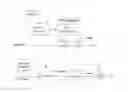
FIG. 1 the general principle of DRC applied to audio;
FIG. 2 a general approach for applying DRC to HOA based signals according to the invention;
FIG. 3 Spherical speaker grids for N=1 to N=6;
FIG. 4 Creation of DRC gains for HOA;
FIG. 5 Applying DRC to HOA signals;
FIG. 6 Dynamic Range Compression processing at the decoder side;
FIG. 7 DRC for HOA in QMF domain combined with rendering step; and
FIG. 8 DRC for HOA in QMF domain combined with rendering step for the simple case of a single DRC gain group.
DETAILED DESCRIPTION OF THE INVENTION
The present invention describes how DRC can be applied to HOA. This is conventionally not easy because HOA is a sound field description. FIG. 2 depicts the principle of the approach. On the encoding or transmitting side, as shown in FIG. 2a), HOA signals are analyzed, DRC gains g are calculated from the analysis of the HOA signal, and the DRC gains are coded and transmitted along with a coded representation of the HOA content. This may be a multiplexed bitstream or two or more separate bitstreams.
On the decoding or receiving side, as shown in FIG. 2b), the gains g are extracted from such bitstream or bitstreams. After decoding of the bitstream or bitstreams in a Decoder, the gains g are applied to the HOA signal as described below. By this, the gains are applied to the HOA signal, i.e. in general a dynamic range reduced HOA signal is obtained. Finally, the dynamic range adjusted HOA signal is rendered in a HOA renderer.
In the following, used assumptions and definitions are explained.
Assumptions are that the HOA renderer is energy preserving, i.e. N3D normalized Spherical Harmonics are used, and the energy of a single directional signal coded inside the HOA representation is maintained after rendering. It is described e.g. in WO2015/007889A(PD130040) how to achieve this energy preserving HOA rendering.
Definitions of used terms are as follows.
B ∈ (N+1)2×τ denotes a block of τ HOA samples, B=[b(1), b(2), . . . , b(t), . . . , b(τ)], with vector b(t)=[b1, b2, . . . bo, . . . b(N+1)2]T=[B00, B1−1, . . . Bnm, . . . BNN,]T which contains the Ambisonics coefficients in ACN order (vector index o=n2+n+m+1, with coefficient order index n and coefficient degree index m). N denotes the HOA truncation order. The number of higher order coefficients in b is (N+1)2. The sample index for one block of data is t. τ may range from usually one sample to 64 samples or more.
The zeroth order signal =[b1(1), b1(2), . . . , b1(τ)] is the first row of B.
D ∈ L×(N+1)2 denotes an energy preserving rendering matrix that renders a block of HOA samples to a block of L loudspeaker channel in spatial domain: W=DB, with W ∈ L×τ. This is the assumed procedure of the HOA renderer in FIG. 2b) (HOA rendering).
DL ∈ (N+1)2(N+1)2 denotes a rendering matrix related to LL=(N+1)2 channels which are positioned on a sphere in a very regular manner, in a way that all neighboring positions share the same distance. DL is well-conditioned and its inverse DL−1 exists. Thus both define a pair of transformation matrices (DSHT—Discrete Spherical Harmonics Transform):
WL=DLB, B=DL−1WL
g is a vector of LL=(N+1)2 gain DRC values. Gain values are assumed to be applied to a block of τ samples and are assumed to be smooth from block to block. For transmission, gain values that share the same values can be combined to gain-groups. If only a single gain-group is used, this means that a single DRC gain value, here indicated by g1, is applied to all speaker channel τ samples.
For every HOA truncation order N, an ideal LL=(N+1)2 virtual speaker grid and related rendering matrix DL are defined. The virtual speaker positions sample spatial areas surrounding a virtual listener. The grids for N=1 to 6 are shown in FIG. 3, where areas related to a speaker are shaded cells. One sampling position is always related to a central speaker position (azimuth=0, inclination=π/2; Note that azimuth is measured from frontal direction related to the listening position). The sampling positions, DL, DL−1 are known at the encoder side when the DRC gains are created. At the decoder side, DL and DL−1 need to be known for applying the gain values.
Creation of DRC gains for HOA works as follows.
The HOA signal is converted to the spatial domain by WL=DLB. Up to LL=(N+1)2 DRC gains gl are created by analyzing these signals. If the content is a combination of HOA and Audio Objects (AO), AO signals such as e.g. dialog tracks may be used for side chaining. This is shown in FIG. 4b). When creating different DRC gain values related to different spatial areas, care needs to be taken that these gains do not influence the spatial image stability at the decoder side. To avoid this, a single gain may be assigned to all L channels, in the simplest case (so-called simplified mode). This can be done by analyzing all spatial signals W, or by analyzing the zeroth order HOA coefficient sample block (o), and the transformation to the spatial domain is not needed (FIG. 4a). The latter is identical to analyzing the downmix signal of W. Further details are given below.
In FIG. 4, creation of DRC gains for HOA is shown. FIG. 4a) depicts how a single gain g1 (for a single gain group) can be derived from the zeroth HOA order component o (optional with side chaining from AOs). The zeroth HOA order component o is analyzed in a DRC Analysis block 41s and the single gain g1 is derived. The single gain g1 is separately encoded in a DRC Gain Encoder 42s. The encoded gain is then encoded together with the HOA signal B in an encoder 43, which outputs an encoded bitstream. Optionally, further signals 44 can be included in the encoding. FIG. 4b) depicts how two or more DRC gains are created by transforming 40 the HOA representation into a spatial domain. The transformed HOA signal WL is then analyzed in a DRC Analysis block 41 and gain values g are extracted and encoded in a DRC Gain Encoder 42. Also here, the encoded gain is encoded together with the HOA signal B in an encoder 43, and optionally further signals 44 can be included in the encoding. As an example, sounds from the back (e.g. background sound) might get more attenuation than sounds originating from front and side directions. This would lead to (N+1)2 gain values in g which could be transmitted within two gain groups for this example. Optional, it is also possible here to use side chaining by Audio Objects wave forms and their directional information. Side chaining means that DRC gains for a signal are obtained from another signal. This reduces the power of the HOA signal. Distracting sounds in the HOA mix sharing the same spatial source areas with the AO foreground sounds can get stronger attenuation gains than spatially distant sounds.
The gain values are transmitted to a receiver or decoder side.
A variable number of 1 to LL=(N+1)2 gain values related to a block of τ samples is transmitted. Gain values can be assigned to channel groups for transmission. In an embodiment, all equal gains are combined in one channel group to minimize transmission data. If a single gain is transmitted, it is related to all LL channels. Transmitted are the channel groups gain values glg and their number. The usage of channel groups is signaled, so that the receiver or decoder can apply the gain values correctly.
The gain values are applied as follows.
The receiver/decoder can determine the number of transmitted coded gain values, decode 51 related information and assign 52-55 the gains to LL=(N+1)2 channels. If only one gain value (one channel group) is transmitted, it can be directly applied 52 to the HOA signal (BDRC=g1 B), as shown in FIG. 5a). This has an advantage because the decoding is much simpler and requires considerably less processing. The reason is that no matrix operations are required; instead, the gain values can be applied 52 directly, e.g. multiplied with the HOA coefficients. For further details see below.
If two or more gains are transmitted, the channel group gains are assigned to L channel gains g=[g1, . . . , gL] each.
For the virtual regular loudspeaker grid, the loudspeaker signals with the DRC gains applied are computed by
ŴL=diag(g)·WL.
The resulting modified HOA representation is then computed by
BDRC=DL−1ŴL.
This can be simplified, as shown in FIG. 5b). Instead of transforming the HOA signal into the spatial domain, applying the gains and transforming the result back to the HOA domain, the gain vector is transformed 53 to the HOA domain by:
G=DL−1 diag(g) DL,
with ∈ (N+1)2×(N+1)2. The gain matrix is applied directly to the HOA coefficients in a gain assignment block 54: BDRC=GB.
This is more efficient in terms of computational operations needed for (N+1)2<τ. That is, this solution has an advantage over conventional solutions because the decoding is much simpler and requires considerably less processing. The reason is that no matrix operations are required; instead, the gain values can be applied directly, e.g. multiplied with the HOA coefficients in the gain assignment block 54.
In one embodiment, an even more efficient way of applying the gain matrix is to manipulate in a Renderer matrix modification block 57 the Renderer matrix by {circumflex over (D)}=DG, apply the DRC and render the HOA signal in one step: W={circumflex over (D)}B. This is shown in FIG. 5c). This is beneficial if L<τ.
In summary, FIG. 5 shows various embodiments of applying DRC to HOA signals. In FIG. 5a), a single channel group gain is transmitted and decoded 51 and applied directly onto the HOA coefficients 52. Then, the HOA coefficients are rendered 56 using a normal rendering matrix.
In FIG. 5b), more than one channel group gains are transmitted and decoded 51. The decoding results in a gain vector g of (N+1)2 gain values. A gain matrix G is created and applied 54 to a block of HOA samples. These are then rendered 56 by using a normal rendering matrix.
In FIG. 5c), instead of applying the decoded gain matrix/gain value to the HOA signal directly, it is applied directly onto the renderer's matrix. This is performed in the Renderer matrix modification block 57, and it is computationally beneficial if the DRC block size τ is larger than the number of output channels L. In this case, the HOA samples are rendered 57 by using a modified rendering matrix.
In the following, calculation of ideal DSHT (Discrete Spherical Harmonics Transform) matrices for DRC is described. Such DSHT matrices are particularly optimized for usage in DRC and are different from DSHT matrices used for other purpose, e.g. data rate compression.
The requirements for the ideal rendering and encoding matrices DL and DL−1 related to an ideal spherical layout are derived below. Finally, these requirements are the following:
(1) the rendering matrix DL must be invertible, that is, DL−1 needs to exist;
(2) the sum of amplitudes in the spatial domain should be reflected as the zeroth order HOA coefficients after spatial to HOA domain transform, and should be preserved after a subsequent transform to the spatial domain (amplitude requirement); and
(3) the energy of the spatial signal should be preserved when transforming to the HOA domain and back to the spatial domain (energy preservation requirement).
Even for ideal rendering layouts, requirement 2 and 3 seem to be in contradiction to each other. When using a simple approach to derive the DSHT transform matrices, such as those known from the prior art, only one or the other of requirements (2) and (3) can be fulfilled without error. Fulfilling one of the requirements (2) and (3) without error results in errors exceeding 3 dB for the other one. This usually leads to audible artifacts. A method to overcome this problem is described in the following.
First, an ideal spherical layout with L=(N+1)2 is selected. The L directions of the (virtual) speaker positions are given by Ωl and the related mode matrix is denoted as ΨL=[φ(Ω1), . . . , φ(Ωl), φ(ΩL)]T. Each φ(Ωl) is a mode vector containing the spherical harmonics of the direction Ωl. L quadrature gains related to the spherical layout positions are assembled in vector q. These quadrature gains rate the spherical area around such positions and all sum up to a value of 4π related to the surface of a sphere with a radius of one.
A first prototype rendering matrix {tilde over (D)}L is derived by
D ~ L = diag ( q ) Ψ L L .
Note that the division by L can be omitted due to a later normalization step (see below).
Second, a compact singular value decomposition is performed: {tilde over (D)}L=USVT and a second prototype matrix is derived by
{tilde over ({circumflex over (D)})}L=UVT.
Third, the prototype matrix is normalized:
D ⋓ L = D ~ ^ L D ~ ^ L k ,
where k denotes the matrix norm type. Two matrix norm types show equally good performance. Either the k=1 norm or the Frobenius norm should be used. This matrix fulfills the requirement 3 (energy preservation).
Fourth, in the last step the Amplitude error to fulfill requirement 2 is substituted:
Row-vector e is calculated by
e = - 1 L T D ⋓ L - [ 1 , 0 , 0 , … , 0 ] L ,
where [1,0,0, . . . , 0] is a row vector of (N+1)2 all zero elements except for the first element with a value of one. 1LT{hacek over (D)}L denotes the sum of rows vectors of {hacek over (D)}L. The rendering matrix DL is now derived by substituting the amplitude error:
DL={hacek over (D)}L+[eT, eT, eT, . . . ]T,
where vector e is added to every row of {hacek over (D)}L. This matrix fulfills requirement 2 and requirement 3. The first row elements of DL−1 all become one.
In the following, detailed requirements for DRC are explained.
First, LL identical gains with a value of g1 applied in spatial domain is equal to apply the gain g1 to the HOA coefficients:
DL−1gWL=DL−1g1IDLB=g1DL−1DLB=g1B
This leads to the requirement: DL−1DL=I, which means that L=(N+1)2 and DL−1 needs to exist (trivial).
Second, analyzing the sum signal in spatial domain is equal to analyzing the zeroth order HOA component. DRC analyzers use the signals' energy as well as its amplitude. Thus the sum signal is related to amplitude and energy.
The signal model of HOA: B=ΨeXs, Xs∈ S×τ is a matrix of S directional signals; Ψe=[φ(Ω1), . . . , φ(Ωs), φ(ΩS)] is a N3D mode matrix related to the directions Ω1, . . . , Ωs. The mode vector φ(Ωs)=[Y00(Ωs), Y1−1(Ωs), . . . YNN(Ωs)]T is assembled out of Spherical Harmonics. In N3D notation the zeroth order component Y00(Ωs)=1 is independent of the direction.
The zeroth order component HOA signal needs to become the sum of the directional signals o=[b1(1), b1(2), . . . , b1(T)]=1STXs to reflect the correct amplitude of the summation signal. 1S is a vector assembled out of S elements with a value of 1. The energy of the directional signals is preserved in this mix because ooT=1STXsXsT1S. This would simplify to Σs=1SΣt=1τXs,t2=∥Xs∥fro2 if the signals Xs are not correlated.
The sum of amplitudes in spatial domain is given by 1LTWL=1LTDLΨeXs=1LTMLXs with HOA panning matrix ML=DLΨe.
This becomes o=1STXs for 1LTML=1LTDLΨe=1ST. The latter requirement can be compared to the sum of amplitudes requirement sometimes used in panning like VBAP. Empirically it can be seen that this can be achieved in good approximation for very symmetric spherical speaker setups with DL=Ψe−1, because there we find: 1LTDL≈[1,0,0, . . . , 0]1LTDLΨe≈[Y00(Ω1), . . . Y00(Ωs)]=1ST. The Amplitude requirement can then be reached within necessary accuracy.
This also ensures that the energy requirement for the sum signal can be met:
The energy sum in spatial domain is given by: 1LTWLWLT1L=1LTMLXsXsTML1L which would become in good approximation 1STXsXsT1S, the existence of an ideal symmetric speaker setup required.
This leads to the requirement: 1LTDL≅[1,0,0, . . . , 0] and in addition from the signal model we can conclude that the top row of DL−1 needs to be [1,1,1,1, . . . ], i.e. a vector of length L with “one” elements) in order that the re-encoded order zero signal maintains amplitude and energy.
Third, energy preservation is a prerequisite: The energy of signal xs ∈ 1×τ should be preserved after conversion to HOA and spatial rendering to loud speakers independent of the signal's direction Ωs. This leads to ∥DLφ(Ωs)∥22=1. This can be achieved by modeling DL from rotation matrices and a diagonal gain matrix: DL=UVT diag(a) (the dependency on the direction (Ωs) was removed for clarity): ∥DLφ∥22=φTDLTDLφ=φT diag(a)VUTUVT diag(a)φ=φT diag(a)2φ=Σo=1(N+1)2ao2φo2≡1
For Spherical harmonics φo2=Ynm2(Ωs)=1, so all gains ao2 related to ∥DL∥fro2=Σo=1(N+1)2ao2=1 would satisfy the equation. If all gains are selected equal, this leads to ao2=(N+1)−2.
The requirement VVT=1 can be achieved for L≧(N+1)2 and only be approximated for L<(N+1)2.)
This leads to the requirement: DLTDL=diag(a)2 with Σo=1(N+1)2ao2=1.
As an example, a case with ideal spherical positions (for HOA orders N=1 to N=3) is described in the following (Tabs. 1-3). Ideal spherical positions for further HOA orders (N=4 to N=6) are described further below (Tabs. 4-6). All the below-mentioned positions are derived from modified positions published in [1]. The method to derive these positions and related quadrature/cubature gains was published in [2]. In these tables, the azimuth is measured counter-clockwise from frontal direction related to the listening position and the inclination is measured from the z-axis with an inclination of 0 being above the listening position.
| TABLE 1 |
| a) Spherical positions of virtual loudspeakers for HOA order |
| N = 1, and b) resulting rendering matrix for spatial transform |
| (DSHT) |
| N = 1 Positions |
| Spherical position Ωl | q |
| Inclination θ/rad | Azimuth φ/rad | Quadrature gains |
| 0.33983655 | 3.14159265 | 3.14159271 |
| 1.57079667 | 0.00000000 | 3.14159267 |
| 2.06167886 | 1.95839324 | 3.14159262 |
| 2.06167892 | −1.95839316 | 3.14159262 |
| a) | ||||
| DL: | ||||
| 0.2500 | −0.0000 | 0.4082 | −0.1443 | |
| 0.2500 | 0.0000 | −0.0000 | 0.4330 | |
| 0.2500 | 0.3536 | −0.2041 | −0.1443 | |
| 0.2500 | −0.3536 | −0.2041 | −0.1443 | |
| b) | ||||
| TABLE 2 |
| a) Spherical positions of virtual loudspeakers for HOA order N = 2 |
| and b) resulting rendering matrix for spatial transform (DSHT) |
| N = 2 Positions |
| a) |
| Spherical position Ωl | q, |
| Inclination θ/rad | Azimuth φ/rad | Quadrature gains |
| 1.57079633 | 0.00000000 | 1.41002219 |
| 2.35131567 | 3.14159265 | 1.36874571 |
| 1.21127801 | −1.18149779 | 1.36874584 |
| 1.21127606 | 1.18149755 | 1.36874598 |
| 1.31812905 | −2.45289512 | 1.41002213 |
| 0.00975782 | −0.00009218 | 1.41002214 |
| 1.31812792 | 2.45289621 | 1.41002230 |
| 2.41880319 | 1.19514740 | 1.41002223 |
| 2.41880555 | −1.19514441 | 1.41002209 |
| DL: |
| b) |
| 0.1117 | 0.0000 | 0.0067 | 0.2001 | 0.0000 | −0.0000 | −0.0931 | −0.0078 | 0.2235 |
| 0.1099 | −0.0000 | −0.1237 | −0.1249 | −0.0000 | 0.0000 | 0.0486 | 0.2399 | 0.0889 |
| 0.1099 | −0.1523 | 0.0619 | 0.0625 | −0.1278 | −0.1266 | −0.0850 | 0.0841 | −0.1455 |
| 0.1099 | 0.1523 | 0.0619 | 0.0625 | 0.1278 | 0.1266 | −0.0850 | 0.0841 | −0.1455 |
| 0.1117 | −0.1272 | 0.0450 | −0.1479 | 0.1938 | −0.0427 | −0.0898 | −0.1001 | 0.0350 |
| 0.1117 | −0.0000 | 0.2001 | 0.0086 | 0.0000 | −0.0000 | 0.2402 | −0.0040 | 0.0310 |
| 0.1117 | 0.1272 | 0.0450 | −0.1479 | −0.1938 | 0.0427 | −0.0898 | −0.1001 | 0.0350 |
| 0.1117 | 0.1272 | −0.1484 | 0.0436 | 0.0408 | −0.1942 | 0.0769 | −0.0982 | −0.0612 |
| 0.1117 | −0.1272 | −0.1484 | 0.0436 | −0.0408 | 0.1942 | 0.0769 | −0.0982 | −0.0612 |
| TABLE 3 |
| a): Spherical positions of virtual loudspeakers for HOA |
| order N = 3 |
| N = 3 Positions |
| Spherical position Ωl | q |
| Inclination θ/rad | Azimuth φ/rad | Quadrature gains |
| 0.49220083 | 0.00000000 | 0.75567412 |
| 1.12054210 | −0.87303924 | 0.75567398 |
| 2.52370429 | −0.05517088 | 0.75567401 |
| 2.49233024 | −2.15479457 | 0.87457076 |
| 1.57082248 | 0.00000000 | 0.87457075 |
| 2.02713647 | 1.01643753 | 0.75567388 |
| 1.61486095 | −2.60674413 | 0.75567396 |
| 2.02713675 | −1.01643766 | 0.75567398 |
| 1.08936018 | 2.89490077 | 0.75567412 |
| 1.18114721 | 0.89523032 | 0.75567399 |
| 0.65554353 | 1.89029902 | 0.75567382 |
| 1.60934762 | 1.91089719 | 0.87457082 |
| 2.68498672 | 2.02012831 | 0.75567392 |
| 1.46575084 | −1.76455426 | 0.75567402 |
| 0.58248614 | −2.22170415 | 0.87457060 |
| 2.00306837 | 2.81329239 | 0.75567389 |
| TABLE 3 |
| b): resulting rendering matrix for spatial transform (DSHT) |
| DL: |
| b) |
| 0.061457 | −0.000075 | 0.093499 | 0.050400 | −0.000027 | 0.000060 | 0.091035 | 0.098988 | 0.026750 |
| 0.061457 | −0.073257 | 0.046432 | 0.061316 | −0.094748 | −0.071487 | −0.029426 | 0.059688 | −0.016892 |
| 0.061457 | −0.003584 | −0.086661 | 0.061312 | −0.004319 | 0.006362 | 0.068273 | −0.111895 | 0.039506 |
| 0.065628 | −0.057573 | −0.090918 | −0.038050 | 0.042921 | 0.102558 | 0.066570 | 0.067780 | −0.018289 |
| 0.065628 | −0.000000 | −0.000003 | 0.114142 | −0.000000 | 0.000000 | −0.073690 | −0.000007 | 0.127634 |
| 0.061457 | 0.081011 | −0.046687 | 0.050396 | 0.085735 | −0.079893 | −0.028706 | −0.049469 | −0.042390 |
| 0.061457 | −0.054202 | −0.004471 | −0.091238 | 0.104013 | 0.005102 | −0.068089 | 0.008829 | 0.056943 |
| 0.061457 | −0.080936 | −0.046816 | 0.050396 | −0.085707 | 0.079834 | −0.028795 | −0.049516 | −0.042442 |
| 0.061457 | 0.023227 | 0.049179 | −0.091237 | −0.044356 | 0.023858 | −0.024641 | −0.094498 | 0.082023 |
| 0.061457 | 0.076842 | 0.040224 | 0.061316 | 0.099067 | 0.065125 | −0.038969 | 0.052207 | −0.022402 |
| 0.061457 | 0.061293 | 0.084298 | −0.020472 | −0.026210 | 0.108838 | 0.060891 | −0.036183 | −0.035381 |
| 0.065628 | 0.107524 | −0.004399 | −0.038047 | −0.080156 | −0.009268 | −0.073361 | 0.003280 | −0.099081 |
| 0.061457 | 0.042357 | −0.095230 | −0.020477 | −0.018235 | −0.084766 | 0.096995 | 0.040799 | −0.014532 |
| 0.061457 | −0.103651 | 0.010933 | −0.020474 | 0.044445 | −0.024073 | −0.066259 | −0.004608 | −0.108789 |
| 0.065628 | −0.049951 | 0.095320 | −0.038045 | 0.037235 | −0.093290 | 0.080481 | −0.071053 | −0.010264 |
| 0.061457 | 0.030975 | −0.044701 | −0.091239 | −0.059658 | −0.028961 | −0.032307 | 0.085658 | 0.077606 |
| 0.061457 | 0.019405 | 0.001461 | 0.003133 | 0.065741 | 0.124248 | 0.086602 | 0.029345 | |
| 0.061457 | −0.055360 | −0.097812 | −0.010980 | −0.082425 | −0.007027 | −0.048502 | −0.080998 | |
| 0.061457 | 0.008330 | 0.001142 | −0.027428 | −0.044323 | 0.125349 | −0.097700 | 0.021534 | |
| 0.065628 | 0.008866 | −0.087449 | −0.104655 | −0.011720 | −0.061567 | 0.025778 | 0.023749 | |
| 0.065628 | 0.002742 | 0.000000 | 0.010620 | 0.012464 | −0.093807 | 0.009642 | 0.121106 | |
| 0.061457 | 0.016897 | −0.101358 | 0.003784 | 0.101201 | −0.012537 | 0.040833 | −0.076613 | |
| 0.061457 | −0.149185 | 0.004553 | 0.050065 | 0.007556 | 0.060425 | −0.003395 | −0.002394 | |
| 0.061457 | −0.030388 | 0.099898 | 0.015986 | 0.082103 | −0.014540 | 0.065488 | −0.078162 | |
| 0.061457 | 0.072649 | −0.042376 | −0.007211 | −0.082403 | 0.008618 | 0.112746 | −0.042512 | |
| 0.061457 | 0.028674 | 0.096668 | −0.032684 | −0.098253 | −0.008594 | −0.028068 | −0.082210 | |
| 0.061457 | −0.026726 | −0.058661 | 0.111083 | 0.035312 | −0.053574 | −0.087737 | 0.014123 | |
| 0.065628 | −0.064714 | 0.014164 | −0.085660 | −0.004839 | 0.038775 | 0.016889 | 0.101473 | |
| 0.061457 | −0.025100 | 0.058531 | 0.110659 | −0.076710 | −0.053780 | 0.056883 | 0.013978 | |
| 0.061457 | 0.127480 | 0.000140 | 0.071265 | −0.019816 | 0.026559 | −0.016573 | 0.076201 | |
| 0.065628 | −0.018490 | 0.073275 | −0.097597 | 0.032029 | −0.080959 | −0.030699 | 0.008722 | |
| 0.061457 | 0.084920 | 0.037824 | −0.010382 | 0.084083 | 0.002412 | −0.102187 | −0.047341 | |
The term numerical quadrature is often abbreviated to quadrature and is quite a synonym for numerical integration, especially as applied to 1-dimensional integrals. Numerical integration over more than one dimension is called cubature herein.
Typical application scenarios to apply DRC gains to HOA signals are shown in FIG. 5, as described above. For mixed content applications, such as e.g. HOA plus Audio Objects, DRC gain application can be realized in at least two ways for flexible rendering.
FIG. 6 shows exemplarily Dynamic Range Compression (DRC) processing at the decoder side. In FIG. 6a), DRC is applied before rendering and mixing. In FIG. 6b), DRC is applied to the loudspeaker signals, i.e. after rendering and mixing.
In FIG. 6a), DRC gains are applied to Audio Objects and HOA separately: DRC gains are applied to Audio Objects in an Audio Object DRC block 610, and DRC gains are applied to HOA in a HOA DRC block 615. Here the realization of the block HOA DRC block 615 matches one of those in FIG. 5. In FIG. 6b), a single gain is applied to all channels of the mixture signal of the rendered HOA and rendered Audio Object signal. Here no spatial emphasis and attenuation is possible. The related DRC gain cannot be created by analyzing the sum signal of the rendered mix, because the speaker layout of the consumer site is not known at the time of creation at the broadcast or content creation site. The DRC gain can be derived analyzing ym ∈ 1×τ where ym is a mix of the zeroth order HOA signal bw and the mono downmix of S Audio Objects xs:
y m = o + ∑ s = 1 S x s .
In the following, further details of the disclosed solution are described.
DRC for HOA Content
DRC is applied to the HOA signal before rendering, or may be combined with rendering. DRC for HOA can be applied in the time domain or in the QMF-filter bank domain.
For DRC in the Time Domain, the DRC decoder provides (N+1)2 gain values gdrc=[g1, . . . , g(N+1)2]T according to the number of HOA coefficient channels of the HOA signal c.
N is the HOA order.
DRC gains are applied to the HOA signals according to:
cdrc=DL−1diag(gdrc)DLc
where c is a vector of one time sample of HOA coefficients (c ∈ (N+1)2×1), and DL ∈ (N+1)2×(N+1)2 and its inverse DL−1 are matrices related to a Discrete Spherical Harmonics Transform (DSHT) optimized for DRC purposes.
In one embodiment, it can be advantageous for decreasing the computational load by (N+1)4 operations per sample, to include the rendering step and calculate the loudspeaker signals directly by: wdrc=(D DL−1) (diag(gdrc)DL) c, where D is the rendering matrix and (D DL−1) can be pre-computed.
If all gains g1, . . . , g(N+1)2 have the same value of gdrc, as in the simplified mode, a single gain group has been used to transmit the coder DRC gains. This case can be flagged by the DRC decoder, because in this case the calculation in the spatial filter is not needed, so that the calculation simplifies to:
cdrc=gdrc c.
The above describes how to obtain and apply the DRC gain values. In the following, the calculation of DSHT matrices for DRC is described.
In the following, DL is renamed to DDSHT. The matrices to determine the spatial filter DDSHT and its inverse DDSHT−1 are calculated as follows:
A set of spherical positions DDSHT=[Ω1, Ωl, . . . , Ω(N+1)2] with Ωl=[θl, φl]T and related quadrature (cubature) gains q ∈ (N+1)2×1 are selected, indexed by the HOA order N from Tables 1-4. A mode matrix ΨDSHT related to these positions is calculated as described above. That is, the mode matrix ΨDSHT comprises mode vectors according to ΨDSHT=[φ(Ω1), . . . , φ(Ω(N+1)2)] with each φ(Ωl) being a mode vector that contains spherical harmonics of a predefined direction Ωl with Ωl=[θl, φl]T. The predefined direction depends on the HOA order N, according to Tab. 1-6 (exemplarily for 1≦N≦6). A first prototype matrix is calculated by
D ~ 1 = diag ( q ) Ψ DSHT T ( N + 1 ) 2
(the division by (N+1)2 can be skipped due to a subsequent normalization). A compact singular value decomposition is performed {tilde over (D)}1=USVT and a new prototype matrix is calculated by: {tilde over ({circumflex over (D)})}2=UVT. This matrix is normalized by:
D ⋓ 2 = D ~ ^ 2 D ~ ^ 2 fro .
A row-vector e is calculated by
e = - 1 L T D ⋓ 2 - [ 1 , 0 , 0 , … , 0 ] ( N + 1 ) 2 ,
where [1,0,0, . . . , 0] is a row vector of (N+1)2 all zero elements except for the first element with a value of one. 1LT{hacek over (D)}2 denotes the sum of rows of {hacek over (D)}2. The optimized DSHT matrix DDSHT is now derived by: DDSHT={hacek over (D)}2+[eT, eT, eT, . . . ]T. It has been found that, if −e is used instead of e, the invention provides slightly worse but still usable results.
For DRC in the QMF-filter bank domain, the following applies.
The DRC decoder provides a gain value gch(n, m) for every time frequency tile n, m for (N+1)2 spatial channels. The gains for time slot n and frequency band m are arranged in g(n, m) ∈ (N+1)2×1.
Multiband DRC is applied in the QMF Filter bank domain. The processing steps are shown in FIG. 7. The reconstructed HOA signal is transformed into the spatial domain by (inverse DSHT): WDSHT=DDSHTC, where C ∈ (N+1)2×τ is a block of τ HOA samples and WDSHT∈ (N+1)2×τ is a block of spatial samples matching the input time granularity of the QMF filter bank. Then the QMF analysis filter bank is applied. Let ŵDSHT(n, m) ∈ (N+1)2×1 denote a vector of spatial channels per time frequency tile (n, m). Then the DRC gains are applied: {hacek over (w)}DRC(n, m)=diag(g(n, m))ŵDHST(n, m).
To minimize the computational complexity, the DSHT and rendering to loudspeaker channels are combined: w(n, m)=D DDSHT−1{hacek over (w)}DRC(n, m), where D denotes the HOA rendering matrix. The QMF signals then can be fed to the mixer for further processing.
FIG. 7 shows DRC for HOA in the QMF domain combined with a rendering step. If only a single gain group for DRC has been used this should be flagged by the DRC decoder because again computational simplifications are possible. In this case the gains in vector g(n, m) all share the same value of gDRC(n, m). The QMF filter bank can be directly applied to the HOA signal and the gain gDRC(n, m) can be multiplied in filter bank domain.
FIG. 8 shows DRC for HOA in the QMF domain (a filter domain of a Quadrature Mirror Filter) combined with a rendering step, with computational simplifications for the simple case of a single DRC gain group.
As has become apparent in view of the above, in one embodiment the invention relates to a method for applying Dynamic Range Compression gain factors to a HOA signal, the method comprising steps of receiving a HOA signal and one or more gain factors, transforming 40 the HOA signal into the spatial domain, wherein an iDSHT is used with a transform matrix obtained from spherical positions of virtual loudspeakers and quadrature gains q, and wherein a transformed HOA signal is obtained, multiplying the gain factors with the transformed HOA signal, wherein a dynamic range compressed transformed HOA signal is obtained, and transforming the dynamic range compressed transformed HOA signal back into the HOA domain being a coefficient domain and using a Discrete Spherical Harmonics Transform (DSHT), wherein a dynamic range compressed HOA signal is obtained.
Further, the transform matrix is computed according to DDSHT={hacek over (D)}2+[eT, eT, eT, . . . ]T wherein
D ⋓ 2 = D ~ ^ 2 D ~ ^ 2 fro
is a normalized version of {tilde over ({circumflex over (D)})}2=UVT with U,V obtained from
D ~ 1 = USV T = diag ( q ) Ψ DSHT ( N + 1 ) 2 , with Ψ DSHT
being the transposed mode matrix of spherical harmonics related to the used spherical positions of virtual loudspeakers, and eT being a transposed version of
e = - 1 L T D ⋓ 2 - [ 1 , 0 , 0 , … , 0 ] ( N + 1 ) 2 .
Further, in one embodiment the invention relates to a device for applying DRC gain factors to a HOA signal, the device comprising a processor or one or more processing elements adapted for receiving a HOA signal and one or more gain factors, transforming 40 the HOA signal into the spatial domain, wherein an iDSHT is used with a transform matrix obtained from spherical positions of virtual loudspeakers and quadrature gains q, and wherein a transformed HOA signal is obtained, multiplying the gain factors with the transformed HOA signal, wherein a dynamic range compressed transformed HOA signal is obtained, and transforming the dynamic range compressed transformed HOA signal back into the HOA domain being a coefficient domain and using a Discrete Spherical Harmonics Transform (DSHT), wherein a dynamic range compressed HOA signal is obtained. Further, the transform matrix is computed according to
D DSHT = D ⋓ 2 + [ e T , e T , e T , … ] T wherein D ⋓ 2 = D ~ ^ 2 D ~ ^ 2 fro
is a normalized version of {tilde over ({circumflex over (D)})}2=UVT with U,V obtained from
D ~ 1 = USV T = diag ( q ) Ψ DSHT ( N + 1 ) 2 ,
with ΨDSHT being the transposed mode matrix of the spherical harmonics related to the used spherical positions of virtual loudspeakers, and eT being a transposed version of
e = - 1 L T D ⋓ 2 - [ 1 , 0 , 0 , … , 0 ] ( N + 1 ) 2 .
Further, in one embodiment the invention relates to a computer readable storage medium having computer executable instructions that when executed on a computer cause the computer to perform a method for applying Dynamic Range Compression gain factors to a Higher Order Ambisonics (HOA) signal, the method comprising receiving a HOA signal and one or more gain factors, transforming 40 the HOA signal into the spatial domain, wherein an iDSHT is used with a transform matrix obtained from spherical positions of virtual loudspeakers and quadrature gains q, and wherein a transformed HOA signal is obtained, multiplying the gain factors with the transformed HOA signal, wherein a dynamic range compressed transformed HOA signal is obtained, and transforming the dynamic range compressed transformed HOA signal back into the HOA domain being a coefficient domain and using a Discrete Spherical Harmonics Transform (DSHT), wherein a dynamic range compressed HOA signal is obtained. Further, the transform matrix is computed according to DDSHT={hacek over (D)}2+[eT, eT, eT, . . . ]T wherein
D ⋓ 2 = D ~ ^ 2 D ~ ^ 2 fro
is a normalized version of {tilde over ({circumflex over (D)})}2=UVT with U,V obtained from
D ~ 1 = USV T = diag ( q ) Ψ DSHT ( N + 1 ) 2 ,
with WDSHT being the transposed mode matrix of spherical harmonics related to the used spherical positions of virtual loudspeakers, and eT being a transposed version of
e = - 1 L T D ⋓ 2 - [ 1 , 0 , 0 , … , 0 ] ( N + 1 ) 2 .
Further, in one embodiment the invention relates to a method for performing DRC on a HOA signal, the method comprising steps of setting or determining a mode, the mode being either a simplified mode or a non-simplified mode, in the non-simplified mode, transforming the HOA signal to the spatial domain, wherein an inverse DSHT is used, in the non-simplified mode, analyzing the transformed HOA signal, and in the simplified mode, analyzing the HOA signal, obtaining, from results of said analyzing, one or more gain factors that are usable for dynamic range compression, wherein only one gain factor is obtained in the simplified mode and wherein two or more different gain factors are obtained in the non-simplified mode, in the simplified mode multiplying the obtained gain factor with the HOA signal, wherein a gain compressed HOA signal is obtained, in the non-simplified mode, multiplying the obtained gain factors with the transformed HOA signal, wherein a gain compressed transformed HOA signal is obtained, and transforming the gain compressed transformed HOA signal back into the HOA domain, wherein a gain compressed HOA signal is obtained.
In one embodiment, the method further comprises steps of receiving an indication indicating either a simplified mode or a non-simplified mode, selecting a non-simplified mode if said indication indicates non-simplified mode, and selecting a simplified mode if said indication indicates simplified mode, wherein the steps of transforming the HOA signal into the spatial domain and transforming the dynamic range compressed transformed HOA signal back into the HOA domain are performed only in the non-simplified mode, and wherein in the simplified mode only one gain factor is multiplied with the HOA signal.
In one embodiment, the method further comprises steps of, in the simplified mode analyzing the HOA signal, and in the non-simplified mode analyzing the transformed HOA signal, then obtaining, from results of said analyzing, one or more gain factors that are usable for dynamic range compression, wherein in the non-simplified mode two or more different gain factors are obtained and in the simplified mode only one gain factor is obtained, wherein in the simplified mode a gain compressed HOA signal is obtained by said multiplying the obtained gain factor with the HOA signal, and wherein in the non-simplified mode said gain compressed transformed HOA signal is obtained by multiplying the obtained two or more gain factors with the transformed HOA signal, and wherein in the non-simplified mode said transforming the HOA signal to the spatial domain uses an inverse DSHT.
In one embodiment, the HOA signal is divided into frequency subbands, and the gain factor(s) is (are) obtained and applied to each frequency subband separately, with individual gains per subband. In one embodiment, the steps of analyzing the HOA signal (or transformed HOA signal), obtaining one or more gain factors, multiplying the obtained gain factor(s) with the HOA signal (or transformed HOA signal), and transforming the gain compressed transformed HOA signal back into the HOA domain are applied to each frequency subband separately, with individual gains per subband. It is noted that the sequential order of dividing the HOA signal into frequency subbands and transforming the HOA signal to the spatial domain can be swapped, and/or the sequential order of synthesizing the subbands and transforming the gain compressed transformed HOA signals back into the HOA domain can be swapped, independently from each other.
In one embodiment, the method further comprises, before the step of multiplying the gain factors, a step of transmitting the transformed HOA signal together with the obtained gain factors and the number of these gain factors.
In one embodiment, the transform matrix is computed from a mode matrix ΨDSHT and corresponding quadrature gains, wherein the mode matrix ΨDSHT comprises mode vectors according to ΨDSHT=[φ(Ω1), . . . , φ(Ωl), φ(Ω(N+1)2)] with each φ(Ωl) being a mode vector containing spherical harmonics of a predefined direction Ωl with Ωl=[θl, φl]T. The predefined direction depends on a HOA order N.
In one embodiment, the HOA signal B is transformed into the spatial domain to obtain a transformed HOA signal WDSHT, and the transformed HOA signal WDSHT is multiplied with the gain values diag(g) sample wise according to WDSHT=diag(g) DLB, and the method comprises a further step of transforming the transformed HOA signal to a different second spatial domain according to W2={circumflex over (D)}WDSHT, where {circumflex over (D)} is pre-calculated in an initialization phase according to {circumflex over (D)}=D DL−1 and where D is a rendering matrix that transforms a HOA signal into the different second spatial domain.
In one embodiment, at least if (N+1)2<τ, with N being the HOA order and τ being a DRC block size, the method further comprises steps of transforming 53 the gain vector to the HOA domain according to G=DL−1 diag(g) DL, with G being a gain matrix and DL being a DSHT matrix defining said DSHT, and applying the gain matrix G to the HOA coefficients of the HOA signal B according to BDRC=GB, wherein the DRC compressed HOA signal BDRC is obtained.
In one embodiment, at least if L<τ, with L being the number of output channels and τ being a DRC block size, the method further comprises steps of applying the gain matrix G to the renderer matrix D according to {circumflex over (D)}=DG, wherein a dynamic range compressed renderer matrix {circumflex over (D)} is obtained, and rendering the HOA signal with the dynamic range compressed renderer matrix.
In one embodiment the invention relates to a method for applying DRC gain factors to a HOA signal, the method comprising steps of receiving a HOA signal together with an indication and one or more gain factors, the indication indicating either a simplified mode or a non-simplified mode, wherein only one gain factor is received if the indication indicates the simplified mode, selecting either a simplified mode or a non-simplified mode according to said indication, in the simplified mode multiplying the gain factor with the HOA signal, wherein a dynamic range compressed HOA signal is obtained, and in the non-simplified mode transforming the HOA signal into the spatial domain, wherein a transformed HOA signal is obtained, multiplying the gain factors with the transformed HOA signals, wherein dynamic range compressed transformed HOA signals are obtained, and transforming the dynamic range compressed transformed HOA signals back into the HOA domain, wherein a dynamic range compressed HOA signal is obtained.
Further, in one embodiment the invention relates to a device for performing DRC on a HOA signal, the device comprising a processor or one or more processing elements adapted for setting or determining a mode, the mode being either a simplified mode or a non-simplified mode, in the non-simplified mode transforming the HOA signal to the spatial domain, wherein an inverse DSHT is used, in the non-simplified mode analyzing the transformed HOA signal, while in the simplified mode analyzing the HOA signal, obtaining, from results of said analyzing, one or more gain factors that are usable for dynamic range compression, wherein only one gain factor is obtained in the simplified mode and wherein two or more different gain factors are obtained in the non-simplified mode, in the simplified mode multiplying the obtained gain factor with the HOA signal, wherein a gain compressed HOA signal is obtained, and in the non-simplified mode multiplying the obtained gain factors with the transformed HOA signal, wherein a gain compressed transformed HOA signal is obtained, and transforming the gain compressed transformed HOA signal back into the HOA domain, wherein a gain compressed HOA signal is obtained.
In one embodiment for non-simplified mode only, a device for performing DRC on a HOA signal comprises a processor or one or more processing elements adapted for transforming the HOA signal to the spatial domain, analyzing the transformed HOA signal, obtaining, from results of said analyzing, gain factors that are usable for dynamic range compression, multiplying the obtained factors with the transformed HOA signals, wherein gain compressed transformed HOA signals are obtained, and transforming the gain compressed transformed HOA signals back into the HOA domain, wherein gain compressed HOA signals are obtained. In one embodiment, the device further comprises a transmission unit for transmitting, before multiplying the obtained gain factor or gain factors, the HOA signal together with the obtained gain factor or gain factors.
Also here it is noted that the sequential order of dividing the HOA signal into frequency subbands and transforming the HOA signal to the spatial domain can be swapped, and the sequential order of synthesizing the subbands and transforming the gain compressed transformed HOA signals back into the HOA domain can be swapped, independently from each other.
Further, in one embodiment the invention relates to a device for applying DRC gain factors to a HOA signal, the device comprising a processor or one or more processing elements adapted for receiving a HOA signal together with an indication and one or more gain factors, the indication indicating either a simplified mode or a non-simplified mode, wherein only one gain factor is received if the indication indicates the simplified mode, setting the device to either a simplified mode or a non-simplified mode, according to said indication, in the simplified mode, multiplying the gain factor with the HOA signal, wherein a dynamic range compressed HOA signal is obtained; and in the non-simplified mode, transforming the HOA signal into the spatial domain, wherein a transformed HOA signal is obtained, multiplying the gain factors with the transformed HOA signals, wherein dynamic range compressed transformed HOA signals are obtained, and transforming the dynamic range compressed transformed HOA signals back into the HOA domain, wherein a dynamic range compressed HOA signal is obtained.
In one embodiment, the device further comprises a transmission unit for transmitting, before multiplying the obtained factors, the HOA signals together with the obtained gain factors. In one embodiment, the HOA signal is divided into frequency subbands, and the analyzing the transformed HOA signal, obtaining gain factors, multiplying the obtained factors with the transformed HOA signals and transforming the gain compressed transformed HOA signals back into the HOA domain are applied to each frequency subband separately, with individual gains per subband.
In one embodiment of the device for applying DRC gain factors to a HOA signal, the HOA signal is divided into a plurality of frequency subbands, and obtaining one or more gain factors, multiplying the obtained gain factors with the HOA signals or the transformed HOA signals, and in the non-simplified mode transforming the gain compressed transformed HOA signals back into the HOA domain are applied to each frequency subband separately, with individual gains per subband.
Further, in one embodiment where only the non-simplified mode is used, the invention relates to a device for applying DRC gain factors to a HOA signal, the device comprising a processor or one or more processing elements adapted for receiving a HOA signal together with gain factors, transforming the HOA signal into the spatial domain (using iDSHT), wherein a transformed HOA signal is obtained, multiplying the gain factors with the transformed HOA signal, wherein a dynamic range compressed transformed HOA signal is obtained, and transforming the dynamic range compressed transformed HOA signal back into the HOA domain (i.e. coefficient domain) (using DSHT), wherein a dynamic range compressed HOA signal is obtained.
The following tables Tab. 4-6 list spherical positions of virtual loudspeakers for HOA of order N with N=4, 5 or 6.
While there has been shown, described, and pointed out fundamental novel features of the present invention as applied to preferred embodiments thereof, it will be understood that various omissions and substitutions and changes in the apparatus and method described, in the form and details of the devices disclosed, and in their operation, may be made by those skilled in the art without departing from the spirit of the present invention. It is expressly intended that all combinations of those elements that perform substantially the same function in substantially the same way to achieve the same results are within the scope of the invention. Substitutions of elements from one described embodiment to another are also fully intended and contemplated.
It will be understood that the present invention has been described purely by way of example, and modifications of detail can be made without departing from the scope of the invention. Each feature disclosed in the description and (where appropriate) the claims and drawings may be provided independently or in any appropriate combination. Features may, where appropriate be implemented in hardware, software, or a combination of the two.
REFERENCES
[1] “Integration nodes for the sphere”, Jörg Fliege 2010, online accessed Oct. 5, 2010 http://www.mathematik.uni-dortmund.de/lsx/research/projects/fliege/nodes/nodes.html
[2] “A two-stage approach for computing cubature formulae for the sphere”, Jörg Fliege and Ulrike Maier, Technical report, Fachbereich Mathematik, Universität Dortmund, 1999
| TABLE 4 |
| Spherical positions of virtual loudspeakers for |
| HOA order N = 4 |
| N = 4 Positions |
| Inclination\ | Azimuth\ | |
| rad | rad | Gain q |
| 1.57079633 | 0.00000000 | 0.52689274 |
| 2.39401407 | 0.00000000 | 0.48518011 |
| 1.14059283 | −1.75618245 | 0.52688432 |
| 1.33721851 | 0.69215601 | 0.47027816 |
| 1.72512898 | −1.33340585 | 0.48037442 |
| 1.17406779 | −0.79850952 | 0.51130478 |
| 0.69042674 | 1.07623171 | 0.50662254 |
| 1.47478735 | 1.43953896 | 0.52158458 |
| 1.67073876 | 2.25235428 | 0.52835300 |
| 2.52745842 | −1.33179653 | 0.52388165 |
| 1.81037110 | 3.05783641 | 0.49800736 |
| 1.91827560 | −2.03351312 | 0.48516540 |
| 0.27992161 | 2.55302196 | 0.50663531 |
| 0.47981675 | −1.18580204 | 0.50824199 |
| 2.37644317 | 2.52383590 | 0.45807408 |
| 0.98508365 | 2.03459671 | 0.47260252 |
| 2.18924206 | 1.58232601 | 0.49801422 |
| 1.49441825 | −2.58932194 | 0.51745117 |
| 2.04428895 | 0.76615262 | 0.51744164 |
| 2.43923726 | −2.63989327 | 0.52146074 |
| 1.10308418 | 2.88498471 | 0.52158484 |
| 0.78489181 | −2.54224201 | 0.47027748 |
| 2.96802845 | 1.25258904 | 0.52145388 |
| 1.91816652 | −0.63874484 | 0.48036020 |
| 0.80829458 | −0.00991977 | 0.50824345 |
| TABLE 5 |
| Spherical positions of virtual loudspeakers for |
| HOA orders N = 5 |
| N = 5 Positions |
| Inclination\ | Azimuth\ | |
| rad | rad | Gain q |
| 1.57079633 | 0.00000000 | 0.34493574 |
| 2.68749293 | 3.14159265 | 0.35131373 |
| 1.92461621 | −1.22481468 | 0.35358151 |
| 1.95917092 | 3.06534485 | 0.36442231 |
| 2.18883411 | 0.08893301 | 0.36437350 |
| 0.35664531 | −2.15475973 | 0.33953855 |
| 1.32915731 | −1.05408340 | 0.35358417 |
| 2.21829206 | 2.45308518 | 0.33534647 |
| 1.00903070 | 2.31872053 | 0.34739607 |
| 0.99455136 | −2.29370294 | 0.36437101 |
| 1.13601102 | −0.46303195 | 0.33534542 |
| 0.41863640 | 0.63541391 | 0.35131934 |
| 1.78596913 | −0.56826765 | 0.34739591 |
| 0.56658255 | −0.66284593 | 0.36441956 |
| 2.25292410 | 0.89044754 | 0.36437098 |
| 2.67263757 | −1.71236120 | 0.36442208 |
| 0.86753981 | −1.50749854 | 0.34068122 |
| 1.38158330 | 1.72190554 | 0.35358401 |
| 0.98578154 | 0.23428465 | 0.35131950 |
| 1.45079827 | −1.69748851 | 0.34739437 |
| 2.09223697 | −1.85025366 | 0.33534659 |
| 2.62854417 | 1.70110685 | 0.34494256 |
| 1.44817433 | −2.83400771 | 0.33953463 |
| 2.37827410 | −0.72817212 | 0.34068529 |
| 0.82285875 | 1.51124182 | 0.33534531 |
| 0.40679748 | 2.38217051 | 0.34493552 |
| 0.84332549 | −3.07860398 | 0.36437337 |
| 1.38947809 | 2.83246237 | 0.34068522 |
| 1.61795773 | −2.27837285 | 0.34494274 |
| 2.17389505 | −2.58540735 | 0.35131361 |
| 1.65172710 | 2.28105193 | 0.35358166 |
| 1.67862104 | 0.57097606 | 0.33953819 |
| 2.02514031 | 1.70739195 | 0.34739443 |
| 1.12965858 | 0.89802542 | 0.36442004 |
| 2.82979093 | 0.17840931 | 0.33953488 |
| 1.67550339 | 1.18664952 | 0.34068114 |
| 2.42144792 | 0.00000000 | 0.23821175 |
| 0.32919895 | 2.78993083 | 0.26169552 |
| 1.06225899 | 1.49243160 | 0.25534085 |
| 1.06225899 | 1.49243160 | 0.25534085 |
| 1.01526896 | −2.16495206 | 0.25092628 |
| 1.10570423 | −1.59180661 | 0.25099550 |
| 1.47319543 | 1.14258135 | 0.26160776 |
| 2.15414541 | 1.88359269 | 0.24442720 |
| 0.20805372 | −0.52863458 | 0.25487678 |
| 0.50141101 | −2.11057110 | 0.25619096 |
| 1.98041218 | 0.28912378 | 0.26288225 |
| 0.83752075 | −2.81667891 | 0.25837996 |
| 2.44130228 | 0.81495962 | 0.26772416 |
| 1.21539727 | −1.00788022 | 0.25534092 |
| 2.62944184 | −1.58354086 | 0.26437874 |
| 1.86884674 | −2.40686906 | 0.25619091 |
| 0.68705554 | −1.20612227 | 0.25576026 |
| 1.52325470 | −1.98940871 | 0.26169551 |
| 2.39097364 | −2.37336381 | 0.25576025 |
| 0.98667678 | 0.86446728 | 0.26014219 |
| 2.27078506 | −3.06771779 | 0.25099551 |
| 2.33605400 | 2.51674567 | 0.26455002 |
| 1.29371004 | 2.03656562 | 0.25576032 |
| 0.86334494 | 2.77720222 | 0.25092620 |
| 1.94118355 | −0.37820559 | 0.26772409 |
| 2.10323413 | −1.28283816 | 0.24442725 |
| 1.87416330 | 0.80785741 | 0.23821179 |
| 1.63423157 | 1.65277986 | 0.26437876 |
| 2.06477636 | 1.31341296 | 0.25595469 |
| 0.82305807 | −0.47771423 | 0.26437883 |
| 2.04154780 | −1.85106655 | 0.25487677 |
| 0.61285067 | 0.33640173 | 0.24442716 |
| 1.08029340 | 0.10986230 | 0.25595472 |
| 1.60164764 | −1.43535015 | 0.26455000 |
| 2.66513701 | 1.69643796 | 0.26014228 |
| 1.35887781 | −2.58083733 | 0.25838000 |
| 1.78658555 | 2.25563014 | 0.25487674 |
| 1.83333508 | 2.80487382 | 0.26169549 |
| 0.78406009 | 2.08860099 | 0.25099560 |
| 2.94031615 | −0.07888534 | 0.26160780 |
| 1.34658213 | 2.57400947 | 0.25619094 |
| 1.73906669 | −0.87744928 | 0.26014223 |
| 0.50210739 | 1.33550547 | 0.26455007 |
| 2.38040297 | −0.75104092 | 0.25595462 |
| 1.41826790 | 0.54845193 | 0.26772418 |
| 1.77904107 | −2.93136138 | 0.25092628 |
| 1.35746628 | −0.47759398 | 0.26160765 |
| 1.31545731 | 3.12752832 | 0.25838016 |
| 2.81487011 | −3.12843671 | 0.25534100 |
| TABLE 6 |
| Spherical positions of virtual loudspeakers for |
| HOA orders N = 6 |
| N = 6 Positions |
| Inclination\ | Azimuth\ | |
| rad | rad | Gain q |
| 1.57079633 | 0.00000000 | 0.23821170 |
Claims
1-21. (canceled)
22. A method for dynamic range compression, the method comprising:
receiving a Higher Order Ambisonics (HOA) audio representation and at least a gain factor;
applying the at least a gain factor to the HOA audio representation based on matrices related to a Discrete Spherical Harmonics Transform (DSHT);
wherein the matrices related to the DSHT are determined based on a first prototype matrix, a second prototype matrix that is based on a singular value decomposition and the first prototype matrix, and a third prototype matrix that is based on a normalization of the second prototype matrix,
wherein the matrices are further determined based on a row vector e determined based on
e = - 1 L T D ⋓ 2 - [ 1 , 0 , 0 , … , 0 ] ( N + 1 ) 2 ,
wherein L and N relate to a number of directions of virtual speakers and {hacek over (D)}2 represents the third prototype matrix.
23. The method of claim 1, wherein the matrices include a spatial filter matrix DSHT and an inverse spatial filter matrix DSHT-1.
24. The method of claim 1, wherein the matrices are based on the DSHT matrix represented by DDSHT={hacek over (D)}2+[eT, eT, eT, . . . ]T.
25. The method of claim 1, wherein the first prototype matrix is determined based on
D ~ 1 = USV T = diag ( q ) Ψ DSHT ( N + 1 ) 2 ,
wherein ΨDSHT is determined based on a transposed mode matrix of spherical harmonics related to the virtual speakers and q is determined based on quadrature gains related to a set of spherical positions.
26. The method of claim 1, wherein the second prototype matrix is determined based on {tilde over ({circumflex over (D)})}2=UVT with U, V obtained based on {tilde over (D)}1=USVT.
27. The method of claim 1, wherein the third prototype matrix is determined based on
D ⋓ 2 = D ~ ^ 2 D ~ ^ 2 fro .
28. The method of claim 1, further comprising receiving an indication of a simplified mode and, based on the simplified mode indication, multiplying the HOA audio representation with only one gain factor.
29. The method of claim 1, wherein the HOA audio representation is divided into frequency subbands and the at least one gain factor is applied to each subband separately.
30. The method of claim 1, wherein at least if (N+1)2<τ, with N being an HOA order and τ being a DRC block size, the method further comprising
transforming a gain vector to an HOA domain according to
G=DL−1 diag(g) DL, with G being a gain matrix and DL being a DSHT matrix defining said DSHT; and
applying the gain matrix G to the HOA coefficients of the HOA audio representation B according to BDRC=GB, wherein the DRC compressed HOA signal BDRC is obtained.
31. An apparatus for dynamic range compression, the apparatus comprising:
a receiver configured to obtain a Higher Order Ambisonics (HOA) audio representation and at least a gain factor; and
an audio decoder configured to apply the at least a gain factor to the HOA audio representation based on matrices related to a Discrete Spherical Harmonics Transform (DSHT);
wherein the matrices related to the DSHT are determined based on a first prototype matrix, a second prototype matrix that is based on a singular value decomposition and the first prototype matrix, and a third prototype matrix that is based on a normalization of the second prototype matrix,
wherein the matrices are further determined based on a row vector e determined based on
e = - 1 L T D ⋓ 2 - [ 1 , 0 , 0 , … , 0 ] ( N + 1 ) 2 ,
wherein L and N relate to a number of directions of virtual speakers and {hacek over (D)}2 represents the third prototype matrix.
32. The apparatus of claim 10, wherein the matrices include a spatial filter matrix DSHT and an inverse spatial filter matrix DSHT-1.
33. The apparatus of claim 10, wherein the matrices are based on the DSHT matrix represented by DDSHT={hacek over (D)}2+[eT, eT, eT, . . . ]T.
34. The apparatus of claim 10, wherein the first prototype matrix is determined based on
D ~ 1 = USV T = diag ( q ) Ψ DSHT ( N + 1 ) 2 ,
wherein ΨDSHT is determined based on a transposed mode matrix of spherical harmonics related to the virtual speakers and q is determined based on quadrature gains related to a set of spherical positions.
35. The apparatus of claim 10, wherein the second prototype matrix is determined based on {tilde over ({circumflex over (D)})}2=UVT with U, V obtained based on {tilde over (D)}1=USVT.
36. The apparatus of claim 10, wherein the third prototype matrix is determined based on
D ⋓ 2 = D ~ ^ 2 D ~ ^ 2 fro .
37. The apparatus of claim 10, further comprising receiving an indication of a simplified mode, and, based on the simplified mode indication, multiplying the HOA audio representation with only one gain factor.
38. The apparatus of claim 10, wherein the HOA audio representation is divided into frequency subbands and the at least one gain factor is applied to each subband separately.
39. The apparatus of claim 10, wherein at least if (N+1)2<τ, with N being the HOA order and τ being a DRC block size, the method further comprises steps of
transforming a gain vector to an HOA domain according to
G=DL−1 diag(g) DL, with G being a gain matrix and DL being a DSHT matrix defining said DSHT; and
applying the gain matrix G to the HOA coefficients of the HOA audio representation B according to BDRC=GB, wherein the DRC compressed HOA signal BDRC is obtained.
40. A non-transitory computer readable storage medium having computer executable instructions that when executed on a computer cause the computer to perform a method for applying dynamic range compression, the method comprising: receiving a Higher Order Ambisonics (HOA) audio representation and at least a gain factor;
applying the at least a gain factor to the HOA audio representation based on matrices related to a Discrete Spherical Harmonics Transform (DSHT);
wherein the matrices related to the DSHT are determined based on a first prototype matrix, a second prototype matrix that is based on a singular value decomposition and the first prototype matrix, and a third prototype matrix that is based on a normalization of the second prototype matrix,
wherein the matrices are further determined based on a row vector e determined based on
e = - 1 L T D ⋓ 2 - [ 1 , 0 , 0 , … , 0 ] ( N + 1 ) 2 ,
wherein L and N relate to a number of directions of virtual speakers and {hacek over (D)}2 represents the third prototype matrix.
Images & Drawings included:





















Sources:
- United States Patent and Trademark Office - verify current appl. status at the USPTO↗
Similar patent applications:
- » 20190052990
Method and device for applying dynamic range compression to a higher order ambisonics signal - » 20190320280
Method and device for applying dynamic range compression to a higher order ambisonics signal - » 20200068330
Method and device for applying dynamic range compression to a higher order ambisonics signal - » 20200359150
Method and device for applying dynamic range compression to a higher order ambisonics signal - » 20210314719
Method and device for applying Dynamic Range Compression to a Higher Order Ambisonics signal - » 20240098436
Method and device for applying dynamic range compression to a higher order ambisonics signal - » 20250267415
METHOD AND DEVICE FOR APPLYING DYNAMIC RANGE COMPRESSION TO A HIGHER ORDER AMBISONICS SIGNAL
Recent applications in this class:
- » 20250267415 2025-08-21
METHOD AND DEVICE FOR APPLYING DYNAMIC RANGE COMPRESSION TO A HIGHER ORDER AMBISONICS SIGNAL - » 20250260934 2025-08-14
METHOD AND APPARATUS FOR COMPRESSING AND DECOMPRESSING A HIGHER ORDER AMBISONICS SIGNAL REPRESENTATION - » 20250227424 2025-07-10
RENDERING OF AN M-CHANNEL INPUT ON S SPEAKERS (S - » 20250193618 2025-06-12
APPARATUS AND METHOD FOR PROCESSING MULTI-CHANNEL AUDIO SIGNAL - » 20250184680 2025-06-05
METHODS AND APPARATUS FOR DECODING ENCODED HOA SIGNALS - » 20250142276 2025-05-01
METHODS AND DEVICES FOR RENDERING AN AMBISONICS AUDIO SIGNAL - » 20250113153 2025-04-03
SYNCHRONIZED AUDIO STREAMING FROM MULTIPLE CONTROLLERS - » 20250080934 2025-03-06
METHODS, APPARATUS AND SYSTEMS FOR DECOMPRESSING A HIGHER ORDER AMBISONICS (HOA) SIGNAL - » 20250056174 2025-02-13
DUAL ADVANCED AUDIO DISTRIBUTION PROFILE (A2DP) SINK - » 20240422493 2024-12-19
DEVICE AND METHOD FOR RERECORDING AN EXISTING AUDIO SAMPLE
Recent applications for this Assignee:
- » 20250294308 2025-09-18
CUSTOMIZED BINAURAL RENDERING OF AUDIO CONTENT - » 20250293707 2025-09-18
METHOD AND DEVICE FOR ARITHMETIC ENCODING OR ARITHMETIC DECODING - » 20250292783 2025-09-18
METHODS AND DEVICES FOR ENCODING AND/OR DECODING IMMERSIVE AUDIO SIGNALS - » 20250292780 2025-09-18
METHODS AND SYSTEMS FOR INTERACTIVE RENDERING OF OBJECT BASED AUDIO - » 20250291542 2025-09-18
SYSTEM AND METHOD FOR OPTIMIZING LOUDNESS AND DYNAMIC RANGE ACROSS DIFFERENT PLAYBACK DEVICES - » 20250280259 2025-09-04
Method, Systems and Apparatus for Hybrid Near/Far Virtualization for Enhanced Consumer Surround Sound - » 20250273226 2025-08-28
PCEN-BASED MASK THRESHOLDING AND VOICE ACTIVITY DETECTION FOR TRAINING DNN-BASED SPEECH ENHANCEMENT MODELS - » 20250267417 2025-08-21
SPATIAL AUDIO RENDERING ADAPTIVE TO SIGNAL LEVEL AND LOUDSPEAKER PLAYBACK LIMIT THRESHOLDS - » 20250267416 2025-08-21
METHOD FOR AND APPARATUS FOR DECODING/RENDERING AN AMBISONICS AUDIO SOUNDFIELD REPRESENTATION FOR AUDIO PLAYBACK USING 2D SETUPS - » 20250267415 2025-08-21
METHOD AND DEVICE FOR APPLYING DYNAMIC RANGE COMPRESSION TO A HIGHER ORDER AMBISONICS SIGNAL