Process of producing glass
US20170174563A1
2017-06-22
15/451,435
2017-03-07
Abstract:
A process of producing a glass includes preparing a glass material including silicates; coating a refractory material on the glass material to form a refractory glass material capable of being resistant to 500-1,200° C.; subjecting the refractory glass material to heat to be deformed; shaping the deformed refractory glass material to form a half-finished product having a curved shape by molding; and cooling the half-finished product to produce a finished product. In one embodiment, the refractory material is insulating. In another embodiment, the refractory material is conductive.
Interested in similar patents?
Get notified when new applications in this technology area are published.
Classification:
C03C17/001 » CPC main
Surface treatment of glass, not in the form of fibres or filaments, by coating General methods for coating; Devices therefor
C03C2217/70 » CPC further
Coatings on glass Properties of coatings
C03C2218/32 » CPC further
Methods for coating glass; Aspects of methods for coating glass not covered above After-treatment
C03C17/00 IPC
Surface treatment of glass, not in the form of fibres or filaments, by coating
C03B23/00 » CPC further
Re-forming shaped glass
Description
BACKGROUND OF THE INVENTION
1. Field of the Invention
The invention relates to processes of producing glass and more particularly to a process of producing glass having improved surface coating characteristics.
2. Description of Related Art
A conventional process of producing a glass comprises the step of heating a glass for about 24 hours for phase-separation of the glass.
While the process enjoys its success in the market, continuing improvements in the exploitation of processes of producing glass are constantly being sought.
SUMMARY OF THE INVENTION
It is therefore one object of the invention to provide a process of producing glass comprising preparing a glass material including silicates; coating a refractory material on the glass material to form a refractory glass material capable of being resistant to 500-1,200° C.; subjecting the refractory glass material to heat to be deformed; shaping the deformed refractory glass material to form a half-finished product having a curved shape by molding; and cooling the half-finished product to produce a finished product.
The above and other objects, features and advantages of the invention will become apparent from the following detailed description taken with the accompanying drawings.
BRIEF DESCRIPTION OF THE DRAWINGS
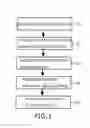
FIG. 1 is a perspective view of a process of producing glass according to a first preferred embodiment of the invention; and
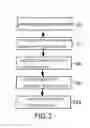
FIG. 2 is a perspective view of a process of producing glass according to a second preferred embodiment of the invention;
DETAILED DESCRIPTION OF THE INVENTION
Referring to FIG. 1, a process of producing glass in accordance with a first preferred embodiment of the invention is illustrated. The process comprises steps as discussed in detail below.
Step 10: Glass material including silicates is prepared.
Step 20: A refractory, insulating material is uniformly coated on the glass material to form a refractory glass material capable of being resistant to 500-1,200° C.
Step 30: The refractory glass material is subject to heat to be deformed.
Step 40: The deformed refractory glass material is shaped to form a half-finished product having a curved shape by molding.
Step 50: The half-finished product is cooled to produce a finished product.
Preferably, the refractory, insulating material can be dyed. Further, the finished product maintains the color of the refractory, insulating material.
Preferably, the finished product is used as screen of a mobile phone, screen of a touch panel, etc.
It is envisaged by the invention that no color printing on the half-finished product to form a finished product is required, the finished product has a desired color, and the finished product is not liable to fading.
Referring to FIG. 2, a process of producing glass in accordance with a second preferred embodiment of the invention is illustrated. The process comprises steps as discussed in detail below.
Step 60: Glass material including silicates is prepared.
Step 70: A refractory, conductive material is uniformly coated on the glass material to form a refractory glass material capable of being resistant to 500-1,200° C.
Step 80: The refractory glass material is subject to heat to be deformed.
Step 90: The deformed refractory glass material is shaped to form a half-finished product having a curved shape by molding.
Step 1000: The half-finished product is cooled to produce a finished product.
While the invention has been described in terms of preferred embodiments, those skilled in the art will recognize that the invention can be practiced with modifications within the spirit and scope of the appended claims.
Claims
What is claimed is:1. A process of producing a glass comprising:
preparing a glass material including silicates;
coating a refractory material on the glass material to form a refractory glass material capable of being resistant to 500-1,200° C.;
subjecting the refractory glass material to heat to be deformed;
shaping the deformed refractory glass material to form a half-finished product having a curved shape by molding; and
cooling the half-finished product to produce a finished product.
2. The process of producing a glass of claim 1, wherein the refractory material is insulating.
3. The process of producing a glass of claim 1, wherein the refractory material is conductive.
Images & Drawings included:
Sources:
- United States Patent and Trademark Office - verify current appl. status at the USPTO↗
Similar patent applications:
- » 20140033766
Method for vacuum-degassing molten glass, apparatus for vacuum-degassing molten glass, process for producing molten glass, apparatus for producing molten glass, process for producing glass product, and apparatus for producing glass product - » 20130239618
GLASS MELTING FURNACE, PROCESS FOR MODIFYING GLASS MELT, PROCESS FOR PRODUCING GLASS MELT, PROCESS FOR PRODUCING GLASS PRODUCT, AND APPARATUS FOR PRODUCING GLASS PRODUCT - » 20120216571
Glass-melting furnace, process for producing molten glass, apparatus for producing glass products and process for producing glass products - » 20120159994
GLASS MELTING FURNACE, PROCESS FOR PRODUCING MOLTEN GLASS, APPARATUS FOR PRODUCING GLASS PRODUCT, AND PROCESS FOR PRODUCING GLASS PRODUCT - » 20120137736
GLASS-MELTING FURNACE, PROCESS FOR PRODUCING MOLTEN GLASS, APPARATUS FOR PRODUCING GLASS PRODUCTS AND PROCESS FOR PRODUCING GLASS PRODUCTS - » 20120159992
Glass-melting furnace, process for producing molten glass, apparatus for producing glass products and process for producing glass products - » 20120151966
GLASS MELTING FURNACE, PROCESS FOR PRODUCING MOLTEN GLASS, APPARATUS FOR PRODUCING GLASS PRODUCT, AND PROCESS FOR PRODUCING GLASS PRODUCT - » 20130247617
Process for producing glass material granules and process for producing glass product - » 20120167631
PROCESS FOR PRODUCING MOLTEN GLASS, GLASS-MELTING FURNACE, APPARATUS FOR PRODUCING GLASS PRODUCTS AND PROCESS FOR PRODUCING GLASS PRODUCTS - » 20120137737
Process for producing molten glass, glass-melting furnace, process for producing glass products and apparatus for producing glass products
Recent applications in this class:
- » 20240286951 2024-08-29
DEADFRONT FOR DISPLAYS INCLUDING A TOUCH PANEL ON DECORATIVE GLASS AND RELATED METHODS - » 20240010549 2024-01-11
Glass assembly including a performance-enhancing feature and method of manufacturing thereof - » 20230331626 2023-10-19
Tactile elements for deadfronted glass and methods of making the same - » 20220411323 2022-12-29
Tactile elements for deadfronted glass and methods of making the same - » 20200317562 2020-10-08
WINDOW AND ELECTRONIC DEVICE CONTAINING SAME - » 20200262744 2020-08-20
Deadfront for displays including a touch panel on decorative glass and related methods - » 20200239358 2020-07-30
Method for producing vehicular structure and method for producing protective film-attached transparent substrate - » 20190345057 2019-11-14
Method and system utilizing ellipsometry to detect corrosion on glass - » 20180354844 2018-12-13
Method for manufacturing a device for forming at least one focused beam in a near zone - » 20180029928 2018-02-01
Apparatus and methods for processing ceramic fiber