Wear resistance of a high-temperature component imparted by a cobalt coating
US20170175553A1
2017-06-22
15/115,917
2015-01-05
✅ Patent granted
US 10,100,651 B2
2018-10-16
WO; PCT/EP2015/050032; 20150105
WO; WO2015/120994; 20150820
David R Sample | Mary I Omori
Schmeiser Olsen & Watts LLP
2035-01-05
Abstract:
A coated high-temperature component including a cobalt coating that has a higher carbon content is provided. A layer composed of a cobalt-based alloy is applied which is known as or is similar to substrate material, to the region of the component which is subject to the wear, wherein the component preferably comprises a nickel-based alloy as substrate material, the carbon content of which is lower than that of the cobalt-based alloy. At the high operating temperatures, carbon diffuses from the coating into the base material; this is normally undesirable, but here leads to a higher carbide proportion in the substrate and therefore to a higher hardness and therefore to an increased wear resistance.
Assignee:
- Siemens Aktiengesellschaft 315 🇩🇪 , Germany
Applicant:
Interested in similar patents?
Get notified when new applications in this technology area are published.
Classification:
F01D5/288 » CPC main
Blades; Blade-carrying members ; Heating, heat-insulating, cooling or antivibration means on the blades or the members; Blades; Selecting particular materials; Particular measures relating thereto; Measures against erosion or corrosion Protective coatings for blades
B32B9/005 » CPC further
Layered products comprising a layer of a particular substance not covered by groups - comprising one layer of ceramic material, e.g. porcelain, ceramic tile
B32B9/041 » CPC further
Layered products comprising a layer of a particular substance not covered by groups - comprising such substance as the main or only constituent of a layer, next to another layer of a of metal
B32B15/013 » CPC further
Layered products comprising a layer of metal all layers being exclusively metallic one layer being formed of an iron alloy or steel, another layer being formed of a metal other than iron or aluminium
B32B15/017 » CPC further
Layered products comprising a layer of metal all layers being exclusively metallic one layer being formed of aluminium or an aluminium alloy, another layer being formed of an alloy based on a non ferrous metal other than aluminium
B32B15/043 » CPC further
Layered products comprising a layer of metal comprising metal as the main or only constituent of a layer, next to another layer of a of metal
F01D5/282 » CPC further
Blades; Blade-carrying members ; Heating, heat-insulating, cooling or antivibration means on the blades or the members; Blades; Selecting particular materials; Particular measures relating thereto; Measures against erosion or corrosion Selecting composite materials, e.g. blades with reinforcing filaments
B32B2307/552 » CPC further
Properties of the layers or laminate having particular mechanical properties Fatigue strength
B32B2603/00 » CPC further
Vanes, blades, propellers, rotors with blades
F05D2220/30 » CPC further
Application in turbines
F05D2240/24 » CPC further
Components; Rotors for turbines
F05D2300/175 » CPC further
Materials; Properties thereof; Metals, alloys or intermetallic compounds; Alloys Superalloys
B32B9/00 IPC
Layered products characterised by particular substances used
B32B9/00 IPC
Layered products comprising a layer of a particular substance not covered by groups -
B32B15/20 » CPC further
Layered products comprising a layer of metal comprising aluminium or copper
B32B9/04 IPC
Layered products comprising a layer of a particular substance not covered by groups - comprising such substance as the main or only constituent of a layer, next to another layer of a
B32B15/04 IPC
Layered products comprising a layer of metal comprising metal as the main or only constituent of a layer, next to another layer of a
B32B15/01 » CPC further
Layered products comprising a layer of metal all layers being exclusively metallic
B32B7/02 » CPC further
Layered products characterised by the relation between layers; Layered products characterised by the relative orientation of features between layers, or by the relative values of a measurable parameter between layers, i.e. products comprising layers having different physical, chemical or physicochemical properties; Layered products characterised by the interconnection of layers Physical, chemical or physicochemical properties
B32B15/00 IPC
Layered products comprising a layer of metal
F01D5/28 IPC
Blades; Blade-carrying members ; Heating, heat-insulating, cooling or antivibration means on the blades or the members; Blades Selecting particular materials; Particular measures relating thereto; Measures against erosion or corrosion
B32B15/18 » CPC further
Layered products comprising a layer of metal comprising iron or steel
Description
CROSS-REFERENCE TO RELATED APPLICATIONS
This application claims priority to PCT Application No. PCT/EP2015/050032, having a filing date of Jan. 5, 2015, based off of DE Application No. 102014202457.9 having a filing date of Feb. 11, 2014, the entire contents of which are hereby incorporated by reference.
FIELD OF TECHNOLOGY
The following relates to a high-temperature component in which use is made of a layer composed of a cobalt-based alloy in order to increase the wear resistance.
BACKGROUND
In the high-temperature range, blade or vane tips of turbine blades or vanes in particular exhibit increased wear caused by erosive material removal.
This has the effect that the tips of the rotor blades regularly have to be reshaped by various repair methods such as welding or soldering.
SUMMARY
An aspect relates to a method by means of which the wear resistance is improved in order that the maintenance intervals can be increased.
It is proposed to apply a layer composed of a cobalt-based alloy, which is known as or is similar to substrate material, to the region of the component which is subject to the wear, wherein the component preferably comprises a nickel-based alloy as substrate material, the carbon content of which is lower than that of the cobalt-based alloy. At the high operating temperatures, carbon diffuses from the coating into the base material; this is normally undesirable, but here leads to a higher carbide proportion in the substrate and therefore to a higher hardness and therefore to an increased wear resistance.
One example of a nickel-based substrate is the blade or vane material PWA1483, to which a cobalt-based alloy PWA795 is applied.
This generally leads to carbides of the MC and M23C6 type, which lead to the higher hardness and therefore to the increased wear resistance.
BRIEF DESCRIPTION
Some of the embodiments will be described in detail, with reference to the following figures, wherein like designations denote like members, wherein:
FIGS. 1 and 2 show exemplary embodiments of the invention; and
FIG. 3 shows a list of superalloys.
The figures and the description represent only exemplary embodiments of the invention.
DETAILED DESCRIPTION
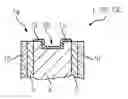
FIG. 1 shows a substrate 4 which is coated.
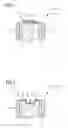
Particularly in the case of high-temperature components such as turbine blades or vanes 120, 130, the substrate 4, 4′ (FIG. 2) is a nickel-based or cobalt-based superalloy; in particular, it is nickel-based (FIG. 3). The substrate 4, 4′ has a first carbon proportion. A metallic protective coating 7, 7′ (FIG. 2) and/or a ceramic protective coating 10, 10′ (FIG. 2) is applied to the lateral faces of the substrate 4, 4′.
The metallic protective coating 7, 7′ is preferably free of carbon (C) and has in particular the composition NiCoCrAl or NiCoCrAlX (X=Y, Re), NiCoCrAlTa, NiCoCrAlFe, NiCOCrAlYFe, NiCoCrAlYFeTa, NiCoCrAlFeTa or NiCoCrAlYTa, in particular consisting thereof. The proportions of tantalum (Ta) or iron (Fe) lie in the single-digit percentage range, in particular <=5% by weight.
Previously, the flat blade or vane tip 19, 19′ (FIG. 2) often had no coating, and therefore a free end 19 of the substrate 4, 4′ would be exposed to the increased wear.
A layer 13, 13′ (FIG. 2) composed of a cobalt-based alloy is applied to this exposed area 14, 20, 23 (FIG. 2) of the substrate 4, 4′.
This cobalt-based alloy has a higher carbon content (C) than the substrate 4, 4′, the absolute difference in the carbon content of the substrate 4, 4′ and the layer 13, 13′ being at least 0.03% by weight.
FIG. 2 shows a further exemplary embodiment, in which the tip 19′ is formed as a tip which has an outer wall 23 with a recess 20. The metallic 7′ and ceramic 10′ coatings are similarly present here, as in FIG. 1.
Likewise, a layer 13′ composed of a cobalt-based alloy is applied to the substrate 4′ in the region of the tip 19′ there 20, 23.
Without a further heat treatment of the components shown in FIGS. 1 and 2, after a certain period of use of the components at the relatively high temperatures, carbon (C) already diffuses from the cobalt-based layer 13, 13′, preferably having a thickness of 0.1 mm, into the substrate 4, 4′ after 100 hours at 1173 K-1223 K.
A ceramic layer, if appropriate in connection with the ceramic layers 10, 10′, may preferably be present on the layers 13, 13′.
The nickel-based alloy of the substrate 4, 4′ preferably comprises at least chromium (Cr), cobalt (Co), tungsten (W), aluminum (Al), titanium (Ti), optionally tantalum (Ta) and preferably no rhenium (Re) and preferably no yttrium (Y).
The cobalt-based alloy comprises at least chromium (Cr), nickel (Ni), tungsten (W), optionally tantalum (Ta), aluminum (Al), titanium (Ti) and preferably no rhenium (Re) and preferably no yttrium (Y).
Although the present invention has been disclosed in the form of preferred embodiments and variations thereon, it will be understood that numerous additional modifications and variations could be made thereto without departing from the scope of the invention.
For the sake of clarity, it is to be understood that the use of ‘a’ or ‘an’ throughout this application does not exclude a plurality, and ‘comprising’ does not exclude other steps or elements.
Claims
1. A high-temperature component
composed of a metallic substrate of a nickel-based or cobalt-based superalloy,
comprising a composition of a nickel-based alloy,
wherein the substrate has a first carbon content,
wherein a layer composed of a cobalt-based alloy is applied directly to an area of the substrate,
said layer having a higher carbon content than the substrate.
2. The component as claimed in claim 1, in which the layer is applied only locally, in particular in a region with increased erosion loading.
3. The component as claimed in claim 1, in which the substrate is coated with a metallic coating and/or a ceramic coating on the metallic coating, which adjoin the area of the substrate and wherein the metallic coating comprises no carbon.
4. The component as claimed in claim 2, in which the region represents a flat, planar tip.
5. The component as claimed in claim 2, in which the region represents a tip with a freestanding wall.
6. The component as claimed in claim 1, in which the absolute difference in the carbon content of the substrate and the layer is at least 0.03% by weight.
7. The component as claimed in claim 1, in which the substrate is directionally solidified, in columnar form and is solidified in single-crystal form.
8. The component as claimed in claim 1, in which the layer at most partially overlaps the metallic coating.
9. The component as claimed in claim 1, in which the layer is at least 10% thinner, than the metallic coating.
10. The component as claimed in claim 1, in which the nickel-based alloy of the substrate comprises at least chromium, cobalt, tungsten, aluminum, titanium, and optionally tantalum and wherein it contains no rhenium (Re) and no yttrium.
11. The component as claimed in claim 1, in which the cobalt-based alloy of the layer comprises at least chromium, nickel, tungsten, and at least one of tantalum, and aluminum, titanium and no rhenium and no yttrium.
12. The component as claimed in claim 3, in which the metallic coating comprises no carbon and comprises NiCoCrAl, NiCoCrAlY, NiCoCrAlTa, NiCoCrAlFe, NiCOCrAlYFe, NiCoCrAlYFeTa, NiCoCrAlFeTa or NiCoCrAlYTa.
13. The component as claimed in claim 1, in which the layer has a thickness of 1 μm to 100 μm.
Images & Drawings included:

Sources:
- United States Patent and Trademark Office - verify current appl. status at the USPTO↗
Recent applications in this class:
- » 20250250905 2025-08-07
Turbine Airfoil Coating - » 20250243770 2025-07-31
INTERNAL ALUMINIDE COATING FOR VANES AND BLADES AND METHOD OF MANUFACTURE - » 20250207502 2025-06-26
ROTOR BLADE, METHOD FOR MANUFACTURING A ROTOR BLADE AND A GAS TURBINE ENGINE - » 20250198294 2025-06-19
FAN BLADE LEADING EDGE SHEATH - » 20250179923 2025-06-05
GAS TURBINE ENGINE - » 20250092793 2025-03-20
Internal Aluminization of Coated Substrates - » 20250092792 2025-03-20
TURBINE ENGINE INCLUDING A GAS PATH COMPONENT HAVING A HYDROPHOBIC COATING - » 20250035001 2025-01-30
Components having coating systems comprising mud cracks and methods for forming the coating systems - » 20250027419 2025-01-23
METHOD OF MANUFACTURING A COMPONENT OF A GAS TURBINE ENGINE - » 20250020063 2025-01-16
SELECTIVE REMOVAL OF COATINGS FROM COOLING POCKETS OF TURBINE BLADES
Recent applications for this Assignee:
- » 20230394331 2023-12-07
Method for computer-implemented determination of a data-driven prediction model - » 20200175031 2020-06-04
Device and method for coupling a machine to a plurality of applications - » 20190370332 2019-12-05
Semantic textual similarity system - » 20190334891 2019-10-31
Retrieval device for authentication information, system and method for secure authentication - » 20190317733 2019-10-17
Method and tool for system development - » 20190075027 2019-03-07
Method and apparatus for determining a network topology of a hierarchical network - » 20190069455 2019-02-28
Method and apparatus for assigning assemblies to component fitting lines - » 20190064761 2019-02-28
Control of a water supply network - » 20190047108 2019-02-14
Apparatus for shortening the rotor blades of a turbomachine - » 20180373214 2018-12-27
Method for operating an automation component