Exhaust gas purification catalyst and production method thereof
US20170182481A1
2017-06-29
15/118,213
2014-02-18
✅ Patent granted
US 10,245,579 B2
2019-04-02
WO; PCT/JP2014/053748; 20140218
WO; WO2015/125206; 20150827
Melvin C. Mayes | Smita S Patel
Foley & Lardner LLP
2035-03-31
Abstract:
An exhaust gas purification catalyst contains an oxide 1 and an oxide 2. The catalyst has pores P1-260 with a pore size of from 1 nm to 260 nm, that can be measured by the nitrogen absorption method, and the total sum ΣPV1-260 of the pore volume PV1-260 of the pores is equal to or greater than 0.79 cm3/g.
The oxide 1 is an oxide with an oxygen release capability. The oxide 2 is represented by LaxM1-xM′O3-δ (2), where M is at least one element selected from the group consisting of Ba, Sr and Ca, M′ is at least one element selected from the group consisting of Fe, Co, Ni and Mn, δ is the amount of oxygen deficiency, x satisfies 0≦x≦1, and satisfies 0≦δ≦1.
Assignee:
- NISSAN MOTOR CO., LTD. 2,119 🇯🇵 Yokohama-shi, Japan
- NISSAN MOTOR CO., LTD. 1,955 🇯🇵 Yokohama-shi, Kanagawa, Japan
Applicant:
Interested in similar patents?
Get notified when new applications in this technology area are published.
Classification:
B01J37/04 » CPC further
Processes, in general, for preparing catalysts; Processes, in general, for activation of catalysts Mixing
B01J37/08 » CPC further
Processes, in general, for preparing catalysts; Processes, in general, for activation of catalysts Heat treatment
B01J35/1042 » CPC further
Catalysts, in general, characterised by their form or physical properties; Solids characterised by their surface properties or porosity; Pore volume 0.5-1.0 ml/g
B01J35/1047 » CPC further
Catalysts, in general, characterised by their form or physical properties; Solids characterised by their surface properties or porosity; Pore volume more than 1.0 ml/g
B01J35/1057 » CPC further
Catalysts, in general, characterised by their form or physical properties; Solids characterised by their surface properties or porosity; Pore diameter less than 2 nm
B01J35/1061 » CPC further
Catalysts, in general, characterised by their form or physical properties; Solids characterised by their surface properties or porosity; Pore diameter 2-50 nm
B01J35/1066 » CPC further
Catalysts, in general, characterised by their form or physical properties; Solids characterised by their surface properties or porosity; Pore diameter 50-500 nm
F01N3/28 IPC
Exhaust or silencing apparatus having means for purifying, rendering innocuous, or otherwise treating exhaust for rendering innocuous by thermal or catalytic conversion of noxious components of exhaust characterised by constructional aspects of converting apparatus Construction of catalytic reactors
F01N3/103 » CPC further
Exhaust or silencing apparatus having means for purifying, rendering innocuous, or otherwise treating exhaust for rendering innocuous by thermal or catalytic conversion of noxious components of exhaust Oxidation catalysts for HC and CO only
F01N3/2828 » CPC further
Exhaust or silencing apparatus having means for purifying, rendering innocuous, or otherwise treating exhaust for rendering innocuous by thermal or catalytic conversion of noxious components of exhaust characterised by constructional aspects of converting apparatus; Construction of catalytic reactors characterised by structure, by material or by manufacturing of catalyst support; Ceramics Ceramic multi-channel monoliths, e.g. honeycombs
B01D2255/407 » CPC further
Catalysts; Mixed oxides Zr-Ce mixed oxides
B01D2255/908 » CPC further
Catalysts; Physical characteristics of catalysts O-storage component incorporated in the catalyst
B01D2255/9202 » CPC further
Catalysts; Physical characteristics of catalysts; Dimensions Linear dimensions
F01N2570/12 » CPC further
Exhaust treating apparatus eliminating, absorbing or adsorbing specific elements or compounds Hydrocarbons
B01J23/83 » CPC main
Catalysts comprising metals or metal oxides or hydroxides, not provided for in group of the iron group metals or copper combined with metals, oxides or hydroxides provided for in groups - with rare earths or actinides
B01J35/10 IPC
Catalysts, in general, characterised by their form or physical properties; Solids characterised by their surface properties or porosity
B01D53/94 » CPC further
Separation of gases or vapours; Recovering vapours of volatile solvents from gases; Chemical or biological purification of waste gases, e.g. engine exhaust gases, smoke, fumes, flue gases, aerosols,; Chemical or biological purification of waste gases of engine exhaust gases by catalytic processes
F01N3/10 IPC
Exhaust or silencing apparatus having means for purifying, rendering innocuous, or otherwise treating exhaust for rendering innocuous by thermal or catalytic conversion of noxious components of exhaust
B01D53/944 » CPC further
Separation of gases or vapours; Recovering vapours of volatile solvents from gases; Chemical or biological purification of waste gases, e.g. engine exhaust gases, smoke, fumes, flue gases, aerosols,; Chemical or biological purification of waste gases of engine exhaust gases by catalytic processes Simultaneously removing carbon monoxide, hydrocarbons or carbon making use of oxidation catalysts
B01D53/945 » CPC further
Separation of gases or vapours; Recovering vapours of volatile solvents from gases; Chemical or biological purification of waste gases, e.g. engine exhaust gases, smoke, fumes, flue gases, aerosols,; Chemical or biological purification of waste gases of engine exhaust gases by catalytic processes; Simultaneously removing carbon monoxide, hydrocarbons or nitrogen oxides making use of three-way catalysts [TWC] or four-way-catalysts [FWC] characterised by a specific catalyst
B01J23/002 » CPC further
Catalysts comprising metals or metal oxides or hydroxides, not provided for in group Mixed oxides other than spinels, e.g. perovskite
B01D2255/204 » CPC further
Catalysts; Metals or compounds thereof Alkaline earth metals
B01D2255/2068 » CPC further
Catalysts; Metals or compounds thereof; Rare earth metals Neodymium
B01D2255/20738 » CPC further
Catalysts; Metals or compounds thereof; Transition metals Iron
B01D2255/92 » CPC further
Catalysts; Physical characteristics of catalysts Dimensions
B01J2523/00 » CPC further
Constitutive chemical elements of heterogeneous catalysts
B01J23/00 IPC
Catalysts comprising metals or metal oxides or hydroxides, not provided for in group
B01J23/10 » CPC further
Catalysts comprising metals or metal oxides or hydroxides, not provided for in group of rare earths
B01D2255/2063 » CPC further
Catalysts; Metals or compounds thereof; Rare earth metals Lanthanum
Description
TECHNICAL FIELD
The present invention relates to an exhaust gas purification catalyst and a production method thereof, particularly to an exhaust gas purification catalyst with adequate pore volume and good gas diffusion property and a production method thereof.
BACKGROUND ART
Exhaust gas purification catalysts with an improved redox function have been known in which an oxygen storage material (OSC material) supports LaMM′Ox (M being Ba, Sr, Ca or the like, and M′ being Fe, Co, Ni, Mn or the like) (e.g. see Patent Document 1).
CITATION LIST
Patent Document
Patent Document 1: WO 2012/133526A
SUMMARY OF INVENTION
Technical Problem
However, a further study by the present inventors revealed a problem with the prior art that pores of approximately 100 nm of the above-described La oxide, which affects the gas diffusion property, may be closed in the process of impregnating the OSC material with the La oxide or supporting the La oxide with the OSC material, which may cause degradation of the catalyst performance at high space velocity.
The present invention has been made in view of this finding, and an object thereof is to provide an exhaust gas purification catalyst that has good gas diffusion property and can exert its intrinsic catalyst performance, and a production method thereof.
Solution to Problem
As a result of a keen study for achieving the above object, the present inventors found that the above object can be achieved by controlling the pore volume of predetermined pores. The present invention was thus completed.
That is, an exhaust gas purification catalyst of the present invention contains an oxide 1 and an oxide 2.
Further, the exhaust gas purification catalyst has pores P1-260 having a pore size of from 1 nm to 260 nm, that can be measured by a nitrogen absorption method, and a total sum ΣPV1-260 of the pore volume PV1-260 of the pores is equal to or greater than 0.79 cm3/g.
A method of producing an exhaust gas purification catalyst of the present invention is to produce the above-described exhaust gas purification catalyst. The method involves mixing a precursor of the oxide 2 with the oxide 1 before calcining the oxide 1, and then calcining the resultant mixture.
Advantageous Effects of Invention
In the present invention, the pore volume of the predetermined pores is adequately controlled. Therefore, it becomes possible to provide an exhaust gas purification catalyst that has good gas diffusion property and can exert its intrinsic catalyst performance, and a production method thereof.
BRIEF DESCRIPTION OF DRAWINGS
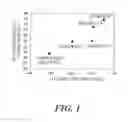
FIG. 1 is a graph illustrating the HC performance retention of exhaust gas purification catalysts of examples and a comparative example.
FIG. 2 is a graph illustrating the HC performance retention of exhaust gas purification catalysts of examples and a comparative example.
DESCRIPTION OF EMBODIMENTS
Hereinafter, an exhaust gas purification catalyst of the present invention will be described.
(1) The exhaust purification catalyst of the present invention contains an oxide 1 and an oxide 2.
The oxide 1 may be any oxygen storage material (OSC material) that has an oxygen storage/release function. Such materials include oxides and complex oxides that contain cerium (Ce) and/or zirconium (Zr).
Examples of the oxide 2 include oxides that contain at least one element selected from the group consisting of lanthanum (La), barium (Ba), strontium (Sr), calcium (Ca), iron (Fe), cobalt (Co), nickel (Ni) and manganese (Mn).
Specifically, examples of such oxides includes oxides of the following formula (2):
LaxM1-xM′O3-δ (2)
where M is at least one element selected from the group consisting of Ba, Sr and Ca, M′ is at least one element selected from the group consisting of Fe, Co, Ni and Mn, δ is the amount of oxygen deficiency, x satisfies 0≦x≦1, and δ satisfies 0≦δ≦1.
(2) The exhaust gas purification catalyst of the present invention has pores (P1-260) having a pore size of from 1 nm to 260 nm measured by the nitrogen (N2) absorption method, and the total sum (ΣPV1-260) of the pore volume (PV1-260) of the to pores is equal to or greater than 0.79 cm3/g.
Since the pore volume of the pores having a pore size of from 1 nm to 260 nm is equal to or greater than 0.79 cm3/g as described above, the exhaust gas purification catalyst of the present invention can effectively maintain its catalyst performance even at high space velocity (high SV).
(3) The exhaust gas purification catalyst of the present invention is obtained typically by impregnating the powdered oxide 1 with the oxide 2 or supporting the oxide 2 with the oxide 1.
In the exhaust gas purification catalyst of the present invention thus obtained, the increase ratio (ΔΣPV100-260) of the total sum of the pore volume of pores with a pore size of from 100 nm to 260 nm by the supporting process satisfies ΔΣPV100-260≧1, where the increase ratio (ΔΣPV100-260) of the total sum of the pore volume is represented by the following equation (1):
ΔΣPV100-260=(Total Sum(σPV100-260) of Pore Volume of Exhaust Gas Purification Catalyst after Supporting Process)/0.11 (1)
Typically, the increase ratio (ΔΣPV100-260) of the 100-260 nm pore total volume can be obtained by comparing the pore volume (ΣPV100-260) within a predetermined pore size range of a catalyst layer made of the oxide 1 with the pore volume (αPV100-260) within the predetermined pore size range of a catalyst layer made of the oxide 1 and the oxide 2 supported by the oxide 1. When the increase ratio (ΔΣPV100-260) is equal to or greater than 1, the HC (hydrocarbon) oxidation performance at high SV is improved. That is, the gas diffusion property of the catalyst layer at high SV is improved, and the retention rate of the HC oxidation performance is improved accordingly.
This also means that the oxide 1 can support the oxide 2 without decreasing the pore volume of the pores with a pore size of from 100 to 260 nm of the oxide 1, when oxide 1 supports oxide 2.
The value “0.11” defined in the equation (1) is a standard value of the pore volume within the above-described possible pore size range of the oxide 1.
Next, a production method of the exhaust gas purification catalyst of the present invention will be described.
(4) The production method is to produce the above-described exhaust gas purification catalyst of the present invention, which involves mixing a precursor of the oxide 2 with the oxide 1 before calcining the oxide 1 and then calcining the resultant mixture.
As described above, in the production method of the present invention, the material of the oxide 2 is added before calcining the oxide 1 so that pores are formed. It is not preferred to firstly form (calcine) the oxide 1 and then to make the oxide 1 support the oxide 2, since the oxide 2 may fill the pores of the oxide 1.
Examples of such precursors of the oxide 2 include carboxylates of at least one element selected from the group consisting of lanthanum (La), barium (Ba), strontium (Sr), calcium (Ca), iron (Fe), cobalt (Co), nickel (Ni) and manganese (Mn). Solutions of such carboxylates have a certain level of viscosity, and the oxide 1 is readily impregnated with them.
Carboxylic acids that can be used includes carboxylic acids having one to four carboxyl groups such as gluconic acid, malic acid, maleic acid, acetic acid, succinic acid, fumaric acid, propionic acid, methacrylic acid, acrylic acid, citric acid, tartaric acid, itaconic acid, formic acid and malonic acid.
EXAMPLES
Hereinafter, the present invention will be described in more detail with examples and comparative examples. However, the present invention is not limited to these examples.
Example 1 to Example 3
Carboxylates of oxides 2 listed in Table 1 were prepared and were then mixed with precursors of oxides 1. The mixtures were dried and further calcined at 700° C. The resultant powders were slurried, and the slurries were applied to monolith honeycomb supports, dried and baked at 400° C. Exhaust gas purification catalysts of the examples were thus obtained.
Comparative Example 1 and Comparative Example 2
For Comparative example 1, a precursor of the oxide 1 shown in Table 1 was dried and further calcined at 700° C. The resultant powder was impregnated with a carboxylate of the oxide 2, dried and calcined at 700° C. so that powder was obtained. The resultant powder was slurried, and the catalyst slurry was applied to a monolith honeycomb support, dried and baked at 400° C. An exhaust gas purification catalyst was thus obtained.
For Comparative example 2, a precursor of the oxide 1 shown in Table 1 was dried and further calcined at 700° C. The resultant powder was slurried, and the catalyst slurry was applied to a honeycomb support, dried and baked at 400° C. An exhaust gas purification catalyst was thus obtained.
The blend ratio of the oxides 1 and the oxides 2, the composition of the oxides 1 and the oxides 2, the specification of the honeycomb support, the conditions of the HC purification test are listed in Table 1.
(Performance Evaluation)
(All Pore Volume)
This refers to the total sum of the pore volume of pores with a size of from 1 nm to 260 nm, which is measured by the nitrogen absorption method.
Each powder was subjected to heat, decompression and the like so that absorbed gas was removed. Nitrogen was introduced in a cooled condition. The all pore volume was calculated from the amount of absorption when the nitrogen was absorbed to the material surface to reach the relative pressure.
(Total Sum of 100-260 nm Pore Volume)
This refers to the total sum of the pore volume of pores with a pore size of from 100 nm to 260 nm, which is a part of the all pore volume measured as described above.
(Increase Ratio of Total Sum of 100-260 nm Pore Volume)
The standard value of the 100-260 nm pore volume was determined as 0.11 (which is actually the average in the oxides 1). An increase of ΣPV100-260 is indicated, when the value obtained by dividing the total sum of the 100-260 nm pore volume (ΣPV100-260) of the catalyst of the present invention by the standard value is equal to or greater than 1.
(Performance Retention)
This was calculated by the following equation.
Performance Retention (%)=(HC Purification Performance at SV of 30252 h−1)/(HC Purification Performance at SV of 20168 h−1)×100
| TABLE 1 | ||
| Increase | ||
| Oxide 2 | Ratio of |
| Ratio | 100-260 nm | 100-260 nm | ||||
| Oxide 2/ | All Pore | Pore | Pore | |||
| Oxide 1 | Oxide 1 | Volume | Volume | Volume | ||
| (wt %) | Composition | Composition | (cm3/g) | (cm3/g) | (cm3/g) | |
| Example 1 | 5 | Zn—Ce—Nd—Ox | LaFeO3 | 0.80 | 0.37 | 3.4 |
| Example 2 | 10 | Zn—Ce—Nd—Ox | LaFeO3 | 0.99 | 0.40 | 3.6 |
| Example 3 | 15 | Zn—Ce—Nd—Ox | LaFeO3 | 1.1 | 0.45 | 4.1 |
| Example 4 | 20 | Zn—Ce—Nd—Ox | LaFeO3 | 1.0 | 0.54 | 4.9 |
| Comparative | 6 | Zn—Ce—Nd—Ox | LaSrFeO3 | 0.58 | 0.058 | 0.5 |
| example 1 | ||||||
| Comparative | — | Zn—Ce—Nd—Ox | — | 0.75 | 0.17 | — |
| example 2 | ||||||
| Experimental Conditions | Results |
| Sample | Evaluation | Gas | Performance | ||
| Shape | Temperature | Flow Rate | Concentration | Retention (%) | |
| Example 1 | 134 | g/L | 400° C. | 40 L/min | C3H6 1665 ppm | 54.9 |
| Example 2 | 0.119 | L | (SV = 20168 h−1) | CO 0.6% | 55.4 |
| Example 3 | Honeycomb | 60 L/min | NO 1000 ppm | 74.3 | |
| Example 4 | coating | (SV = 30252 h−1) | O2 0.6% | 68.2 | |
| Comparative | H2 0.2% | 44.0 | |||
| example 1 | CO2 13.9% | ||||
| H2O 10% | |||||
| Comparative | — | — | — | — | — |
| example 2 | |||||
The HC performance retentions of Table 1 are plotted on graphs of FIG. 1 and FIG. 2 with respect to the all pore volume and the increase ratio of the 100-260 nm pore volume.
While the present invention is described with some embodiments and examples, the present invention is not limited thereto, and a variety of changes can be made within the gist of the present invention.
Claims
1.-9. (canceled)
10. An exhaust gas purification catalyst containing an oxide 1 that is an oxide with an oxygen release capability and an oxide 2 that is represented by the following formula (2):
LaxM1-xM′O3-δ (2)
where M is at least one element selected from the group consisting of Ba, Sr and Ca, M′ is at least one element selected from the group consisting of Fe, Co, Ni and Mn, δ is the amount of oxygen deficiency, x satisfies 0≦x≦1, and δ satisfies 0≦δ≦1,
wherein the exhaust gas purification catalyst has pores P1-260 with a pore size of from 1 nm to 260 nm, that can be measured by a nitrogen absorption method, and
a total sum ΣPV1-260 of a pore volume PV1-260 of the pores is equal to or greater than 0.79 cm3/g.
11. The exhaust gas purification catalyst according to claim 10,
wherein the exhaust gas purification catalyst is obtained by making the oxide 1 support the oxide 2, and
an increase ratio ΔΣPV100-260 of a total sum of a pore volume of pores with a pore size of from 100 nm to 260 nm due to the support satisfies ΔΣPV100-260≧1, where the increase ratio ΔΣPV100-260 of the total sum the pore volume is represented by the following equation (1).
ΔΣPV100-260=(Total Sum σPV100-260 of Pore Volume of the Exhaust Gas Purification Catalyst after the Support)/0.11 (1)
12. The exhaust gas purification catalyst according to claim 10, wherein the oxide 1 contains cerium (Ce) and/or zirconium (Zr).
13. The exhaust gas purification catalyst according to claim 11, wherein the oxide 1 contains cerium (Ce) and/or zirconium (Zr).
14. The exhaust gas purification catalyst according to claim 10, wherein the oxide 1 is a complex oxide that contains cerium (Ce) and/or zirconium (Zr).
15. The exhaust gas purification catalyst according to claim 11, wherein the oxide 1 is a complex oxide that contains cerium (Ce) and/or zirconium (Zr).
16. A method of producing the exhaust gas purification catalyst of claim 10, comprising the steps of:
mixing a precursor of the oxide 2 with the oxide 1 before calcining the oxide 1, and then calcining a resultant mixture.
17. The method of producing the exhaust gas purification catalyst according to claim 16, wherein the precursor of the oxide 2 is a carboxylate of lanthanum (La) and at least one element selected from the group consisting of barium (Ba), strontium (Sr), calcium (Ca), iron (Fe), cobalt (Co), nickel (Ni) and manganese (Mn).
Images & Drawings included:

Sources:
- United States Patent and Trademark Office - verify current appl. status at the USPTO↗
Similar patent applications:
- » 20110027135
Complex oxide for exhaust gas purification catalyst, production method thereof, coating material for exhaust gas purification catalyst, and diesel exhaust gas purification filter - » 20180193819
EXHAUST GAS PURIFICATION CATALYST AND PRODUCTION METHOD THEREOF - » 20170232424
EXHAUST GAS PURIFICATION CATALYST AND PRODUCTION METHOD THEREOF - » 20150251165
Exhaust gas purification catalyst and production method thereof - » 20160067690
Exhaust gas purification catalyst and production method thereof - » 20160296915
EXHAUST GAS PURIFICATION CATALYST AND PRODUCTION METHOD THEREOF - » 20150151282
Exhaust gas purification catalyst and production method thereof - » 20090246111
EXHAUST GAS PURIFICATION CATALYST AND METHOD FOR PRODUCTION THEREOF - » 20110189069
EXHAUST GAS PURIFICATION CATALYST AND METHOD FOR PRODUCTION THEREOF - » 20230302435
Catalyst for purification of exhaust gas and production method thereof
Recent applications in this class:
- » 20250276307 2025-09-04
CATALYST COMPOSITIONS AND METHODS OF PREPARATION AND USE THEREOF - » 20250235853 2025-07-24
CERIUM ZIRCONIUM MIXED OXIDE COMPOSITIONS - » 20250170562 2025-05-29
PROCESS FOR THE PREPARATION OF A CERIA-BASED CATALYST USEFUL IN SYNGAS PRODUCTION - » 20250073686 2025-03-06
PREPARATION AND PRETREATMENT TECHNIQUES OF CU/CEO2 CATALYSTS FOR LOW TEMPERATURE DIRECT DECOMPOSITION OF NOX EXHAUST GAS - » 20250073685 2025-03-06
NiCeOx AEROGELS FOR METHANE SUPPRESSION IN THE WATER-GAS SHIFT REACTION - » 20240390879 2024-11-28
Hydrogenation Catalyst, and Preparation Method Therefor and Use Thereof - » 20240359165 2024-10-31
HYDROCHLORIC ACID OXIDATION CATALYST AND METHOD FOR PRODUCING CHLORINE - » 20240351007 2024-10-24
HYDROCHLORIC ACID OXIDATION CATALYST AND METHOD FOR PRODUCING CHLORINE - » 20240326024 2024-10-03
CATALYST FOR CARBON DIOXIDE HYDROGENATION TO METHANOL AND METHOD OF PREPARATION THEREOF - » 20240286119 2024-08-29
NANOCATALYST FOR DRY REFORMING OF METHANE
Recent applications for this Assignee:
- » 20250277479 2025-09-04
RESTART CONTROL METHOD AND DEVICE FOR INTERNAL COMBUSTION ENGINE - » 20250276704 2025-09-04
VEHICLE CONTROL DEVICE, VEHICLE CONTROL METHOD, AND NON-TRANSITORY COMPUTER-READABLE MEDIUM - » 20250273410 2025-08-28
INHIBITOR SWITCH - » 20250242689 2025-07-31
CONTROL METHOD FOR VEHICLE AND CONTROL DEVICE FOR VEHICLE - » 20250230870 2025-07-17
CONTROL METHOD FOR VEHICLE AND CONTROL DEVICE FOR VEHICLE - » 20250230781 2025-07-17
COMPLEXED CYLINDER BLOCK - » 20250224007 2025-07-10
OPPOSED PISTON TYPE MONOBLOCK BRAKE CALIPER AND METHOD FOR MANUFACTURING OPPOSED PISTON TYPE MONOBLOCK BRAKE CALIPER - » 20250222919 2025-07-10
HYBRID VEHICLE CONTROL METHOD AND HYBRID VEHICLE CONTROL DEVICE - » 20250215971 2025-07-03
CONTROL DEVICE FOR TRANSMISSION - » 20250215844 2025-07-03
FAULT DIAGNOSIS METHOD AND DEVICE FOR EVAPORATED FUEL PROCESSING DEVICE