Hair-removal system
US20170196336A1
2017-07-13
15/312,937
2015-04-30
✅ Patent granted
US 10,694,827 B2
2020-06-30
WO; PCT/EP2015/059534; 20150430
WO; WO2015/107229; 20150723
Gary Jackson | Sebastian X Lukjan
Lawrence Cruz, Esq. | Ryan, Mason & Lewis, LLP
2036-11-28
Abstract:
The present invention is related to a hair-removal system comprising: a mobile phone or tablet computer comprising wireless communication means, a calendar memory with hair-removal session history information and a database comprising treatment time interval and treatment parameters; a light-emitting hair-removal device comprising wireless communication means, said communication means being able to establish interactive communication with the wireless communication means of the mobile phone or tablet computer.
Assignee:
- CONAIR CORPORATION 197 🇺🇸 Stamford, CT, United States
Applicant:
Interested in similar patents?
Get notified when new applications in this technology area are published.
Classification:
A61B18/00 IPC
Surgical instruments, devices or methods for transferring non-mechanical forms of energy to or from the body
A61B2018/00988 » CPC further
Surgical instruments, devices or methods for transferring non-mechanical forms of energy to or from the body Means for storing information, e.g. calibration constants, or for preventing excessive use, e.g. usage, service life counter
H04W76/14 » CPC further
Connection management; Connection setup Direct-mode setup
A45D44/00 IPC
Other cosmetic or personal care articles, e.g. for hairdressers' rooms
A61B18/203 » CPC further
Surgical instruments, devices or methods for transferring non-mechanical forms of energy to or from the body by applying electromagnetic radiation, e.g. microwaves using laser applying laser energy to the outside of the body
A45D2026/008 » CPC further
Hair-singeing apparatus; Apparatus for removing superfluous hair, e.g. tweezers Details of apparatus for removing superfluous hair
A45D2044/007 » CPC further
Other cosmetic or personal care articles, e.g. for hairdressers' rooms Devices for determining the condition of hair or skin or for selecting the appropriate cosmetic or hair treatment
A61B2018/00476 » CPC further
Surgical instruments, devices or methods for transferring non-mechanical forms of energy to or from the body for treatment of particular body parts; Skin Hair follicles
A45D26/00 » CPC main
Hair-singeing apparatus; Apparatus for removing superfluous hair, e.g. tweezers
A45D44/005 » CPC further
Other cosmetic or personal care articles, e.g. for hairdressers' rooms for selecting or displaying personal cosmetic colours or hairstyle
A61B18/20 IPC
Surgical instruments, devices or methods for transferring non-mechanical forms of energy to or from the body by applying electromagnetic radiation, e.g. microwaves using laser
H04W4/80 » CPC further
Services specially adapted for wireless communication networks; Facilities therefor Services using short range communication, e.g. near-field communication [NFC], radio-frequency identification [RFID] or low energy communication
Description
FIELD OF THE INVENTION
The present invention is related to the cosmetic treatment of human skin, and in particular to a hair-removal system associating an electromagnetic energy emitting device for hair removal and a wireless communication with a mobile phone or tablet computer for the management of skin treatment.
BACKGROUND AND STATE OF THE ART
Hair-removal devices are well known in the art. The former mechanical devices with epilator discs for temporary hair removal are progressively replaced by electromagnetic energy emitting devices such as laser or pulsed-light epilators performing medium and long term epilation.
Originally, electromagnetic energy emitting devices such as laser or pulsed-light epilators were only used in clinics by educated professionals managing the possible security issues of such devices. The latest trend in the market of skin-treatment devices is miniaturization and recently, home-use devices have been commercialized moving skin treatments, and in particular light-epilation treatments, from a professional context into the home environment, where non-professional users operate in privacy. Since inappropriate handling of home-use devices can entail injuring like skin irritation, the safety aspect represents a real challenge for the manufacturers.
The private user is confronted with at least four parameters, namely the location and the intensity of the skin treatment as well as the associated frequency and interval. Additional parameters to be considered are the history of the skin exposure to UV light, the type of skin and the age of the applicant.
In this context, it was necessary to invent a system associating an epilation device with a management support for all those parameters allowing the private user to set up a safe and adequate treatment program for the epilation of various parts of his/her body.
Mobile phones, in particular the so called “smart phones” and “tablets”, the variety of screen sizes making the differentiation between “smart phones”, “tablets” of various sizes and “portable computer” difficult, are nowadays much more than just communication tools. A continuously-growing number of available applications (camera, GPS, agenda . . . ) and wireless communication (Bluetooth) with a series of manageable devices are now possible.
The wireless communication capacity of these devices therefore represents a major opportunity to achieve tailor-made systems to manage skin-treatment devices, and in particular electromagnetic energy emitting devices for hair-removal systems.
WO 2014/057481 A2 discloses a system for personal skin procedures based on the interaction of a camera-equipped portable computer with an electromagnetic energy emitting device, the extracted information from a taken picture of the skin being the basis for a computer analysis leading to a specific treatment of the skin.
WO 2012/052976 A1 and WO 2012/052975 A1 disclose methods and devices for monitoring the use of a pulsed-light skin-treatment device in order to avoid fraudulent use of said device regarding the number of flashes and the types of treatments actually performed. The described methods do not allow personal planning such as treatment frequency, adaptation to individual user's skin types and relevant processing areas.
AIMS OF THE INVENTION
The present invention aims to provide a hair-removal system comprising a light emitting based epilator having wireless communication means associated to a skin-treatment management system via a smart phone or a tablet computer.
SUMMARY OF THE INVENTION
The present invention is related to a hair-removal system comprising:
-
- a mobile phone or tablet computer comprising wireless communication means, a calendar memory with hair-removal session history information and a database comprising treatment-time interval and treatment parameters;
- a light-emitting hair-removal device comprising wireless communication means, said communication means being able to establish interactive communication with the wireless communication means of the mobile phone or tablet computer.
Preferred embodiments of the present invention disclose at least one or a suitable combination of the following features:
-
- the light-emitting hair-removal device comprises a pulsed-light source, producing in use light pulses at selectable energy fluence and repetition rate;
- said pulsed-light source is able to produce light pulses at selectable energy fluence comprised between 1 and 10 J/cm2, preferably between 2 and 8 J/cm2, and most preferably between 2 and 6 J/cm2;
- said pulsed-light source is able to produce light pulses at selectable repetition rate comprised between 1 and 5 s and preferably between 1.5 and 3.5 s;
- the pulsed-light source produces pulses having duration comprised between 0.1 and 10 ms, preferably between 0.5 and 2 ms, and most preferably between 0.6 and 0.9 ms.;
- said hair-removal session history comprises at least the date of the last session, the pulse fluence of the last session and the number of pulses of the last session on the body part treated.
A second aspect of the invention is related to a method for hair-removal, using the system of the invention, comprising the steps of:
-
- retrieving the last session information on a specific body part stored in a calendar memory of the phone or tablet computer;
- determining time interval between the last session date and the current date;
- comparing said determined time interval with the treatment time interval stored in the database, and if the determined time interval is larger than the preconized treatment time interval, indicate on the phone or tablet screen the authorization of a new epilation session;
- sending, if a new epilation session on said specific body part is authorized, the phone or tablet computer treatment parameters for said body part to the light-emitting hair-removal device;
- performing the hair-removal session with the light-emitting hair-removal device on the specific body part;
- sending back the session parameters, emitted from the light-emitting hair-removal device, to the phone or tablet and storing a new session history in a calendar for the body part treated.
Preferably, the method of the invention comprises the additional step of determining the skin status prior to the treatment, said skin status being related to at least one of the following information: sun exposure, skin irritation, use of cosmetic or therapeutic cream, and adapting the treatment accordingly.
Advantageously, said method is applied recursively as a background task on said phone or tablet computer, a reminder being shown on the screen as soon as the time interval condition is fulfilled.
The present invention is also related to a light-emitting hair-removal device comprising wireless communication means, said communication means being able to establish a two-ways communication link with a mobile phone or tablet computer.
FIGURES
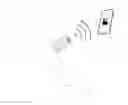
FIG. 1 represents an example of the hair-removal system according to the invention.
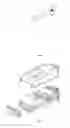
FIG. 2 represents an example of the light-emitting epilation device according to the invention.
FIG. 3 represents an organigram of an application implementing the method according to the invention.
FIGS. 4a to 4h represent various snapshots of the screen appearing to the user.
KEY
- 1. Pulsed light source epilation device
- 2. Mobile phone or tablet computer
- 3. Wireless communication means (Bluetooth)
- 4. Trigger button
- 5. Flashtube
- 6. Capacitive sensor for skin detection
- 7. Capacitor
- 8. Transformer
DETAILED DESCRIPTION OF THE INVENTION
The present invention is related to a hair-removal system. The hair removal is performed by a pulsed-light source 1 such as a flash lamp for example. The technology is called IPL (for Intense Pulsed Light). The energy level of the flash can be adapted on the device itself or via communication means over mobile phone or tablet computer.
Preferably, the light source can be operated at five energy levels with the following exemplative parameters:
-
- The duration of the pulse at 50% intensity, between 0.5 ms and 0.9 ms;
- The repetition rate of the pulse is about 1.6 s at level 1 and 3.5 s at level 5;
- The fluence is split in 5 levels as followed:
| Level 1 | Level 2 | Level 3 | Level 4 | Level 5 | |
| Fluence (J/cm2) | 2.0 | 3.0 | 3.5 | 4.0 | 4.5 |
-
- Wavelengths between 550 and 1200 nm;
- Window size: 300 mm2;
- A face filter can be added (wavelengths between 600 and 1200 nm and window size is 150 mm2).
Advantageously, the hair-removal device 1 comprises a capacitive sensor 6 to detect the skin contact.
The hair-removal device 1, part of the system of the invention, also comprises wireless communication means 3 such as a Bluetooth chip for providing a two-ways link with a smartphone or a tablet computer 2. Such communication means are used to establish communication between the hair-removal device 1 and an application running on the smart phone 2 in order to exchange true treatment data (energy fluence, number of pulses, . . . ) to be used in the next epilation session.
The purpose of the Bluetooth chip 3 is to communicate with a smartphone 2. An application (App) on the smartphone 2 helps the user to choose the correct setting corresponding to his/her skin and provides assistance during the hair-removal session.
The App advantageously comprises an automatic session calendar with session history. Preferably, the calendar also provides a reminder function. The automatic calendar feature helps the user controlling his/her hair-removal sessions. Hair-removal sessions have to follow a precise schedule. Therefore, the App is programmed to advise the user when the next hair-removal session is appropriate. If the user is not available for hair-removal session when the reminder sends an alert, it is possible to reprogram a new reminder.
Preferably, default body parts are selectable and custom body parts can be editable, the automatic calendar comprising specific information for each body part, so that the App independently controls the schedule for each body part and allows its independent treatment.
Advantageously, the App comprises a personal questionnaire to select the correct energy level.
A history is kept for each body part. In the history, the user can see all the different sessions performed on the selected body part. For each session, the energy level, the date and the number of light pulses is memorised.
The user can choose his/her body part in a default list (e.g. leg, underarm, bikini line . . . ). The user can also add a custom part. Custom parts can also be deleted by the user.
In order to define the correct level of energy to be applied, questions are asked to the user. Preferred questions and corresponding treatment adaptation are:
-
- Sun exposure: if the user has been exposed to the sun less than 15 days ago, a treatment is not recommended;
- First treatment: the user treats the body part for the first time with the App. It is still possible that the user already made some treatments without the App. It is therefore possible to introduce the number of session already done without the App in order to correctly follow the hair-removal schedule for the selected body part;
- Skin irritation now or during last session: if the user has skin irritation, a treatment is not recommended. The energy level is adapted according to the irritation level perceived during the last treatment;
- User's skin photo type: the skin colour has to be selected to define the energy level range to be applied;
- Use of therapeutic or cosmetic cream: in case of use of therapeutic cream, a treatment is not recommended. A new treatment is only recommended when the cream is fully penetrated.
After the questionnaire has been completed and validated, the session screen appears. On this screen, the following data appears:
-
- Body part,
- Selected energy level,
- Number of flashes during the current session,
- Number of flashes performed during the previous session.
Security functions are also implemented in the system. In that case, a warning is given to the user, for example in case of:
-
- Selection of a not-recommended level of energy,
- Request of a hair-removal session before the due date,
- Sun exposure less than 15 days ago,
- Use of therapeutic cream less than 7 days ago,
- Use of cosmetic cream not fully penetrated,
- Changes of the energy level during the treatment,
Advantageously, the communication protocol is a two-channel communication for both the device and the smartphone or tablet computer:
-
- The smartphone sends information each time it is needed;
- The device is listening all the time and is sending its report regularly.
Preferred transmitted data are:
-
- The smartphone is able to change the energy level of the epilation device;
- The device send the performed number of flashes to the smartphone, the energy level and some information about defective parts when the user modifies the energy level on the device, the value is also communicated to the smartphone.
The transmitted report lists the following parameter:
-
- Up-link communication (hair-removal device to smartphone)
| Voltage-Fan- | |
| Life | Temperature-Level |
| Byte 1 | Byte 2 | Byte 3 | Byte 4 | Byte 5 |
| Low byte send first | 7 | 6 | 5 | 4 | 3 | 2 | 1 | 0 |
| Reserved | V | F | T | Level | |
-
-
- Failure report on App:
- Life exceeds 130 k flash; the App displays a warning message: “End of life of the product”;
- Bit_5 of byte_5 (V) is at 0 for 10 times consecutively. App displays a warning message: “Charging Failure”;
- Bit_4 of byte_5 (F) is at 0. App displays warning message: “Fan Failure”;
- Bit_3 of byte_5 (T) is at 0. App displays warning message: “Temperature too high”;
- Failure report on App:
- Down-link communication (Smartphone to IPL)
-
| Level |
| Byte1 |
| 2 | 1 | 0 |
| Level 0 to 4 |
Claims
1. Hair-removal system comprising:
a mobile phone or tablet computer comprising wireless communication means, a calendar memory with hair-removal session history information and a database comprising treatment-time interval and treatment parameters; and
a light-emitting hair-removal device comprising wireless communication means, said communication means being able to establish interactive communication with the wireless communication means of the mobile phone or tablet computer.
2. System according to claim 1, wherein the light-emitting hair-removal device comprises a pulsed-light source, producing in use light pulses at selectable energy fluence and repetition rate.
3. System according to claim 1, wherein said pulsed-light source is able configured to produce light pulses at selectable energy fluence comprised between 1 and 10 J/cm2, preferably between 2 and 8 J/cm2, and most preferably between 2 and 6 J/cm2.
4. System according to claim 3, wherein said pulsed-light source is configured to produce light pulses at selectable repetition rate comprised between 1 and 5 s and preferably between 1.5 and 3.5 s.
5. System according to claim 4, wherein said pulsed-light source produces pulses having duration comprised between 0.1 and 10 ms, preferably between 0.5 and 2 ms, and most preferably between 0.6 and 0.9 ms.
6. System according to claim 2, wherein said hair-removal session history comprises at least the date of the last session, the energy fluence of the last session and the number of pulses of the last session on the body part treated.
7. A method for hair-removal using the system of claim 1, comprising the steps of:
retrieving last session information on a specific body part stored in a calendar memory of the phone or tablet computer;
determining time interval between the last session date and the a current date;
comparing said determined time interval with the treatment time interval stored in the database, and if said determined time interval is larger than the treatment time interval, indicate on the phone or tablet screen the authorization of a new epilation session;
sending, if a new epilation session on said specific body part is authorized, the phone or tablet computer treatment parameters for said body part to the light-emitting hair-removal device;
performing the hair-removal session with the light-emitting hair-removal device on the specific body part; and
sending back the session parameters, emitted from the light-emitting hair-removal device, to the phone or tablet and storing a new session history in a calendar for the body part treated.
8. Method according to claim 7, comprising the additional step of determining the skin status prior to the treatment, said skin status being related to at least one of the following information: sun exposure, skin irritation, use of cosmetic or therapeutic cream, and adapting the treatment accordingly.
9. Method according to claim 7, wherein said method is applied recursively as a background task on said phone or tablet computer, a reminder being shown on the screen as soon as the time interval condition is fulfilled.
10. A light-emitting hair-removal device comprising wireless communication means, said communication means being able to establish a two-ways communication link with a mobile phone or tablet computer.
Images & Drawings included:


Sources:
- United States Patent and Trademark Office - verify current appl. status at the USPTO↗
Recent applications in this class:
- » 20240341442 2024-10-17
A SKIN TREATMENT DEVICE - » 20220378168 2022-12-01
Hair cutting member and hair cutting device - » 20220378167 2022-12-01
HAIR CUTTING DEVICE AND HAIR CUTTING SYSTEM - » 20180132591 2018-05-17
System and method for extraction of hair follicle - » 20170027298 2017-02-02
Composition, Process For Preparation And Method Of Use - » 20160000202 2016-01-07
Hair removal tool - » 20150305472 2015-10-29
Follicular Unit Extraction System - » 20150289625 2015-10-15
METHOD AND APPARATUS FOR EXTRACTION OF FOLICULAR UNITS - » 20150289624 2015-10-15
METHOD AND APPARATUS FOR EXTRACTION OF FOLICULAR UNITS - » 20150189968 2015-07-09
Golden ratio eyebrow shaping method
Recent applications for this Assignee:
- » 20220313021 2022-10-06
Drive coupling for a food processing device - » 20220195657 2022-06-23
Handheld appliance - » 20220183437 2022-06-16
Glass hair styling iron with heat and light emitting source - » 20220142410 2022-05-12
Sound enclosure system for food blender - » 20220142409 2022-05-12
Motor driven food processing system - » 20220053905 2022-02-24
Hair dryer with ion emitter - » 20220053902 2022-02-24
Hair styling apparatus with ion emitter - » 20220053901 2022-02-24
Curling iron with ion emitter - » 20220049415 2022-02-17
Garment steamer system with multi-function air and steam chamber - » 20220047116 2022-02-17
Toaster and control system for a toaster