Method and apparatus for generating hydrogen from formic acid
US20170197828A1
2017-07-13
15/326,118
2015-01-27
✅ Patent granted
US 10,710,877 B2
2020-07-14
WO; PCT/KR2015/000841; 20150127
WO; WO2016/010222; 20160121
Douglas B Call
Goldilocks Zone IP Law
2035-04-22
Abstract:
The present invention provides a hydrogen generating apparatus and a hydrogen generating method, wherein the hydrogen generating apparatus generates hydrogen by dehydrating formic acid, and comprises: a reactor for containing water and a heterogeneous catalyst; a formic acid feeder for feeding formic acid into the reactor; and a moisture remover for removing moisture generated from the reactor.
Inventors:
- Jonghee HAN 74 🇰🇷 Seoul, South Korea
- Suk-Woo NAM 111 🇰🇷 Seoul, South Korea
- Tae Hoon LIM 63 🇰🇷 Seoul, South Korea
- Jin Young KIM 184 🇰🇷 Seoul, South Korea
- Chang Won YOON 32 🇰🇷 Seoul, South Korea
- Yeong Cheon KIM 20 🇰🇷 Seoul, South Korea
- Hyung Chul HAM 21 🇰🇷 Seoul, South Korea
- Sun-Hee CHOI 11 🇰🇷 Seoul, South Korea
- Hyoung-Juhn KIM 54 🇰🇷 Seoul, South Korea
- Sung Pil YOON 26 🇰🇷 Seoul, South Korea
- Taekhyun OH 1 🇰🇷 Seoul, South Korea
Assignee:
- Korea Institute of Science and Technology 2,066 🇰🇷 Seoul, South Korea
Applicant:
Interested in similar patents?
Get notified when new applications in this technology area are published.
Classification:
B01J27/26 » CPC further
Catalysts comprising the elements or compounds of halogens, sulfur, selenium, tellurium, phosphorus or nitrogen; Catalysts comprising carbon compounds; Nitrogen compounds Cyanides
B01D53/265 » CPC further
Separation of gases or vapours; Recovering vapours of volatile solvents from gases; Chemical or biological purification of waste gases, e.g. engine exhaust gases, smoke, fumes, flue gases, aerosols,; Drying gases or vapours by refrigeration (condensation)
B01D5/00 » CPC further
Condensation of vapours; Recovering volatile solvents by condensation
B01D5/0057 » CPC further
Condensation of vapours; Recovering volatile solvents by condensation in combination with other processes
B01J8/00 » CPC further
Chemical or physical processes in general, conducted in the presence of fluids and solid particles; Apparatus for such processes
B01J8/20 » CPC further
Chemical or physical processes in general, conducted in the presence of fluids and solid particles; Apparatus for such processes with fluidised particles with liquid as a fluidising medium
B01J27/24 » CPC further
Catalysts comprising the elements or compounds of halogens, sulfur, selenium, tellurium, phosphorus or nitrogen; Catalysts comprising carbon compounds Nitrogen compounds
B01J35/0006 » CPC further
Catalysts, in general, characterised by their form or physical properties Catalysts containing parts with different compositions
B01J37/082 » CPC further
Processes, in general, for preparing catalysts; Processes, in general, for activation of catalysts; Heat treatment Decomposition and pyrolysis
B01J37/18 » CPC further
Processes, in general, for preparing catalysts; Processes, in general, for activation of catalysts; Reducing with gases containing free hydrogen
B01J2208/0053 » CPC further
Processes carried out in the presence of solid particles; Reactors therefor; Controlling the process; Controlling the temperature Controlling multiple zones along the direction of flow, e.g. pre-heating and after-cooling
B01J2208/00168 » CPC further
Processes carried out in the presence of solid particles; Reactors therefor; Controlling the process; Controlling the temperature by indirect heat exchange with heat exchange elements outside the bed of solid particles
B01J2208/00548 » CPC further
Processes carried out in the presence of solid particles; Reactors therefor; Controlling the process Flow
B01J2208/00893 » CPC further
Processes carried out in the presence of solid particles; Reactors therefor; Details of the reactor or of the particulate material Feeding means for the reactants
B01J2219/00011 » CPC further
Chemical, physical or physico-chemical processes in general; Their relevant apparatus; Chemical plants; Scale aspects Laboratory-scale plants
C01B2203/0277 » CPC further
Integrated processes for the production of hydrogen or synthesis gas; Processes for making hydrogen or synthesis gas containing a decomposition step containing a catalytic decomposition step
C01B2203/0495 » CPC further
Integrated processes for the production of hydrogen or synthesis gas containing a purification step for the hydrogen or the synthesis gas; Composition of the impurity the impurity being water
C01B2203/1064 » CPC further
Integrated processes for the production of hydrogen or synthesis gas; Catalysts for performing the hydrogen forming reactions; Composition of the catalyst; Group VIII metal catalysts Platinum group metal catalysts
C01B2203/1211 » CPC further
Integrated processes for the production of hydrogen or synthesis gas; Feeding the process for making hydrogen or synthesis gas; Composition of the feed Organic compounds or organic mixtures used in the process for making hydrogen or synthesis gas
C01B3/22 » CPC main
Hydrogen; Gaseous mixtures containing hydrogen; Separation of hydrogen from mixtures containing it ; Purification of hydrogen; Production of hydrogen or of gaseous mixtures containing a substantial proportion of hydrogen by decomposition of gaseous or liquid organic compounds
B01D53/26 IPC
Separation of gases or vapours; Recovering vapours of volatile solvents from gases; Chemical or biological purification of waste gases, e.g. engine exhaust gases, smoke, fumes, flue gases, aerosols, Drying gases or vapours
B01J23/44 » CPC further
Catalysts comprising metals or metal oxides or hydroxides, not provided for in group of noble metals of the platinum group metals Palladium
B01J35/00 IPC
Catalysts, in general, characterised by their form or physical properties
B01J37/08 IPC
Processes, in general, for preparing catalysts; Processes, in general, for activation of catalysts Heat treatment
Description
TECHNICAL FIELD
This disclosure relates to a method and apparatus for generating hydrogen from a formic acid, and more particularly, to a method and apparatus for generating hydrogen from a formic acid in a continuous-flow method using a heterogeneous catalyst and water.
BACKGROUND ART
A formic acid does not generate CO at a low reaction temperature (20 to 100° C.) under specific reaction conditions, easily discharges gas products (hydrogen and carbon dioxide) out of the system, has a relatively low hydrogen production cost (about 700 won/1 g H2), and is produced by means of regeneration of products (circulation of CO2). Due to such advantages, in these days, the formic acid attracts great interests as a hydrogen source of a polymer electrolyte membrane fuel cell (PEMFC).
For the decomposition reaction of a formic acid, there are two paths as follows. Carbon monoxide produced by a dehydration reaction poisons a platinum catalyst of the PEMFC which is a mobile fuel cell. Thus, a study for developing a catalyst capable of suppressing the dehydration reaction and having great activity to a dehydrogenation reaction is being actively performed.
HCOOH→H2+CO2 (dehydrogenation reaction) (1)
HCOOH→H2O+CO (dehydration reaction) (2)
However, the formic acid decomposition reaction is known as decreasing its activity as the concentration of the formic acid increases. This is because CO is accumulated at the catalyst when a high-concentration formic acid is used. If a formic acid of about 9.9 M (45 wt %) is used, the activity is rapidly lowered to reduce the gas generation rate, and it is known that only 19% of the formic acid is decomposed for about 2 hours 30 minutes.
Table 1 below comparatively shows a weight of fuel to have energy of 1000 Wh. In order to compare weights of fuels, the performance of a commercial fuel cell system, manufactured by Horizon Fuel Cell Technologies, using 25 wt % of NaBH4 as a solution was referred to. If 12 wt % of formic acid is used, 13.19 kg of fuel is required to have energy of 1000 Wh. This is about 10 times of the weight of 25 wt % of NaBH4 solution. In a mobile fuel cell system, an energy density is most important. This is because a fuel cell system of the same weight can be used for a longer time without recharging as the energy density is greater.
| TABLE 1 | ||
| Fuel | Weight (kg) | |
| 25 wt % NaBH4 solution | 1.30 | |
| 12 wt % formic acid solution | 13.19 | |
In the existing technique, a liquid homogeneous catalyst and amine serving as a reaction accelerator are used to attempt a hydrogen generation system, but the hydrogen generation rate becomes unstable as the operations repeat, due to evaporation of amine and the deteriorated activity of catalyst.
DISCLOSURE
Technical Problem
In order to solve the above problems, the present disclosure is directed to providing a method and apparatus for generating hydrogen, in which water easily available in the vicinity is used, different from an existing technique where amine is used as a reaction accelerator, in which water generated through reactions at a fuel cell is condensed and used again to maintain a constant amount of water, different from an existing technique where a system is unstable due to the evaporation of amine, and also in which a heterogeneous catalyst is used so that the catalyst may be easily separated and reused.
Technical Solution
In one general aspect, there is provided an apparatus for generating hydrogen by dehydrogenation of a formic acid, comprising:
a reactor containing water and a heterogeneous catalyst;
a formic acid feeder configured to supply a formic acid into the reactor; and
a moisture remover configured to remove moisture generated at the reactor.
In an embodiment of the present disclosure, the apparatus for generating hydrogen may further comprise a freezer configured to condense the moisture removed by the moisture remover and supply the condensed moisture to the reactor.
In an embodiment of the present disclosure, the heterogeneous catalyst is a solid catalyst.
In an embodiment of the present disclosure, the formic acid supplied to the reactor by the formic acid feeder may be an aqueous formic acid solution with a concentration of 70 to 99.9 wt %.
In an embodiment of the present disclosure, the formic acid feeder may supply the formic acid to the reactor at a feed rate of 0.1 mL to 2.2 L per minute.
In an embodiment of the present disclosure, the water and the formic acid supplied to the reactor by the formic acid feeder may be mixed at the reactor to form an aqueous formic acid solution with a concentration of 20 to 90 wt %.
In another aspect, the present disclosure may provide a method for generating hydrogen by dehydrogenation of a formic acid, comprising, adding a formic acid to a mixture of water and a heterogeneous catalyst to perform a dehydrogenation reaction.
In an embodiment of the present disclosure, the method may further comprise removing a moisture generated at the dehydrogenation reaction.
In an embodiment of the present disclosure, the method may further comprise condensing the moisture removed in the moisture removing step and using the condensed moisture as water for the dehydrogenation reaction.
Advantageous Effects
In the method and apparatus for generating hydrogen according to the present disclosure, since the extent of a formic acid decomposition of 90% or above is exhibited at an early stage by using a high-concentration formic acid, an excellent energy density may be obtained, and thus the present disclosure may be applied as an excellent hydrogen source for a mobile fuel cell system.
DESCRIPTION OF DRAWINGS
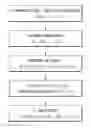
FIG. 1 a flowchart for illustrating a process of preparing a catalyst, used for an apparatus for generating hydrogen according to an embodiment of the present disclosure.
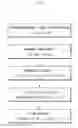
FIG. 2 is a block diagram showing an apparatus for generating hydrogen according to an embodiment of the present disclosure.
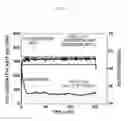
FIG. 3 is a graph showing a gas generation rate (hydrogen and carbon dioxide) and a reaction rate of the apparatus for generating hydrogen according to an embodiment of the present disclosure, based on time.
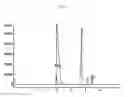
FIG. 4 is a graph showing analysis results of a generated gas of the apparatus for generating hydrogen according to an embodiment of the present disclosure.
BEST MODE
Hereinafter, embodiments of the present disclosure will be described in detail so that the present disclosure can be easily implemented by those having ordinary skill in the art.
The present disclosure provides an apparatus for generating hydrogen by dehydrogenation of a formic acid, comprising:
a reactor containing water and a heterogeneous catalyst;
a formic acid feeder configured to supply a formic acid into the reactor; and
a moisture remover configured to remove moisture generated at the reactor.
The apparatus for generating hydrogen according to the present disclosure may further comprise a freezer configured to condense the moisture removed by the moisture remover and supply the condensed moisture to the reactor. In the present disclosure, the freezer may be a cold trap bath, without being limited thereto.
FIG. 2 is a block diagram showing the apparatus for generating hydrogen according to the present disclosure. A syringe pump supplies a formic acid to the reactor at a constant feed rate. The formic acid reacts with a catalyst in the reactor to generate hydrogen and carbon dioxide. The supplied formic acid is mixed with water in the reactor, and the concentration of the formic acid in the reactor is maintained to be 10 wt % or below. The freezer condenses evaporating moisture. A generation rate of the generated gas is measured using a volume flowmeter.
In the present disclosure, the heterogeneous catalyst represents a catalyst whose phase is different from the formic acid during a dehydrogenation reaction. In other words, the formic acid used in the present disclosure may be liquid, and the heterogeneous catalyst may be a solid catalyst.
In the present disclosure, the heterogeneous catalyst may employ catalysts prepared using various metals or supports. In the present disclosure, the metal of the heterogeneous catalyst may be at least one selected from the group consisting of Pt, Rh, Ru, Au, Ag, Pd, Ni, Co, Cu, and Fe, and the support may be at least one selected from the group consisting of metal foam, carbon supports (carbon sheet, carbon felt, carbon black, carbon nanotube), and porous supports (Al2O3, ZrO2, TiO2, CeO2). A Pd/mpg-C3N4 (Pd/meso porous g-C3N4) catalyst may be used, without being limited thereto.
In the existing technique, when a hydrogen-generating reaction is performed, a homogeneous catalyst is used and thus is not easily separated. However, the heterogeneous catalyst used in the present disclosure at a hydrogen-generating reaction may be easily separated and reused.
In the present disclosure, the formic acid supplied to the reactor by the formic acid feeder may be an aqueous formic acid solution with a concentration of 70 to 99.9 wt %. If the concentration is less than 70 wt %, the energy density is lowered. If the concentration is greater than 99.9 wt %, costs may be increased due to the use of a high-purity formic acid.
In the present disclosure, the formic acid supplied to the reactor by the formic acid feeder is mixed with water at the reactor. At this time, the water and the formic acid supplied to the reactor by the formic acid feeder may be mixed at a weight ratio of water:formic acid=10 to 30:20 to 50.
In the present disclosure, when the formic acid feeder supplies the formic acid to the reactor, the formic acid may be supplied at a feed rate of 0.1 mL to 2.2 L per minute (a formic acid feed rate for supplying hydrogen to a 100 kW PEMFC). In other words, the formic acid may be applied as a hydrogen source of a commercial PEMFC (0 to 100 kW).
When the water and the formic acid supplied by the formic acid feeder are mixed at the reactor of the present disclosure, an aqueous formic acid solution with a concentration of 20 to 90 wt %, preferably 20 to 40 wt %, may be formed. If the concentration is less than 20 wt %, the energy density is lowered. If the concentration is greater than 90 wt %, the performance may deteriorate due to the accumulation of formic acid.
The formic acid solution formed by mixing the water and the formic acid supplied by the formic acid feeder at the reactor performs a dehydrogenation reaction at a temperature of 40 to 100° C., preferably 40 to 90° C., and hydrogen is generated through the dehydrogenation reaction. Since the formic acid is supplied at a constant feed rate and decomposed at the reactor, during the dehydrogenation reaction, the concentration of the formic acid in the reactor is maintained to be 10 wt % or below.
In addition, the present disclosure provides a method for generating hydrogen by dehydrogenation of a formic acid, comprising, adding a formic acid to a mixture of water and a heterogeneous catalyst to perform a dehydrogenation reaction; removing a moisture generated at the dehydrogenation reaction; and condensing the moisture removed in the moisture removing step and using the condensed moisture as water for the dehydrogenation reaction.
The method for generating hydrogen according to the present disclosure is a continuous-flow method, and the water generated at the formic acid dehydrogenation reaction may be injected into the reactor and used again for the dehydrogenation reaction.
The method and apparatus for generating hydrogen according to the present disclosure gives the following advantages.
(1) Use of water: Water easily available in the vicinity is used, different from an existing technique where amine is used as a reaction accelerator. Water generated through reactions at a fuel cell is condensed and used again to maintain a constant amount of water, different from an existing technique where a system is unstable due to the evaporation of amine.
(2) Use of a heterogeneous catalyst: A heterogeneous catalyst is used so that the catalyst may be easily separated and reused.
As described above, in an existing formic acid decomposition reaction, the activity is lowered as the concentration of the formic acid increases. However, in the method and apparatus for generating hydrogen according to the present disclosure, since the extent of a formic acid decomposition of 90% or above is exhibited at an early stage even though a high-concentration formic acid is used, an excellent energy density may be obtained. Therefore, the method and apparatus for generating hydrogen according to the present disclosure may be applied as an excellent hydrogen source for a mobile fuel cell system.
Hereinafter, the present disclosure will be described in more detail through examples. However, these examples are just for illustration of the present disclosure and not intended to limit the scope of the present disclosure.
EXAMPLE 1
A Pd/mpg-C3N4 catalyst was prepared according to the process depicted in FIG. 1. In other words, a hard template was prepared using cyanamide and silica solution, and a support was prepared by means of thermal treatment and removal of silica. After that, a catalyst was prepared using palladium nitrate, and reduction was performed using a 10% hydrogen gas.
6 g of the prepared Pd/mpg-C3N4 catalyst and 40 g of water were put into a reactor, and the internal temperature of the reactor was adjusted to 55° C. A formic acid with a concentration of 98% (57 g in total) was supplied at a feed rate of 0.22 mL per minute to generate a hydrogen gas (CO2+H2:0.28 L/min, H2:0.14 L/min). The generated hydrogen gas was in an amount capable of operating a 10 W PEMFC. Since the formic acid is supplied and decomposed at a constant feed rate, the concentration of the formic acid in the reactor is maintained to be 10 wt % or below.
TEST EXAMPLE 1
Decomposition characteristics of the formic acid were analyzed by measuring a hydrogen generation rate and a reaction rate based on time, during the hydrogen-generating reaction of Example 1. The analysis results are depicted in FIG. 3. As can be seen from FIG. 3, under the selected test conditions, hydrogen was stably generated, and 95.5% of formic acid was decomposed. In Example 1, 57 g of formic acid and 40 g of water were used, which gives the same effects as the case where an aqueous formic acid solution with a concentration of 58.8 wt % was used.
The analysis results of the decomposed gas are depicted in FIG. 4. As shown in FIG. 4, CO2 and H2 (N2 was detected due to a small amount of gas mixed thereto) were measured, and CO was not measured. Detection limit of GC for CO used in the analysis was 5 ppm or below. Since CO was not detected, it can be understood that hydrogen generated at the hydrogen generator may be directly supplied to the PEMFC without passing through any separate CO removing device.
In other words, by injecting a high-concentration formic acid into a reactor containing certain amounts of water and catalyst and then decomposing the formic acid, it was possible to enhance the energy density and the extent of a formic acid decomposition. Different from the existing technique where only 18% of formic acid is decomposed using about 45 wt % of formic acid solution, the apparatus for generating hydrogen according to the present disclosure decomposes 95.5% of formic acid by using 57 g of formic acid and 40 g of water (58 wt % of formic acid solution). Since the hydrogen generator of the present disclosure may ensure high energy density, this may be applied as a hydrogen source of a mobile fuel cell system.
Claims
1. An apparatus for generating hydrogen by dehydrogenation of a formic acid, comprising:
a reactor containing water and a heterogeneous catalyst;
a formic acid feeder configured to supply a formic acid into the reactor; and
a moisture remover configured to remove moisture generated at the reactor.
2. The apparatus for generating hydrogen according to claim 1, further comprising:
a freezer configured to condense the moisture removed by the moisture remover and supply the condensed moisture to the reactor.
3. The apparatus for generating hydrogen according to claim 1,
wherein the heterogeneous catalyst is a solid catalyst.
4. The apparatus for generating hydrogen according to claim 1,
wherein the formic acid supplied to the reactor by the formic acid feeder is an aqueous formic acid solution with a concentration of 70 to 99.9 wt %.
5. The apparatus for generating hydrogen according to claim 1,
wherein the formic acid feeder supplies the formic acid to the reactor at a feed rate of 0.1 mL to 2.2 L per minute.
6. The apparatus for generating hydrogen according to claim 1,
wherein the water and the formic acid supplied to the reactor by the formic acid feeder are mixed at the reactor to form an aqueous formic acid solution with a concentration of 20 to 90 wt %.
7. A method for generating hydrogen by dehydrogenation of a formic acid, comprising,
adding a formic acid to a mixture of water and a heterogeneous catalyst to perform a dehydrogenation reaction.
8. The method for generating hydrogen according to claim 7, further comprising:
removing a moisture generated at the dehydrogenation reaction.
9. The method for generating hydrogen according to claim 8, further comprising:
condensing the moisture removed in the moisture removing step and using the condensed moisture as water for the dehydrogenation reaction.
10. The method for generating hydrogen according to claim 7,
wherein the formic acid is an aqueous formic acid solution with a concentration of 70 to 99.9 wt %.
11. The method for generating hydrogen according to claim 7,
wherein the formic acid is added at a feed rate of 0.1 mL to 2.2 L per minute.
12. The method for generating hydrogen according to claim 7,
wherein the water and the formic acid are mixed to form an aqueous formic acid solution with a concentration of 20 to 90 wt %.
Images & Drawings included:

Sources:
- United States Patent and Trademark Office - verify current appl. status at the USPTO↗
Similar patent applications:
Recent applications in this class:
- » 20250206602 2025-06-26
SYSTEM AND METHOD FOR PRODUCING HYDROGEN - » 20250042729 2025-02-06
A Method for Producing Hydrogen Containing Gas - » 20240383747 2024-11-21
GASEOUS FUEL PRODUCTION SYSTEM - » 20240367967 2024-11-07
HIGH-PRESSURE HYDROGEN SUPPLY SYSTEM AND METHOD THEREOF - » 20240351867 2024-10-24
METHOD FOR PRODUCING HYDROGEN - » 20240217814 2024-07-04
PROCESS AND SYSTEM FOR PROVIDING HYDROGEN GAS - » 20240076183 2024-03-07
METHOD AND SYSTEM FOR CONTINUOUS PRODUCTION OF HYDROGEN - » 20230141528 2023-05-11
IMPROVED SYSTEM AND METHOD FOR STORING AND RE-RELEASING DIHYDROGEN - » 20230098199 2023-03-30
METHOD OF PRODUCING HYDROGEN - » 20220411263 2022-12-29
SYSTEM AND METHOD FOR HYDROGEN PRODUCTION BY DEHYDROGENATION OF FORMIC ACID
Recent applications for this Assignee:
- » 20250294796 2025-09-18
GATE ALL AROUND FIELD EFFECT TRANSISTOR HAVING MULTIPLE GATE STACK STRUCTURE AND FABRICATION METHOD THEREFOR - » 20250288978 2025-09-18
MULTI-ELEMENT CATALYST INCLUDING INTERMETALLIC ALLOY NANOPARTICLES AND METHOD FOR PREPARING THE SAME - » 20250286083 2025-09-11
METHOD OF MANUFACTURING CATALYST AND ELECTRODE USING SUPERCRITICAL FLUID - » 20250281415 2025-09-11
EXOSOMES EXPRESSING RSVF AND USE THEREOF - » 20250280550 2025-09-04
CAPACITOR AND METHOD FOR MANUFACTURING THE SAME - » 20250278659 2025-09-04
SYSTEM FOR CALCULATING QUANTUM CHEMISTRY BASED ON QUDIT - » 20250250454 2025-08-07
MXene SURFACE-MODIFIED WITH METAL ALKOXIDE AND PREPARATION METHOD THEREOF - » 20250250324 2025-08-07
NOVEL FUSION PROTEIN FOR ELIMINATING NEURODEGENERATIVE DISEASE-CAUSING FACTOR AND USE THEREOF - » 20250246640 2025-07-31
ELECTRODE COMPRISING CERIA NANOTUBE ANTIOXIDANT, AND MEMBRANE-ELECTRODE ASSEMBLY AND FUEL CELL COMPRISING THE SAME - » 20250239968 2025-07-24
THREE-DIMENSIONAL SOLAR POWER GENERATION SYSTEM FOR SMART FARMS