Compositions and methods for extending storage time of competent cells at -20° C
US20170198250A1
2017-07-13
15/321,319
2015-07-15
✅ Patent granted
US 9,963,672 B2
2018-05-08
WO; PCT/US2015/040508; 20150715
WO; WO2016/014307; 20160128
James S Ketter
New England Biolabs, Inc | Harriet M. Strimpel
2035-07-15
Abstract:
Compositions and methods are provided for storing prokaryotic cells including competent prokaryotic cells at −20° C. in a buffer so that the cells are suitable for transformation at 0° C. with a foreign molecule.
Assignee:
- NEW ENGLAND BIOLABS, INC. 293 🇺🇸 Ipswich, MA, United States
Applicant:
Interested in similar patents?
Get notified when new applications in this technology area are published.
Classification:
C12N1/20 » CPC further
Microorganisms, e.g. protozoa; Compositions thereof ; Processes of propagating, maintaining or preserving microorganisms or compositions thereof; Processes of preparing or isolating a composition containing a microorganism; Culture media therefor Bacteria; Culture media therefor
C12N1/04 » CPC main
Microorganisms, e.g. protozoa; Compositions thereof ; Processes of propagating, maintaining or preserving microorganisms or compositions thereof; Processes of preparing or isolating a composition containing a microorganism; Culture media therefor Preserving or maintaining viable microorganisms
Description
BACKGROUND
Competent cells are available for cloning vectors of interest for molecular biology research. A variety of competent cells are provided commercially for various types of laboratory procedures such as routine cloning, protein expression, and library production. Bacterial cells are rendered competent in the presence of high salt and are then washed and resuspended in a high salt solution for storage at −80° C. Storage at −80° C. is at best a costly inconvenience.
SUMMARY
In general, a method is provided that includes removing salts from prokaryotic cells optionally induced to competency by a first salt containing buffer; adding a storage buffer comprising glucose or an oligosaccharide containing glucose; storing cells at −20° C. for a period of time; and adding a salt containing buffer to the cells at a time proximate to transformation of the cells with a foreign molecule.
In one aspect, the foreign molecule is a DNA, an RNA or a protein. In another aspect, the prokaryotic cells are E.coli. In another aspect, the storage buffer further comprises glycerol and may further include DMSO. In one aspect, where glucose or an oligosaccharide is added to the storage buffer, its concentration is within a range of 10 mM-500 mM. In one aspect the period of time may be greater than 5 days.
In general, a composition is provided having stabilized competent bacterial cells in a buffer including a monosaccharide and/or an oligosaccharide such as for example trehalose or sucrose or glucose.
In various aspects, the concentration of the one or more monosaccharides or oligosaccharides may be the range of 50 mM-500 mM. The competent bacterial cells may have a concentration of OD600=2-500.
In general, a method is provided that includes storing a composition described above at about −20° C. for at least 5 days; adding a salt containing buffer to the cells in the composition at a time proximate to transformation of the cells with a foreign molecule; and transforming the cells.
DESCRIPTION OF THE FIGURES
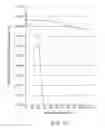
FIG. 1A-1B shows E.coli cells which were stored at 0, 28, 42, 56, 77 and 105 days at −20° C. in a storage buffer containing oligosaccharides and no salt without any significant loss of transformation efficiency compared with a control sample stored at −20° C. in the standard competent cell storage buffer containing salt used for routine storage at −80° C.
FIG. 1A shows the effect of storage at −20° C. of competent cells
-
- (•••) Competent E.coli cells which were previously stored at −80° C. with substantially diminished activity after being stored at −20° C. for 29 days. At the end of the selected time period, the sample was moved to 0° C. and transformed with pUC19.
- (—) Competent E.coli which was made by removing the buffer used to prepare cells at time zero followed by storage of the cells in a novel buffer containing 200 mM trehalose, as well as standard DMSO and glycerol and lacking salt did not lose significant activity after being stored up to 105 days at −20° C.
FIG. 1B shows a comparison of competency of E.coli cells which were stored at −20° C. in the novel storage buffer formulation that lacked salt and contained various concentrations of different oligosaccharides in addition to glycerol and DMSO in a standard buffer over various time periods—1, 28,42, 56, 77 and 105 days showing remarkable stability.
At the end of the selected time period (0, 28, 42, 56, 77 and 105 days), the sample was moved to 0° C. and transformed with pUC19. The data shows that cells could be stored at −20° C. for as long as 105 days with little or no change in transformation efficiency. Several examples of oligosaccharides were shown to have similar preservative activities. A=trehalose at 200 mM, B=sucrose at 250 mM, C=sucrose at 200 mM and D=sucrose at 150 mM. Data is provided for transformation efficiency after storage.
DESCRIPTION OF EMBODIMENTS
The term “competent” bacteria refers to bacteria having altered cell walls so that DNA can pass through more easily. Generally competent cells are fragile and may lose viability rapidly after thawing from −80° C. so that they are no longer available to take up DNA.
The term “stable” or “stabilized” refers to a preparation of bacterial cells that are capable of retaining a transformation efficiency of at least 1.00E+08 cfu/ug pUC19 when stored for at least 5 days at −20° C.
The term “−20° C.” is intended to refer to a temperature suitable for storage that is preferable at −20° C. but may vary according to various factors so that the temperature may represent a range of −15° C. to −30° C.
In embodiments of the invention, bacterial cells can optionally be rendered competent when prepared under standard conditions in a salt containing buffer using standard protocols for preparing competent cells after which the salt is preferably removed (See for example, Hanahan, et al., Methods in Enzymology, 204:63 (1991)). The competent cells can then be stored in the novel storage buffer described herein at −20° C. and after thawing can remain competent for an extended period of time when a salt containing buffer is added to the thawed cells. Such competent bacterial cells are suitable for transformation by biological macromolecules such as DNA, RNA and protein. The examples provided herein measure transformation efficiency with pUC19 DNA.
Competent bacterial cells (for example those tested in FIG. 1B), can be washed (for example, with water) to remove salt which may optionally be utilized prior to placing cells at −20° C. in a storage buffer containing glycerol, DMSO and sugars. Glycerol may be used at a concentration of 1%-50%, and DMSO may be used at a concentration of 1%-25%. By way of an example, FIG. 1A shows loss of competency of cells stored in a conventional storage buffer at −20° C. where the conventional storage buffer includes 10% glycerol and 7% DMSO suitable for standard conditions of storage at −80° C. In contrast, FIG. 1B shows sustained levels of competency at −20° C. in the novel storage buffer which contains 20% glycerol, 14% DMSO, one or more sugars and optionally ethylene glycol and/or propylene glycol. In FIG. 1B, the assay for competency included moving the cells to 0° C. and adding an equal volume of a salt buffer to the storage buffer. The cells were then transformed with biological macromolecules.
The sugars in the storage buffer comprise one or more glucose monosaccharides or oligosaccharides comprising glucose and having a size of 2-10 monosaccharides. In one embodiment , the monosaccharide or oligosaccharide in an amount of 10 mM-500 mM, for example, 50 mM-500 mM for example 50 mM-200 mM of the monosaccharide or oligosaccharide was added to cells having a concentration in the range of OD600=1-500, for example, OD600=2-250, OD600=3-100, OD600=4-75, or OD600=5-50. It should be understood by a person of ordinary skill in the art that a monosaccharide or oligosaccharide for use herein might include something other than glucose such as xylose or ribose. While not intended to be limiting, FIG. 1B shows the advantageous effect of a single concentration of a disaccharide, trehelose that is composed of two alpha glucose units, and sucrose at 3 different concentrations. In addition to the above, ethylene glycol and/or propylene glycol to the storage buffer may be added at concentrations in the range of 0.1 mM-1000 mM.
Storage preferably occurs in the absence of salts of the amount and type used to generate the competent cells.
The storage conditions used herein are suitable for any competent E.coli strain including E.coli K-12, E.coli B, E.coli W and E.coli C.
Cells stored in the manner described herein were found to be capable of retaining competency for at least 5, 10, 15, 20, 25, 30, 35, 40, 42 days.
Claims
1. A method; comprising:
optionally inducing prokaryotic cells to competency in a buffer containing salt;
adding a storage buffer comprising glucose or an oligosaccharide containing glucose;
storing cells at −20° C. for a period of time; and
adding a salt containing buffer to the cells at a time proximate and prior to transformation of the cells with a foreign molecule.
2. A method according to claim 1, wherein the foreign molecule is a DNA, an RNA or a protein.
3. A method according to claim 1, wherein the prokaryotic cells are E.coli.
4. A method according to claim 1, wherein the storage buffer further comprises glycerol.
5. A method according to claim 1, wherein the storage buffer further comprises DMSO.
6. A method according to claim 1, wherein the glucose or the oligosaccharide comprising glucose is present within a range of 10 mM-500 mM.
7. A method according to claim 1, wherein the period of time is greater than 5 days.
8. A composition, comprising: stabilized competent bacterial cells in a buffer comprising a monosaccharide or an oligosaccharide.
9. A composition, according to claim 8, wherein the oligosaccharide is trehalose or sucrose.
10. A composition according to claim 8, wherein the monosaccharide is glucose.
11. A composition according to claim 9, wherein the concentration of monosaccharide or oligosaccharide is in the range of 50 mM-500 mM.
12. A composition according to claim 9, wherein the competent bacterial cells have a concentration of OD600=2-500.
13. A method comprising:
storing a composition according to claim 8 at −20° C. for at least 5 days; and
adding the salt containing buffer to the cells in the composition at a time proximate to transformation of the cells with a foreign molecule; and
transforming the cells.
14. A kit comprising a storage buffer in a first reaction tube wherein the storage buffer comprises glucose or an oligosaccharide containing glucose and optionally glycerol and/or DMSO; and a salt solution in a second reaction tube capable of inducing competence in thawed cell
Images & Drawings included:

Sources:
- United States Patent and Trademark Office - verify current appl. status at the USPTO↗
Recent applications in this class:
- » 20250290028 2025-09-18
DEVICES, SYSTEMS, AND METHODS FOR REHYDRATION OF MICROORGANISMS TO ENHANCE AGRICULTURAL YIELDS - » 20250207081 2025-06-26
COATED DRIED ACTIVE YEASTS AND FOOD PRODUCTS CONTAINING THE SAME - » 20250188404 2025-06-12
CULTURE CAPSULE AND METHOD FOR RESUSCITATING BACTERIA IN VIABLE BUT NON-CULTURABLE (VBNC) STATE - » 20250179418 2025-06-05
UNIVERSAL MICROBIAL SAMPLE TRANSPORT MEDIUM FOR GENOMIC AND METAGENOMIC STUDIES - » 20250019639 2025-01-16
FAT AND WAX MICROENCAPSULATED AMBIENT STABLE BACTERIA AND PROBIOTICS - » 20250011710 2025-01-09
DRIED MICROORGANISM WITH EXCIPIENT - » 20250011709 2025-01-09
COMPOSITIONS FOR INCREASED STABITLITY OF BACTERIA - » 20240425802 2024-12-26
Lyophilizing Honey with a Buffering Agent - » 20240425801 2024-12-26
COMPOSITION FOR PROTECTING A MICROORGANISM IN AN ACIDIC ENVIRONMENT - » 20240409876 2024-12-12
LIQUID COMPOSITION OF GRAM-NEGATIVE BACTERIA
Recent applications for this Assignee:
- » 20250236853 2025-07-24
Reverse Transcriptases and Related Methods - » 20250197923 2025-06-19
DNA Polymerases and Related Methods - » 20250179568 2025-06-05
Target Enrichment - » 20250179549 2025-06-05
Methods of Higher Fidelity RNA Synthesis - » 20250115953 2025-04-10
Methylcytosine-Selective Deaminases and Uses Thereof - » 20250075193 2025-03-06
FCE MRNA CAPPING ENZYME COMPOSITIONS, METHODS AND KITS - » 20250066763 2025-02-27
Application of Immobilized Enzymes for Nanopore Library Construction - » 20250027064 2025-01-23
Polynucleotide Error Recognition Methods and Compositions - » 20240383939 2024-11-21
Enzymatic RNA Capping Method - » 20240376531 2024-11-14
Target Initiation and Amplification of Long DNA with Nuclease and Replisome Enzymes