Antifreeze compositions
US20170203136A1
2017-07-20
15/384,469
2016-12-20
✅ Patent granted
US 11,559,715 B2
2023-01-24
-
-
Andrew J. Oyer
Marshall & Melhorn, LLC
2038-10-29
Abstract:
Compositions of matter that are antifreeze composition, coolants, heat transfer fluids, and de-icing fluids based on the use of coalescent efficient glycol ethers.
Inventors:
- Robert L. McKellar 12 🇺🇸 Midland, MI, United States
- John D. Blizzard 4 🇺🇸 Midland, MI, United States
- JOAN MCMAHON 5 🇺🇸 MIDLAND, MI, United States
Assignee:
- QUADSIL, INC. 5 🇺🇸 Midland, MI, United States
Applicant:
Interested in similar patents?
Get notified when new applications in this technology area are published.
Classification:
A62C31/02 » CPC further
Delivery of fire-extinguishing material Nozzles specially adapted for fire-extinguishing
C09K5/20 » CPC further
Heat-transfer, heat-exchange or heat-storage materials, e.g. refrigerants; Materials for the production of heat or cold by chemical reactions other than by combustion Antifreeze additives therefor, e.g. for radiator liquids
A62D1/0042 » CPC main
Fire-extinguishing compositions; Use of chemical substances in extinguishing fires; Liquid extinguishing substances; Aqueous solutions "Wet" water, i.e. containing surfactant
A62D1/00 IPC
Fire-extinguishing compositions; Use of chemical substances in extinguishing fires
Description
This application is a utility application based on U.S. Provisional patent application Ser. No. 62/279,073, filed Jan. 15, 2016, from which priority is claimed.
BACKGROUND OF THE INVENTION
This invention deals with compositions of matter that are antifreeze compositions, coolants, heat transfer fluids, and de-icing fluids. For purposes of discussion in this specification, all of the afore-mentioned materials are referred-to as “antifreeze” compositions.
NFPA 13, Standard for the Installation of Sprinkler Systems, has included guidance on the use of antifreeze compositions in fire sprinkler systems. Antifreeze compositions may be used in fire sprinkler systems where the piping system, or portions of the piping system, may be subjected to freezing temperatures.
The term “antifreeze” refers to a composition which reduces the freezing point of an aqueous solution, or is an aqueous solution with a reduced freezing point with respect to water, for example, a composition comprising a freezing point depressant.
The term “coolant” refers to a category or liquid antifreeze compositions which have properties that allow an engine to function effectively without freezing, boiling, or corrosion. The performance of an engine coolant must meet or exceed standards set by the American Society for Testing and Materials (ASTM) and the Society of Automotive Engineers (SAE).
The term “heat transfer fluid” refers to a fluid which flows through a system in order to prevent it from overheating and transferring the heat produced within the system to other systems or devices that can utilize or dissipate the heat.
The term “de-icing fluid” refers to a fluid which makes or keeps a system, a device, or a part of a device free of ice, or a fluid that melts ice.
The term “ultra-pure water” as used herein refers to the water obtained by the process as set forth in U.S. patent Publication 2010/0209360, published Aug. 19, 2010 entitled “Method for making a Gas from an Aqueous Fluid, Product of the Method and Apparatus Therefor.
The term “non-flammable” as used herein refers to the standard for flammability set forth in UL Test Standard 2901.
“Coalescence” for purposes of this invention means similar or like properties as a group.
These compositions (hereinafter “antifreeze compositions”) have multiple uses, as they can be used to prevent freezing of certain systems, but can also be used as additives for certain applications in which heat control is an issue.
It is known to use antifreeze compositions in heat exchanger systems, de-icing applications, for example, on airplane wings and fuselage, radiators in automobiles, automobile and truck batteries and other vehicles, such as armored tanks, and the like.
Currently the only antifreeze which is approved for use in CPVC fore sprinkler piping by NFPA 13 is glycerin. Ethylene glycol and propylene glycol have been used for hard piped sprinkler systems. All of these antifreeze materials are flammable. Flammability and a variety of other issues have created a need for a non-flammable antifreeze materials for sprinkler piping. A variety of “compounds” and additives have been evaluated in the prior art without any success.
In such applications, the antifreeze composition must be contained, and the materials of the containment system must come in contact with the antifreeze compositions. Such systems are manufactured from metals, alloys of metals and other components forming the different parts of the systems.
Thus, one of the major issues in using antifreeze compositions is the prevention of corrosion in such materials. Another issue is flammability of the antifreeze compositions, especially when such antifreeze compositions are used in fire sprinkler systems.
BRIEF DESCRIPTION OF THE DRAWINGS
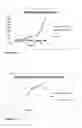
FIG. 1A is a graph showing conductivity end freezing points of aqueous solutions without potassium formate. FIG. 1B is a graph of various properties of aqueous solutions without potassium formate.
FIG. 1C is a graph of conductivity and freezing point of aqueous solutions with potassium formate.
FIG. 1D is a graph of various properties of aqueous solutions with potassium formate.
FIG. 1E is a graph of freezing point comparison with and without potassium formate.
FIG. 2A is a comparison of samples 130, 131, and 132, initial properties compared to commercial antifreeze.
FIG. 2B is a comparison of sample 130, 131, and 132, at 30 days at high ambient temperature stability 70° C. for 30 days.
FIG. 2C is a comparison of sample 130, 131, and 132, at 90 days at high ambient temperature stability 70° C. for 90 days.
FIG. 2D is a comparison of sample 130, 131, and 132, at 40 cycles high ambient temperature stability 66° C.
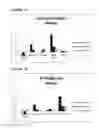
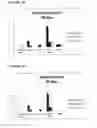
FIG. 3A is a graph of corrosion rate at 30 days.
FIG. 3B is a graph of weight loss rate at 30 days.
FIG. 3C is a graph of corrosion rate for 60 days.
FIG. 3D is a graph of weight loss for 60 days.
FIG. 3E is a graph of corrosion for 90 days.
FIG. 3F is a graph of weight loss for 90 days.
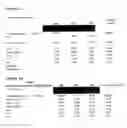
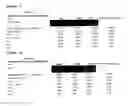
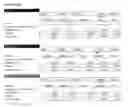
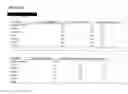
FIG. 4A is a table showing corrosion rate and weight loss data at 30 days
FIG. 4B is a table showing corrosion rate and weight loss date at 60 days
FIG. 4C is a table showing corrosion rate weight loss data at 90 days
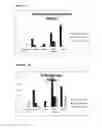
FIG. 5A is a graph showing % volume changes for formulation 130 and various rubbers and plastics.
FIG. 5B is a graph showing % weight change for formulation 130 and various rubbers and plastics.
FIG. 5C is a graph showing % volume change for formulation 131 and various rubbers and plastics.
FIG. 5D is a graph showing % weight change for formulation 131 and various rubbers and plastics.
FIG. 5E is a graph showing % volume change for formulation 132 and various rubbers and plastics.
FIG. 5F is a graph showing % weight change for formulation 132 and various rubbers and plastics.
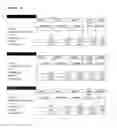
FIG. 6A is a table showing data for formulation 130 and various rubbers and plastics.
FIG. 6B is a table showing data for formulation 131 and various rubbers and plastics.
FIG. 6C is a table showing data for formulation 132 and various rubbers and plastics.
DETAILED DESCRIPTION OF THE INVENTION
It has now been discovered that antifreeze compositions can be formulated that are essentially low cost, non-flammable, have very low freezing points, and are essentially non-corrosive to metal components of systems used for handling such antifreeze compositions.
What is disclosed herein are non-flammable antifreeze compositions comprising the incipient materials, water; a coalescent efficient glycol ether selected from a group of materials having the general formula:
RO(CH2CH2O)yR′ or,
In the first formula, RO is selected from a group consisting of an alkoxy group of 1 to 6 carbon atoms or phenoxy; R′ is H, or —C(O)CH3, and y has a value of 1 to 6. In the second formula, RO is an alkoxy group of 1 to 4 carbon atoms, the phenoxy group or acetoxy group; is R′ or —C (O)CH3, and y has a value of 1 to 3, wherein the boiling point of the coalescent efficient glycol ether is 190° C. or greater at 760 mm Hg.
A third component is a non-flammable compound selected from the group consisting of sodium formate, potassium formate, lithium formate, rubidium formate, cesium formate, beryllium formate, magnesium formate, calcium formate, strontium formate, barium formate, and mixtures of these components.
In addition, it is contemplated within the scope of this invention to use one or more additional adjuvants and materials in the formulation. Such materials comprise such materials as waxes, silicate stabilizers, thickeners, dyes, and the like. It is also contemplated within the scope of this invention to use mixtures of these materials with the basic formulation.
Another embodiment is the use of the basic formula set forth Supra in conjunction with other sources of carbinol, such as sugar, glycerin, polyethylene glycol, polypropylene glycol, diethylene glycol, and, salts such as sodium chloride and sea salt. Also contemplated within the scope of this invention are mixtures of these materials.
DETAILED DESCRIPTION OF THE DISCLOSURE
Thus what is disclosed and claimed herein are non-flammable antifreeze compositions based on water. the amount of each of the components here is based on the total weight of the components, and the amount of water that can be used herein is 0.1 to 95% weight percent. A preferred amount of water is from about 15 weight percent to about 75 weight percent and the most preferred embodiments is water at 40 weight percent to 65 weight percent.
A second component of the antifreeze composition is a group of materials that are coalescent efficient glycol ethers having the general formula RO(CH2CH2O)yR′ or,
wherein in the first formula, RO is selected from a group consisting of an alkoxy group of 1 to 6 carbon atoms or phenoxy; R′ is H, or —C(O)CH3, and y has a value of 1 to 6, and in the second formula, RO is an alkoxy group of 1 to 4 carbon atoms, the phenoxy group or acetoxy group; R′ is H or —C(O)CH3, and y has a value of 1 to 3.
These materials can be used singularly or combined in two or more combinations. They are used in this composition at from 0.1 to 85 weight percent, based on the total weight of the composition. Preferred is from 20 to 60 weight percent and most preferred is from 40 to 55 weight percent based on the total weight of the final composition.
A third component of the antifreeze composition is a non-flammable compound selected from group consisting of sodium formate, rubidium formate, cesium formate, beryllium formate, magnesium formate, calcium formate, strontium formate, barium formate, potassium formate, lithium formate, and, mixtures of these compounds. These compositions are used in the antifreeze compositions at from 0.1 to 85 weight percent of the total composition. Preferred is a weight of from 0.1 weight percent to 70 weight percent and most preferred is the use at 0.1 to 50 weight percent based on the weight of the final composition.
In addition, it is contemplated within the scope of this invention to use corrosion inhibitors, such as, for example, sodium silicate, potassium silicate, and sodium trihydroxysilylpropyl methylphosphonate. The corrosion inhibitors are used at 0.1 to 10 weight percent based on the weight of the total composition. Preferred is from about 3 percent to about 8 percent and most preferred is from about 5 percent to 7 percent by weight based on the total weight of the final composition.
Other adjuvants include waxes, such as carnauba, paraffin, polyethylene wax or polypropylene wax, PTFE, microcrystalline waxes and blends of waxes which are used primarily at about 0.2 weight percent to about 10.0 weight percent based on the total weight of the final composition. Such waxes can be obtained from a variety of commercial sources such as Michelman, INC. Cincinnati, Ohio.
In addition, there can be used thickeners or rheology modifiers, for example for use on de-iceing airplanes wings. Any conventional thickener can be used. Cellulosics such as CMC, HMC, HPMC, and others, that are chemically substituted cellulose macromolecules, polyvinyl alcohol, metal oxides such as silica, clays: attapulgite which also disperses suspensions, bentonite (both flocculating and non-flocculating), and other montmorillonite clays. Preferred for this invention is carboxymethylcellulose which is used primarily at about 0.2 weight percent to about 5.0 weight percent based on the total weight of the final composition.
As indicated Supra, ultra-pure water can be used in this invention and it can be used is conjunction with other water, such as well water, city water, river, lake and pond water.
When the coalescent efficient glycol ethers are mixed with the other carbinol materials, the ratio of the other carbinol materials to the coalescent efficient glycol ethers is in the range of from 0.1:99.9 to 25:75. The salts can be managed in the same manner.
The compositions of the invention are easily prepared by simple mixing of the ingredients at room temperature and, the compositions can be stored indefinitely at room temperature.
The following examples illustrate the disclosure.
Examples
In accordance with UL 2901: Outline of Investigation for Antifreeze Solutions for Use in Fire Sprinkler Systems initial testing on potential solutions includes Pour Point—ASTM D97, Standard Test Method for Pour Point of Petroleum Products Viscosity—ASTM D2983, Standard Test Method for Low-Temperature Viscosity of Lubricants Measured by Brookfield Viscometer; Specific Gravity—ASTM D1429, Standard Test Methods for Specific Gravity of Water and Brine; pH—ASTM D1293, Standard Test Methods for pH of Water; Freeze Point—ASTM D6660, Standard Test Method for Freezing Point of Aqueous Ethylene Glycol Base Engine Coolants by Automatic Phase Transition Method or equivalent differential scanning calorimetric methods. All of these methods were used in acquiring the data in the following examples.
After these required tests are met and quantified, the following further testing is required: High Ambient Temperature Stability; Temperature Cycling Stability; Electrical Conductivity; Corrosion Rate; Exposure to Elastomeric Materials; Compatibility with Polymeric Materials, and Exposure to Fire.
In these examples, all data is in grams; Temperatures are measured in Centigrade (degrees C); Freeze Point at −20° C. was determined by placing samples in a refrigerated chamber for 24 hours at a constant −20° C. After 24 hours the sample was evaluated for flow; pH was tested using the Standard Methods for examination of water and wastewater standard 4500-H.
Exotherm or endotherm was measured using a NIST certified thermometers; Viscosity was tested using ASTM D2983, Standard Test Method for Low-Temperature Viscosity of Lubricants Measured by Brookfield Viscometer Model DV-II; Spindle 2 @100 rpm or Ubbleode tubes for low viscosity measurements.
Freeze Point at −40° C. (or lower) was determined by placing samples in a bath of Dow Corning® 10 cst 200 fluid chilled to temperature using either a bath of dry ice in acetone or a Neslab Bath Cooler Model PBC 2-II; Pour point was determined by placing samples in a bath of Dow Corning® 10 cst 200 fluid™ chilled to temperature using either a bath of dry ice in acetone or a Neslab Bath Cooler Model PBC 2-II and observing the temperature at which the sample was no longer fluid.
Corrosion rate was determined by placing pre-weighed samples into the test solution, aged at 49° C., and re-weighed at the prescribed times; Exposure to Elastomeric Materials was determined by placing pre-weighed samples into the test solution, aged at 70° C., and reweighed at the prescribed times, and, Unless specified otherwise all raw materials were purchased form Aldrich Chemical Company.
Tables 1 and 2 represent the development work done to arrive at the lowest freezing point achievable. This effort centered on dissociative salts trying to achieve a freezing point of at least −40° C.
The compositions of this invention can have conductivity properties that can be manipulated at will as will be obvious from the data infra. For example, city water, in the inventor's laboratory, has a conductivity of 300 μS. A requirement for the materials used for antifreeze for outdoor file suppression systems is 1000 μS or less. Table 3 sets forth conductivity for the various components and combinations useful in this invention. H+H2O is ultra-pure water. “Water” indicates tap water.
| TABLE 1 | |
| sample No. |
| A | B | C | D | E | F | G | |
| Water | 100 | 100 | 100 | 100 | 100 | 100 | 100 |
| KC2H3O2 | 269 | 201 | 135 | 70 | 269 | ||
| NaC2H3O2 | 94.9 | ||||||
| Glycerol, | 100 | 25 | 50 | 75 | 100 | ||
| pure | |||||||
| FPt, −20 C. | OK | SOLID | OK | OK | OK | OK | OK |
| initial pH | 8.5 | 7 | 4.5 | ||||
| final pH | 7 | 7 | 7 | 7 | 7 | 7 | 7 |
| Exotherm, @ | |||||||
| mix | |||||||
| Init temp | 23 | 23 | 23 | ||||
| final temp | 9 | 20 | 23 | ||||
| pour point | , −52 C. | , −52 C. | |||||
| FPt, −40 C. | solid | solid | OK | OK | |||
| , −48 C. | OK | OK | |||||
| TABLE 2 | |
| Sample No. |
| H | K | L | M | O | P | |
| Water | 100 | 100 | 100 | 100 | 100 | |
| KC2H3O2 | 269 | 33.7 | ||||
| Glycerol, | 100 | 50 | 10 | 100 | ||
| raw | ||||||
| S.G. | 1.55 | 1.2 | 1.25 | |||
| FPt, −20 C. | OK | Slice | 2 | solid | solid | v |
| phase | thick | |||||
| initial pH | 9 | 7.5 | 4.5 | 5 | ||
| final pH | 8 | 7 | 5 | 5 | 4.53 | |
| Exotherm, @ | ||||||
| mix | ||||||
| Init temp | 22 | 22 | 22 | 22 | ||
| final temp | 11 | 21 | 22 | 22 | ||
| Viscosity, | 32 | 5 | 20 | 3 | ||
| cps | ||||||
| Sp 2 @ 100 rpm | ||||||
| Freezing | , −40 C. | |||||
| point | ||||||
| TABLE 3 | |||||
| Sample | 9 | 10 | 11 | 12 | 13 |
| H + H2O | 100 | 50 | 50 | ||
| Glycerin | 50 | ||||
| DPM | 100 | 50 | |||
| TPNB | 100 | ||||
| Conductivity uS | 1.8 | 3.6 | 4.5 | 0.08 | 1 |
| FPt, −20 C. | solid | OK | <−75 | −83 | OK |
| Flash Pt | 126 | 75 | |||
| Density | 0.93 | 0.95 | |||
| TABLE 4 | |||||
| Sample | I | J | K | L | |
| Water | 100 | 90 | 45 | 49 | |
| KC2H3O2 | 135 | 10 | 5 | 1 | |
| Glycerol | 50 | 50 | |||
| Wt. % KCHO | 57 | 11 | 5 | 3.6 | |
| Conductivity, uS | 76000 | 14400 | 8500 | 3600 | |
Table 4 contains data regarding the level of Potassium Formate as it relates to the conductivity vs concentration in solution. Tables 5 and 6 illustrate conductivity as it relates to three lower levels of Potassium Formate, no Potassium Formate, and the addition of specialty fluids to lower the freezing point of the formulation. The formulations in Table 7 contain date regarding the levels of water in the formulation and its effect on conductivity and pH.
| TABLE 5 | ||||
| Sample | 15 | 16 | 17 | |
| H + H2O | 50 | 50 | 50 | |
| DPM | 47.75 | 47.75 | 47.75 | |
| TPNB | 2.25 | 2.25 | 2.25 | |
| KCHO | 1 | 0.6 | 0.2 | |
| % H2O | 50 | 50 | 50 | |
| Conductivity uS | 3600 | 1955 | 785 | |
| TABLE 6 | |
| Sample |
| 15 | 16 | 17 | 14 | 18 | 19 | |
| H + H2O | 50 | 50 | 50 | 50 | 50 | 50 |
| DPM | 47.75 | 47.75 | 47.75 | 47.75 | 40 | 30 |
| TPNB | 2.25 | 2.25 | 2.25 | 2.25 | 10 | 20 |
| KCHO | 1 | 0.6 | 0.2 | 0 | ||
| Conductivity | 3600 | 1955 | 785 | 2.5 | 5.4 | 2 |
| uS | phase | |||||
| FPt, −20 C. | OK | OK | OK | OK | OK | |
| TABLE 7 | |
| Sample |
| 20 | 21 | 22 | 14 | 23 | 24 | 25 | |
| H + H2O | 450 | 150 | 100 | 50 | 25 | 10 | 5 |
| DPM | 47.75 | 47.75 | 47.75 | 47.75 | 47.75 | 47.75 | 47.75 |
| TPNB | 2.25 | 2.25 | 2.25 | 2.25 | 2.25 | 2.25 | 2.25 |
| % H2O | 90 | 75 | 66 | 50 | 36 | 16 | 9 |
| Conductivity | 13.9 | 8.01 | 5.07 | 2.5 | 6.2 | 5.81 | 5.51 |
| uS | |||||||
| pH | 7.57 | 7.3 | 7.02 | 6.6 | 6.2 | 5.8 | 5.5 |
Tables 8 and 9 are miscellaneous salt additives as they relate to freezing point while Table 10 shows the optimum formulations that have resulted in low conductivity and low freezing point depression. Additionally an added corrosion inhibitor to further improve the formulation was incorporated, i. e. CH3COOK and/or CH3COONa.
| TABLE 8 | ||||
| Sample | 20 | 21 | 22 | |
| Water | 100 | 100 | 100 | |
| CH3COOK | 200 | |||
| CH3COONa | 125 | |||
| NaCl | 35 | |||
| ppt | ||||
| FPt, −20 C. | OK | solid | some ice | |
| initial pH | 9 | 9 | 6.8 | |
| final pH | 9 | 8 | 6.8 | |
| Exotherm, @ mix | ||||
| Init temp | 21 | 21 | 21 | |
| final temp | 26 | 32 | 19 | |
| TABLE 9 | |
| Sample |
| a-13 | a-14 | a-20 | a-21 | a-3 | a-4 | a-7 | |
| Water | 100 | 100 | 100 | 100 | 100 | 100 | |
| KC2H3O2 | 269 | 135 | 269 | 33.7 | |||
| prop glycol | 100 | 100 | 50 | ||||
| Na Lactate | 100 | 100 | |||||
| Na Silicate | 26.9 | 13.5 | |||||
| FPt, −20 C. | Solid | Solid | OK | OK | OK | OK | OK |
| TABLE 10 | ||||
| Sample | 29 | 30 | 17 | 15 |
| H + H2O | 50 | 50 | 50 | 50 |
| DPM | 47.75 | 47.75 | 47.75 | 47.75 |
| TPNB | 2.25 | 2.25 | 2.25 | 2.25 |
| DCC 6083 | 1 | 0.5 | ||
| KCHO | 0.1 | 0.2 | 1 | |
| % H2O | 50 | 50 | 50 | 50 |
| Conductivity uS | 967 | 857 | 785 | 3600 |
| FPt, −20 C. | OK | OK | OK | OK |
| FPt, −C. | −20 | |||
| R.I. | 1.3907 | 1.4255 | ||
| pH | 11.5 | 10.7 | ||
| TABLE 11 |
| Aging Study |
| Formulations | 130 | 131 | 132 | |
| same as | 30 | 24 | 32 | |
| H + H2O | 50 | 10 | 10 | |
| DPM | 47.5 | 47.75 | 47.75 | |
| TPNB | 2.25 | 2.25 | 2.25 | |
| DCC 6083 | 0.5 | 0.5 | ||
| KCHO | 0.1 | 0.1 | ||
| % H2O | 50 | 16.7 | 16.5 | |
High Ambient Temperature Stability at 70° C. for 90 days . The Pour Point, Viscosity, Specific Gravity, pH and Freeze Point will remain stable within 10 percent of the initial properties (FIG. 2). Temperature Cycling Stability at 66° C. for 40 cycles. One cycle was equal to 24 hours at 66° C. and 24 hours at room temperature. The Pour Point, Viscosity, Specific Gravity, pH and Freeze Point will remain stable within 10 percent of the initial properties (FIG. 2). Corrosion Rate. The corrosion rate should not exceed 1.0 mils/year. Corrosion rate was tested according to NFPA 18A-2011. Metal alloy samples were submerged in the test solutions and incubated at 45° C. for 30, 60 and 90 days. The corrosion rate (Cr) was calculated using the following equation:
Cr = weight loss ( g ) × K alloy density × exposed area × exposure time
where K=5.34*105
Percent Weight Loss was also calculated for these samples where:
% Weight Loss = initial weight - final weight × 100 initial weight
See FIG. 3.
Exposure to Elastomeric Materials: A volume change of minus 1 to plus 25 percent and a maximum loss of weight of 10 percent (See the Figures).
Tables 12, 13, and, illustrate a few of the compositions of this disclosure.
| TABLE 12 | |
| sample No. |
| A | B | C | D | E | F | G | |
| Water | 100 | 100 | 100 | 100 | 100 | 100 | 100 |
| KC2H3O2 | 269 | 201 | 135 | 70 | 269 | ||
| NaC2H3O2 | 94.9 | ||||||
| Glycerol, pure | 100 | 25 | 50 | 75 | 100 | ||
| Freeze Pt, | OK | SOLID | OK | OK | OK | OK | OK |
| −20 C. | |||||||
| initial pH | 8.5 | 7 | 4.5 | ||||
| final pH | 7 | 7 | 7 | 7 | 7 | 7 | 7 |
| Exotherm, | |||||||
| @ mix | |||||||
| Init temp | 23 | 23 | 23 | ||||
| final temp | 9 | 20 | 23 | ||||
| Ratio | 100/0 | 0/100 | 75/25 | 50/50 | 25/75 | 100/100 | |
| Viscosity | |||||||
| S.G. | |||||||
| pour point | −52 C. | −52 C. | |||||
| R.I. | |||||||
| Freeze Pt, | solid | solid | OK | OK | |||
| −40 C. | |||||||
| −48 C. | OK | OK | |||||
| TABLE 13 | |
| Sample No. |
| H | K | L | M | O | p | |
| Water | 100 | 100 | 100 | 100 | 100 | |
| KC2H3O2 | 269 | 33.7 | ||||
| Glycerol, raw | 100 | 50 | 10 | 100 | ||
| S.G. | 15.5 | 1.2 | 1.25 | |||
| Freeze Pt, −20 C. | OK | Slice | 2 | solid | solid | v |
| phase | thick | |||||
| initial pH | 9 | 7.5 | 4.5 | 5 | ||
| final pH | 8 | 7 | 5 | 5 | 4.53 | |
| Exotherm, @ mix | ||||||
| Init temp | 22 | 22 | 22 | 22 | ||
| final temp | 11 | 21 | 22 | 22 | ||
| Viscosity | 32 | 5 | 20 | 3 | ||
| TABLE 14 | |||||
| a = 8 | a-9 | a-10 | a-13 | a-14 | |
| Water | 100 | 100 | 100 | 100 | ||
| KC2 H3 O2 | 269 | 135 | 135 | |||
| prop glycol | ||||||
| eth glycol | ||||||
| Glycerol | 50 | |||||
| Corr. In @ 43% | 26.9 | 13.5 | 13.5 | |||
| Na Lactate | 100 | 100 | ||||
| S.G. | ||||||
| FPt, −20 C. | OK | OK | OK | Solid | Solid | |
| initial Ph | ||||||
| Corrosion inhibitor = sodium trihydroxysilylpropyl methylphosphonate |
Claims
What is claimed is:1. A non-flammable antifreeze composition comprising the incipient materials:
A. water;
B. a coalescent efficient glycol ether selected from a group of materials having the general formula:
wherein in (i.), RO is selected from a group consisting of an alkoxy group of 1 to 6carbon atoms or phenoxy; R′ is H, or —C(O)CH3, and y has a value of 1 to 6, and wherein in (ii.), RO is an alkoxy group of 1 to 4 carbon atoms, the phenoxy group or acetoxy group; R′ is H or —C(O)CH3, and y has a value of 1 to 3, wherein the boiling point of the coalescent efficient glycol ether is 190° C. or greater at 760 mm Hg;
C. a non-flammable compound selected from group consisting of
a. sodium formate,
b. potassium formate,
c. lithium formate
d. rubidium formate,
e. cesium formate,
f. beryllium formate,
g. magnesium formate,
h. calcium formate,
i. strontium formate,
j. barium formate,
k. mixtures of a. to j.
2. A non-flammable antifreeze composition as claimed in claim 1 wherein A. is present from 0.1 to 93 weight percent; B. is present from 0.1 to 85 weight percent; C. is present from 0.1 to 73 weight percent, each based on the weight of the total composition.
3. A non-flammable antifreeze composition as claimed in claim 1 wherein, in addition, there is a corrosion inhibitor present.
4. A non-flammable antifreeze composition as claimed in claim 3 wherein the corrosion inhibitor is present from 0.1 to 10 weight percent based on the weight of the total composition.
5. A non-flammable antifreeze composition as claimed in claim 3 wherein the corrosion inhibitor is sodium silicate.
6. A non-flammable antifreeze composition as claimed in claim 3 wherein the corrosion inhibitor is potassium silicate.
7. A non-flammable antifreeze composition as claimed in claim 3 wherein the corrosion inhibitor is sodium trihydroxysilylpropylmethyl-phosphonate.
8. A non-flammable antifreeze composition as claimed in claim 1 wherein, in addition, there is a wax present.
9. A non-flammable antifreeze composition as claimed in claim 8 wherein the wax is present from 0.1 to 10 percent based on the weight of the total composition.
10. A non-flammable antifreeze composition as claimed in claim 1 wherein, in addition, there is a thickener present.
11. A non-flammable antifreeze composition as claimed in claim 10 wherein the thickener is present from 0.1 to 10 percent based on the weight of the total composition.
12. A non-flammable antifreeze composition as claimed in claim 1 wherein the water is ultra-pore water.
13. A non-flammable antifreeze composition as claimed in claim 1 wherein the water is a mixture of ultra-pure water and water other than ultra-pure water.
14. A non-flammable antifreeze composition comprising the incipient materials:
A. water;
B. a coalescent efficient glycol ether selected from a group of materials having the general formula:
wherein, in (i.), RO is selected from a group consisting of an alkoxy group of 1 to 6 carbon atoms or phenoxy; R′ is H, or −C(O)CH3, and y has a value of 1 to 6, and wherein, in (ii.), RO is an alkoxy group of 1 to 4 carbon atoms, the phenoxy group or acetoxy group: R′ is H or —C(O)CH3, and y has a value of 1 to 3, said Coalescent efficient glycol wither having a boiling point of 190° C. or higher at 760 mm of Hg;
C. a compound selected from the group consisting of
a. sugar;
b. glycerin;
c. polyethylene glycol;
d. polypropylene glycol,
e. sodium chloride,
f. sea salt,
g. diethylene glycol, and,
h. mixtures of (i) to (vii);
D. a non-flammable compound selected from group consisting of
c. sodium formate,
d. potassium formate,
c. lithium formate
d. rubidium formate,
e. cesium formate,
f. beryllium formate,
g. magnesium formate,
h. calcium formate,
i. strontium formate,
j. barium formate,
k. mixtures of a. to j.
15. A non-flammable antifreeze composition as claimed in claim 14 wherein A. is present from 0.1 to 95 weight percent; B. is present from 0.1 to 85 weight percent; C. is present from 0.1 to 73 weight percent, each based on the weight of the total composition.
16. A non-flammable antifreeze composition as claimed in claim 14 wherein, in addition, there is a corrosion inhibitor present.
17. A non-flammable antifreeze composition as claimed in claim 16 wherein the corrosion inhibitor is present from 0.1 to 10 weight percent based on the weight of the total composition.
18. A non-flammable antifreeze composition as claimed in claim 16 wherein the corrosion inhibitor is sodium silicate.
19. A non-flammable antifreeze composition as claimed in claim 16 wherein the corrosion inhibitor is potassium silicate.
20. A non-flammable antifreeze composition as claimed in claim 16 wherein the corrosion inhibitor is sodium trihydroxysilylpropylmethyl-phosphonate.
21. A non-flammable antifreeze composition as claimed in claim 14 wherein, in addition, there is a wax present.
22. A non-flammable antifreeze composition as claimed in claim 21 wherein the wax is present from 0.1 to 10 percent based on the weight of the total composition.
23. A non-flammable antifreeze composition as claimed in claim 14 wherein, in addition, there is a thickener present.
24. A non-flammable antifreeze composition as claimed in claim 23 wherein the thickener is present from 0.1 to 10 percent based on the weight of the total composition.
25. A non-flammable antifreeze composition as claimed in claim 14 wherein the water is ultra-pure water.
26. A non-flammable antifreeze composition as claimed in claim 14 wherein the water is a mixture of ultra-pure water and water other than ultra-pure water.
27. A non-flammable antifreeze composition as claimed in claim 8 wherein, in addition, there is a wax present.
28. Waxes, such as carnauba, paraffin, polyethylene or polypropylene, PTFE, microcrystalline waxes and blends of waxes which are used primarily at about 0.1 weight percent to about 20.0 weight percent based on the total weight of the final composition.
29. A non-flammable antifreeze composition as claimed in claim 8 wherein, in addition, there is a wax present which are used primarily at about 0.2 weight percent to about 10.0 weight percent.
Images & Drawings included:







Sources:
- United States Patent and Trademark Office - verify current appl. status at the USPTO↗
Similar patent applications:
- » 9611413
Engine antifreeze composition - » 20070131898
Antifreeze composition - » 10755713
Acid based antifreeze composition - » 10784644
Antifreeze composition - » 11147947
Antifreeze composition and method - » 13135065
Saccharide antifreeze compositions - » 17064656
Sprinkler system antifreeze compositions and methods - » 20050121646
Antifreeze composition comprising benzimidazole and triazine - » 20060033077
Engine antifreeze composition - » 20080283795
Glycol-free aqueous antifreeze compositions comprising dicarboxylic acid salts
Recent applications in this class:
- » 20250288841 2025-09-18
FIRE RETARDANT COMPOSITIONS AND PRODUCTS AND METHODS FOR PREPARING THE SAME - » 20250213907 2025-07-03
SYSTEM FOR EXTINGUISHING FIRES - » 20250121235 2025-04-17
LONG-TERM FIRE RETARDANT WITH CORROSION INHIBITORS AND METHODS FOR MAKING AND USING SAME - » 20250050154 2025-02-13
METHOD FOR EXTINGUISING FIRE - » 20240424333 2024-12-26
ECO-FRIENDLY FIRE-FIGHTING COMPOSITION AND METHOD OF USE THEREOF - » 20240424332 2024-12-26
METHOD FOR SUPPRESSION OF BATTERY HAZARDS - » 20240293694 2024-09-05
FOAM EXTINGUISHING AGENT RAW LIQUID - » 20240269501 2024-08-15
Long-term fire retardant with corrosion inhibitors and methods for making and using same - » 20240269500 2024-08-15
FIRE EXTINGUISHING COMPOSITION AND METHOD OF MAKING - » 20240226631 2024-07-11
Nonfluorinated agent for liquid vehicle systems
Recent applications for this Assignee:
- » 20200114331 2020-04-16
Method of encapsulating particulate material - » 20180171109 2018-06-21
Thermoplastic materials having beneficial properties and processes for providing the same - » 20180072870 2018-03-15
Compositions useful in preparing plastics and paints - » 20140086857 2014-03-27
Compositions Comprising Siloxane Polymer