Method for producing pressurized gaseous oxygen through the cryogenic separation of air
US20170205141A1
2017-07-20
15/000,583
2016-01-19
✅ Patent granted
US 9,964,354 B2
2018-05-08
-
-
Melvin Jones
Justin K. Murray
2036-05-07
Abstract:
A method is provided for production of gaseous oxygen at high pressures by splitting a main air feed into at least three separate streams, with the first stream being fed to a heat exchanger and then a column system for rectification; the second stream being further compressed in a warm booster, partially cooled in the heat exchanger, expanded in a turbine coupled to the warm booster and then fed to the column system; the third stream being expanded in a warm expander before being introduced to the heat exchanger and introduced to the column system. In certain embodiments, substantially all of the main air feed is eventually introduced to the column system for rectification, resulting in reduced sizing of a main air compressor and improved product recoveries.
Assignee:
Applicant:
Interested in similar patents?
Get notified when new applications in this technology area are published.
Classification:
F25J3/04412 » CPC main
Processes or apparatus for separating the constituents of gaseous or liquefied gaseous mixtures involving the use of liquefaction or solidification by rectification, i.e. by continuous interchange of heat and material between a vapour stream and a liquid stream for air using a dual pressure main column system in a classical double column flowsheet, i.e. with thermal coupling by a main reboiler-condenser in the bottom of low pressure respectively top of high pressure column
F25J3/04 IPC
Processes or apparatus for separating the constituents of gaseous or liquefied gaseous mixtures involving the use of liquefaction or solidification by rectification, i.e. by continuous interchange of heat and material between a vapour stream and a liquid stream for air
F25J3/04812 » CPC main
Processes or apparatus for separating the constituents of gaseous or liquefied gaseous mixtures involving the use of liquefaction or solidification by rectification, i.e. by continuous interchange of heat and material between a vapour stream and a liquid stream for air; Start-up or control of the process; Details of the apparatus used; Operation, control and regulation of the process; Instrumentation within the process Different modes, i.e. "runs" of operation
F25J3/042 » CPC further
Processes or apparatus for separating the constituents of gaseous or liquefied gaseous mixtures involving the use of liquefaction or solidification by rectification, i.e. by continuous interchange of heat and material between a vapour stream and a liquid stream for air; Purification and (pre-)cooling of the feed air; recuperative heat-exchange with product streams; Cooling of the purified feed air by recuperative heat-exchange; Heat-exchange with product streams; Division of the main heat exchange line in consecutive sections having different functions having an intermediate feed connection
F25J3/0409 » CPC further
Processes or apparatus for separating the constituents of gaseous or liquefied gaseous mixtures involving the use of liquefaction or solidification by rectification, i.e. by continuous interchange of heat and material between a vapour stream and a liquid stream for air; Providing pressurised feed air or process streams within or from the air fractionation unit providing pressurized products by liquid compression and vaporisation with cold recovery, i.e. so-called internal compression of oxygen
F25J3/04175 » CPC further
Processes or apparatus for separating the constituents of gaseous or liquefied gaseous mixtures involving the use of liquefaction or solidification by rectification, i.e. by continuous interchange of heat and material between a vapour stream and a liquid stream for air; Purification and (pre-)cooling of the feed air; recuperative heat-exchange with product streams; Hot end purification of the feed air by adsorption of the impurities at a pressure of substantially more than the highest pressure column
F25J3/04296 » CPC further
Processes or apparatus for separating the constituents of gaseous or liquefied gaseous mixtures involving the use of liquefaction or solidification by rectification, i.e. by continuous interchange of heat and material between a vapour stream and a liquid stream for air; Generation of cold for compensating heat leaks or liquid production, e.g. by Joule-Thompson expansion using internal refrigeration by open-loop gas work expansion, e.g. of intermediate or oxygen enriched (waste-)streams of feed air, e.g. used as waste or product air or expanded into an auxiliary column Claude expansion, i.e. expanded into the main or high pressure column
F25J3/04393 » CPC further
Processes or apparatus for separating the constituents of gaseous or liquefied gaseous mixtures involving the use of liquefaction or solidification by rectification, i.e. by continuous interchange of heat and material between a vapour stream and a liquid stream for air; Generation of cold for compensating heat leaks or liquid production, e.g. by Joule-Thompson expansion; Details relating to the work expansion, e.g. process parameter etc. using multiple or multistage gas work expansion
F25J2240/42 » CPC further
Processes or apparatus involving steps for expanding of process streams; Expansion without extracting work, i.e. isenthalpic throttling, e.g. JT valve, regulating valve or venturi, or isentropic nozzle, e.g. Laval the fluid being air
F25J2245/40 » CPC further
Processes or apparatus involving steps for recycling of process streams the recycled stream being air
F25J3/00 IPC
Processes or apparatus for separating the constituents of gaseous or liquefied gaseous mixtures involving the use of liquefaction or solidification
Description
TECHNICAL FIELD OF THE INVENTION
The present invention relates to a process for separating air into its components. More specifically, embodiments of the present invention are related to producing oxygen and optionally nitrogen at moderate pressures by the use of a warm expander.
SUMMARY OF THE INVENTION
Certain embodiments of the present invention relate to a method for producing high pressure gaseous oxygen, preferably between 20 and 60 bara, through the cryogenic separation of air at moderate pressures by the use of a warm expander.
In one embodiment, the method can include the steps of obtaining a main air feed comprising filtered and compressed air, preferably at a pressure greater than 15 bara; splitting the main air feed into at least a first air fraction, a second air fraction, and a third air fraction; fully cooling the first air fraction in a heat exchanger to a temperature suitable for rectification of the first air fraction to form a cooled air feed; withdrawing the cooled air feed from the heat exchanger and introducing the cooled air feed to a column system under conditions effective for rectification of the cooled air feed into low pressure gaseous nitrogen (LP GAN), liquid oxygen (LOX), liquid nitrogen (LIN), and high pressure gaseous nitrogen (HP GAN), wherein the column system comprises a double column having a higher pressure column and a lower pressure column; warming the LP GAN, LOX, and HP GAN in the heat exchanger; boosting the second air fraction in a warm booster to form a boosted second air fraction; partially cooling a first portion of the boosted second air fraction in the heat exchanger and then expanding the first portion of the boosted second air fraction in a cold turbine to form an expanded second air fraction; introducing the expanded second air fraction to the column system; compressing a second portion of the boosted second air fraction in a second warm booster to form a second boosted second air fraction; fully cooling the second boosted second air fraction in the heat exchanger to form a second cooled air feed; withdrawing the second cooled air feed from the heat exchanger and introducing the second cooled air feed to the column system; expanding the third air fraction using a warm expander to create an expanded third air fraction, wherein the warm expander powers the second warm booster; and cooling the expanded third air fraction in the heat exchanger before introducing the expanded third air fraction to the column system for rectification. In one embodiment, LIN can be warmed in the heat exchanger. In one embodiment, the main air feed is at a pressure of at least 15 bar, preferably at least 20 bar.
In another embodiment, the expanded second air fraction is at about the same pressure as the higher pressure column. In another embodiment, the cold turbine is coupled to the warm booster. In another embodiment, the method can include the step of withdrawing LIN from the column system as product.
In another embodiment, the LOX can be vaporized in the heat exchanger and have a pressure of about 20-60 bar. In another embodiment, substantially all of the main air feed is introduced to the column system for rectification. In another embodiment, substantially none of the main air feed is vented to the atmosphere. In another embodiment, the third air fraction is at substantially the same pressure as the second air fraction and the first air fraction.
BRIEF DESCRIPTION OF THE DRAWINGS
These and other features, aspects, and advantages of the present invention will become better understood with regard to the following description, claims, and accompanying drawings. It is to be noted, however, that the drawings illustrate only several embodiments of the invention and are therefore not to be considered limiting of the invention's scope as it can admit to other equally effective embodiments.
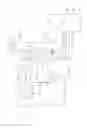
The FIGURE provides an embodiment of the present invention.
DETAILED DESCRIPTION
While the invention will be described in connection with several embodiments, it will be understood that it is not intended to limit the invention to those embodiments. On the contrary, it is intended to cover all the alternatives, modifications and equivalence as may be included within the spirit and scope of the invention defined by the appended claims.
FIG. 1 represents an embodiment of the present invention. In this embodiment, main air feed 2 can be split into three streams, first air fraction 3, second air fraction 4, and third air fraction 6. First air fraction 3 is then preferably expanded across valve 50 and then introduced to the warm side of heat exchanger 10 and is fully cooled therein, and preferably condensed. Preferably, main air feed 2 has a pressure of at least 15 bar, preferably at least 20 bar or even at least 30 bar.
Low pressure gaseous nitrogen 22 is withdrawn from column system 20 and is warmed in heat exchanger 10 before exiting, to be eventually used to regenerate compressed air filters (not shown), vented to the atmosphere, or used as product. Liquid oxygen 24 is also withdrawn from column system 20 pressurized in a pump and then vaporized in heat exchanger 10 to form high pressure gaseous oxygen. Liquid oxygen product stream 25 is taken as a slip stream of liquid oxygen 24 and can be stored as product. High pressure gaseous nitrogen 26 and liquid nitrogen 27 are also withdrawn from column system 20. High pressure gaseous nitrogen 26 is warmed in heat exchanger 10 and liquid nitrogen 27 can be stored as product. In another embodiment, liquid argon 29 leaves column system 20 and can be stored as product. In an embodiment not shown, waste gas from column system 20 can be used to provide cooling to heat exchanger 10 and/or used to regenerate air adsorbers. In a preferred embodiment, column system 20 can include a higher pressure column, a lower pressure column, and an argon column.
In one embodiment, second air fraction 4 is compressed in warm booster 30 and cooled in aftercooler 33 to form boosted second air fraction 32. Boosted second air fraction 32 is then split into three streams 32a, 32b, and 32c. Stream 32a is further compressed in second warm booster 45 and cooled in aftercooler 47 to form boosted air stream 48. Boosted air stream 48 is then cooled in heat exchanger 10 to form cooled air feed 12, before being expanded through valve 51 and introduced to column system 20 for rectification. Stream 32c is partially cooled (i.e., taken out at an intermediate location of heat exchanger 10) in heat exchanger 10 and expanded across turbine 35 to form expanded second air fraction 36 and then introduced to column system 20 for rectification. Turbine 35 is connected to warm booster 30 by a common shaft, such that turbine 35 provides the power needed to drive warm booster 30. Stream 32b is expanded across valve 51 to the same pressure as first air fraction 3 following expansion across valve 50. Stream 32b is preferably combined with first air fraction 3 upstream of heat exchanger 10, such that the combined stream is fully cooled within said heat exchanger 10.
In one embodiment, third air fraction 6, which is preferably at ambient air temperatures, is expanded across warm expander 40 to form expanded third air fraction 42. Expanded third air fraction 42 is then introduced to heat exchanger 10, preferably at an intermediate location where it is mixed with first air fraction 3 and stream 32b to form combined cooled fractions 44, fully cooled and combined with expanded second air fraction 36 before introduction to column system 20 for rectification. In a preferred embodiment, the combined streams 36,44 are introduced to the higher pressure column. In the embodiment shown, the warm expander is coupled to a second warm compressor 45.
The advantage of including pressure valve 50 is to allow for partial loading of the plant or to produce reduced quantities of liquid products. This permits the plant to operate with the optimum flow of Joule-Thompson air per the liquid vaporization occurring in heat exchanger 10. Certain embodiments of the invention are suitable for the production of gaseous oxygen in the range of about 20 to 60 bara by replacing a typical “lost air” turbine with the warm turbine/booster (40/45). Certain embodiments of the present invention allow for large quantities of liquid products (e.g., 10-20% of the total air flow) while consuming less power than a “lost air” process and with less complexity (e.g., up to 10% savings in power as compared to lost air type). Additionally, in certain embodiments of the present invention, essentially all of the main air enters the column system for separation (as opposed to a portion being used for refrigeration and then vented), thus permitting maximum product recoveries.
While the invention has been described in conjunction with specific embodiments thereof, it is evident that many alternatives, modifications, and variations will be apparent to those skilled in the art in light of the foregoing description. Accordingly, it is intended to embrace all such alternatives, modifications, and variations as fall within the spirit and broad scope of the appended claims. The present invention may suitably comprise, consist or consist essentially of the elements disclosed and may be practiced in the absence of an element not disclosed. Furthermore, language referring to order, such as first and second, should be understood in an exemplary sense and not in a limiting sense. For example, it can be recognized by those skilled in the art that certain steps or devices can be combined into a single step/device.
The singular forms “a”, “an”, and “the” include plural referents, unless the context clearly dictates otherwise.
Optional or optionally means that the subsequently described event or circumstances may or may not occur. The description includes instances where the event or circumstance occurs and instances where it does not occur.
Ranges may be expressed herein as from about one particular value, and/or to about another particular value. When such a range is expressed, it is to be understood that another embodiment is from the one particular value and/or to the other particular value, along with all combinations within said range.
Claims
We claim:1. A method for producing pressurized gaseous oxygen through the cryogenic separation of air, the method comprising the steps of:
obtaining a main air feed comprising filtered and compressed air;
splitting the main air feed into at least a first air fraction, a second air fraction, and a third air fraction;
fully cooling the first air fraction in a heat exchanger to a temperature suitable for rectification of the first air fraction to form a cooled air feed;
withdrawing the cooled air feed from the heat exchanger and introducing the cooled air feed to a column system under conditions effective for rectification of the cooled air feed into low pressure gaseous nitrogen (LP GAN), liquid oxygen (LOX), liquid nitrogen (LIN), and high pressure gaseous nitrogen (HP GAN), wherein the column system comprises a double column having a higher pressure column and a lower pressure column;
warming the LP GAN, LOX, and HP GAN in the heat exchanger;
boosting the second air fraction in a first warm booster to form a boosted second air fraction;
partially cooling a first portion of the boosted second air fraction in the heat exchanger and then expanding the first portion of the boosted second air fraction in a cold turbine to form an expanded second air fraction;
introducing the expanded second air fraction to the column system;
compressing a second portion of the boosted second air fraction in a second warm booster to form a second boosted second air fraction;
fully cooling the second boosted second air fraction in the heat exchanger to form a second cooled air feed;
withdrawing the second cooled air feed from the heat exchanger and introducing the second cooled air feed to the column system;
expanding the third air fraction using a warm expander to create an expanded third air fraction, wherein the warm expander powers the second warm booster; and
cooling the expanded third air fraction in the heat exchanger before introducing the expanded third air fraction to the column system for rectification.
2. The method as claimed in claim 1, wherein the expanded second air fraction is at the same pressure as the higher pressure column.
3. The method as claimed in claim 1, wherein the main air feed has a pressure of least 10 bar
4. The method as claimed in claim 1, wherein the main air feed has a pressure of at least 20 bar
5. The method as claimed in claim 1, wherein the cold turbine is coupled to the first warm booster.
6. The method as claimed in claim 1, further comprising withdrawing LIN from the column system as product.
7. The method as claimed in claim 1, wherein the LOX is vaporized in the heat exchanger and has a pressure of about 20-60 bar after being warmed in the heat exchanger.
8. The method as claimed in claim 1, wherein substantially all of the main air feed is introduced to the column system for rectification.
9. The method as claimed in claim 1, wherein substantially none of the main air feed is vented to the atmosphere.
10. The method as claimed in claim 1, wherein the third air fraction is at substantially the same pressure as the second air fraction and the first air fraction.
11. The method as claimed in claim 1, wherein the expanded second air fraction and the expanded third air fraction are sent to the same location within the column system.
12. The method as claimed in claim 1, wherein the column system comprises an absence of a mixing column.
13. The method as claimed in claim 1, wherein the column system consists essentially of a higher pressure column, a lower pressure column and an argon column.
14. A method for producing pressurized gaseous oxygen through the cryogenic separation of air, the method comprising a first operation mode and a second operation mode, wherein in both the first operation mode and the second operation mode, wherein in the first operation mode, the method comprises the steps of:
obtaining a main air feed comprising filtered and compressed air having a pressure of at least 15 bara;
splitting the main air feed into at least a first air fraction, a second air fraction, and a third air fraction;
fully cooling the first air fraction in a heat exchanger to a temperature suitable for rectification of the first air fraction to form a cooled air feed;
withdrawing the cooled air feed from the heat exchanger and introducing the cooled air feed to a column system under conditions effective for rectification of the cooled air feed into low pressure gaseous nitrogen (LP GAN), liquid oxygen (LOX), liquid nitrogen (LIN), and high pressure gaseous nitrogen (HP GAN), wherein the column system comprises a double column having a higher pressure column and a lower pressure column;
warming the LP GAN, LOX, and HP GAN in the heat exchanger;
boosting the second air fraction in a first warm booster to form a boosted second air fraction;
partially cooling a first portion of the boosted second air fraction in the heat exchanger and then expanding the first portion of the boosted second air fraction in a cold turbine to form an expanded second air fraction;
introducing the expanded second air fraction to the column system;
expanding the third air fraction using a warm expander to create an expanded third air fraction; and
cooling the expanded third air fraction in the heat exchanger before introducing the expanded third air fraction to the column system for rectification, wherein in the second operation mode, the method further comprises the steps of:
opening a Joule-Thompson valve in fluid communication with the boosted second air fraction and diverting a third portion of the boosted second air fraction through the Joule-Thompson valve and combining the third portion of the boosted second air fraction with the first air fraction upstream the heat exchanger;
introducing the third portion of the boosted second air fraction, along with the first air fraction, into the heat exchanger for cooling before introducing the third portion of the boosted second air fraction, along with the first air fraction, to the column system;
compressing a second portion of the boosted second air fraction in a second warm booster to form a second boosted second air fraction;
fully cooling the second boosted second air fraction in the heat exchanger;
expanding the cooled second boosted second air fraction across a valve and then introducing the expanded cooled second boosted second air fraction to the higher pressure column,
wherein the method switches from the first operation mode to the second operation mode based upon a determination to produce less quantity of liquid products, wherein the liquid products comprise LOX and LIN.
15. A method for producing pressurized gaseous oxygen through the cryogenic separation of air, the method comprising the steps of:
obtaining a main air feed comprising filtered and compressed air having a pressure of at least 15 bara;
splitting the main air feed into at least a first air fraction, a second air fraction, and a third air fraction;
fully cooling the first air fraction in a heat exchanger to a temperature suitable for rectification of the first air fraction to form a cooled air feed;
withdrawing the cooled air feed from the heat exchanger and introducing the cooled air feed to a column system under conditions effective for rectification of the cooled air feed into low pressure gaseous nitrogen (LP GAN), liquid oxygen (LOX), liquid nitrogen (LIN), and high pressure gaseous nitrogen (HP GAN), wherein the column system comprises a double column having a higher pressure column and a lower pressure column;
warming the LP GAN, LOX, and HP GAN in the heat exchanger;
boosting the second air fraction in a first warm booster to form a boosted second air fraction;
partially cooling a first portion of the boosted second air fraction in the heat exchanger and then expanding the first portion of the boosted second air fraction in a cold turbine to form an expanded second air fraction;
introducing the expanded second air fraction to the column system;
expanding the third air fraction using a warm expander to create an expanded third air fraction; and
cooling the expanded third air fraction in the heat exchanger before introducing the expanded third air fraction to the column system for rectification,
wherein the expanded second air fraction and the expanded third air fractions are sent to the same location within the column system.
Images & Drawings included:

Sources:
- United States Patent and Trademark Office - verify current appl. status at the USPTO↗
Similar patent applications:
Recent applications in this class:
- » 20250290692 2025-09-18
APPARATUS AND PROCESS FOR PROVIDING NITROGEN AND OXYGEN - » 20250264274 2025-08-21
AIR SEPARATION UNIT - » 20240393042 2024-11-28
METHOD FOR THE CRYOGENIC SEPARATION OF AIR, AND AIR SEPARATION PLANT - » 20240230222 2024-07-11
METHOD FOR SEPARATING AIR BY CRYOGENIC DISTILLATION - » 20240133624 2024-04-25
METHOD FOR SEPARATING AIR BY CRYOGENIC DISTILLATION - » 20240035743 2024-02-01
Process and apparatus for recovery of at least nitrogen and argon - » 20240035742 2024-02-01
Air separation unit and method for production of high purity nitrogen product using a distillation column system with an intermediate pressure kettle column - » 20230358467 2023-11-09
AIR SEPARATION UNIT BY CRYOGENIC DISTILLATION - » 20230251033 2023-08-10
Dual column nitrogen producing air separation unit with split kettle reboil and integrated condenser-reboiler - » 20230079087 2023-03-16
MULTISTAGE BATH CONDENSER-REBOILER AND CRYOGENIC AIR SEPARATION UNIT USING THE SAME
Recent applications for this Assignee:
- » 20250290202 2025-09-18
FLUORINATION OF ANCILLARY LIGANDS OF GROUP (III) PRECURSORS AND THEIR APPLICATIONS IN VAPOR DEPOSITIONS - » 20250283579 2025-09-11
DEVICE FOR STORING AND SUPPLYING CRYOGENIC FLUID, IN PARTICULAR LIQUEFIED HYDROGEN - » 20250256958 2025-08-14
METHOD AND SYSTEM FOR HEATING A REFORMER WITH AN AMMONIA-FIRED BURNER PRODUCING A STABLE FLAME - » 20250229214 2025-07-17
PROCESS AND APPARATUS FOR CAPTURE OF CO2 - » 20250223704 2025-07-10
SPIN-COATABLE METAL DOPED SILICON-CONTAINING FILM-FORMING COMPOSITIONS AND PROCESSES OF USING THEM FOR DEPOSITION - » 20250223696 2025-07-10
GROUP 2 METAL CONTAINING FILM FORMING COMPOSITIONS AND VAPOR DEPOSITION OF THE FILMS USING THE SAME - » 20250189184 2025-06-12
FLUID CIRCULATION DEVICE, INSTALLATION AND METHOD USING SUCH A DEVICE - » 20250184007 2025-06-05
MODULATION SYSTEM CONFIGURED TO CONTROL MODULATION OF A SIGNAL - » 20250179938 2025-06-05
COUPLED ASSEMBLY - » 20250166974 2025-05-22
SULFUR-CONTAINING MOLECULES FOR HIGH ASPECT RATIO PLASMA ETCHING PROCESSES