Virtual reality goggles and display method thereof
US20170214905A1
2017-07-27
15/107,862
2016-01-13
✅ Patent granted
US 10,469,835 B2
2019-11-05
WO; PCT/CN2016/070784; 20160113
WO; WO2017/020557; 20170209
Maria E Vazquez Colon
Womble Bond Dickinson (US) LLP
2036-01-22
Abstract:
The present invention relates to the field of display technology, and discloses virtual reality goggles and a display method thereof. The virtual reality goggles comprise: a shell, a display screen and an optical lens, wherein the display screen and the optical lens are located within the shell, a buffer layer is formed on a side of the shell facing towards viewing eyes, the optical lens is located between the buffer layer and the display screen, for projecting a picture of the whole display screen only to the left eye or the right eye at a time. The virtual reality goggles of the present invention, by controlling the optical lens to project the picture of the whole display screen only to one eye at a time, enables a single eye to see the picture of the whole display screen. And compared to the conventional goggles through which a single eye can only see half of the picture of the display screen, the picture resolution of the goggles of the present invention is doubled.
Assignee:
- BOE TECHNOLOGY GROUP CO., LTD. 20,350 🇨🇳 Beijing, China
Applicant:
Interested in similar patents?
Get notified when new applications in this technology area are published.
Classification:
H04N13/00 IPC
Stereoscopic video systems; Multi-view video systems; Details thereof
G02B27/0172 » CPC further
Optical systems or apparatus not provided for by any of the groups -; Head-up displays; Head mounted characterised by optical features
G02B27/0176 » CPC further
Optical systems or apparatus not provided for by any of the groups -; Head-up displays; Head mounted characterised by mechanical features
G02F1/133526 » CPC further
Devices or arrangements for the control of the intensity, colour, phase, polarisation or direction of light arriving from an independent light source, e.g. switching, gating or modulating; Non-linear optics for the control of the intensity, phase, polarisation or colour based on liquid crystals, e.g. single liquid crystal display cells; Constructional arrangements; Operation of liquid crystal cells; Circuit arrangements; Constructional arrangements; Manufacturing methods; Structural association of cells with optical devices, e.g. polarisers or reflectors Lenses, e.g. microlenses or Fresnel lenses
G02B2027/0134 » CPC further
Optical systems or apparatus not provided for by any of the groups -; Head-up displays characterised by optical features comprising binocular systems of stereoscopic type
G02B2027/0136 » CPC further
Optical systems or apparatus not provided for by any of the groups -; Head-up displays characterised by optical features comprising binocular systems with a single image source for both eyes
G09G2340/0407 » CPC further
Aspects of display data processing; Changes in size, position or resolution of an image Resolution change, inclusive of the use of different resolutions for different screen areas
G09G2340/0442 » CPC further
Aspects of display data processing; Changes in size, position or resolution of an image Handling or displaying different aspect ratios, or changing the aspect ratio
H04N13/341 » CPC further
Stereoscopic video systems; Multi-view video systems; Details thereof; Image reproducers; Displays for viewing with the aid of special glasses or head-mounted displays [HMD] using temporal multiplexing
G02F1/1335 IPC
Devices or arrangements for the control of the intensity, colour, phase, polarisation or direction of light arriving from an independent light source, e.g. switching, gating or modulating; Non-linear optics for the control of the intensity, phase, polarisation or colour based on liquid crystals, e.g. single liquid crystal display cells; Constructional arrangements; Operation of liquid crystal cells; Circuit arrangements; Constructional arrangements; Manufacturing methods Structural association of cells with optical devices, e.g. polarisers or reflectors
G02F1/137 » CPC further
Devices or arrangements for the control of the intensity, colour, phase, polarisation or direction of light arriving from an independent light source, e.g. switching, gating or modulating; Non-linear optics for the control of the intensity, phase, polarisation or colour based on liquid crystals, e.g. single liquid crystal display cells characterised by the electro-optical or magneto-optical effect, e.g. field-induced phase transition, orientation effect, guest-host interaction or dynamic scattering
G02F1/29 » CPC further
Devices or arrangements for the control of the intensity, colour, phase, polarisation or direction of light arriving from an independent light source, e.g. switching, gating or modulating; Non-linear optics for the control of the position or the direction of light beams, i.e. deflection
G02B27/01 IPC
Optical systems or apparatus not provided for by any of the groups - Head-up displays
G09G3/3208 » CPC further
Control arrangements or circuits, of interest only in connection with visual indicators other than cathode-ray tubes for presentation of an assembly of a number of characters, e.g. a page, by composing the assembly by combination of individual elements arranged in a matrix no fixed position being assigned to or needed to be assigned to the individual characters or partial characters using controlled light sources using electroluminescent panels semiconductive, e.g. using light-emitting diodes [LED] organic, e.g. using organic light-emitting diodes [OLED]
G09G3/36 » CPC further
Control arrangements or circuits, of interest only in connection with visual indicators other than cathode-ray tubes for presentation of an assembly of a number of characters, e.g. a page, by composing the assembly by combination of individual elements arranged in a matrix no fixed position being assigned to or needed to be assigned to the individual characters or partial characters by control of light from an independent source using liquid crystals
H04N13/344 » CPC main
Stereoscopic video systems; Multi-view video systems; Details thereof; Image reproducers; Displays for viewing with the aid of special glasses or head-mounted displays [HMD] with head-mounted left-right displays
H04N13/139 » CPC further
Stereoscopic video systems; Multi-view video systems; Details thereof; Processing, recording or transmission of stereoscopic or multi-view image signals; Processing image signals Format conversion, e.g. of frame-rate or size
Description
FIELD OF THE INVENTION
The present invention relates to the field of display technology, particularly to virtual reality goggles and a display method thereof.
BACKGROUND OF THE INVENTION
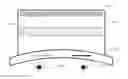
Virtual reality has attracted progressively more attention, and many related products such as Google Glasses of Google and Hololens newly introduced by Microsoft have come up in the market. Such devices for displaying before human eyes bring us may brand new experiences. There are various virtual reality technologies, one of which is immersive virtual reality goggles. The principle of the immersive virtual reality goggles of current manufacturers is mostly as shown in FIG. 1, which goggles comprise: a first display screen 121, a second display screen 122 (or it may be a large piece of display screen divided into two display areas), a near-eye first lens 131 and second lens 132, the lenses projecting the contents of the corresponding portions on the display panel to the human eyes respectively. They further comprise a shell 110 for fixing and protecting the first display screen 121, the second display screen 122, the first lens 131 and the second lens 132. A buffer layer 140 is arranged at a portion of the shell 110 which is in contact with the human face, the buffer layer 140 being used for fitting closely with the human face so as to avoid ambient light to enter and also improve wearing comfort. The buffer layer 140 can be made of cotton, sponge, coat, resin and the like. Other components such as a control circuit, an interface, a power supply are not shown.
However, by using the above immersive virtual reality goggles, each eye can only see a small piece of display screen in front of the eye, or can only see half of the large piece of screen divided for use. Therefore the picture resolution is relatively low.
SUMMARY OF THE INVENTION
(I) Technical Problem to be Solved
The technical problem to be solved by the present invention is: how to increase picture resolution of the virtual reality goggles.
(II) Technical Solution
In order to solve the above technical problem, the present invention provides virtual reality goggles, comprising: a shell, a display screen and an optical lens, wherein the display screen and the optical lens are located within the shell, a buffer layer is formed on a side of the shell facing the viewing human eyes, the optical lens is located between the buffer layer and the display screen, for projecting a picture of the whole display screen only to the left eye or the right eye at the same moment.
Optionally, the goggles further comprise a first light valve and a second light valve for blocking the left eye and the right eye respectively so as to prevent the light from entering.
Optionally, the first light valve and the second light valve are located within the buffer layer.
Optionally, the first light valve and the second light valve both have a structure similar to a liquid crystal display panel.
Optionally, the optical lens is a liquid crystal lens having a structure similar to a liquid crystal display panel.
Optionally, the display screen is an OLED display screen.
Optionally, the display screen is a liquid crystal display screen.
The present invention further provides a display method for virtual reality goggles as stated above, which performs the following two steps for each frame of picture until all frames of pictures are displayed:
at a first moment, processing each frame of picture as having a resolution conforming to the resolution of the display screen of the virtual reality goggles, and then displaying it in the whole display screen of the virtual reality goggles, and controlling the optical lens to project the picture of the whole display screen only to one eye, and making an aspect ratio of a display picture seen by the human eyes to be reduced to half of an aspect ratio of the display screen;
at a second moment, controlling the optical lens to project the picture of the whole display screen only to the other eye, and making the aspect ratio of the display picture seen by the eye to be reduced to half of the aspect ratio of the display screen.
Optionally, at a first moment for displaying a next frame of picture, the optical lens keeps projecting the picture of the whole display screen to the eye which is projected at a second moment for the previous frame. This can reduce the switching frequency of the optical lens.
Optionally, the virtual reality goggles further comprise a first light valve and a second light valve for blocking the left eye and the right eye respectively so as to prevent light from entering, at each moment the light valve to which the unprojected eye corresponds being closed and the light valve to which the projected eye corresponds being opened. This can eliminate influence of light leakage and enhance the viewing effect.
(III) Beneficial Effect
The virtual reality goggles of the present invention, by controlling the optical lens to project the picture of the whole display screen only to one eye at a moment, enable a single eye to see the picture of the whole display screen. Thus, compared to the conventional virtual reality goggles through which a single eye can only see half of the picture of the display screen, the picture resolution of the virtual reality goggles of the present invention is doubled.
BRIEF DESCRIPTION OF THE DRAWINGS
The following drawings are only used for schematically illustrating the purposes, structures, characteristics and advantages of the present invention, rather than being intended to limit the scope of the present invention. The elements in the drawings may be not drawn to scale, and on the contrary, for the purpose of clarity, some of the elements might be shown exaggeratedly.
FIG. 1 is a schematic view of a structure and a display principle of virtual reality goggles in the prior art;
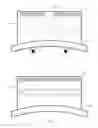
FIG. 2 is a structural schematic view of virtual reality goggles according to an embodiment of the present invention;
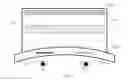
FIG. 3 is a structural schematic view of another virtual reality goggles according to an embodiment of the present invention;
FIG. 4 is a schematic view when light from a display screen of the virtual reality goggles in FIG. 3 is incident onto the left eye;
FIG. 5 is a schematic view when a display picture of the virtual reality goggles in FIG. 3 is projected onto the right eye.
DETAILED DESCRIPTION OF THE INVENTION
The specific implementations of the present invention will be described below in more detail with reference to the drawings and the embodiments. The following embodiments are used for illustrating the present invention rather than limiting the scope of the present invention.
Virtual reality goggles according to an embodiment of the present invention, as shown in FIG. 2, comprise: a shell 210, a display screen 220 and an optical lens 230, the display screen 220 and the optical lens 230 being located within the shell 210. A buffer layer 240 is formed at a side of the shell 210 facing the viewing human eyes, and the optical lens 230 is located between the buffer layer 240 and the display screen 220, for projecting a whole picture of the display screen 220 only to the left eye or the right eye at a time, so as to enable a single eye to see the picture of the whole display screen 220. Compared to the convention virtual reality goggles through which only half of the picture of the display screen 220 can be seen simultaneously, the picture resolution experienced by the user in the virtual reality goggles of the present invention is doubled.
In this embodiment, the optical lens 230 is specifically a liquid crystal lens having a structure similar to a liquid crystal display panel, i.e., a structure similar to a liquid crystal cell of a display panel. Therefore, emission of light can be controlled by controlling deflection of the liquid crystal, thereby enabling the light emitted by the display screen to be incident only to a single eye, i.e., the display picture is only seen by a single eye.
Virtual reality goggles according to another embodiment of the present invention are as shown in FIG. 3. The inventor found in carrying out the present invention that the optical lens 230 may have the situation of light leakage, i.e., when projecting the display picture to the left eye, the right eye may see leaked light. This influences the viewing effect of the virtual reality goggles of the present invention. Therefore, the virtual reality goggles as shown in FIG. 3, on the basis of FIG. 2, further comprise a first light valve 251 and a second light valve 252 for blocking the left eye and the right eye respectively so as to prevent the light from entering.
The closer to the human eyes the above light valves are, the better the effect of preventing the leaked light from entering the human eyes will be. Hence, the first light valve 251 and the second light valve 252 are preferably located within the buffer layer 240.
In this embodiment, the first light valve 251 and the second light valve 252 both have a structure similar to a liquid crystal display panel, wherein the light valves are opened by controlling deflection of the liquid crystal so as to control the light to totally pass through, and the light valves are closed by controlling deflection of the liquid crystal so as to control the light not to pass through at all.
Optionally, the display screen 220 in the virtual reality goggles is an OLED display screen or a liquid crystal display screen.
The present invention further provides a display method for virtual reality goggles as stated in any of the above embodiments, wherein the following two steps are performed for each frame of picture until all frames of pictures are displayed:
at a first moment, processing each frame of picture as having a resolution conforming to a resolution of the display screen 220 of the virtual reality goggles, and then displaying it in the whole display screen 220 of the virtual reality goggles, and controlling the optical lens 230 to project the picture of the whole display screen only to one eye, and making an aspect ratio of a display picture seen by the human eye to be reduced to half of an aspect ratio of the display screen 220;
at a second moment, controlling the optical lens 230 to project the picture displayed by the whole display screen only to the other eye, and making the aspect ratio of the display picture seen by the human eye to be reduced to half of the aspect ratio of the display screen 220.
Assume that the resolution size of the corresponding display screen of the virtual reality goggles in the prior art for providing contents to each eye is A×B (i.e., there are two display screens for the left eye and the right eye respectively), the resolution size of an image provided for a single eye is AX×BX, wherein X is the magnification. Meanwhile, in order to ensure that the viewer obtains a same visual field as the existing product (i.e., obtaining a visual field of AX×BX), in the present invention, because the size of the display screen therein is 2A×B, it is required to adjust the resolution of the image to be displayed as a image of 2A×B and double the resolution in the horizontal direction, and then input it into the display screen of a resolution of 2A×B. That is, compared to an image for use in the goggles in the prior art, the resolution of the display image for use in the goggles of the present invention in the horizontal direction will be doubled while the image is extended by one time in the horizontal direction. And then, the image is projected to one eye of the viewer by using the optical lens, meanwhile, the width of the image in the horizontal direction is narrowed by half by using the optical lens (which can be realized by controlling deflection of the liquid crystal in the liquid crystal lens), i.e., making the aspect ratio thereof to be reduced by half, thereby forming an image of AX×BX, thus the resolution of the image seen by the viewer in the horizontal direction will be doubled.
The advantages of the virtual reality goggles of the present invention will be set forth specifically by taking viewing movie pictures as an example. Assume that the virtual reality goggles in the prior art divide the single display screen into two display areas for providing pictures for each eye respectively, the resolution of each display area is a×b (e.g. 1000×1000). It is further assumed that the resolution of the image for displaying can reach 2a×b (e.g. 2000×1000, i.e., the aspect ratio of the image is 2:1), thus in displaying, in order to maintain the aspect ratio of the image, the virtual reality goggles in the prior art must compress the resolution of the image to be displayed as a×b/2 (e.g. 1000×500) so as to be displayed in the two display areas respectively. Therefore, in the virtual reality goggles in the prior art, the user can only experience movie pictures of a×b/2 (e.g. 1000×500) resolution. However, for the virtual reality goggles of the present invention, since it can project a picture of the whole display screen to a single eye, it can play a display picture of 2a×b (e.g. 2000×1000) resolution in the display screen directly, and the user can experience displaying of 2a×b (e.g. 2000×1000) resolution in the same visual field. Thus it can be seen that in the process of viewing the movie video, the user can experience displaying of double resolution by using the virtual reality goggles of the present invention.
In order to reduce the switching frequency of the optical lens, further, at a first moment for displaying a next frame of picture, the optical lens keeps projecting the picture of the display screen to the eye which is projected at a second moment of a previous frame.
For the virtual reality goggles having light valves, at each moment, a light valve to which the unprojected eye corresponds is closed and a light valve to which the projected eye corresponds is opened. This can eliminate influence of light leakage of the optical lens and enhance the viewing effect.
The above implementations are only used for illustrating the present invention, rather than limiting the present invention. The ordinary skilled person in the related technical field may also make various modifications and variations without departing from the spirit and the scope of the present invention. Hence, all the equivalent technical solutions also belong to the scope of the present invention, and the patent protection scope of the present invention should be defined by the claims. It should be noted that the wording “comprise” does not exclude presence of elements or steps not listed in the claims. The wording “a” or “an” preceding an element does not exclude presence of a plurality of such elements. The mere fact that some measures are stated in mutually different dependent claims does not indicate that the combination of these measures cannot be used to advantage. Any reference signs in the claims should not be construed as limitation of the scopes.
Claims
1. Virtual reality goggles, characterized by comprising: a shell, a display screen and an optical lens, wherein the display screen and the optical lens are located within the shell, a buffer layer is formed on a side of the shell facing the viewing human eyes, and the optical lens is located between the buffer layer and the display screen, for projecting a picture of the whole display screen only to the left eye or the right eye at a time.
2. The virtual reality goggles as claimed in claim 1, characterized by further comprising a first light valve and a second light valve for blocking the left eye and the right eye respectively so as to prevent the light from entering.
3. The virtual reality goggles as claimed in claim 2, characterized in that the first light valve and the second light valve are located within the buffer layer.
4. The virtual reality goggles as claimed in claim 2, characterized in that the first light valve and the second light valve both have a structure similar to a liquid crystal display panel.
5. The virtual reality goggles as claimed in claim 1, characterized in that the optical lens is a liquid crystal lens having a structure similar to a liquid crystal display panel.
6. The virtual reality goggles as claimed in claim 1, characterized in that the display screen is an OLED display screen.
7. The virtual reality goggles as claimed in claim 1, characterized in that the display screen is a liquid crystal display screen.
8. A display method for virtual reality goggles as claimed in claim 1, characterized by performing the following two steps for each frame of picture until all frames of pictures are displayed:
at a first moment, processing each frame of picture as having a resolution conforming to a resolution of the display screen of the virtual reality goggles, and then displaying it in the whole display screen of the virtual reality goggles, and controlling the optical lens to project the picture of the whole display screen only to one eye, and making an aspect ratio of a display picture seen by the human eye to be reduced to half of an aspect ratio of the display screen;
at a second moment, controlling the optical lens to project the picture of the whole display screen only to the other eye, and making the aspect ratio of the display picture seen by the human eye to be reduced to half of the aspect ratio of the display screen.
9. The display method for virtual reality goggles as claimed in claim 8, characterized in that at a first moment for displaying a next frame of picture, the optical lens keeps projecting the picture of the whole display screen to the eye which is projected at a second moment of a previous frame.
10. The display method for virtual reality goggles as claimed in claim 8, characterized in that the virtual reality goggles further comprise a first light valve and a second light valve for blocking the left eye and the right eye respectively so as to prevent light from entering, at each moment, a light valve to which the unprojected eye corresponds being closed and a light valve to which the projected eye corresponds being opened.
11. The virtual reality goggles as claimed in claim 2, characterized in that the optical lens is a liquid crystal lens having a structure similar to a liquid crystal display panel.
12. The virtual reality goggles as claimed in claim 3, characterized in that the optical lens is a liquid crystal lens having a structure similar to a liquid crystal display panel.
13. The virtual reality goggles as claimed in claim 4, characterized in that the optical lens is a liquid crystal lens having a structure similar to a liquid crystal display panel.
14. The display method for virtual reality goggles as claimed in claim 9, characterized in that the virtual reality goggles further comprise a first light valve and a second light valve for blocking the left eye and the right eye respectively so as to prevent light from entering, at each moment, a light valve to which the unprojected eye corresponds being closed and a light valve to which the projected eye corresponds being opened.
Images & Drawings included:

Sources:
- United States Patent and Trademark Office - verify current appl. status at the USPTO↗
Recent applications in this class:
- » 20190089940 2019-03-21
Generating stereoscopic light field panoramas using concentric viewing circles - » 20180324402 2018-11-08
Resonating optical waveguide using multiple diffractive optical elements - » 20180288391 2018-10-04
Method for capturing virtual space and electronic device using the same - » 20180255285 2018-09-06
Systems and methods for layered virtual features in an amusement park environment - » 20180213210 2018-07-26
3D HEAD-UP DISPLAY SYSTEM AND METHOD - » 20180199028 2018-07-12
Head-mounted display device - » 20180160106 2018-06-07
Omnistereo capture and render of panoramic virtual reality content - » 20180160105 2018-06-07
Representations of event notifications in virtual reality - » 20180160104 2018-06-07
Head mounted display - » 20180152694 2018-05-31
Head mounted display device and method for providing visual aid using same
Recent applications for this Assignee:
- » 20250295022 2025-09-18
QUANTUM DOT COMPOSITION, LIGHT-EMITTING ELEMENT, DISPLAY PANEL AND PREPARATION METHOD THEREOF - » 20250295019 2025-09-18
HEAT DISSIPATION FILM, DISPLAY MODULE AND DISPLAY DEVICE - » 20250294987 2025-09-18
DISPLAY PANEL, DISPLAY DEVICE - » 20250294983 2025-09-18
DISPLAY PANEL AND DISPLAY DEVICE - » 20250292736 2025-09-18
DRIVING CIRCUIT, DRIVING METHOD, DRIVING MODULE AND DISPLAY DEVICE - » 20250291336 2025-09-18
COMPUTER-IMPLEMENTED METHOD, APPARATUS FOR MANAGING PRODUCTION OF ONE OR MORE PRODUCTS, AND COMPUTER-PROGRAM PRODUCT - » 20250291215 2025-09-18
CIRCUIT BOARD AND METHOD FOR MANUFACTURING THE SAME, LIGHT-EMITTING SUBSTRATE, BACKLIGHT MODULE, DISPLAY PANEL AND DISPLAY APPARATUS - » 20250287801 2025-09-11
ARRAY SUBSTRATE AND DISPLAY APPARATUS - » 20250287695 2025-09-11
ARRAY PANEL, METHOD OF MANUFACTURING THE SAME AND DISPLAY DEVICE - » 20250285597 2025-09-11
DISPLAY SUBSTRATE AND DISPLAY DEVICE