Systems, Devices, and/or Methods for Managing Hammocks
US20170224092A1
2017-08-10
15/239,684
2016-08-17
Abstract:
Certain exemplary embodiments can provide a hammock. The hammock comprises a body. The body comprises a plurality of layers of material cut to form a channel in each end when folded and sewn together to form a quadrilateral parallelogram. A length of grosgrain ribbon is sewn down a length of edges of long diagonals of at least two of the plurality of layers of material, so as when folded over and sewn the channels are formed.
Interested in similar patents?
Get notified when new applications in this technology area are published.
Classification:
A45F2003/001 » CPC further
Travelling or camp articles ; Sacks or packs carried on the body Accessories
A45F3/22 » CPC main
Travelling or camp articles ; Sacks or packs carried on the body Hammocks; Hammock spreaders
Description
CROSS-REFERENCES TO RELATED APPLICATIONS
This application claims priority to, and incorporates by reference herein in its entirety, pending United States Provisional Patent Application Ser. No. 62/292341 (Attorney Docket No. 1117-001), filed Feb. 7, 2016.
BRIEF DESCRIPTION OF THE DRAWINGS
A wide variety of potential practical and useful embodiments will be more readily understood through the following detailed description of certain exemplary embodiments, with reference to the accompanying exemplary drawings in which:
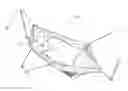
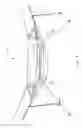
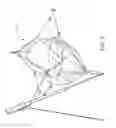
FIG. 1 is a perspective view an exemplary embodiment of a system 1000;
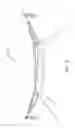
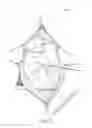
FIG. 2 is a perspective view an exemplary embodiment of a system 2000;
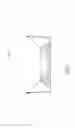
FIG. 3 is a perspective view an exemplary embodiment of a system 3000;
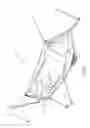
FIG. 4 is a perspective view an exemplary embodiment of a system 4000;
FIG. 5 is a perspective view an exemplary embodiment of a system 5000;
FIG. 6 is a perspective view an exemplary embodiment of a system 6000;
FIG. 7 is a perspective view an exemplary embodiment of a system 7000;
FIG. 8 is a perspective view an exemplary embodiment of a system 8000;
FIG. 9 is a perspective view an exemplary embodiment of a system 9000;
FIG. 10 is a perspective view an exemplary embodiment of a system 10000; and
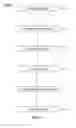
FIG. 11 is a flowchart of an exemplary embodiment of a method 11000.
DETAILED DESCRIPTION
Certain exemplary embodiments can provide a hammock. The hammock comprises a body. The body comprises a plurality of layers of material cut to form a channel in each end when folded and sewn together to form a quadrilateral parallelogram. A length of grosgrain ribbon is sewn down a length of edges of long diagonals of at least two of the plurality of layers of material, so as when folded over and sewn the channels are formed.
FIG. 1 is a perspective view an exemplary embodiment of a system 1000. The body of a Smith Camping Hammock 1050 comprises a plurality of layers (e.g., between one and three layers) of material cut in a manner to form a channel 1300 in each end when folded and sewn to form a quadrilateral parallelogram. For example, system 1000 can comprise first layer 1100 and second layer 1200. The longer diagonals form the body 1150 (sides and length) of the hammock, while the shorter diagonals form the channels 1300 (ends and width) of the hammock. The angles on the diagonals forming the end channels 1300 are variable and are based on the length and width of the finished hammock and determine the comfort and amount of adjustment available to the user. A length of grosgrain ribbon or strap 1250 (or equivalent) is sewn down the length of the edge of the long diagonals, so as when folded over and sewn to form the end channels 1300; grosgrain ribbon or strap 1250 (or equivalent) forms a loop inside the channels 1300 on each side and end of hammock 1050 forming the suspension system and defining the final shape of hammock 1050. This provides reinforcement to support the user and to install a zipper 1550 on both long diagonals to provide the user with ingress and egress through a netted or solid canopy 1500 to the body of the hammock on models with a non-removable canopy 1500. Attachment points 1400 are provided on each side of the long diagonals and in the center on the inside of the short diagonals for the attachment of accessories and to provide tie out points to increase the width and stability of the hammock. Pockets (see e.g., pocket 7700 of FIG. 7) are sewn inside the hammock at each end to provide storage for personal items Hammock 1050 can be constructed in the following configurations: netted or solid canopy 1500, without net or solid canopy, with removable net or solid canopy 1500, single double or triple layer, or any combination of the forgoing Hammock 1050 can be made of any of various materials to suit the user's preference and the environment in which it is used. An adjustable suspension system on both ends (short diagonals) of the hammock comprises a grosgrain strap 1650 or equivalent sewn double thickness with a set of two ring buckles 1600 sewn on one end and a loop of sufficient size to allow the ring buckles to pass through the loop. The suspension straps are passed through the channels, one at each end. Ring buckles 1600 are then passed through the loop on their respective ends forming a loop which tightens inside channels 1300 gathering hammock 1050 into its final shape and provides the adjustable attachment points for the straps to the hanging points. The netted or solid canopy 1500 has a grosgrain strap or ribbon or equivalent sewn across the side and top on both ends with loops and D rings placed so as to provide a suspension system to suspend the canopy above the body of the hammock when and if it is attached. Hammock 1050 further comprises anchor ring buckles 1700 that can be used to anchor hammock 1050 to the ground or to an object or structure to limit movement and/or deflection of hammock 1050 under weight.
Hammock 1050 comprises body 1150. Body 1150 comprises a plurality of layers (first layer 1100 and second layer 1200) of material cut to form a channel 1300 in each end when folded and sewn together to form a quadrilateral parallelogram. A length of grosgrain ribbon or strap 1250 is sewn down a length of edges of long diagonals of at least two of plurality of layers (first layer 1100 and second layer 1200) of material, so as when folded over and sewn channels 1300 are formed. Grosgrain ribbon or strap 1250 forms a loop inside channels 1300 on each side and end of hammock 1050 thereby forming a suspension system and defining an operative shape of said hammock 1050. A canopy 1500 can be fixedly coupled to hammock, 1050 wherein canopy 1500 can comprise a netted material. Canopy 1500 can be fixedly coupled to hammock. Canopy 1500 comprises an opaque material.
The long diagonals of plurality of layers (first layer 1100 and second layer 1200) form said body, while short diagonals of plurality of layers (first layer 1100 and second layer 1200) form channel 1300. Zipper 1550 is installed along the long diagonals. A suspension system supports a user laying on hammock 1050. Body 1150 comprises attachment points on at least one of the long diagonals. Attachment points can be constructed to allow accessories to be coupled to hammock 1050. Body 1150 can comprise attachment points 1400 on at least one of the long diagonals. The attachment points 1400 can be constructed to allow accessories to be coupled to hammock 1050. Body 1150 can comprises attachment points 1400 on at least one of the long diagonals. Attachment points 1400 can be constructed to be coupled to the earth or to something that limits movement of hammock 1050 Hammock 1050 can comprises a pocket (see e.g., pocket 7700 of FIG. 7) sewn inside an end thereof. The suspension system of hammock 1050 can be adjustable. The suspension system of hammock 1050 can comprise ring buckles 1600 that are coupled to a grosgrain strap 1650.
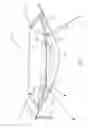
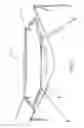
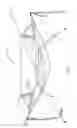
FIG. 2 is a perspective view an exemplary embodiment of a system 2000 suspended from points of attachment (e.g., trees).
FIG. 3 is a perspective view an exemplary embodiment of a system 3000 suspended from points of attachment (e.g., trees).
FIG. 4 is a perspective view an exemplary embodiment of a system 4000 suspended from points of attachment (e.g., trees).
FIG. 5 is a perspective view an exemplary embodiment of a system 5000 suspended from points of attachment (e.g., trees).
FIG. 6 is a perspective view an exemplary embodiment of a system 6000 resting on the ground with the canopy suspended via posts.
FIG. 7 is a perspective view an exemplary embodiment of a system 7000 resting on the ground with the canopy suspended via posts.
FIG. 8 is a perspective view an exemplary embodiment of a system 8000 resting on the ground with the canopy suspended via posts.
FIG. 9 is a perspective view view an exemplary embodiment of a system 9000;
FIG. 10 is a perspective view an exemplary embodiment of a system 10000; and
FIG. 11 is a flowchart of an exemplary embodiment of a method 11000. At activity 11100, a hammock can be fabricated. At activity 11200, the hammock can be coupled to a structure for use by a person. The structure can be a tree, pole, post, rock, and/or building, etc. The hammock can also be used without attaching one end to a structure and can be anchored to the ground.
At activity 11300, the hammock can be tied to a surface. The surface can be the surface of the earth, a floor, and/or a structure constructed to secure the cot to a predetermined location. At activity 11400, the hammock can be used. For example, a person can lay on the cot and/or materials and supplies can be placed on the cot to keep them above ground level.
At activity 11500, the cot can be decoupled from the structure. When, decoupled the cot can be disassembled and/or folded into a relatively compact space for storage. At activity 11600, the cot can be stored until further use is desired.
Definitions
When the following terms are used substantively herein, the accompanying definitions apply. These terms and definitions are presented without prejudice, and, consistent with the application, the right to redefine these terms during the prosecution of this application or any application claiming priority hereto is reserved. For the purpose of interpreting a claim of any patent that claims priority hereto, each definition (or redefined term if an original definition was amended during the prosecution of that patent), functions as a clear and unambiguous disavowal of the subject matter outside of that definition.
-
- a—at least one.
- accessory—a device and/or object that enhances a function of a system.
- activity—an action, act, step, and/or process or portion thereof.
- adapter—a device used to effect operative compatibility between different parts of one or more pieces of an apparatus or system.
- and/or—either in conjunction with or in alternative to.
- apparatus—an appliance or device for a particular purpose
- associate—to join, connect together, and/or relate.
attachment points—predetermined parts of a system to which something else is couplable.
-
- body—a principle part of something.
- can—is capable of, in at least some embodiments.
- canopy—a piece of material that is spread over something that resists penetration by certain objects and/or environmental elements.
- channel—a passage that is substantially surrounded by material.
- comprising—including but not limited to.
- configure—to make suitable or fit for a specific use or situation.
- connect—to join or fasten together.
- constructed to—made to and/or designed to.
- convert—to transform, adapt, and/or change.
- coupleable—capable of being joined, connected, and/or linked together.
- coupling—linking in some fashion.
- cut—to divide, crop, and/or shape via a sharp instrument.
- define—to establish the outline, form, or structure of.
- determine—to obtain, calculate, decide, deduce, and/or ascertain.
- device—a machine, manufacture, and/or collection thereof.
- edge—a border of an object.
- end—a last part or extremity of something.
- fold—to lay one part over another.
- form—to construct.
- grosgrain—a type of fabric characterized by its ribbed appearance. In grosgrain, the weft is heavier than the warp, creating prominent transverse ribs. It can also be called a “corded” fabric since its weft resembles a fine cord.
- hammock—a piece of material suspended from supports at least at each end, wherein the piece of material is of sufficient size and strength to support a user laying on the piece of material.
- install—to connect or set in position and prepare for use.
- lay—to be positioned on a surface of an object to rest.
- layer—a thickness of a material that is substantially planar when laid on a surface.
- length—a longest dimension of an object when the object is fully laid out.
- long diagonal—a line between two opposing corners of an object, which line is of a greater distance than any other line between two alternate opposing corners of the object.
- loop—a doubling of a piece of material so as to form a closed or partly open curve within itself through which another piece of material can be passed or into which a hook may be hooked.
- material—a substance comprised by something.
- may—is allowed and/or permitted to, in at least some embodiments.
- method—a process, procedure, and/or collection of related activities for accomplishing something.
- netted material—a meshed substance.
- opaque material—a substance that substantially blocks passage of radiant energy or light.
- operative shape—a form of something when placed in a manner so as to enable the something to be used.
- parallelogram—a four-sided geometric shape that has two pairs of straight parallel lines, wherein each line of a given pair of lines is substantially equal in length to the other line of the pair.
- plurality—the state of being plural and/or more than one.
- pocket—a shaped piece of fabric that is installed on something to form a pouch.
- predetermined—established in advance.
- provide—to furnish, supply, give, and/or make available.
- quadrilateral—a substantially planar geometric shape that has four sides and four angles.
- receive—to get as a signal, take, acquire, and/or obtain.
- ribbon—a substantially flat and narrow piece of material.
- ring buckle—a metal loop to which something can be coupled.
- set—a related plurality.
- sew—to fasten via stitches of thread.
- short diagonal—a line between two opposing corners of an object, which line is of a lesser distance than any other line between two alternate opposing corners of the object.
- substantially—to a great extent or degree.
- support—to bear the weight of, especially from below.
- suspension system—a set of objects that restrain something from moving past a predetermined position.
- system—a collection of mechanisms, devices, machines, articles of manufacture, processes, data, and/or instructions, the collection designed to perform one or more specific functions.
- user—a person employing a device and/or system.
- via—by way of and/or utilizing.
- zipper—a device that is made of two rows of teeth and another piece that slides over the teeth to make them fit together and/or come apart.
Note
Still other substantially and specifically practical and useful embodiments will become readily apparent to those skilled in this art from reading the above-recited and/or herein-included detailed description and/or drawings of certain exemplary embodiments. It should be understood that numerous variations, modifications, and additional embodiments are possible, and accordingly, all such variations, modifications, and embodiments are to be regarded as being within the scope of this application.
Thus, regardless of the content of any portion (e.g., title, field, background, summary, description, abstract, drawing figure, etc.) of this application, unless clearly specified to the contrary, such as via explicit definition, assertion, or argument, with respect to any claim, whether of this application and/or any claim of any application claiming priority hereto, and whether originally presented or otherwise:
-
- there is no requirement for the inclusion of any particular described or illustrated characteristic, function, activity, or element, any particular sequence of activities, or any particular interrelationship of elements;
- no characteristic, function, activity, or element is “essential”;
- any elements can be integrated, segregated, and/or duplicated;
- any activity can be repeated, any activity can be performed by multiple entities, and/or any activity can be performed in multiple jurisdictions; and
- any activity or element can be specifically excluded, the sequence of activities can vary, and/or the interrelationship of elements can vary.
Moreover, when any number or range is described herein, unless clearly stated otherwise, that number or range is approximate. When any range is described herein, unless clearly stated otherwise, that range includes all values therein and all subranges therein. For example, if a range of 1 to 10 is described, that range includes all values therebetween, such as for example, 1.1, 2.5, 3.335, 5, 6.179, 8.9999, etc., and includes all subranges therebetween, such as for example, 1 to 3.65, 2.8 to 8.14, 1.93 to 9, etc.
When any claim element is followed by a drawing element number, that drawing element number is exemplary and non-limiting on claim scope. No claim of this application is intended to invoke paragraph six of 35 USC 112 unless the precise phrase “means for” is followed by a gerund.
Any information in any material (e.g., a United States patent, United States patent application, book, article, etc.) that has been incorporated by reference herein, is only incorporated by reference to the extent that no conflict exists between such information and the other statements and drawings set forth herein. In the event of such conflict, including a conflict that would render invalid any claim herein or seeking priority hereto, then any such conflicting information in such material is specifically not incorporated by reference herein.
Accordingly, every portion (e.g., title, field, background, summary, description, abstract, drawing figure, etc.) of this application, other than the claims themselves, is to be regarded as illustrative in nature, and not as restrictive, and the scope of subject matter protected by any patent that issues based on this application is defined only by the claims of that patent.
Claims
What is claimed is:1. A system comprising:
a hammock, said hammock comprising a body, said body comprising a plurality of layers of material cut to form a channel in each end when folded and sewn together to form a quadrilateral parallelogram, wherein a length of grosgrain ribbon is sewn down a length of edges of long diagonals of at least two of said plurality of layers of material, so as when folded over and sewn said channels are formed, wherein said grosgrain ribbon forms a loop inside said channels on each side and end of said hammock thereby forming a suspension system and defining an operative shape of said hammock.
2. The system of claim 1, further comprising:
a canopy fixedly coupled to said hammock, wherein said canopy comprises a netted material.
3. The system of claim 1, further comprising:
a canopy fixedly coupled to said hammock, wherein said canopy comprises an opaque material.
4. The system of claim 1, wherein:
said long diagonals of said plurality of layers form said body, while short diagonals of said plurality of layers form said channel.
5. The system of claim 1, wherein:
a zipper is installed along said long diagonals.
6. The system of claim 1, wherein:
said suspension system supports a user laying on said hammock.
7. The system of claim 1, wherein:
said body comprises attachment points on at least one of said long diagonals, said attachment points constructed to allow accessories to be coupled to said hammock.
8. The system of claim 1, wherein:
said body comprises attachment points on at least one of said long diagonals, said attachment points constructed to allow accessories to be coupled to said hammock.
9. The system of claim 1, wherein:
said body comprises attachment points on at least one of said long diagonals, said attachment points constructed to be coupled to the earth or to something that limits movement of said hammock.
10. The system of claim 1, wherein:
said hammock comprises a pocket sewn inside an end thereof.
11. The system of claim 1, wherein:
said suspension system is adjustable.
12. The system of claim 1, wherein:
said suspension system comprises ring buckles that are coupled to a grosgrain strap.
Images & Drawings included:

Sources:
- United States Patent and Trademark Office - verify current appl. status at the USPTO↗
Recent applications in this class:
- » 20240306801 2024-09-19
Hammock - » 20240197061 2024-06-20
VERSATILE SLING SYSTEM, APPARATUS AND HUB - » 20240172860 2024-05-30
Hammock - » 20240016285 2024-01-18
HAMMOCK SYSTEMS AND METHODS - » 20230329425 2023-10-19
Pool and spa water hammock device and methods of use - » 20230255341 2023-08-17
Hammock With An Integrated Insulation Section - » 20230232967 2023-07-27
Hammock - » 20220400838 2022-12-22
Pool and spa water hammock device and methods of use - » 20220354241 2022-11-10
Hammock - » 20220346533 2022-11-03
Hammock