Overhead Throwers Train Aid
US20170225053A1
2017-08-10
15/019,309
2016-02-09
Abstract:
A device to create repeatability in the overhead throwing motion to support the arm speed used by baseball position players and baseball pitchers includes a ball with a towel attached at the apex of the ball. The towel is attached with a fastening bar and two fasteners.
Interested in similar patents?
Get notified when new applications in this technology area are published.
Classification:
A63B69/0002 » CPC main
Training appliances or apparatus for special sports for baseball
A63B69/00 IPC
Training appliances or apparatus for special sports
Description
This application claims priority to current U.S. Provisional Patent Application No. 62/113,624, filed on Feb. 9, 2015, and entitled “Overhead Throwers Training Aid,” the contents of which are hereby incorporated by reference.
BACKGROUND OF THE INVENTION
1. Field of the Invention
This invention facilitates the repeatability needs for overhead throwers. More specifically, the overhead throwing motion and arm speed needed for baseball position players as well as baseball pitchers.
2. Brief Description of Related Art
Multiple variables make up a proper overhead throwing motion for baseball position players and baseball pitchers. Among the most important variables is the ability to create and support arm speed with the throwing arm. As a way of developing and training arm speed, coaches and athletes work on drills that are designed to reinforce the biomechanics and Neural Pathway Programming of the muscles and nervous system to assist the athletes' performance in competition.
An often used drill requires putting a ball in a sock to do drills, allowing the athlete to reproduce the overhead throwing motion used by baseball position players and baseball pitchers, without actually throwing the ball, as a way for the athlete to gain repeatability.
The problem with this technique is with the ball inside the sock, the athlete has no sense of feel for the balls position in the hand and that sock changes the diameter of the ball. This is particularly important for baseball position players and pitchers where slight changes in the grip of the ball can result in drastic changes in the flight and accuracy of the ball.
There are several training devices designed to improve throwing technique for baseball players and pitchers known in prior art. For Example, U.S. Pat. No. 8,771,106 (“106”) issued Jul. 8, 2014 to Todd M. Boulanger, John Bordelon and Earl Perrin discloses a device that includes a tether apparatus attached to a baseball with a loop, tethering rod and rope that is frayed on the end. This device has several basic flaws. First the tethering rod protrudes in great length off the physical surface of the baseball and has to pass between the fingers of the throwing hand interfering with the grip of the baseball. The tethering rod and rope are not consistent in length or mass to signal to the athlete any feedback in the area of arm speed. Second, the tethering rod is also attached to a rope, causing breaks in the continuity of the object extending off the baseball allowing the rope exaggerated lag in striking the rope on an object. Lastly, the breaks in the system provide the possibility for the rope to become disconnected from the tethering rod allowing the rope to become a projectile that could harm or injure the athlete or bystander.
Another example of a training device for throwers is disclosed in U.S. 2006/0135291 A1 (“'291”) issued on Jun. 22, 2006 to James f. Biegen. This device has similar flaws to the '106 patent. While potentially effective at developing strength in the throwing arm by creating aerodynamic drag, the device does nothing to support repeatability of arm speed or to signify to the athlete that a consistent arm speed has been achieved. Furthermore, the bulkiness of the devices that are used to create said aerodynamic drag are free to travel past the end of the throwing motion allowing them to become a hazard to the athlete using the device and to bystanders. In addition, the device disclosed in Pat. '291 uses a plastic whiffle ball which is extremely different to the feel and weight of a regulation 9″, 5 oz. baseball, resulting in no gain of feel for the grip of the baseball for a proper overhead throwing motion needed by baseball position players and baseball pitchers.
Accordingly there exists the need for a training device and method for training to support biomechanics and arm speed for the overhead throwing motion used by baseball position players and baseball pitchers. Such a device needs to allow the athlete accurate repeatability in the overhead throwing motion. In addition, there exists a need for a device that allows the same size and feel of the regulation 9″, 5 oz. baseball that is used in competition. Finally there exists a need for a device and method of training that gives the athlete accurate feedback as to when proper biomechanics and arm speed have been achieved. However, in view of the art considered as a whole at the time the present invention was made, it was not obvious to those of ordinary skill in the field of this invention how the flaws in the prior art could be overcome. While some aspects of conventional wisdom have been discussed to facilitate disclosure of the invention, applicant in no way disclaims technical aspects and it is contemplated that the claimed invention may encompass one or more of the conventional wisdom discussed herein.
The present invention may address one or more of the problems and deficiencies of the prior art discussed above. However, it is contemplated that the invention may prove useful in addressing Other problems and deficiencies in a number of technical areas. Therefore, the claimed invention should not necessarily be construed as limited to addressing any of the particular problems or deficiencies discussed herein.
In this specification, where a document, act or item of knowledge is referred to or discussed, this reference or discussion is not an admission that the document, act or item of knowledge or any combination thereof was at the priority date, publicly available, known to the public, part of common general knowledge, or otherwise constitutes prior art under the applicable statutory provisions; or is known to be relevant to an attempt to solve any problem with which this specification is concerned.
SUMMARY OF THE INVENTION
The longstanding but heretofore unfilled need for a training device for overhead throwers allowing the user to develop a consistent overhead throwing motion while conditioning the body to support arm speed by simulating the throwing motion without actually throwing the ball.
In an embodiment, this invention is an overhead throwers training device, including a ball having a solid core, a surface and one or more seams on the surface of the ball; a fastening bar, and a towel attached to a fastening bar, with the fastening bar attached to the surface of the ball; and where the attached fastening bar does not interfere with the overhead throwers grip of the ball.
In a further embodiment, the towel is attached to the fastening bar by winding the towel around the fastening bar and sealing the towel to the fastening bar with an adhesive.
In a further embodiment, the ball is a baseball of regulation size or smaller.
In a further embodiment, a target is placed at a distance from the overhead thrower.
In a further embodiment, the towel does not interfere with the overhead throwers grip of the ball.
In an embodiment, this invention is a method of training, including the steps of providing a ball comprising a solid core, a surface and one or more seams on the surface of the ball; attaching a fastening bar to the surface of the ball, attaching a towel to the fastening bar, placing a target at a distance from the overhead thrower, gripping the ball, and striking the target with an end of the towel unattached to the fastening bar, wherein the attached fastening bar does not interfere with gripping the ball.
In a further embodiment, the target is struck with an overhead throwing motion without letting go of the ball.
In a further embodiment, the towel is attached to the fastening bar by winding the towel around the fastening bar and sealing the towel to the fastening bar with an adhesive.
In a further embodiment, the ball is a baseball of regulation size or smaller.
In a further embodiment, the towel attached to the fastening bar does not interfere with gripping the ball.
BRIEF DESCRIPTION OF THE DRAWINGS
For a greater understanding of the invention, reference should be made to the following detailed description, taken in connection with the accompanying drawings, in which:
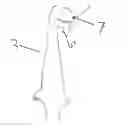
FIG. 1 is a perspective view of the training device being held in the hand according to the present invention.
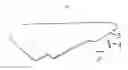
FIG. 2 is a schematic view of the components used to construct and attach the towel to the ball that comprise the training device according to the present invention.
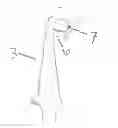
FIG. 3 is a perspective view of the training device being used to simulate the overhead throwing motion used by baseball position players and pitchers.
DETAILED DESCRIPTION OF THE PREFERRED EMBODIMENT OF THE DEVICE
In the following detailed description of the preferred embodiments, reference is made to the accompanying drawings, which form a part thereof and within which are shown by illustration specific embodiments by which the invention may be practiced. It is to be understood that other embodiments may be utilized and structural changes may be utilized and structural changes may be made without departing from the scope of the invention.
As used in this specification and the appended claims, the singular forms “a”, “an”, and “the” include plural referents unless the content clearly dictates otherwise. As used in this specification and the appended claims, the term “or” is generally employed in its sense including “and/or” unless the context clearly dictates otherwise.
In general, a training device 7 in accordance with the present invention is depicted in FIG. 1. Training device 7 includes a ball 6 with a small towel 3 attached to the surface of the ball 6.
FIG. 2 depicts the towel 3, fastening bar 4 and fastener 5. In accordance of the preferred embodiment of the present invention, the towel 3 is attached to the fastening bar 4 and then fastened to the surface of the ball 6 with two fasteners 5.
FIG. 3 depicts the user simulating the overhead throwing motion used by baseball position players and baseball pitchers. The user strikes a target at a measurable distance relative to the user and strikes the target with the furthest end of the towel, thus simulating the overhead throwing motion without letting go of the ball.
The training device in accordance to the current invention, overcomes the flaw in the '106 device of having an object that has to pass between the fingers of the user restricting the grip of the ball, by fastening the towel at the apex of the ball keeping the towel out of the gripping area. Additionally the '106 device has breaks, or joints in its tethering device allowing for exaggerated lag in the tethering device, this additional lag does not represent the optimal throwing sequence resulting in poor feedback and repeating an inaccurate motion, this is overcome by using a solid material. Finally, both the '106 and '291 device use materials that potentially could become a projectile if dislodged or the ball was thrown by accident nor do they give any feedback when the correct throwing motion was attained, this is overcome by using s soft material that has no points, or surface that would become harmful if dislodged and can offer feedback by the sound of the towel hitting the target. The '291 device utilizes objects that are designed to slow the throwing arm down. The goal of this device is to offer resistance to the throwing arm thus slowing the arm down, doing nothing to condition the throwing arm to support and repeat arm speed this is overcome by using a solid material that dies not impede the ability to create arm speed. This flaw is particularly important, as arm speed and grip are vital elements of the optimal throwing motion for baseball position players and baseball pitchers.
Accordingly, there exists the need for a training device and method that can be utilized for training and conditioning the throwing arm to support arm speed. Such a device must be able to accurately simulate the proper techniques to make a mechanically sound throw, without effecting how the grip of the ball. In addition, there exists a need for a device and method that provides accurate feedback when the user has repeated the proper overhead throwers motion and achieved sufficient arm speed with the throwing arm. Finally there exists a need for a training device that will not become harmful if dislodged or thrown by accident. However, in view of the art considered as a whole at the time of the present invention was made, it was not obvious to those of ordinary skill in the field of this invention how the shortcomings of the prior art could be overcome.
The present invention may address one or more of the problems and deficiencies of the prior art discussed above. However, it is contemplated that the invention may also prove useful in addressing other problems and deficiencies in a number of technical areas. Therefore, the claimed invention should not necessarily be construed as limited to addressing any of the particular problems or deficiencies discussed herein.
In this specification where a document, act or item of knowledge is referred to or discussed, this reference or discussion is not an admission that the document, act or item of knowledge or any combination thereof was at the priority date, publicly available, known to the public, part of common general knowledge, or otherwise constitutes prior art under the applicable statutory provisions; or is known to be relevant to an attempt to solve any problem with which this specification is concerned.
Glossary of the Claim Terms
Fastening bar—a device the small towel is fastened to, as well as to be fastened to the surface of the ball.
The ball—a ball having a solid core, a surface and seams on the surface of the ball.
The small towel—a device made of various types of fabrics.
Claims
What is claimed is:1. An overhead throwers training device, comprising of a ball having a solid core, a surface and seams on the surface of the ball.
2. The training device according to claim 1, further comprising:
a. A towel attached to a fastening bar by winding towel around fastening bar and sealing with an adhesive and fastening bar attached to the surface of the training device at the apex of the surface, not interfering with gripping the ball.
3. The overhead throwers training device according to claim 1, wherein the ball is a regulation baseball, or baseball of smaller size.
4. A training device according to claim 2, further comprising a target for placement at a distance based on a measurable distance relative to the user, wherein the target is configured to be struck with the furthest end of the towel.
5. The training device according to claim 2, wherein the towel does not interfere with gripping the ball.
6. A method of training, the method comprising:
Providing a
ball comprising a solid core, a surface and one or more seams on the surface of the ball;
attaching a towel to the fastening bar,
attaching a fastening bar to the surface of the ball,
attaching a towel to the fastening bar,
placing a target at a distance from the overhead thrower,
gripping the ball,
and striking the target with an end of the towel unattached to the fastening bar,
wherein the attached fastening bar does not interfere with gripping the ball.
7. The method of training according to claim 6, the method further comprising:
striking the target with an overhead throwing motion without letting go of the ball.
8. The method of training according to claim 7, the method further comprising:
attaching the towel to the fastening bar by winding the towel around the fastening bar and sealing the towel to the fastening bar with an adhesive.
9. The method of training according to claim 8,
wherein the ball is a baseball of regulation size or smaller.
10. The method of training according to claim 9,
wherein the towel attached to the fastening bar does not interfere with gripping the ball.
Images & Drawings included:
Sources:
- United States Patent and Trademark Office - verify current appl. status at the USPTO↗
Recent applications in this class:
- » 20250135311 2025-05-01
HITTING TOOL SELECTION DIAGNOSIS SYSTEM, HITTING TOOL SELECTION DIAGNOSIS METHOD, AND NON-TRANSITORY COMPUTER-READABLE MEDIUM STORING DIAGNOSIS PROGRAM - » 20250114680 2025-04-10
BATTING TEE ADAPTER AND SYSTEM - » 20250083017 2025-03-13
BASEBALL AND SOFTBALL TRAINING DEVICE FOR IMPROVED SPIN RATE AND EFFICIENCY - » 20250083016 2025-03-13
Throwing Footwork Trainer - » 20250073552 2025-03-06
BALL PRESSURE MEASUREMENT SYSTEM AND METHOD - » 20250065205 2025-02-27
Baseball Batting Training Assembly - » 20250065204 2025-02-27
PITCH TRAINING DEVICE - » 20250032877 2025-01-30
SHOCK ABSORBING DEFORMABLE SPORTING SUPPORT APPARATUS - » 20250032876 2025-01-30
TRAINING BAT APPARATUS - » 20250025759 2025-01-23
Baseball Grip Training Device