Battery and electric bicycle
US20170229883A1
2017-08-10
15/259,647
2016-09-08
✅ Patent granted
US 10,027,136 B2
2018-07-17
-
-
Edward Tso
Finnegan, Henderson, Farabow, Garrett & Dunner, L.L.P.
2036-10-27
Abstract:
According to one embodiment, a battery includes: a first wire; a second wire; a third wire; a first resistor; a first switch; a second switch; a second resistor; a voltage measurer; and a controller that calculates a second resistance value of the third wire using a first voltage of a first battery when the first switch is turned on and the second switch is turned off, a second voltage of a second battery when the first switch is turned on and the second switch is turned off, a third voltage of the second battery when the first switch is turned off and the second switch is turned off, and a first resistance value of the first resistor.
Inventors:
- Tomokazu Morita 17 🇯🇵 Chiba, Japan
- Tomokazu MORITA 48 🇯🇵 Funabashi, Japan
- Nobukatsu Sugiyama 32 🇯🇵 Kawasaki, Japan
- Ena ISHll 6 🇯🇵 Yokohama, Japan
- Nobukatsu Sugiyama 8 🇯🇵 Kanagawa, Japan
- Ena Ishii 11 🇯🇵 Kanagawa, Japan
Assignee:
- Kabushiki Kaisha Toshiba 36,067 🇯🇵 Tokyo, Japan
Applicant:
Interested in similar patents?
Get notified when new applications in this technology area are published.
Classification:
H02J7/0019 » CPC main
Circuit arrangements for charging or depolarising batteries or for supplying loads from batteries acting upon several batteries simultaneously or sequentially; Circuits for equalisation of charge between batteries using switched or multiplexed charge circuits
H01M10/4257 » CPC further
Secondary cells; Manufacture thereof; Methods or arrangements for servicing or maintenance of secondary cells or secondary half-cells; Structural combination with electronic components, e.g. electronic circuits integrated to the outside of the casing Smart batteries, e.g. electronic circuits inside the housing of the cells or batteries
H01M10/443 » CPC further
Secondary cells; Manufacture thereof; Methods or arrangements for servicing or maintenance of secondary cells or secondary half-cells; Methods for charging or discharging in response to temperature
H01M10/482 » CPC further
Secondary cells; Manufacture thereof; Methods or arrangements for servicing or maintenance of secondary cells or secondary half-cells; Accumulators combined with arrangements for measuring, testing or indicating the condition of cells, e.g. the level or density of the electrolyte for several batteries or cells simultaneously or sequentially
H01M10/486 » CPC further
Secondary cells; Manufacture thereof; Methods or arrangements for servicing or maintenance of secondary cells or secondary half-cells; Accumulators combined with arrangements for measuring, testing or indicating the condition of cells, e.g. the level or density of the electrolyte for measuring temperature
H02J7/007 » CPC further
Circuit arrangements for charging or depolarising batteries or for supplying loads from batteries Regulation of charging or discharging current or voltage
H02J7/0021 » CPC further
Circuit arrangements for charging or depolarising batteries or for supplying loads from batteries acting upon several batteries simultaneously or sequentially Monitoring or indicating circuits
B60L2200/12 » CPC further
Type of vehicles Bikes
B60L2240/36 » CPC further
Control parameters of input or output; Target parameters; Vehicle control parameters Temperature of vehicle components or parts
H01M10/48 IPC
Secondary cells; Manufacture thereof; Methods or arrangements for servicing or maintenance of secondary cells or secondary half-cells Accumulators combined with arrangements for measuring, testing or indicating the condition of cells, e.g. the level or density of the electrolyte
H01M10/42 IPC
Secondary cells; Manufacture thereof Methods or arrangements for servicing or maintenance of secondary cells or secondary half-cells
H01M10/44 IPC
Secondary cells; Manufacture thereof; Methods or arrangements for servicing or maintenance of secondary cells or secondary half-cells Methods for charging or discharging
B60L2240/545 » CPC further
Control parameters of input or output; Target parameters; Drive Train control parameters related to batteries Temperature
B60L2240/547 » CPC further
Control parameters of input or output; Target parameters; Drive Train control parameters related to batteries Voltage
B60L2240/549 » CPC further
Control parameters of input or output; Target parameters; Drive Train control parameters related to batteries Current
H01M2010/4271 » CPC further
Secondary cells; Manufacture thereof; Methods or arrangements for servicing or maintenance of secondary cells or secondary half-cells; Structural combination with electronic components, e.g. electronic circuits integrated to the outside of the casing Battery management systems including electronic circuits, e.g. control of current or voltage to keep battery in healthy state, cell balancing
H01M2010/4278 » CPC further
Secondary cells; Manufacture thereof; Methods or arrangements for servicing or maintenance of secondary cells or secondary half-cells; Structural combination with electronic components, e.g. electronic circuits integrated to the outside of the casing Systems for data transfer from batteries, e.g. transfer of battery parameters to a controller, data transferred between battery controller and main controller
H01M2220/20 » CPC further
Batteries for particular applications Batteries in motive systems, e.g. vehicle, ship, plane
H01M10/46 IPC
Secondary cells; Manufacture thereof; Methods or arrangements for servicing or maintenance of secondary cells or secondary half-cells Accumulators structurally combined with charging apparatus
H02J7/00 IPC
Circuit arrangements for charging or depolarising batteries or for supplying loads from batteries
Description
CROSS-REFERENCE TO RELATED APPLICATION
This application claims priority from Japanese Patent Application No. 2016-020900 filed on Feb. 5, 2016, the contents of which are incorporated herein by reference in their entirety.
FIELD
Embodiments described herein relate generally to a battery and an electric bicycle.
BACKGROUND
A battery module has a configuration in which a plurality of secondary batteries are serially connected.
A battery measures voltages of the secondary batteries of the battery module and adjusts the voltages or amounts of charge.
In order to adjust a voltage or an amount of charge of a secondary battery, it is necessary to calculate a resistance value of a wire connected to the secondary battery in advance.
Some conventional methods of calculating a resistance value of a wire use voltages which are measured before and after a current flows in a circuit.
However, since a resistance value of an internal resistor of a battery is too small and is thus ignored, the resistance value of the internal resistor is not considered when calculating the resistance value of the wire.
Accordingly, in the conventional methods of calculating a resistance value of a wire, it is not possible to calculate an accurate resistance value of a wire.
BRIEF DESCRIPTION OF THE DRAWINGS
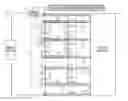
FIG. 1 is a diagram showing a configuration of a battery.
FIG. 2 is a diagram showing a process flow of a wire-resistance calculator.
FIG. 3 is a diagram showing a relationship between time and voltage of a secondary battery cell.
FIG. 4 is a diagram showing a relationship between time and voltage of a secondary battery cell.
FIG. 5 is a diagram showing a battery including a temperature measurer.
FIG. 6 is a diagram showing an electric bicycle including the battery.
DETAILED DESCRIPTION
According to one embodiment, a battery includes: a first battery that includes a first positive electrode and a first negative electrode; a second battery that includes a second positive electrode and a second negative electrode; a first wire that connects the first positive electrode and the second negative electrode; a second wire that connects the first negative electrode and the second positive electrode; a third wire that connects the first wire and the second wire; a first resistor that is inserted into the second wire between a junction point of the second wire and the third wire and the first negative electrode; a first switch that is inserted into the second wire between the first resistor and the first negative electrode; a second switch that is inserted into the second wire between the junction point and the second positive electrode; a second resistor that is inserted into the second wire between the second switch and the second positive electrode; a voltage measurer that measures a voltage between the first switch and the first negative electrode in the second wire, a voltage between the second resistor and the second positive electrode in the second wire, and a voltage of the junction point; and a controller, wherein the controller calculates a second resistance value of the third wire using a first voltage of the first battery when the first switch is turned on and the second switch is turned off, a second voltage of the second battery when the first switch is turned on and the second switch is turned off, a third voltage of the second battery when the first switch is turned off and the second switch is turned off, and a first resistance value of the first resistor.
Hereinafter, embodiments will be described with reference to the accompanying drawings.
Like elements will be provided with like reference signs.
The drawings are schematic or conceptual, and a relationship between a thickness and a width of each element, and sizes, specific coefficients, and the like of the elements cannot be said to be the same as they actually are.
The same element may be drawn with different sizes or specific coefficients in the drawings.
First Embodiment
FIG. 1 shows a configuration of a battery 10.
The battery 10 includes a secondary battery module 11, a voltage measurer 12, a power source 13, a current measurer 14, a cell balancing circuit 15, a cell balance controller 16, a storage 5, and a wire-resistance calculator 17.
The secondary battery module 11 includes n secondary battery cells 11-1, 11-2, . . . , and 11-n which are connected in series.
The secondary battery cells 11-1, 11-2, . . . , and 11-n are secondary batteries such as lithium ion batteries.
It is assumed that electromotive forces of the secondary battery cells 11-1, 11-2, . . . , and 11-n are defined as El, E2, , and En, respectively, and internal resistors of the secondary battery cells 11-1, 11-2, . . . , and 11-n are defined as Ri1, Ri2, . . . , and Rin, respectively.
The power source 13 is connected to a plus-side terminal and a minus-side terminal of the secondary battery module 11.
When the power source 13 is connected to the secondary battery module 11, the secondary battery module 11 is charged.
The power source 13 may be replaced with a load for use.
The load is a circuit or an element that consumes electric power.
When the load is connected to the secondary battery module 11, electric power of the secondary battery module 11 is consumed.
A voltage measuring line Lv0 is a wire that connects a junction point T0 and the voltage measurer 12.
A voltage measuring line Lvn+1 is a wire that connects a junction point Tn+1 and the voltage measurer 12.
A voltage measuring line Lv01 connects a junction point T01 and the voltage measurer 12.
A voltage measuring line Lv12 connects a junction point T12 and the voltage measurer 12.
A voltage measuring line Lv23 connects a junction point T23 and the voltage measurer 12.
A voltage measuring line Lvn+1 connects a junction point Tnn+1 and the voltage measurer 12.
The voltage measurer 12 measures a voltage between the plus-side terminal and the minus-side terminal of the secondary battery module 11.
The voltage measurer 12 measures a voltage between a positive electrode terminal and a negative electrode terminal of each of the secondary battery cells 11-1, 11-2, . . . , and 11-n.
A junction point S01 of the voltage measuring line Lv01 and a junction point S12 of the voltage measuring line Lv12 are connected.
A switch SW1 and a resistor R1 are inserted between the junction point S01 of the voltage measuring line Lv01 and the junction point S12 of the voltage measuring line Lv12.
The junction point S12 of the voltage measuring line Lv12 and a junction point S23 of the voltage measuring line Lv23 are connected.
A switch SW2 and a resistor R2 are inserted between the junction point S12 of the voltage measuring line Lv12 and the junction point S23 of the voltage measuring line Lv23.
A junction point Sn−1n of a voltage measuring line Lvn−1n and a junction point Snn+1 of the voltage measuring line Lvnn+1 are connected.
A switch SWn and a resistor Rn are inserted between the junction point Sn−1n of the voltage measuring line Lvn−1n and the junction point Snn+1 of the voltage measuring line Lvnn+1.
The voltage measuring line Lv01 between the junction point T01 and the junction point S01 includes a wire resistor Rl01.
The voltage measuring line Lv12 between the junction point T12 and the junction point S12 includes a wire resistor Rl12.
The voltage measuring line Lv23 between the junction point T23 and the junction point S23 includes a wire resistor Rl23.
The voltage measuring line Lvnn+1 between the junction point Tnn+1 and the junction point Snn+1 includes a wire resistor Rlnn+1.
The current measurer 14 is serially connected to the secondary battery module 11.
The current measurer 14 measures a current flowing in the secondary battery module 11.
The cell balance controller 16 controls switching of the switches SW1, SW2, . . . , and SWn.
For example, when the switch SW1 is turned on, the secondary battery cell 11-1 is connected to the resistor R1 and the secondary battery cell 11-1 is in a discharging state.
The wire-resistance calculator 17 calculates a resistance value of each of the wire resistors Rl01, Rl12, . . . , Rln−1n, and Rlnn+1.
The storage 5 stores the voltage values of the secondary battery cells 11-1, 11-2, . . . , and 11-n measured by the voltage measurer 12, the current values measured by the current measurer 14, and the resistance values of the wire resistors Rl01, Rl12, . . . , and Rln−1n, and Rlnn+1 calculated by the wire-resistance calculator 17.
The cell balance controller 16 and the wire-resistance calculator 17 may be controlled by one controller (one circuit).
The cell balancing circuit 15 is a part including the secondary battery module 11, the switches SW1, SW2, . . . , and SWn, and the resistors R1, R2, . . . , and Rn.
The cell balancing circuit 15 is a circuit that equalizes the voltages of the secondary battery cells 11-1, 11-2, . . . , and 11-n with each other.
The cell balancing circuit 15 is not particularly limited as long as it can individually charge and discharge one or more secondary battery cells.
Here, arrangement of parts will be described with a focus on the secondary battery cell (a first battery) 11-1 and the secondary battery cell (a second battery) 11-2 among the secondary battery cells 11-1, 11-2, . . . , and 11-n.
The positive electrode (a first positive electrode) of the secondary battery cell 11-1 and the negative electrode (a second negative electrode) of the secondary battery cell 11-2 are connected by a wire (a first wire) 1.
The negative electrode (a first negative electrode) of the secondary battery cell 11-1 and the positive electrode (a second positive electrode) of the secondary battery cell 11-2 are connected by a wire (a second wire) 2.
A wire (a third wire) 3 connects the junction point T12 of the wire 1 and the junction point S12 of the wire 2.
In the wire 2, the resistor (a first resistor) R1 is inserted in series between the junction point S12 and the negative electrode (the first negative electrode) of the secondary battery cell 11-1.
In the wire 2, the switch (a first switch) SW1 is inserted in series between the resistor (the first resistor) R1 and the negative electrode (the first negative electrode) of the secondary battery cell 11-1.
In the wire 2, the switch (a second switch) SW2 is inserted in series between the junction point S12 and the positive electrode (the second positive electrode) of the secondary battery cell 11-2.
In the wire 2, the resistor (a second resistor) R2 is inserted in series between the switch (the second switch) SW2 and the positive electrode (the second positive electrode) of the secondary battery cell 11-2.
The voltage measurer 12 measures a voltage between the resistor R2 and the positive electrode (the second positive electrode) of the secondary battery cell 11-2 in the wire 2, a voltage between the switch SW1 and the negative electrode (the first negative electrode) of the secondary battery cell 11-1 in the wire 2, and a voltage of the junction point S12.
The voltages of the secondary battery cells 11-1, 11-2, . . . , and 11-n which are measured by the voltage measurer 12 are defined as v1 (V), v2 (V), . . . , and vn (V).
The voltage of the secondary battery module 11 that is measured by the voltage measurer 12 is defined as v (V).
The voltage measuring line Lv0 and the voltage measuring line Lv01 may be formed as a single wire.
The voltage measuring line Lvn+1 and the voltage measuring line Lvnn+1 may be formed as a single wire.
The wire-resistance calculator 17 calculates the resistance values of the wire resistors Rl01, Rl12, . . . , Rln−1n, and Rlnn+1 when the absolute value of the current measured by the current measurer 14 is sufficiently small, that is, when the secondary battery module 11 is neither charged nor discharged.
One of the switches SW1 to SWn is turned on every predetermined interval k, and the resistance values of the wire resistors Rl01, Rl12, . . . , Rln−1n, and Rlnn+1 are calculated.
Here, k is a predetermined natural number and is preferably 1 or 2.
When k=1, the cell balance controller 16 turns on the switch SW1.
When the switch SW1 is turned on, the wire-resistance calculator 17 calculates the resistance values of the wire resistor Rl01 and the wire resistor Rl12.
The cell balance controller 16 turns off the switch SW1 and then turns on the switch SW2.
The wire-resistance calculator 17 calculates the resistance values of the wire resistor Rl12 and the wire resistor Rl23.
The resistance value of the wire resistor Rl12 is calculated two times when the switch SW1 is turned on and when the switch SW2 is turned off.
The wire-resistance calculator 17 can improve calculation accuracy of the resistance value of the wire resistor Rl12 by calculating an average of the resistance values of the wire resistor Rl12.
When k=2, the cell balance controller 16 turns on the switch SW1.
When the switch SW1 is turned on, the wire-resistance calculator 17 calculates the resistance values of the wire resistor Rl01 and the wire resistor Rl12.
The cell balance controller 16 turns off the switch SW1 and then turns on the switch SW3.
The wire-resistance calculator 17 calculates the resistance values of the wire resistor Rl23 and the wire resistor Rl34.
When k=2, the wire-resistance calculator 17 calculates the resistance values of the wire resistors Rl01, Rl12, . . . , Rln−1n, and Rlnn+1 at least one time.
Since the number of switches SW1, SW2, . . . , and SWn which are controlled by the cell balance controller 16 is smaller than that of when k=1, a time in which the wire-resistance calculator 17 calculates the resistance values of the wire resistors Rl01, Rl12, . . . , Rln−1n, and Rlnn+1 is shorter.
When k>2, all of the resistance values of the wire resistors Rl01, Rl12, . . . , Rln−1n, and Rlnn+1 cannot be calculated, and thus all of the resistance values of all of the wire resistors Rl01, Rl12, . . . , Rln−1n, and Rlnn+1 are calculated by interpolation.
For example, it is assumed that the resistance values of the wire resistors Rl01, Rl12, . . . , Rln−1n, and Rlnn+1 are the same.
At this time, an average value of the resistance values of the wire resistors Rl01, Rl12, . . . , Rln−1n, and Rlnn+1 which are calculated by the wire-resistance calculator 17 is set as the resistance values of all the wire resistors Rl01, Rl12, . . . , Rln−1n, and Rlnn+1.
FIG. 2 shows a process flow of the wire-resistance calculator 17.
The wire-resistance calculator 17 starts a process flow (Step 101).
The cell balance controller 16 turns off all switches (Step 102).
Here, j denotes the number of the switches SW1, SW2, . . . , and SWn controlled by the cell balance controller 16, and j is any one of 1, 2, . . . , and n.
When j=1 (Step 104), the wire-resistance calculator 17 stores the voltage v of the secondary battery module 11, the voltage v1 of the secondary battery cell 11-1, and the voltage v2 of the secondary battery cell 11-2 which are measured by the voltage measurer 12 in the storage 5, and defines the voltages as V′, V1′, and V2′.
Since no current flows in the secondary battery module 11, the voltage V′ of the secondary battery module 11, the voltage V1′ (a fifth voltage) of the secondary battery cell 11-1, and the voltage V2′ (a third voltage) of the secondary battery cell 11-2 are the same as an electromotive force E1+E2+ . . . +En of the secondary battery module 11, the electromotive force E1 of the secondary battery cell 11-1, and the electromotive force E2 of the secondary battery cell 11-2, respectively, (Step 105).
When the cell balance controller 16 turns on the switch SW1, a current flows in the secondary battery cell 11-1, the wire resistor Rl01, the resistor R1, and the wire resistor Rl12 (Step 106).
The voltage measurer 12 stores the measured voltage v of the secondary battery module 11, the measured voltage v1 of the secondary battery cell 11-1, and the measured voltage v2 of the secondary battery cell 11-2 in the storage 5, and defines the voltages as the voltage V of the secondary battery module 11, the voltage (a first voltage) V1 of the secondary battery cell 11-1, and the voltage (a second voltage) V2 of the secondary battery cell 11-2 (Step 107).
The wire-resistance calculator 17 calculates the resistance value rl01 of the wire resistor Rl01 and the resistance value (a second resistance value) rl12 of the wire resistor Rl12 using the voltage V′ of the secondary battery module 11, the voltage V1′ of the secondary battery cell 11-1, and the voltage V2′ of the secondary battery cell 11-2 which are measured by the voltage measurer 12 when the switch SW1 is turned off in Step 105 and the voltage V of the secondary battery module 11, the voltage V1 of the secondary battery cell 11-1, the voltage V2 of the secondary battery cell 11-2, and the resistance value (a first resistance value) of the resistor R1 which are measured by the voltage measurer 12 when the switch SW1 is turned on in Step 107, and stores the calculated resistance values in the storage 5 (Step 108).
The cell balance controller 16 turns off the switch SW1 (Step 109).
It is checked whether j=n is established (Step 119).
When j=n is not established, j=j+k is set in Step 120 and it is checked whether j>n is established in Step 121.
When it is determined that j>n is not established in Step 121, the process flow is returned to Step 104.
When it is determined that j>n is established in Step 121, j=n is set in Step 122 and the process flow is returned to Step 104.
Here, a method of calculating the resistance value rl01 of the wire resistor Rl01 and the resistance value rl12 of the wire resistor Rl12 in Step 108 will be described below.
The voltage V of the secondary battery module 11, the voltage V1 (the first voltage) of the secondary battery cell 11-1, and the voltage V2 of the secondary battery cell 11-2 which are measured by the voltage measurer 12 when the switch SW1 is turned on in Step 107 are expressed by Equation (1), Equation (2), and Equation (3).
Equation (1)
V=V′−(Ri1)×I1 (1)
Equation (2)
V1=V1′−(Ri1+Rl01+Rl12)I1 (2)
Equation (3)
V2=V2′+Rl12×I1 (3)
Here, when a current flowing in the resistor R1 is defined as I1, the current I1 can be calculated by Equation (4) using the voltage v1 of the secondary battery cell 11-1 and a known resistance value r1 of the resistor R1
Equation ( 4 ) I 1 = V 1 r 1 ( 4 )
Accordingly, by substituting Equation (1), Equation (3), and Equation (4) into Equation (2) and arranging the equation with respect to the wire resistor Rl01, the resistance value rl01 of the wire resistor Rl01 can be calculated by Equation (5).
Equation ( 5 ) rl 01 = ( V 1 ′ - V 1 + V ′ - V + V 2 ′ - V 2 ) r 1 V 1 ( 5 )
By substituting Equation (4) into Equation (3), the resistance value rl12 of the wire resistor Rl12 can be calculated by Equation (6).
Equation ( 6 ) rl 12 = ( V 2 - V 2 ′ ) r 1 V 1 ( 6 )
When j=1 is not established (Step 104) and j=n is established (Step 110), the wire-resistance calculator 17 stores the voltage v of the secondary battery module 11, a voltage vn−1 of a secondary battery cell 11-n−1, and the voltage vn of the secondary battery cell 11-n which are measured by the voltage measurer 12 in the storage 5, and defines the voltages as V′, Vn−1′, and Vn′.
Here, since no current flows in the secondary battery module 11, the voltage V′ of the secondary battery module 11, the voltage Vn−1′ of the secondary battery cell 11-n−1, and the voltage Vn′ of the secondary battery cell 11-n are the same as the electromotive forces E1+E2+ . . . +En, En−1, and En of the batteries (Step 111).
When the cell balance controller 16 turns on the switch SWn, a current In (>0) flows in the secondary battery cell 11-n, the wire resistor Rln−1n, the resistor Rn, and the wire resistor Rlnn+1 (Step 112).
The voltage measurer 12 measures the voltage v of the secondary battery module 11, the voltage vn−1 of the secondary battery cell 11-n−1, and the voltage vn of the secondary battery cell 11-n, and defines the measured voltages as V, Vn−1, and Vn (Step 113).
The wire-resistance calculator 17 calculates the resistance values rln−1n and rlnn−1 of the wire resistors Rln−1n and Rlnn+1 using the voltages V′, Vn−1′, and Vn′ stored in the storage 5 by the wire-resistance calculator 17 in Step 111 and the voltages V, Vn−1, and Vn measured by the voltage measurer 12 in Step 113, and stores the calculated resistance values in the storage 5 (Step 114).
The cell balance controller 16 turns off the switch SWn (Step 109).
It is checked whether j=n is established (Step 119).
Since j=n is established, the process flow moves to Step 123 and then ends.
The voltage v of the secondary battery module 11, the voltage Vn of the secondary battery cell 11-n−1, and the voltage Vn−1 of the secondary battery cell 11-n which are measured in Step 113 are expressed by Equation (7), Equation (8), and Equation (9).
Equation (7)
V=V′−(Rin)×In (7)
Equation (8)
Vn−1=V2′+rln−1nIn (8)
Equation (9)
Vn=Vn′−(Rin+rln−1n+rlnn+1)In (9)
When j=1 is not established (Step 104) and j=n is not established (Step 110), that is, when 1<j<n is established, the wire-resistance calculator 17 stores a voltage vj−1 of a secondary battery cell 11-j−1, a voltage vj of a secondary battery cell 11-j, and a voltage vj+1 of a secondary battery cell 11-j+1 measured by the voltage measurer 12, and defines these voltages as Vj−1′, Vj′, and Vj+1′.
Here, since no current flows in the secondary battery module 11, Vj−1′, Vj′, and Vj+1′ are the same as an electromotive force Ej−1 of the secondary battery cell 11-j−1, an electromotive force Ej of the secondary battery cell 11-j, and an electromotive force Ej+1 of the secondary battery cell 11-j+1, respectively (Step 115).
The cell balance controller 16 turns on a switch SWj, and then a current Ij (>0) flows in the secondary battery cell 11-j, a wire resistor Rlj−1j, a resistor Rj, and a wire resistor Rljj+1 (Step 116).
The voltage measurer 12 measures the voltage vj−1 of the secondary battery cell 11-j−1, the voltage vj of the secondary battery cell 11-j, and the voltage vj+1 of the secondary battery cell 11-j+1 (Step 117).
The wire-resistance calculator 17 calculates the resistance values of the wire resistor Rlj−1j and the wire resistor Rljj+1 using the voltage Vj−1′ of the secondary battery cell 11-j−1, the voltage Vj′ of the secondary battery cell 11-j, and the voltage Vj+1′ of the secondary battery cell 11-j+1 stored by the wire-resistance calculator 17 when all of the switches are turned off and the voltage Vj−1 of the secondary battery cell 11-j−1, the voltage Vj of the secondary battery cell 11-j, and the voltage Vj+1 of the secondary battery cell 11-j+1 which are measured by the voltage measurer 12 when the switch SWj is turned on (Step 118).
The cell balance controller 16 turns off the switch SWj (Step 109).
It is checked whether j=n is established (Step 119).
When j=n is not established, j=j+k is set in Step 120 and it is checked whether j>n is established in Step 121.
When it is determined that j>n is not established in Step 121, the process flow is returned to Step 104.
When it is determined that j>n is established in Step 121, j=n is set in Step 122 and the process flow is returned to Step 104.
A method of calculating the resistance values of the wire resistor Rlj−1j and the wire resistor Rljj−1 in Step 118 will be described below.
The voltage Vj−1 of the secondary battery cell 11-j−1, the voltage Vj of the secondary battery cell 11-j, and the voltage Vj+1 of the secondary battery cell 11-j+1 which are measured by the voltage measurer 12 are expressed by Equation (10), Equation (11), and Equation (12).
Equation (10)
Vj−1=Vj−1′+rj−1jIj (10)
Equation (11)
Vj=rjIj (11)
Equation (12)
Vj+1=(Vj+1′)+rjj+1Ij (12)
When a resistance value rj of the resistor Rj is known, Equation (11) and Equation (12) are substituted into Equation (10) and resistance values rj−1j and rjj+1 of the wire resistors Rlj−1j and Rljj+1 are calculated by Equation (13) and Equation (14).
Equation ( 13 ) r j - 1 j = ( V j - 1 - V j - 1 ′ ) r j V j ( 13 ) Equation ( 14 ) r jj + 1 = ( V j + 1 - V j + 1 ′ ) r j V j ( 14 )
A method of calculating the voltages of the secondary battery cells 11-1, 11-2, . . . , and 11-n using the resistance values of the wire resistors Rl01, Rl12, . . . , Rln−1n, and Rlnn+1 which are measured in FIG. 2 will be described below.
Under the control of the cell balance controller 16, all of the switches SW1, SW2, . . . , and SWn are turned off.
At this time, the voltages of the secondary battery cells 11-1, 11-2, . . . , and 11-n which are measured by the voltage measurer 12 are defined as V1′, V2′, . . . , and Vn′, respectively.
Under the control of the cell balance controller 16, operating conditions of the switches SW1, SW2, . . . , and SWn corresponding to the secondary battery cells 11-1, 11-2, . . . , and 11-n are determined.
For example, when the voltage V1′ (the fifth voltage) of the secondary battery cell 11-1 is higher than a predetermined threshold voltage or is higher than the voltages of other secondary battery cells such as the secondary battery cell 11-2, it is determined that the switch SW1 corresponding to the secondary battery cell 11-1 should be turned on.
This determination is performed on the voltages V1′, V2′, . . . , and Vn′ of the secondary battery cells 11-1, 11-2, . . . , and 11-n.
That is, when it is determined that a secondary battery cell 11-m (where m is any one of 1 to n) satisfies the operating condition, a switch SWm corresponding to the secondary battery cell 11-m is turned on.
A cell voltage Vm of the secondary battery cell 11-m, in which the switch SWm is turned on, is detected by the voltage measurer 12.
The wire-resistance calculator 17 calculates a current Im flowing in a resistor Rm from the cell voltage Vm when the switch SWm is turned on.
That is, the wire-resistance calculator 17 calculates the current value of the current Im in the secondary battery cell 11-m, in which the switch SWm is turned on, on the basis of the resistance value of the resistor Rm.
For example, when the switch SW1 of the secondary battery cell 11-1 is turned on, the current value of the current I1 is calculated on the basis of the resistance value r1 of the resistor R1.
The current value of the current I1 is calculated by “I1=V1/r1.”
The wire-resistance calculator 17 calculates a voltage drop value ΔVm which is generated in a wire resistor Rlm−1m and a wire resistor Rlmm+1 on the basis of the current value of the current Im.
The voltage drop value ΔVm is calculated by “ΔVm=Im×(rlm−1m+rlmm +1).”
For example, when the switch SW1 of the secondary battery cell 11-1 is turned on, the voltage drop value ΔV1 which is generated by the resistance value rl01 of the wire resistor Rl01 and the resistance value rl12 of the wire resistor Rl12 is calculated on the basis of the current value of the current I1.
The voltage drop value ΔV1 is calculated by “ΔV1=I1×(rl01+rl12).”
The wire-resistance calculator 17 corrects the voltage Vm of the secondary battery cell 11-m by adding the voltage drop value ΔVm to the voltage Vm of the secondary battery cell 11-m.
A true voltage of the secondary battery cell 11-m can be calculated by “Vm+ΔVm.”
For example, when the switch SW1 of the secondary battery cell 11-1 is turned on, a true voltage (a fourth voltage) of the secondary battery cell 11-1 is calculated by adding the voltage drop value ΔV1 to the voltage V1 of the secondary battery cell 11-1 detected by the voltage measurer 12 (V1+ΔV1).
j=1 is set in Step 103 and it is checked whether j=n is established in Step 119, but this checking may not necessarily be performed.
For example, when the resistance value of the wire resistor Rl23 is set as j=2 in Step 103. it is checked whether j=2 is established in Step 119.
Similarly, Step 103, Step 119, or the predetermined k may be changed depending on the resistance value of the wire resistor Rljj+1 which will be calculated.
Since resistors of wires between a certain secondary battery cell 11-x and junction points Tx−1x and Txx+1 can be considered as an internal resistor Rix of the secondary battery cell 11-x, the resistor of the wire between the secondary battery cell 11-x and the junction point Tx−1x and the resistor of the wire between the secondary battery cell 11-x and the junction point Txx+1 do not have to be considered.
Since a small current flows in the wires between the junction points S01, S12, . . . , and Snn+1 and the voltage measurer 12 for the purpose of accurate voltage measurement, the wire resistors may be ignored.
Step 105, Step 111, and Step 115 may be performed after Step 109.
FIG. 3 is a diagram showing the voltage v1 of the secondary battery cell 11-1 and the voltage v2 of the secondary battery cell 11-2 which are measured by the voltage measurer 12 when the switch SW1 is turned on or off in the process flow shown in FIG. 2.
The horizontal axis represents time (seconds) and the vertical axis represents voltage (V).
A solid line indicates the voltage v1 of the secondary battery cell 11-1 and a broken line indicates the voltage v2 of the secondary battery cell 11-2.
Between a time t1 and a time t2, the switch SW1 is turned on.
When the switch SW1 is turned on, a current flows in the secondary battery cell 11-1.
The voltage v1 measured by the voltage measurer 12 at this time is not the electromotive force of the secondary battery cell 11-1.
As expressed by Equation (2), the voltage of the secondary battery cell 11-1, that is, the voltage between the junction point T01 and the junction point T12, which should be measured cannot be measured due to an influence of a voltage drop in the wire resistors Rl01 and Rl12, in addition to a voltage drop in the internal resistor Ri1 of the secondary battery cell 11-1.
Between the time t1 and the time t2, the voltage v1 greatly decreases.
When the switch SW1 is turned on, no current flows in the secondary battery cell 11-2.
Since the voltage v2 of the secondary battery cell 11-2 which is measured by the voltage measurer 12 is a voltage between the junction point S12 and the junction point S23, a voltage rise due to the wire resistor Rl12 is added thereto as expressed by Equation (3), and the voltage increases to be more than it is before the time t1 and after the time t2.
Accordingly, the voltage measurer 12 does not accurately measure the voltage v1 of the secondary battery cell 11-1 and the voltage v2 of the secondary battery cell 11-2.
FIG. 4 shows the voltage v1 of the secondary battery cell 11-1 and the voltage v2 of the secondary battery cell 11-2 which are corrected using the resistance values of the wire resistors Rl01, Rl12, Rln−1n, and Rlnn+1 calculated by the wire-resistance calculator 17.
The horizontal axis represents time (seconds) and the vertical axis represents voltage (V).
A solid line indicates the voltage v1 of the secondary battery cell 11-1 and a broken line indicates the voltage v2 of the secondary battery cell 11-2.
Between a time t1 and a time t2, the switch SW1 is turned on.
Immediately after the switch SW1 is turned on, the voltage v1 of the secondary battery cell 11-1 drops due to the internal resistor Ri1 of the battery.
This is because a voltage drop due to the wire resistor Rl01 and the wire resistor Rl12 is added to the voltage v1 of the secondary battery cell 11-1 shown in FIG. 3.
Immediately after the switch SW1 is turned on, the voltage v2 of the secondary battery cell 11-2 does not vary.
This is because a voltage rise due to the wire resistor Rl12 is subtracted from the voltage v2 of the secondary battery cell 11-2 in FIG. 3.
It is possible to accurately calculate the voltage v1 of the secondary battery cell 11-1 and the voltage v2 of the secondary battery cell 11-2 by correcting the voltage v1 of the secondary battery cell 11-1 and the voltage v2 of the secondary battery cell 11-2 which are measured by the voltage measurer 12 using the resistance values of the wire resistors Rl01, Rl12, . . . , Rln−1n, and Rlnn+1.
The battery 10 is used for an electric bicycle 20 shown in FIG. 6.
Second Embodiment
FIG. 5 shows a configuration of the battery 10 including a temperature measurer 18.
The battery 10 shown in FIG. 5 further includes the temperature measurer 18 in addition to the components of the battery 10 shown in FIG. 1.
The same elements shown in FIG. 1 will be provided with the same reference signs, and a description thereof will not be repeated.
The temperature measurer 18 measures temperatures around the secondary battery module 11 or the resistors R1, R2, . . . , and Rn.
Since the resistance value rj of the resistor Rj depends on the temperature, the resistance value rj varies depending on the temperature.
A table in which the temperature measured by the temperature measurer 18 and the resistance value rj of the resistor Rj are correlated with each other is stored in the storage 5 in advance.
A relationship between the temperature and the resistance value rj of the resistor Rj is considered by setting temperature as the horizontal axis and setting the resistance value rj of the resistor Rj as the vertical axis.
When the temperature is defined as T, the relationship between the temperature T and the resistance value rj of the resistor Rj is expressed by Equation (15).
Equation (15)
rj=aT+b (15)
Here, a denotes a slope and b denotes an intercept.
For example, a=0.04 and b=30 (Ω) are set.
For example, the wire-resistance calculator (a controller) 17 acquires the resistance value (a third resistance value) of the resistor R1 (the first resistor) corresponding to the temperature measured by the temperature measurer 18 from the table stored in the storage 5.
The wire-resistance calculator (the controller) 17 calculates the resistance value (a fourth resistance value) of the wire (the third wire) 3 using the voltage V1 (the first voltage) of the secondary battery cell 11-1 (the first battery), the voltage V2 (the second voltage) of the secondary battery cell 11-2 (the second battery), the voltage V′2 (the third voltage) of the secondary battery cell 11-2 (the second battery), and the resistance value (the third resistance value) of the resistor R1 (the first resistor).
The battery 10 including the temperature measurer 18 is used for the electric bicycle 20 shown in FIG. 6.
While certain embodiments have been described, these embodiments have been presented by way of example only, and are not intended to limit the scope of the inventions. Indeed, the novel embodiments described herein may be embodied in a variety of other forms; furthermore, various omissions, substitutions and changes in the form of the embodiments described herein may be made without departing from the spirit of the inventions. The accompanying claims and their equivalents are intended to cover such forms or modifications as would fall within the scope and spirit of the inventions.
Claims
What is claimed is:1. A battery comprising:
a first battery that comprises a first positive electrode and a first negative electrode;
a second battery that comprises a second positive electrode and a second negative electrode;
a first wire that connects the first positive electrode and the second negative electrode;
a second wire that connects the first negative electrode and the second positive electrode;
a third wire that connects the first wire and the second wire;
a first resistor that is inserted into the second wire between a junction point of the second wire and the third wire and the first negative electrode;
a first switch that is inserted into the second wire between the first resistor and the first negative electrode;
a second switch that is inserted into the second wire between the junction point and the second positive electrode;
a second resistor that is inserted into the second wire between the second switch and the second positive electrode;
a voltage measurer that measures a voltage between the first switch and the first negative electrode in the second wire, a voltage between the second resistor and the second positive electrode in the second wire, and a voltage of the junction point; and
a controller,
wherein the controller calculates a second resistance value of the third wire using a first voltage of the first battery when the first switch is turned on and the second switch is turned off, a second voltage of the second battery when the first switch is turned on and the second switch is turned off, a third voltage of the second battery when the first switch is turned off and the second switch is turned off, and a first resistance value of the first resistor.
2. The battery according to claim 1, wherein the controller calculates a fourth voltage of the first battery using the second resistance value of the third wire, the first voltage of the first battery, and the first resistance value of the first resistor.
3. The battery according to claim 1, wherein when the first switch is turned off and the second switch is turned off, the controller turns on the first switch when a fifth voltage of the first battery is higher than the third voltage of the second battery, and turns on the second switch when the third voltage of the second battery is higher than the fifth voltage of the first battery.
4. The battery according to claim 1, further comprising:
a temperature measurer that measures a temperature around the first resistor; and
a storage that stores a table in which the temperature and a third resistance value of the first resistor are correlated with each other,
wherein the controller calculates the third resistance value corresponding to the temperature measured by the temperature measurer from the table stored in the storage, and calculates a fourth resistance value of the third wire using the first voltage of the first battery, the second voltage of the second battery, the third voltage of the second battery, and the third resistance value of the first resistor.
5. An electric bicycle comprising the battery according to claim 1.
Images & Drawings included:




Sources:
- United States Patent and Trademark Office - verify current appl. status at the USPTO↗
Similar patent applications:
- » 20250162686
ELECTRIC BICYCLE BATTERY WITH ACTIVATION SENSOR, ELECTRIC BICYCLE WITH SUCH AN ELECTRIC BICYCLE BATTERY AND METHOD FOR OPERATING AN ELECTRIC BICYCLE BATTERY - » 20230058461
Electric bicycle, battery switching device, and method of switching battery - » 20180111652
ELECTRIC BICYCLE BATTERY ANTI-THEFT DEVICE AND METHOD - » 20230146313
BATTERY PACK FOR ELECTRIC BICYCLE AND ELECTRIC BICYCLE EQUIPPED WITH BATTERY PACK - » 20240076004
ELECTRIC BICYCLE HAVING A DRIVE BATTERY AND A DRIVE BATTERY ASSEMBLY FOR AN ELECTRIC BICYCLE - » 20240101221
Energy Storage Battery Basket and Electric Bicycle with Energy Storage Battery Basket - » 20180029497
Electric bicycle and battery lift mechanism and battery carrying device thereof - » 20220024538
Structure for integrating down tube of electric bicycle with battery box - » 20180257724
DEVICE FOR PREVENTING THE THEFT OF BATTERIES OF ELECTRIC BICYCLES - » 20190329660
Electric bicycle and battery lift mechanism and battery carrying device thereof
Recent applications in this class:
- » 20250286388 2025-09-11
BATTERY MANAGEMENT SYSTEM FOR ENERGY CONTROL - » 20250266692 2025-08-21
ACTIVE ENERGY BALANCING FOR ENERGY STORAGE SYSTEMS - » 20250260242 2025-08-14
POWER SUPPLY CIRCUIT FOR BALANCING AND ISOLATING BATTERIES - » 20250260241 2025-08-14
TECHNIQUES FOR PERFORMING SOFT START FOR ONE OR MORE BATTERIES - » 20250253681 2025-08-07
STORAGE BATTERY CONTROL DEVICE, AND POWER STORAGE SYSTEM - » 20250253680 2025-08-07
POWER SUPPLY SYSTEM AND CONTROL METHOD THEREFOR, AND ELECTRONIC DEVICE - » 20250253679 2025-08-07
POWER SUPPLY SYSTEM - » 20250253678 2025-08-07
PASSIVE CELL BALANCING WITH ADAPTIVE PARALLEL BALANCING CIRCUITS - » 20250239869 2025-07-24
ACTIVE INTER-CELL BALANCING METHOD - » 20250239868 2025-07-24
BATTERY CHARGE BALANCING
Recent applications for this Assignee:
- » 20250294845 2025-09-18
SEMICONDUCTOR DEVICE - » 20250294830 2025-09-18
SEMICONDUCTOR DEVICE - » 20250294829 2025-09-18
SEMICONDUCTOR DEVICE - » 20250294786 2025-09-18
SEMICONDUCTOR DEVICE - » 20250294110 2025-09-18
CODE RECOGNITION METHOD, INSPECTION DEVICE, AND STORAGE MEDIUM - » 20250293867 2025-09-18
CONTROL DEVICE, QUANTUM KEY DISTRIBUTION SYSTEM, CONTROL METHOD, AND COMPUTER PROGRAM PRODUCT - » 20250293865 2025-09-18
QUANTUM KEY DISTRIBUTION SYSTEM, QUANTUM KEY DISTRIBUTION DEVICE, AND QUANTUM KEY DISTRIBUTION METHOD - » 20250293784 2025-09-18
AN OPTICAL TRANSMITTER, A QUANTUM COMMUNICATION SYSTEM AND A METHOD OF OPERATING AN OPTICAL TRANSMITTER - » 20250293414 2025-09-18
BATTERY - » 20250293316 2025-09-18
NONAQUEOUS ELECTROLYTE BATTERY AND BATTERY PACK