Lower end fixing body for improving flow path resistance of in-core detector
US20170243663A1
2017-08-24
15/515,130
2015-10-22
✅ Patent granted
US 10,403,406 B2
2019-09-03
WO; PCT/KR2015/011223; 20151022
WO; WO2016/093487; 20160616
Jack W Keith | Daniel Wasil
Rabin & Berdo, P.C.
2036-04-15
Abstract:
The present invention relates to a lower end fitting for reducing flow resistance due to an in-core instrument in a nuclear fuel assembly, that is, a lower end fitting (100) having a plurality of flow holes for a nuclear fuel assembly, in which the flow holes (121) are formed under an assembly groove in which an instrumentation tube (131) for a nuclear fuel assembly is inserted, and at least two or more flow holes (121) are formed at a predetermined distance from the central axis (C) of the instrumentation tube (131).
Inventors:
- Joo Young RYU 7 🇰🇷 Daejeon, South Korea
- Sang Youn JEON 5 🇰🇷 Daejeon, South Korea
- Kyong Bo EOM 14 🇰🇷 Daejeon, South Korea
- Dong Geun HA 7 🇰🇷 Daejeon, South Korea
- Jin Sun KIM 15 🇰🇷 Daejeon, South Korea
- Seong Soo KIM 9 🇰🇷 Daejeon, South Korea
- Jae Ik Kim 9 🇰🇷 Daejeon, South Korea
- O Cheol KWON 3 🇰🇷 Daejeon, South Korea
- Su Pil RYU 6 🇰🇷 Daejeon, South Korea
- Hak In LEE 3 🇰🇷 Daejeon, South Korea
- Joo Hong CHUN 6 🇰🇷 Daejeon, South Korea
- Ba Leum KIM 5 🇰🇷 Daejeon, South Korea
Assignee:
- KEPCO NUCLEAR FUEL CO., LTD. 91 🇰🇷 Daejeon, South Korea
Applicant:
Interested in similar patents?
Get notified when new applications in this technology area are published.
Classification:
G21C3/322 » CPC main
Reactor fuel elements and their assemblies; Selection of substances for use as reactor fuel elements; Assemblies of a number of fuel elements in the form of a rigid unit; Bundles of parallel pin-, rod-, or tube-shaped fuel elements Means to influence the coolant flow through or around the bundles
G21C17/108 » CPC further
Monitoring; Testing Maintaining; Structural combination of fuel element, control rod, reactor core, or moderator structure with sensitive instruments, e.g. for measuring radioactivity, strain Measuring reactor flux
G21C3/3305 » CPC further
Reactor fuel elements and their assemblies; Selection of substances for use as reactor fuel elements; Assemblies of a number of fuel elements in the form of a rigid unit; Bundles of parallel pin-, rod-, or tube-shaped fuel elements; Supporting or hanging of elements in the bundle ; Means forming part of the bundle for inserting it into, or removing it from, the core; Means for coupling adjacent bundles Lower nozzle
G21C17/10 » CPC further
Monitoring; Testing Maintaining Structural combination of fuel element, control rod, reactor core, or moderator structure with sensitive instruments, e.g. for measuring radioactivity, strain
G21C3/33 IPC
Reactor fuel elements and their assemblies; Selection of substances for use as reactor fuel elements; Assemblies of a number of fuel elements in the form of a rigid unit; Bundles of parallel pin-, rod-, or tube-shaped fuel elements Supporting or hanging of elements in the bundle ; Means forming part of the bundle for inserting it into, or removing it from, the core; Means for coupling adjacent bundles
G21C15/02 » CPC further
Cooling arrangements within the pressure vessel containing the core; Selection of specific coolants Arrangements or disposition of passages in which heat is transferred to the coolant; Coolant flow control devices
Description
TECHNICAL FIELD
The present invention relates to a lower end fitting for reducing flow resistance due to an in-core instrument in a nuclear fuel assembly.
BACKGROUND ART
An in-core instrument (ICI) is a device for measuring the output of a nuclear reactor by measuring the density and temperature of neutron flux in a core of the nuclear reactor.
In the related art, in-core instruments were inserted into a core through the bottom of a reactor vessel, but there was a problem that the substances in the core of a reactor may leak through the hole formed through the bottom of the reactor vessel.
In order to solve this problem, all in-core instruments have been disposed close to a core through a hole at the top of a reactor vessel instead of the way of inserting them through the bottom of a reactor vessel.
In-core instruments inserted through the closure head reach the inside the nuclear fuel assembly through instrumentation tubes and their ends block cooling holes in the lower end fitting for the nuclear fuel assembly, depending on the insertion positions, so the flow rate of cooling water that flows into the instrumentation tubes may not be sufficiently secured.
RELATED ART DOCUMENT
1. Korean Patent No. 10-0984018 (registered on Sep. 17, 2010)
2. Korean Patent Application Publication No. 10-2011-0103392 (published on Sep. 20, 2011)
3. Korean Patent Application Publication No. 10-2000-0061665 (published on Oct. 25, 2000)
DISCLOSURE
Technical Problem
In order to solve the problems in the related art, an object of the present invention is to provide a lower end fitting for reducing flow resistance due to an in-core instrument in a nuclear fuel assembly.
Technical Solution
In order to accomplish the above object, the present invention provides a lower end fitting for a nuclear fuel assembly of the present invention that has flow holes for cooling an in-core instrument for a nuclear fuel assembly, in which at least two or more flow holes are formed at a predetermined distance from the central axis of an instrumentation tube.
In the present invention, the flow holes may be arranged symmetrically around the central axis of the instrumentation tube.
Advantageous Effects
According to the lower end fitting of the present invention, a plurality of flow holes for supplying cooling water to an instrumentation tube is circumferentially symmetrically arranged at a predetermined distance from the central axis of an instrumentation tube, so even if an end of the instrumentation tube comes in contact with a flow channel plate, the flow holes are not blocked, so smooth flow of cooling water can be secured and it is possible to reduce vibration of an in-core instrument and prevent frictional damage to the in-core instrument.
DESCRIPTION OF DRAWINGS
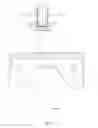
FIG. 1 is a view showing the configuration of a lower end fitting according to the present invention.
FIGS. 2A and 2B are views showing the structure of flow holes of a lower end fitting according to the present invention.
BEST MODE
Specific structures and functions stated in the following embodiments of the present invention are exemplified to illustrate embodiments according to the spirit of the present invention and the embodiments according to the spirit of the present invention can be achieved in various ways. Further, the present invention should not be construed as being limited to the following embodiments and should be construed as including all changes, equivalents, and replacements included in the spirit and scope of the present invention.
Further, in the specification, terms including “first” and/or “second” may be used to describe various components, but the components are not limited to the terms. The terms are used to distinguish one component from another component, and for instance, a first component may be referred to as a second component, and similarly, a second component may be referred to as a first component without being depart from the scope according to the spirit of the present invention.
It should be understood that when one element is referred to as being “connected to” or “coupled to” another element, it may be connected directly to or coupled directly to another element or be connected to or coupled to another element, having the other element intervening therebetween. On the other hand, it is to be understood that when one element is referred to as being “connected directly to” or “contact directly with” another element, it may be connected to or coupled to another element without the other element intervening therebetween. Expressions for describing relationships between components, that is, “between”, “directly between”, “adjacent to”, and “directly adjacent to” should be construed in the same way.
Hereinafter, embodiments of the present invention will be described hereafter in detail with reference to the accompanying drawings.
Referring to FIGS. 1, 2A, and 2B, a lower end fitting 100 of a nuclear fuel assembly includes a flow channel plate 120 having a plurality of flow holes on an enclosure 110 and is disposed under a plurality of fuel rods supported a plurality of support grids.
According to the present invention, a flow hole 121 is formed under an assembly groove in which an instrumentation tube 131 is inserted in the flow channel plate 120, and at least two or more flow holes 121 are formed at a predetermined distance from the central axis C of the instrumentation tube 131.
The flow holes 121 may be symmetrically arranged (at 360°/n, n is the number of the flow holes) around the central axis C of the instrumentation tube 131 and may be spaced at the same distance from the central axis C of the instrumentation tube 131.
For example, when three flow holes 121 are provided, they may be arranged with an angle of 120° therebetween.
Reference numeral ‘131a’ in FIGS. 2A and 2B indicates the assembly hole formed on which the flow channel plate 120 to insert an instrument tube.
According to the configuration of the lower end fitting of the present invention, since a plurality of holes is formed at a predetermined distance from the central axis C of the instrumentation tube 131 inside the assembly groove in which the instrumentation tube 131 is inserted, even if an end of an in-core instrument 132 comes in contact with the flow channel plate 120, the flow holes are not blocked, so smooth flow of cooling water can be secured.
Further, by the structure in which a plurality of flow holes is arranged symmetrically around the central axis of an instrumentation tube, cooling water can smoothly flow, so it is possible to reduce vibration of the in-core instrument and prevent frictional damage to the in-core instrument.
It will be apparent to those skilled in the art that the foregoing present invention is not limited by the foregoing embodiments and the accompanying drawings, and various modifications and changes may be made without departing from the scope and spirit of the invention.
| <Description of the Reference Numerals in the Drawings> |
| 100: Lower end fitting | 110: Enclosure | |
| 120: Flow channel plate | 121: Flow hole | |
| 131: Instrumentation tube | 132: In-core instrument | |
Claims
What is claimed is:1. A lower end fitting having a plurality of flow holes for a nuclear fuel assembly, wherein the flow holes are formed under an assembly groove in which an instrumentation tube for the nuclear fuel assembly is inserted, and at least two or more flow holes are formed at a predetermined distance from a central axis of the instrumentation tube.
2. The lower end fitting of claim 1, wherein the flow holes are arranged symmetrically around the central axis of the instrumentation tube.
Images & Drawings included:


Sources:
- United States Patent and Trademark Office - verify current appl. status at the USPTO↗
Recent applications in this class:
- » 20250046480 2025-02-06
Nuclear Fuel Assembly Retrofit for Increasing Reactor Power - » 20230343475 2023-10-26
CHANNEL BOXES FOR A BOILING WATER REACTOR AND METHODS OF MANUFACTURE THEREOF - » 20230282374 2023-09-07
FUEL BUNDLE WITH TWISTED RIBBON FUEL RODLETS FOR NUCLEAR THERMAL PROPULSION APPLICATIONS, STRUCTURES FOR MANUFACTURE, AND METHODS OF MANUFACTURE - » 20230282373 2023-09-07
FUEL BUNDLE WITH TWISTED RIBBON FUEL RODLETS FOR NUCLEAR THERMAL PROPULSION APPLICATIONS, STRUCTURES FOR MANUFACTURE, AND METHODS OF MANUFACTURE - » 20220139575 2022-05-05
Fuel assembly with outer channel including reinforced sidewall and non-reinforced sidewall - » 20220084695 2022-03-17
Nuclear fuel assembly for a boiling water reactor with redundant load chain - » 20210375495 2021-12-02
Nuclear reactor fuel assemblies and process for production - » 20200027583 2020-01-23
ANNULAR METAL NUCLEAR FUEL AND METHODS OF MANUFACTURING THE SAME - » 20180218795 2018-08-02
Flow damper, pressure-accumulation and water-injection apparatus, and nuclear installation - » 20170330638 2017-11-16
Nuclear reactor fuel rod and fuel assembly having bundled same
Recent applications for this Assignee:
- » 20250259758 2025-08-14
IMPROVED NUCLEAR FUEL ASSEMBLY WITH ENHANCED SEISMIC PERFORMANCE AND CONTROL ROD WORTH - » 20250029739 2025-01-23
DEVICE FOR ASSEMBLING AND DISASSEMBLING TOP NOZZLE OF NUCLEAR FUEL ASSEMBLY - » 20240404720 2024-12-05
METHOD OF SYNTHESIZING REACTOR CORE POWER DISTRIBUTION FOR REACTOR CORE PROTECTION SYSTEM BASED ON IN-CORE INSTRUMENT SIGNAL USING ORDINARY KRIGING METHOD - » 20240371537 2024-11-07
HIGH-INTENSITY FOCUSED ULTRASOUND APPARATUS AND METHOD FOR DECONTAMINATING SOLID RADIOACTIVE WASTE - » 20240257989 2024-08-01
METHOD FOR PREPARING UO2 MIXTURE POWDER FOR NUCLEAR FUEL MANUFACTURING BY MEANS OF IBC BLENDER, AND UO2 MIXTURE POWDER FOR NUCLEAR FUEL MANUFACTURING, PREPARED THEREBY - » 20230207143 2023-06-29
INTERNAL ELECTRODE INSERTION DEVICE FOR WELDING EQUIPMENT FOR SKELETON OF NUCLEAR FUEL ASSEMBLY - » 20220392655 2022-12-08
Light-water reactor nuclear fuel rod loading force measuring apparatus - » 20220223303 2022-07-14
SINTERING ADDITIVE FOR FORMING FILM CAPABLE OF IMPROVING OXIDATION RESISTANCE OF NUCLEAR FUEL PELLETS, AND PREPARATION METHOD THEREFOR - » 20220068516 2022-03-03
METHOD FOR COLLECTING URANIUM BY TREATMENT PROCESS OF WASHING WASTE LIQUID GENERATED IN URANIUM HEXAFLUORIDE CYLINDER WASHING PROCESS - » 20220059249 2022-02-24
Method for solidifying radioactive waste