Device for detecting a surface of bulk materials
US20170284796A1
2017-10-05
15/477,205
2017-04-03
✅ Patent granted
US 10,337,858 B2
2019-07-02
-
-
Olumide Ajibade Akonai
David S. Safran | Roberts Mlotkowski Safran Cole & Calderon, P.C.
2038-02-20
Abstract:
Described is a device for detecting a surface of bulk materials, the device including: a transmitter unit having a radiation direction for transmitting a measuring signal, a receiver unit for receiving a measuring signal reflected on the surface of the bulk material, a control and evaluation unit for controlling the alignment of the radiation direction and for evaluating the received measuring signal, and an alignment arrangement for aligning the transmitter unit. The alignment arrangement includes at least one connecting element for connection to the transmitter unit, at least one bearing element, and at least one positioning member. The connecting element is pivotably connected to the bearing element via the positioning member. The alignment of the transmitter unit can be changed by the positioning member. The positioning member includes a shape memory element that actively changes its shape under variations of an influencing parameter.
Inventors:
- Michael Deilmann 20 🇩🇪 Essen, Germany
- Michael Gerding 29 🇩🇪 Bochum, Germany
- Almir Adrovic 2 🇩🇪 Duisburg, Germany
- Mattias Linkies 1 🇩🇪 Mülheim, Germany
- Thomas Convent 7 🇩🇪 Issum, Germany
Assignee:
- KROHNE Messtechnik GmbH 157 🇩🇪 Duisburg, Germany
Applicant:
Interested in similar patents?
Get notified when new applications in this technology area are published.
Classification:
G01F23/284 » CPC further
Indicating or measuring liquid level or level of fluent solid material, e.g. indicating in terms of volume or indicating by means of an alarm by measuring physical variables, other than linear dimensions, pressure or weight, dependent on the level to be measured, e.g. by difference of heat transfer of steam or water by measuring the variations of parameters of electromagnetic or acoustic waves applied directly to the liquid or fluent solid material Electromagnetic waves
G01S7/4026 » CPC further
Details of systems according to groups of systems according to group; Means for monitoring or calibrating of parts of a radar system Antenna boresight
G01S7/40 IPC
Details of systems according to groups of systems according to group Means for monitoring or calibrating
G01B15/00 » CPC main
Measuring arrangements characterised by the use of wave or particle radiation
G01F25/00 IPC
Testing or calibration of apparatus for measuring volume, volume flow or liquid level or for metering by volume
H01Q1/225 » CPC further
Details of, or arrangements associated with, antennas; Supports; Mounting means by structural association with other equipment or articles used in level-measurement devices, e.g. for level gauge measurement
G01S7/02 IPC
Details of systems according to groups of systems according to group
H01Q1/22 IPC
Details of, or arrangements associated with, antennas; Supports; Mounting means by structural association with other equipment or articles
G01F23/00 » CPC further
Level indicators
G01F23/00 » CPC further
Indicating or measuring liquid level or level of fluent solid material, e.g. indicating in terms of volume or indicating by means of an alarm
G01S7/4008 » CPC further
Details of systems according to groups of systems according to group; Means for monitoring or calibrating of parts of a radar system of transmitters
Description
BACKGROUND OF THE INVENTION
Field of the Invention
The present invention relates to a device for detecting a surface of bulk materials comprising a transmitter unit having a radiation direction for transmitting a measuring signal, a receiver unit for receiving a measuring signal reflected on the surface of the bulk material, a control and evaluation unit for controlling the alignment of the radiation direction and for evaluating the received measuring signal, and an alignment arrangement for aligning the transmitter unit, wherein the alignment arrangement has at least one connecting element for connection to the transmitter unit, at least one bearing element and at least one positioning member.
Description of Related Art
The detection of the surface of bulk materials, for example for fill level measurement in a container, is normally carried out using transit time measurement of radar or ultrasound signals. Thereby, the measuring signal is emitted by a transmitter unit in the direction of the bulk material and then, after the signal is reflected at the surface, is received by a receiving unit. The distance of the transmitter unit from the surface of the bulk material and, from this, the fill level of the bulk material in the container can be determined from the transit time of the received signal by means of an evaluation unit.
Alternatively, it is also known that the transmitter unit emits a frequency modulated radar signal as a measuring signal, which is reflected on the surface to be measured and then received by the receiver unit. For evaluation, the difference frequency of the transmitted and the received measuring signal is formed, which is proportional to the distance to the surface of the bulk material. The fill level is then determined from the distance to the surface of bulk material.
What can cause a problem in the above-described method for detecting the surface of a bulk material is that, in each case, only one measuring point of the surface is monitored. However, especially when dealing with bulk materials, irregularities are often formed, in particular material cones on stockpiles, bunkerings or silos. These material cones, however, are not registered by the above-described method, which leads to an inaccurate result of the measurement of the fill level. Thus, it is not possible to determine existing irregularities in the surface structure of bulk materials using the above-described method.
In order to solve this problem, EP 2 803 952 A1, which corresponds to U.S. Patent Application Publication 2016/0054167 A1, suggests providing a positioning device through which the main radiation direction of the transmitter unit can be changed, so that a series of echo curves can be generated under different main directions of radiation. For this, a mechanically or electronically pivotable transmitter unit is provided in the form of an antenna. The alignment of the transmitter unit is either changed mechanically or with the help of a correspondingly controlled antenna array. In this manner, it is possible to sample the surface of a bulk material both two-dimensionally as well as three-dimensionally.
The above-described device, however, has the disadvantage that the movable elements are subject to greater wear and require maintenance. Additionally, complex mechanical arrangements, in particular when used for detecting surfaces of bulk materials, are vulnerable to contamination and vibrations.
SUMMARY OF THE INVENTION
In light of the disadvantages of conventional techniques, the object of the invention is to provide a device for two-dimensional or three-dimensional detection of the surface of a bulk material, whose construction is particularly simple and economical, and furthermore, is particularly robust and has a long service life.
The object is achieved by a device as mentioned in the introduction in that the connecting element is pivotably connected to the bearing element via the positioning member, that the alignment of the transmitter unit can be changed by the positioning member, and that the positioning member comprises a shape memory element that actively changes its shape under variations of an influencing parameter.
According to the invention, it has been recognized that the use of complex mechanical components for aligning or controlling the alignment of the transmitter unit can be done without when the characteristic of shape memory elements of active form changing at variations of respective influencing parameters is exploited.
Shape memory elements are characterized in that they actively, reversibly change shape, for example, at a change in temperature or in the magnetic field strength.
This effect is used in the device according to the invention for changing the alignment of the transmitter unit. Consequently, not only one point of the surface of the bulk material is detected, but rather by means of the device according to the invention, a two-dimensional or three-dimensional structure of the surface can be detected. In particular irregularities of the surface, such as material cones can be registered in this manner. Since the change of shape of a shape memory element takes place continuously, the surface of the bulk material detected by the measuring signal can be completely continuously measured. The evaluation unit is preferably designed in such a manner that it generates a surface profile of the measured bulk material.
The device according to the invention thus has the advantage that it is particularly simply and economically designed. Furthermore, maintenance of the positioning member is also not necessary or only with little effort.
According to a first design, the shape memory element has a shape memory alloy, in particular a Ni/Ti alloy or a Ni/Ti/Cu alloy or a Cu/Zn/Al alloy or a Cu/Al/Ni alloy. Shape memory alloys actively change their shape in dependence on external influencing factors, such as a change in temperature or in magnetic field strength. In thermal shape memory elements, thermal shape memory alloys have a martensite structure, when the temperature increases, the lattice structure of the alloy changes to a austenite structure. Simultaneously, with a temperature increase, the shape memory element actively changes its shape. The shape memory element “remembers” the shape in the presence of the austenite structure and actively returns back to this shape. In magnetic shape memory alloys, the application of an external magnetic field leads to a shift of twin boundaries between two martensite structures, which also generates a macroscopic change in shape. Based on this behavior, shape memory alloys are particularly suitable for use as active positioning members.
Shape memory alloys are also suitable as positioning members for aligning the transmitter unit since they have only a low sign of fatigue and, in this respect, provide a particularly long service life even at high loads.
According to a preferred design, the shape memory element, according to the two way effect, has two shapes that it actively takes in the case of a variation of an influencing parameter. This design has the advantage that solely the variation of one influencing parameter affects both the deflection of the transmitter unit out of the base position as well as back into the base position. Further external forces are not necessary for setting the alignment of the transmitter unit.
According to an alternative design, the shape memory element, according to the one way effect, has a base shape that it actively takes in the case of a variation of an influencing parameter and that a deflecting element is provided that is designed and arranged so that it deflects the shape memory element out of the base shape by exerting a force. For example, the deflecting element can be the transmitter unit in conjunction with the connecting element. It is possible that the transmitter unit deflects the shape memory element out of the base shape using the force of weight and the shape memory element actively changes the alignment of the transmitter unit using a change in temperature.
The device according to the invention can be improved in that a movable retaining element is arranged between the connecting element and the bearing element. Thereby, the retaining element is preferably designed and arranged in such a manner that it increases the stability of the alignment arrangement. It is particularly preferred that cables for the electric contact of the transmitter unit run through the retaining element.
It is also preferred when the alignment arrangement has at least three positioning members, wherein at least one positioning member has a shape memory element and it is preferred when the at least three positioning members are arranged in such a manner that the alignment of the transmitter unit can be deflected in all three spatial directions. According to this design, the connecting element is pivotably connected to the bearing element via at least three positioning members. Thus, this design has the advantage that a particularly large area of the surface of the bulk material can be monitored. It is particularly preferred that at least three positioning members have form memory elements.
The device according to the invention can be further improved in that at least one positioning member is designed in the form of a pressure/tension rod or in the form of a taut wire. In this design, the change in shape at a variation of the influencing parameter consists of a compression or expansion of the pressure/tension rod or in an expansion of the taut wire. Such a change in shape causes a change in the radiation direction of the transmitter unit.
It is of particular advantage when the influencing parameter for changing the shape of the shape memory element is the temperature or the magnetic field strength of the shape memory element.
If the influencing parameter for changing the shape of the shape memory element is the temperature, it is preferred when the shape memory element is applied with a current by the control and evaluation unit for changing the temperature. A change in temperature of the shape memory element can be particularly easily achieved in this manner.
According to a further design of the device according to the invention, the alignment arrangement has at least three positioning members, wherein the at least three positioning members each have a shape memory element and wherein the influencing parameter for changing the shape of each shape memory element can be independently varied. Preferably, the shape memory elements can be applied with current independently of one another, whereby their temperature can be independently varied. The alignment of the radiation direction of the transmitter unit can be carried out flexibly in this manner.
Alternatively, the device according to the invention can have at least three positioning members, wherein the at least three positioning members each have a shape memory element, wherein the influencing parameter for changing the shape of each shape memory element can be varied in dependence on the influencing parameter for changing the shape of at least one of the other shape memory elements. For example a fixed route can be provided, that is sampled or monitored by the transmitter unit according to this design. In this respect, a systematic monitoring of the surface of bulk materials can be carried out.
Preferably, the retaining element has a joint, in particular a ball and socket joint. According to this design, the transmitter unit can be particularly flexibly deflected in every direction.
According to a further advantageous design, the connecting element and/or the bearing element is/are formed to have a plate shape. This design has the advantage that the mounting of the positioning member or the positioning members can be particularly flexibly carried out.
In detail, there is a plurality of possibilities for designing the device for detecting a surface of a bulk material according to the invention as will be apparent from the following description of preferred embodiments in conjunction with the accompanying drawings.
BRIEF DESCRIPTION OF THE DRAWINGS
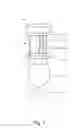
FIG. 1 is a first embodiment of a device according to the invention in the base shape,
FIG. 2 is a second embodiment of a device according to the invention in the base shape,
FIG. 3 is the second embodiment of the device according to the invention in the deflected state.
DETAILED DESCRIPTION OF THE INVENTION
A first embodiment of a device 1 for detecting a surface of a bulk material is shown in FIG. 1. The device 1 comprises a transmitter unit 2 having a radiation direction for emitting a measuring signal 3, wherein the transmitter unit 2 simultaneously represents the receiver unit 10, and an alignment arrangement 4 for aligning the transmitter unit 2. A control and evaluation unit 11 is provided for controlling the alignment of the radiation direction or the transmitter unit 2 and for evaluating the received measuring signal reflected at the surface of the bulk material. The alignment arrangement 4 comprises a plate-shaped connecting element 5 for connection to the transmitter unit 2 and a bearing element 6, which is also designed with a plate shape and which is presently connected to the control and evaluation unit 11. Additionally, the alignment arrangement 4 has three positioning members 8, which each have a shape memory element 9, that change their shape at a change in temperature. Presently, the positioning members 8 are designed in the form of pressure/tension rods. Furthermore, an electric connection 12 is provided that connects the control and evaluation unit 11 to the transmitter unit 2.
The connecting element 5 is pivotably connected to the bearing element 6 via the positioning members 8. The alignment of the transmitter unit 2 can be changed by the positioning members 8, in particular by changing the shape of the positioning members. For this, the positioning members 8 can be individually applied with current, i.e., independent of one another, by the control and evaluation unit, which leads to a change in temperature of the positioning members and, thereby, the shape memory elements. The illustrated embodiment makes a deflection of the transmitter unit 2 in every direction possible, whereby a particularly flexible detection of the surface of bulk materials is possible.
In this respect, the illustrated embodiment of the device 1 according to the invention has the advantage that a robust alignment arrangement for setting the alignment of the transmitter unit 2 is provided by using shape memory elements, the arrangement also simultaneously having a long service life.
A second embodiment of a device 1 according to the invention for detecting a surface of bulk materials is shown in FIG. 2. The device comprises a transmitter unit 2 having a radiation direction for transmitting a measuring signal 3, wherein the transmitter unit 2 simultaneously represents the receiver unit 10, and an alignment arrangement 4 for aligning the transmitter unit 2. A control and evaluation unit 11 is provided for controlling the alignment of the radiation direction or the transmitter unit 2 and for evaluating the received measuring signal reflected at the surface of the bulk material. The alignment arrangement 4 comprises a plate-shaped connecting element 5 for connection to the transmitter unit 2, a bearing element 6, which is also designed with a plate shape and which can be used for connection to further components, a retaining element 7 with a ball and socket joint, and three positioning members 8. The positioning members 8 each comprise a shape memory alloy that changes its shape at a change in temperature. In the shown embodiment, the positioning members 8 are designed in the form of pressure/tension rods. A change in the temperature causes a compression or expansion of the rods.
The connecting element 5 is pivotably connected to the bearing element 6 via the ball and socket joint and the positioning members 8. The alignment of the transmitter unit 2 can be changed by the positioning members 8 via the ball and socket joint. For this, the positioning members 8 can be individually, i.e., independent of one another, applied with current, which leads to a change in temperature of the positioning members and, thus, to the shape memory alloy. The illustrated embodiment makes a deflection of the transmitter unit 2 in every direction possible, whereby a particularly flexible detection of the surface of the bulk material is possible.
In this respect, the embodiment illustrated in FIG. 2 also demonstrates a robust device 1 for detecting a surface of bulk material, which simultaneously has a long service life.
FIG. 3 shows the first embodiment of a device 1 according to the invention, wherein the transmitter unit 2 is deflected to the side by the positioning members 8 and the ball and socket joint. A positioning member 8a is compressed due to the supply of heat by an application of a current, while the other positioning members 8b, 8c are expanded or not influenced. The transmitter unit 2 is deflected by the change in shape of the positioning members 8, so that the radiation direction of the measuring signal 3 can be varied. In this manner, the surface of bulk materials can be completely detected.
Claims
What is claimed is:1. A device for detecting a surface of a bulk material, the device comprising:
a transmitter unit having a radiation direction for transmitting a measuring signal,
a receiver unit for receiving a measuring signal reflected on the surface of the bulk material,
a control and evaluation unit for controlling an alignment of the radiation direction and for evaluating the received measuring signal, and
an alignment arrangement for aligning the transmitter unit,
wherein the alignment arrangement comprises at least one connecting element for connection to the transmitter unit, at least one bearing element, and at least one positioning member,
the connecting element is pivotably connected to the bearing element via the positioning member,
an alignment of the transmitter unit is changeable by the positioning member, and
the positioning member comprises a shape memory element that actively changes its shape under variations of an influencing parameter.
2. The device according to claim 1, wherein shape memory element comprises a shape memory alloy.
3. The device according to claim 1, wherein the shape memory element, according to a two way effect, actively takes one of two shapes based on a variation of the influencing parameter.
4. The device according to claim 1, wherein:
the shape memory element, according to a one way effect, actively takes a base shape based on a variation of the influencing parameter, and
a deflecting element is provided that is designed and arranged such that it deflects the shape memory element out of the base shape by exerting a force.
5. The device according to claim 1, wherein a movable retaining element is arranged between the connecting element and the bearing element.
6. The device according to claim 1, wherein:
the alignment arrangement comprises at least three said positioning members,
at least one of the at least three positioning members comprises a shape memory element, and
the at least three positioning members are arranged such that the alignment of the transmitter unit is movable in all three spatial directions.
7. The device according to claim 1, wherein the at least one positioning member is designed in the form of a pressure/tension rod or in the form of a taut wire.
8. The device according to claim 1, wherein the influencing parameter for changing the shape of the shape memory element is one of temperature and magnetic field strength.
9. The device according to claim 1, wherein the influencing parameter for changing the shape of the shape memory element is temperature, and that the shape memory element is applied with a current by the control and evaluation unit for changing the temperature.
10. The device according to claim 1, wherein:
the alignment arrangement comprises at least three said positioning members,
the at least three positioning members each have a respective said shape memory element, and
the influencing parameter for changing the shape of each respective said shape memory element can be independently varied.
11. The device according to claim 1, wherein:
the alignment arrangement comprises at least three said positioning members,
the at least three positioning members each have a respective said shape memory element, and
the influencing parameter for changing the shape of each respective said shape memory element can be varied in dependence on the influencing parameter for changing the shape of the other shape memory elements.
12. The device according to claim 5, wherein the retaining element comprises a joint.
13. The device according to claim 12, wherein the joint comprises a ball and socket joint.
14. The device according to claim 1, wherein at least one of the connecting element and the bearing element has a plate shape.
Images & Drawings included:



Sources:
- United States Patent and Trademark Office - verify current appl. status at the USPTO↗
Recent applications in this class:
- » 20250172389 2025-05-29
ELECTRON TUBE AND SPECTROSCOPE - » 20250164242 2025-05-22
METHOD AND APPARATUS FOR DETERMINING A TRAILER DIMENSION OF A MOTOR VEHICLE-TRAILER COMBINATION - » 20240426604 2024-12-26
Method to Control Gap for Sheet Manufacturing Measurement Processes - » 20240318955 2024-09-26
METHOD FOR CHECKING A BATTERY ELEMENT STACK WITH REGARD TO THE POSITION OF BATTERY ELEMENT LAYERS - » 20240240937 2024-07-18
Depth Measurement Device, Depth Measurement System, and Depth Index Calculation Method - » 20240230324 2024-07-11
GAP INSPECTION APPARATUS AND GAP INSPECTION METHOD - » 20240210169 2024-06-27
DETERMINING A POSITION OF A TREATMENT INSTRUMENT TO PERFORM A TREATMENT ON AN OBJECT - » 20240133683 2024-04-25
OVERLAY MEASURING METHOD AND SYSTEM, AND METHOD OF MANUFACTURING A SEMICONDUCTOR DEVICE USING THE SAME - » 20240133682 2024-04-25
GAP INSPECTION APPARATUS AND GAP INSPECTION METHOD - » 20230152089 2023-05-18
METHOD AND DEVICE FOR DETERMINING AN ALIGNMENT OF A PHOTOMASK ON A SAMPLE STAGE WHICH IS DISPLACEABLE ALONG AT LEAST ONE AXIS AND ROTATABLE ABOUT AT LEAST ONE AXIS
Recent applications for this Assignee:
- » 20250207962 2025-06-26
METHOD FOR OPERATING A CORIOLIS MASS FLOWMETER AND CORRESPONDING CORIOLIS MASS FLOWMETER - » 20250076236 2025-03-06
METHOD FOR DETERMINING THE VOLUME FRACTION OF A PHASE OF A MULTIPHASE MEDIUM AND CORRESPONDING MEASURING DEVICE - » 20220217217 2022-07-07
Method and communication system for exchanging data between several field devices - » 20210234261 2021-07-29
Radar antenna arrangement - » 20210157755 2021-05-27
Method for initializing a bus system for a process plant, and the bus system - » 20210123790 2021-04-29
Vortex flowmeter and method for operating a vortex flowmeter - » 20200309579 2020-10-01
Magnetic-inductive flowmeter having a conductivity measuring device and method for operating a magnetic-inductive flowmeter having a conductivity measuring device - » 20200166411 2020-05-28
Transmitter and field device - » 20200136641 2020-04-30
Field measuring device - » 20200132525 2020-04-30
Variable area flowmeter, system comprising a variable area flowmeter and an external control unit, and method for operating a variable area flowmeter