Apple tree named 'UEBI 406/1'
US20170295682P1
2017-10-12
15/530,968
2017-03-30
Abstract:
A new and distinct Malus domestica (Borkh.) variety that exhibits a slightly upright to spreading tree habit, medium-high vigor, medium dense pyramidal tree form, bears a Vf-resistance gene against scab, and has high and regular yields without the need of fruit thinning. The new variety provides late maturing, medium-sized, cylindrical globose-shaped, and homogenous bright red fruits that are russet free. The fruit flesh is firm, crisp, and juicy, with a finely sour and slightly aromatic flavor. The fruits of the new variety exhibit good eating and keeping qualities.
Inventors:
- Otto Louda 12 🇨🇿 Pencin u Liberce, Czech Republic
- Jan Zima 12 🇨🇿 Turnov, Czech Republic
- Jaroslav Tupy 8 🇨🇿 Praha 6, Czech Republic
- Radek Cerny 8 🇨🇿 Ricany u Prahy, Czech Republic
Interested in similar patents?
Get notified when new applications in this technology area are published.
Classification:
A01H5/02 » CPC main
Angiosperms, i.e. flowering plants, characterised by their plant parts; Angiosperms characterised otherwise than by their botanic taxonomy Flowers
A01H5/08 IPC
Angiosperms, i.e. flowering plants, characterised by their plant parts; Angiosperms characterised otherwise than by their botanic taxonomy Fruits
Description
CROSS REFERENCE TO RELATED APPLICATION
This application claims the benefit of U.S. Provisional Patent Application Ser. No. 62/390,768, filed on Apr. 7, 2016, and entitled “Variety of Apple Tree Named ‘UEBI 406/1’”, the entire disclosure of which is incorporated herein by reference.
Botanical classification: Malus domestica (Borkh.).
Varietal denomination: ‘UEBI 406/1’.
BACKGROUND OF THE INVENTION
The present invention comprises a new and distinct cultivar of apple tree botanically classified as Malus domestica (Borkh.) and known by the varietal name ‘UEBI 406/1’.
The new variety is the result of a cross in a planned breeding program between ‘Topaz’ (female parent, unpatented) and ‘Cripps Pink’ (male parent, U.S. Plant Pat. No. 7,880). The cross resulting in ‘UEBI 406/1’ occurred in the Spring of 1998 at 310 meters above sea level with a mean annual temperature of 7.7° C. and a mean annual precipitation of 680 mm. The purpose of the breeding program was to develop a late ripening, dessert apple variety with attractive fruits, good eating and keeping qualities, and that exhibits Vf-resistance against scab. The new variety was discovered in the Fall of 2004 with the first fruiting of the original seedling in the Czech Republic. Subsequently, the new variety was asexually reproduced in the Czech Republic by budding/grafting on apple rootstocks in the Spring of 2005.
The new variety is similar to its female parent ‘Topaz’ in the presence of Vf-resistance against scab. However, ‘UEBI 406/1’ exhibits a cylindrical globose fruit shape, red hue of solid flush overcolor, and a long stalk length, while ‘Topaz’ exhibits an obloid fruit shape, orange-red hue of striped overcolor, and a medium stalk length. The new variety is similar to its male parent ‘Cripps Pink’ in exhibiting a slightly upright to spreading growth form, solid flush overcolor, and a cylindrical globose fruit shape. However, ‘UEBI 406/1’ exhibits Vf-resistance against scab, vigorous trees with medium-sized fruits having a red hue of overcolor, and a thin and long stalk, while ‘Cripps Pink’ exhibits no Vf-resistance against scab, very vigorous trees with large-sized fruits having a pink-red hue of overcolor, and a stalk of medium thickness and length. Further, the time to beginning of flowering is medium for the new variety, while for ‘Cripps Pink’ it is late. Additionally, the harvesting time is late for ‘UEBI 406/1’, while for ‘Cripps Pink’ it is very late.
Further, when compared to apple tree named ‘Nicoter’ (U.S. Plant Pat. No. 17,201), both varieties exhibit a yellow ground color, red hue of overcolor, and late harvesting time. However, ‘UEBI 406/1’ exhibits a cylindrical globose fruit shape, leaf blades of medium length (average of 83.0 mm), and Vf-resistance against scab, while ‘Nicoter’ exhibits a globose conical fruit shape, leaf blades of long length (average of 104.0 mm, and no Vf-resistance against scab.
The following characteristics also distinguish the new variety from other varieties known to the breeders:
-
- Late ripening, dessert-type, diploid variety;
- Ramified tree type with a slightly upright to spreading habit;
- Medium-high tree vigor;
- Fruit shape is cylindrical globose;
- Fruit size is medium;
- Long and thin stalk;
- Brightly red blushed overcolor;
- High and regular productivity;
- Slightly sour and finely aromatic flavor; and
- Resistance against scab on Vf-gene basis.
The new variety has been trial and field tested and has been found to retain its distinctive characteristics and remain true to type through successive asexual propagations.
DESCRIPTION OF THE DRAWINGS
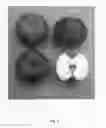
The accompanying photographic drawings illustrate the new cultivar, with the color being as nearly true as possible with color illustrations of this type. It should be noted that colors may vary with growing conditions and time of year:
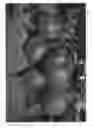
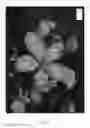
FIG. 1 illustrates blossoms of the new variety;
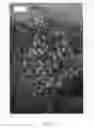
FIG. 2 illustrates a young, flowering tree grafted on M9 rootstock;
FIG. 3 illustrates a flowering tree on the seedling rootstock;
FIG. 4 illustrates a growing shoot of the new variety;
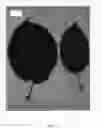
FIG. 5 illustrates a close-up view of the young and mature leaves of the new variety;
FIG. 6 illustrates details of mature fruits of the new variety;
FIG. 7 illustrates a close-up view of fruits of the new variety at picking maturity;
FIG. 8 illustrates a young tree of the new variety grafted on M9 rootstock at picking maturity;
FIG. 9 illustrates a tree of the new variety on the seedling rootstock at picking time; and
FIG. 10 illustrates a plantation of young trees of the new variety grafted on M9 rootstocks at picking maturity.
DESCRIPTION OF THE PLANT
The following detailed description sets forth characteristics of the new cultivar. The new variety was grown under natural field conditions in The Czech Republic. The following fertilizer combination was used (Kg/ha/year): 55 parts nitrogen, 25 parts phosphorous, 60 parts potassium, 55 parts calcium, and 5 parts magnesium. Color references are primarily to the R.H.S. Colour Chart of The Royal Horticultural Society of London and were identified under natural light.
- Tree:
-
- Age.—8 years from the year of grafting on seedling rootstock.
- Size.—Crown height of 3.5 m, width of 3.5 m.
- Vigor.—Moderate.
- Density.—Medium.
- Form.—Pyramidal.
- Production.—Highly productive.
- Growth type.—Slightly upright to spreading.
- Bearing.—Annual.
- Trunk.—Size: Approximately 14.0 cm in diameter at 30.0 cm from the soil line. Surface texture: Smooth. Bark color: Greyed-Green Group RHS 197A. Lenticels (100.0 cm above ground): Length: 1.0 mm to 5.0 mm. Width: 0.5 mm to 1.0 mm. Color: Greyed-Orange Group RHS 167A to 167B. Density: Variable, with 6 to 7 lenticels on average per 1 cm2.
- Branches.—Overall description: A conventional branching system along the tree trunk. Diameter: Main branches on the trunk, 4.0 to 6.0 cm. Surface texture: Smooth. Color: Greyed-Green Group RHS 197B. Form: Profuse branching. Average crotch angle: About 60 degrees. Bud arrangement: Alternate. Internode length: 1.9 cm to 3.5 cm. Lenticels (on 1-year old shoot): Length: Typically 1.0 mm to 4.0 mm. Width: Typically 0.5 mm to 1.0 mm. Shape: Oval. Density: Variable, with 5 to 7 lenticels on average per 1 cm2. Color: Greyed-Orange Group RHS 167A to 167B.
- Leaves (measured at the middle of growing shoot).—Length: About 75.0 mm to about 97.0 mm, averaging 83.0 mm. Width: About 55.0 mm to about 62.0 mm, averaging about 58.0 mm. Form: Oval elliptic. Texture: Smooth. Thickness: Medium. Base: Rounded, predominantly symmetric. Apex: Mostly straight, acute. Margin: Bicrenate. Pubescence: Upper surface: None present. Lower surface: Very fine. Color: Young leaves: Upper surface: Yellow-Green Group RHS 144A. Lower surface: Yellow-Green Group RHS 144D. Mature leaves: Upper surface: Yellow-Green Group RHS 147A. Lower surface: Green Group RHS 138C. Petiole: Shape: Straight to curved, thickened and flattened at the base. Length: About 18.0 mm to about 31.0 mm, averaging about 23.0 mm. Diameter: About 2.0 mm to 3.0 mm in the middle. Color: Yellow-Green Group RHS 145C with Red-Purple Group RHS 59A near the base. Veins: Venation type: Net-like, medium dense. Color: Upper surface: Yellow-Green Group RHS 144C. Lower surface: Yellow-Green Group RHS 145D.
- Flower buds.—Pedicel: Length: Typically in the range of 31.0-38.0 mm, with an average of 34.0 mm. Diameter: 1.4 mm on average. Color: Predominantly Yellow-Green Group RHS 144A. Bud: Length: 18.0 mm on average. Width: 13.5 mm on average. Color: Red-Purple Group RHS 63B.
- Flowers.—Bloom timing: Medium. Blooming period: Medium. Pollination requirements: Diploid, self-sterile, needs pollinators. Number of flowers per cluster: 5, rarely 6. Fragrance: Soft, smooth. Petals: Number: 5. Length: From 23.0-28.0 mm, with an average of 26.0 mm. Width: From 14.0-16.0 mm, with an average of 15.0 mm. Shape: Oval. Aspect: Positioned free to intermediate. Margin: Entire. Texture and appearance: Soft and smooth. Color: When opening: Upper surface: White Group RHS 155D and Red-Purple Group RHS 63B. Lower surface: White Group RHS 155D and Red-Purple Group RHS 63C. Fully opened: Upper surface: Predominantly White Group RHS 155D and partly Red-Purple Group RHS 63D. Lower surface: Predominantly White Group RHS 155D and partly Red-Purple Group RHS 63C. Sepals: Shape: Long-conical; pointed. Margin: Entire. Texture: Finely pubescent. Length: 11.0 mm on average. Width: 4.0 mm in the middle. Color: Upper surface: Yellow-Green Group RHS 144B, with a Red-Purple Group RHS 59B apex. Lower surface: Yellow-Green Group RHS 145A, with a Red-Purple Group RHS 59B apex. Stamens: Number (per flower): 20. Filament length: 7.0-13.0 mm. Anthers: Shape: Oval. Length: 2.0 mm. Color: Yellow Group RHS 10B. Pollen: Color: Yellow Group RHS 7B. Amount (generally): Medium. Pistils: Length: 17.0 mm on average. Style: Length: 12.0 mm on average. Color: Yellow-Green Group RHS 145B. Stigma: Shape: Rounded. Color: Yellow-Green Group RHS 151B.
- Fruit.—Maturity when described: Full eating maturity. Date of picking: Approximately 8 years from grafting on seedling rootstock (Oct. 17, 2013). Size: Axial diameter: 56.0 mm to 62.0 mm, with an average of 60.0 mm. Transverse diameter: 63.0 mm to 75.0 mm, with an average of 68.0 mm. Form: Globose cylindrical to ellipsoid. Cavity: Shape: Funnel. Depth: Typically between 9.0 mm and 10.0 mm, approximately 10.0 mm on average. Breadth: Typically between 26.0 mm and 30.0 mm, averaging 28.0 mm. Basin: Shape: Deeply bowl-shaped, ribbed. Depth: Between 7.0 mm and 13.0 mm, averaging 10.0 mm. Width: Between 27.0 mm and 32.0 mm, averaging 30.0 mm. Calyx: Persistent with erect lobes, partly open.
- Skin.—Thickness: Medium. Texture: Smooth, free of russet. Tendency to crack: Absent. Color: Red Group RHS 46A to 46C. Ground color: Yellow-Orange Group RHS 15B.
- Flesh.—Aroma: Medium. Color: Yellow-Orange Group RHS 18C to 18D. Texture: Fine, juicy, firm, and crisp. Eating quality: Good, slightly sour, with a well-balanced sugar to acid ratio.
- Core.—Bundle area: On longitudinal section — onion-shaped, with a height of 28.0 mm and a width of 30.0 mm. Bundle: Number of bunds is 10, with a color of Orange-Red Group RHS 30A. Calyx tube: Funnel-shaped. Depth of tube to shoulder: 12.0 mm (calyx tube itself is about 2.0 mm long). Styles: Persistent as dry residues. Stamens: Persistent as dry residues. Seed cells: Wall: Smooth. Depth: 7.0 mm to 8.0 mm. Breadth: 3.0 mm on cross section. Longitudinal section: About 16.0 mm (length of seed cell).
- Seeds.—Number perfect: 8 to 15. Number in one cell: 1 to 2. Length: About 9.0 mm. Breadth: About 4.0 mm. Form: Long conical with an acute tip. Color: Greyed-Orange Group RHS 166A.
- Stem.—Length: 32.0 mm on average (typically 25.0 mm to 39.0 mm). Width: About 1.5 mm on average. Color: Yellow-Green Group RHS 152C.
- Use.—As a late ripening, dessert apple variety with brightly red colored fruits of outstanding appearance with good eating and keeping qualities that is suitable for commercial apple growing.
- Shipping quality.—Average.
- Keeping quality.—Average — lasts approximately 4 months in common storage, but has longer keeping quality in controlled atmosphere storage.
- Tree winter hardiness.—No frost damage observed at the place of origin, lowest winter temperatures approximately −20° C.
- Bud winter hardiness.—No frost damage observed at the place of origin, lowest winter temperatures approximately −20° C.
- Drought tolerance.—Unknown.
- Disease resistance.—Vf-resistance against scab.
-
Claims
I claim:1. A new and distinct variety of Malus domestica (Borkh.) apple tree plant substantially as is herein described and illustrated.
Images & Drawings included:




Sources:
- United States Patent and Trademark Office - verify current appl. status at the USPTO↗
Recent applications in this class:
- » 20230413752 2023-12-28
plant named Bailmacseven - » 20210259180 2021-08-26
resistant plant - » 20200329656 2020-10-22
Scabiosa atropurpurea plants and methods of producing same - » 20200323160 2020-10-15
Double-flowered Pentas plant and method for growing same - » 20200323118 2020-10-08
Cornus Kousa Tree Named 'Melissa's Mountain Snowfall' - » 20200275625 2020-09-03
Petunia plants having a spotted flower color pattern - » 20200253143 2020-08-13
IPLANTS OF JUSTICIA AND THEIR USES - » 20200253142 2020-08-13
CALIBRACHOA PLANT WITH RADIALLY SYMMETRIC COLORATION - » 20200037529 2020-02-06
Low Pungency, Long Day Onion - » 20200008380 2020-01-09
Single nucleotide polymorphism (SNP) markers for L. and methods of use thereof in selection efficiency with breeding strategies