Exhaust gas-purifying catalyst
US20170297004A1
2017-10-19
15/482,961
2017-04-10
✅ Patent granted
US 10,099,204 B2
2018-10-16
-
-
Haytham Soliman
John P. White | Cooper & Dunham LLP
2037-04-10
Abstract:
An exhaust gas-purifying catalyst of the present invention comprises a substrate, and one or more catalytic layers provided on the substrate, wherein at least one of the catalytic layers (i) contains a precious metal, alumina, and an acidic oxide element, (ii) has a correlation coefficient ρAl,AE of 0.70 or more, and (iii) has a correlation coefficient ρPM,AE of 0.70 or more.
Inventors:
- Akimasa Hirai 29 🇯🇵 Kakegawa-Shi, Japan
- Sho HOSHINO 21 🇯🇵 Kakegawa-shi, Japan
- Kenichi TAKI 31 🇯🇵 Kakegawa-shi, Japan
- Satoshi MATSUEDA 36 🇯🇵 Kakegawa-shi, Japan
- Yuji Yabuzaki 10 🇯🇵 Kakegawa-shi, Japan
- Sho Hoshino 18 🇯🇵 Kakegawa, Japan
- Yuji Yabuzaki 10 🇯🇵 Kakegawa, Japan
- Akimasa Hirai 28 🇯🇵 Kakegawa, Japan
- Kenichi Taki 27 🇯🇵 Kakegawa, Japan
- Satoshi Matsueda 29 🇯🇵 Kakegawa, Japan
Assignee:
- CATALER CORPORATION 146 🇯🇵 Kakegawa-shi, Japan
Applicant:
Interested in similar patents?
Get notified when new applications in this technology area are published.
Classification:
B01J23/464 » CPC main
Catalysts comprising metals or metal oxides or hydroxides, not provided for in group of noble metals of the platinum group metals; Ruthenium, rhodium, osmium or iridium Rhodium
B01D53/945 » CPC further
Separation of gases or vapours; Recovering vapours of volatile solvents from gases; Chemical or biological purification of waste gases, e.g. engine exhaust gases, smoke, fumes, flue gases, aerosols,; Chemical or biological purification of waste gases of engine exhaust gases by catalytic processes; Simultaneously removing carbon monoxide, hydrocarbons or nitrogen oxides making use of three-way catalysts [TWC] or four-way-catalysts [FWC] characterised by a specific catalyst
B01J21/063 » CPC further
Catalysts comprising the elements, oxides, or hydroxides of magnesium, boron, aluminium, carbon, silicon, titanium, zirconium, or hafnium; Silicon, titanium, zirconium or hafnium; Oxides or hydroxides thereof Titanium; Oxides or hydroxides thereof
B01J35/0006 » CPC further
Catalysts, in general, characterised by their form or physical properties Catalysts containing parts with different compositions
B01J37/0215 » CPC further
Processes, in general, for preparing catalysts; Processes, in general, for activation of catalysts; Impregnation, coating or precipitation Coating
B01D2255/1021 » CPC further
Catalysts; Noble metals or compounds thereof; Platinum group metals Platinum
B01D2255/1023 » CPC further
Catalysts; Noble metals or compounds thereof; Platinum group metals Palladium
B01D2255/1025 » CPC further
Catalysts; Noble metals or compounds thereof; Platinum group metals Rhodium
B01D2255/902 » CPC further
Catalysts; Physical characteristics of catalysts Multilayered catalyst
B01D2255/908 » CPC further
Catalysts; Physical characteristics of catalysts O-storage component incorporated in the catalyst
B01J23/44 » CPC further
Catalysts comprising metals or metal oxides or hydroxides, not provided for in group of noble metals of the platinum group metals Palladium
B01J35/04 » CPC further
Catalysts, in general, characterised by their form or physical properties; Solids Foraminous structures, sieves, grids, honeycombs
B01J37/0236 » CPC further
Processes, in general, for preparing catalysts; Processes, in general, for activation of catalysts; Impregnation, coating or precipitation Drying, e.g. preparing a suspension, adding a soluble salt and drying
B01J37/04 » CPC further
Processes, in general, for preparing catalysts; Processes, in general, for activation of catalysts Mixing
B01D2255/9202 » CPC further
Catalysts; Physical characteristics of catalysts; Dimensions Linear dimensions
F01N2370/02 » CPC further
Selection of materials for exhaust purification used in catalytic reactors
F01N2510/0684 » CPC further
Surface coverings for exhaust purification, e.g. catalytic reaction characterised by the distribution of the catalytic coatings having more than one coating layer, e.g. multi-layered coatings
B01J23/00 IPC
Catalysts comprising metals or metal oxides or hydroxides, not provided for in group
B01J23/46 IPC
Catalysts comprising metals or metal oxides or hydroxides, not provided for in group of noble metals of the platinum group metals Ruthenium, rhodium, osmium or iridium
B01J23/10 » CPC further
Catalysts comprising metals or metal oxides or hydroxides, not provided for in group of rare earths
B01J21/06 IPC
Catalysts comprising the elements, oxides, or hydroxides of magnesium, boron, aluminium, carbon, silicon, titanium, zirconium, or hafnium Silicon, titanium, zirconium or hafnium; Oxides or hydroxides thereof
B01J23/30 » CPC further
Catalysts comprising metals or metal oxides or hydroxides, not provided for in group of arsenic, antimony, bismuth, vanadium, niobium, tantalum, polonium, chromium, molybdenum, tungsten, manganese, technetium or rhenium; Chromium, molybdenum or tungsten Tungsten
B01J21/12 » CPC further
Catalysts comprising the elements, oxides, or hydroxides of magnesium, boron, aluminium, carbon, silicon, titanium, zirconium, or hafnium Silica and alumina
B01J35/00 IPC
Catalysts, in general, characterised by their form or physical properties
B01J37/02 IPC
Processes, in general, for preparing catalysts; Processes, in general, for activation of catalysts Impregnation, coating or precipitation
B01D53/94 IPC
Separation of gases or vapours; Recovering vapours of volatile solvents from gases; Chemical or biological purification of waste gases, e.g. engine exhaust gases, smoke, fumes, flue gases, aerosols,; Chemical or biological purification of waste gases of engine exhaust gases by catalytic processes
F01N3/10 » CPC further
Exhaust or silencing apparatus having means for purifying, rendering innocuous, or otherwise treating exhaust for rendering innocuous by thermal or catalytic conversion of noxious components of exhaust
Description
CROSS-REFERENCE TO RELATED APPLICATION
This application is based upon and claims the benefit of priority from Japanese Patent Application No. 2016-080359, filed Apr. 13, 2016, the entire contents of which are incorporated herein by reference.
BACKGROUND OF THE INVENTION
1. Field of the Invention
The present invention relates to an exhaust gas-purifying catalyst.
2. Description of the Related Art
Emission controls on automobiles or the like have been tightened in recent years. Therefore, in order to address this issue, various exhaust gas-purifying catalysts for purifying hydrocarbons (HC), carbon monoxide (CO), nitrogen oxides (NOX) or the like contained in an exhaust gas have been developed.
Most exhaust gas-purifying catalysts contain precious metals as catalytic metals. The precious metals play a role in promoting oxidation reactions of HC and CO and reductive reactions of NOX.
The precious metals, however, have a problem that they are susceptible to poisoning by sulfur in the exhaust gas. When the precious metals are poisoned by sulfur, the catalytic performance of the precious metal is deteriorated. Then, in order to suppress the sulfur poisoning of the precious metal, proposed is a technique in which an acidic oxide such as titanium dioxide is added to a catalyst containing precious metals (see, for example, Jpn. Pat. Appln. KOKAI Publication No. 2004-321847).
The exhaust gas-purifying catalysts, however, have room for further improvement in the exhaust gas-purification performances.
BRIEF SUMMARY OF THE INVENTION
An object of the present invention is to provide a technique that makes it possible to achieve a higher performance in purifying exhaust gas.
According to an aspect of the present invention, there is provided an exhaust gas-purifying catalyst comprising:
a substrate, and one or more catalytic layers provided on the substrate,
wherein at least one of the catalytic layers (i) contains a precious metal, alumina, and an acidic oxide element; (ii) has a correlation coefficient ρAl,AE calculated by the following formula (1) of 0.70 or more; and (iii) has a correlation coefficient ρPM,AE calculated by the following formula (7) of 0.70 or more,
ρ Al , AE = C Al , AE σ Al σ AE ( 1 )
wherein CAl,AE, σA1, and σAE in the formula (1) are represented by the following formulae (2), (3) and (4), respectively:
C Al , AE = 1 350 ∑ i = 1 350 ( I Al , i - I Al , av ) ( I AE , i - I AE , av ) ( 2 ) σ Al = 1 350 ∑ i = 1 350 ( I Al , i - I Al , av ) 2 ( 3 ) σ AE = 1 350 ∑ i = 1 350 ( I AE , i - I AE , av ) 2 ( 4 )
in the formulae (2) to (4),
i is a natural number of from 1 to 350,
IAl,i is a characteristic X-ray intensity of aluminum measured using an electron beam microanalyzer at an i-th intersection point among 350 intersection points of planes and a line perpendicular to a main surface of the catalytic layer, the planes being obtained by dividing the catalytic layer into 350 equal parts in a thickness direction,
IAl,av is an arithmetic average value of the IAl,i calculated by the following formula (5):
I Al , av = 1 350 ∑ i = 1 350 I Al , i ( 5 )
IAE,i is a characteristic X-ray intensity of the acidic oxide element measured using the electron beam microanalyzer at the i-th intersection point, and
IAE,av is an arithmetic average value of the IAE,i calculated by the following formula (6):
I AE , av = 1 350 ∑ i = 1 350 I AE , i ( 6 ) ρ PM , AE = C PM , AE σ PM σ AE ( 7 )
wherein CPM,AE, σPM and σAE in the formula (7) are represented by the following formulae (8), (9) and (10), respectively:
C PM , AE = 1 350 ∑ i = 1 350 ( I PM , i - I PM , av ) ( I AE , i - I AE , av ) ( 8 ) σ PM = 1 350 ∑ i = 1 350 ( I PM , i - I PM , av ) 2 ( 9 ) σ AE = 1 350 ∑ i = 1 350 ( I AE , i - I AE , av ) 2 ( 10 )
in the formulae (8) to (10),
i is a natural number of from 1 to 350,
IPM,i is a characteristic X-ray intensity of the precious metal measured using the electron beam microanalyzer at the i-th intersection point among 350 intersection points of planes and a line perpendicular to a main surface of the catalytic layer, the planes being obtained by dividing the catalytic layer into 350 equal parts in a thickness direction,
IPM,av is an arithmetic average value of the IPM,i calculated by the following formula (11):
I PM , av = 1 350 ∑ i = 1 350 I PM , i ( 11 )
IAE,i is a characteristic X-ray intensity of the acidic oxide element measured using the electron beam microanalyzer at the i-th intersection point, and
IAE,av is an arithmetic average value of the IAE,i calculated by the following formula (12):
I AE , av = 1 350 ∑ i = 1 350 I AE , i ( 12 )
BRIEF DESCRIPTION OF THE SEVERAL VIEWS OF THE DRAWING
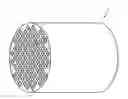
FIG. 1 is a perspective view schematically showing an exhaust gas-purifying catalyst according to a first embodiment of the present invention;
FIG. 2 is an enlarged cross-sectional view showing a part of the exhaust gas-purifying catalyst shown in FIG. 1;
FIG. 3 is an enlarged cross-sectional view showing a part of an exhaust gas-purifying catalyst according to a second embodiment of the present invention;
FIG. 4 is an enlarged cross-sectional view showing a part of an exhaust gas-purifying catalyst according to a third embodiment of the present invention;
FIG. 5 is a graph showing the relationship between the amount of titanium per a unit volume of a substrate and NOx emission; and
FIG. 6 is a graph showing the relationship between the amount of titanium per a unit volume of a substrate and NOx emission.
DETAILED DESCRIPTION OF THE INVENTION
Embodiments of the present invention will be described in detail below with reference to the drawings. In all the drawings, elements that are the same or similar in function are given the same reference characters, and their description will not be repeated.
FIG. 1 is a perspective view schematically showing an exhaust gas-purifying catalyst according to a first embodiment of the present invention. FIG. 2 is an enlarged cross-sectional view showing a part of the exhaust gas-purifying catalyst shown in FIG. 1. An exhaust gas-purifying catalyst 1 shown in FIGS. 1 and 2 is a monolith catalyst. The exhaust gas-purifying catalyst 1 contains a substrate 2 such as a monolith honeycomb substrate. Typically, the substrate 2 is made of ceramic such as cordierite.
A catalytic layer 3 is formed on a partition wall of the substrate 2. The catalytic layer 3 contains a precious metal, alumina, and an acidic oxide element.
The precious metal is, for example, a platinum group, and is generally rhodium, palladium, platinum, or a combination thereof. The precious metal is present in the form of precious metal particles, and has, for example, a particle size of from 0.1 to 500 nm. Typically, the precious metals are supported on alumina particles, and play a role as a catalyst in oxidation reactions of HC and CO and reductive reactions of NOX.
Typically, alumina is present in the form of a secondary particle formed by the aggregation of alumina particles. Each of the alumina particles has, for example, a particle size of from 0.1 to 500 nm. The secondary particle has, for example, a particle size of from 1 to 50 μm. The alumina supports the precious metal, and plays a role in increasing the specific surface area of the precious metal and dissipating heat generated by the reactions to suppress the sintering of the precious metal.
The acidic oxide element means an element other than oxygen contained in an acidic oxide. Typically, the acidic oxide element is titanium, tungsten, or silicon. Typically, the acidic oxide element is present in the form of primary particles containing the acidic oxide element, and has, for example, a particle size of from 0.1 to 500 nm. The acidic oxide element plays a role in suppressing the sulfur poisoning of the precious metal.
Typically, the acidic oxide element is uniformly distributed in a secondary particle formed by the aggregation of alumina particles. That is, the acidic oxide element is present in a high dispersion state in the secondary particle formed by the aggregation of alumina particles.
The uniformity (dispersibility) of the distribution of the acidic oxide element in the catalytic layer 3 is evaluated as follows.
First, supposed are m planes that are obtained by dividing the region between the surface of the catalytic layer 3 and the surface of the catalytic layer 3 located on the substrate 2 side into 350 equal parts. Then, 350 intersection points of these m planes and a straight line that is perpendicular to the surface of the catalytic layer 3 are supposed. Hereinafter, these 350 intersection points are referred to as points Pi (i=1, 2, . . . , 350, hereinafter the same).
Then, using an electron beam microanalyzer (EPMA), a characteristic X-ray intensity IAl,i of aluminum (Al) and a characteristic X-ray intensity IAE,i of the acidic oxide element are measured on each of these 350 points Pi. Then, a correlation coefficient ρAl,AE given by the following formula (1) is obtained based on these measurement values.
ρ Al , AE = C Al , AE σ Al σ AE ( 1 )
In the above formula, CAl,AE is a covariance of the intensity IAl,i and the intensity IAE,i; σAl is the standard deviation of the intensity IAl,i; and σAE is the standard deviation of the intensity IAE,i. The covariance CAl,AE, the standard deviations σAl, and σAE are given by the following formulae (2) to (4), respectively.
C Al , AE = 1 350 ∑ i = 1 350 ( I Al , i - I Al , av ) ( I AE , i - I AE , av ) ( 2 ) σ Al = 1 350 ∑ i = 1 350 ( I Al , i - I Al , av ) 2 ( 3 ) σ AE = 1 350 ∑ i = 1 350 ( I AE , i - I AE , av ) 2 ( 4 )
In each of the above formulae, IAl,av is the arithmetic average value of the intensity IAl,i given by the following formula (5), and IAE,av is the arithmetic average value of the intensity IAE,i given by the following formula (6).
I Al , av = 1 350 ∑ i = 1 350 I Al , i ( 5 ) I AE , av = 1 350 ∑ i = 1 350 I AE , i ( 6 )
The correlation coefficient ρAl,AE represented by the above formula serves as an indicator that shows the correlation between the distribution of aluminum and the distribution of the acidic oxide element in the catalytic layer 3. That is, in the case where the acidic oxide element is distributed in the catalytic layer 3 with a relatively high uniformity, the correlation coefficient ρAl,AE is a large positive value of 1 or less. On the other hand, in the case where the acidic oxide element is distributed in the catalytic layer 3 with a relatively low uniformity, the correlation coefficient ρAl,AE is a small positive value close to 0.
Thus, by using the correlation coefficient ρAl,AE, the uniformity of the acidic oxide element distribution in the catalytic layer 3 can be evaluated. In the exhaust gas-purifying catalyst 1, the correlation coefficient ρAl,AE of the catalytic layer 3 is a large positive value of 1 or less. That is, in the catalytic layer 3 of the exhaust gas-purifying catalyst 1, the acidic oxide element is distributed with a relatively high uniformity.
In the exhaust gas-purifying catalyst 1, the correlation coefficient ρAl,AE of the catalytic layer 3 is 0.70 or more, preferably 0.75 or more, and more preferably 0.80 or more. The upper limit of the correlation coefficient ρAl,AE of the catalytic layer 3 is 1.00.
The acidic oxide element is uniformly distributed in the secondary particle formed by the aggregation of the alumina particles. As a result, the acidic oxide element and the precious metal supported on the alumina particles are present close to each other. The proximity of the acidic oxide element and the precious metal is evaluated as follows.
First, using an electron beam microanalyzer (EPMA), a characteristic X-ray intensity IPM,i of the precious metal and a characteristic X-ray intensity IAE,i of the acidic oxide element are measured on each of the above-described 350 points Pi. The correlation coefficient ρPM,AE given by the following formula (7) is obtained based on these measurement values.
ρ PM , AE = C PM , AE σ PM σ AE ( 7 )
In the above formula (7), CPM,AE and σPM are represented by the following formulae (8) and (9), respectively. Furthermore, σAE is represented by the above formula (4).
C PM , AE = 1 350 ∑ i = 1 350 ( I PM , i - I PM , av ) ( I AE , i - I AE , av ) ( 8 ) σ PM = 1 350 ∑ i = 1 350 ( I PM , i - I PM , av ) 2 ( 9 )
In each of the above formulae, IPM,av is the arithmetic average value of the intensity IAl,i given by the following formula (11), and IAE,av is the arithmetic average value of the intensity IAE,i given by the above formula (6).
I PM , av = 1 350 ∑ i = 1 350 I PM , i ( 11 )
The correlation coefficient ρPM,AE thus obtained serves as an indicator that shows the correlation between the distribution of the precious metal and the distribution of the acidic oxide element in the catalytic layer 3. That is, in the case where the precious metal and the acidic oxide element are distributed close to each other in the catalytic layer 3, the correlation coefficient ρPM,AE is a large positive value of 1 or less. On the other hand, in the case where the precious metal and the acidic oxide element are distributed not close to each other, the correlation coefficient ρPM,AE is a small positive value close to 0.
Thus, by using the correlation coefficient ρPM,AE, the proximity of the precious metal and the acidic oxide element in the catalytic layer 3 can be evaluated. In the exhaust gas-purifying catalyst 1, the correlation coefficient ρPM,AE of the catalytic layer 3 is a large positive value of 1 or less. That is, in the catalytic layer 3 of the exhaust gas-purifying catalyst 1, the precious metal and the acidic oxide element are distributed close to each other.
In the exhaust gas-purifying catalyst 1, the correlation coefficient ρPM,AE of the catalytic layer 3 is 0.70 or more, preferably 0.75 or more, and more preferably 0.80 or more. The upper limit of the correlation coefficient ρPM,AE of the catalytic layer 3 is 1.00.
As described above, the acidic oxide element is uniformly distributed in the secondary particle formed by the aggregation of the alumina particles in the catalytic layer 3. As a result, the acidic oxide element and the precious metal supported on the alumina particles are present close to each other. The acidic oxide element and the precious metal are present close to each other, which can efficiently suppress the sulfur poisoning of the precious metal. Thereby, the exhaust gas-purifying catalyst including the catalytic layer can achieve a higher performance in purifying exhaust gas.
The state where the acidic oxide element is uniformly distributed in the secondary particle of alumina in the catalytic layer 3 can be produced by previously doping the alumina with the acidic oxide element, and forming the catalytic layer using the alumina doped with the acidic oxide element.
The alumina doped with the acidic oxide element can be prepared as follows, for example. When the acidic oxide element is titanium, aluminum nitrate and citric acid are first added to ion exchange water, and a titanium isopropoxide solution in n-propyl alcohol is then added thereto, followed by mixing. Next, hydrazine is added to the mixed solution. Then, the reaction system is stirred with heating to obtain a precipitate. The precipitate is separated by filtering, and the obtained filter cake is dried. The obtained solid is then fired. Thus, the alumina doped with the titanium can be obtained.
The alumina doped with the acidic oxide element has a structure where the acidic oxide element is located inside each of the alumina particles. These acidic oxide elements may replace a part of atoms constituting the crystal lattice of alumina, or may be located in voids between these atoms. Alternatively, while a part of the acidic oxide elements replace a part of atoms constituting the crystal lattice of alumina, the other part of the acidic oxide elements may be located in voids between these atoms.
The exhaust gas-purifying catalyst 1 can be manufactured by applying a slurry containing both the alumina doped with the acidic oxide element and the precious metal on the substrate 2 to form the catalytic layer 3.
On the other hand, when a catalytic layer is formed using a slurry containing a mixture of alumina, an acidic oxide element, and a precious metal without using the alumina doped with the acidic oxide element, the ratio of the acidic oxide element that is present close to the precious metal is decreased (see Examples 19 and 20 to be described later). The acidic oxide element that is not present close to the precious metal does not contribute to the suppression of the sulfur poisoning of the precious metal. Therefore, as the ratio of the acidic oxide element that is present close to the precious metal is decreased, the performance of the catalyst in purifying exhaust gas may be deteriorated.
In the exhaust gas-purifying catalyst 1, the content of the acidic oxide element per the unit volume of the substrate 2 is, for example, within a range of from 0.5 g/L to 80 g/L, and typically within a range of from 1 g/L to 40 g/L. When the content is less than 0.5 g/L, the sulfur poisoning of the precious metal may be insufficiently suppressed by the acidic oxide element. When the content is more than 80 g/L, the heat resistance of the catalytic layer 3 is deteriorated, which may be apt to cause the aggregation of the precious metal.
In the exhaust gas-purifying catalyst 1, the content of the acidic oxide element is, for example, within a range of from 0.5% by mass to 20% by mass, and typically within a range of from 1% by mass to 10% by mass, based on the total mass of the alumina and the acidic oxide element. When the content is less than 0.1% by mass, the sulfur poisoning of the precious metal may be insufficiently suppressed by the acidic oxide element. When the content is more than 20% by mass, the heat resistance of the alumina is deteriorated, which may be apt to cause the aggregation of the precious metal.
In the exhaust gas-purifying catalyst 1, the mass ratio of the content of the acidic oxide element to the content of the precious metal is, for example, within a range of from 0.5 to 80, and typically within a range of from 0.5 to 40. When the mass ratio is less than 0.5, the sulfur poisoning of the precious metal may be insufficiently suppressed by the acidic oxide element. The mass ratio of more than 80 may be apt to cause the aggregation of the precious metal.
The acidic oxide element contained in the catalytic layer 3 is preferably contained in a raw material slurry in the form of alumina doped with the total amount of the acidic oxide element. A part of the acidic oxide element may be contained in the raw material slurry without doping the alumina therewith as long as the formed catalytic layer 3 satisfies the correlation coefficients ρAl,AE and ρPM,AE of 0.7 or more.
The catalytic layer 3 can contain other components in addition to the precious metal, the alumina, and the acidic oxide element.
The catalytic layer 3 may further contain an oxygen storage material. The oxygen storage material stores oxygen under an oxygen-rich condition and emits oxygen under an oxygen-lean condition so as to optimize the oxidation reactions of HC and CO and the reductive reactions of NOx. The oxygen storage material is in the form of particles, for example. As the oxygen storage material, for example, cerium oxide, zirconium oxide, or a composite oxide thereof is used. Alternatively, as the oxygen storage material, a rare-earth oxide such as praseodymium oxide, lanthanum oxide or yttrium oxide; a transition metal oxide such as iron oxide or manganese oxide; or a composite oxide thereof may be used. Alternatively, as the oxygen storage material, a mixture or composite oxide of the above-described compounds may be used. Typically, a composite oxide of cerium oxide and zirconium oxide, a composite oxide of cerium oxide, zirconium oxide, and lanthanum oxide, or a composite oxide of cerium oxide, zirconium oxide, lanthanum oxide, and yttrium oxide is used as the oxygen storage material.
The catalytic layer 3 may further contain a rare-earth element. The rare-earth element has a function of improving the NOX purification performance of the exhaust gas-purifying catalyst 1 without deteriorating the HC purification performance of the exhaust gas-purifying catalyst 1. As the rare-earth element, for example, neodymium, lanthanum, praseodymium or yttrium can be used.
The catalytic layer 3 may further contain zeolite. Zeolite has a large specific surface area, and has an excellent performance of adsorbing HC in the exhaust gas. Therefore, the HC purification performance of the exhaust gas-purifying catalyst 1 can be further improved by incorporating zeolite.
The catalytic layer 3 may further contain a binder. The binder plays a role in strengthening the bonds among a plurality of particles in the catalytic layer 3 to improve the endurance of the catalyst. As the binder, for example, an alumina sol, a titania sol, or a silica sol is used.
The exhaust gas-purifying catalyst 1 is not limited to an embodiment including one catalytic layer 3, and may include catalytic layers having a multilayer structure. For example, the exhaust gas-purifying catalyst 1 includes two to six catalytic layers. When the exhaust gas-purifying catalyst includes catalytic layers having a multilayer structure, at least one of the catalytic layers satisfies the following three requirements: (i) the catalytic layer contains a precious metal, alumina, and an acidic oxide element; (ii) a correlation coefficient ρAl,AE calculated by the formula (1) is 0.70 or more; and (iii) a correlation coefficient ρPM,AE calculated by the formula (7) is 0.70 or more.
FIG. 3 is a cross-sectional view schematically showing an exhaust gas-purifying catalyst according to a second embodiment of the present invention.
This exhaust gas-purifying catalyst 1 contains a substrate 2, a first catalytic layer 3A formed on the substrate 2, and a second catalytic layer 3B formed on the first catalytic layer 3A. The first catalytic layer 3A has the same structure as that of the catalytic layer 3 described with reference to FIG. 2. That is, the exhaust gas-purifying catalyst 1 has the same structure as that of the exhaust gas-purifying catalyst described with reference to FIG. 2 except that it further contains the second catalytic layer 3B.
The second catalytic layer 3B has a structure different from that of the first catalytic layer 3A.
Typically, the second catalytic layer 3B contains a precious metal. As the precious metal, typically used is a precious metal that is different from the precious metal contained in the first catalytic layer 3A. For example, in the case where the first catalytic layer 3A contains palladium and/or platinum as the precious metal, the second catalytic layer 3B typically contains rhodium. Alternatively, in the case where the first catalytic layer 3A contains rhodium as the precious metal, the second catalytic layer 3B typically contains palladium and/or platinum. When such a structure is employed, the performance of the exhaust gas-purifying catalyst 1 in purifying an exhaust gas can be further improved.
The second catalytic layer 3B may or may not satisfy the following three requirements as with the first catalytic layer 3A: (i) the catalytic layer contains a precious metal, alumina, and an acidic oxide element; (ii) the correlation coefficient ρAl,AE calculated by the formula (1) is 0.70 or more; and (iii) the correlation coefficient ρPM,AE calculated by the formula (7) is 0.70 or more.
When the second catalytic layer 3B satisfies the three requirements as with the first catalytic layer 3A, a higher performance in purifying exhaust gas can be exhibited.
The second catalytic layer 3B may further contain an oxygen storage material. As the oxygen storage material, the same material as that of the catalytic layer 3 of the exhaust gas-purifying catalyst 1 described with reference to FIG. 2 can be used.
The second catalytic layer 3B may further contain a rare-earth element, zeolite, or a binder. As these elements or materials, the same ones as those previously described for the catalytic layer 3 can be used.
FIG. 4 is a cross-sectional view schematically showing an exhaust gas-purifying catalyst according to a third embodiment of the present invention.
This exhaust gas-purifying catalyst 1 contains a substrate 2, a second catalytic layer 3B formed on the substrate 2, and a first catalytic layer 3A formed on the second catalytic layer 3B. That is, the exhaust gas-purifying catalyst 1 has the same structure as that of the exhaust gas-purifying catalyst described with reference to FIG. 3 except that the order of stacking the first catalytic layer 3A and the second catalytic layer 3B is reversed.
In the case where the structure described with reference to FIGS. 3 and 4 is employed, the uniformity of the distribution of the acidic oxide element and the proximity of the precious metal and acidic oxide element in each of the first catalytic layer 3A and the second catalytic layer 3B are evaluated as follows. Hereinafter, an example will be described in which the catalytic layers 3A and 3B are arranged as shown in FIG. 3.
First, supposed are 175 planes that are obtained by dividing the region between the surface of the first catalytic layer 3A located on the side of the second catalytic layer 3B and the surface of the first catalytic layer 3A located on the side of the substrate 2 into 175 equal parts. Then, measurements using EPMA are performed at 175 intersection points Pj (j=1, 2, . . . , 175) of the 175 planes and a straight line perpendicular to the main surface of the first catalytic layer 3A. Then, the correlation coefficients ρAl,AE and ρPM,AE are calculated for the first catalytic layer 3A by the same methods as those previously described for the catalytic layer 3.
Supposed are 175 planes that are obtained by dividing the region between the surface of the second catalytic layer 3B and the surface of the second catalytic layer 3B located on the side of the first catalytic layer 3A into 175 equal parts. Then, measurements using EPMA are performed at 175 intersection points Pk (k=1, 2, . . . , 175) of the 175 planes and a straight line perpendicular to the main surface of the second catalytic layer 3B. Then, the correlation coefficients ρAl,AE and ρPM,AE are calculated for the second catalytic layer 3B by the same methods as those previously described for the catalytic layer 3.
The exhaust gas-purifying catalyst 1 described with reference to FIGS. 3 and 4 includes the two catalytic layers, but at least the first catalytic layer 3A has a correlation coefficient ρAl,AE of 0.7 or more and a correlation coefficient ρPM,AE of 0.7 or more. The correlation coefficient ρAl,AE of the first catalytic layer 3A is preferably 0.75 or more, and the correlation coefficient ρPM,AE of the first catalytic layer 3A is preferably 0.75 or more.
EXAMPLES
Hereinafter, examples of the present invention will be described.
<Preparation of Alumina Doped with Acidic Oxide Element>
When an acidic oxide element was titanium, 35 g of titanium isopropoxide was first dissolved in 65 mL of n-propyl alcohol to prepare a titanium isopropoxide solution. Then, 90 g of aluminum nitrate and 5 g of citric acid were added to 210 mL of ion exchange water, and 100 ml of the prepared titanium isopropoxide solution was then added, followed by mixing. Next, 10 g of hydrazine was added to the mixed solution. Then, the obtained mixed solution was stirred at 50° C. for 24 hours to obtain a precipitate. The precipitate was separated by filtering to obtain a filter cake, and the obtained filter cake was dried. Then, the obtained solid was fired at 900° C. for 5 hours. Thus, alumina doped with 10% by mass of titanium was obtained.
The doped amount of the acidic oxide element was changed by changing the used amount of a raw material containing the acidic oxide element (titanium isopropoxide in the case of titanium). Herein, the doped amount (content) of the acidic oxide element is represented by % by mass based on the total of the mass of the alumina and the mass of the doped acidic oxide element.
When the acidic oxide element was tungsten, 11.2 g of ammonium tungstate was dissolved in 88.8 mL of n-propyl alcohol to prepare an ammonium tungstate solution, and the solution was used instead of the titanium isopropoxide solution. Except for this point, alumina doped with 10% by mass of tungsten was prepared in the same manner as in the case of the titanium.
When the acidic oxide element was silicon, 14.6 g of tetramethoxysilane was dissolved in 85.4 mL of n-propyl alcohol to prepare a tetramethoxysilane solution, and the solution was used instead of the titanium isopropoxide solution. Except for this point, alumina doped with 10% by mass of silicon was prepared in the same manner as in the case of the titanium.
Example 1: Manufacture of Catalyst C1
Alumina doped with 10% by mass of titanium was prepared. Hereinafter, this is referred to as “Ti alumina TI1”.
A composite oxide of cerium oxide and zirconium oxide was prepared. In the composite oxide, the molar ratio of a cerium element and a zirconium element was set to 7:3. Hereinafter, the composite oxide is referred to as “CZ oxide”.
In addition, a monolith honeycomb substrate was prepared, which was made of cordierite and had a total length of 100 mm, a volumetric capacity of 1.0 L and a cell number of 900 cells per square inch.
100 g of the Ti alumina TI1, 100 g of the CZ oxide, and a palladium nitrate aqueous solution containing 1 g of palladium were mixed to prepare a slurry. Hereinafter, the slurry is referred to as “slurry S1”.
Next, 201 g (containing 1 g of palladium) of slurry S1 was applied on the substrate. Then, this was dried at 250° C. for 1 hour, and then fired at 500° C. for 1 hour.
As described above, an exhaust gas-purifying catalyst was manufactured. Hereinafter, the catalyst is referred to as “catalyst C1”.
Example 2: Manufacture of Catalyst C2
Alumina doped with 0.5% by mass of titanium was prepared. Hereinafter, this is referred to as “Ti alumina TI2”.
A slurry was prepared in the same manner as in the slurry S1 except that the Ti alumina TI2 was used instead of the Ti alumina TI1. Hereinafter, the slurry is referred to as “slurry S2”.
Then, an exhaust gas-purifying catalyst was manufactured in the same manner as in the catalyst C1 except that the slurry S2 was used instead of the slurry S1. Hereinafter, the catalyst is referred to as “catalyst C2”.
Example 3: Manufacture of Catalyst C3
Alumina doped with 20% by mass of titanium was prepared. Hereinafter, this is referred to as “Ti alumina TI3”.
A slurry was prepared in the same manner as in the slurry S1 except that the Ti alumina TI3 was used instead of the Ti alumina TI1. Hereinafter, the slurry is referred to as “slurry S3”.
Then, an exhaust gas-purifying catalyst was manufactured in the same manner as in the catalyst C1 except that the slurry S3 was used instead of the slurry S1. Hereinafter, the catalyst is referred to as “catalyst C3”.
Example 4: Manufacture of Catalyst C4
A slurry was prepared in the same manner as in the slurry S3 except that 400 g of the Ti alumina TI3 was used instead of 100 g of the Ti alumina TI3, and that 50 g of the CZ oxide was used instead of 100 g of the CZ oxide. Hereinafter, the slurry is referred to as “slurry S4”.
Then, an exhaust gas-purifying catalyst was manufactured in the same manner as in the catalyst C3 except that 451 g (containing 1 g of palladium) of the slurry S4 was used instead of 201 g (containing 1 g of palladium) of the slurry S3. Hereinafter, the catalyst is referred to as “catalyst C4”.
Example 5: Manufacture of Catalyst C5
50 g of the Ti alumina TI1, 50 g of the CZ oxide, and a palladium nitrate aqueous solution containing 0.5 g of palladium were mixed to prepare a slurry. Hereinafter, the slurry is referred to as “slurry S5-1”.
A composite oxide of zirconium oxide and cerium oxide was prepared. In the composite oxide, the molar ratio of a zirconium element and a cerium element was set to 7:3. Hereinafter, the composite oxide is referred to as “ZC oxide”.
50 g of the Ti alumina TI1, 50 g of the ZC oxide, and a rhodium nitrate aqueous solution containing 0.5 g of rhodium were mixed to prepare a slurry. Hereinafter, the slurry is referred to as “slurry S5-2”.
100.5 g (containing 0.5 g of palladium) of the slurry S5-1 was applied on the substrate. Then, this was dried at 250° C. for 1 hour, and then fired at 500° C. for 1 hour. Then, 100.5 g (containing 0.5 g of rhodium) of the slurry S5-2 was applied to the substrate on which the slurry S5-1 had been applied. Subsequently, this was dried at 250° C. for 1 hour, and then fired at 500° C. for 1 hour.
As described above, an exhaust gas-purifying catalyst was manufactured. Hereinafter, the catalyst is referred to as “catalyst C5”.
Example 6: Manufacture of Catalyst C6
100.5 g (containing 0.5 g of rhodium) of the slurry S5-2 was applied on the substrate. Then, this was dried at 250° C. for 1 hour, and then fired at 500° C. for 1 hour. Then, 100.5 g (containing 0.5 g of palladium) of the slurry S5-1 was applied to the substrate on which the slurry S5-2 had been applied. Subsequently, this was dried at 250° C. for 1 hour, and then fired at 500° C. for 1 hour.
As described above, an exhaust gas-purifying catalyst was manufactured. That is, the exhaust gas-purifying catalyst was manufactured in the same manner as in the catalyst C5 except that the order of applying the slurry S5-1 and the slurry S5-2 was reversed. Hereinafter, the catalyst is referred to as “catalyst C6”.
Example 7: Manufacture of Catalyst C7
A slurry was prepared in the same manner as in the slurry S1 except that a dinitrodiamine platinum nitrate aqueous solution containing 1 g of platinum was used instead of a palladium nitrate aqueous solution containing 1 g of palladium. Hereinafter, the slurry is referred to as “slurry S7”.
Then, an exhaust gas-purifying catalyst was manufactured in the same manner as in the catalyst C1 except that the slurry S7 was used instead of the slurry S1. Hereinafter, the catalyst is referred to as “catalyst C7”.
Example 8: Manufacture of Catalyst C8
A slurry was prepared in the same manner as in the slurry S1 except that an aqueous solution containing a mixture of palladium nitrate containing 0.5 g of palladium and dinitrodiamine platinum nitrate containing 0.5 g of platinum was used instead of a palladium nitrate aqueous solution containing 1 g of palladium. Hereinafter, the slurry is referred to as “slurry S8”.
Then, an exhaust gas-purifying catalyst was manufactured in the same manner as in the catalyst C1 except that the slurry S8 was used instead of the slurry S1. Hereinafter, the catalyst is referred to as “catalyst C8”.
Example 9: Manufacture of Catalyst C9
Alumina doped with 10% by mass of tungsten was prepared. Hereinafter, this is referred to as “W alumina”.
A slurry was prepared in the same manner as in the slurry S1 except that the W alumina was used instead of the Ti alumina TI1. Hereinafter, the slurry is referred to as “slurry S9”.
Then, an exhaust gas-purifying catalyst was manufactured in the same manner as in the catalyst C1 except that the slurry S9 was used instead of the slurry S1. Hereinafter, the catalyst is referred to as “catalyst C9”.
Example 10: Manufacture of Catalyst C10
Alumina doped with 10% by mass of silicon was prepared. Hereinafter, this is referred to as “Si alumina”.
A slurry was prepared in the same manner as in the slurry S1 except that the Si alumina was used instead of the Ti alumina TI1. Hereinafter, the slurry is referred to as “slurry S10”.
Then, an exhaust gas-purifying catalyst was manufactured in the same manner as in the catalyst C1 except that the slurry S10 was used instead of the slurry S1. Hereinafter, the catalyst is referred to as “catalyst C10”.
Example 11: Manufacture of Catalyst C11
A slurry was prepared in the same manner as in the slurry S1 except that a mixture of 50 g of the Ti alumina TI1 and 50 g of the W alumina was used instead of 100 g of the Ti alumina TI1. Hereinafter, the slurry is referred to as “slurry S11”.
Then, an exhaust gas-purifying catalyst was manufactured in the same manner as in the catalyst C1 except that the slurry S11 was used instead of the slurry S1. Hereinafter, the catalyst is referred to as “catalyst C11”.
Example 12: Manufacture of Catalyst C12
Alumina doped with 1% by mass of titanium was prepared. Hereinafter, this is referred to as “Ti alumina TI12”.
A slurry was prepared in the same manner as in the slurry S1 except that the Ti alumina TI12 was used instead of the Ti alumina TI1. Hereinafter, the slurry is referred to as “slurry S12”.
Then, an exhaust gas-purifying catalyst was manufactured in the same manner as in the catalyst C1 except that the slurry S12 was used instead of the slurry S1. Hereinafter, the catalyst is referred to as “catalyst C12”.
Example 13: Manufacture of Catalyst C13
A slurry was manufactured in the same manner as in the slurry S1 except that 400 g of the Ti alumina TI1 was used instead of 100 g of the Ti alumina TI1, and that 50 g of the CZ oxide was used instead of 100 g of the CZ oxide. Hereinafter, the slurry is referred to as “slurry S13”.
Then, an exhaust gas-purifying catalyst was manufactured in the same manner as in the catalyst C1 except that 451 g (containing 1 g of palladium) of the slurry S13 was used instead of 201 g (containing 1 g of palladium) of the slurry S1. Hereinafter, the catalyst is referred to as “catalyst C13”.
Example 14: Manufacture of Catalyst C14
50 g of the Ti alumina TI12, 50 g of the CZ oxide (Ce/Zr molar ratio=7/3), and a palladium nitrate aqueous solution containing 0.5 g of palladium were mixed to prepare a slurry. Hereinafter, the slurry is referred to as “slurry S14-1”.
50 g of the Ti alumina TI12, 50 g of the ZC oxide (Zr/Ce molar ratio=7/3), and a rhodium nitrate aqueous solution containing 0.5 g of rhodium were mixed to prepare a slurry. Hereinafter, the slurry is referred to as “slurry S14-2”.
100.5 g (containing 0.5 g of palladium) of the slurry S14-1 was applied on the substrate. Then, this was dried at 250° C. for 1 hour, and then fired at 500° C. for 1 hour. Then, 100.5 g (containing 0.5 g of rhodium) of the slurry S14-2 was applied to the substrate on which the slurry S14-1 had been applied. Subsequently, this was dried at 250° C. for 1 hour, and then fired at 500° C. for 1 hour.
As described above, an exhaust gas-purifying catalyst was manufactured. Hereinafter, the catalyst is referred to as “catalyst C14”.
Example 15: Manufacture of Catalyst C15
A composite oxide of cerium oxide, zirconium oxide, and lanthanum oxide was prepared. In the composite oxide, the molar ratio of a cerium element, a zirconium element, and a lanthanum element was set to 6:3:1. Hereinafter, the composite oxide is referred to as “CZL oxide”.
A slurry was prepared in the same manner as in the slurry S1 except that the CZL oxide was used instead of the CZ oxide. Hereinafter, the slurry is referred to as “slurry S15”.
Then, an exhaust gas-purifying catalyst was manufactured in the same manner as in the catalyst C1 except that the slurry S15 was used instead of the slurry S1. Hereinafter, the catalyst is referred to as “catalyst C15”.
Example 16: Manufacture of Catalyst C16
A composite oxide of cerium oxide, zirconium oxide, lanthanum oxide, and yttrium oxide was prepared. In the composite oxide, the molar ratio of a cerium element, a zirconium element, a lanthanum element, and an yttrium element was set to 5:3:1:1. Hereinafter, the composite oxide is referred to as “CZLY oxide”.
A slurry was prepared in the same manner as in the slurry S1 except that the CZLY oxide was used instead of the CZ oxide. Hereinafter, the slurry is referred to as “slurry S16”.
Then, an exhaust gas-purifying catalyst was manufactured in the same manner as in the catalyst C1 except that the slurry S16 was used instead of the slurry S1. Hereinafter, the catalyst is referred to as “catalyst C16”.
Example 17: Manufacture of Catalyst C17
Alumina doped with 0.05% by mass of titanium was prepared. Hereinafter, this is referred to as “Ti alumina TI17”.
A slurry was prepared in the same manner as in the slurry S1 except that the Ti alumina TI17 was used instead of the Ti alumina TI1. Hereinafter, the slurry is referred to as “slurry S17”.
Then, an exhaust gas-purifying catalyst was manufactured in the same manner as in the catalyst C1 except that the slurry S17 was used instead of the slurry S1. Hereinafter, the catalyst is referred to as “catalyst C17”.
Example 18: Manufacture of Catalyst C18
Alumina doped with 21% by mass of titanium was prepared. Hereinafter, this is referred to as “Ti alumina TI18”.
A slurry was prepared in the same manner as in the slurry S1 except that 400 g of the Ti alumina TI18 was used instead of 100 g of the Ti alumina TI1, and that 50 g of the CZ oxide was used instead of 100 g of the CZ oxide. Hereinafter, the slurry is referred to as “slurry S18”.
Then, an exhaust gas-purifying catalyst was manufactured in the same manner as in the catalyst C1 except that 451 g (containing 1 g of palladium) of the slurry S18 was used instead of 201 g (containing 1 g of palladium) of the slurry S1. Hereinafter, the catalyst is referred to as “catalyst C18”.
Example 19: Manufacture of Catalyst C19
90 g of alumina, 100 g of the CZ oxide, 16.7 g of titanium oxide, and a palladium nitrate aqueous solution containing 1 g of palladium were mixed to prepare a slurry. Hereinafter, the slurry is referred to as “slurry S19”.
Then, an exhaust gas-purifying catalyst was manufactured in the same manner as in the catalyst C1 except that 207.7 g (containing 1 g of palladium) of the slurry S19 was used instead of 201 g (containing 1 g of palladium) of the slurry S1. Hereinafter, the catalyst is referred to as “catalyst C19”.
In the catalyst C19, the mass of titanium based on the total mass of alumina and titanium was 10% by mass.
Example 20: Manufacture of Catalyst C20
45 g of alumina, 50 g of the CZ oxide, 8.35 g of titanium oxide, and a palladium nitrate aqueous solution containing 0.5 g of palladium were mixed to prepare a slurry. Hereinafter, the slurry is referred to as “slurry S20-1”.
45 g of alumina, 50 g of the CZ oxide, 8.35 g of titanium oxide, and a rhodium nitrate aqueous solution containing 0.5 g of rhodium were mixed to prepare a slurry. Hereinafter, the slurry is referred to as “slurry S20-2”.
103.85 g (containing 0.5 g of palladium) of the slurry S20-1 was applied on the substrate. Then, this was dried at 250° C. for 1 hour, and then fired at 500° C. for 1 hour. Then, 103.85 g (containing 0.5 g of rhodium) of the slurry S20-2 was applied to the substrate on which the slurry S20-1 had been applied. Subsequently, this was dried at 250° C. for 1 hour, and then fired at 500° C. for 1 hour.
As described above, an exhaust gas-purifying catalyst was manufactured. Hereinafter, the catalyst is referred to as “catalyst C20”.
Example 21: Manufacture of Catalyst C21
An exhaust gas-purifying catalyst was manufactured in the same manner as in the catalyst C20 except that 103.85 g (containing 0.5 g of palladium) of the slurry S20-1 was applied, and 100.5 g (containing 0.5 g of rhodium) of the slurry S5-2 was then applied. Hereinafter, the catalyst is referred to as “catalyst C21”.
Example 22: Manufacture of Catalyst C22
An exhaust gas-purifying catalyst was manufactured in the same manner as in the catalyst C20 except that 100.5 g (containing 0.5 g of palladium) of the slurry S5-1 was applied, and 103.85 g (containing 0.5 g of rhodium) of the slurry S20-2 was then applied. Hereinafter, the catalyst is referred to as “catalyst C22”.
Data related to the catalysts C1 to C22 are summarized in the following Tables 1 to 6.
| TABLE 1 | ||||||||
| Amount of | Doped | Amount | ||||||
| acidic | amount of | of | ||||||
| Acidic | oxide | acidic oxide | precious | Correlation | Correlation | Emission of evaluation 1 |
| Catalytic | oxide | element | element | Precious | metal | coefficient | coefficient | NMHC | CO | NOX | |
| Catalyst | layer | element | (g/L) | (% by mass) | metal | (g/L) | ρAI,AE | ρPM,AE | (g/km) | (g/km) | (g/km) |
| C1 | Ti | 10 | 10 | Pd | 1 | 0.81 | 0.82 | 0.017 | 0.132 | 0.022 | |
| C2 | Ti | 0.5 | 0.5 | Pd | 1 | 0.75 | 0.74 | 0.019 | 0.138 | 0.024 | |
| C3 | Ti | 20 | 20 | Pd | 1 | 0.78 | 0.78 | 0.019 | 0.138 | 0.024 | |
| C4 | Ti | 80 | 20 | Pd | 1 | 0.76 | 0.77 | 0.020 | 0.143 | 0.030 | |
| C5 | Upper | Ti | 5 | 10 | Rh | 0.5 | 0.80 | 0.81 | 0.022 | 0.112 | 0.011 |
| layer | |||||||||||
| Lower | Ti | 5 | 10 | Pd | 0.5 | 0.81 | 0.80 | ||||
| layer | |||||||||||
| C6 | Upper | Ti | 5 | 10 | Pd | 0.5 | 0.80 | 0.80 | 0.020 | 0.117 | 0.013 |
| layer | |||||||||||
| Lower | Ti | 5 | 10 | Rh | 0.5 | 0.80 | 0.81 | ||||
| layer | |||||||||||
| C7 | Ti | 10 | 10 | Pt | 1 | 0.79 | 0.78 | 0.021 | 0.140 | 0.031 | |
| C8 | Ti | 10 | 10 | Pd | 0.5 | 0.81 | 0.80 | 0.019 | 0.127 | 0.020 | |
| Pt | 0.5 | ||||||||||
| TABLE 2 | ||||||||
| Amount of | Doped | Amount | ||||||
| acidic | amount of | of | ||||||
| Acidic | oxide | acidic oxide | precious | Correlation | Correlation | Emission of evaluation 1 |
| Catalytic | oxide | element | element | Precious | metal | coefficient | coefficient | NMHC | CO | NOX | |
| Catalyst | layer | element | (g/L) | (% by mass) | metal | (g/L) | ρAI,AE | ρPM,AE | (g/km) | (g/km) | (g/km) |
| C9 | W | 10 | 10 | Pd | 1 | 0.80 | 0.81 | 0.021 | 0.140 | 0.028 | |
| C10 | Si | 10 | 10 | Pd | 1 | 0.79 | 0.78 | 0.024 | 0.143 | 0.034 | |
| C11 | Ti | 5 | 10 | Pd | 1 | 0.80 | 0.80 | 0.018 | 0.133 | 0.023 | |
| W | 5 | 10 | |||||||||
| C12 | Ti | 1 | 1 | Pd | 1 | 0.80 | 0.80 | 0.017 | 0.123 | 0.021 | |
| C13 | Ti | 40 | 10 | Pd | 1 | 0.79 | 0.78 | 0.017 | 0.126 | 0.022 | |
| C14 | Upper | Ti | 0.5 | 1 | Rh | 0.5 | 0.79 | 0.78 | 0.024 | 0.113 | 0.013 |
| layer | |||||||||||
| Lower | Ti | 0.5 | 1 | Pd | 0.5 | 0.80 | 0.80 | ||||
| layer | |||||||||||
| C15 | Ti | 10 | 10 | Pd | 1 | 0.81 | 0.82 | 0.012 | 0.103 | 0.014 | |
| C16 | Ti | 10 | 10 | Pd | 1 | 0.82 | 0.81 | 0.010 | 0.099 | 0.011 | |
| TABLE 3 | ||||||||
| Amount of | Doped | Amount | ||||||
| acidic | amount of | of | ||||||
| Acidic | oxide | acidic oxide | precious | Correlation | Correlation | Emission of evaluation 1 |
| Catalytic | oxide | element | element | Precious | metal | coefficient | coefficient | NMHC | CO | NOX | |
| Catalyst | layer | element | (g/L) | (% by mass) | metal | (g/L) | ρAI,AE | ρPM,AE | (g/km) | (g/km) | (g/km) |
| C17 | Ti | 0.05 | 0.05 | Pd | 1 | 0.71 | 0.70 | 0.028 | 0.156 | 0.039 | |
| C18 | Ti | 84 | 21 | Pd | 1 | 0.70 | 0.71 | 0.028 | 0.155 | 0.037 | |
| C19 | Ti | 10 | 0 | Pd | 1 | 0.59 | 0.58 | 0.045 | 0.187 | 0.070 | |
| C20 | Upper | Ti | 5 | 0 | Rh | 0.5 | 0.58 | 0.58 | 0.046 | 0.190 | 0.069 |
| layer | |||||||||||
| Lower | Ti | 5 | 0 | Pd | 0.5 | 0.59 | 0.57 | ||||
| layer | |||||||||||
| C21 | Upper | Ti | 5 | 10 | Rh | 0.5 | 0.80 | 0.80 | 0.030 | 0.151 | 0.045 |
| layer | |||||||||||
| Lower | Ti | 5 | 0 | Pd | 0.5 | 0.58 | 0.59 | ||||
| layer | |||||||||||
| C22 | Upper | Ti | 5 | 0 | Rh | 0.5 | 0.57 | 0.57 | 0.031 | 0.153 | 0.040 |
| layer | |||||||||||
| Lower | Ti | 5 | 10 | Pd | 0.5 | 0.80 | 0.81 | ||||
| layer | |||||||||||
| TABLE 4 | ||||||||
| Amount of | Doped | Amount | ||||||
| acidic | amount of | of | ||||||
| Acidic | oxide | acidic oxide | precious | Correlation | Correlation | Emission of evaluation 2 |
| Catalytic | oxide | element | element | Precious | metal | coefficient | coefficient | NMHC | CO | NOX | |
| Catalyst | layer | element | (g/L) | (% by mass) | metal | (g/L) | ρAI,AE | ρPM,AE | (g/km) | (g/km) | (g/km) |
| C1 | Ti | 10 | 10 | Pd | 1 | 0.81 | 0.82 | 0.045 | 0.317 | 0.065 | |
| C2 | Ti | 0.5 | 0.5 | Pd | 1 | 0.75 | 0.74 | 0.068 | 0.442 | 0.126 | |
| C3 | Ti | 20 | 20 | Pd | 1 | 0.78 | 0.78 | 0.050 | 0.330 | 0.073 | |
| C4 | Ti | 80 | 20 | Pd | 1 | 0.76 | 0.77 | 0.075 | 0.480 | 0.120 | |
| C5 | Upper | Ti | 5 | 10 | Rh | 0.5 | 0.80 | 0.81 | 0.079 | 0.359 | 0.044 |
| layer | |||||||||||
| Lower | Ti | 5 | 10 | Pd | 0.5 | 0.81 | 0.80 | ||||
| layer | |||||||||||
| C6 | Upper | Ti | 5 | 10 | Pd | 0.5 | 0.80 | 0.80 | 0.071 | 0.373 | 0.053 |
| layer | |||||||||||
| Lower | Ti | 5 | 10 | Rh | 0.5 | 0.80 | 0.81 | ||||
| layer | |||||||||||
| C7 | Ti | 10 | 10 | Pt | 1 | 0.79 | 0.78 | 0.077 | 0.456 | 0.125 | |
| C8 | Ti | 10 | 10 | Pd | 0.5 | 0.81 | 0.80 | 0.067 | 0.405 | 0.079 | |
| Pt | 0.5 | ||||||||||
| TABLE 5 | ||||||||
| Amount of | Doped | Amount | ||||||
| acidic | amount of | of | ||||||
| Acidic | oxide | acidic oxide | precious | Correlation | Correlation | Emission of evaluation 2 |
| Catalytic | oxide | element | element | Precious | metal | coefficient | coefficient | NMHC | CO | NOX | |
| Catalyst | layer | element | (g/L) | (% by mass) | metal | (g/L) | ρAI,AE | ρPM,AE | (g/km) | (g/km) | (g/km) |
| C9 | W | 10 | 10 | Pd | 1 | 0.80 | 0.81 | 0.076 | 0.448 | 0.112 | |
| C10 | Si | 10 | 10 | Pd | 1 | 0.79 | 0.78 | 0.086 | 0.458 | 0.136 | |
| C11 | Ti | 5 | 10 | Pd | 1 | 0.80 | 0.80 | 0.065 | 0.426 | 0.092 | |
| W | 5 | 10 | |||||||||
| C12 | Ti | 1 | 1 | Pd | 1 | 0.80 | 0.80 | 0.062 | 0.400 | 0.085 | |
| C13 | Ti | 40 | 10 | Pd | 1 | 0.79 | 0.78 | 0.061 | 0.403 | 0.088 | |
| C14 | Upper | Ti | 0.5 | 1 | Rh | 0.5 | 0.79 | 0.78 | 0.086 | 0.362 | 0.053 |
| layer | |||||||||||
| Lower | Ti | 0.5 | 1 | Pd | 0.5 | 0.80 | 0.80 | ||||
| layer | |||||||||||
| C15 | Ti | 10 | 10 | Pd | 1 | 0.81 | 0.82 | 0.043 | 0.330 | 0.056 | |
| C16 | Ti | 10 | 10 | Pd | 1 | 0.82 | 0.81 | 0.037 | 0.320 | 0.044 | |
| TABLE 6 | ||||||||
| Amount of | Doped | Amount | ||||||
| acidic | amount of | of | ||||||
| Acidic | oxide | acidic oxide | precious | Correlation | Correlation | Emission of evaluation 2 |
| Catalytic | oxide | element | element | Precious | metal | coefficient | coefficient | NMHC | CO | NOX | |
| Catalyst | layer | element | (g/L) | (% by mass) | metal | (g/L) | ρAI,AE | ρPM,AE | (g/km) | (g/km) | (g/km) |
| C17 | Ti | 0.05 | 0.05 | Pd | 1 | 0.71 | 0.70 | 0.111 | 0.562 | 0.210 | |
| C18 | Ti | 84 | 21 | Pd | 1 | 0.70 | 0.71 | 0.113 | 0.560 | 0.195 | |
| C19 | Ti | 10 | 0 | Pd | 1 | 0.59 | 0.58 | 0.236 | 0.868 | 0.406 | |
| C20 | Upper | Ti | 5 | 0 | Rh | 0.5 | 0.58 | 0.58 | 0.231 | 0.840 | 0.370 |
| layer | |||||||||||
| Lower | Ti | 5 | 0 | Pd | 0.5 | 0.59 | 0.57 | ||||
| layer | |||||||||||
| C21 | Upper | Ti | 5 | 10 | Rh | 0.5 | 0.80 | 0.80 | 0.152 | 0.650 | 0.224 |
| layer | |||||||||||
| Lower | Ti | 5 | 0 | Pd | 0.5 | 0.58 | 0.59 | ||||
| layer | |||||||||||
| C22 | Upper | Ti | 5 | 0 | Rh | 0.5 | 0.57 | 0.57 | 0.155 | 0.643 | 0.201 |
| layer | |||||||||||
| Lower | Ti | 5 | 10 | Pd | 0.5 | 0.80 | 0.81 | ||||
| layer | |||||||||||
In each of Tables 1 to 6, the column “Amount of acidic oxide element (g/L)” describes the mass of the acidic oxide element per the unit volume of the substrate. The column “Doped amount of acidic oxide element (% by mass)” describes the doped amount of the acidic oxide element based on the total mass of the alumina and the acidic oxide element. The column “Amount of precious metal” describes the mass of the precious metal per the unit volume of the substrate.
<Evaluation of Dispersibility of Acidic Oxide Element in Catalytic Layer>
The above-mentioned correlation coefficient ρAl,AE was obtained as follows for each of the catalysts C1 to C22.
First, each of the catalysts C1 to C22 was cut to a cube shape of 1 cm×1 cm×1 cm to produce a sample for EPMA measurement. Each of 350 points Pi (i=1, 2, . . . , 350) determined as described above was subjected to EPMA measurement. When the catalytic layer had a double-layered structure, each of 175 points Pj and 175 points Pk (j=1, 2, . . . , 175; k=j=1, 2, . . . , 175) was subjected to EPMA measurement. Specifically, in each of these points, characteristic X-ray intensity IAl,i of aluminum or characteristic X-ray intensities IAl,j and IAl,k of aluminum, and characteristic X-ray intensity IAl,i of an acidic oxide element or characteristic X-ray intensities IAE,j and IAE,k of an acidic oxide element were measured. Based on the above-mentioned formulae, the correlation coefficient ρAl,AE of the catalytic layer included in each of the catalysts was calculated. The correlation coefficients ρAl,AE thus obtained are shown in the above-mentioned Tables 1 to 6.
<Evaluation of Proximity of Precious Metal and Acidic Oxide Element in Catalytic Layer>
The above-mentioned correlation coefficient ρPM,AE was obtained as follows for each of the catalysts C1 to C22.
First, each of the catalysts C1 to C22 was cut to a cube shape of 1 cm×1 cm×1 cm to produce a sample for EPMA measurement. Each of 350 points Pi (i=1, 2, . . . , 350) determined as described above was subjected to EPMA measurement. When the catalytic layer had a double-layered structure, each of 175 points Pj and 175 points Pk (j=1, 2, . . . , 175; k=j=1, 2, . . . , 175) was subjected to EPMA measurement. Specifically, in each of the points, characteristic X-ray intensity IPM,i of a precious metal or characteristic X-ray intensities IPM,j and IPM,k of a precious metal, and characteristic X-ray intensity IAE,i of an acidic oxide element or characteristic X-ray intensities IAE,j and IAE,k of an acidic oxide element were measured.
Based on the above-mentioned formulae, the correlation coefficient ρPM,AE of the catalytic layer included in each of the catalysts was calculated. The correlation coefficients ρPM,AE thus obtained are shown in the above-mentioned Tables 1 to 6.
<Evaluation of Exhaust Gas-Purification Performance>
Evaluation 1:
First, an endurance test corresponding to driving of 80,000 km was performed for each of the catalysts C1 to C22. Then, each of them was mounted on an actual vehicle having an engine with a piston displacement of 1.5 L. Subsequently, the actual vehicle was driven on JC08C mode (JC08 mode by cold start) and JC08H mode (JC08 mode by hot start) using gasoline containing 100 ppm of sulfur, and the emissions of non-methane hydrocarbons (NMHC), CO and NOX were measured in each mode. Then, the emissions obtained in each mode were substituted into the following formula, and a combined value of the emissions of NMHC, CO and NOX by JC08 mode was obtained.
E=0.25×Ec+0.75×EH
In the formula, E is the combined value of the emissions of the respective exhaust gases by JC08 mode; EC is the measurement value of the emission of the respective exhaust gas by JC08C mode; and EH is the measurement value of the emission of the respective exhaust gas by JC08H mode. The combined values of the emissions of the respective exhaust gases thus obtained are shown in the columns of “emission of evaluation 1” in Tables 1 to 3 above.
Evaluation 2:
The catalysts C1 to C22 were evaluated according to the same evaluation method as that in the evaluation 1 except that gasoline containing 1000 ppm of sulfur was used instead of gasoline containing 100 ppm of sulfur. The combined values of the emissions of the respective exhaust gases are shown in the columns of “emission of evaluation 2” in Tables 4 to 6 above.
<Results>
As is apparent from Tables 1 to 3, the catalysts C1 to C18, C21 and C22 had a higher performance in purifying exhaust gas than that of the catalysts C19 and C20. Similarly, as is apparent from Tables 4 to 6, the catalysts C1 to C18, C21, and C22 had a higher performance in purifying exhaust gas than that of the catalysts C19 and C20.
These results show that when at least one of the catalytic layers has a correlation coefficient ρAl,AE of 0.7 or more and a correlation coefficient ρPM,AE of 0.7 or more, the acidic oxide element is present close to the precious metal supported on the alumina particle, which enables the sulfur poisoning of the precious metal to be efficiently suppressed.
FIG. 5 shows the relationship between the amount of titanium per the unit volume of the substrate and the NOx emission for the results obtained in the evaluation 1. FIG. 6 shows the relationship between the amount of titanium per the unit volume of the substrate and the NOx emission for the results obtained in the evaluation 2. The NOx emissions of the catalysts C1 to C4, C12, C13, and C17 to C19 are shown in FIGS. 5 and 6.
As is apparent from FIGS. 5 and 6, a particularly high performance in purifying NOx could be achieved by setting the amount of titanium per the unit volume of the substrate to be within a range of from 0.5 g/L to 80 g/L. A higher performance in purifying NOx could be achieved by setting the amount of titanium per the unit volume of the substrate to be within a range of 1 g/L to 40 g/L.
Additional advantages and modifications will readily occur to those skilled in the art. Therefore, the invention in its broader aspects is not limited to the specific details and representative embodiments shown and described herein. Accordingly, various modifications may be made without departing from the spirit or scope of the general invention concept as defined by the appended claims and their equivalents.
Claims
What is claimed is:1. An exhaust gas-purifying catalyst comprising:
a substrate, and one or more catalytic layers provided on the substrate,
wherein at least one of the catalytic layers (i) contains a precious metal, alumina, and an acidic oxide element; (ii) has a correlation coefficient ρAl,AE calculated by the following formula (1) of 0.70 or more; and (iii) has a correlation coefficient ρPM,AE calculated by the following formula (7) of 0.70 or more,
ρ Al , AE = C Al , AE σ Al σ AE ( 1 )
wherein CAl,AE, σAl, and σAE in the formula (1) are represented by the following formulae (2), (3) and (4), respectively:
C Al , AE = 1 350 ∑ i = 1 350 ( I Al , i - I Al , av ) ( I AE , i - I AE , av ) ( 2 ) σ Al = 1 350 ∑ i = 1 350 ( I Al , i - I Al , av ) 2 ( 3 ) σ AE = 1 350 ∑ i = 1 350 ( I AE , i - I AE , av ) 2 ( 4 )
in the formulae (2) to (4),
i is a natural number of from 1 to 350,
IAl,i is a characteristic X-ray intensity of aluminum measured using an electron beam microanalyzer at an i-th intersection point among 350 intersection points of planes and a line perpendicular to a main surface of the catalytic layer, the planes being obtained by dividing the catalytic layer into 350 equal parts in a thickness direction,
IAl,av is an arithmetic average value of the IAl,i calculated by the following formula (5):
I Al , av = 1 350 ∑ i = 1 350 I Al , i ( 5 )
IAE,i is a characteristic X-ray intensity of the acidic oxide element measured using the electron beam microanalyzer at the i-th intersection point, and
IAE,av is an arithmetic average value of the IAE,i calculated by the following formula (6):
I AE , av = 1 350 ∑ i = 1 350 I AE , i ( 6 ) ρ PM , AE = C PM , AE σ PM σ AE ( 7 )
wherein CPM,AE, σPM and σAE in the formula (7) are represented by the following formulae (8), (9) and (10), respectively:
C PM , AE = 1 350 ∑ i = 1 350 ( I PM , i - I PM , av ) ( I AE , i - I AE , av ) ( 8 ) σ PM = 1 350 ∑ i = 1 350 ( I PM , i - I PM , av ) 2 ( 9 ) σ AE = 1 350 ∑ i = 1 350 ( I AE , i - I AE , av ) 2 ( 10 )
in the formulae (8) to (10),
i is a natural number of from 1 to 350,
IPM,i is a characteristic X-ray intensity of the precious metal measured using the electron beam microanalyzer at the i-th intersection point among 350 intersection points of planes and a line perpendicular to a main surface of the catalytic layer, the planes being obtained by dividing the catalytic layer into 350 equal parts in a thickness direction,
IPM,av is an arithmetic average value of the IPM,i calculated by the following formula (11):
I PM , av = 1 350 ∑ i = 1 350 I PM , i ( 11 )
IAE,i is a characteristic X-ray intensity of the acidic oxide element measured using the electron beam microanalyzer at the i-th intersection point, and
IAE,av is an arithmetic average value of the IAE,i calculated by the following formula (12):
I AE , av = 1 350 ∑ i = 1 350 I AE , i ( 12 )
2. The exhaust gas-purifying catalyst according to claim 1, wherein the one or more catalytic layers are catalytic layers having a multilayer structure.
3. The exhaust gas-purifying catalyst according to claim 1, wherein the acidic oxide element is titanium, tungsten, or silicon.
4. The exhaust gas-purifying catalyst according to claim 1, wherein a content of the acidic oxide element per a unit volume of the substrate is within a range of from 0.5 g/L to 80 g/L.
5. The exhaust gas-purifying catalyst according to claim 4, wherein the content of the acidic oxide element per the unit volume of the substrate is within a range of from 1 g/L to 40 g/L.
6. The exhaust gas-purifying catalyst according to claim 1, wherein a content of the acidic oxide element is within a range of from 0.5% by mass to 20% by mass based on a total mass of the alumina and the acidic oxide element.
7. The exhaust gas-purifying catalyst according to claim 6, wherein the content of the acidic oxide element is within a range of from 1% by mass to 10% by mass based on the total mass of the alumina and the acidic oxide element.
8. The exhaust gas-purifying catalyst according to claim 1, wherein a mass ratio of a content of the acidic oxide element to a content of the precious metal is within a range of from 0.5 to 80.
9. The exhaust gas-purifying catalyst according to claim 8, wherein the mass ratio of the content of the acidic oxide element to the content of the precious metal is within a range of from 0.5 to 40.
Images & Drawings included:










Sources:
- United States Patent and Trademark Office - verify current appl. status at the USPTO↗
Similar patent applications:
- » 20170239646
Exhaust gas-purifying catalyst and exhaust gas-purifying catalyst material - » 20120088655
Exhaust gas-purifying catalyst, powdery material, and method of manufacturing exhaust gas-purifying catalyst - » 20200070126
EXHAUST GAS-PURIFYING CATALYST COMPOSITION AND METHOD FOR PRODUCING THE SAME, AND AUTOMOBILE EXHAUST GAS-PURIFYING CATALYST - » 20200353447
Exhaust gas-purifying three-way catalyst and method for producing same, and integral structure type exhaust gas-purifying catalyst - » 20070021294
Exhaust gas-purifying catalyst - » 20080182746
Exhaust gas-purifying catalyst - » 20060252638
Exhaust gas-purifying catalyst - » 20090036300
Exhaust gas-purifying catalyst - » 20070004589
Exhaust gas-purifying catalyst - » 20090011932
Exhaust gas-purifying catalyst and method of manufacturing the same
Recent applications in this class:
- » 20250229256 2025-07-17
EXHAUST GAS PURIFYING CATALYST - » 20250196108 2025-06-19
Exhaust Gas Purification Catalyst - » 20250058302 2025-02-20
SUPPORTED CATALYST PARTICLES - » 20240375087 2024-11-14
ELECTRICALLY HEATED CATALYST DEVICE - » 20240307854 2024-09-19
EXHAUST GAS PURIFYING CATALYST - » 20240165591 2024-05-23
Exhaust gas purification catalyst - » 20240157339 2024-05-16
EXHAUST GAS PURIFICATION CATALYST - » 20240042420 2024-02-08
EXHAUST GAS PURIFICATION CATALYST - » 20240001343 2024-01-04
PLATINUM ENRICHED MULTI-REGION CATALYSTS FOR CNG ENGINE EXHAUST GAS TREATMENTS - » 20230381746 2023-11-30
METHOD FOR MANUFACTURING GASOLINE PARTICULATE FILTER
Recent applications for this Assignee:
- » 20250289029 2025-09-18
TOOL FOR CATALYST COATING APPARATUS, AND CATALYST COATING APPARATUS - » 20250276309 2025-09-04
EXHAUST GAS PURIFICATION DEVICE AND METHOD FOR MANUFACTURING EXHAUST GAS PURIFICATION DEVICE - » 20250276286 2025-09-04
Exhaust Gas Purifying Catalyst - » 20250235852 2025-07-24
EXHAUST GAS PURIFICATION CATALYST - » 20250083102 2025-03-13
EXHAUST GAS PURIFICATION CATALYST - » 20250073640 2025-03-06
EXHAUST GAS PURIFICATION DEVICE - » 20250058302 2025-02-20
SUPPORTED CATALYST PARTICLES - » 20240390853 2024-11-28
EXHAUST GAS PURIFICATION DEVICE - » 20240326082 2024-10-03
EXHAUST GAS-PURIFYING CATALYST-MANUFACTURING APPARATUS - » 20240304830 2024-09-12
ELECTRODE CATALYST FOR FUEL CELL AND SOLID POLYMER FUEL CELL INCLUDING THE SAME