Coupling of distillative purification with a partial condenser for pre-purification of isophoronediamine
US20170298003A1
2017-10-19
15/473,892
2017-03-30
✅ Patent granted
US 10,343,975 B2
2019-07-09
-
-
Clinton A Brooks
Philip P. McCann | Nexsen Pruet, PLLC
2037-05-12
Abstract:
A process for fine purification of isophoronediamine (IPDA), including producing IPDA by aminating hydrogenation of isophorone nitrile in the presence of at least ammonia, hydrogen, a a hydrogenation catalyst and optionally further additions to obtain a crude IPDA, and subjecting the crude IPDA to a fine purification via two vacuum distillation columns, wherein in the first vacuum distillation column the removal of any remaining relatively low-boiling byproducts is effected and in the second vacuum distillation column the IPDA is obtained in pure form as tops and thus separated from the organic residues, and wherein the first vacuum distillation column has vacuum distillation column has a partial condenser fitted to it.
Inventors:
- Axel Hengstermann 17 🇩🇪 Senden, Germany
- Guido Streukens 8 🇩🇪 Wuppertal, Germany
- Matthias MENDORF 3 🇩🇪 Dortmund, Germany
- Stephan KOHLSTRUK 23 🇩🇪 Gladbeck, Germany
- Anne RITTSTEIGER 12 🇩🇪 Olfen, Germany
- Alexander Martin Rüfer 12 🇩🇪 Recklinghausen, Germany
- Matthias Orschel 4 🇩🇪 Münster, Germany
- Jorn Walscharts 1 🇧🇪 Edegem, Belgium
- Anja Müller 2 🇩🇪 Dortmund, Germany
Assignee:
- Evonik Degussa GmbH 1,824 🇩🇪 Essen, Germany
Applicant:
Interested in similar patents?
Get notified when new applications in this technology area are published.
Classification:
B01D3/10 IPC
Distillation or related exchange processes in which liquids are contacted with gaseous media, e.g. stripping Vacuum distillation
B01D3/14 IPC
Distillation or related exchange processes in which liquids are contacted with gaseous media, e.g. stripping Fractional distillation or use of a fractionation or rectification column
B01D3/103 » CPC further
Distillation or related exchange processes in which liquids are contacted with gaseous media, e.g. stripping; Vacuum distillation by using a barometric column
B01D3/143 » CPC further
Distillation or related exchange processes in which liquids are contacted with gaseous media, e.g. stripping; Fractional distillation or use of a fractionation or rectification column by two or more of a fractionation, separation or rectification step
B01D5/006 » CPC further
Condensation of vapours; Recovering volatile solvents by condensation in combination with other processes with evaporation or distillation
C07C209/84 » CPC main
Preparation of compounds containing amino groups bound to a carbon skeleton; Purification; Separation; Stabilisation; Use of additives Purification
B01D5/00 IPC
Condensation of vapours; Recovering volatile solvents by condensation
C07C211/36 » CPC further
Compounds containing amino groups bound to a carbon skeleton having amino groups bound to carbon atoms of rings other than six-membered aromatic rings of a saturated carbon skeleton containing at least two amino groups bound to the carbon skeleton
C07C2601/14 » CPC further
Systems containing only non-condensed rings with a six-membered ring The ring being saturated
Description
This application claims the benefit of European Application No. 16165898.4 filed on Apr. 19, 2016, the disclosure of which is expressly incorporated herein by reference.
BACKGROUND
The invention relates to the fine purification of isophoronediamine (IPDA) using a two-stage column setup comprising a partial condenser.
The production of IPDA by aminating hydrogenation of isophorone nitrile (IPN) is known and has been described numerous times.
In the simplest case (U.S. Pat. No. 3,352,913), IPN is reacted in the presence of hydrogen and of an excess of ammonia over a cobalt catalyst. IPN and ammonia initially react with elimination of water to form isophorone nitrile imine, IPNI, which is subsequently hydrogenated to IPDA.
In addition, processes for producing isophoronediamine are known from CN 104230721A, EP 2649042 A and WO 2012126869A.
In EP 2 649 042A isophoronediamine is produced from isophorone nitrile in a one- or two-stage reaction. Isophorone nitrile is initially iminated with ammonia to afford isophorone nitrile imine. Said isophorone nitrile imine is hydrogenated to afford isophoronediamine in the second step. The purification that follows the reaction is likewise divided into two steps. The low boilers are initially removed in a plurality of distillation columns, said low boilers including hydrogen, inert gases, ammonia and low-boiling impurities (low boiler removal). In a final step the pure isophoronediamine is then obtained via two vacuum distillation columns. The first column in turn serves to remove any remaining relatively low-boiling byproducts. In the second column the isophoronediamine is obtained in pure form as tops and thus separated from the organic residues (high boilers).
SUMMARY
The present invention has for its object to provide a simple process for fine purification of isophoronediamine having reduced energy requirements in the form of heating and cooling power.
It was found that, surprisingly, the use of an additional partial condenser in the first vacuum distillation makes it possible to reduce the energy requirements for the fine distillation of isophoronediamine.
The invention provides a process for fine purification of crude isophoronediamine from the production of isophoronediamine by aminating hydrogenation of isophorone nitrile in the presence of at least ammonia, hydrogen, a hydrogenation catalyst and optionally further additions and in the presence or absence of organic solvents to obtain a crude isophoronediamine,
characterized in that the crude isophoronediamine is subjected to a fine purification via two vacuum distillation columns, wherein in the first vacuum distillation column the removal of any remaining relatively low-boiling byproducts is effected and in the second vacuum distillation column the isophoronediamine is obtained in pure form as tops and thus separated from the organic residues, and wherein the first vacuum distillation column has a partial condenser fitted to it.
BRIEF DESCRIPTION OF THE DRAWINGS
Reference will now be made to the accompanying drawings wherein like reference characters designate the same or similar parts throughout the several views, and wherein:
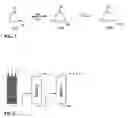
FIG. 1 is a chemical reaction showing the chemical reaction of isophorone nitrile (IPN) to make isophoronediamine (IPNA);
FIG. 2 is a block diagram of the IPNA chemical reaction of FIG. 1 including step a—reductive amination reaction, b distillative ammonia removal and c fine distillation of IPA; and
FIG. 3 is a schematic perspective view of the column setup with partial condenser for fine distillation of IPNA.
DETAILED DESCRIPTION
This entire process for producing pure IPDA is divided into three sections (see FIG. 2). In section a the reaction is effected by aminating hydrogenation of isophorone nitrile in a single- or multi-stage process in the presence of at least ammonia, hydrogen and a catalyst. In section b the distillative removal of ammonia and hydrogen to obtain crude IPDA is affected. The distillation may be performed in one or more columns. In section c the fine purification of crude IPDA is effected by distillative removal of IPDA, water, low boilers and high boilers. The fine purification is performed in two columns.
The crude IPDA generally has the following composition in weight % (wt %):
| IPDA | 75-100 | wt % | |
| Water | 0-15 | wt % | |
| Low boilers | 0-6 | wt % | |
| High boilers | 0-6 | wt % | |
Low boilers are defined as byproducts from the production process having a lower boiling point than IPDA. High boilers are defined as byproducts from the production process having a higher boiling point than IPDA.
The crude IPDA I is initially passed into the first vacuum distillation column, see FIG. 3. The partial condenser is installed at the top of the first vacuum distillation column and may be attached either inside the vacuum distillation column or outside the distillation column. The vapor stream is thus pre-cooled and consequently partly condensed in the partial condenser. The condensed liquid is used as return stream in the vacuum distillation column. The uncondensed vapor stream is subsequently fully condensed and divided into an organic phase 3 and an aqueous phase 2 in a second condenser, wherein the organic phase 3 is partly used as reflux for the first vacuum distillation column (phase 7). The other part and the aqueous phase serve as discharge for low boilers and water. The IPDA leaves the vacuum distillation column as bottoms stream and is sent to a second vacuum distillation column for removal of the high boilers, the pure IPDA being obtained here at the top of the second vacuum distillation column.
The partial condenser is operated under the following conditions:
| Temperature | 40-120° C. | |
| Pressure | 10-200 mbar | |
The employed 1st vacuum distillation column has the following parameters:
| Pressure | 10-200 mbar | |
| Bottoms temperature | 80-200° C. | |
| Theoretical plates | 10-80 | |
The composition of the feed stream (crude IPDA II) from the 1st vacuum distillation column into the 2nd vacuum distillation column has the following composition:
| IPDA | 90-100 wt % | |
| High boilers | 0-10 wt % | |
The employed 2nd vacuum distillation column has the following parameters:
| Pressure | 10-200 mbar | |
| Tops temperature | 80-200° C. | |
| Theoretical plates | 5-50 | |
The purity of the pure isophoronediamine shall be at least 98 wt %.
EXAMPLES
Example 1
Comparative Example
The distillation was simulated using Aspen Plus. In the comparative example a setup composed of two vacuum distillation columns was chosen. At the top of the first distillation column a decanter was used to separate the two liquid phases, only the organic phase being used as reflux for the vacuum distillation column. The first vacuum distillation column had 36 theoretical plates and the second vacuum distillation column had 15 theoretical plates, with reflux-to-feed ratios of 1.1 (first vacuum distillation column) and 1.4 (second vacuum distillation column). The column pressure of the first vacuum distillation column was set to 110 mbar and that of the second vacuum distillation column was set to 80 mbar.
The feed stream employed at the following composition in weight % (wt %):
| IPDA | 88.6 wt % | |
| Water | 9.1 wt % | |
| Low boilers | 1.2 wt % | |
| High boilers | 1.1 wt % | |
In the first vacuum distillation column the removal of the low boilers and of the water was effected at a bottoms temperature of 168° C. and a tops temperature of 95° C. The feed stream from the first vacuum distillation column into the second vacuum distillation column thus had the following composition:
| IPDA | 98.7 wt % | |
| High boilers | 1.3 wt % | |
In the second vacuum distillation column the fine purification of IPDA was effected at a bottoms temperature of 187° C. and a tops temperature of 159° C. A purity of 99.95 wt % was achieved. The total loss of IPDA over the 2 vacuum distillation column system was 0.2 wt %
At a chosen feed mass flow of 2160 kg per hour
the heating power required was: 1184 kW
and the cooling power required was: 1232 kW.
Example 2
Inventive Vacuum Distillation Column Setup
The distillation was simulated using Aspen Plus. In the inventive example a setup composed of two vacuum distillation columns was chosen. At the top of the first vacuum distillation column a decanter was used to separate the two liquid phases. In addition, a partial condenser was installed upstream of the decanter. In this apparatus the vapor stream was first partially condensed and then added to the vacuum distillation column as reflux. The remaining vapor stream was subsequently fully condensed and separated into the two liquid phases via the decanter. The organic phase was likewise used as reflux for the vacuum distillation column. The first vacuum distillation column had 36 theoretical plates and the second vacuum distillation column had 15 theoretical plates, with reflux-to-feed ratios of 1.1 (first vacuum distillation column) and 1.4 (second vacuum distillation column). The column pressure of the first vacuum distillation column was set to 110 mbar and that of the second vacuum distillation column was set to 80 mbar.
The feed stream employed at the following composition in weight % (wt %):
| IPDA | 88.6 wt % | |
| Water | 9.1 wt % | |
| Low boilers | 1.2 wt % | |
| High boilers | 1.1 wt % | |
In the first vacuum distillation column the removal of the low boilers and of the water was effected at a bottoms temperature of 168° C., a tops temperature of 117° C. and a partial condenser temperature of 74° C. The feed stream from the first vacuum distillation column into the second vacuum distillation column thus had the following composition:
| IPDA | 98.7 wt % | |
| High boilers | 1.3 wt % | |
In the second vacuum distillation column the fine purification of IPDA was effected at a bottoms temperature of 187° C. and a tops temperature of 159° C. A purity of 99.95 wt % was achieved. The total loss of IPDA over the 2 column system was 0.2 wt %
At a chosen feed mass flow of 2160 kg per hour
the heating power required was: 1006 kW
and the cooling power required was: 1048 kW.
In the inventive distillation setup with the installed partial condenser the required heating and cooling powers were 15% lower than in the comparative setup.
Claims
1. A process for fine purification of isophoronediamine (IPDA), pure isophoronediamine, comprising the steps of:
(a) producing isophoronediamine by aminating hydrogenation of isophorone nitrile in the presence of at least ammonia, hydrogen, a hydrogenation catalyst and optionally further additions and in the presence or absence of organic solvents to obtain a crude isophoronediamine; and
(b) subjecting the crude isophoronediamine to a fine purification via two vacuum distillation columns, wherein in the first vacuum distillation column the removal of any remaining relatively low-boiling byproducts is effected and in the second vacuum distillation column the isophoronediamine is obtained in pure form as tops and thus separated from the organic residues, and wherein the first vacuum distillation column has a partial condenser fitted to it.
2. The process according to claim 1, wherein the crude isophoronediamine generally comprises the following composition in weight % (wt %) based on the weight of the crude isophoronediamine :
| IPDA | 75-100 wt %; | |
| Water | 0-15 wt %; | |
| Low boilers | 0-6 wt %; and | |
| High boilers | 0-6 wt %. | |
3. The process according to claim 1, wherein the partial condenser is installed at the top of the first vacuum distillation column and is attached inside the column or outside the column.
4. The process according to claim 1, wherein the vapor stream in the first vacuum distillation column is pre-cooled and consequently partly condensed in the partial condenser and the condensed liquid is used as return stream in the vacuum distillation column.
5. The process according to claim 1, wherein the uncondensed vapor stream in the first vacuum distillation column is fully condensed and divided into an organic phase and an aqueous phase in a second condenser, wherein the organic phase is partly used as reflux for the first vacuum distillation column.
6. The process according to claim 1, wherein IPDA leaves the first vacuum distillation column as bottoms stream and is sent to a second vacuum distillation column for removal of the high boilers.
7. The process according to claim 1, wherein the pure IPDA is obtained at the top of the second vacuum distillation column.
8. The process according to claim 1, wherein the partial condenser is operated under the following conditions:
| Temperature | 40-120° C.; and | |
| Pressure | 10-200 mbar. | |
9. The process according to claim 1, wherein the employed first vacuum distillation column comprises the following parameters:
| Pressure | 10-200 mbar; | |
| Bottoms temperature | 80-200° C.; and | |
| Theoretical plates | 10-80. | |
10. The process according to claim 1, wherein the composition of the feed stream from the first vacuum distillation column into the second vacuum distillation column (crude IPDA II) comprises the following composition (wt %) based on the weight of the crude isophoronediamine:
| IPDA | 90-100 wt %; and | |
| High boilers | 0-10 wt %. | |
11. The process according to claim 1, wherein the employed second vacuum distillation column comprises the following parameters:
| Pressure | 10-200 mbar; | |
| Tops temperature | 80-200° C.; and | |
| Theoretical plates | 5-50. | |
12. An isophoronediamine prepared by the process of claim 1.
13. The process according to claim 2, wherein the partial condenser is installed at the top of the first vacuum distillation column and is attached inside the column or outside the column.
14. The process according to claim 2, wherein the vapor stream in the first vacuum distillation column is pre-cooled and consequently partly condensed in the partial condenser and the condensed liquid is used as return stream in the vacuum distillation column.
15. The process according to claim 2, wherein the uncondensed vapor stream in the first vacuum distillation column is fully condensed and divided into an organic phase and an aqueous phase in a second condenser, wherein the organic phase is partly used as reflux for the first vacuum distillation column.
16. The process according to claim 2, wherein IPDA leaves the first vacuum distillation column as bottoms stream and is sent to a second vacuum distillation column for removal of the high boilers.
17. The process according to claim 2, wherein the pure IPDA is obtained at the top of the second vacuum distillation column.
18. The process according to claim 2, wherein the partial condenser is operated under the following conditions:
| Temperature | 40-120° C.; and | |
| Pressure | 10-200 mbar. | |
19. The process according to claim 2, wherein the employed first vacuum distillation column comprises the following parameters:
| Pressure | 10-200 mbar; | |
| Bottoms temperature | 80-200° C.; and | |
| Theoretical plates | 10-80. | |
20. An isophoronediamine prepared by the process of claim 2.
Images & Drawings included:

Sources:
- United States Patent and Trademark Office - verify current appl. status at the USPTO↗
Recent applications in this class:
- » 20250257028 2025-08-14
Method for Preparing Trifluoromethyl Aromatic Compound - » 20250206694 2025-06-26
METHOD FOR THE PURIFICATION OF ANILINE - » 20240336554 2024-10-10
Method for the Removal of Water from and Transport of Aliphatic Diamines - » 20240254074 2024-08-01
METHOD FOR PURIFYING TRIALKYLAMINE, TRIALKYLAMINE PRODUCTION METHOD AND COMPOSITION - » 20240043370 2024-02-08
METHOD FOR TRIETHYLENETETRAMINE PURIFICATION - » 20230278948 2023-09-07
METHOD FOR MAKING A DI(AMINOARYL)FLUORENE COMPOUND - » 20230257339 2023-08-17
ALKYLAMINE COMPOSITION AND METHOD FOR STORING SAID ALKYLAMINE COMPOSITION - » 20230139979 2023-05-04
Organic amine collection method - » 20230017999 2023-01-19
PROCESS FOR THE PURIFICATION OF A MIXTURE COMPRISING N-ALKYL-HYDROXYLAMMONIUM SALTS - » 20220348533 2022-11-03
METHOD FOR THE PURIFICATION OF ANILINE
Recent applications for this Assignee:
- » 20210228653 2021-07-29
BACILLUS LICHENIFORMIS STRAIN WITH PROBIOTIC ACTIVITY - » 20200231537 2020-07-23
Reductive alkylation of amines with orthocarboxylic acid esters - » 20200230703 2020-07-23
PROCESS FOR PRODUCING TUNGSTEN OXIDE AND TUNGSTEN MIXED OXIDES - » 20200199492 2020-06-25
Biodegradable cleaning composition - » 20200165278 2020-05-28
Halogermanides and methods for the preparation thereof - » 20200115334 2020-04-16
Method for preparing methionine - » 20200109102 2020-04-09
Process for hydroformylating short-chain olefins using a heterogenized catalyst system without ionic liquid - » 20200109101 2020-04-09
Process for hydroformylating short-chain olefins in the gas phase - » 20200109056 2020-04-09
Stannous compatible silica - » 20200087446 2020-03-19
Low temperature anhydride epoxy cured systems