Centralized identification and authentication system and method
US20170308716A1
2017-10-26
15/639,020
2017-06-30
✅ Patent granted
US 10,769,297 B2
2020-09-08
-
-
Kito R Robinson
Resolute Legal PLLC
2037-06-30
Abstract:
Systems and methods are provided for enabling online entities to determine whether a user is truly the person who he says using a two-factor authentication technique and authenticating user's identity utilizing an authenticator.
Inventors:
- Nader Asghari-Kamrani 25 🇺🇸 Centreville, VA, United States
- Kamran Asghari-Kamrani 24 🇺🇸 Centreville, VA, United States
Applicant:
Interested in similar patents?
Get notified when new applications in this technology area are published.
Classification:
G06Q20/341 » CPC further
Payment architectures, schemes or protocols characterised by the use of specific devices or networks using cards, e.g. integrated circuit [IC] cards or magnetic cards Active cards, i.e. cards including their own processing means, e.g. including an IC or chip
G06Q20/3674 » CPC further
Payment architectures, schemes or protocols characterised by the use of specific devices or networks using electronic wallets or electronic money safes involving electronic purses or money safes involving authentication
G06Q20/382 » CPC further
Payment architectures, schemes or protocols; Payment protocols; Details thereof insuring higher security of transaction
G06Q20/385 » CPC further
Payment architectures, schemes or protocols; Payment protocols; Details thereof using an alias or single-use codes
G07F7/1008 » CPC further
Mechanisms actuated by objects other than coins to free or to actuate vending, hiring, coin or paper currency dispensing or refunding apparatus by coded identity card or credit card or other personal identification means together with a coded signal, e.g. in the form of personal identification information, like personal identification number [PIN] or biometric data Active credit-cards provided with means to personalise their use, e.g. with PIN-introduction/comparison system
G06Q20/40 » CPC further
Payment architectures, schemes or protocols; Payment protocols; Details thereof Authorisation, e.g. identification of payer or payee, verification of customer or shop credentials; Review and approval of payers, e.g. check credit lines or negative lists
G06Q20/36 IPC
Payment architectures, schemes or protocols characterised by the use of specific devices or networks using electronic wallets or electronic money safes
H04L63/08 » CPC further
Network architectures or network communication protocols for network security for supporting authentication of entities communicating through a packet data network
G06Q30/0225 » CPC further
Commerce, e.g. shopping or e-commerce; Marketing, e.g. market research and analysis, surveying, promotions, advertising, buyer profiling, customer management or rewards; Price estimation or determination; Discounts or incentives, e.g. coupons, rebates, offers or upsales Avoiding frauds
H04L63/0421 » CPC further
Network architectures or network communication protocols for network security for providing a confidential data exchange among entities communicating through data packet networks wherein the identity of one or more communicating identities is hidden Anonymous communication, i.e. the party's identifiers are hidden from the other party or parties, e.g. using an anonymizer
H04L63/0838 » CPC further
Network architectures or network communication protocols for network security for supporting authentication of entities communicating through a packet data network using passwords using one-time-passwords
G06Q20/38 IPC
Payment architectures, schemes or protocols Payment protocols; Details thereof
G06Q20/04 » CPC further
Payment architectures, schemes or protocols Payment circuits
G06Q20/34 IPC
Payment architectures, schemes or protocols characterised by the use of specific devices or networks using cards, e.g. integrated circuit [IC] cards or magnetic cards
G06Q30/02 IPC
Commerce, e.g. shopping or e-commerce Marketing, e.g. market research and analysis, surveying, promotions, advertising, buyer profiling, customer management or rewards; Price estimation or determination
G06F21/62 IPC
Security arrangements for protecting computers, components thereof, programs or data against unauthorised activity; Protecting data Protecting access to data via a platform, e.g. using keys or access control rules
G06F21/40 » CPC further
Security arrangements for protecting computers, components thereof, programs or data against unauthorised activity; Authentication, i.e. establishing the identity or authorisation of security principals; User authentication by quorum, i.e. whereby two or more security principals are required
G06F21/6245 » CPC main
Security arrangements for protecting computers, components thereof, programs or data against unauthorised activity; Protecting data; Protecting access to data via a platform, e.g. using keys or access control rules to a system of files or objects, e.g. local or distributed file system or database Protecting personal data, e.g. for financial or medical purposes
G06F21/31 » CPC further
Security arrangements for protecting computers, components thereof, programs or data against unauthorised activity; Authentication, i.e. establishing the identity or authorisation of security principals User authentication
G06F2221/2115 » CPC further
Indexing scheme relating to security arrangements for protecting computers, components thereof, programs or data against unauthorised activity; Indexing scheme relating to and subgroups addressing additional information or applications relating to security arrangements for protecting computers, components thereof, programs or data against unauthorised activity Third party
G06Q20/4014 » CPC further
Payment architectures, schemes or protocols; Payment protocols; Details thereof; Authorisation, e.g. identification of payer or payee, verification of customer or shop credentials; Review and approval of payers, e.g. check credit lines or negative lists; Transaction verification Identity check for transactions
G07F7/10 IPC
Mechanisms actuated by objects other than coins to free or to actuate vending, hiring, coin or paper currency dispensing or refunding apparatus by coded identity card or credit card or other personal identification means together with a coded signal, e.g. in the form of personal identification information, like personal identification number [PIN] or biometric data
Description
RELATED APPLICATIONS
This application is a continuation of U.S. patent application Ser. No. 13/606,538, filed Sep. 7, 2012, which is continuation of U.S. patent application Ser. No. 12/210,926, filed Sep. 15, 2008 (now U.S. Pat. No. 8,266,432), which is a continuation-in-part of U.S. patent application Ser. No. 11/239,046, filed Sep. 30, 2005 (now U.S. Pat. No. 7,444,676), which is a continuation-in-part of U.S. patent application Ser. No. 09/940,635, filed Aug. 29, 2001 (now U.S. Pat. No. 7,356,837), and claims benefit of U.S. Provisional Patent Application No. 60/615,603 Oct. 5, 2004. U.S. patent application Ser. No. 12/210,926 is a continuation-in-part of U.S. patent application Ser. No. 11/333,400, filed Jan. 18, 2006 (now U.S. Pat. No. 8,281,129), which is a continuation-in-part of U.S. patent application Ser. No. 09/940,635, filed Aug. 29, 2001 (now U.S. Pat. No. 7,356,837) and claims benefit of U.S. Provisional Patent Application No. 60/650,137. The contents of each of the above-identified applications is incorporated herein by reference in their entirety.
BACKGROUND OF THE INVENTION
1. Field of the Invention
The present invention relates to a centralized identification and authentication system and method for identifying an individual over a communication network such as Internet, to increase security in e-commerce. More particularly a method and system for generation of a dynamic, non-predictable and time dependent SecureCode for the purpose of positively identifying an individual.
2. Description of the Related Art
The increasing use of the Internet and the increase of businesses utilizing e-commerce have led to a dramatic increase in customers releasing confidential personal and financial information, in the form of social security numbers, names, addresses, credit card numbers and bank account numbers, to identify themselves. This will allow them to get access to the restricted web sites or electronically purchase desired goods or services. Unfortunately this type of identification is not only unsafe but also it is not fool proof that the user is really the person he says he is. The effect of these increases is reflected in the related art.
U.S. Pat. No. 5,732,137 issued to Aziz outlines a system and method for providing remote user authentication in a public computer network such as the Internet. More specifically, the system and method provides for remote authentication using a one-time password scheme having a secure out-of-band channel for initial password delivery.
U.S. Pat. No. 5,815,665 issued to Teper et al. outlines the use of a system and method for enabling consumers to anonymously, securely and conveniently purchase on-line services from multiple service providers over a distributed network, such as the Internet. Specifically, a trusted third-party broker provides billing and security services for registered service providers via an online brokering service, eliminating the need for the service providers to provide these services.
U.S. Pat. No. 5,991,408 issued to Pearson, et al. outlines a system and method for using a biometric element to create a secure identification and verification system, and more specifically to an apparatus and a method for creating a hard problem which has a representation of a biometric element as its solution.
Although each of the previous patents outline a valuable system and method, what is really needed is a system and method that offers digital identity to the users and allows them to participate in e-commerce without worrying about the privacy and security. In addition to offering security and privacy to the users, the new system has to be simple for businesses to adopt and also doesn't require the financial institutions to change their existing systems. Such a secure, flexible and scalable system and method would be of great value to the businesses that would like to participate in today's electronic commerce.
None of the above inventions and patents, taken either singularly or in combination, is seen to describe the instant invention as claimed. Thus a centralized identification and authentication system and method solving the aforementioned problems is desired.
For convenience, the term “user” is used throughout to represent both a typical person consuming goods and services as well as a business consuming goods and services.
As used herein, a “Central-Entity” is any party that has user's personal and/or financial information, UserName, Password and generates dynamic, non-predictable and time dependent SecureCode for the user. Examples of Central-Entity are: banks, credit card issuing companies or any intermediary service companies.
As also used herein, an “External-Entity” is any party offering goods or services that users utilize by directly providing their UserName and SecureCode as digital identity. Such entity could be a merchant, service provider or an online site. An “External-Entity” could also be an entity that receives the user's digital identity indirectly from the user through another External-Entity, in order to authenticate the user, such entity could be a bank or a credit card issuing company.
The term “UserName” is used herein to denote any alphanumeric name, id, login name or other identification phrase, which may be used by the “Central-Entity” to identify the user.
The term “Password” is used herein to denote any alphanumeric password, secret code, PIN, prose phrase or other code, which may be stored in the system to authenticate the user by the “Central-Entity”.
The term “SecureCode” is used herein to denote any dynamic, non-predictable and time dependent alphanumeric code, secret code, PIN or other code, which may be broadcast to the user over a communication network, and may be used as part of a digital identity to identify a user as an authorized user.
The term “digital identity” is used herein to denote a combination of user's “SecureCode” and user's information such as “UserName”, which may result in a dynamic, non-predictable and time dependent digital identity that could be used to identify a user as an authorized user.
The term “financial information” is used herein to denote any credit card and banking account information such as debit cards, savings accounts and checking accounts.
SUMMARY OF THE INVENTION
The invention relates to a system and method provided by a Central-Entity for centralized identification and authentication of users and their transactions to increase security in e-commerce. The system includes:
-
- A Central-Entity: This entity centralizes users personal and financial information in a secure environment in order to prevent the distribution of user's information in e-commerce. This information is then used to create digital identity for the users. The users may use their digital identity to identify themselves instead of providing their personal and financial information to the External-Entities;
- A plurality of users: A user represents both a typical person consuming goods and services as well as a business consuming goods and services, who needs to be identified in order to make online purchases or to get access to the restricted web sites. The user registers at the Central-Entity to receive his digital identity, which is then provided to the External-Entity for identification;
- A plurality of External-Entities: An External-Entity is any party offering goods or services in e-commerce and needs to authenticate the users based on digital identity.
The user signs-up at the Central-Entity by providing his personal or financial information. The Central-Entity creates a new account with user's personal or financial information and issues a unique UserName and Password to the user. The user provides his Username and Password to the Central-Entity for identification and authentication purposes when accessing the services provided by the Central-Entity. The Central-Entity also generates dynamic, non-predictable and time dependent SecureCode for the user per user's request and issues the SecureCode to the user. The Central-Entity maintains a copy of the SecureCode for identification and authentication of the user's digital identity. The user presents his UserName and SecureCode as digital identity to the External-Entity for identification. When an External-Entity receives the user's digital identity (UserName and SecureCode), the External-Entity will forward this information to the Central-Entity to identify and authenticate the user. The Central-Entity will validate the information and sends an approval or denial response back to the External-Entity.
There are also communications networks for the user, the Central-Entity and the External-Entity to give and receive information between each other.
This invention also relates to a system and method provided by a Central-Entity for centralized identification and authentication of users to allow them access to restricted web sites using their digital identity, preferably without revealing confidential personal or financial information.
This invention further relates to a system and method provided by a Central-Entity for centralized identification and authentication of users to allow them to purchase goods and services from an External-Entity using their digital identity, preferably without revealing confidential personal or financial information.
Accordingly, it is a principal object of the invention to offer digital identity to the users for identification in e-commerce.
It is another object of the invention to centralize user's personal and financial information in a secure environment.
It is another object of the invention to prevent the user from distributing their personal and financial information.
It is a further object of the invention to keep merchants, service providers, Internet sites and financial institutions satisfied by positively identifying and authenticating the users.
It is another object of the invention to reduce fraud and increase security for e-commerce.
It is another object of the invention to allow businesses to control visitor's access to their web sites.
It is another object of the invention to protect the customer from getting bills for goods and services that were not ordered.
It is another object of the invention to increase customers' trust and reduce customers' fear for e-commerce.
It is another object to decrease damages to the customers, merchants and financial institutions.
It is an object of the invention to provide improved elements and arrangements thereof for the purposes described which are inexpensive, dependable and fully effective in accomplishing its intended purposes.
These and other objects of the present invention will become readily apparent upon further review of the following specification and drawings.
BRIEF DESCRIPTION OF THE DRAWINGS
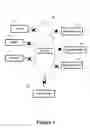
FIG. 1 is a high-level overview of a centralized identification and authentication system and method according to the present invention.
FIG. 2 is a detailed overview of a centralized identification and authentication system and method according to the present invention.
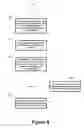
FIG. 3 is a block diagram of the registration of a customer utilizing a centralized identification and authentication system and method according to the present invention.
FIG. 4 is a block diagram of the transaction of a customer utilizing a centralized identification and authentication system and method according to the present invention.
FIG. 5 is a block diagram of a Central-Entity authorizing a user utilizing a centralized identification and authentication system and method according to the present invention.
DETAILED DESCRIPTION OF THE PREFERRED EMBODIMENTS
Detailed descriptions of the preferred embodiment are provided herein. It is to be understood, however, that the present invention may be embodied in various forms. Therefore, specific details disclosed herein are not to be interpreted as limiting, but rather as a basis for the claims and as a representative basis for teaching one skilled in the art to employ the present invention in virtually any appropriately detailed system, structure or manner.
The invention relates to a system 1 and method 2 to identify and authenticate the users and their transactions to increase security in e-commerce. FIG. 1 illustrates a system to positively identify the users 10 in e-commerce based on digital identity.
The system 1 comprises a plurality of users 10, a plurality of External-Entities 20 with goods and services that are desired by the users 10 and a Central-Entity 30 providing a unique UserName and Password to the users 10 and generating dynamic, non-predictable and time dependent SecureCode for the users 10 per user's request. There are also communication networks 50 for the user 10, the Central-Entity 30 and the External-Entity 20 to give and receive information between each other.
It would be desirable to develop a new system 1 and method 2 to centralize user's personal and financial information in a secure environment and to offer digital identity to the users 10 in order to provide privacy, increase security and reduce fraud in e-commerce. Ideally, a secure identification and authentication system 1 would identify legitimate users 10 and unauthorized users 10. This would increase the user's trust, which leads to more sales and cash flow for the merchants/service providers.
The present invention relates to a system 1 and method 2 to support this ideal identification and authentication system. For identification purpose, a digital identity (a unique UserName and a dynamic, non-predictable and time dependent SecureCode) is used by the user 10 at the time of ordering or at the time of accessing a restricted Internet site. A series of steps describing the overall method are conducted between the users 10, the Central-Entity 30 and the External-Entity 20 and are outlined in FIG. 3, 4, 5.
There are three distinct phases involved in using the centralized identification and authentication system FIG. 2, the first of which being the registration phase, which is depicted in FIG. 3. During the registration phase, the user 10 provides his personal or financial information to the Central-Entity 30. The user 10 registers at the Central-Entity 30, 100, 104 and receives his account and login information such as UserName and Password 108. User 10 can access his account at any time by accessing the Central-Entity's system using a communication network 50 and logging into the system.
Next is the transaction phase, where the user 10 attempts to access a restricted web site or attempts to buy services or products 110, as illustrated in FIG. 4, through a standard interface provided by the External-Entity 20, similar to what exists today and selects digital identity as his identification and authorization or payment option. The External-Entity 20 displays the access or purchase authorization form requesting the user 10 to authenticate himself using his UserName and SecureCode as digital identity. The user 10 requests SecureCode from the Central-Entity 30 by accessing his account over the communication network 50, 114. The Central-Entity 30 generates dynamic, non-predictable and time dependent SecureCode 118 for the user 10. The Central-Entity 30 maintains a copy of the SecureCode for identification and authentication of the user 10 and issues the SecureCode to the user 10. When the user 10 receives the SecureCode 120, the user 10 provides his UserName and SecureCode as digital identity to the External-Entity 20, 124, FIG. 4.
The third phase is identification and authorization phase. Once the user 10 provides his digital identity to the External-Entity 20, the External-Entity 20 forwards user's digital identity along with the identification and authentication request to the Central-Entity 30, 130, as illustrated in FIG. 5. When the Central-Entity 30 receives the request containing the user's digital identity, the Central-Entity 30 locates the user's digital identity (UserName and SecureCode) in the system 134 and compares it to the digital identity received from the External-Entity 20 to identify and validate the user 10, 138. The Central-Entity 30 generates a reply back to the External-Entity 20 via a communication network 50 as a result of the comparison. If both digital identities match, the Central-Entity 30 will identify the user 10 and will send an approval of the identification and authorization request to the External-Entity 20, 140, otherwise will send a denial of the identification and authorization request to the External-Entity 20, 150. The External-Entity 20 receives the approval or denial response in a matter of seconds. The External-Entity 20 might also display the identification and authentication response to the user 10.
To use the digital identity feature, the Central-Entity 30 provides the authorized user 10 the capability to obtain a dynamic, non-predictable and time dependent SecureCode. The user 10 will provide his UserName and SecureCode as digital identity to the External-Entity 20 when this information is required by the External-Entity 20 to identify the user 10.
The Central-Entity 30 may add other information to the SecureCode before sending it to the user 10, by algorithmically combining SecureCode with user's information such as UserName. The generated SecureCode will have all the information needed by the Central-Entity 30 to identify the user 10. In this case the user will only need to provide his SecureCode as digital identity to the External-Entity 20 for identification.
In the preferred embodiment, the user 10 uses the communication network 50 to receive the SecureCode from the Central-Entity 30. The user 10 submits the SecureCode in response to External-Entity's request 124. The SecureCode is preferably implemented through the use of an indicator. This indicator has two states: “on” for valid and “off” for invalid. When the user 10 receives the SecureCode, the SecureCode is in “on” or “valid” state. The Central-Entity 30 may improve the level of security by invalidating the SecureCode after its use. This may increase the level of difficulty for unauthorized user. Two events may cause a valid SecureCode to become invalid:
-
- 1. Timer event: This event occurs when the predefined time passes. As mentioned above the SecureCode is time dependent.
- 2. Validation event: This event occurs when the SecureCode forwarded to the Central-Entity 30 (as part of digital identity) corresponds to the user's SecureCode held in the system. When this happens the Central-Entity 30 will invalidate the SecureCode to prevent future use and sends an approval identification and authorization message to the External-Entity 20,140.
A valid digital identity corresponds to a valid SecureCode. When the SecureCode becomes invalid, the digital identity will also become invalid.
While the invention has been described in connection with a preferred embodiment, it is not intended to limit the scope of the invention to the particular form set forth, but on the contrary, it is intended to cover such alternatives, modifications, and equivalents as may be included within the spirit and scope of the invention as defined by the appended claims.
Claims
1. An authentication system for enhancing computer network security, the authentication system comprising one or more computing devices configured to perform operations comprising:
receiving, via a computer network during an electronic communication engaged in between an online computer system and a user, a digital code request for a substantially non-predictable digital code;
generating the substantially non-predictable digital code;
providing to a device of the user, via the computer network during the electronic communication, the substantially non-predictable digital code in response to the digital code request, wherein:
the substantially non-predictable code is invalid after a predetermined time passes,
the substantially non-predictable code is invalid after one use of the code for authentication, and
the substantially non-predictable code is only valid for authenticating the user; and
receiving from the online computer system, via the computer network during the electronic communication, a digital authentication request for authenticating the user, wherein:
the digital authentication request comprises a digital identity of the user, and
the digital identity includes the substantially non-predictable digital code; and
evaluating, during the electronic communication, a validity of the substantially non-predictable digital code included in the digital authentication request.
2. The authentication system of claim 1, wherein the evaluating the validity comprises:
determining that the substantially non-predictable digital code included in the digital authentication request is used before the predefined time passes and the substantially non-predictable code is used for a first time.
3. The authentication system of claim 2, wherein the operations further include transmitting a digital user authentication response message to the online computer system, the digital user authentication response message indicating that the user is authentic.
4. The authentication system of claim 1, wherein the electronic communication comprises a real-time interaction between the device of the user and the online computer system.
5. The authentication system of claim 1, wherein the electronic communication comprises accessing restricted information via the computer network.
6. The authentication system of claim 1, wherein the electronic communication comprises accessing a restricted-access website via the computer network.
7. The authentication system of claim 1, wherein the electronic communication comprises authenticating access of an online account of the user via the computer network.
8. The authentication system of claim 1, wherein the substantially non-predictable digital code is alphanumeric.
9. The authentication system of claim 1, wherein the substantially non-predictable digital code is numeric.
10. An authentication method for enhancing computer network security comprising:
receiving, via a computer network during an electronic communication engaged in between an online computer system and a user, a digital code request for a substantially non-predictable digital code;
generating the substantially non-predictable digital code;
providing to a device of the user, via the computer network during the electronic communication, the substantially non-predictable digital code in response to the digital code request, wherein:
the substantially non-predictable code is invalid after a predetermined time passes,
the substantially non-predictable code is invalid after one use of the code for authentication, and
the substantially non-predictable code is only valid for authenticating the user; and
receiving from the online computer system, via the computer network during the electronic communication, a digital authentication request for authenticating the user, wherein:
the digital authentication request comprises a digital identity of the user, and
the digital identity includes the substantially non-predictable digital code; and
evaluating, during the electronic communication, a validity of the substantially non-predictable digital code included in the digital authentication request.
11. The authentication method of claim 10, wherein the evaluating the validity comprises:
determining that the substantially non-predictable digital code included in the digital authentication request is used before the predefined time passes and the substantially non-predictable code is used for a first time.
12. The authentication method of claim 11, further comprising transmitting a digital user authentication response message to the online computer system, the digital user authentication response message indicating that the user is authentic.
13. The authentication method of claim 10, wherein the electronic communication comprises a real-time interaction between the device of the user and the online computer system.
14. The authentication method of claim 10, wherein the electronic communication comprises accessing restricted information via the computer network.
15. The authentication method of claim 10, wherein the electronic communication comprises accessing a restricted-access website via the computer network.
16. The authentication method of claim 10, wherein the electronic communication comprises authenticating access of an online account of the user via the computer network.
17. The authentication method of claim 10, wherein the substantially non-predictable digital code is alphanumeric.
18. The authentication method of claim 10, wherein the substantially non-predictable digital code is numeric.
19. A system for enhancing computer network security comprising one or more computing devices configured to perform operations comprising:
engaging in an electronic communication with a user via a computer network;
sending, via the computer network after engaging in the electronic communication, a request for user-authentication information;
receiving from the user, via the computer network during the electronic communication, a response to the request for user-authentication information, wherein:
the response to the request for user-authentication information comprises a digital identity of the user,
the digital identity of the user includes a substantially non-predictable code generated by an authentication system and provided to a device of the user during electronic communication,
the substantially non-predictable code becomes invalid after a predetermined time passes,
the substantially non-predictable code becomes invalid after one use of the code for authentication, and
the substantially non-predictable code is only valid for authenticating the user;
sending to the authentication system, via the computer network during the electronic communication, a digital user authentication request for authenticating the user, wherein the digital user authentication request includes the substantially non-predictable code;
receiving, via the computer network prior to completion of the electronic communication, a response to the digital user authentication request; and
proceeding with the electronic communication with the user based on the response to the digital user authentication request.
20. The system of claim 19, wherein:
the digital user authentication request includes user-identifying information; and
for authenticating the user, the authentication system determines whether the user-identifying information included in the digital user authentication request is correct and if the substantially non-predictable code is valid.
21. The system of claim 19, wherein the electronic communication comprises accessing restricted information via the computer network.
22. The system of claim 19, wherein the electronic communication comprises accessing a restricted-access website via the computer network.
23. The system of claim 19, wherein the electronic communication comprises authenticating access of an online account of the user via the computer network.
24. The system of claim 19, wherein the substantially non-predictable code is numeric.
25. The system of claim 19, wherein the substantially non-predictable code is alphanumeric.
26. The system of claim 19, wherein, after receiving the response to the digital user authentication request, the substantially non-predictable code is invalid for all subsequent requests for authenticating the user.
27. The system of claim 19, wherein the electronic communication comprises a real-time interaction between the user and the online entity.
28. The system of claim of 27, wherein the sending the request for user-authentication information, receiving the response to the request for user-authentication information, the sending the digital user authentication request, and the receiving the response to the digital user authentication request all occur during the real-time interaction.
29. A method for enhancing computer network security comprising:
engaging in an electronic communication with a user via a computer network;
sending, via the computer network after engaging in the electronic communication, a request for user-authentication information;
receiving from the user, via the computer network during the electronic communication, a response to the request for user-authentication information, wherein:
the response to the request for user-authentication information comprises a digital identity of the user,
the digital identity of the user includes a substantially non-predictable code generated by an authentication system and provided to a device of the user during the electronic communication,
the substantially non-predictable code becomes invalid after a predetermined time passes,
the substantially non-predictable code becomes invalid after one use of the code for authentication, and
the substantially non-predictable code is only valid for authenticating the user;
sending to the authentication system, via the computer network during the electronic communication, a digital user authentication request for authenticating the user, wherein the digital user authentication request includes the substantially non-predictable code;
receiving, via the computer network prior to completion of the electronic communication, a response to the digital user authentication request; and
proceeding with the electronic communication with the user based on the response to the digital user authentication request.
30. The method of claim 29, wherein
the digital user authentication request includes user-identifying information; and
for authenticating the user, the authentication system determines whether the user-identifying information included in the digital user authentication request is correct and if the substantially non-predictable code is valid.
Images & Drawings included:



Sources:
- United States Patent and Trademark Office - verify current appl. status at the USPTO↗
Similar patent applications:
- » 9940635
Centralized identification and authentication system and method - » 20090013182
Centralized identification and authentication system and method - » 20130036053
Centralized Identification and Authentication System and Method - » 20170149566
Centralized identification and authentication system and method
Recent applications in this class:
- » 20250291952 2025-09-18
TRAINING A CUSTOMER-SPECIFIC DEEP LEARNING CLASSIFIER THAT DETECTS ON-PREMISE ORGANIZATION-SENSITIVE DATA - » 20250291951 2025-09-18
System, Method, and Computer Program Product for Consent Management - » 20250291950 2025-09-18
COMPUTING FRAMEWORK FOR ENFORCEMENT OF DATA PRIVACY CONSENT THROUGH DEVICE FINGERPRINTS - » 20250291949 2025-09-18
SYSTEM AND METHOD FOR GENERATION AND USE OF COPY-PROTECTED FILES IN SECURE TRANSACTIONS - » 20250291948 2025-09-18
METHOD TO PROVIDE ON DEMAND VERIFIABILITY OF A MEDICAL METRIC FOR A PATIENT USING A DISTRIBUTED LEDGER - » 20250284844 2025-09-11
ELECTRONIC SYSTEM AND METHOD FOR MANAGING ELECTRONIC SYSTEM - » 20250284843 2025-09-11
DATA PRIVACY ARCHITECTURE, SYSTEMS, AND METHODS - » 20250284842 2025-09-11
CONSENT DATA PIPELINE ARCHITECTURE AND OPERATION - » 20250284841 2025-09-11
SYSTEMS AND METHODS FOR DETECTING RISK EVENTS IN A COMPUTING ENVIRONMENT USING INFRASTRUCTURE GRAPHS AND EVEN LOG SCANNERS - » 20250284840 2025-09-11
TRANSPARENT AND FAST DATA REMEDIATION