Simplified stacked pallet and method of making the same
US20170313488A1
2017-11-02
15/499,485
2017-04-27
✅ Patent granted
US 10,589,912 B2
2020-03-17
-
-
King M Chu
Kirsten Stone | Kristi Halloran
2037-11-22
Abstract:
The inventors have discovered that certain hot melt adhesives can be used to form a stable stacked pallet that can limit the need for additional packaging materials e.g. inter-layer and pallet wrap.
Inventors:
- Nattavud Hirunyachoke 1 🇹🇭 Bangkok, Thailand
- Monthon Tabthong 1 🇹🇭 Pathumthani, Thailand
- Thanongdet Semma 1 🇹🇭 Bangkok, Thailand
Assignee:
- H.B. Fuller Company 110 🇺🇸 St. Paul, MN, United States
Applicant:
Interested in similar patents?
Get notified when new applications in this technology area are published.
Classification:
B29C63/0065 » CPC further
Lining or sheathing, i.e. applying preformed layers or sheathings of plastics; Apparatus therefor Heat treatment
B29C65/4815 » CPC further
Joining of preformed parts ; Apparatus therefor using adhesives, i.e. using supplementary joining material; solvent bonding characterised by the type of adhesives; Non-reactive adhesives, e.g. physically hardening adhesives Hot melt adhesives, e.g. thermoplastic adhesives
B65D71/0096 » CPC main
Bundles of articles held together by packaging elements for convenience of storage or transport, e.g. portable segregating carrier for plural receptacles such as beer cans or pop bottles; Bales of material; Palletisable loads, i.e. loads intended to be transported by means of a fork-lift truck provided with one or more rigid supports, at least one dimension of the supports corresponding to a dimension of the load, e.g. skids the dimensions of the supports corresponding to the periphery of the load, e.g. pallets
B65D19/0004 » CPC further
Pallets or like platforms, with or without side walls, for supporting loads to be lifted or lowered Rigid pallets without side walls
B65D2571/00067 » CPC further
Bundles of articles held together by packaging elements for convenience of storage or transport, e.g. portable segregating carrier for plural receptacles such as beer cans, pop bottles; Bales of material; Palletisable loads, i.e. loads intended to be transported by means of a fork-lift truck Local maintaining elements, e.g. partial packaging, shrink packaging, shrink small bands
B65D21/0227 » CPC further
Nestable, stackable or joinable containers; Containers of variable capacity; Containers specially shaped, or provided with fittings or attachments, to facilitate nesting, stacking, or joining together stackable or joined together one-upon-the-other in the upright or upside-down position Containers joined together by bonding, adhesive or the like
B65D71/08 » CPC further
Bundles of articles held together by packaging elements for convenience of storage or transport, e.g. portable segregating carrier for plural receptacles such as beer cans or pop bottles; Bales of material; Packaging elements holding or encircling completely or almost completely the bundle of articles, e.g. wrappers Wrappers shrunk by heat or under tension, e.g. stretch films or films tensioned by compressed articles
C09J5/00 » CPC further
Adhesive processes in general; Adhesive processes not provided for elsewhere, e.g. relating to primers
C09J123/08 » CPC further
Adhesives based on homopolymers or copolymers of unsaturated aliphatic hydrocarbons having only one carbon-to-carbon double bond; Adhesives based on derivatives of such polymers not modified by chemical after-treatment; Homopolymers or copolymers of ethene Copolymers of ethene
B29K2667/003 » CPC further
Use of polyesters or derivatives thereof for preformed parts, e.g. for inserts PET, i.e. poylethylene terephthalate
B29K2995/0049 » CPC further
Properties of moulding materials, reinforcements, fillers, preformed parts or moulds; Other properties Heat shrinkable
B29L2031/7178 » CPC further
Other particular articles; Containers; Packaging elements or accessories, Packages Pallets
B65D2571/00012 » CPC further
Bundles of articles held together by packaging elements for convenience of storage or transport, e.g. portable segregating carrier for plural receptacles such as beer cans, pop bottles; Bales of material; Palletisable loads, i.e. loads intended to be transported by means of a fork-lift truck Bundles surrounded by a film
C09J2423/04 » CPC further
Presence of polyolefin Presence of homo or copolymers of ethene
C09J2467/006 » CPC further
Presence of polyester in the substrate
B29C63/04 » CPC further
Lining or sheathing, i.e. applying preformed layers or sheathings of plastics; Apparatus therefor using sheet or web-like material by folding, winding, bending or the like
B65D71/00 IPC
Bundles of articles held together by packaging elements for convenience of storage or transport, e.g. portable segregating carrier for plural receptacles such as beer cans or pop bottles; Bales of material
B29C63/00 IPC
Lining or sheathing, i.e. applying preformed layers or sheathings of plastics; Apparatus therefor
B29C65/48 IPC
Joining of preformed parts ; Apparatus therefor using adhesives, i.e. using supplementary joining material; solvent bonding
B65B17/02 » CPC further
Other machines, apparatus, or methods for packaging articles or materials Joining articles, e.g. cans, directly to each other for convenience of storage, transport, or handling
B65B53/02 » CPC further
Shrinking wrappers, containers, or container covers during or after packaging by heat
B65D19/00 IPC
Pallets or like platforms, with or without side walls, for supporting loads to be lifted or lowered
B65D21/02 IPC
Nestable, stackable or joinable containers; Containers of variable capacity Containers specially shaped, or provided with fittings or attachments, to facilitate nesting, stacking, or joining together
Description
CROSS-REFERENCE TO RELATED APPLICATIONS
This application claims the benefit of a U.S. provisional application having a Ser. No. 62/328,808 filed Apr. 28, 2016.
BACKGROUND
Primary packages are often gathered together in groups and enclosed in a secondary package such as a shrinkable or stretchable film. The secondary packages can then be arranged into layers and stacked on a pallet for storage and transportation.
In order to stabilize the stacked pallet for transportation, there is often additional materials present. For example, there can be a layer of cardboard or chip board between the layers of secondary packages (inter-layer). In addition, the entire stacked pallet can be wrapped with a stretchable plastic film (pallet wrap).
It would be advantageous if a simplified, stable stacked pallet could be formed using fewer packaging materials.
SUMMARY
In one aspect, the invention features a stacked pallet including a pallet, a plurality of layers of secondary packages stacked on the pallet, and a hot melt adhesive sandwiched between the layers of secondary packages thereby adhering the layers to each other, the hot melt adhesive including a polymer selected from the group consisting of ethylene copolymers derived from ethylene and a co-monomer that includes vinyl unsaturation, styrene block copolymers, and olefin based polymers, and no greater than 10% by weight of a plasticizer.
In one embodiment, the stacked pallet is free of inter-layer. In a different embodiment, the secondary packages include at least 4 primary packages. In one embodiment, the secondary packages are formed by a shrinkable film. In a different embodiment, the primary packages comprise a beverage packaged in a plastic container. In one embodiment the plastic container comprises PET. In another embodiment, each layer of secondary packages is in an interlock formation,
In one embodiment, the hot melt adhesive is applied to the top of each of the primary package. In another embodiment, the hot melt adhesive has a viscosity of no greater than about 2500 cps at 149° C. In a different embodiment, the hot melt adhesive has a wax content of from about 5% to about 20% by weight. In one embodiment, the hot melt adhesive has a plasticizer content of no greater than about 5% by weight. In still another embodiment, the hot melt adhesive has a plasticizer content of from about 1% to about 10% by weight and a wax content of from about 5% to about 20% by weight.
In one embodiment, the pallet includes a hot melt adhesive including an olefin based polymer. In a different embodiment, the olefin based polymer is a single site catalyzed polymer.
Another embodiment includes a stacked pallet where the hot melt adhesive is applied as a bead. In one embodiment, each secondary package comprises from about 0.5 to about 3.0 grams of the hot melt adhesive.
In a second aspect, the invention feature a method of stacking a pallet including grouping a plurality of primary packages, encasing the primary packages in a plastic film shrunk by heat to form a plurality of individual secondary packages, applying hot melt adhesive to at least two locations on the top of each of the individual secondary packages; and arranging the plurality of individual secondary packages on a pallet to form a plurality of layers, where the hot melt adhesive is sandwiched between two layers of secondary packages, the hot melt adhesive including a polymer selected from the group consisting of ethylene copolymers derived from ethylene and a co-monomer that includes vinyl unsaturation, styrene block copolymers, and olefin based polymers, and no greater than 10% by weight of a plasticizer.
In one embodiment, the hot melt adhesive is applied in a bead to the top of each primary package. In a different embodiment, the hot melt is applied at a temperature of no greater than about 150° C. In another embodiment, the secondary packages are arranged in an interlock formation.
The inventors have discovered that adhesive can be used to form a stable stacked pallet using fewer packaging materials e.g. inter-layer and pallet wrap. The adhesive stabilizes the pallet While at the same time allowing the secondary packages to be easily removed from the pallet at the point of use.
GLOSSARY
A primary package is defined as a single packaged item.
A secondary package is defined as more than one primary package gathered into a group. The group is held together by a gathering means. The gathering means can be plastic (e.g. shrinkable film, stretch film, plastic loops, etc.).
BRIEF DESCRIPTION OF THE DRAWINGS
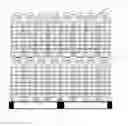
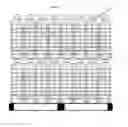
FIG. 1 is a front view of two layers of a stacked pallet, including primary packages (1) grouped into secondary packages using shrink wrap (3) and stacked on a pallet (4) stabilized with adhesive (5). The stacked pallet is free of inter-layer.
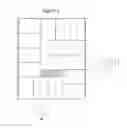
FIG. 2 is a top view of a layer of secondary packages arranged in an interlock formation.
DETAILED DESCRIPTION
Stacked Pallet
The invention includes a stacked pallet including a pallet, a plurality of layers of secondary packages stacked on the pallet, and an adhesive sandwiched between the layers of secondary packages thereby adhering the top of each secondary package to the bottom of the secondary package in the layer directly above it.
The stacked pallet includes fewer packaging materials. The stacked pallet can have a reduced amount of inter-layer (i.e. 3 or fewer sheets), or even can be free of inter-layer. The stacked pallet can have a reduced amount of pallet wrap, or even can be free of pallet wrap. Alternatively, the stacked pallet can he free of inter-layer and pallet wrap. The inter-layer is a cellulose based board (e.g. card board, chip board, etc.). The inter-layer is commonly laid horizontal to the platform between layers of secondary packages. Pallet wrap is a plastic film that is wound around the outside of a stacked pallet.
The stacked pallet includes at least two layers of secondary packages.
The adhesive can be applied to the top of the secondary packages in a variety of ways e.g. bead (e.g. single bead, double bead, etc.), swirl, dot, etc. The adhesive can be applied to two or more positions on the top of the secondary package, alternatively the adhesive can be applied to the top of each primary package that makes up the secondary package. The adhesive can be applied after the secondary package is formed. The top layer of the pallet can be free of adhesive. Each secondary package can comprise from 0.5 to 3.0 grams of adhesive.
Secondary Packages
The secondary packages are arranged on the pallet in layers. In each layer the secondary packages can be arranged in any possible way.
In one embodiment, the secondary packages can be arranged in an interlock formation. In this arrangement the direction of the secondary packages varies in groups relative to each other. For example in FIG. 2, the secondary packages in group (A) are facing one direction and the secondary packages in group (B) a different direction. The secondary packages can also be arranged in a column formation (FIG. 1). In this arrangement, the packages are stacked one on top of the other, all facing the same direction, forming columns.
The secondary package includes more than one primary package gathered into a group. The secondary package is held together with a gathering means. The gathering means can he plastic (e.g. shrinkable film (e.g. heat shrinkable film), stretch film, plastic loops). The secondary package includes more than one primary package. The secondary package can include at least 4, at least 6, at least 8, at least 12, or even from about 4 to about 16 primary packages. The primary packages can be arranged in a variety of configurations. In one configuration, the primary packages when gathered together into a secondary package roughly form a rectangle or a square, with the primary packages lined up in rows of three or four, i.e. 4×6, 4×3, 3 ×2.
Primary Package
The primary package is a single packaged item. It can be packaged in any type of container including e.g. bottle, can, flexible package, etc. The container can he formed from a material selected from plastic, metal and flexible film. If the container is plastic, the plastic can be any possible plastic including e.g. polyethylene terephthalate (PET), polyethylene napthalate (PEN), other polyesters, polyethylene (e.g. high density polyethylene (HDPE)), polypropylene (PP), polystyrene (PS), polycarbonate and poly lactic acid (PLA). If the container is metal, it can be any possible metal including aluminum, steel, coated metal (e.g. varnish coated, printed or plastic coated, etc.).
The containers can be of any size including but not limited to 500 milliliters (mls), 591 mls, 1.0 liter, 1.25 liter, 1.45 liter, 1.5 liter, 1.95 liter or even from 150 mls to about 2000 mls, etc.
The item can be any consumer good e.g. beverage (e.g. water, carbonated beverage, energy drinks, fruit juice, milk, ice tea, etc.), food substances and other liquids e.g. oil, laundry detergent, dish detergent, etc.)
The primary package can be a beverage packaged in a plastic bottle.
The adhesives of this invention are particularly useful for stabilizing pallets of beverage containing bottles comprising PET.
Adhesive Composition
The adhesive can be a pressure sensitive adhesive.
The adhesive can be a hot melt adhesive. When a hot melt adhesive is used it is relatively low in viscosity to enable easy application. The hot melt adhesive can have a viscosity of less than 5,000 cps at 149° C., less than 2500 cps at 149° C., or even less than 2000 cps at 149° C.
The adhesive needs to have a balance of properties to enable both stabilization of the pallet and ease of removal of the secondary packages.
The hot melt adhesive can comprise polymer, tackifying agent and plasticizer. The adhesive can also further include a wax.
The hot melt adhesive can be based on a variety of polymers including but not limited to ethylene copolymers derived from ethylene and a co-monomer that includes vinyl unsaturation (e.g. ethylene vinyl acetate, ethylene methyl acrylate, ethylene ethyl acrylate, ethylene n-butyl acrylate, ethylene acrylic acid, ethylene methacrylate, ethylene methyl-methacrylate, ethylene 2-ethythexyl acrylate), styrene block copolymers (e.g. styrene-ethylene/butylene-styrene (SEBS), styrene-butadiene-styrene (SBS), styrene-ethylene/propylene-styrene (SEPS), styrene-isoprene-styrene block copolymers (SIS), and styrene-ethylene-ethylene-propylene-styrene (SEEPS) block copolymers) and olefin based polymers (e.g. amorphous poly alpha olefins, single-site (e.g. metallocene) catalyzed polyolefins, polyethylene based polymers, polypropylene based polymers, etc.) and blends thereof.
Useful commercially available single site catalyzed polyolefin polymers include propylene homopolymers available under the L-MODU trade designations from Idemitsu Kosan Co., Ltd. (Japan) including, e.g., L-MODU 5400 and 5410 polypropylene, propylene ethylene copolymers available under the LICOCENE series of trade designations from Clariant Int'l Ltd. (Muttenz, Switzerland) including, e.g., LICOCENE PP 1602 TP and PP 2602 TP, ethylene octene copolymers available under the AFFINITY series of trade designations from The Dow Chemical Company including, e.g. AFFINITY GA 1900 and AFFINITY GA 1950 and propylene ethylene copolymers available under the VISTAMAXX series of trade designations from ExxonMobil Chemical (Houston, Tex.) including e.g. VISTAMAXX 8880.
The hot melt adhesive can have a limited amount of plasticizer to prevent it from being too soft i.e. having low cohesive strength. When the hot melt is too soft, it does not stabilize the pallet effectively. The hot melt adhesive can have no greater than 20%, no greater than 1.5% by weight, no greater than 10% by weight, no greater than 7% by weight, no greater than 5% by weight, from 0% by weight to 10% by weight, from about 1% to 10% by weight, from 0% by weight to about 7% by weight, or even from about 1% to about 5% by weight of plasticizer.
Suitable plasticizers include, e.g., naphthenic oils, paraffinic oils (e.g., cycloparaffin oils), mineral oils, phthalate esters, adipate esters, olefin oligomers (e.g., oligomers of polypropylene, polybutene, and hydrogenated polyisoprene), polybutenes, polyisoprene, hydrogenated polyisoprene, polybutadiene, benzoate esters, dibenzoates (e.g. 1,4-cyclohexane dimethanol dibenzoate), animal oil, plant oils (e.g. castor oil, soybean oil), derivatives of oils, glycerol esters of fatty acids, polyesters, polyethers, lactic acid derivatives and combinations thereof.
Useful commercially available plasticizers include CALSOL 550 naphthenic oil from Calumet Specialty Products Partners, LP (Indianapolis, Ind.), KAYDOL OIL mineral oil from Sonneborn (Tarrytown N.Y.) PARAPOL polybutene from Exxon Mobil Chemical Company (Houston, Tex.), OPPANOL polyisobutylene from BASF (Ludwigsjhafen, Germany), KRYSTOL 550 mineral oil from Petrochem Carless Limited (Surrey, England), PURETOL 35 mineral oil from Petro Canada Lubricants Inc. (Mississauga, Ontario) and BENZOFLEX 352, a solid plasticizer available from Eastman Chemical Company (Kingsport, Tenn.).
Suitable classes of tackifying agents include, e.g., aromatic, aliphatic and cycloaliphatic hydrocarbon resins, mixed aromatic and aliphatic modified hydrocarbon resins, aromatic modified aliphatic hydrocarbon resins, and hydrogenated versions thereof; terpenes, modified terpenes and hydrogenated versions thereof; natural rosins, modified rosins, rosin esters, and hydrogenated versions thereof; low molecular weight polylactic acid; and combinations thereof. Examples of useful natural and modified rosins include gum rosin, wood rosin, tall oil rosin, distilled rosin, hydrogenated rosin, dimerized rosin and polymerized rosin. Examples of useful rosin esters include e.g., glycerol esters of pale wood rosin, glycerol esters of hydrogenated rosin, glycerol esters of polymerized rosin, pentaerythritol esters of natural and modified rosins including pentaerythritol esters of pale wood rosin, pentaerythritol esters of hydrogenated rosin, pentaerythritol esters of tall oil rosin, and phenolic-modified pentaerythritol esters of rosin.
Useful tackifying agents are commercially available under a variety of trade designations including, e.g., hydrocarbon resins under the ESCOREZ series of trade designations from Exxon Mobil Chemical Company (Houston, Tex.) including ESCOREZ 5380, 5400 and ESCOREZ 5600, hydrocarbon resins under the EASTOTAC series of trade designations from Eastman Chemical (Kingsport. Tenn.) including EASTOTAC H-130R and EASTOTAC H-130L.
The adhesive composition can be free of a wax, alternatively the adhesive composition can include a wax. When the adhesive composition includes a wax, the wax is present at from about 1% to about 25% by weight, from about 5% to about 20% by weight, or even from about 5% to about 18% by weight.
Useful classes of wax include, e.g., paraffin waxes, microcrystalline waxes, high density low molecular weight polyethylene waxes, by-product polyethylene waxes, polypropylene waxes, Fischer-Tropsch waxes, oxidized Fischer-Tropsch waxes, functionalized waxes such as acid, anhydride, and hydroxyl modified waxes, animal waxes, vegetable waxes (e.g. soy wax) and combinations thereof.
The adhesive composition optionally includes additional components including, e.g., additional polymers, stabilizers, antioxidants, adhesion promoters, ultraviolet light stabilizers, corrosion inhibitors, colorants (e.g., pigments and dyes), fillers, surfactants and combinations thereof.
Method of Stacking a Pallet
The invention includes a method of stacking a pallet including, grouping a plurality of primary packages, encasing the primary packages in a plastic film shrunk by heat to form a plurality of individual secondary packages, applying hot melt adhesive to at least two locations on the top of each of the individual secondary packages; and arranging the plurality of individual secondary packages on a pallet to form a plurality of layers, wherein the hot melt adhesive is sandwiched between two layers of secondary packages.
The hot melt adhesive can be applied at a temperature of less than about 150° C., less than about 145° C., or even from about 100° C. to about 150° C. to prevent distortion of the secondary packages.
The invention will now be described by way of the following non-limiting examples.
EXAMPLES
| TABLE ONE | |||||
| Com- | Com- | Com- | Com- | Com- | |
| parative | parative | parative | parative | parative | |
| 1 | 2 | 3 | 4 | 5 | |
| Adhesive? | Adhesive 1 | Adhesive 1 | Adhesive 1 | Adhesive 1 | Adhesive 1 |
| Coat weight | 0.5 | 0.3 | 0.3 | 0.3 | 0.6 |
| (g/pack) | |||||
| Glue pattern | bead | swirl | swirl | swirl | bead |
| Position on | 4 corners | 6 (all caps) | 6 (all caps) | 6 (all caps) | 6 (all caps) |
| secondary | |||||
| package | |||||
| Glue actual | 145- | 145- | 145- | 145- | 140° C. |
| temperature | 150° C. | 150° C. | 150° C. | 150° C. | |
| Inter-layer? | No | No | No | No | No |
| Pallet wrap? | No | standard | less than | No | Standard |
| amount | standard | amount | |||
Comment: Each pallet (Comparative 1-5) contained 4 layers of shrink wrapped secondary packages (2×3, 1.95 L) arranged in an interlock formation (FIG. 2). Pallet 5 was the most preferred. The bead did a better job of filling the gap between the top of one secondary package and the bottom of the one above it. Inventors further found that the pallet was more stable with adhesive applied to all caps of the secondary package. Finally an application temperature of less than 150° C. was preferred to prevent distortion of the shrink wrap of the secondary package. The inter-layer was removed, however in order to get maximum stability, the standard amount of pallet wrap was used.
| TABLE TWO | |||
| Adhesive 1 | Adhesive 2 | Adhesive 3 | |
| Polymer Base | Styrene block | Styrene block | Metallocene catalyzed |
| copolymer | copolymer | ethylene based | |
| Viscosity at 149° C. | 930 cps | 1690 cps | |
| Viscosity at 175° C. | 940 cps | 660 cps | |
| Plasticizer content | 30 | 11 | 2.6 |
| (weight %) | |||
| Wax content | 2 | 14 | 15 |
| (weight %) | |||
| Comparative 6 | Comparative 7 | Example 1 (pallet | |
| (pallet stacked using | (pallet stacked using | stacked using | |
| Adhesive 1) | Adhesive 2) | Adhesive 3) | |
| Inter-layer? | No | No | No |
| Pallet wrap? | Yes | Yes | Yes |
| Secondary packages | Yes | Yes | Yes |
| can be separated from | |||
| each other by hand? | |||
| Interlock stacked pallet | No | No | Yes |
| stable during normal | |||
| handling and | |||
| transportation? | |||
| *Pallets 6-8 were stacked interlock fashion (FIG. 2) using the same parameters as Pallet 5 in Table 1, with the exception that the primary package was a 1.25 liter PET carbonated beverage bottle and the secondary package was twelve bottles in a 4 × 3 configuration, shrink wrapped together with 0.1 gram bead of adhesive applied to the top of each bottle. |
Test Procedures
Test procedures used in the examples and throughout the specification, unless stated otherwise, include the following.
Viscosity Test Method
Viscosity is determined in accordance with ASTM D-3236 entitled, “Standard Test Method for Apparent viscosity of Adhesives and Coating Materials,” (Oct. 31, 1988), using a Brookfield Thermosel viscometer Model RVDV 2 and a number 27 spindle. The results are reported in centipoise (cps),
Other embodiments are within the claims.
Claims
What is claimed is:1. A stacked pallet comprising:
a pallet,
a plurality of layers of secondary packages stacked on the pallet, and
a hot melt adhesive sandwiched between the layers of secondary packages thereby adhering the layers to each other, the hot melt adhesive comprising:
a polymer selected from the group consisting of ethylene copolymers derived from ethylene and a co-monomer that includes vinyl unsaturation, styrene block copolymers, and olefin based polymers, and
no greater than 10% by weight of a plasticizer.
2. The stacked pallet of claim 1 being free of inter-layer.
3. The stacked pallet of claim 1 wherein the secondary packages include at least 4 primary packages.
4. The stacked pallet of claim 1 wherein the secondary packages are formed by a shrinkable film.
5. The stacked pallet of claim 3 wherein the primary packages comprise a beverage packaged in a plastic container.
6. The stacked pallet of claim 5 wherein the plastic container comprises PET.
7. The stacked pallet of claim 1 wherein each layer of secondary packages is in an interlock formation.
8. The stacked pallet of claim 3 wherein the hot melt adhesive is applied to the top of each of the primary packages.
9. The stacked pallet of claim 1 wherein the hot melt adhesive has a viscosity of no greater than about 2500 cps at 149° C.
10. The stacked pallet of claim 1 wherein the hot melt adhesive has a wax content of from about 5% to about 20% by weight.
11. The stacked pallet of claim 1 wherein the hot melt esive has a plasticizer content of no greater than about 5% by weight.
12. The stacked pallet of claim 1 wherein the hot melt adhesive has a plasticizer content of from about 1% to about 10% by weight and a wax content of from about 5% to about 20% by weight.
13. The stacked pallet of claim 1 wherein the hot melt adhesive comprises an olefin based polymer.
14. The stacked pallet of claim 13 wherein the olefin based polymer is a single site catalyzed polymer.
15. The stacked pallet of claim 1 wherein the hot melt adhesive is applied as a bead.
16. The stacked pallet of claim 1 wherein each secondary package comprises from about 0.5 to about 3.0 grams of the hot melt adhesive.
17. A method of stacking a pallet comprising:
grouping a plurality of primary packages,
encasing the primary packages in a plastic film shrunk by heat to form a plurality of individual secondary packages,
applying hot melt adhesive to at least two locations on the top of each of the individual secondary packages; and
arranging the plurality of individual secondary packages on a pallet to form a plurality of layers, wherein the hot melt adhesive is sandwiched between two layers of secondary packages, the hot melt adhesive comprising:
a polymer selected from the group consisting of ethylene copolymers derived from ethylene and a co-monomer that includes vinyl unsaturation, styrene block copolymers, and olefin based polymers, and
no greater than 10% by weight of a plasticizer.
18. The method of claim 17 wherein the hot melt adhesive is applied in a bead to the top of each primary package.
19. The method of claim 17 wherein the hot melt is applied at a temperature of no greater than about 150° C.
20. The method of claim 17 wherein the secondary packages are arranged in an interlock formation.
Images & Drawings included:
Sources:
- United States Patent and Trademark Office - verify current appl. status at the USPTO↗
Recent applications in this class:
- » 20250011061 2025-01-09
ROLLED PAPER PRODUCT CARGO ASSEMBLAGES AND METHOD FOR MAKING ROLLED PAPER PRODUCT CARGO ASSEMBLAGES - » 20240391668 2024-11-28
APPARATUS AND METHOD FOR PACKING AND SHIPPING FORMED WRAPPING SHEETS - » 20240383659 2024-11-21
SHIPPING UNIT LOAD WITH INCREASED STABILITY AND/OR SHIPPING EFFICIENCY - » 20240083650 2024-03-14
Structural system for load stabilization frame and method for assembling the same - » 20230257176 2023-08-17
Rolled paper product cargo assemblages and method for making rolled paper product cargo assemblages - » 20230227229 2023-07-20
Shipping unit load with increased stability and/or shipping efficiency - » 20230182982 2023-06-15
PALLET SYSTEM - » 20230093455 2023-03-23
Transport unit for coils, and arrangement comprising the transport units - » 20220274752 2022-09-01
Pallet unit with continuous wrapping sheet extending within the stack of blocks and palletizing method - » 20220219874 2022-07-14
System for packaging a plurality of packages on a pallet
Recent applications for this Assignee:
- » 20240116341 2024-04-11
Watertight structures and methods of making the same - » 20240042747 2024-02-08
Repulpable, recyclable, compostable and biodegradable reinforcement elements and paper reinforced tapes, and containers including the same - » 20230272174 2023-08-31
Hot melt composition in the form of a film for use in thin film photovoltaic modules - » 20230159717 2023-05-25
Electric cell potting compound and method of making - » 20220363508 2022-11-17
SPINDLE FREE TAPE ARTICLE AND METHOD - » 20220356300 2022-11-10
Semi-crystalline polyester polyol and method of making the same - » 20220348097 2022-11-03
Automated electric vehicle charging station - » 20220332908 2022-10-20
Hot melt composition in the form of a film for use in thin film photovoltaic modules - » 20220282063 2022-09-08
Cyanoacrylate composition with hazardless stabilizer - » 20220235214 2022-07-28
Low density colored composition and methods of making