Axial impeller with rotating housing and positionable blades
US20170328205A1
2017-11-16
15/232,627
2016-08-09
✅ Patent granted
US 10,508,545 B2
2019-12-17
-
-
Ninh H. Nguyen
Patent Law & Venture Gp. | Gene Scott
2038-01-27
Abstract:
An axial impeller has a tubular housing mounted on bearings for rotation. The housing is capable of engaging a motor or generator directly or through a drive belt. Interior turbine blades are mounted on the housing wall. The blades may be hinged so they can rotate between a retracted position adjacent to the wall and an extended radial position. Rods penetrate the wall to position the blades between retracted and extended positions. When extended, the blades may be rotated to propel a fluid through the housing; and when retracted natural fluid flow is less restricted.
Applicant:
Interested in similar patents?
Get notified when new applications in this technology area are published.
Classification:
F01D5/3061 » CPC further
Blades; Blade-carrying members ; Heating, heat-insulating, cooling or antivibration means on the blades or the members; Fixing blades to rotors; Blade roots ; Blade spacers by welding, brazing
F05D2220/30 » CPC further
Application in turbines
F01D25/24 » CPC further
Component parts, details, or accessories, not provided for in, or of interest apart from, other groups Casings ; Casing parts, e.g. diaphragms, casing fastenings
F01D5/30 IPC
Blades; Blade-carrying members ; Heating, heat-insulating, cooling or antivibration means on the blades or the members Fixing blades to rotors; Blade roots ; Blade spacers
F01D5/12 » CPC further
Blades; Blade-carrying members ; Heating, heat-insulating, cooling or antivibration means on the blades or the members Blades
F01D15/10 » CPC further
Adaptations of machines or engines for special use; Combinations of engines with devices driven thereby Adaptations for driving, or combinations with, electric generators
F03B3/06 » CPC further
Machines or engines of reaction type; Parts or details peculiar thereto with substantially axial flow throughout rotors, e.g. propeller turbines with adjustable blades, e.g. Kaplan turbines
F01D25/162 » CPC further
Component parts, details, or accessories, not provided for in, or of interest apart from, other groups; Arrangement of bearings; Supporting or mounting bearings in casings Bearing supports
F05B2240/30 » CPC further
Components; Rotors Characteristics of rotor blades, i.e. of any element transforming dynamic fluid energy to or from rotational energy and being attached to a rotor
F03B3/123 » CPC further
Machines or engines of reaction type; Parts or details peculiar thereto; Blades; Blade-carrying rotors; Blades, their form or construction specially designed as adjustable blades, e.g. for Kaplan-type turbines
F03B3/14 IPC
Machines or engines of reaction type; Parts or details peculiar thereto; Blades; Blade-carrying rotors Rotors having adjustable blades
F03D80/70 » CPC further
Details, components or accessories not provided for in groups - Bearing or lubricating arrangements
F03B17/06 IPC
Other machines or engines using liquid flow , e.g. of swinging-flap type
F03B17/061 » CPC further
Other machines or engines using liquid flow , e.g. of swinging-flap type with rotation axis substantially in flow direction
F03D1/0658 » CPC further
Wind motors with rotation axis substantially parallel to the air flow entering the rotor ; Rotors characterised by their construction, i.e. structural design details Fixing wind-engaging parts to rotor
F03B3/12 IPC
Machines or engines of reaction type; Parts or details peculiar thereto Blades; Blade-carrying rotors
F05B2240/33 » CPC further
Components; Rotors Shrouds which are part of or which are rotating with the rotor
F05B2250/02 » CPC further
Geometry variable
F05B2250/231 » CPC further
Geometry three-dimensional prismatic cylindrical
F05B2260/76 » CPC further
Function; Adjusting of angle of incidence or attack of rotating blades the adjusting mechanism using auxiliary power sources
F05B2260/79 » CPC further
Function; Adjusting of angle of incidence or attack of rotating blades Bearing, support or actuation arrangements therefor
F01D5/03 » CPC main
Blades; Blade-carrying members ; Heating, heat-insulating, cooling or antivibration means on the blades or the members; Blade-carrying members, e.g. rotors Annular blade-carrying members having blades on the inner periphery of the annulus and extending inwardly radially, i.e. inverted rotors
F03D1/06 IPC
Wind motors with rotation axis substantially parallel to the air flow entering the rotor Rotors
F03D5/02 » CPC further
Other wind motors the wind-engaging parts being attached to endless chains or the like
F01D25/16 » CPC further
Component parts, details, or accessories, not provided for in, or of interest apart from, other groups Arrangement of bearings; Supporting or mounting bearings in casings
F05B2260/4021 » CPC further
Function; Transmission of power through friction drives through belt drives
F05B2260/4031 » CPC further
Function; Transmission of power through the shape of the drive components as in toothed gearing
Description
PRIOR APPLICATIONS
This application, being filed within one year of the filing date of provisional patent application U.S. 62/334,319 filed on May 10, 2016 claims priority thereto and subject matter thereof is incorporated hereinto in its entirety.
FIELD OF THE DISCLOSURE
The field of this disclosure is impeller devices as used, for example, in mixing, homogenizing, pumping, and similar actions.
BACKGROUND
An impeller can be used as the rotating component of a pump or generator, and is usually made of a rigid material such as a metal. It transfers energy from a prime mover such as an electric or gasoline powered motor-generator to a fluid being pumped or to increase the rotational rate of the impeller itself. An Axial flow impeller imposes bulk motion, and typical uses include homogenization processes, in which increased fluid volumetric flow rate is important. Impellers are an integral part of an axial-flow pump used in ventricular assist devices to augment or fully replace cardiac function. Radial flow impellers impose a shear stress to the fluid, and are used, for example, to mix immiscible liquids or, in general, when there is a deformable interface to break, or where mixing of viscous fluids is required.
In propeller type impellers the blades are axial thrust-giving elements providing a high degree of swirling in the vessel. The flow pattern generated in the fluid resembles a helix. In paddle type impellers relatively low velocities are attained. Examples are windmills, water wheels, and washing machine agitators. In turbine type impellers the blades are often exposed to high temperature and pressure and also extreme mechanical stress. Such blades are held at both the cord and tip and usually have a relatively low ratio form factor.
The velocity achieved by the impelled fluid transfers into pressure when the outward movement of the fluid is confined by conductor resistance or receiving apparatus such or valves, diverters, and receivers. Linear impellers may have short cylinders with open inlet and outlet through which a fluid moves. Rotating vanes to push the fluid axially provide increased linear flow motion and builds fluid pressure. In a reverse action an impeller may be driven by the flow of a fluid as for instance in a dam turbine so that the energy of the flowing fluid is converted into turbine rotation most often coupled to an electrical generator.
SUMMARY
In view of the foregoing, an impeller according to the following description and illustrations can have a bearing mounted housing so that its blades and housing rotate as an integral unit. According to an embodiment, a cylindrical housing may have impeller blades attached to its inner wall and extending radially toward the cylinder's center. The blades may be cast as a single part with the housing, or may be fastened to the inside wall or may be hinged to the wall so that they may be extended to a set degree to increase or decrease thrust.
The housing may be bearing mounted so as to rotate easily. It may have exterior linear gear teeth wrapped in a circle around the housing which may be engaged with a drive chain or belt to be driven by a motor or to drive a generator or other apparatus.
The significant benefit of this design is that no central axle is required which reduces assembly complexity and lowers resistance to fluid flow through the housing.
These and other aspects of embodiments herein described will be better appreciated when considered in conjunction with the following description and the accompanying drawings. It should be understood, however, that the following descriptions, while indicating preferred embodiments and numerous specific details thereof, are given by way of illustration and not of limitation. Many changes and modifications may be made within the scope of the embodiments herein without departing from the spirit thereof, and the embodiments herein include all such modifications.
In this document, the terms “a” or “an” are used, as is common in patent documents, to include one or more than one. Furthermore, the term “or” is used to refer to a nonexclusive “or,” such that “A or B” includes “A but not B,” “B but not A,” and “A and B,” unless otherwise indicated.
BRIEF DESCRIPTION OF THE DRAWINGS
Embodiments of the described apparatus are illustrated only as examples in the figures of the accompanying drawing sheets wherein the same reference numeral refers to the same element as it may appear in multiple drawing sheets.
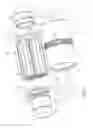
FIG. 1 is an exploded perspective view of an embodiment of an impeller assembly according to the detailed description and particularly showing a full complement of radial impellor blades;
FIG. 2 is a perspective view of a further embodiment thereof shown as fully assembled; and
FIG. 3 is an axial view of a tubular housing thereof showing mounting and positioning means of several of the radial turbine blades therein.
DETAILED DESCRIPTION
In an embodiment of the present invention shown in FIG. 1, an axial impeller 10 has a tubular housing 20 with opposing open ends 30 and 40, a longitudinal central axis 50, an exterior surface 60 and an interior surface 70; a circumferential drive engagement 80 is integral with exterior surface 60 and may be joined to surface 60 by forming, bonding, fastening and other means known to those of skill. A pair of circular bearing assemblies 90 each have an outer bearing race 92 engaged for mutual rotation with an inner bearing race 94 via ball or roller bearings or other means. The outer bearing races 92 are secured at opposing open ends 30 and 40 of tubular housing 20 where they are free to rotate with housing 20 about inner bearing races 94. Such bearing sets are well known to those of skill in the field of this apparatus. Stationary tubes 100 may be engaged with inner bearing races 94 wherein inner bearing races 94 and tubes 100 may be held stationary against rotation using, for example, fixed stands 110. Stands 110 may be secured to fixed bases 120, and may use band-clamps 130 for encircling tubes 100. This is only one approach to securing tubes 100 against rotation and other approaches will be known to those of skill. A set 200 of turbine blades 210 may be engaged within tubular housing 20 as will be further described below.
Drive engagement 80 may have a series of steps consisting of spaced-apart ridges as shown in FIG. 1 or alternately may have a series of radial gear teeth 82 as shown in FIG. 2. In either approach or others that may be known to those of skill, will accept a flexible drive belt or drive chain (not shown) in engagement so as to be driven in circuitous rotation as housing 20 rotates, or for driving housing 20. Therefore, such a flexible drive belt or chain may be engaged with an electrical generator or an electric motor (not shown) as would be known to those of skill.
As shown in FIG. 3, turbine blades 210 may be secured to housing 20 on interior surface 70 by welds 212 or by fasteners 214, and it is clear that those of skill in the art will find ways of attaching blades 210 by other means. In operation blades 210 may extend radially from interior surface 70 toward axis 50. It is shown at “A” that blades 210 may be placed in a retracted position roughly adjacent to surface 70 and, at “B,” in the radial extended position. To accomplish this, as shown, blades 210 may be secured by hinges, so as to rotate between the retracted position “A” and the extended radial position “B”.
In an embodiment as shown in FIG. 2, actuators 220 may be mounted on exterior surface 60 and as shown in FIG. 3, each turbine blade 210 may be engaged with an actuator 220 by rod 234 which may be actuated by switch 230. Switch 230 may have two positions; one for extending rod 234 (retracted blade “A”) and the other for retracting rod 234 (extended blade “B”). As shown, rod 234 may be engaged with a hinge arrangement 236 at the proximal end of blade 210 which allows blade 210 to pivot about its own hinge pin. A lever 232 may be used to manually change positions of switch 230 between “A” and “B.” As shown, rod 234 may extend through an aperture 22 in tubular housing 20 and aperture 22 may be sealed for excluding fluid leakage from housing 20 as would be known by those of skill.
It can be seen that when blades 210 are retracted (position “A”), fluid flow through housing 20 is able to move freely and housing 20 will not rotate; while when blades 210 are extended, as shown at “B,” a fluid flow through housing 20 will cause housing 20 to rotate. A prime mover such as an electric motor joined to housing 20 at 80 or 82 by a drive belt will be able to cause fluid flow within housing 20 propelled by turbine blades 210. Likewise, a fluid flow within housing 20 will drive blades 210 into rotation and this mechanical motion may be transferred to an alternator or electric generator. Because actuators 220 may enable adjustment of blades 210 to intermediate positions between “A” and “B” energy transfer may be throttled.
In the foregoing description, embodiments are described as a plurality of individual parts, and methods as a plurality of individual steps and this is solely for the sake of illustration. Accordingly, it is contemplated that some additional parts or steps may be added, some parts or steps may be changed or omitted, and the order of the parts or steps may be re-arranged, while maintaining the sense and understanding of the apparatus and methods as claimed.
Claims
What is claimed is:1. An axial impeller comprising:
a housing of tubular construction having a drive engagement mounted circumferentially thereon;
bearings mounted at opposing ends of said housing; and
fixed tubes engaged with said bearings wherein said housing is rotatable by said drive engagement relative to said fixed tubes.
2. The axial impeller of claim 1 wherein said drive engagement is selected from the group consisting of radial gear teeth, radial indentations, and alternating ridges and indentations.
3. The axial impeller of claim 1 further comprising turbine blades secured to a housing wall.
4. The axial impeller of claim 3 wherein said turbine blades are secured by fasteners.
5. The axial impeller of claim 3 wherein said turbine blades are secured by welds.
6. The axial impeller of claim 3 wherein said turbine blades are secured by hinges for movement between retracted and extended positions.
7. The axial impeller of claim 6 wherein each said turbine blades are engaged with actuators mounted on an exterior surface of said housing wall, wherein actuator rods communicate between said actuators and said turbine blades.
8. The axial impeller of claim 7 wherein said actuator rods operate said turbine blades between retracted and extended positions.
9. An axial impeller comprising:
a tubular housing having a circumferential drive engagement integral with an exterior surface of said housing;
a pair of circular bearing assemblies each having an outer bearing race engaged with said housing at opposing ends thereof; and
inner bearing races of said bearing assemblies engaged with stationary tubes.
10. The axial impeller of claim 9 wherein said drive engagement is selected from the group consisting of radial gear teeth, radial indentations, and alternating ridges and indentations.
11. The axial impeller of claim 9 further comprising turbine blades secured to an interior surface of said housing.
12. The axial impeller of claim 11 wherein said turbine blades are secured by fasteners, wherein said turbine blades extend radially away from said interior surface.
13. The axial impeller of claim 11 wherein said turbine blades are secured by welds, wherein said turbine blades extend radially away from said interior surface.
14. The axial impeller of claim 11 wherein said turbine blades are secured by hinges, said turbine blades each free to move between a retracted position adjacent to said interior surface and an extended radial position.
15. The axial impeller of claim 11 wherein each said turbine blades are engaged with an actuator mounted on said exterior surface of said housing, wherein each said actuator has an operator engaged with an operator shaft extensive through an aperture in said housing and joined with one of said turbine blades.
16. The axial impeller of claim 15 wherein each said operator is a switch having plural states, wherein each on of said states is associated with a position of said turbine blade.
Images & Drawings included:


Sources:
- United States Patent and Trademark Office - verify current appl. status at the USPTO↗
Recent applications in this class:
- » 20230243263 2023-08-03
AXIAL OUT-RUNNER TURBINE AND METHOD FOR MANUFACTURING A ROTOR SECTION FOR THAT TURBINE - » 20190323354 2019-10-24
HIGH TEMPERATURE CERAMIC ROTARY TURBOMACHINERY - » 20120201669 2012-08-09
Rotating component of a turbine engine - » 20100129227 2010-05-27
Fiber composite reinforced aircraft gas turbine engine drums with radially inwardly extending blades - » 20090067983 2009-03-12
Centerline compression turbine engine - » 20080022693 2008-01-31
Ceramic blade gas turbine - » 20050226720 2005-10-13
Contra rotatable turbine system - » 18187724 2024-06-11
Gas turbine engine having a tie rod