Elastic wave device
US20170338795A1
2017-11-23
15/465,632
2017-03-22
✅ Patent granted
US 10,205,433 B2
2019-02-12
-
-
Stephen E. Jones | Samuel S Outten
Keating & Bennett, LLP
2037-03-25
Abstract:
An elastic wave device includes a substrate including a piezoelectric material layer and an IDT electrode on the piezoelectric material layer. The IDT electrode includes a Pt film, a Ti film on the Pt film, and an Al-based metal film on the Ti film. The Ti film is quasi-single-crystalline.
Inventors:
- Ryo NAKAGAWA 30 🇯🇵 Nagaokakyo-shi, Japan
- Chihiro KONOMA 6 🇯🇵 Nagaokakyo-shi, Japan
- Masashi TSUBOKAWA 6 🇯🇵 Nagaokakyo-shi, Japan
- Ryo Nakagawa 21 🇯🇵 Nagaokakyo, Japan
- Chihiro Konoma 6 🇯🇵 Nagaokakyo, Japan
- Masashi Tsubokawa 6 🇯🇵 Nagaokakyo, Japan
Assignee:
- MURATA MANUFACTURING CO., LTD. 6,413 🇯🇵 Kyoto, Japan
Applicant:
Interested in similar patents?
Get notified when new applications in this technology area are published.
Classification:
H03H9/02559 » CPC main
Networks comprising electromechanical or electro-acoustic devices; Electromechanical resonators; Details of surface acoustic wave devices; Characteristics of substrate, e.g. cutting angles of lithium niobate or lithium-tantalate substrates
B06B1/0644 » CPC further
Methods or apparatus for generating mechanical vibrations of infrasonic, sonic, or ultrasonic frequency making use of electrical energy operating with piezo-electric effect or with electrostriction using a single piezo-electric element
H01L41/0477 » CPC further
Piezo-electric devices in general; Electrostrictive devices in general; Magnetostrictive devices in general; Processes or apparatus specially adapted for the manufacture or treatment thereof or of parts thereof; Details thereof; Details of piezo-electric or electrostrictive devices; Electrodes or electrical connection arrangements Conductive materials
H01L41/047 IPC
Piezo-electric devices in general; Electrostrictive devices in general; Magnetostrictive devices in general; Processes or apparatus specially adapted for the manufacture or treatment thereof or of parts thereof; Details thereof; Details of piezo-electric or electrostrictive devices Electrodes or electrical connection arrangements
H03H9/02 IPC
Networks comprising electromechanical or electro-acoustic devices; Electromechanical resonators Details
H03H9/56 » CPC further
Networks comprising electromechanical or electro-acoustic devices; Electromechanical resonators; Filters comprising resonators of piezo-electric or electrostrictive material Monolithic crystal filters
B06B1/06 IPC
Methods or apparatus for generating mechanical vibrations of infrasonic, sonic, or ultrasonic frequency making use of electrical energy operating with piezo-electric effect or with electrostriction
B06B1/0662 » CPC further
Methods or apparatus for generating mechanical vibrations of infrasonic, sonic, or ultrasonic frequency making use of electrical energy operating with piezo-electric effect or with electrostriction using a single piezo-electric element with an electrode on the sensitive surface
H03H9/131 » CPC further
Networks comprising electromechanical or electro-acoustic devices; Electromechanical resonators; Details; Driving means, e.g. electrodes, coils for networks consisting of piezo-electric or electrostrictive materials consisting of a multilayered structure
H03H9/13 IPC
Networks comprising electromechanical or electro-acoustic devices; Electromechanical resonators; Details; Driving means, e.g. electrodes, coils for networks consisting of piezo-electric or electrostrictive materials
Description
CROSS REFERENCE TO RELATED APPLICATIONS
This application claims the benefit of priority to Japanese Patent Application No. 2016-098395 filed on May 17, 2016. The entire contents of this application are hereby incorporated herein by reference.
BACKGROUND OF THE INVENTION
1. Field of the Invention
The present invention relates to an elastic wave device that includes a piezoelectric material layer and an interdigital transducer (IDT) electrode thereon.
2. Description of the Related Art
Various elastic wave devices are known that have an IDT electrode formed by stacked metal films. For example, the elastic wave device described in Japanese Unexamined Patent Application Publication No. 2012-175315 includes a piezoelectric substrate and an IDT electrode thereon. This IDT electrode has a structure in which NiCr, Pt, Ti, and AlCu films are stacked from the piezoelectric substrate side. The Ti film prevents atomic diffusion between the Pt and AlCu films.
This Ti film is not a sufficiently effective diffusion barrier when polycrystalline.
SUMMARY OF THE INVENTION
Accordingly, preferred embodiments of the present invention provide an elastic wave device in which atomic diffusion is prevented to a sufficient extent.
According to a preferred embodiment of the present invention, an elastic wave device includes a substrate including a piezoelectric material layer and an IDT electrode on the piezoelectric material layer. The IDT electrode includes a Pt film, a Ti film on the Pt film, and an Al-based metal film on the Ti film. The Ti film is quasi-single-crystalline.
In a particular aspect of an elastic wave device according to a preferred embodiment of the present invention, an X-ray diffraction pole figure of a Ti(200) plane of the Ti film exhibits a peak pattern substantially having three- or six-fold symmetry.
In another particular aspect of an elastic wave device according to a preferred embodiment of the present invention, the Al-based metal film is an Al film or Al alloy film.
In yet another particular aspect of an elastic wave device according to a preferred embodiment of the present invention, the Al alloy film is an AlCu alloy film.
In the elastic wave devices according to preferred embodiments of the present invention, atomic diffusion is prevented to a sufficient extent because of the presence of the quasi-single-crystalline Ti film.
The above and other elements, features, steps, characteristics and advantages of the present invention will become more apparent from the following detailed description of the preferred embodiments with reference to the attached drawings.
BRIEF DESCRIPTION OF THE DRAWINGS
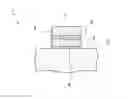
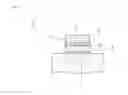
FIG. 1 is a front cross-section for illustrating the electrode structure of an elastic wave device according to a preferred embodiment of the present invention.
FIG. 2 is an X-ray diffraction (XRD) pole figure of a quasi-single-crystalline Ti film of an elastic wave device according to a preferred embodiment of the present invention.
FIG. 3 is an X-ray diffraction (XRD) pole figure of a Ti film located above a Pt film on a piezoelectric substrate in an elastic wave device according to a preferred embodiment of the present invention.
FIG. 4 is an X-ray diffraction (XRD) pole figure of a polycrystalline Ti film.
DETAILED DESCRIPTION OF THE PREFERRED EMBODIMENTS
The following makes the present invention more clearly understood by describing some specific preferred embodiments of the present invention with reference to the drawings.
The preferred embodiments set forth herein are illustrative. It is possible to replace or combine elements or features of the structure of a preferred embodiment with that of another preferred embodiment.
FIG. 1 is a front cross-section for illustrating the electrode structure of an elastic wave device according to a preferred embodiment of the present invention.
The elastic wave device 1 includes a piezoelectric substrate 2. The piezoelectric substrate 2 is a LiTaO3 substrate, but the piezoelectric substrate 2 may alternatively be made from any other piezoelectric single crystal such as LiNbO3. In this preferred embodiment of the present invention, the substrate does not need to be a layer of a piezoelectric material as a whole, i.e., a piezoelectric substrate, as long as it has a piezoelectric material layer. The substrate may have a structure in which there is a piezoelectric material layer on a supporting substrate.
There is an IDT electrode 3 on the piezoelectric substrate 2. The IDT electrode 3 includes a Ti film 4, a Pt film 5, a Ti film 6, and an AlCu alloy film 7. The Ti film 4 more firmly adheres to the piezoelectric substrate 2 than the Pt film 5 does. The Ti film 4 is therefore an adhesion layer.
The Ti film 6 prevents atomic diffusion between the Pt film 5 and the AlCu alloy film 7. The Ti film 6 is therefore a diffusion barrier layer.
The AlCu alloy layer 7 reduces the insertion loss due to its electric resistance lower than that of the Pt film 5. The AlCu alloy film 7 is an AlCu alloy film in which Al is the base metal. In this preferred embodiment of the present invention, it is possible to use another kind of Al-based alloy film instead of the AlCu alloy film 7. The AlCu alloy film 7 can also be replaced with an Al film.
One of the unique features of the elastic wave device 1 is that the Ti film 6 is quasi-single-crystalline. Being quasi-single-crystalline means that the film is not polycrystalline but an X-ray diffraction (XRD) pole figure of its Ti(200) plane exhibits a peak pattern substantially having three- or six-fold symmetry. FIG. 2 is an XRD pole figure of a Ti film. In this figure, the peak pattern from the Ti(200) plane substantially has six-fold symmetry.
In practice, since the IDT electrode 3 is provided on the piezoelectric substrate 2, the symmetry of the Ti film 6 is influenced by the crystal orientation of the piezoelectric substrate 2. FIG. 3 is an XRD pole figure of a Ti film 6 in an IDT electrode 3 actually provided on a piezoelectric substrate 2. The peaks in a substantially six-fold symmetric pattern in this drawing are not in the positions illustrated in FIG. 2.
FIG. 4 is an XRD pole figure of a polycrystalline Ti film. As can be seen from FIG. 4, there is no peak pattern substantially having six-fold symmetry. The pole figure does not contain a peak pattern having three-fold symmetry either.
A Ti film is generally accepted as being quasi-single-crystalline, not polycrystalline, when an X-ray diffraction pole figure of its Ti(200) plane exhibits a peak pattern substantially having three- or six-fold symmetry as in the foregoing. Such a Ti film contains much fewer grain boundaries than a polycrystalline Ti film. This makes the Ti film 6 an extremely effective diffusion barrier. The Ti film 6 is thus sufficiently effective in preventing atomic diffusion even when thin. This allows the manufacturer to provide an elastic wave device 1 in which the Ti film 6 is thin.
Since even a thin Ti film 6 is sufficiently effective in preventing atomic diffusion, the manufacturer is able to reduce the electric resistance of the electrode fingers, and therefore reduce the transmission loss through the device, by thickening the AlCu alloy film 7.
While FIG. 2 illustrates a peak pattern substantially having six-fold symmetry, peak patterns substantially having three-fold symmetry are also acceptable.
While in the above preferred embodiment, a Ti film 4, a Pt film 5, a Ti film 6, and an AlCu alloy film 7 are preferably stacked in this order from the piezoelectric substrate 2 side, the IDT electrode according to a preferred embodiment of the present invention only needs to have a multilayer structure in which there is a Ti film on a Pt film and there is an Al or AlCu alloy film on the Ti film. The rest of the multilayer portion of the IDT electrode is not critical. The Ti adhesion layer 4 may therefore be replaced with a NiCr film and can even be omitted.
Elastic wave devices according to this preferred embodiment of the present invention preferably include the above-described multilayer structure of an IDT electrode. The rest of their structure is therefore not critical. Preferred embodiments of the present invention are therefore able to be applied to various elastic wave devices including longitudinally coupled resonator-type elastic wave filters besides elastic wave resonators.
While preferred embodiments of the present invention have been described above, it is to be understood that variations and modifications will be apparent to those skilled in the art without departing from the scope and spirit of the present invention. The scope of the present invention, therefore, is to be determined solely by the following claims.
Claims
What is claimed is:1. An elastic wave device comprising:
a substrate including a piezoelectric material layer; and
an IDT electrode on the piezoelectric material layer; wherein
the IDT electrode includes a Pt film, a Ti film on the Pt film, and an Al-based metal film on the Ti film; and
the Ti film is quasi-single-crystalline.
2. The elastic wave device according to claim 1, wherein an X-ray diffraction pole figure of a Ti(200) plane of the Ti film exhibits a peak pattern substantially having three- or six-fold symmetry.
3. The elastic wave device according to claim 1, wherein the Al-based metal film is an Al film or Al alloy film.
4. The elastic wave device according to claim 3, wherein the Al alloy film is an AlCu alloy film.
5. The elastic wave device according to claim 1, wherein the substrate is one of a LiTaO3 substrate and a LiNbO3 substrate.
6. The elastic wave device according to claim 1, wherein the substrate is a piezoelectric substrate.
7. The elastic wave device according to claim 1, wherein the substrate is one of a LiTaO3 substrate and a LiNbO3 substrate.
8. The elastic wave device according to claim 1, wherein the Ti film is an adhesion layer.
9. The elastic wave device according to claim 1, wherein the Ti film is a diffusion barrier layer that prevents atomic diffusion between the Pt film and the AlCu alloy film.
10. The elastic wave device according to claim 1, wherein the AlCu alloy layer reduces insertion loss due to its electric resistance lower than that of the Pt film.
11. The elastic wave device according to claim 1, wherein the IDT electrode includes another Ti film between the substrate and the Pt film.
12. The elastic wave device according to claim 1, wherein the IDT electrode includes an NiCr film between the substrate and the Pt film.
13. The elastic wave device according to claim 1, wherein the elastic wave device is one of a longitudinally coupled resonator-type elastic wave filter and an elastic wave resonator.
Images & Drawings included:


Sources:
- United States Patent and Trademark Office - verify current appl. status at the USPTO↗
Similar patent applications:
- » 20220069799
Elastic wave device, elastic waves filter, duplexer, and module - » 20170279429
Method for manufacturing elastic wave device, and elastic wave device - » 20190312559
Elastic wave device manufacturing method, elastic wave device, radio-frequency front-end circuit, and communication device - » 20250112615
Elastic Wave Device and Module Using Elastic Wave Device - » 20220329228
ELASTIC WAVE DEVICE AND METHOD OF MANUFACTURING ELASTIC WAVE DEVICE - » 20150328875
Composite substrate, elastic wave device, and method for producing elastic wave device - » 20180053679
Composite substrate, elastic wave device, and method for producing elastic wave device - » 20160156331
Elastic wave device, electronic component, and method for manufacturing elastic wave device - » 20170358728
Elastic wave device, communication module apparatus, and method for manufacturing elastic wave device - » 20170222625
Elastic wave device and elastic wave module
Recent applications in this class:
- » 20250211196 2025-06-26
PIEZOELECTRIC WAFER AND METHOD OF FABRICATING THE SAME AND ACOUSTIC WAVE DEVICE INCLUDING THE SAME - » 20250202451 2025-06-19
SUPPORT LAYER SUBSTRATE, COMPOSITE SUBSTRATE, AND ELECTRONIC DEVICE - » 20240396517 2024-11-28
ACOUSTIC WAVE DEVICES WITH MULTILAYER PIEZOELECTRIC SUBSTRATE - » 20240356518 2024-10-24
ELASTIC WAVE DEVICE WITH SUB-WAVELENGTH THICK PIEZOELECTRIC LAYER AND HIGH VELOCITY LAYER - » 20240113680 2024-04-04
SURFACE ACOUSTIC WAVE DEVICES WITH HIGH ELECTROMECHANICAL COUPLING COEFFICIENT AND THERMAL STABILITY - » 20240113679 2024-04-04
SURFACE ACOUSTIC WAVE DEVICES WITH LITHIUM NIOBATE PIEZOELECTRIC MATERIAL - » 20230412141 2023-12-21
ACOUSTIC WAVE DEVICE - » 20230370043 2023-11-16
COMPOSITE SUBSTRATE FOR SURFACE ACOUSTIC WAVE DEVICE AND MANUFACTURING METHOD THEREOF - » 20230035609 2023-02-02
Elastic wave device - » 20220116012 2022-04-14
Surface acoustic wave device and filter device
Recent applications for this Assignee:
- » 20250264604 2025-08-21
RADAR SYSTEM FOR AUTOMOBILE TRACKING - » 20250264594 2025-08-21
RADAR SYSTEM WITH MACHINE LEARNING ENHANCED ANTENNA ARRAY - » 20250264573 2025-08-21
RADAR SYSTEM WITH WAVELENGTH INDEPENDENT ANTENNA ARRAY - » 20250149971 2025-05-08
CHARGE PUMP AND BUCK CONVERTER FOR INTERMEDIATE BUS CONVERSION - » 20240429955 2024-12-26
DIGITAL PRE-DISTORTION FOR DIGITAL ET SYSTEMS USING DIGITAL SUPPLY MODULATION WITH PULSE TRANSITION CONTROL - » 20240429954 2024-12-26
DIGITAL PRE-DISTORTION FOR BEAMFORMING TRANSCEIVERS - » 20240429953 2024-12-26
DIGITAL PRE-DISTORTION FOR MULTIPLE-POWER AMPLIFIER TRANSCEIVERS - » 20240429952 2024-12-26
DIGITAL PRE-DISTORTION FOR RF TRANSMITTERS USING RECONFIGURABLE MATCHING NETWORKS - » 20240429951 2024-12-26
DIGITAL PRE-DISTORTION FOR RF TRANSMITTERS USING BIAS MODULATION - » 20240429950 2024-12-26
DIGITAL PRE-DISTORTION FOR RF TRANSMITTERS USING DIGITAL SUPPLY MODULATION