Training apparatus for quadriceps setting
US20170368399A1
2017-12-28
15/628,439
2017-06-20
✅ Patent granted
US 10,434,356 B2
2019-10-08
-
-
Megan Anderson
Venjuris, P.C.
2037-10-20
Abstract:
Training apparatuses configured to receive, and conform to, the back of a user's knee and provide varying resistance and tactile feedback to a user performing quadriceps exercises and methods for using such apparatuses are disclosed herein. A preferred embodiment of the training apparatuses for quad sets comprises a solid, deformable, resilient body that includes a non-skid base and a top surface with a recess configured to receive the back of a user's knee. The body of this embodiment is preferably made of open-cell polyurethane foam with a uniform density ranging between 1 lb/ft3 and 8 lbs/ft3, and more preferably between 1.5 lbs/ft3 and 4.5 lbs/ft3. The embodiment provides gradually increasing resistance to compression, e.g. tactile feedback to the user's knee, when the user increasingly pushes his/her knee down against the embodiment, and thus allows dynamic quad setting and strengthening.
Applicant:
Interested in similar patents?
Get notified when new applications in this technology area are published.
Classification:
A63B21/028 » CPC main
Exercising apparatus for developing or strengthening the muscles or joints of the body by working against a counterforce, with or without measuring devices using resilient force-resisters made of material having high internal friction, e.g. rubber, steel wool, intended to be compressed
A61H1/024 » CPC further
Apparatus for passive exercising ; Vibrating apparatus ; Chiropractic devices, e.g. body impacting devices, external devices for briefly extending or aligning unbroken bones; Stretching or bending or torsioning apparatus for exercising for the lower limbs Knee
A63B21/00189 » CPC further
Exercising apparatus for developing or strengthening the muscles or joints of the body by working against a counterforce, with or without measuring devices using resistance provided by plastic deformable materials, e.g. lead bars or kneadable masses
A63B23/03508 » CPC further
Exercising apparatus specially adapted for particular parts of the body for limbs, i.e. upper or lower limbs, e.g. simultaneously For a single arm or leg,
A63B23/0494 » CPC further
Exercising apparatus specially adapted for particular parts of the body for limbs, i.e. upper or lower limbs, e.g. simultaneously for lower limbs primarily by articulating the knee joints
A61H2205/102 » CPC further
Devices for specific parts of the body; Leg Knee
A63B21/00 IPC
Exercising apparatus for developing or strengthening the muscles or joints of the body by working against a counterforce, with or without measuring devices
A63B23/035 IPC
Exercising apparatus specially adapted for particular parts of the body for limbs, i.e. upper or lower limbs, e.g. simultaneously
A63B21/02 » CPC further
Exercising apparatus for developing or strengthening the muscles or joints of the body by working against a counterforce, with or without measuring devices using resilient force-resisters
A61H1/02 IPC
Apparatus for passive exercising ; Vibrating apparatus ; Chiropractic devices, e.g. body impacting devices, external devices for briefly extending or aligning unbroken bones Stretching or bending or torsioning apparatus for exercising
A63B23/04 » CPC further
Exercising apparatus specially adapted for particular parts of the body for limbs, i.e. upper or lower limbs, e.g. simultaneously for lower limbs
A63B21/0023 » CPC further
Exercising apparatus for developing or strengthening the muscles or joints of the body by working against a counterforce, with or without measuring devices isometric or isokinetic, i.e. substantial force variation without substantial muscle motion or wherein the speed of the motion is independent of the force applied by the user for isometric exercising, i.e. substantial force variation without substantial muscle motion
A63B21/4011 » CPC further
Exercising apparatus for developing or strengthening the muscles or joints of the body by working against a counterforce, with or without measuring devices; Interfaces with the user related to strength training; Details thereof; Arrangements for attaching the exercising apparatus to the user's body, e.g. belts, shoes or gloves specially adapted therefor to the lower limbs
A63B21/4039 » CPC further
Exercising apparatus for developing or strengthening the muscles or joints of the body by working against a counterforce, with or without measuring devices; Interfaces with the user related to strength training; Details thereof; Specific exercise interfaces contoured to fit to specific body parts, e.g. back, knee or neck support
A63B2022/0094 » CPC further
Exercising apparatus specially adapted for conditioning the cardio-vascular system, for training agility or co-ordination of movements for active rehabilitation, e.g. slow motion devices
A63B2208/0252 » CPC further
Characteristics or parameters related to the user or player posture; Lying down supine
A63B21/002 IPC
Exercising apparatus for developing or strengthening the muscles or joints of the body by working against a counterforce, with or without measuring devices isometric or isokinetic, i.e. substantial force variation without substantial muscle motion or wherein the speed of the motion is independent of the force applied by the user
A63B22/00 IPC
Exercising apparatus specially adapted for conditioning the cardio-vascular system, for training agility or co-ordination of movements
Description
CROSS-REFERENCE TO RELATED APPLICATION
The present application claims priority to a co-pending U.S. provisional patent application entitled “Training Apparatus for Quadriceps Setting,” having Ser. No. 62/353,192, filed on Jun. 22, 2016, which is entirely incorporated herein by reference.
BACKGROUND
Quadriceps setting (also known as quad sets) is an exercise for building and maintaining the strength of quadriceps which is essential for people with knee problems or after a knee surgery. Traditionally patients do quad sets by lying down or sitting on a surface with the problematic leg as straight as possible, then gently pushing the knee into the surface by tightening the thigh muscles (quadriceps), and holding the muscle contraction for a certain period of time.
This isometric contraction in quad sets can be painful and boring, and many patients tend to avoid reaching the knee's end range of motion if they anticipate pain. In addition, strengthening quadriceps by simply pushing the knee down and contracting quadriceps is a slow process. Therapists sometimes suggest placing a small towel roll under a patient's knee as a support as well as a marker of end range. But towel rolls do not provide a controlled resistance and tactile feedback to the patient that are consistent from one towel roll to another. Neither do towel rolls allow the patient to achieve full knee extension.
It is thus desirous to have a training tool for dynamic quad set that starts with a concentric contraction of the quadriceps and provides tactile feedback to a patient.
It also desirous that the training tool provides strengthening throughout the range as well as increased activation of the quadriceps at end range due to the tactile feedback.
SUMMARY
The structure, overall operation and technical characteristics of the present invention will become apparent with the detailed description of preferred embodiments and the illustration of the related drawings as follows.
The invention is incorporated in training apparatuses configured to support and conform to the back of a user's knee and provide varying resistance and tactile feedback to a user performing quadriceps exercises. A preferred embodiment of the training apparatuses for quad sets comprises a solid, deformable, resilient body that includes a base and a top surface with a recess configured to conform to the back of a user's knee.
The body of the preferred embodiment is preferably made of open-cell polyurethane foam. The base of the exemplary body is configured to support the embodiment and prevent any relative movement between the embodiment and the surface that the embodiment is placed on during the quad sets. The base is preferably cubical or of any shape that has a bottom at least as large as the top of the embodiment. The top surface of this exemplary body is preferably curved along a first axis with the middle portion of the top surface raised higher than its sides. The recess of this embodiment is located at the middle portion of the top surface, configured to receive the back of the user's knee, and preferably curved along a second axis perpendicular to the first axis.
When doing quad sets, the user first places the embodiment under the knee with the leg stretching along the first axis so that the embodiment holds the knee at its back with the recess. The user then pushes his/her knee down against the embodiment by the contraction of quadriceps. Since the embodiment has a resilient body, the body of the embodiment deforms when the user's knee pushes into it. The more the user presses the knee down, the more resistance to compression the embodiment provides, and the more tactile feedback the user's knee receives. As such, with the increasing tactile feedback, the embodiment provides dynamic quad setting and strengthening as well as increased activation of the quadriceps during the quad sets.
Alternate embodiments of the training apparatuses may adopt various designs and implementations. An embodiment may have a different shape or dimension. For instance, an exemplary embodiment may comprise a body having a substantially trapezoidal shape along the first axis with a flat top surface that includes a recess located in the middle of the top surface, cut along the second axis. Additionally, various embodiments may be made of different solid, deformable, resilient materials with various densities and deformation resistances to provide different levels of tactile feedback for strengthening and setting quadriceps. For instances, an embodiment may be made of resins, rubbers, or polyurethane foams, with a uniform density between 1 lbs/ft3 and 8 lbs/f3, depending on how intense the quad sets are meant to be.
One object of this invention is to provide a training apparatus that conforms to and holds in place the back of a user's knee during quadriceps setting.
Another objection of this invention is to provide a training apparatus that gives dynamic tactile feedback to a user during quad sets.
BRIEF DESCRIPTION OF THE DRAWINGS OR PICTURES
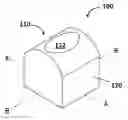
FIG. 1A shows the perspective view of a preferred embodiment.
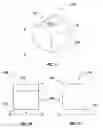
FIG. 1B shows a side view of the embodiment in FIG. 1A along the line A-A′.
FIG. 1C shows a side view of the embodiment in FIG. 1A along the line B-B′.
FIG. 2A shows the perspective view of an alternate preferred embodiment.
FIG. 2B shows a side view of the embodiment in FIG. 2A along the line C-C′.
FIG. 2C shows a side view of the embodiment in FIG. 2A along the line D-D′.
DESCRIPTION OF THE EMBODIMENTS
The preferred embodiments are illustrated in FIGS. 1A-2C. A preferred embodiment (100) in FIGS. 1A-1C has a solid, deformable, resilient body with a top surface (110) with a recess (112) and a base (120) with a bottom (122). As shown in FIG. 1B, the top surface (110) of this embodiment (100) is a horizontal partial cylinder, extending along the line B-B′ while curved along the line A-A′, with the middle portion of the top surface (110) raised higher than the sides. The recess (112) of this embodiment (100) is located at the top surface (110) in the middle portion. The recess (112) is curved along the line B-B′ which is perpendicular to the line A-A′ so that the recess (112) conforms to the back of a user's knee when the user's leg rests on the embodiment (100) along the line A-A′.
An exemplary material of this preferred embodiment (100) is a solid open-cell polyurethane foam with a density ranging from 1.5 lbs/ft3 to 4.5 lbs/ft3. An exemplary dimension of this embodiment (100) is 5″×5″×5″ with a 5″×5″ bottom surface (122) of the base (120) contacting the surface the embodiment is placed on, the curve of the top surface (110), i.e. the perimeter of the horizontal partial cylinder (along the line A-A′), having a 2.83″ radius, and the curved recess (112) having a 2.32″ length (along the line A-A′), a 4″ width (along the line B-B′), and a 0.25″ height/depth.
Another preferred embodiment (200) is illustrated in FIGS. 2A-2C. This embodiment (200) also has a top surface (210) with a recess (212) and a base (220). The body of this embodiment (200) is a trapezoid on the sides along the line C-C′. The top surface (210) in this embodiment (200) is flat and narrower than the bottom (222) of the base (220) along the line C-C′, and the recess (212) is curved along the line D-D′. This embodiment (200) is also 5″×5″×5″ in overall dimension and made of the same material as the previous embodiment (100) in FIGS. 1A-1C. Since this embodiment (200) has a smaller volume than that of the first embodiment (100), it thus would provide less deformation resistance and tactile feedback compared to the embodiment (100).
While the invention has been described by means of specific embodiments, numerous modifications and variations could be made thereto by those ordinary skilled in the art without departing from the scope and spirit disclosed herein.
For instance, an exemplary body may have various densities, shapes, and dimensions in order to provide different resistances and tactile feedbacks. An exemplary body and its recess may additionally be of different shapes and dimensions in order to accommodate various sizes of the users' legs.
Claims
What is claimed is:1. A training apparatus with a solid, deformable, resilient body for quadriceps setting, the body comprising:
(a) a uniform density between 1 lb/ft3 and 8 lbs/ft3;
(b) a top surface with a recess configured to receive a back of the user's knee; and
(c) a base with a flat anti-skid bottom, wherein
the body is configured to provide resistance to compression to a user's knee when the user's knee pushes into the top surface, and
an area of the bottom of the base is at least as great as a vertical projected area of the top surface.
2. The training apparatus of claim 1, wherein the top surface is horizontal partial cylindrical, extending along a horizontal axis, and the recess is located at a middle of the top surface.
3. The training apparatus of claim 2, wherein the recess is convex downward, curved along the horizontal axis.
4. The training apparatus of claim 2, wherein the recess has a uniform depth along a horizontal direction perpendicular to the horizontal axis.
5. The training apparatus of claim 2, wherein:
(a) the base is a cubic with a dimension of 5″×5″×3.5″ in length, width, and height;
(b) the top surface has a dimension of 5″×5″×1.5″ in length, width, and height; and
(c) the recess has a width of 4″ along the horizontal axis and a depth of 0.25″.
6. The training apparatus of claim 1, wherein the density is between 1.5 lbs/ft3 and 4.5 lbs/ft3.
7. The training apparatus of claim 1, wherein the base further comprises two trapezoidal sides.
8. The training apparatus of claim 1, wherein the body is made of a material selected from polyurethane foam, resin, and rubber.
9. A method for setting a user's quadriceps with a training apparatus including a solid, deformable, resilient body with a uniform density, the method comprising the steps of:
(a) resting a user's knee on a recess of a top surface of the body, the recess being configured to receive a back of the user's knee;
(b) gently pushing the user's knee downward into the recess by tightening the user's quadriceps and causing the body deform which in turn provides a tactile feedback to the user's knee; and
(c) holding contraction of the user's quadriceps, wherein
the density of the body is between 1 lb/ft3 and 8 lbs/ft3, and
the body further includes a flat non-skid bottom with an area at least as great as a vertical projected area of the top surface.
10. The method of claim 9, wherein the top surface of the body is horizontal partial cylindrical, extending along a horizontal axis, and the recess is located at a middle of the top surface.
11. The method of claim 10, wherein the recess is convex downward, curved along the horizontal axis.
12. The method of claim 10, wherein the recess has a uniform depth along a horizontal direction perpendicular to the horizontal axis.
13. The method of claim 10, wherein:
(a) a base of the body is a cubic with a dimension of 5″×5″×3.5″ in length, width, and height and configured to support the top surface;
(b) the top surface has a dimension of 5″×5″×1.5″ in length, width, and height; and
(c) the recess has a width of 4″ along the horizontal axis and a depth of 0.25″.
14. The method of claim 9, wherein the density is between 1.5 lbs/ft3 and 4.5 lbs/ft3.
15. The method of claim 9, wherein the body further comprises two trapezoidal sides.
16. The method of claim 9, wherein the body is made of a material selected from polyurethane foam, resin, and rubber.
17. A training apparatus with a solid, deformable, resilient polyurethane foam for quadriceps setting, the polyurethane foam comprising:
(a) a uniform density between 1 lb/ft3 and 8 lbs/ft3;
(b) a horizontal partial cylindrical top surface, extending along a horizontal axis and comprising a recess curved along the horizontal axis and configured to receive a back of a user's knee; and
(c) a base with a non-skid bottom, wherein
the foam is configured to provide resistance to compression to the user's knee when the user's knee pushes into the recess, and
an area of the bottom is at least as great as a vertical projected area of the top surface.
18. The training apparatus of claim 17, wherein the recess has a uniform depth along a horizontal direction perpendicular to the horizontal axis.
19. The training apparatus of claim 17, wherein:
(a) the base is a cubic with a dimension of 5″×5″×3.5″ in length, width, and height;
(b) the top surface has a dimension of 5″×5″×1.5″ in length, width, and height; and
(c) the recess has a width of 4″ along the horizontal axis and a depth of 0.25″.
20. The training apparatus of claim 17, wherein the density is between 1.5 lbs/ft3 and 4.5 lbs/ft3.
Images & Drawings included:

Sources:
- United States Patent and Trademark Office - verify current appl. status at the USPTO↗
Recent applications in this class:
- » 20240299797 2024-09-12
METHODS AND APPARATUS FOR MUSCLE RESISTANCE TRAINING WRAP - » 20230405385 2023-12-21
THERAPEUTIC OR EXERCISE ELASTOMER PUTTY SPECIALLY FORMULATED WITH CBD OIL AND/OR DMSO TO REDUCE PAIN AND INFLAMMATION DURING HAND EXERCISE OR REHABILITATION - » 20220273978 2022-09-01
DEVICE, SYSTEM AND METHOD FOR PERFORMING COMPOUND MULTI-DIRECTIONAL RESISTANCE EXERCISES - » 20220023696 2022-01-27
Exercise apparatus and method - » 20200338387 2020-10-29
Exercise and Stress Reduction Device - » 20200078628 2020-03-12
Exercise tubing for high intensity interval training and methods of use - » 20200047019 2020-02-13
Ergonomic strength conditioning grip - » 20180200556 2018-07-19
Collapsible hand exercise assembly - » 20180169458 2018-06-21
Exerciser - » 20140274601 2014-09-18
Exercise device