Device for the additive production of three-dimensional components
US20170368640A1
2017-12-28
15/540,009
2016-01-12
✅ Patent granted
US 11,179,806 B2
2021-11-23
WO; PCT/EP2016/050470; 20160112
WO; WO2016/113253; 20160721
Seyed Masoud Malekzadeh
Dority & Manning, P.A.
2037-12-18
Abstract:
Device for the additive production of three-dimensional components (2), namely a laser melting device or laser sintering device, in which a component (2) is produced by successive solidifying of individual layers (3) made from solidifiable construction material, by the effect of radiation (4), through melting of the construction material (5), wherein the dimensions and/or temperature of the melt area (6) generated by a point-shaped or line-shaped energy input can be captured by a sensor device (8) of a process monitoring system, and sensor values for evaluation of a component quality can be deduced therefrom, wherein the radiation (9) created by the melt area and used for the generation of the sensor values passes through the scanner used for the melt energy input, and is guided from there to the sensor device (8) of the process monitoring system, wherein an optical focus tracking device (20) is arranged in the radiation path used for generation of the sensor values between the scanner (10) and the sensor device (8) of the process monitoring system, which optical focus tracking device can be controlled by electronic machine data for focus tracking.
Inventors:
- Frank Herzog 69 🇩🇪 Lichtenfels, Germany
- Florian BECHMANN 55 🇩🇪 Lichtenfels, Germany
- Fabian ZEULNER 46 🇩🇪 Lichtenfels, Germany
- Tobias BOKKES 15 🇩🇪 Untersiemau, Germany
Assignee:
- CL SCHUTZRECHTSVERWALTUNGS GMBH 55 🇩🇪 Lichtenfels, Germany
- Concept Laser GmbH 238 🇩🇪 Lichtenfels, Germany
Applicant:
Interested in similar patents?
Get notified when new applications in this technology area are published.
Classification:
B22F3/105 IPC
Manufacture of workpieces or articles from metallic powder characterised by the manner of compacting or sintering; Apparatus specially adapted therefor ; Presses and furnaces; Sintering only by using electric current , laser radiation or plasma
B23K26/046 » CPC further
Working by laser beam, e.g. welding, cutting or boring; Positioning or observing the workpiece, e.g. with respect to the point of impact; Aligning, aiming or focusing the laser beam; Automatically aligning, aiming or focusing the laser beam, e.g. using the back-scattered light Automatically focusing the laser beam
B23K26/034 » CPC further
Working by laser beam, e.g. welding, cutting or boring; Positioning or observing the workpiece, e.g. with respect to the point of impact; Aligning, aiming or focusing the laser beam; Observing, e.g. monitoring, the workpiece Observing the temperature of the workpiece
B23K26/03 IPC
Working by laser beam, e.g. welding, cutting or boring; Positioning or observing the workpiece, e.g. with respect to the point of impact; Aligning, aiming or focusing the laser beam Observing, e.g. monitoring, the workpiece
B28B1/001 » CPC further
Producing shaped prefabricated articles from the material Rapid manufacturing of 3D objects by additive depositing, agglomerating or laminating of material
B28B17/0081 » CPC further
Details of, or accessories for, apparatus for shaping the material; Auxiliary measures taken in connection with such shaping; Control arrangements Process control
B28B1/00 IPC
Producing shaped prefabricated articles from the material
B29C64/393 » CPC further
Additive manufacturing, i.e. manufacturing of three-dimensional [3D] objects by additive deposition, additive agglomeration or additive layering, e.g. by 3D printing, stereolithography or selective laser sintering; Auxiliary operations or equipment; Data acquisition or data processing for additive manufacturing for controlling or regulating additive manufacturing processes
B23K26/342 » CPC main
Working by laser beam, e.g. welding, cutting or boring; Laser welding for purposes other than joining Build-up welding
B33Y50/02 » CPC further
for controlling or regulating additive manufacturing processes
B29C64/153 » CPC further
Additive manufacturing, i.e. manufacturing of three-dimensional [3D] objects by additive deposition, additive agglomeration or additive layering, e.g. by 3D printing, stereolithography or selective laser sintering; Processes of additive manufacturing using only solid materials using layers of powder being selectively joined, e.g. by selective laser sintering or melting
B28B17/00 IPC
Details of, or accessories for, apparatus for shaping the material; Auxiliary measures taken in connection with such shaping
B22F12/49 » CPC further
Apparatus or devices specially adapted for additive manufacturing; Auxiliary means for additive manufacturing; Combinations of additive manufacturing apparatus or devices with other processing apparatus or devices; Radiation means Scanners
B22F10/30 » CPC further
Additive manufacturing of workpieces or articles from metallic powder Process control
B22F10/28 » CPC further
Additive manufacturing of workpieces or articles from metallic powder; Direct sintering or melting Powder bed fusion, e.g. selective laser melting [SLM] or electron beam melting [EBM]
B22F2999/00 » CPC further
Aspects linked to processes or compositions used in powder metallurgy
B22F10/368 » CPC further
Additive manufacturing of workpieces or articles from metallic powder; Process control of energy beam parameters Temperature or temperature gradient, e.g. temperature of the melt pool
B22F12/41 » CPC further
Apparatus or devices specially adapted for additive manufacturing; Auxiliary means for additive manufacturing; Combinations of additive manufacturing apparatus or devices with other processing apparatus or devices; Radiation means characterised by the type, e.g. laser or electron beam
B23K26/082 » CPC further
Working by laser beam, e.g. welding, cutting or boring; Devices involving relative movement between laser beam and workpiece Scanning systems, i.e. devices involving movement of the laser beam relative to the laser head
B22F12/90 » CPC further
Apparatus or devices specially adapted for additive manufacturing; Auxiliary means for additive manufacturing; Combinations of additive manufacturing apparatus or devices with other processing apparatus or devices Means for process control, e.g. cameras or sensors
B22F10/366 » CPC further
Additive manufacturing of workpieces or articles from metallic powder; Process control of energy beam parameters Scanning parameters, e.g. hatch distance or scanning strategy
B22F10/80 » CPC further
Additive manufacturing of workpieces or articles from metallic powder Data acquisition or data processing
B22F10/85 » CPC further
Additive manufacturing of workpieces or articles from metallic powder; Data acquisition or data processing for controlling or regulating additive manufacturing processes
Y02P10/25 » CPC further
Technologies related to metal processing Process efficiency
Y02P10/25 » CPC further
Technologies related to metal processing Process efficiency
B22F10/20 » CPC further
Additive manufacturing of workpieces or articles from metallic powder Direct sintering or melting
B33Y30/00 » CPC further
Apparatus for additive manufacturing; Details thereof or accessories therefor
Description
DESCRIPTION
The invention relates to a device for the additive production of three-dimensional components, namely a laser sintering device or a laser melting device, with the further features of patent claim 1.
In such devices, a component is produced by successive solidification of individual layers of construction material, especially powder material, as the result of the impact of a radiation by melting on the construction material. The melting section created by a point-type or linear energy input is detected regarding its dimension, shape or temperature using a sensor device. Therefrom sensor values for evaluating a component quality are derived. The radiation created by the melting section and used for the generation of the sensor values penetrates the scanner employed for the melting energy input. Such a device is e.g. known from DE 20 2010 010 771 U1.
Alternatively, a change of focus of the melting beam can also be carried out by a change of the distance between construction plane and scanner optics, namely by lowering and lifting the construction platform.
The invention is based on the object of designing a device with the features of the preamble of claim 1 such that, in case of a variation of the laser focus and thus the laser spot size variation, an optimized performance of process monitoring can be ensured. This object is solved by the characterizing features of claim 1, advantageous further developments result from the dependent claims.
The device according to the invention first comprises a device enabling a focus displacement and thus also a spot size variation. On the one hand, this can take place by so-called 3D scanning optics, with which a focus adjustment, i.e. a spot size change of the laser spot size, on the surface to be molten is possible in the process.
Furthermore, it is provided to arrange an optical focus tracking device between the scanner of the device and the sensor device of the process monitoring system, which can be actuated by electronic machine data used in the device during the process to track focus.
With that measure, an automatic adjustment of the “field of view” of the process monitoring system to the conditions actually present in the process on the powder surface in the section of the melting spot is carried out. When the spot size of the melting beam increases, then the angle of vision of the process monitoring system is enlarged by the process data used such that an increased melting spot can be detected by the process monitoring system fully, i.e. also in the edge regions thereof, so that accurate data for the process monitoring are available. The same applies in case of a reduction in the melting spot, then the optical focus tracking device controlled by electronic machine data will provide that the reduced melting pool can be accurately examined, which also results in a definite improvement in the process monitoring result.
A manual tracking for example by manual adjustment of objective lens systems of the process monitoring system can be omitted; the process monitoring procedure is automatically adjusted to that focus, by which the powder is molten on.
The machine data used to track focus of the process monitoring system can e.g. be scanner actuation data of the PC scanner actuation card of the device, which controls the focus of the scanner lens in the presence of a so-called 3D scanner. However, the machine data can also be data derived from or comprising construction process parameters.
The focus tracking optics have at least one optical focusing element, for example a focusing lens, that can be moved by a motor, but the focusing element can also be formed as a lens set that can be moved by a motor.
In order to in each case guarantee an improvement to the process monitoring, it can be of particular advantage, when the focus tracking optics of the process monitoring system are performed prior to the focus adjustment of the melting beam directed to the layer of powder. This means that the scanner data at first perform a focus adjustment of the process monitoring system, and the focus adjustment for the melting beam, also controlled by the machine data, follows the focus adjustment of the process monitoring system. This can take place by a simple delay circuit or delaying control that e.g. carries out a focus adjustment of the melting beam only when the process monitoring system is already set to the new focus.
The sensor device can comprise a plurality of photosensitive elements that can selectively or also collectively be brought into the beam or a partial beam of the process monitoring system. This can be done by deflection mirrors, beam splitters or the like. When beam splitters are used, it is possible to operate several or all photosensitive elements of the sensor device in parallel and optionally to take parallel measurements in different spectral regions that can be introduced into the process monitoring. Possible sensor regions are a wavelength range of e.g. 780-950 nm, another wavelength range possibly of interest can be chosen at around 1,200 nm.
In each case, it needs to be ensured that a melting beam focus adjustment in the area of process monitoring is compensated by the focus tracking device.
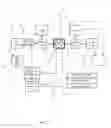
The invention is explained in more detail by means of an exemplary embodiment in the figure of the drawing. In which:
A schematic diagram of the significant components of a device for the additive production of three-dimensional components in a form of a laser melting device comprising a process monitoring system with optical focus tracking is shown.
The device 1 shown in FIG. 1 of the drawings is for the additive production of three-dimensional components 2 produced by successive solidification of individual layers 3 of construction material that can be solidified as the result of the impact of a radiation 4 by melting on the construction material 5. The melting section 6 in the construction plane 7 created by a point-type or linear energy input is detected using a sensor device 8 of a process monitoring system regarding its dimension shape and/or regarding its temperature. Therefrom sensor values for evaluating a component quality are derived, wherein the radiation 9 created by the melting section 6 and used for the generation of the sensor values penetrates the scanner 10 employed for the melting energy input in reverse direction, and is directed to the sensor device 8 of the process monitoring system by said scanner. Process monitoring systems, in which the reflected radiation created by the melting section is directed to a sensor device by the scanner in reverse direction, are referred to as so-called coaxial process monitoring systems, because the radiation emanating the laser for energy input and the reflected radiation for the process monitoring system penetrate the scanner coaxially.
The sensor device 8 can comprise a camera 15, a photodiode 16 or also several photosensitive elements, wherein it can be provided that the radiation 9 used for the generation of sensor values penetrates a beam splitter 17, which distributes the radiation e.g. to the camera, the photodiode or further photosensitive elements.
According to the invention, an optical focus tracking device 20 is arranged between the scanner 10 and the sensor device 8 of the process monitoring system, which can be readjusted by electronic machine data 21, 22 to track focus.
The focus tracking device comprises at least one optical focusing element that can be adjusted by a motor, e.g. a lens set 23 that can be moved by a motor, which serves the purpose of performing a refocusing of the radiation 9 used for the generation of the sensor values.
Refocusing is performed, when either the optical path of the device comprising at least the radiation source and the scanner is provided with an optical adjustment device 3 for melting beam focus adjustment, or a focus adjustment of the melting beam is carried out by mechanically moving the construction plane 7.
The machine data can on the one hand be or comprise scanner actuation data from a scanner actuation card, wherein such scanner actuation data primarily affect a 3D scanner regarding the z-axis focusing.
The machine data can, however, also be or comprise data derived from construction process parameters, especially data used for height adjustment of the construction plane, because a height adjustment of the construction plane also results in defocusing the melting beam.
The machine data delivered to the focus tracking device 20 can be controlled regarding time such that a focus tracking of the radiation 9 used for the generation of the sensor values using the focus tracking device 20 results into a z-axis adjustment of a 3D scanner 10 or a height adjustment of the construction plane. This ensures that upon application of the laser radiation and thus generation of the melting pool, which is to be monitored, the beam 9 used for the generation of the sensor values is already optimized regarding its focus.
In order to be able to evaluate the data from the sensor device 8, i.e. the camera data from the camera 15 and the sensor data from the photodiode 16, a processor unit is provided, in which the data can be processed, stored and be brought into a format that enables visualization of the 3D data for example for reverse engineering.
LIST OF REFERENCE NUMBERS
1. Device
2Component
3 Layer
4 Radiation
5 Construction material
6 Melting section
7 Construction plane
8 Sensor device
9 Radiation
10 Scanner
15 Camera
16 Photodiode
17 Beam splitter
20 Focus tracking device
21 Machine data
22 Machine data
23 Lens set
Claims
1. A device for the additive production of three-dimensional components (2), namely a laser melting device or a laser sintering device, in which a component (2) is produced by successive solidification of individual layers (3) of construction material that can be solidified as a result of the impact of radiation (4) by melting on the construction material (5), wherein the melting section (6) created by a point-type or linear energy input can be detected using a sensor device (8) of a process monitoring system regarding its dimension shape and/or regarding its temperature, and sensor values for evaluating a component quality can be derived therefrom, wherein the radiation (9) created by the melting section and used for the generation of the sensor values penetrates the scanner employed for the melting energy input, and is directed to the sensor device (8) of the process monitoring system by said scanner, characterized in that in the optical path used for the generation of the sensor values between the scanner (10) and the sensor device (8) of the process monitoring system an optical focus tracking device (20) is arranged that can be actuated by electronic machine data to track focus.
2. The device according to claim 1, characterized in that the optical path of the device at least comprising the radiation source and the scanner is provided with an optical adjustment device (30) to adjust the melting beam focus.
3. The device according to claim 1, characterized in that a focus adjustment of the melting beam (4) is carried out by mechanically moving the construction plane (7).
4. The device according to claim 1, characterized in that the machine data are or comprise the scanner actuation data of the PC scanner actuation card.
5. The device according to claim 1, characterized in that the machine data are or comprise data derived from construction process parameters.
6. The device according to claim 1, characterized in that the focus tracking optics has at least one optical focusing element that can be moved by a motor.
7. The device according to claim 1, characterized in that the focusing element is formed as a lens set that can be moved by a motor.
8. The device according to claim 1, characterized in that the focus adjustment of the process monitoring system can be performed by the focus tracking optics prior to the focus adjustment of the melting beam directed to the layer of powder.
9. The device according to claim 1, characterized in that the sensor device (8) comprises a plurality of photosensitive elements (15, 16) that can selectively or collectively be brought into the beam of the process monitoring system.
10. The device according to claim 1, characterized in that a sensor of the process monitoring system is designed for a wavelength range of 780-950 nm.
11. The device according to claim 1, characterized in that a sensor is designed for a wavelength range of around 1,200 nm.
12. The device according to claim 1, characterized in that the electronic signals derived from several sensors are processed in parallel in a process monitoring system.
13. The device according to claim 1, characterized in that the focus tracking of the focus tracking device is formed for the compensation of the melting beam exiting the melting beam focus adjustment of the scanner.
Images & Drawings included:

Sources:
- United States Patent and Trademark Office - verify current appl. status at the USPTO↗
Similar patent applications:
Recent applications in this class:
- » 20250289079 2025-09-18
WIDE LASER BEAM HIGH-THROUGHPUT ADDITIVE-MANUFACTURING AND CLADDING DEVICE AND WORKING METHOD THEREOF - » 20250289078 2025-09-18
METHOD AND SYSTEM FOR OPTIMIZING PROCESS PARAMETERS FOR PORE INHIBITION IN HIGH-POWER LASER SHAPING WELDING - » 20250276408 2025-09-04
FUNCTIONALLY GRADED MATERIALS FROM THERMAL PROCESSING - » 20250256356 2025-08-14
METHOD, CONTROL PROGRAM, AND PLANNING DEVICE FOR A POWDER BED-BASED ADDITIVE MANUFACTURE IN LAYERS - » 20250256355 2025-08-14
ADDITIVE MANUFACTURING APPARATUS AND ADDITIVE MANUFACTURING METHOD - » 20250242441 2025-07-31
WIDE LASER BEAM HIGH-THROUGHPUT ADDITIVE-MANUFACTURING AND CLADDING DEVICE AND WORKING METHOD THEREOF - » 20250214177 2025-07-03
PROCESSING APPARATUS - » 20250196265 2025-06-19
LASER CLADDING REPAIR METHOD AND APPARATUS FOR SURFACE DAMAGE OF PART, AND PART - » 20250196264 2025-06-19
WIRE GUIDE DEVICE FOR A LASER PROCESSING HEAD FOR DEPOSITION WELDING AND LASER PROCESSING HEAD FOR DEPOSITION WELDING COMPRISING THE WIRE GUIDE DEVICE - » 20250187115 2025-06-12
METHODS OF ENHANCING SURFACE HARDNESS OF QUENCH-SENSITIVE AGE-HARDENING MATERIALS, ALLOYS PRODUCED THEREFROM, AND LASER CLADDING SYSTEMS THEREFOR
Recent applications for this Assignee:
- » 20250288935 2025-09-18
FILTER DEVICES FOR ADDITIVE MANUFACTURING APPARATUSES - » 20250163811 2025-05-22
ADDITIVELY MANUFACTURED ARTICLES HAVING A MICROSTRUCTURE WITH A HIGH GAMMA-PRIME VOLUME FRACTION - » 20240278495 2024-08-22
Additive manufacturing methods and systems - » 20240131596 2024-04-25
Method and apparatus for fluid flow for additive manufacturing apparatus - » 20240092027 2024-03-21
Determination device for determining at least one parameter of an energy beam - » 20240075682 2024-03-07
Method for Calibrating an Irradiation Device for an Apparatus for Additively Manufacturing Three-Dimensional Objects - » 20230390997 2023-12-07
Method for producing a three-dimensional component - » 20230381864 2023-11-30
Detecting optical anomalies on optical elements used in an additive manufacturing machine - » 20230219298 2023-07-13
Irradiation sequences for consolidating powder material in an additive manufacturing machine - » 20230150191 2023-05-18
Device for the generative production of a three-dimensional object