INDUCED POLARIZATION AC MOTOR
US20180026488A1
2018-01-25
15/539,948
2015-12-23
Abstract:
The present invention relates to an induced polarization AC motor having maximized efficiency, a stator of the AC motor being provided with 2n number of winding slots and 2n number of induced polarization slits so that when electricity is applied to the stator having just n number of slots distributedly wound, polarization is induced on the magnetic field surfaces on both sides of the winding slots to double the magnetomotive force for operating and rotating the rotor. Here, the rotational direction is determined by the Fleming left-hand rule.
Interested in similar patents?
Get notified when new applications in this technology area are published.
Classification:
H02K15/0485 » CPC further
Methods or apparatus specially adapted for manufacturing, assembling, maintaining or repairing of dynamo-electric machines of windings, prior to mounting into machines; Wound windings; Wave windings, undulated windings manufactured by shaping an annular winding
H02K1/223 » CPC further
Details of the magnetic circuit characterised by the shape, form or construction; Rotating parts of the magnetic circuit Rotor cores with windings and permanent magnets
H02K21/32 » CPC further
Synchronous motors having permanent magnets; Synchronous generators having permanent magnets with rotating armatures and stationary magnets with armatures rotating within the magnets having horse-shoe magnets
H02K3/493 » CPC main
Details of windings; Fastening of windings on the stator or rotor structure in slots; Slot-closing devices magnetic
H02K3/28 » CPC further
Details of windings; Windings characterised by the conductor shape, form or construction, e.g. with bar conductors Layout of windings or of connections between windings
H02K1/22 IPC
Details of the magnetic circuit characterised by the shape, form or construction Rotating parts of the magnetic circuit
H02K15/04 IPC
Methods or apparatus specially adapted for manufacturing, assembling, maintaining or repairing of dynamo-electric machines of windings, prior to mounting into machines
Description
TECHNICAL FIELD
The present invention relates to an AC motor with efficiency improved by induced polarization (horse-shoe magnet polarization), and more particularly, to an induced polarization AC motor in which 2n number of winding slots and 2n number of induced polarization slits are provided, and distributed winding is applied only to the n number of winding slots among the 2n number of winding slots, such that polarization is induced, by the induced polarization slits, to magnetic field surfaces at both sides of the winding slots, thereby doubling magnetomotive force, and thus improving efficiency of the motor.
BACKGROUND ART
One of the global issues that have to be solved by physics in the twenty-first century is an “energy problem”.
AC motors currently use 50% or more of the overall electrical energy.
If a new and innovative technology capable of significantly improving efficiency of the AC motor is developed, the technology can serve to solve the energy problem.
DISCLOSURE
Technical Problem
The present invention provides a new and innovative technology capable of significantly improving efficiency of an AC motor.
Technical Solution
The present invention provides an induced polarization AC motor which includes a stator of the induced polarization AC motor, the stator including: 2n number of winding slots which are provided in a core formed by stacking silicon steel plates; and 2n number of induced polarization slits (horse-shoe magnet polarization slits) which are provided between the winding slots, in which the stator is configured by applying distributed winding only to the n number of winding slots among the 2n number of winding slots, and polarization is induced to magnetic field surfaces at both sides of the winding slots when electricity is applied to the stator, such that a rotor is actuated and rotated by doubling magnetomotive force, and a rotation direction is determined by Fleming's left-hand rule.
Advantageous Effects [Advantageous Effects] following effects.
1. The motor according to the present invention generates no heat, noise, and vibration.
2. The motor according to the present invention produces no eddy current loss.
3. The motor according to the present invention reduces the number of copper wires by 50% compared to the existing AC motor.
4. The motor according to the present invention improves efficiency by about 200% by doubling magnetomotive force.
5. The motor according to the present invention has no harmonics.
6. The motor according to the present invention produces no windage loss.
DESCRIPTION OF DRAWINGS
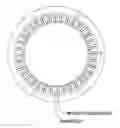
FIG. 1 is a view illustrating a stator according to the present invention.
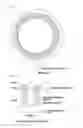
FIG. 2 is a view illustrating winding slots and induced polarization slits according to the present invention.
MODES OF THE INVENTION
The present invention provides an induced polarization AC motor which includes a stator of the induced polarization AC motor, the stator including: 2n number of winding slots which are provided in a core formed by stacking silicon steel plates; and 2n number of induced polarization slits (horse-shoe magnet polarization slits) which are provided between the winding slots, in which the stator is configured by applying distributed winding only to the n number of winding slots among the 2n number of winding slots, and polarization is induced to magnetic field surfaces at both sides of the winding slots when electricity is applied to the stator, such that a rotor is actuated and rotated by doubling magnetomotive force, and a rotation direction is determined by Fleming's left-hand rule.
Claims
1. An induced polarization AC motor which includes a stator of the induced polarization AC motor, the stator comprising:
2n number of winding slots which are provided in a core formed by stacking silicon steel plates; and
2n number of induced polarization slits (horse-shoe magnet polarization slits) which are provided between the winding slots;
wherein the stator is configured by applying distributed winding only to the n number of winding slots among the 2n number of winding slots, and polarization is induced to magnetic field surfaces at both sides of the winding slots when electricity is applied to the stator, such that a rotor is actuated and rotated by doubling magnetomotive force, and a rotation direction is determined by Fleming's left-hand rule.
Images & Drawings included:
Sources:
- United States Patent and Trademark Office - verify current appl. status at the USPTO↗
Recent applications in this class:
- » 20250175051 2025-05-29
METHOD FOR MANUFACTURING MAGNETIC WEDGE, MAGNETIC WEDGE, STATOR FOR ROTATING ELECTRIC MACHINE, AND ROTATING ELECTRIC MACHINE - » 20240072594 2024-02-29
SYNCHRONOUS RELUCTANCE MOTOR - » 20220094232 2022-03-24
Electric machine with variable cross-sectional area constant perimeter trapezoidal teeth - » 20210013760 2021-01-14
Radial gap type rotating electrical machine - » 20200059125 2020-02-20
ROTATING ELECTRIC MACHINE COMPRISING A STATOR WITH SEALED SLOTS, AND MORE PARTICULARLY PERMANENT MAGNET-ASSISTED RELUCTANT SYNCHRONOUS ELECTRIC MACHINE - » 20190372416 2019-12-05
Method and apparatus to reduce losses in a compact high speed generator - » 20190238021 2019-08-01
Rotating electric machine having magnetic wedge with planes and having differences in magnetic permeability - » 20190207460 2019-07-04
Rotary electric machine and manufacturing method for rotary electric machine - » 20190157933 2019-05-23
Stator core and stator slot closer - » 20190027991 2019-01-24
Motor stator structure