Method for Suppressing Bitterness of Quinoline Derivative
US20180028662A1
2018-02-01
15/550,124
2016-02-23
Abstract:
The present invention provides a method for suppressing bitterness of a quinoline derivative.
Inventors:
- Kentaro Nagane 2 🇯🇵 Kakamigahara, Japan
- Yosuke Ueki 3 🇯🇵 Kakamigahara, Japan
- Shusuke Sano 2 🇯🇵 Kakamigahara, Japan
- Takahisa Sakaguchi 7 🇯🇵 Tsukuba, Japan
Interested in similar patents?
Get notified when new applications in this technology area are published.
Classification:
A61K47/02 » CPC main
Medicinal preparations characterised by the non-active ingredients used, e.g. carriers or inert additives; Targeting or modifying agents chemically bound to the active ingredient Inorganic compounds
A61K31/47 » CPC further
Medicinal preparations containing organic active ingredients; Heterocyclic compounds having nitrogen as a ring hetero atom, e.g. guanethidine or rifamycins having six-membered rings with one nitrogen as the only ring hetero atom Quinolines; Isoquinolines
Description
TECHNICAL FIELD
The present invention relates to a method for suppressing bitterness of a medicine.
BACKGROUND ART
4-(3-Chloro-4-(cydopropylaminocarbonyl)aminophenoxy)-7-methoxy-6-quinolinecarboxyamide (hereinafter also referred to as Compound 1 or lenvatinib) or a salt thereof, which is a quinoline derivative having an antiangiogenic effect, is known (Patent Literature 1).
As a pharmaceutical composition comprising Compound 1 or a salt thereof, there is known a pharmaceutical composition comprising Compound 1 or a salt thereof and (i) a compound, a 5% (w/w) solution or suspension of which has a pH of 8 or more and/or (ii) a silicic acid to reduce a degradation under humidified and heated conditions or inhibit a gelation on a surface of the pharmaceutical composition (Patent Literature 2).
Besides, as a pharmaceutical composition excellent in dissolution properties of Compound 1 and stable through long-term storage, a pharmaceutical composition comprising (1) Compound 1 or a salt thereof; and (2) a basic substance is known (Patent Literature 3).
Furthermore, there is known a composition comprising a pharmacologically active ingredient of an organic sulfonate, a disintegrating agent and a water-soluble salt, a 2.5% aqueous solution of which has a pH of 3 to 9 (Patent Literature 4).
CITATION LIST
Patent Literature
[Patent Literature 1] U.S. Patent Application Publication No. 2004/0053908
[Patent Literature 2] U.S. Patent Application Publication No. 2008/0214604
[Patent Literature 3] U.S. Patent Application Publication No. 2012/0077842
[Patent Literature 4] U.S. Patent Application Publication No. 2008/0214557
SUMMARY OF INVENTION
Technical Problem
Usually, when a pharmaceutical composition is administered to a patient, a pharmaceutical composition such as a capsule dissolved or suspended in water or the like is administered in some cases from the viewpoint of medication compliance. If a drug having bitterness dissolved or suspended in water or the like is administered to a patient, however, it is apprehended that the patient may have trouble taking the drug due to the bitterness, and this tendency is increased if the patient is a child. Besides, when a pharmaceutical composition is administered to a child, an administration form that can be easily swallowed, such as a suspension, is sometimes employed, but due to the size of the digestive tract of the child, there is an upper limit in the amount of a solvent used for the suspension. On the other hand, due to the physical properties of an active pharmaceutical ingredient such as consistency and solubility, not only the bitterness but also the active pharmaceutical ingredient contained in the suspension may remain in a vessel, and thus, the recovery may not be sufficient in some cases.
Solution to Problem
The present inventors have found that Compound 1 or a pharmaceutically acceptable salt thereof has bitterness. As a result of earnest studies, the present inventors have found that the bitterness of Compound 1 or the pharmaceutically acceptable salt thereof can be suppressed by mixing a basic substance such as calcium carbonate with Compound 1 or the pharmaceutically acceptable salt thereof. Besides, the present inventors have found that if an administration method comprising: 1) suspending, in an aqueous solvent in a vessel, a pharmaceutical composition comprising Compound 1 or a pharmaceutically acceptable salt thereof and a basic substance; 2) administering a suspension obtained in 1) from the vessel to a patient 3) rinsing the vessel with an aqueous solvent; and 4) administering a rinsing solution obtained in 3) to the patient is employed, the suspension of Compound 1 can be administered to a child at high recovery without causing the child to feel bitterness and in a liquid amount administrable to the child.
Specifically, the present invention provides the following [1] to [33]:
[1] A method for suppressing bitterness of 4-(3-chloro-4-(cyclopropylaminocarbonyl)aminophenoxy)-7-methoxy-6-quinolinecarboxyamide, comprising mixing 4-(3-chloro-4-(cyclopropylaminocarbonyl)aminophenoxy)-7-methoxy-6-quinolinecarboxyamide or a pharmaceutically acceptable salt thereof and a basic substance.
[2] The method according to [1], wherein 0.01 to 50 parts by weight of the basic substance is mixed per 1 part by weight of 4-(3-chloro-4-(cyclopropylaminocarbonyl)aminophenoxy)-7-methoxy-6-quinolinecarboxyamide or the pharmaceutically acceptable salt thereof.
[3] The method according to [1], wherein 0.16 to 80 mol of the basic substance is mixed per 1 mol of 4-(3-chloro-4-(cyclopropylaminocarbonyl)aminophenoxy)-7-methoxy-6-quinolinecarboxyamide or the pharmaceutically acceptable salt thereof.
[4] The method according to any one of [1] to [3], wherein the basic substance is a basic oxide, a basic carbonate or a basic hydroxide.
[5] The method according to any one of [1] to [3], wherein the basic substance is calcium carbonate or magnesium oxide.
[6] The method according to any one of [1] to [3], wherein the basic substance is calcium carbonate.
[7] The method according to any one of [1] to [6], wherein the pharmaceutically acceptable salt is a mesylate.
[8] A pharmaceutical composition, comprising 4-(3-chloro-4-(cyclopropylaminocarbonyl)aminophenoxy)-7-methoxy-6-quinolinecarboxyamide or a pharmaceutically acceptable salt thereof, and a basic substance in an amount effective for suppressing bitterness.
[9] A pharmaceutical composition, comprising 4-(3-chloro-4-(cyclopropylaminocarbonyl)aminophenoxy)-7-methoxy-6-quinolinecarboxyamide or a pharmaceutically acceptable salt thereof, the pharmaceutical composition comprising means for mixing a basic substance for suppressing bitterness.
[10] A pharmaceutical composition, comprising 4-(3-chloro-4-(cyclopropylaminocarbonyl)aminophenoxy)-7-methoxy-6-quinolinecarboxyamide or a pharmaceutically acceptable salt thereof and a basic substance, the pharmaceutical composition having bitterness suppressed.
[11] The pharmaceutical composition according to any one of [8] to [10], comprising 0.01 to 50 parts by weight of the basic substance per 1 part by weight of 4-(3-chloro-4-(cydopropylaminocarbonyl)aminophenoxy)-7-methoxy-6-quinolinecarboxyamide or the pharmaceutically acceptable salt thereof.
[12] The pharmaceutical composition according to any one of [8] to [10], wherein 0.16 to 80 mol of the basic substance is mixed per 1 mol of 4-(3-chloro-4-(cyclopropylaminocarbonyl)aminophenoxy)-7-methoxy-6-quinolinecarboxyamide or the pharmaceutically acceptable salt thereof.
[13] The pharmaceutical composition according to any one of [8] to [12], wherein the basic substance is a basic oxide, a basic carbonate or a basic hydroxide.
[14] The pharmaceutical composition according to any one of [8] to [12], wherein the basic substance is calcium carbonate or magnesium oxide.
[15] The pharmaceutical composition according to any one of [8] to [12], wherein the basic substance is calcium carbonate.
[16] The pharmaceutical composition according to any one of [8] to [15], wherein the pharmaceutically acceptable salt is a mesylate.
[17] The pharmaceutical composition according to any one of [8] to [16], in a dosage form of an orally disintegrating tablet, a chewable preparation, an effervescent tablet, a dispersible tablet, a soluble tablet, a syrup, a preparation for a syrup, a troche, or an oral liquid preparation.
[18] The pharmaceutical composition according to any one of [8] to [16], being a preparation that can be suspended in an aqueous solvent upon an administration to prepare a suspension.
[19] A bitterness suppressing agent, comprising a basic substance, for 4-(3-chloro-4-(cyclopropylaminocarbonyl)aminophenoxy)-7-methoxy-6-quinolinecarboxyamide or a pharmaceutically acceptable salt thereof.
[20] The bitterness suppressing agent according to [19], wherein the basic substance added is in an amount of 0.01 to 50 parts by weight per 1 part by weight of 4-(3-chloro-4-(cyclopropylaminocarbonyl)aminophenoxy)-7-methoxy-6-quinolinecarboxyamide or the pharmaceutically acceptable salt thereof.
[21] The bitterness suppressing agent according to [19], wherein the basic substance added is in an amount of 0.16 to 80 mol per 1 mol of 4-(3-chloro-4-(cyclopropylaminocarbonyl)aminophenoxy)-7-methoxy-6-quinolinecarboxyamide or the pharmaceutically acceptable salt thereof.
[22] The bitterness suppressing agent according to any one of [19] to [21], wherein the basic substance is a basic oxide, a basic carbonate or a basic hydroxide.
[23] The bitterness suppressing agent according to any one of [19] to [21], wherein the basic substance is calcium carbonate or magnesium oxide.
[24] The bitterness suppressing agent according to any one of [19] to [21], wherein the basic substance is calcium carbonate.
[25] The bitterness suppressing agent according to any one of [19] to [24], wherein the pharmaceutically acceptable salt is a mesylate.
[26] A method for administering a suspension comprising 4-(3-chloro-4-(cyclopropylaminocarbonyl)aminophenoxy)-7-methoxy-6-quinolinecarboxyamide or a pharmaceutically acceptable salt thereof, and a basic substance, the method comprising: 1) suspending, in an aqueous solvent in a vessel, a pharmaceutical composition comprising 1 to mg of 4-(3-chloro-4-(cyclopropylaminocarbonyl)aminophenoxy)-7-methoxy-6-quinolinecarboxyamide or the pharmaceutically acceptable salt thereof, and the basic substance; 2) administering a suspension obtained in 1) to a patient from the vessel; 3) rinsing the vessel with an aqueous solvent; and 4) administering a rinsing solution obtained in 3) to the patient.
[27] The method according to [26], wherein the 1) comprises: i) pouring the aqueous solvent in the vessel, ii) allowing the vessel to stand; and iii) shaking the vessel.
[28] The method according to [26] or [27], wherein the pharmaceutical composition is suspended in 1 to 10 mL of the aqueous solvent in 1).
[29] The method according to [28], wherein the pharmaceutical composition is suspended in about 3 mL of the aqueous solvent in 1).
[30] The method according to [26], wherein the vessel is rinsed with 1 to 10 mL of the aqueous solvent in 3).
[31] The method according to [30], wherein the vessel is rinsed with about 2 mL of the aqueous solvent in 3).
[32] A method for treating a cancer by administering a suspension containing 1 to 24 mg of 4-(3-chloro-4-(cyclopropylaminocarbonyl)aminophenoxy)-7-methoxy-6-quinolinecarboxyamide or a pharmaceutically acceptable salt thereof, and a basic substance.
[33] A method for treating a cancer, comprising administering a suspension comprising 1 to mg of 4-(3-chloro-4-(cyclopropylaminocarbonyl)aminophenoxy)-7-methoxy-6-quinolinecarboxyamide or a pharmaceutically acceptable salt thereof, and a basic substance, the method comprising: 1) suspending, in an aqueous solvent in a vessel, a pharmaceutical composition comprising 1 to 24 mg of 4-(3-chloro-4-(cyclopropylaminocarbonyl)aminophenoxy)-7-methoxy-6-quinolinecarboxyamide or the pharmaceutically acceptable salt thereof, and the basic substance; 2) administering a suspension obtained in 1) to a patient from the vessel; 3) rinsing the vessel with an aqueous solvent; and 4) administering a rinsing solution obtained in 3) to the patient.
Advantageous Effects of Invention
Compound 1 or a pharmaceutically acceptable salt thereof is known as an anticancer agent for thyroid cancer and the like, and a cancer can be treated without causing a patient to feel bitterness upon drug administration by the method of the present invention.
BRIEF DESCRIPTION OF DRAWINGS
FIG. 1 is a diagram illustrating relative comparison of bitterness of lenvatinib mesylate and quinine hydrochloride.
FIG. 2 is a diagram illustrating concentration dependence of the bitterness suppressing effect of calcium carbonate.
FIG. 3 is a diagram illustrating concentration dependence of the bitterness suppressing effect of magnesium oxide.
FIG. 4 is a diagram illustrating the bitterness suppressing effect of various polymers.
FIG. 5 is a diagram illustrating the bitterness suppressing effect of various low molecular weight compounds.
FIG. 6 is a diagram illustrating the bitterness suppressing effect of a lenvatinib mesylate-containing composition.
FIG. 7 is a diagram illustrating the bitterness suppressing effect of respective components of the lenvatinib mesylate-containing composition.
FIG. 8 is a diagram illustrating results of a dissolution test of orally disintegrating tablets.
FIG. 9 is a diagram illustrating the bitterness suppressing effect of a lenvatinib mesylate-containing composition.
FIG. 10 is a diagram illustrating the bitterness suppressing effect of various low molecular weight compounds.
FIG. 11 is a diagram illustrating the bitterness suppressing effect of various low molecular weight compounds.
FIG. 12 is a diagram illustrating the bitterness suppressing effect of various silicic acid compounds.
DESCRIPTION OF EMBODIMENTS
Herein, a basic substance may be a low molecular weight compound or a high molecular weight compound as long as it is a substance exhibiting basicity, preferable examples include a basic oxide, a basic carbonate, a basic hydroxide or a sodium salt of a polymer having a carboxyl group, and it is more preferably calcium carbonate, magnesium carbonate, potassium carbonate, magnesium oxide, magnesium hydroxide, sodium carboxymethyl starch or croscarmellose sodium, further preferably calcium carbonate or magnesium oxide, and most preferably calcium carbonate.
Preferably 0.01 to 50 parts by weight, more preferably 0.03 to 10 parts by weight, and most preferably 0.05 to 5 parts by weight of the basic substance is mixed per 1 part by weight of a compound 1.
When the basic substance is a low molecular weight compound, preferably 0.16 to 80 mol, more preferably 0.3 to 60 mol, and most preferably 0.5 to 40 mol of the basic substance is mixed per 1 mol of Compound 1.
Herein, a pharmaceutically acceptable salt means a hydrochloride, a hydrobromide, a tosylate, a sulfate, a mesylate or an esylate, and is preferably a mesylate.
Herein, the “bitterness” of Compound 1 or the pharmaceutically acceptable salt thereof is measured by the following method. A solution of Compound 1 at a concentration of 8 mg/mL as a free form is prepared by dissolving Compound 1 or the pharmaceutically acceptable salt thereof in a 10 mM potassium chloride aqueous solution. To the thus obtained solution, an additive is added if necessary, and the resultant is stirred for 30 minutes and then centrifuged to give a liquid phase component. The bitterness of the liquid phase component is measured using a taste sensor (AC0) for measuring bitterness, and the thus obtained value is used as a bitterness index.
Herein, the term “suppress the bitterness” of Compound 1 or the pharmaceutically acceptable salt thereof means that as measured “bitterness” according to the above-described method, the relative ratio of a measured value of a sample obtained by adding an additive into a control, which comprising Compound 1 or the pharmaceutically acceptable salt thereof, to a measured value of the control is less than 100%, and preferably 70% or less. Here, the control comprising Compound 1 or the pharmaceutically acceptable salt thereof may be Compound 1 itself or the pharmaceutically acceptable salt thereof itself, or may be a mixture also comprising an additional component (such as a capsule) if necessary.
A pharmaceutical composition of the present invention is not particularly limited as long as it is a preparation in which the bitterness of Compound 1 or the pharmaceutically acceptable salt thereof may possibly be felt in a usual administration method or in an administration method comprising dissolving or suspending in water or the like without impairing a specific function such as an enteric property. Examples of such a preparation include an orally administered preparation and a preparation applied to oral cavity described in The Japanese Pharmacopoeia, Sixteenth Edition, General Rules for Preparations, and specific examples include a tablet, an orally disintegrating tablet, a chewable preparation, an effervescent tablet, a dispersible tablet, a soluble tablet, a powder, a granule, a capsule, a syrup, a preparation for a syrup, a troche, an oral liquid preparation (such as a suspension) and an oral jelly preparation. Examples of a preferable form include an orally disintegrating tablet, a chewable preparation, an effervescent tablet, a dispersible tablet, a soluble tablet, a syrup, a preparation for a syrup, a troche and an oral liquid preparation, which stay hi oral cavity for a comparatively long period of time and hence possibly cause a patient to feel the bitterness. Besides, even a dosage form of a capsule or the like can be included in the preferable form if an oral liquid preparation can be prepared from the preparation at time of use using a solvent such as water.
The pharmaceutical composition of the present invention can be produced by any of known methods such as methods described in The Japanese Pharmacopoeia, Sixteenth Edition, General Rules for Preparations. For example, a granule can be produced by adding, if necessary, a diluting agent, a binding agent, a disintegrator, a solvent or the like to Compound 1 or the pharmaceutically acceptable salt thereof; and subjecting the resultant to stirring granulation, extrusion granulation, oscillating granulation, fluidized bed granulation, spray granulation or the like. A core substance of a purified sucrose spherical granule, a lactose-crystalline cellulose spherical granule, a sucrose-starch spherical granule or a granular crystalline cellulose may be coated with an epipastic comprising an additive such as water, sucrose, hydroxypropylcellulose, methylcellulose or polyvinylpyrrolidone. The resultant may be further sized or ground. When the pharmaceutical composition of the present invention is suspended in an aqueous solvent such as water at time of use and then administered, it is possible to administer a suspension prepared by suspending a mixture (including a dosage form such as a tablet or a capsule) of 1 to 24 mg of Compound 1 or the pharmaceutically acceptable salt thereof with a basic substance in an aqueous solvent in a vessel such as a vial, a syringe or a syringe equipped with a nasogastric tube (NG tube). The amount of the aqueous solvent used for the suspension (which can be a sweet drink such as an apple juice according to patients preference) is preferably 1 to 10 mL, more preferably 2 to 5 mL and further preferably about 3 mL. At the time of suspending, it is preferable to allow the mixture to stand still for a while, preferably about 10 minutes, after adding the aqueous solvent, and then to shake the resultant for a while, preferably about 3 minutes. Besides, in view of definitely administering Compound 1 or the pharmaceutically acceptable salt thereof, after administering the suspension, the vessel used for the suspension may be rinsed with 1 to 10 mL, more preferably 1 to 5 mL and further preferably about 2 mL of an aqueous solvent, and the resultant rinsing solution may be further administered. Here, a numerical value with the term “about” encompasses a numerical value obtained by rounding off to the nearest whole number, and for example, “about 3” corresponds to a range of 2.5 to 3.4.
A list of reagents used in preparation and bitterness measurement of examples and comparative examples is shown in Table 1.
| TABLE 1 | |||
| Molecular | |||
| Component | Weight | Manufacturer | Grade/Product Name |
| Potassium | 74.55 | Wako Pure | G.R. |
| Chloride | Chemical | ||
| Industries, | |||
| Ltd. | |||
| L-Tartaric | 150.09 | Wako Pure | G.R. |
| Acid | Chemical | ||
| Industries, | |||
| Ltd. | |||
| Ethanol | Wako Pure | G.R. | |
| Chemical | |||
| Industries, | |||
| Ltd. | |||
| 2M Hydrochloric | Kanto Chemical | 2 mol/L Hydrochloric | |
| Acid Aqueous | Co., Inc. | Acid (2M) | |
| Solution | |||
| Quinine | 396.91 | Wako Pure | E.P. |
| Hydrochloride | Chemical | ||
| Dihydrate | Industries, | ||
| Ltd. | |||
| Lenvatinib | 522.96 | Eisai Co., | |
| Mesylate | Ltd. | ||
| Calcium | 100.09 | Bihoku Funka | Precipitated Calcium |
| Carbonate | Kogyo Co., | Carbonate A | |
| Ltd. | |||
| Magnesium | 40.3 | Kyowa Chemical | Magnesium Oxide, |
| Oxide | Industry Co., | Japanese | |
| Ltd. | Pharmacopoeia | ||
| Magnesium | 84.32 | Kyowa Chemical | (Heavy) Magnesium |
| Carbonate | Industry Co., | Carbonate, Japanese | |
| Ltd. | Pharmacopoeia | ||
| Potassium | 138.21 | Wako Pure | G.R. |
| Carbonate | Chemical | ||
| Industries, | |||
| Ltd. | |||
| Sodium Chloride | 58.44 | Wako Pure | G.R. |
| Chemical | |||
| Industries, | |||
| Ltd. | |||
| Magnesium | 203.30 | Wako Pure | G.R. |
| Chloride | Chemical | ||
| Hexahydrate | Industries, | ||
| Ltd. | |||
| Calcium Chloride | 110.98 | Wako Pure | G.R. |
| Chemical | |||
| Industries, | |||
| Ltd. | |||
| Ferric Chloride | 270.30 | Wako Pure | G.R. |
| Hexahydrate | Chemical | ||
| Industries, | |||
| Ltd. | |||
| Magnesium | 58.32 | Kyowa Chemical | Kyowa Suimag |
| Hydroxide | Industry Co., | ||
| Ltd. | |||
| Carmellose | Gotoku Chemical | ECG-505 | |
| Calcium | Co., Ltd. | ||
| Sodium | JRS Pharma | Explotab | |
| Carboxymethyl | |||
| Starch | |||
| Carmellose | Gotoku Chemical | NS-300 | |
| Co., Ltd. | |||
| Croscarmellose | FMC Inter- | Ac-Di-Sol | |
| Sodium | national Inc. | ||
| Dried Methacrylic | Evonik Rohm | Eudragit L100-55 | |
| Acid Copolymer | GmbH | ||
| LD | |||
| Hypromellose | Shin-Etsu | AQOAT AS-HF | |
| Acetate Succinate | Chemical | ||
| Co., Ltd. | |||
| Aminoalkyl | Evonik Rohm | Eudragit EPO | |
| Methacrylate | GmbH | ||
| Copolymer E | |||
| Mannitol | Rocket Japan | Pearlitol 50C | |
| Co., Ltd. | |||
| Crystalline | Asahi Kasei | Ceolus PH-101, | |
| Cellulose | Chemicals | Japanese | |
| (PH101) | Corporation | Pharmacopoeia | |
| Hydroxypropyl- | Nippon Soda | HPC-L | |
| cellulose | Co., Ltd. | ||
| Low-substituted | Shin-Etsu | L-HPC LH-21 | |
| Hydroxypropyl- | Chemical | ||
| cellulose | Co., Ltd. | ||
| Crystalline | Asahi Kasei | Ceolus PH-102, | |
| Cellulose | Chemicals | Japanese | |
| (PH102) | Corporation | Pharmacopoeia | |
| Talc | Matsumura | Hi-Filler #17 | |
| Sangyo Co., | |||
| Ltd. | |||
Test Example 1: Relative Comparison of Bitterness Between Lenvatinib Mesylate and Quinine Hydrochloride
An apparatus and solutions used for the bitterness measurement are shown in Table 2, and measurement conditions for a sample using a taste perception apparatus are shown in Table 3. As a blank solution for correction, a 10 mM potassium chloride aqueous solution was subjected to the measurement. Measurement samples of Reference Examples 1 to 9 were respectively prepared by dissolving respective components shown in Table 4 in a 10 IBM potassium chloride aqueous solution. The measurement with the taste perception apparatus was performed four times on each sample, and merely three results of the second to fourth measurements were used for analysis. Relative bitterness to Reference Example 7 was calculated in accordance with the following expression, and an average of the three measurement values is shown in Table 4 and FIG. 1. It is noted that the relative bitterness was calculated using merely data obtained through a series of continuous measurements.
Relative bitterness to Reference Example 7(%)=(Measured value of each sample−Measured value of 10 mM potassium chloride aqueous solution)/(Measured value of Reference Example 7−Measured value of 10 mM potassium chloride aqueous solution)×100%
As a result, it was found that the relative bitterness of Reference Example 1 and Reference Example 2 to Reference Example 7 was 100% or more. Accordingly, it was determined that an aqueous solution of lenvatinib mesylate at a concentration of 1.225 mg/mL or more are more bitter than a 0.1 mM quinine hydrochloride aqueous solution.
| TABLE 2 | |
| Measurement Apparatus | Taste Perception Apparatus (SA402, Anritsu |
| Corporation) | |
| Measuring Electrode | AC0 Sensor (Intelligent Sensor Technology, |
| Inc.) | |
| Reference Electrode | Ag/AgCl Electrode |
| Sample Solution Liquid | 10 mM Potassium Chloride Aqueous Solution |
| Reference Liquid | 30 mM Potassium Chloride, 0.3 mM L-Tartaric |
| Acid Aqueous Solution | |
| Washing Solution | 0.1M Hydrochloric Acid Solution (Solvent: |
| water/ethanol = 70/30 [v/v] mixture) | |
| TABLE 3 | |
| Treatment Step | Sensor Treatment Method |
| 1 (Washing 1) | Wash measurement sensor with washing solution |
| for 90 seconds | |
| 2 (Washing 2) | Wash measurement sensor with reference solution |
| for 240 seconds | |
| 3 (Washing 3) | Wash measurement sensor with reference solution |
| for 240 seconds | |
| 4 (Stabilization | Set potential obtained after immersing measurement |
| and Measurement | sensor in reference solution for 30 seconds as |
| of Origin) | origin for measurement |
| 5 (Pretreatment) | Immerse measurement sensor in measurement sample |
| for 30 seconds | |
| 6 (Rinsing 1) | Rinse measurement sensor with reference solution |
| for 3 seconds | |
| 7 (Rinsing 2) | Rinse measurement sensor with reference solution |
| for 3 seconds | |
| 8 (Measurement) | Measure potential after immersing measurement |
| sensor in reference solution for 30 seconds | |
| TABLE 4 | |||||
| Refer- | Refer- | Refer- | Refer- | ||
| ence | ence | ence | ence | ||
| Exam- | Exam- | Exam- | Exam- | ||
| ple 1 | ple 2 | ple 3 | ple 4 | ||
| Quinine | |||||
| Hydrochloride | |||||
| Dihydrate | |||||
| (mM) | |||||
| Lenvatinib | 12.25 | 1.225 | 0.123 | 0.012 | |
| Mesylate | |||||
| (mg/mL) | |||||
| Relative | 446% | 117% | 68% | 24% | |
| Bitterness | |||||
| to Reference | |||||
| Example 7 (%) | |||||
| Refer- | Refer- | Refer- | Refer- | Refer- | |
| ence | ence | ence | ence | ence | |
| Exam- | Exam- | Exam- | Exam- | Exam- | |
| ple 5 | ple 6 | ple 7 | ple 8 | ple 9 | |
| Quinine | 1.00 | 0.30 | 0.10 | 0.030 | 0.010 |
| Hydrochloride | |||||
| Dihydrate | |||||
| (mM) | |||||
| Lenvatinib | |||||
| Mesylate | |||||
| (mg/mL) | |||||
| Relative | 254% | 174% | 100% | 53% | 27% |
| Bitterness | |||||
| to Reference | |||||
| Example 7 (%) | |||||
12.25 mg/mL of lenvatinib mesylate is equivalent to 10 mg/mL of a free form of lenvatinib.
Test Example 2: Concentration Dependency of Bitterness Suppressing Effect of Calcium Carbonate
Measurement samples of Examples 1 to 6 and Comparative Example 1 were prepared in the following manner, and the bitterness was measured by employing the same apparatus and method as those of Test Example 1.
(1) Lenvatinib mesylate was dissolved in a 10 mM potassium chloride aqueous solution to a concentration of 9.8 mg/mL.
(2) To the aqueous solution prepared in (1), components other than the lenvatinib mesylate were added to attain a composition shown in Table 5, and the resultant was stirred for 30 minutes with a stirrer.
(3) The resultant was subjected to centrifugation using a centrifuge under conditions of gravitational acceleration of 20000 g or more for 20 minutes, and a supernatant solution was collected as a measurement sample. If the separation of the supernatant portion was found to be insufficient by visual check, the centrifugation was further performed under conditions of gravitational acceleration of 20000 g or more for 20 minutes, and then the supernatant solution was collected as the measurement sample. In Comparative Example 1, no solid component was added to the aqueous solution prepared in (1), and hence the aqueous solution of (1) was directly used as the measurement sample without performing the centrifugation.
The measurement with the taste perception apparatus was performed four times on each sample, and three measurement results of the second to fourth measurements were used for the analysis. The relative bitterness to Comparative Example 1 was calculated in accordance with the following equation, and an average of the three measured values is shown in Table 5 and FIG. 2. It is noted that the relative bitterness was calculated using merely data obtained through a series of continuous measurements.
Relative bitterness to Comparative Example 1=(Measured value of each sample−Measured value of 10 mM potassium chloride aqueous solution)/(Measured value of Comparative Example 1−Measured value of 10 mM potassium chloride aqueous solution)×100%
As a result, it was found that the relative bitterness to Comparative Example 1 was decreased as the amount of potassium carbonate to be added was increased, and the relative bitterness of Examples 1 to 4 was found to be 70% or less.
| TABLE 5 | |||||||
| Comparative | |||||||
| Example 1 | Example 2 | Example 3 | Example 4 | Example 5 | Example 6 | Example 1 | |
| Lenvatinib Mesylate | 9.8 | 9.8 | 9.8 | 9.8 | 9.8 | 9.8 | 9.8 |
| (mg/mL) | |||||||
| Calcium Carbonate | 26.4 | 2.64 | 1.32 | 0.66 | 0.26 | 0.026 | |
| (mg/mL) | |||||||
| Molar Ratio | 14.1 | 1.41 | 0.70 | 0.35 | 0.14 | 0.01 | |
| (Additive/Lenvatinib | |||||||
| Mesylate) | |||||||
| Relative Bitterness to | 46% | 44% | 43% | 66% | 80% | 92% | 100% |
| Comparative Example 1 | |||||||
| (%) | |||||||
9.8 mg/mL of lenvatinib mesylate is equivalent to 8 mg/mL of a free form of lenvatinib.
Test Example 3: Concentration Dependency of Bitterness Suppressing Effect of Magnesium Oxide
In the same manner as in Test Example 2, measurement samples of Examples 7 to 12 and Comparative Example 1 respectively having compositions shown in Table 6 were prepared to measure the bitterness of the samples.
As a result, it was found, as illustrated in FIG. 3, that the relative bitterness to Comparative Example 1 was decreased as the amount of magnesium oxide to be added was increased, and the relative bitterness of Examples 7 to 11 was found to be 70% or less.
| TABLE 6 | |||||||
| Example | Example | Example | Comparative | ||||
| Example 7 | Example 8 | Example 9 | 10 | 11 | 12 | Example 1 | |
| Lenvatinib Mesylate | 9.8 | 9.8 | 9.8 | 9.8 | 9.8 | 9.8 | 9.8 |
| (mg/mL) | |||||||
| Magnesium Oxide | 26.4 | 2.64 | 1.32 | 0.66 | 0.26 | 0.026 | |
| (mg/mL) | |||||||
| Molar Ratio | 35.0 | 3.50 | 1.75 | 0.87 | 0.35 | 0.03 | |
| (Additive/Lenvatinib | |||||||
| Mesylate) | |||||||
| Relative Bitterness to | 16% | 12% | 9% | 7% | 44% | 89% | 100% |
| Comparative Example 1 | |||||||
| (%) | |||||||
9.8 mg/mL of lenvatinib mesylate is equivalent to 8 mg/mL of a free form of lenvatinib.
Test Example 4: Bitterness Suppressing Effect of Various Polymers
In the same manner as in Test Example 2, measurement samples of Examples 13 to 14 and Comparative Examples 1 to 6 respectively having compositions shown in Table 7 were prepared to measure the bitterness of the samples.
As a result, it was found, as illustrated in FIG. 4, that the relative bitterness to Comparative Example 1 of Examples 13 and 14 each containing a sodium salt of a polymer having a carboxyl group was 70% or less.
| TABLE 7 | ||||||||
| Comp. | Comp | Comp | Comp | Comp | Comp | |||
| Ex 1 | Ex 2 | Ex 13 | Ex 3 | Ex 14 | Ex 4 | Ex 5 | Ex 6 | |
| Lenvatinib Mesylate | 9.8 | 9.8 | 9.8 | 9.8 | 9.8 | 9.8 | 9.8 | 9.8 |
| (mg/mL) | ||||||||
| Carmellose Calcium | 13.2 | |||||||
| (mg/mL) | ||||||||
| Sodium Carboxymethyl | 13.2 | |||||||
| Starch (mg/mL) | ||||||||
| Carmellose (mg/mL) | 13.2 | |||||||
| Croscarmellose Sodium | 13.2 | |||||||
| (mg/mL) | ||||||||
| Dried Methacrylic Acid | 13.2 | |||||||
| Copolymer LD | ||||||||
| (mg/mL) | ||||||||
| Hypromellose Acetate | 13.2 | |||||||
| Succinate (mg/mL) | ||||||||
| Aminoalkyl | 13.2 | |||||||
| Methacrylate | ||||||||
| Copolymer E (mg/mL) | ||||||||
| Relative Bitterness to | 100% | 122% | 65% | 109% | 62% | 113% | 109% | 160% |
| Comparative Example 1 | ||||||||
| (%) | ||||||||
9.8 mg/mL of lenvatinib mesylate is equivalent to 8 mg/mL of a free form of lenvatinib.
Test Example 5: Bitterness Suppressing Effect of Various Low Molecular Weight Compounds
In the same manner as in Test Example 2, measurement samples of Examples 15 to 17 and Comparative Examples 1 and 7 to 10 respectively having compositions shown in Table 8 were prepared to measure the bitterness of the samples.
As a result, it was found, as illustrated in FIG. 5, that the relative bitterness to Comparative Example 1 of Examples 15 to 17 each containing a basic compound was 70% or less.
| TABLE 8 | ||||||||
| Comp | Comp | Comp | Comp | Comp | ||||
| Ex 1 | Ex 15 | Ex 16 | Ex 7 | Ex 8 | Ex 9 | Ex 10 | Ex 17 | |
| Lenvatinib Mesylate (mg/mL) | 9.8 | 9.8 | 9.8 | 9.8 | 9.8 | 9.8 | 9.8 | 9.8 |
| Magnesium Carbonate | 1.11 | |||||||
| (mg/mL) | ||||||||
| Potassium Carbonate (mg/mL) | 1.81 | |||||||
| Sodium Chloride (mg/mL) | 0.77 | |||||||
| Magnesium Chloride | 2.67 | |||||||
| Hexahydrate (mg/mL) | ||||||||
| Calcium Chloride (mg/mL) | 1.46 | |||||||
| Ferric Chloride Hexahydrate | 3.55 | |||||||
| (mg/mL) | ||||||||
| Magnesium Hydroxide | 0.77 | |||||||
| (mg/mL) | ||||||||
| Molar Ratio | 0.70 | 0.70 | 0.70 | 0.70 | 0.70 | 0.70 | 0.70 | |
| (Additive/Lenvatinib | ||||||||
| Mesylate) | ||||||||
| Relative Bitterness to | 100% | 52% | 17% | 96% | 83% | 83% | 89% | 37% |
| Comparative Example 1 (%) | ||||||||
9.8 mg/mL of lenvatinib mesylate is equivalent to 8 mg/mL of a free form of lenvatinib.
Test Example 6: Bitterness Suppressing Effect of Composition Comprising Lenvatinib Mesylate
In the same manner as in Test Example 2, the bitterness of Example 18 and Comparative Example 1 respectively having compositions shown in Table 9 was measured.
The measurement sample of Example 18 was prepared by the following method: The amounts of respective raw materials used in preparation of a sized granule are shown in Table 10. Lenvatinib mesylate and calcium carbonate were charged and mixed in a vertical granulator. To thus obtained mixture, mannitol, crystalline cellulose (PH101) and low-substituted hydroxypropylcellulose were added to be mixed in the vertical granulator. To the resultant mixture, an aqueous solution of hydroxypropylcellulose and an appropriate amount of purified water were gradually added in this order under stirring. After completing the addition, the resultant was further stirred in the vertical granulator to obtain a granulated granule. The granulated granule was dried using a fluidized bed with an inlet air temperature set to 70° C., and the resultant was sized using a Comil equipped with a screen having a pore size of 1 mm to obtain a sized granule. The sized granule, crystalline cellulose (PH102) and talc were mixed in a tumbler mixer to obtain a composition comprising lenvatinib mesylate, the composition of which is shown in Table 9. After adding a 10 mM potassium chloride aqueous solution to the composition comprising lenvatinib mesylate to a concentration shown in Table 9, the resultant was stirred for 30 minutes with a stirrer. After stirring, the centrifugation operation described in (3) of Test Example 2 was performed to collect a supernatant portion as a measurement sample.
As a result, it was found that the relative bitterness of Example 18 to Comparative Example 1 was 70% or less.
| TABLE 9 | ||
| Comparative | ||
| Example 1 | Example 18 | |
| Lenvatinib Mesylate (mg/mL) | 9.8 | 9.8a) |
| Calcium Carbonate (mg/mL) | 26.4a) | |
| Mannitol (mg/mL) | 7.0a) | |
| Crystalline Cellulose (PH101) (mg/mL) | 8.0a) | |
| Hydroxypropylcellulose (mg/mL) | 2.4a) | |
| Low-substituted Hydroxypropylcellulose | 20.0a) | |
| (mg/mL) | ||
| Crystalline Cellulose (PH102) (mg/mL) | 4.0 | |
| Talc (mg/mL) | 2.4 | |
| Relative Bitterness to Comparative | 100% | 20% |
| Example 1 (%) | ||
9.8 mg/mL of lenvatinib mesylate is equivalent to 8 mg/mL of a free form of lenvatinib.
a) is equivalent to 73.6 mg of the sized granule
| TABLE 10 | |
| Granule for Example 18 (g) | |
| Lenvatinib Mesylate | 2450 |
| Calcium Carbonate | 6600 |
| Mannitol | 1750 |
| Crystalline Cellulose (PH101) | 2000 |
| Hydroxypropylcellulose | 600 |
| Low-substituted Hydroxypropylcellulose | 5000 |
Test Example 7: Bitterness Suppressing Effect of Each Component of Lenvatinib Mesylate-Containing Composition
Compositions of measurement samples and measurement results of the relative bitterness of Example 19 and Comparative Examples 1 and 11 to 15 to Comparative Example 1 are shown in Table 11 and FIG. 7. The measurement of the relative bitterness was performed in the same manner as in Test Example 2. In this examination, the bitterness suppressing effect of each component of the lenvatinib mesylate-containing composition of Example 18 was evaluated.
As a result, it was found, as illustrated in FIG. 7, that the relative bitterness to Comparative Example 1 of Example 19 containing calcium carbonate was 70% or less.
| TABLE 11 | |||||||
| Comp | Comp | Comp | Comp | Comp | Comp | ||
| Ex 1 | Ex 19 | Ex 11 | Ex 12 | Ex 13 | Ex 14 | Ex 15 | |
| Lenvatinib Mesylate (mg/mL) | 9.8 | 9.8 | 9.8 | 9.8 | 9.8 | 9.8 | 9.8 |
| Calcium Carbonate (mg/mL) | 26.4 | ||||||
| Mannitol (mg/mL) | 70 | ||||||
| Crystalline Cellulose (PH101) | 8.0 | ||||||
| (mg/mL) | |||||||
| Hydroxypropylcellulose | 2.4 | ||||||
| (mg/mL) | |||||||
| Low-substituted | 20.0 | ||||||
| Hydroxypropylcellulose | |||||||
| (mg/mL) | |||||||
| Crystalline Cellulose (PH102) | 4.0 | ||||||
| (mg/mL) | |||||||
| Talc (mg/mL) | 2.4 | ||||||
| Relative Bitterness to | 100% | 42% | 210% | 138% | 284% | 218% | 192% |
| Comparative Example 1 (%) | |||||||
9.8 mg/mL of lenvatinib mesylate is equivalent to 8 mg/mL of a free form of lenvatinib.
Test Example 8: Dissolution Test of Orally Disintegrating Tablet
Reagents shown in Table 12 were used to obtain orally disintegrating tablets on the basis of prescription shown in Table 13 in accordance with procedures shown in Table 14. A dissolution test was performed under conditions shown in Table 14, and results illustrated in FIG. 8 were obtained.
| TABLE 12 | |||
| Molecular | |||
| Component | Weight | Manufacturer | Grade/Product Name |
| Mannitol | Merck KGaA | PERTECK M200 | |
| Low-substituted | Shin-Etsu | L-HPC NBD-022 | |
| Hydroxypropyl- | Chemical Co., | ||
| cellulose | Ltd. | ||
| Sodium Stearyl | JRS Pharma | Pruv | |
| Fumarate | |||
| L-arginine | 174.2 | Merck KGaA | Emprove |
| Calcium | 100.09 | Bihoku Funka | Precipitated Calcium |
| Carbonate | Kogyo Co., | Carbonate A | |
| Ltd. | |||
| Magnesium | 40.3 | Tomita | Magnesium Oxide XE, |
| Oxide | Pharmaceutical | Japanese Pharmacopoeia | |
| Co., Ltd. | |||
| Aminoalkyl | Evonik Rohm | Eudragit EPO | |
| Methacrylate | GmbH | ||
| Copolymer E | |||
| TABLE 13 | |||
| Component | mg/Tab | g/batch | |
| Lenvatinib Mesylate | 12.25 | 0.245 | |
| Mannitol | 197.75 | 3.955 | |
| Low-substituted Hydroxypropylcellulose | 25.0 | 0.500 | |
| Sodium Stearyl Fumarate | 2.5 | 0.050 | |
| Additive | 12.5 | 0.250 | |
| Total | 250.0 | 5.00 | |
| Additive | Lot | |
| Mannitol | Example 20 | |
| L-arginine | Example 21 | |
| Calcium Carbonate | Example 22 | |
| Magnesium Oxide | Example 23 | |
| Aminoalkyl Methacrylate Copolymer E | Example 24 | |
| TABLE 14 | ||
| Step | Operation | |
| Mixing | Well mixed with mortar and pestle | |
| Tableting | A tablet of 250 mg with a diameter | |
| of 9 mm and 9 mmR is compression | ||
| molded at 10 kN using a compression | ||
| moldability analyzer (Tabflex, Okada | ||
| Seiko Co., Ltd.). | ||
| Dissolution Test | NTR-6100A, Toyama Sangyo Co., Ltd. | |
| 0.1N HCl (USP) 900 mL | ||
| Paddle 50 rpm (~60 min), then 250 rpm | ||
| (~75 min) | ||
| 10 mg (per tablet) of E7080 in the free | ||
| form is put. | ||
| Absorbance at 308 nm (reference 400 nm) | ||
| of test solution having passed through | ||
| a filter (Fine Filter F72, Forte Grow | ||
| Medical Co., Ltd.) is measured with a | ||
| cell having a length of 10 mm to calculate | ||
| dissolution rate (UV-1700, Shimadzu | ||
| Corporation). | ||
| Average obtained when n = 2 is described. | ||
A list of reagents used in preparation and bitterness measurement of examples and comparative examples described below but not listed in Table 1 is shown in Table 15.
| TABLE 15 | |||
| Molecular | |||
| Component | Weight | Manufacturer | Grade/Product Name |
| No. 4 | CAPSUGEL | Japanese | |
| Hypromellose | Pharmacopoeia | ||
| Capsule | |||
| Sodium | 105.99 | Takasugi | Food Additive |
| Carbonate | Pharmaceutical | ||
| Co., Ltd. | |||
| Ammonium | Takasugi | Food Additive | |
| Carbonate | Pharmaceutical | ||
| Co., Ltd. | |||
| Sodium | 84.01 | Wako Pure | G.R. |
| Hydrogencarbonate | Chemical | ||
| Industries, | |||
| Ltd. | |||
| Potassium | 100.12 | Takasugi | G.R. |
| Hydrogencarbonate | Pharmaceutical | ||
| Co., Ltd. | |||
| Magnesium | 591.26 | Mallinckrodt | Magnesium Stearate |
| Stearate | |||
| Calcium Oxide | 56.08 | Ube Material | CSQ |
| Industries, | |||
| Ltd. | |||
| Calcium Hydroxide | 74.09 | Wako Pure | G.R. |
| Chemical | |||
| Industries, | |||
| Ltd. | |||
| Sodium Hydroxide | 40.00 | Wako Pure | G.R. |
| Chemical | |||
| Industries, | |||
| Ltd. | |||
| Alumina | Kyowa | Sanarumin | |
| Magnesium | Chemical | ||
| Hydroxide | Industry Co., | ||
| Ltd. | |||
| L-histidine | 155.15 | Wako Pure | G.R. |
| Chemical | |||
| Industries, | |||
| Ltd. | |||
| L-arginine | 174.2 | Merck | EMPROVE |
| Synthetic | Kyowa | Alcamac B | |
| Hydrotalcite | Chemical | ||
| Industry Co., | |||
| Ltd. | |||
| Magnesium | Tomita | Heavy | |
| Silicate | Pharmaceutical | ||
| Co., Ltd. | |||
| Magnesium | Tomita | ||
| Aluminosilicate | Pharmaceutical | ||
| Co., Ltd. | |||
| Calcium | N/A | Tokuyama | Flow Light RE |
| Silicate | Corporation | ||
Text Example 9: Bitterness Suppressing Effect of Composition Comprising Lenvatinib Mesylate
In the same manner as in Test Example 2, the bitterness of measurement samples of Example 25 and Comparative Example 1 respectively having compositions shown in Table 16 was measured.
The measurement sample of Example 25 was prepared by the following method. A capsule comprising lenvatinib mesylate, the composition of which is shown in Table 16, was prepared by filling a No. 4 hypromellose capsule with 100 mg of the composition comprising lenvatinib mesylate prepared in Example 18. To the capsule, a 10 mM potassium chloride aqueous solution was added to a concentration shown in Table 16, and the resultant was stirred for 30 minutes with a stirrer. After stirring, the centrifugation operation described in (3) of Test Example 2 was performed to collect a supernatant portion as a measurement sample.
The measurement result of the relative bitterness of Example 25 to Comparative Example 1 is illustrated in FIG. 9. As a result, it was found that the relative bitterness of Example 25 to Comparative Example 1 was 70% or less.
| TABLE 16 | ||
| Example | Comparative | |
| 25 | Example 1 | |
| Lenvatinib Mesylate (mg/mL) | 9.8a) | 9.8 |
| Calcium Carbonate (mg/mL) | 26.4a) | |
| Mannitol(mg/mL) | 7.0a) | |
| Crystalline Cellulose (PH101) (mg/mL) | 8.0a) | |
| Hydroxypropylcellulose (mg/mL) | 2.4a) | |
| Low-substituted Hydroxypropylcellulose | 20.0a) | |
| (mg/mL) | ||
| Crystalline Cellulose (PH102) (mg/mL) | 4.0 | |
| Talc(mg/mL) | 2.4 | |
| No. 4 Hypromellose Capsule (Capsule/mL) | 0.8 | |
| Relative Bitterness to Comparative | 22% | 100% |
| Example 1 (%) | ||
9.8 mg/mL of lenvatinib mesylate is equivalent to 8 mg/mL of a free form of lenvatinib.
a) is equivalent to 73.6 mg of the sized granule
Test Example 10: Bitterness Suppressing Effect of Various Low Molecular Weight Compounds
In the same manner as in Test Example 2, measurement samples of Examples 26 to 39 and Comparative Example 1 respectively having compositions shown in Table 17 and Table 18 were prepared to measure the bitterness of the samples.
The measurement results of the relative bitterness of Examples 26 to 32 to Comparative Example 1 are illustrated in FIG. 10. The measurement results of the relative bitterness of Examples 33 to 39 to Comparative Example 1 are illustrated in FIG. 11. As a result, it was found that the relative bitterness of Examples 26 to 39 to Comparative Example 1 was 70% or less.
| TABLE 17 | ||||||||
| Comp | ||||||||
| Ex 26 | Ex 27 | Ex 28 | Ex 29 | Ex 30 | Ex 31 | Ex 32 | Ex 1 | |
| Lenvatinib Mesylate (mg/mL) | 9.8 | 9.8 | 9.8 | 9.8 | 9.8 | 9.8 | 9.8 | 9.8 |
| Sodium Carbonate (mg/mL) | 1.39 | |||||||
| Ammonium Carbonate | 1.32 | |||||||
| (mg/mL) | ||||||||
| Sodium Hydrogencarbonate | 1.10 | 3.31 | ||||||
| (mg/mL) | ||||||||
| Potassium Hydrogencarbonate | 1.31 | 3.94 | ||||||
| (mg/mL) | ||||||||
| Magnesium Stearate (mg/mL) | 7.76 | |||||||
| Molar Ratio | 0.70 | 1.4a) | 0.70 | 0.70 | 2.1 | 2.1 | 0.70 | |
| (Additive/Lenvatinib | ||||||||
| Mesylate) | ||||||||
| Relative Bitterness to | 7% | 11% | 10% | 12% | 11% | 12% | 64% | 100% |
| Comparative Example 1 (%) | ||||||||
9.8 mg/mL of lenvatinib mesylate is equivalent to 8 mg/mL of a free form of lenvatinib.
a) On the basis of a mass composition described in a certificate of analysis issued by the manufacturer, a molar ratio between an ammonium ion and lenvatinib mesylate was calculated.
| TABLE 18 | ||||||||
| Comp | ||||||||
| Ex 33 | Ex 34 | Ex 35 | Ex 36 | Ex 37 | Ex 38 | Ex 39 | Ex 1 | |
| Lenvatinib Mesylate (mg/mL) | 9.8 | 9.8 | 9.8 | 9.8 | 9.8 | 9.8 | 9.8 | 9.8 |
| Calcium Oxide (mg/mL) | 0.74 | |||||||
| Calcium Hydroxide (mg/mL) | 0.97 | |||||||
| Sodium Hydroxide (mg/mL) | 0.52 | |||||||
| Alumina Magnesium | 1.06 | |||||||
| Hydroxide (mg/mL) | ||||||||
| L-histidine (mg/mL) | 2.04 | |||||||
| L-arginine(mg/mL) | 2.29 | |||||||
| Synthetic Hydrotalcite | 1.03 | |||||||
| (mg/mL) | ||||||||
| Molar Ratio | 0.70 | 0.70 | 0.70 | 0.70a) | 0.70 | 0.70 | 0.70a) | 0.70 |
| (Additive/Lenvatinib | ||||||||
| Mesylate) | ||||||||
| Relative Bitterness to | 33% | 34% | 17% | 50% | 14% | 17% | 70% | 100% |
| Comparative Example 1 (%) | ||||||||
9.8 mg/mL of lenvatinib mesylate is equivalent to 8 mg/mL of a free form of lenvatinib.
a) On the basis of a mass composition described in a certificate of analysis issued by the manufacturer, a molar ratio between a sum of metal ions (a sum of an aluminum ion and a magnesium ion) and lenvatinib mesylate was calculated.
Test Example 11: Bitterness Suppressing Effect of Various Silicic Acid Compounds
In the same manner as in Test Example 2, measurement samples of Examples 40 to 42 and Comparative Example 1 respectively having compositions shown in Table 19 were prepared to measure the bitterness of the samples.
The measurement results of the relative bitterness of Examples 40 to 42 to Comparative Example 1 are illustrated in FIG. 12. As a result, it was found that the relative bitterness of Examples 40 to 42 to Comparative Example 1 was 70% or less.
| TABLE 19 | ||||
| Example | Example | Example | Comparative | |
| 40 | 41 | 42 | Example 1 | |
| Lenvatinib Mesylate | 9.8 | 9.8 | 9.8 | 9.8 |
| (mg/mL) | ||||
| Magnesium Silicate | 13.2 | |||
| (mg/mL) | ||||
| Magnesium | 13.2 | |||
| Aluminosilicate | ||||
| (mg/mL) | ||||
| Calcium Silicate | 13.2 | |||
| (mg/mL) | ||||
| Relative Bitterness | 11% | 13% | 44% | 100% |
| to Comparative | ||||
| Example 1 (%) | ||||
9.8 mg/mL of lenvatinib mesylate is equivalent to 8 mg/mL of a free form of lenvatinib.
Suspension Comprising Lenvatinib or Salt Thereof and Administration Method
a. Preparation of Suspension Using Vial and Administration Method
Water or an apple juice (100% juice manufactured by Dole Food Company, Inc.), a screw cap, a 20 mL vial (manufactured by Nichidenrika-Glass Co., Ltd.), and a syringe (20 mL, manufactured by Baxa Corporation) were prepared.
Capsules described in Examples 1 to 3 of U.S. Patent Application Publication No. 2012/0077842 were put in the 20 mL vial (specifically, one to five capsules were put in the vial).
3 mL of water or the apple juice was poured into the vial with the 20 mL syringe.
The vial was closed with the screw cap, and was allowed to stand still for about 10 minutes.
After standing for 10 minutes, the vial was shaken for about 3 minutes to dissolve capsule shell and suspend a granule, and the cap of the vial was removed to administer 3 mL of the thus obtained suspension contained in the vial to a patient.
Rinsing Step
After administering 3 mL of the suspension from the vial, another fresh 20 mL syringe was used to pour 2 mL of water or the apple juice into the vial.
After closing the vial with the screw cap, the vial was shaken ten times, and the cap of the vial was removed to administer 2 mL of the resultant rinsing solution contained in the vial to the patient.
The total amount of the suspension and the rinsing solution to be administered per one to five capsules was 5 mL.
b. Preparation of Suspension Using Syringe and Administration Method
Water or an apple juice (100% juice manufactured by Dole Food Company, Inc.), a cap, and a syringe (20 mL, manufactured by Baxa Corporation) were prepared.
The capsules described in Examples 1 to 3 of U.S. Patent Application Publication No. 2012/0077842 were put in the 20 mL syringe (specifically, one to five capsules put in the syringe). The tip of the syringe was closed with the cap. 3 mL of water or the apple juice collected using another fresh syringe was poured into the former syringe.
A piston was pushed into the end of the syringe by about 2 cm, and the syringe was allowed to stand still for about 10 minutes. After standing for 10 minutes, the syringe was shaken for about 3 minutes to dissolve capsule shell and suspend a granule. The cap was removed from the syringe, the piston was slid to remove the air from the syringe, and 3 mL of the thus obtained suspension was administered from the syringe to a patient.
Rinsing Step
After administering 3 mL of the suspension from the syringe, the cap was attached to the syringe again.
2 mL of water or the apple juice was collected using another fresh syringe, and was poured into the capped syringe.
The piston was pushed into the end of the syringe by about 2 cm, followed by shaking ten times.
The cap was removed from the syringe, the piston was slid to remove the air from the syringe, and 2 mL of the resultant rinsing solution was administered to the patient.
The total amount of the suspension and the rinsing solution to be administered per one to five capsules was 5 mL.
c. Preparation of Suspension Using Syringe Equipped with NG Tube and Administration Method
Water, an NG tube (40 cm, 6 Fr, manufactured by Vygon), a cap and a syringe (20 mL, manufactured by Baxa Corporation) were prepared.
The capsules described in Examples 1 to 3 of U.S. Patent Application Publication No. 2012/0077842 were put in the syringe (specifically, one to five capsules were put in the syringe). The tip of the syringe was closed with the cap. 3 mL of water collected using another fresh syringe was poured into the former syringe.
A piston was pushed into the end of the syringe by about 2 cm, and the syringe was allowed to stand still for about 10 minutes. After standing for 10 minutes, the syringe was shaken for about 3 minutes to dissolve capsule shell and suspend a granule. The cap was removed from the syringe, and the piston was slid to remove the air from the syringe. The NG tube was attached to the syringe, and 3 mL of the thus obtained suspension was administered through the NG tube to a patient.
Rinsing Step
After administering the suspension, the NG tube was removed from the syringe, and the cap was attached to the syringe again.
2 mL of water was collected using another fresh syringe, and was poured into the capped syringe.
The piston was pushed into the end of the syringe by about 2 cm, and then, the syringe was shaken ten times. The cap was removed from the syringe, and the piston was slid to remove the air from the syringe. The NG tube was attached to the syringe, and 2 mL of the resultant rinsing solution was administered through the NG tube to the patient.
The total amount of the suspension and the rinsing solution to be administered per one to five capsules was 5 mL.
Preparation of Suspension of Capsule Comprising Lenvatinib and Stability Thereof
Materials:
Screw cap and vial (20 mL, manufactured by Nichidenrika-Glass Co., Ltd.)
Cap and syringe (20 mL, manufactured by BAXA Corporation)
NG tube (40 cm, 6 Fr, manufactured by Vygon)
Apple juice (100%, manufactured by Dole Food Company, Inc.)
Sample Preparation
1-1 Preparation of Suspension (Using Vial)
A vial was charged with one 1, 4 or 10 mg lenvatinib capsule or five capsules of a total lenvatinib amount of 17 mg (namely, three 1 mg capsules, one 4 mg capsule and one 10 mg capsule). 3 mL of water or the apple juice was added thereto using a syringe, and the vial was closed with the cap. The resultant vial was allowed to stand still for about 10 minutes, and then was shaken for about 3 minutes to dissolve capsule shell. The thus obtained suspension was taken out of the vial, and was subjected to dilution and centrifugation to prepare a sample liquid.
1-2 Rinsing of Vial (First Rinsing Step)
In order to check the effect of a rinsing step, after taking out 3 mL of the suspension, 2 mL of water or the apple juice was added using a syringe, the vial was closed with the cap and then shaken at least ten times, and the resultant rinsing solution was taken out of the vial and subjected to dilution and centrifugation to prepare a sample liquid.
1-3 Second Rinsing Step
After taking out 2 mL of the rinsing solution from the vial, 2 mL of water or the apple juice was added using a syringe, and the vial was closed with the cap. The resultant was shaken at least ten times, and the resultant rinsing solution was taken out of the vial and then subjected to dilution and centrifugation to prepare a sample liquid.
1-4 Preparation of Suspension (Using Syringe)
In the same manner as in the preparation method using the vial, a 20 mL syringe was charged with one 1, 4 or 10 mg lenvatinib capsule or five capsules of a total lenvatinib amount of 17 mg (namely, three 1 mg capsules, one 4 mg capsule and one 10 mg capsule). The syringe was closed with the cap, and after adding 3 mL of water or the apple juice thereto using another fresh syringe, a piston was pushed into the end of the syringe by about 2 cm, and the syringe was allowed to stand still for about 10 minutes. After standing for 10 minutes, the syringe was shaken for about 3 minutes to dissolve capsule shell. The piston was then pushed into the syringe to remove the air from the syringe, and the thus obtained suspension was taken out of the syringe and then subjected to dilution and centrifugation to prepare a sample liquid.
1-5 Rinsing of Syringe (First Rinsing Step)
In order to check the effect of a rinsing step, after taken out 3 mL of the suspension, 2 mL of water or the apple juice was added thereto using another fresh syringe, the syringe was closed with the cap and then shaken at least ten times, and the resultant rinsing solution was taken out of the syringe and then subjected to dilution and centrifugation to prepare a sample liquid.
1-6 Second Rinsing Step
After taking out 2 mL of the rinsing solution from the syringe, 2 mL of water or the apple juice was added thereto with a syringe, and the syringe was closed with the cap. The resultant was shaken at least ten times, and the resultant rinsing solution was taken out of the vial and then subjected to dilution and centrifugation to prepare a sample liquid.
1-7 Preparation of Suspension (Using Syringe Equipped with NG Tube)
In the same manner as in the preparation method using the syringe, a 20 mL syringe was charged with one 1, 4 or 10 mg lenvatinib capsule or five capsules of a total lenvatinib amount of 17 mg (namely, three 1 mg capsules, one 4 mg capsule and one 10 mg capsule). The syringe was closed with the cap, and after adding 3 mL of water thereto using another fresh syringe, a piston was pushed into the end of the syringe by about 2 cm, and the syringe was allowed to stand still for about 10 minutes. After standing for 10 minutes, the syringe was shaken for about 3 minutes to dissolve capsule shell. The piston was then pushed into the syringe to remove the air from the syringe, the NG tube was attached thereto, and the thus obtained suspension was taken out of the syringe through the NG tube and then subjected to dilution and centrifugation to prepare a sample liquid.
1-8 Rinsing of Syringe Equipped with NG Tube (First Rinsing Step)
In order to check the effect of a rinsing step, after taken out 3 mL of the suspension from the syringe through the NG tube, 2 mL of water was added thereto using another fresh syringe, the syringe was closed with the cap and then shaken at least ten times, and the resultant rinsing solution was taken out of the syringe through the NG tube and then subjected to dilution and centrifugation to prepare a sample liquid.
1-9 Second Rinsing Step
After taking out 2 mL of the rinsing solution from the syringe through the NG tube, 2 mL of water was added thereto using another syringe, and the syringe was closed with the cap. The resultant was shaken at least ten times, and the resultant rinsing solution was taken out of the syringe through the NG tube and then subjected to dilution and centrifugation to prepare a sample liquid.
1-10 Dilution and Centrifugation Step
The whole amount of each suspension of the 1 mg, 4 mg or 10 mg capsules was transferred to a 50 mL volumetric flask, and the whole amount of the suspension of the 17 mg capsules (including three 1 mg capsules, one 4 mg capsule and one 10 mg capsule) was transferred to a 200 mL volumetric flask, and the resultant was diluted with a diluent (methanol, water and sodium dihydrogen phosphate dihydrate in 800:200:1 (v/v/w)) to the volume of the flask. The centrifugation was performed after extraction by stirring and an ultrasonic treatment in a water bath.
The final lenvatinib concentration of the suspensions of the 1 mg and 4 mg capsules were respectively 0.02 mg/mL and 0.08 mg/mL.
As for the suspension of the 10 mg capsule, after performing the centrifugation in the same manner as the suspensions of the 1 mg and 4 mg capsules, 5 mL of a supernatant was transferred to a 10 mL flask and then diluted with the diluent. The final lenvatinib concentration of the suspension of the 10 mg capsule was 0.10 mg/mL.
As for the suspension of 17 mg capsules, after performing the centrifugation in the same manner as the suspension of the 10 mg capsule, 5 mL of a supernatant was transferred to a 20 mL flask and then diluted with the diluent. The final lenvatinib concentration of the suspension of the 17 mg capsules was 0.085 mg/mL.
Recovery of the lenvatinib was measured under HPLC conditions shown in Table 20.
| TABLE 20 | |
| HPLC | Waters Alliance |
| Detection | UV (Wavelength: 252 nm) |
| Column | YMC Pack-Pro C18 (4.6 mm × 7.5 cm, 3 μm) |
| Column Temperature | about 35° C. |
| Sample Cooler | about 5° C. |
| Temperature | |
| Mobile Phase | Water, Acetonitrile, Perchloric Acid (70%) |
| (800:200:1, v/v/v) | |
| Flow Rate | 1 mL/min (Retention Time of Lenvatinib Peak: |
| about 4 to 5 minutes) | |
| Injection Volume | 5 μL (4, 10, 17 mg Capsule), 10 μL (1 mg |
| Capsule) | |
| Measurement Time | 6 minutes after injection |
Results of Recovery of Lenvatinib
The recoveries of the suspensions of the 1, 4, 10 and 17 mg capsules using the vial, the syringe and the syringe equipped with the NG tube are shown in Tables 21 to 24.
The selection of water or the apple juice caused no difference in the recovery. If the rinsing step was not performed, the recovery was lowered. There was no difference whether the rinsing step was performed once or twice, and the recovery of 90% or more was attained if the rinsing step was performed at least once.
| TABLE 21 | ||
| Water | ||
| (room temperature) | Apple Juice |
| Syringe | (room temperature) |
| Vial | Syringe | (20 mL + | Vial | Syringe | |
| (20 mL) | (20 mL) | NG tube) | (20 mL) | (20 mL) | |
| 3 mL (no rinsing) | 92.4 | 99.2 | 88.0 | 88.5 | 93.6 |
| (average, n = 3) | |||||
| Rinsing Once with | 96.6 | 100.3 | 94.3 | 97.2 | 95.7 |
| 2 mL (average, | |||||
| n = 3) | |||||
| Rinsing Twice with | 97.2 | 100.4 | 94.7 | 98.3 | 96.0 |
| 2 mL (average, | |||||
| n = 3) | |||||
| TABLE 22 | ||
| Water | ||
| (room temperature) | Apple Juice |
| Syringe | (room temperature) |
| Vial | Syringe | (20 mL + | Vial | Syringe | |
| (20 mL) | (20 mL) | NG tube) | (20 mL) | (20 mL) | |
| 3 mL (no rinsing) | 85.0 | 97.1 | 86.6 | 85.5 | 92.8 |
| (average, n = 3) | |||||
| Rinsing Once with | 96.3 | 98.8 | 99.6 | 95.5 | 95.9 |
| 2 mL (average, | |||||
| n = 3) | |||||
| Rinsing Twice with | 97.5 | 98.9 | 100.3 | 96.9 | 96.5 |
| 2 mL (average, | |||||
| n = 3) | |||||
| TABLE 23 | ||
| Water | ||
| (room temperature) | Apple Juice |
| Syringe | (room temperature) |
| Vial | Syringe | (20 mL + | Vial | Syringe | |
| (20 mL) | (20 mL) | NG tube) | (20 mL) | (20 mL) | |
| 3 mL (no rinsing) | 85.5 | 96.9 | 89.0 | 84.5 | 93.8 |
| (average, n = 3) | |||||
| Rinsing Once with | 97.5 | 99.4 | 96.6 | 94.1 | 98.2 |
| 2 mL (average, | |||||
| n = 3) | |||||
| Rinsing Twice with | 98.9 | 99.6 | 97.3 | 95.4 | 98.7 |
| 2 mL (average, | |||||
| n = 3) | |||||
| TABLE 24 | ||
| Water | ||
| (room temperature) | Apple Juice |
| Syringe | (room temperature) |
| Vial | Syringe | (20 mL + | Vial | Syringe | |
| (20 mL) | (20 mL) | NG tube) | (20 mL) | (20 mL) | |
| 3 mL (no rinsing) | 81.6 | 93.6 | 78.1 | 81.5 | 90.9 |
| (average, n = 3) | |||||
| Rinsing Once with | 95.0 | 95.9 | 93.8 | 93.0 | 94.3 |
| 2 mL (average, | |||||
| n = 3) | |||||
| Rinsing Twice with | 96.6 | 96.3 | 94.4 | 94.5 | 94.9 |
| 2 mL (average, | |||||
| n = 3) | |||||
Chemical Stability of Lenvatinib in Suspension
In accordance with the description of 1-1, each of 1 mg, 4 mg and 10 mg capsules was suspended in 3 mL of water or the apple juice in a vial. The whole amount of the resultant suspension at the initial stage or 24 hours after was transferred to a 50 mL volumetric flask, and a diluent (methanol, water and sodium dihydrogen phosphate dihydrate in 800:200:1 (v/v/w)) was added thereto for dilution to the volume of the flask. Centrifugation was performed after extraction by stirring and an ultrasonic treatment in a water bath. Each supernatant obtained after the centrifugation was measured under HPLC conditions shown in Table 25, and chemical stabilities at the initial stage and after 24 hours of the lenvatinib suspension in water or the apple juice are shown in Tables 26 to 28 in the form of the amount of a detected impurity X.
As a result of the experiments, the amount of the impurity X was not increased from the initial value even after 24 hours, and hence it was found that the lenvatinib suspension in water or the apple juice was stable for 24 hours.
| TABLE 25 | |
| HPLC | Waters Alliance |
| Detection | UV (Wavelength: 252 nm) |
| Column | YMC Pack-Pro C18 (4.6 mm × 7.5 cm, 3 μm) |
| Column Temperature | about 35° C. |
| Sample Cooler | about 5° C. |
| Temperature | |
| Mobile Phase A | Water, Acetonitrile, Perchloric Acid (70%) |
| (990:10:1, v/v/v) | |
| Mobile Phase B | Acetonitrile, Water, Perchloric Acid (70%) |
| (900:100:1, v/v/v) | |
| Flow Rate | 1 mL/min (Retention Time of Lenvatinib Peak: |
| about 13 to 14 minutes) | |
| Time | Mobile Phase A | Mobile Phase B | |
| Gradient Program | (min) | (%) | (%) |
| 0.00 | 100 | 0 | |
| 22.00 | 55 | 45 | |
| 25.00 | 55 | 45 | |
| 25.01 | 100 | 0 | |
| 30.00 | 100 | 0 |
| Injection Volume | 20 μL (1 mg Capsule), 5 μL (4 mg Capsule), |
| 2 μL (10 mg Capsule) | |
| Measurement Time | 30 minutes after injection |
| TABLE 26 | ||
| Suspension | Water | Apple Juice |
| (1 mg/3 mL) | Initial | After 24 Hours | Initial | After 24 Hours |
| n = 1 | 0.05% or less | 0.05% or less | 0.05% or less | 0.05% or less |
| n = 2 | 0.05% or less | 0.05% or less | 0.05% or less | 0.05% or less |
| n = 3 | 0.05% or less | 0.05% or less | 0.05% or less | 0.05% or less |
| TABLE 27 | ||
| Suspension | Water | Apple Juice |
| (4 mg/3 mL) | Initial | After 24 Hours | Initial | After 24 Hours |
| n = 1 | 0.05% or less | 0.05% or less | 0.05% or less | 0.05% or less |
| n = 2 | 0.05% or less | 0.05% or less | 0.05% or less | 0.05% or less |
| n = 3 | 0.05% or less | 0.05% or less | 0.05% or less | 0.05% or less |
| TABLE 28 | ||
| Suspension | Water | Apple Juice |
| (10 mg/3 mL) | Initial | After 24 Hours | Initial | After 24 Hours |
| n = 1 | 0.05% or less | 0.05% or less | 0.05% or less | 0.05% or less |
| n = 2 | 0.05% or less | 0.05% or less | 0.05% or less | 0.05% or less |
| n = 3 | 0.05% or less | 0.05% or less | 0.05% or less | 0.05% or less |
Viscosity
In accordance with the description of 1-4, each of 1, 4 and 10 mg lenvatinib capsules or each combination of capsules shown in Table 30 was suspended in a syringe by using 3 mL of water. Results of viscosities (unit: η/mPas) of the respective suspensions obtained by measurement performed under conditions shown in Table 29 are shown in Table 30. There was no difference in the viscosity whether moisture-proof packed capsules were stored for 6 months at 5° C. or at 40° C./75% RH (relative humidity). It is noted that the capsules were stored under the aforementioned conditions after moisture-proof packaging.
| TABLE 29 | ||
| Viscometer | Viscotester 550 rotational Viscometer | |
| (Thermo scientific) | ||
| Rotational Speed | 90 rpm | |
| Measurement Time | 180 seconds | |
| Number of Times of | 100 Times | |
| Sampling | ||
| Sample Temperature | about 25° C. | |
| TABLE 30 | |
| Conditions for Storing 1, 4 or 10 mg Capsule |
| Suspension | 5° C. | 40° C./75% RH 6 months |
| 1 mg/3 mL water | 3.4 | 2.8 |
| 4 mg/3 mL water | 2.9 | 3.1 |
| 10 mg/3 mL water | 3.3 | 3.2 |
| 17 mg (*1)/3 mL water | 95.2 | 89.9 |
| 23 mg (*2)/3 mL water | 109.0 | 109.2 |
| 24 mg (*3)/3 mL water | 21.5 | 21.4 |
| (*1): 1 mg 3 capsule, 4 mg 1 capsule, 10 mg 1 capsule | ||
| (*2): 1 mg 3 capsules, 10 mg 2 capsules | ||
| (*3): 4 mg 1 capsule, 10 mg 2 capsules |
NG Tube Passability Test
In accordance with the description of 1-7, each of 1, 4 and 10 mg lenvatinib capsules or each combination of capsules shown in Table 30 was suspended in a syringe by using 3 mL of water, and then an NG tube was connected to the syringe. Results of an NG tube passability test thus performed are shown in Table 31. Moisture-proof packaged capsules stored for 6 months at 5° C. and at 40° C./75% RH (relative humidity) both passed through the tubes, and there was no difference in the tube passability. It is noted that the capsules were stored under the aforementioned conditions after moisture-proof packaging.
| TABLE 31 | |
| Conditions for Storing 1, 4 or 10 mg Capsule |
| Suspension | 5° C. | 40° C./75% RH 6 months |
| 1 mg/3 mL water | passed | passed |
| 4 mg/3 mL water | passed | passed |
| 10 mg/3 mL water | passed | passed |
| 17 mg (*1)/3 mL water | passed | passed |
| 23 mg (*2)/3 mL water | passed | passed |
| 24 mg (*3)/3 mL water | passed | passed |
| (*1): 1 mg 3 capsules, 4 mg 1 capsule, 10 mg 1 capsule | ||
| (*2): 1 mg 3 capsules, 10 mg 2 capsules | ||
| (*3): 4 mg 1 capsule, 10 mg 2 capsules |
Claims
1. A method for suppressing bitterness of 4-(3-chloro-4-(cyclopropylaminocarbonyl)aminophenoxy)-7-methoxy-6-quinolinecarboxyamide, comprising mixing 4-(3-chloro-4-(cyclopropylaminocarbonyl)aminophenoxy)-7-methoxy-6-quinolinecarboxyamide or a pharmaceutically acceptable salt thereof and a basic substance.
2. The method according to claim 1, wherein 0.01 to 50 parts by weight of the basic substance is mixed per 1 part by weight of 4-(3-chloro-4-(cyclopropylaminocarbonyl)aminophenoxy)-7-methoxy-6-quinolinecarboxyamide or the pharmaceutically acceptable salt thereof.
3. The method according to claim 1, wherein 0.16 to 80 mol of the basic substance is mixed per 1 mol of 4-(3-chloro-4-(cyclopropylaminocarbonyl)aminophenoxy)-7-methoxy-6-quinolinecarboxyamide or the pharmaceutically acceptable salt thereof.
4. The method according to claim 1, wherein the basic substance is a basic oxide, a basic carbonate or a basic hydroxide.
5. The method according to claim 1, wherein the basic substance is calcium carbonate or magnesium oxide.
6. The method according to claim 1, wherein the basic substance is calcium carbonate.
7. The method according to claim 1, wherein the pharmaceutically acceptable salt is a mesylate.
8. A pharmaceutical composition, comprising 4-(3-chloro-4-(cyclopropylaminocarbonyl)aminophenoxy)-7-methoxy-6-quinolinecarboxyamide or a pharmaceutically acceptable salt thereof, and a basic substance in an amount effective for suppressing bitterness.
9. A pharmaceutical composition, comprising 4-(3-chloro-4-(cyclopropylaminocarbonyl)aminophenoxy)-7-methoxy-6-quinolinecarboxyamide or a pharmaceutically acceptable salt thereof, the pharmaceutical composition comprising means for mixing a basic substance for suppressing bitterness.
10. A pharmaceutical composition, comprising 4-(3-chloro-4-(cyclopropylaminocarbonyl)aminophenoxy)-7-methoxy-6-quinolinecarboxyamide or a pharmaceutically acceptable salt thereof and a basic substance, the pharmaceutical composition having bitterness suppressed.
11. The pharmaceutical composition according to claim 8, comprising 0.01 to 50 parts by weight of the basic substance per 1 part by weight of 4-(3-chloro-4-(cyclopropylaminocarbonyl)aminophenoxy)-7-methoxy-6-quinolinecarboxyamide or the pharmaceutically acceptable salt thereof.
12. The pharmaceutical composition according to claim 8, wherein 0.16 to 80 mol of the basic substance is mixed per 1 mol of 4-(3-chloro-4-(cyclopropylaminocarbonyl)aminophenoxy)-7-methoxy-6-quinolinecarboxyamide or the pharmaceutically acceptable salt thereof.
13. The pharmaceutical composition according to claim 8, wherein the basic substance is a basic oxide, a basic carbonate or a basic hydroxide.
14. The pharmaceutical composition according to claim 8, wherein the basic substance is calcium carbonate or magnesium oxide.
15. The pharmaceutical composition according to claim 8, wherein the basic substance is calcium carbonate.
16. The pharmaceutical composition according to claim 8, wherein the pharmaceutically acceptable salt is a mesylate.
17. The pharmaceutical composition according to claim 8, in a dosage form of an orally disintegrating tablet, a chewable preparation, an effervescent tablet, a dispersible tablet, a soluble tablet, a syrup, a preparation for a syrup, a troche, or an oral liquid preparation.
18. The pharmaceutical composition according to claim 8, being a preparation that can be suspended in an aqueous solvent upon an administration to prepare a suspension.
19. A bitterness suppressing agent, comprising a basic substance, for 4-(3-chloro-4-(cyclopropylaminocarbonyl)aminophenoxy)-7-methoxy-6-quinolinecarboxyamide or a pharmaceutically acceptable salt thereof.
20. The bitterness suppressing agent according to claim 19, wherein the basic substance added is in an amount of 0.01 to 50 parts by weight per 1 part by weight of 4-(3-chloro-4-(cyclopropylaminocarbonyl)aminophenoxy)-7-methoxy-6-quinolinecarboxyamide or the pharmaceutically acceptable salt thereof.
21. The bitterness suppressing agent according to claim 19, wherein the basic substance added is in an amount of 0.16 to 80 mol per 1 mol of 4-(3-chloro-4-(cyclopropylaminocarbonyl)aminophenoxy)-7-methoxy-6-quinolinecarboxyamide or the pharmaceutically acceptable salt thereof.
22. The bitterness suppressing agent according to claim 19, wherein the basic substance is a basic oxide, a basic carbonate or a basic hydroxide.
23. The bitterness suppressing agent according to claim 19, wherein the basic substance is calcium carbonate or magnesium oxide.
24. The bitterness suppressing agent according to claim 19, wherein the basic substance is calcium carbonate.
25. The bitterness suppressing agent according to claim 19, wherein the pharmaceutically acceptable salt is a mesylate.
26. A method for administering a suspension comprising 4-(3-chloro-4-(cyclopropylaminocarbonyl)aminophenoxy)-7-methoxy-6-quinolinecarboxyamide or a pharmaceutically acceptable salt thereof, and a basic substance, the method comprising:
1) suspending a pharmaceutical composition comprising 1 to 24 mg of 4-(3-chloro-4-(cyclopropylaminocarbonyl)aminophenoxy)-7-methoxy-6-quinolinecarboxyamide or the pharmaceutically acceptable salt thereof, and the basic substance in an aqueous solvent in a vessel;
2) administering a suspension obtained in 1) to a patient from the vessel;
3) rinsing the vessel with an aqueous solvent; and
4) administering a rinsing solution obtained in 3) to the patient.
27. The method according to claim 26, wherein 1) comprises: i) pouring the aqueous solvent in the vessel, ii) allowing the vessel to stand; and iii) shaking the vessel.
28. The method according to claim 26, wherein the pharmaceutical composition is suspended in 1 to 10 mL of the aqueous solvent in 1).
29. The method according to claim 28, wherein the pharmaceutical composition is suspended in about 3 mL of the aqueous solvent in 1).
30. The method according to claim 26, wherein the vessel is rinsed with 1 to 10 mL of the aqueous solvent in 3).
31. The method according to claim 30, wherein the vessel is rinsed with about 2 mL of the aqueous solvent in 3).
32. A method for treating a cancer, comprising administering a suspension comprising 1 to 24 mg of 4-(3-chloro-4-(cyclopropylaminocarbonyl)aminophenoxy)-7-methoxy-6-quinolinecarboxyamide or a pharmaceutically acceptable salt thereof, and a basic substance.
33. A method for treating a cancer, comprising administering a suspension comprising 4-(3-chloro-4-(cyclopropylaminocarbonyl)aminophenoxy)-7-methoxy-6-quinolinecarboxyamide or a pharmaceutically acceptable salt thereof, and a basic substance, the method comprising:
1) suspending, in an aqueous solvent in a vessel, a pharmaceutical composition comprising 1 to 24 mg of 4-(3-chloro-4-(cyclopropylaminocarbonyl)aminophenoxy)-7-methoxy-6-quinolinecarboxyamide or the pharmaceutically acceptable salt thereof, and the basic sub stance;
2) administering a suspension obtained in 1) to a patient from the vessel;
3) rinsing the vessel with an aqueous solvent; and
4) administering a rinsing solution obtained in 3) to the patient.
Images & Drawings included:
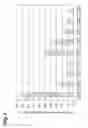
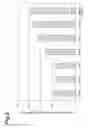
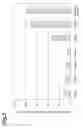

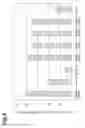
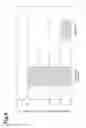
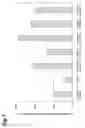
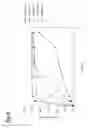


Sources:
- United States Patent and Trademark Office - verify current appl. status at the USPTO↗
Similar patent applications:
Recent applications in this class:
- » 20250057953 2025-02-20
ELECTROLYTE COMPOSITION FOR INTRODUCTION INTO A HUMAN DIGESTIVE TRACT, BALANCED IN MACROELEMENT COMPOUND AND PH WITH A MURAL CHYMUS OF INITIAL PARTS OF THE SMALL INTESTINE - » 20240350636 2024-10-24
HYPERTONIC ANTIMICROBIAL THERAPEUTIC COMPOSITIONS - » 20240350635 2024-10-24
HYPERTONIC ANTIMICROBIAL THERAPEUTIC COMPOSITIONS - » 20240342288 2024-10-17
METHODS OF ANTIBODY PRODUCTION - » 20240325541 2024-10-03
PARTICULATE SUBSTANCES COMPRISING CERAMIC PARTICLES FOR DELIVERY OF BIOMOLECULES - » 20240261407 2024-08-08
PHARMACEUTICAL COMPOSITIONS COMPRISING MELOXICAM - » 20240245776 2024-07-25
PHARMACEUTICAL COMPOSITIONS COMPRISING MELOXICAM - » 20240197887 2024-06-20
PHARMACEUTICAL COMPOSITIONS COMPRISING MELOXICAM - » 20240173415 2024-05-30
Pharmaceutical compositions comprising meloxicam - » 20240108726 2024-04-04
METHODS AND COMPOSITIONS FOR SELF-REGULATED RELEASE OF ACTIVE PHARMACEUTICAL INGREDIENT