Method for preparing a polygraphene membrane
US20180036690A1
2018-02-08
15/229,098
2016-08-04
✅ Patent granted
US 10,065,155 B2
2018-09-04
-
-
Ana Fortuna
Oblon, McClelland, Maier & Neustadt, L.L.P.
2037-01-27
Abstract:
A method for preparing a polygraphene membrane includes adding graphite and sodium nitrate into sulfuric acid to form a first mixture; adding potassium permanganate solution into the first mixture to form a second mixture; adding hydrogen peroxide solution to the second mixture to form a mixture including soluble manganese ions; filtering the mixture including soluble manganese ions to form an aqueous suspension; centrifuging the aqueous suspension; performing ultrasonication of the suspension to obtain graphene oxide sheets; acylating the graphene oxide sheets to prepare an acylated graphene oxide sheet; and polymerizing the acylated graphene oxide sheets to prepare polygraphene.
Assignee:
- KING FAHD UNIVERSITY OF PETROLEUM AND MINERALS 2,608 🇸🇦 DHAHRAN, Saudi Arabia
Applicant:
Interested in similar patents?
Get notified when new applications in this technology area are published.
Classification:
B01D71/56 » CPC main
Semi-permeable membranes for separation processes or apparatus characterised by the material; Manufacturing processes specially adapted therefor; Organic material Polyamides, e.g. polyester-amides
B01D67/0006 » CPC further
Processes specially adapted for manufacturing semi-permeable membranes for separation processes or apparatus; Organic membrane manufacture by chemical reactions
B01D67/0093 » CPC further
Processes specially adapted for manufacturing semi-permeable membranes for separation processes or apparatus; After-treatment of organic or inorganic membranes Chemical modification
B01D71/021 » CPC further
Semi-permeable membranes for separation processes or apparatus characterised by the material; Manufacturing processes specially adapted therefor; Inorganic material Carbon
B29C35/02 » CPC further
Heating, cooling or curing, e.g. crosslinking or vulcanising; Apparatus therefor Heating or curing, e.g. crosslinking or vulcanizing during moulding, e.g. in a mould
B29D7/01 » CPC further
Films or sheets
C02F1/44 » CPC further
Treatment of water, waste water, or sewage by dialysis, osmosis or reverse osmosis
B01D2323/30 » CPC further
Details relating to membrane preparation Cross-linking
B29K2081/06 » CPC further
Use of polymers having sulfur, with or without nitrogen, oxygen or carbon only, in the main chain, as moulding material PSU, i.e. polysulfones; PES, i.e. polyethersulfones or derivatives thereof
B29K2307/04 » CPC further
Use of elements other than metals as reinforcement Carbon
B29L2031/755 » CPC further
Other particular articles Membranes, diaphragms
C02F2101/12 » CPC further
Nature of the contaminant; Inorganic compounds Halogens or halogen-containing compounds
C02F2103/08 » CPC further
Nature of the water, waste water, sewage or sludge to be treated Seawater, e.g. for desalination
B01D61/00 IPC
Processes of separation using semi-permeable membranes, e.g. dialysis, osmosis, or ultrafiltration; Apparatus specially adapted therefor; Semi-permeable membranes or their production
B01D61/00 IPC
Processes of separation using semi-permeable membranes, e.g. dialysis, osmosis or ultrafiltration; Apparatus, accessories or auxiliary operations specially adapted therefor
B01D39/00 IPC
Filtering material for liquid or gaseous fluids
B01D39/14 IPC
Filtering material for liquid or gaseous fluids Other self-supporting filtering material ; Other filtering material
B05D5/00 IPC
Processes for applying liquids or other fluent materials to surfaces to obtain special surface effects, finishes or structures
B01D67/00 IPC
Processes specially adapted for manufacturing semi-permeable membranes for separation processes or apparatus
B01D71/02 IPC
Semi-permeable membranes for separation processes or apparatus characterised by the material; Manufacturing processes specially adapted therefor Inorganic material
Description
BACKGROUND OF THE INVENTION
1. Field of the Invention
The present invention relates to membranes, and particularly to a method for preparing a polygraphene membrane.
2. Description of the Related Art
Many countries, especially those in the Arabian Gulf, are seeking solutions to convert salt water, e.g., seawater, into clean drinking water. Various approaches have been used to desalinate sea water such as distillation, reverse osmosis (RO) etc. For RO, typically a filter is used, which includes a porous or semipermeable membrane made from cellulose acetate or a polyimide thin-film composite.
A graphene membrane is a single-atomic-layer-thick layer of carbon atoms, bound together to define a sheet. The thickness of a single graphene membrane, which may be referred to as a layer or a sheet, is approximately 0.2 to 0.3 nanometers (nm) thick. The carbon atoms of the graphene layer define a repeating pattern of hexagonal ring structures (benzene rings) constructed of six carbon atoms, which form a honeycomb lattice of carbon atoms. An interstitial aperture is formed by each six carbon atom ring structure in the sheet and this interstitial aperture is less than one nanometer across.
Prior studies on graphene membranes have failed to provide a membrane suitable for use as a filtration membrane in salt water desalination using reverse osmosis. In these studies, it has been found, for example, that if the interlayer spacing of graphene is reduced, the nano-capillaries cannot be filled and water cannot permeate through completely.
Thus, a method of synthesizing polygraphene membranes solving the aforementioned problems is desired.
SUMMARY OF THE INVENTION
A method for preparing a polygraphene membrane includes adding graphite and sodium nitrate into sulfuric acid to form a first mixture; adding potassium permanganate solution into the first mixture to form a second mixture; adding hydrogen peroxide solution to the second mixture to form a mixture including soluble manganese ions; filtering the mixture including soluble manganese ions to form an aqueous suspension; centrifuging the aqueous suspension; performing ultrasonication of the suspension to obtain graphene oxide sheets; acylating the graphene oxide sheets to prepare an acylated graphene oxide sheet; and polymerizing the acylated graphene oxide sheets to prepare polygraphene.
These and other features of the present invention will become readily apparent upon further review of the following specification and drawings.
BRIEF DESCRIPTION OF THE DRAWINGS
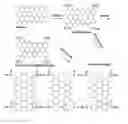
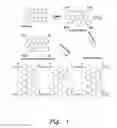
FIG. 1 is a schematic representation of the process of preparing polygraphene from graphite, according to the present teachings.
FIG. 2 is a schematic representation of a polygraphene membrane incorporating silver and titanium dioxide, according to the present teachings.
Similar reference characters denote corresponding features consistently throughout the attached drawings.
DETAILED DESCRIPTION OF THE PREFERRED EMBODIMENTS
A method for preparing a polygraphene membrane includes adding graphite and sodium nitrate into sulfuric acid to form a first mixture; adding potassium permanganate solution into the first mixture to form a second mixture; adding hydrogen peroxide solution to the second mixture to form a mixture including soluble manganese ions; filtering the mixture including soluble manganese ions to form an aqueous suspension; centrifuging the aqueous suspension; performing ultrasonication of the suspension to obtain graphene oxide sheets; acylating the graphene oxide sheets to prepare an acylated graphene oxide sheet; and polymerizing the acylated graphene oxide sheets to prepare polygraphene. The graphene oxide sheets can be acylated by mixing the graphene oxide sheets with thionyl chloride (SOCl2). The acylated graphene oxide sheets can be polymerized by mixing with amines, thiols, and/or amides. The amine can be diamine, diethylamine, dialkylamine, triamines, or bis(hexamethylene)triamine.
The polygraphene can be used to form a polygraphene filtration membrane. The polygraphene filtration membrane can include polygraphene alone or in combination with a second polymer. For example, the polygraphene can be subjected to interfacial polymerization with a second polymer to form the membrane. The polygraphene can be introduced, layer by layer, into the second polymer. The second polymer for preparing the membrane can be polyamide, polysulfone, or monomers thereof. Other suitable polymers or monomers thereof can be used. The polygraphene membrane can have numerous applications such as desalination of salt water for water purification.
Silver and/or titania can be introduced during the polymerization of the polygraphene sheets (in situ process) or during insertion of polygraphene within the second polymer. In this way, for example, silver-modified polygraphene, titanium-modified polygraphene, and/or silver/titanium-modified polygraphene can be prepared. The polygraphene filtration membrane can include one or more layers including polygraphene or modified polygraphene. The polygraphene filtration membrane can include one or more layers including polygraphene with polyamide or polysulfone. The polygraphene filtration membrane can include one or more layers including modified polygraphene with polyamide or polysulfone.
As discussed above, polymerization of graphene can include use of linkers to link the graphene or graphene oxide nanosheets. The linkers can be amines, thiols, amides, and/or derivatives thereof. The size of pores, interlayer spacing, reduction routes and paths of the graphene can be adjusted and controlled by the linker to make the membrane suitable for a specific application. For example, the membrane can be configured to separate salts, ions, metals, and/or organic pollutants, from water. Alternatively, the membrane can be configured for the separation of oil components, hydrogen, nitrogen, and/or or methane from gaseous media or gas.
The present polygraphene filtration membrane showed improved performance in terms of permeate flux and salt rejection relative to other filtration membranes. It is believed that this improvement can be attributed to the narrow dimension of the nanocapillaries and the co-existence of sp2 aromatic channels with various oxygen functionalities. The polygraphene membranes can afford excellent permeability and selectivity toward various ions based on the molecular sieving effect and diverse chemical interactions, which are favorable for filtration and separation.
FIG. 1 shows an exemplary method of preparing polygraphene. Initially, graphite is oxidized using an oxidant such as KMnO4 to prepare carboxylic acid functionalized graphene. Subsequently, the functionalized graphene is mixed with thionyl chloride (SOCl2) to undergo acylation reaction. The acylated graphene product is reacted with diamine to form polyamine/graphene or “polygraphene”. Thus, the process of polymerization of graphene includes the use of linkers to link the graphene (or graphene oxide) nanosheets. The linkers can be any amines, thiols and/or amides. The linkers can include, for example, thionyl chloride-SOCl2-acylation reaction, diamine, diethylamine, dialkylamine or triamines, bis(hexamethylene)triamine, methanethiol, ethanethiol, 1-propanethiol, 2-propanethiol, butanethiol, tert-butyl mercaptan, pentanethiols, thiophenol, dimercaptosuccinic acid, or thioacetic acid.
FIG. 2 shows the schematic representation of an exemplary polygraphene membrane including a polyamide backbone with silver and titanium dioxide dispersed therein. As discussed above, silver (Ag) and titania (TiO2) can be added during the polymerization of poly-graphene sheets, i.e., during the in-situ polymerization process, or during the insertion of poly-graphene within the second polymer after the formation of the polygraphene.
The following example will further illustrate the method for the preparation of poly-graphene based membranes and should not be construed as specifically limiting the invention described and claimed herein.
Example
Preparation of Polygraphene Membrane
Graphene was prepared from graphite by using a modified Hummers' method. Graphite and sodium nitrate were added to sulfuric acid while stirring to form a mixture. Potassium permanganate (KMnO4) was slowly introduced into this mixture. Then, the mixture was stirred continuously at room temperature. Next, deionized water containing 30% hydrogen peroxide (H2O2) was introduced in order to reduce residual permanganate to soluble manganese ions. This was followed by filtration process to remove the residuals. Then, the aqueous suspension was centrifuged. Graphene oxide sheets were obtained by bath-sonication of the filtered graphite oxide suspension. The prepared carboxylic functionalized graphene was then mixed with thionyl chloride-SOCl2-acylation reaction. The product was then mixed with diamine, diethylamine, dialkylamine triamines, or bis(hexamethylene)triamine to form polygraphene.
After the polymerization step of the graphene to make the polygraphene, the polygraphene was treated with silver, titania, or both. Polygraphene or polygraphene modified with silver and/or titania was inserted into a second polymer, layer by layer, via a modified polymerization process of the monomers such as via an interfacial polymerization process. The second polymer included polyamide or its monomers or polysulfone or its monomers. Interfacial polymerization reaction occurred from the aqueous phase of m-phenyl diamine and the organic phase of trimesoyl chloride in which poly-graphene, silver polygraphene, titania polygraphene, titania/silver polygraphene, or modified polygraphene were homogeneously dispersed.
It is to be understood that the present invention is not limited to the embodiments described above, but encompasses any and all embodiments within the scope of the following claims.
Claims
We claim:1. A method for preparing a polygraphene membrane comprising:
mixing graphite and sodium nitrate into sulfuric acid to form a first mixture;
adding potassium permanganate solution into the first mixture to form a second mixture;
adding hydrogen peroxide solution to the second mixture to form a mixture including soluble manganese ions;
filtering the mixture including soluble manganese ions to form an aqueous suspension;
centrifuging the aqueous suspension;
performing ultrasonication of the suspension to obtain graphene oxide sheets;
acylating the graphene oxide sheets to prepare an acylated graphene oxide sheet; and
polymerizing the acylated graphene oxide sheet to prepare the polygraphene membrane.
2. The method for preparing a polygraphene membrane according to claim 1, wherein the graphene oxide sheet is acylated by mixing the graphene oxide sheet with thionyl chloride (SOCl2).
3. The method for preparing a polygraphene membrane according to claim 1, wherein the acylated graphene oxide sheet is polymerized by mixing with at least one of an amine, an amine derivative, a thiol, a thiol derivative, an amide, and an amide derivative.
4. The method for preparing a polygraphene membrane according to claim 3, wherein the amine is selected from the group consisting of diamine, diethylamine, dialkylamine, triamines, and bis(hexamethylene)triamine.
5. The method for preparing a polygraphene membrane according to claim 1, further comprising polymerizing the polygraphene with a second polymer.
6. The method for preparing a polygraphene membrane according to claim 5, wherein the second polymer is polyamide or polysulfone.
7. The method for preparing a polygraphene membrane according to claim 5, further comprising introducing at least one of silver and titania during the step of polymerizing the polygraphene with a second polymer.
8. The method for preparing a polygraphene membrane according to claim 1, further comprising introducing at least one of silver and titania during the step of polymerizing the acylated graphene oxide sheet.
9. A polygraphene membrane obtained by the method of claim 1.
10. A method for desalinating salt water for water purification, comprising using the polygraphene membrane of claim 9 as a filtration membrane for the salt water.
11. The method for desalinating salt water for water purification according to claim 10, wherein the polygraphene membrane is polymerized with polyamide or polysulfone.
12. The method for desalinating salt water for water purification according to claim 11, wherein the polygraphene membrane is modified with at least one of silver and titania.
13. The method for desalinating salt water for water purification according to claim 10, wherein the acylated graphene oxide sheet is modified with at least one of silver and titania.
Images & Drawings included:

Sources:
- United States Patent and Trademark Office - verify current appl. status at the USPTO↗
Recent applications in this class:
- » 20250242313 2025-07-31
COMPOSITE FILTER MEDIA - » 20250108341 2025-04-03
INTERFACIALLY POLYMERISED POLYAMIDE MEMBRANE FOR REVERSE OSMOSIS WITH SILANE ADDITIVE - » 20250073647 2025-03-06
DIETHYLAMINO ETHYL POLYMERS AND METHODS OF USE - » 20240416292 2024-12-19
POLYAMIDE POROUS MEMBRANE AND METHOD FOR PRODUCING POLYAMIDE POROUS MEMBRANE - » 20240307831 2024-09-19
REVERSE OSMOSIS MEMBRANE AND METHOD OF PRODUCING THE SAME - » 20230338905 2023-10-26
POLYAMIDE REVERSE OSMOSIS MEMBRANE HAVING EXCELLENT DURABILITY AND ANTIFOULING PROPERTIES, AND METHOD FOR MANUFACTURING SAME - » 20230241559 2023-08-03
Reverse osmosis membrane and method of producing the same - » 20230123639 2023-04-20
ULTRAPOROUS NANOFIBER MATS AND USES THEREOF - » 20230060093 2023-02-23
HIGH-FLUX WATER PERMEABLE MEMBRANES - » 20220347633 2022-11-03
COMPOSITE BIOMIMETIC MEMBRANES WITH ARTIFICIAL WATER CHANNELS
Recent applications for this Assignee:
- » 20250292541 2025-09-18
SYSTEM AND METHOD TO DETECT ROAD ANOMALIES - » 20250289999 2025-09-18
LUMINESCENT PAINT CONTAINING UPCONVERSION PHOSPHOR - » 20250289755 2025-09-18
CURED CEMENT COMPOSITION CONTAINING A ZEOLITE - » 20250286384 2025-09-11
SYSTEM AND METHODS FOR INTELLIGENT STABILITY AND CONTROL OF FREQUENCY OF AN INTEGRATED HYBRID RENEWABLE ENERGY SYSTEM - » 20250286379 2025-09-11
LOAD FREQUENCY STABILIZATION USING OPTIMIZED MPC-(1+PIDN) CONTROLLER FOR HIGH ORDER INTERCONNECTED RENEWABLE ENERGY BASED POWER SYSTEMS - » 20250282987 2025-09-11
INCORPORATING IMIDAZOLE-BASED NANOMATERIAL INTO DRILLING FLUIDS FOR EFFECTIVE HYDROGEN SULFIDE SCAVENGING DURING DRILLING OPERATIONS - » 20250281950 2025-09-11
VESSEL CLEANING ROBOTIC SYSTEM - » 20250281910 2025-09-11
FIBROUS SILICA LANTHANUM OXIDE-BASED CATALYST FOR DRY REFORMING OF METHANE AND METHODS OF PREPARATION THEREOF - » 20250281899 2025-09-11
METAL-ORGANIC FRAMEWORKS BASED ON UiO-66 AND METHOD FOR DIRECT AIR CAPTURE OF CARBON DIOXIDE - » 20250281898 2025-09-11
METHOD FOR REMOVING AMMONIA FROM WASTEWATER