Reheatable and washproof container with insulation properties
US20180044499A1
2018-02-15
15/673,009
2017-08-09
✅ Patent granted
US 10,577,474 B2
2020-03-03
-
-
Gideon R Weinerth
Hoglund & Pamias, PSC | Roberto J. Rios
2038-04-20
Abstract:
The various embodiments herein provide an insulated container. The container comprises a body assembly and a lid assembly. The body assembly comprises of an outer plastic body and a plastic ring insert molded with an inner stainless steel (SS) container. The inner SS container has a non-woven polyester fabric acting as an insulation material. The non-woven polyester fabric is enclosed in between the outer plastic body and the inner SS container. The lid assembly comprises of a plastic top lid, an inner lid and a bowl with non-woven polyester fabric acting as insulation. The polyester fabric is sandwiched between the plastic top lid, the inner lid and the bowl. In the body assembly, the outer plastic body and the inner plastic ring is joined together using a spin welding technique. In the lid assembly the top lid, inner lid and bowl are joined together using spin welding technique.
Assignee:
- HAMILTON HOUSEWARES PVT. LTD. 1 🇮🇳 Mumbai, India
Applicant:
Interested in similar patents?
Get notified when new applications in this technology area are published.
Classification:
B32B27/02 » CPC further
Layered products comprising synthetic resin in the form of fibres or filaments
B23K20/023 » CPC further
Non-electric welding by applying impact or other pressure, with or without the application of heat, e.g. cladding or plating by means of a press ; Diffusion bonding Thermo-compression bonding
B23K20/02 IPC
Non-electric welding by applying impact or other pressure, with or without the application of heat, e.g. cladding or plating by means of a press ; Diffusion bonding
C08K3/18 » CPC main
Use of inorganic substances as compounding ingredients Oxygen-containing compounds, e.g. metal carbonyls
B32B15/09 » CPC further
Layered products comprising a layer of metal comprising metal as the main or only constituent of a layer, next to another layer of a of synthetic resin comprising polyesters
B32B27/28 » CPC further
Layered products comprising synthetic resin comprising synthetic resins not wholly covered by any one of the sub-groups -
C08K2003/2206 » CPC further
Use of inorganic substances as compounding ingredients; Oxygen-containing compounds, e.g. metal carbonyls; Oxides; Hydroxides of metals of calcium, strontium or barium
B29C66/8322 » CPC further
General aspects of processes or apparatus for joining preformed parts; General aspects of machine operations or constructions and parts thereof characterised by the movement of the joining or pressing tools; Reciprocating joining or pressing tools Joining or pressing tools reciprocating along one axis
B32B5/022 » CPC further
Layered products characterised by the non- homogeneity or physical structure, i.e. comprising a fibrous, filamentary, particulate or foam layer; Layered products characterised by having a layer differing constitutionally or physically in different parts characterised by structural features of a layer Non-woven fabric
B32B3/06 » CPC further
Layered products comprising a layer with external or internal discontinuities or unevennesses, or a layer of non-planar form ; Layered products having particular features of form characterised by features of form at particular places, e.g. in edge regions for securing layers together; for attaching the product to another member, e.g. to a support, or to another product, e.g. groove/tongue, interlocking
B32B27/32 » CPC further
Layered products comprising synthetic resin comprising polyolefins
B29C65/0672 » CPC further
Joining of preformed parts ; Apparatus therefor by heating, with or without pressure using friction, e.g. spin welding Spin welding
B32B15/18 » CPC further
Layered products comprising a layer of metal comprising iron or steel
B29C65/02 » CPC further
Joining of preformed parts ; Apparatus therefor by heating, with or without pressure
B29C65/06 IPC
Joining of preformed parts ; Apparatus therefor by heating, with or without pressure using friction, e.g. spin welding
B29C66/0242 » CPC further
General aspects of processes or apparatus for joining preformed parts; General aspects dealing with the joint area or with the area to be joined; Preparation of the material, in the area to be joined, prior to joining or welding; Thermal pre-treatments Heating, or preheating, e.g. drying
B29C66/131 » CPC further
General aspects of processes or apparatus for joining preformed parts; General aspects dealing with the joint area or with the area to be joined; Particular design of joint configurations particular design of the joint cross-sections; Single flanged joints; Fin-type joints; Single hem joints; Edge joints; Interpenetrating fingered joints; Other specific particular designs of joint cross-sections not provided for in groups - Single flanged joints, i.e. one of the parts to be joined being rigid and flanged in the joint area
B29C66/5344 » CPC further
General aspects of processes or apparatus for joining preformed parts; General aspects of joining tubular articles; General aspects of joining long products, i.e. bars or profiled elements; General aspects of joining single elements to tubular articles, hollow articles or bars; General aspects of joining several hollow-preforms to form hollow or tubular articles; Joining tubular articles, profiled elements or bars; Joining single elements to tubular articles, hollow articles or bars; Joining several hollow-preforms to form hollow or tubular articles; Joining single elements to tubular articles, hollow articles or bars; Joining single elements to open ends of tubular or hollow articles or to the ends of bars said single elements being substantially annular, i.e. of finite length, e.g. joining flanges to tube ends
B29C66/73921 » CPC further
General aspects of processes or apparatus for joining preformed parts characterised by the composition, physical properties or the structure of the material of the parts to be joined; Joining with non-plastics material characterised by the intensive physical properties of the material of the parts to be joined, by the optical properties of the material of the parts to be joined, by the extensive physical properties of the parts to be joined, by the state of the material of the parts to be joined or by the material of the parts to be joined being a thermoplastic or a thermoset characterised by the material of the parts to be joined being a thermoplastic or a thermoset characterised by the material of at least one of the parts being a thermoplastic characterised by the materials of both parts being thermoplastics
B29C66/919 » CPC further
General aspects of processes or apparatus for joining preformed parts; Measuring or controlling the joining process by measuring or controlling the temperature, the heat or the thermal flux characterised by specific temperature, heat or thermal flux values or ranges
B29C66/929 » CPC further
General aspects of processes or apparatus for joining preformed parts; Measuring or controlling the joining process by measuring or controlling the pressure, the force, the mechanical power or the displacement of the joining tools characterized by specific pressure, force, mechanical power or displacement values or ranges
B29C66/939 » CPC further
General aspects of processes or apparatus for joining preformed parts; Measuring or controlling the joining process by measuring or controlling the speed characterised by specific speed values or ranges
B29C66/93451 » CPC further
General aspects of processes or apparatus for joining preformed parts; Measuring or controlling the joining process by measuring or controlling the speed by controlling or regulating the speed by controlling or regulating the rotational speed, i.e. the speed of revolution
B29L2031/74 » CPC further
Other particular articles Domestic articles
B32B2262/02 » CPC further
Composition or structural features of fibres which form a fibrous or filamentary layer or are present as additives Synthetic macromolecular fibres
B32B2262/0276 » CPC further
Composition or structural features of fibres which form a fibrous or filamentary layer or are present as additives; Synthetic macromolecular fibres Polyester fibres
B32B2307/302 » CPC further
Properties of the layers or laminate having particular thermal properties Conductive
B32B2307/304 » CPC further
Properties of the layers or laminate having particular thermal properties Insulating
B32B2307/308 » CPC further
Properties of the layers or laminate having particular thermal properties Heat stability
B32B2307/7145 » CPC further
Properties of the layers or laminate; Other properties; Inert, i.e. inert to chemical degradation, corrosion Rot proof, resistant to bacteria, mildew, mould, fungi
B32B2307/734 » CPC further
Properties of the layers or laminate; Other properties; Dimensional properties Dimensional stability
B32B2307/752 » CPC further
Properties of the layers or laminate; Other properties Corrosion inhibitor
B32B2398/20 » CPC further
Unspecified macromolecular compounds Thermoplastics
B32B2439/00 » CPC further
Containers; Receptacles
B32B2439/40 » CPC further
Containers; Receptacles Closed containers
C08K2003/265 » CPC further
Use of inorganic substances as compounding ingredients; Oxygen-containing compounds, e.g. metal carbonyls; Acids; Salts thereof; Carbonates; Bicarbonates Calcium, strontium or barium carbonate
B65D81/38 IPC
Containers, packaging elements, or packages, for contents presenting particular transport or storage problems, or adapted to be used for non-packaging purposes after removal of contents with thermal insulation
A47J41/00 IPC
Thermally-insulated vessels, e.g. flasks, jugs, jars
B23K20/12 IPC
Non-electric welding by applying impact or other pressure, with or without the application of heat, e.g. cladding or plating the heat being generated by friction; Friction welding
B29C65/00 IPC
Joining of preformed parts ; Apparatus therefor
B32B27/20 » CPC further
Layered products comprising synthetic resin characterised by the use of special additives using fillers, pigments, thixotroping agents
B29C66/71 » CPC further
General aspects of processes or apparatus for joining preformed parts characterised by the composition, physical properties or the structure of the material of the parts to be joined; Joining with non-plastics material characterised by the composition of the plastics material of the parts to be joined
B32B2307/54 » CPC further
Properties of the layers or laminate having particular mechanical properties Yield strength; Tensile strength
B29C66/54 » CPC further
General aspects of processes or apparatus for joining preformed parts; General aspects of joining tubular articles; General aspects of joining long products, i.e. bars or profiled elements; General aspects of joining single elements to tubular articles, hollow articles or bars; General aspects of joining several hollow-preforms to form hollow or tubular articles; Joining tubular articles, profiled elements or bars; Joining single elements to tubular articles, hollow articles or bars; Joining several hollow-preforms to form hollow or tubular articles Joining several hollow-preforms, e.g. half-shells, to form hollow articles, e.g. for making balls, containers; Joining several hollow-preforms, e.g. half-cylinders, to form tubular articles
B32B15/14 » CPC further
Layered products comprising a layer of metal next to a fibrous or filamentary layer
B32B2250/03 » CPC further
Layers arrangement 3 layers
C08K3/26 » CPC further
Use of inorganic substances as compounding ingredients; Oxygen-containing compounds, e.g. metal carbonyls; Acids; Salts thereof Carbonates; Bicarbonates
B32B3/30 » CPC further
Layered products comprising a layer with external or internal discontinuities or unevennesses, or a layer of non-planar form ; Layered products having particular features of form characterised by a particular shape of the outline of the cross-section of a continuous layer; characterised by a layer with cavities or internal voids ; characterised by an apertured layer characterised by a layer formed with recesses or projections, e.g. hollows, grooves, protuberances, ribs
B32B27/12 » CPC further
Layered products comprising synthetic resin next to a fibrous or filamentary layer
B32B7/08 » CPC further
Layered products characterised by the relation between layers; Layered products characterised by the relative orientation of features between layers, or by the relative values of a measurable parameter between layers, i.e. products comprising layers having different physical, chemical or physicochemical properties; Layered products characterised by the interconnection of layers; Interconnection of layers by mechanical means
B32B5/02 IPC
Layered products characterised by the non- homogeneity or physical structure, i.e. comprising a fibrous, filamentary, particulate or foam layer; Layered products characterised by having a layer differing constitutionally or physically in different parts characterised by structural features of a layer
C08K3/22 IPC
Use of inorganic substances as compounding ingredients; Oxygen-containing compounds, e.g. metal carbonyls; Oxides; Hydroxides of metals
Description
TECHNICAL FIELD OF INVENTION
The present invention generally relates to an insulated household utility container. The present invention more particularly relates to an insulated container having layered insulation cover to give absolute sealing to the layers from penetration of external matters.
BACKGROUND OF THE INVENTION
In conventional insulated containers, the method of assembling container's sub parts is simple mechanical push snap fit and the insulation used is non-recyclable and non-eco-friendly rigid PU foam, which makes it unsafe to be used in a microwave and dishwashing machines due to its expansion properties. The expansion of the insulation material on microwave exposure results in disassembling of the apparatus.
Also, while handling liquid food items in the conventional insulated container, liquid seeps in and between the layers and open curvatures of the containers surface and gets collected therein, which is difficult to clean due to inaccessible cleaning space. The accumulated food in such spaces gives unhygienic bad odor after use.
Hence, there is a need to develop a new kind of an insulated container with new assembly techniques to be used in dishwashers and with new insulation component to be used in microwave, made from recyclable material. The new container has been designed in such manner that liquid does not seep in the container, thus avoiding accidents such as electrical hazard and unhygienic conditions.
The above mentioned shortcomings, disadvantages and problems are addressed herein, as detailed below.
OBJECT OF INVENTION
The primary object of the present invention is to provide an insulated container to be used for reheating in heating devices such as microwave or device having similar mechanism after washing.
Another object of the present invention is to adopt a spin welding and an insert moulding technique for assembling the container's parts and subparts for absolute sealing of the layers.
Another object of the present invention is to implement recyclable & non-hazardous insulation material in said container which shall not have physical, chemical and/or constructional changes when exposed to the microwave radiation.
SUMMARY OF INVENTION
The various embodiments of the present invention provide a re-heatable and wash proof container with insulation properties. The container comprises a body assembly and a lid assembly. The body assembly comprises at-least three layers namely an outer plastic body, a middle layer and an inner stainless steel with treated (SS) container. The outer plastic layer is made up of polypropylene filled with 20% mineral. The middle layer is made up of a nonwoven polyester fabric. The inner stainless steel (SS) container is insert molded between a fused layer of plastic ring, the outer plastic body and the middle layer. The lid assembly comprises a plastic top lid, an inner lid and a bowl with nonwoven polyester fabric acting as an insulation wherein the top lid is radially fused with the inner lid and the bowl. An extended rib on the lid assembly is insert-ably locked in a corresponding rib on the plastic ring in the body assembly by rotating in clockwise direction.
According to one embodiment of the present invention, the non-woven polyester fabric in said body assembly is enclosed in between the outer plastic body and the inner SS container. The enclosure is completely sealed by fusing outer plastic body with the plastic ring. The plastic ring is placed on top of the outer plastic body and the middle layer by spin welding.
According to one embodiment of the present invention, the stainless steel (SS) container is inserted in between the outer plastic body and the middle layer by using insert moulding technique.
According to one embodiment of the present invention, the plastic top lid, the inner lid and the bowl are sealed by using a plastic to plastic fusion using the spin welding technique.
According to one embodiment of the present invention, the mineral comprises carbonate based filler.
According to one embodiment of the present invention, the body assembly sustains a temperature range of 40-50° C.
According to one embodiment of the present invention, the body assembly has a heat deflection temperature of 110° C.
According to one embodiment of the present invention, a fusion temperature has been maintained at a predetermined temperature, at least in between 135 to 155° C., to make the welding of the lid and body assembly absolutely leak proof.
According to one embodiment of the present invention, the spin welding technique is performed at a pre-determined pressure range, at least in between 1.5 to 4 Pressure Bar and variable spindle rotational speed at least in between 150 to 350 RPM to achieve the leak-proof assembly.
The embodiments herein provide the body assembly comprises of at least three layers. The outer layer consist of Polypropylene filled with 20% minerals to enhance the thermal stability of container when exposed to microwave or device having similar mechanism after washing, especially in a dishwashing machine where temperature reaches 70 degree and above. The middle layer which is an insulation layer consists of nonwoven polyester fabric, which acts as a thermal insulation between the inner and outer layer. The inner layer consists of treated Stainless Steel (J4). The lid assembly comprises of a plastic top lid, an inner lid and a bowl with nonwoven polyester fabric acting as insulation. The nonwoven polyester fabric is sandwiched between the plastic top lid, the inner lid and the bowl.
The Polypropylene filled with 20% minerals is used in the outer layer helps in maintaining thermal and dimensional stability of the container. The thermal and dimensional stability is essential for using spin welding technique to assemble the parts and subparts of the container and the fabric can sustain very high temperature, especially when used in microwave and dishwashing machine. The material has a tensile strength of >25 MPA and can sustain heat deflection temperature of 100 degrees Celsius with minimum shrinkage of 1.2 to 1.3% on strong exposure. Due to these particular properties, the material has been used in the present invention so that on microwave exposure there are no physical damages, deformation, distortion, weight gain or loss in the container and the parts and subparts are not disassembled due to expansion.
The middle layer consists of nonwoven polyester fabric mainly used for thermal insulation due to its ability and capacity to withstand high temperature upto 100 degree Celsius without causing any visual, physical and chemical damages to the material. The main objective of the insulation is to provide thermal high stability and lower thermal conductivity to the container. In order to achieve the end result, numerous insulation materials were tested with, such as expanded polyethylene, expanded polystyrene etc. However, these materials failed to achieve the desired result due to its non-compatibility with container's design. The nonwoven polyester fabric was found to possess the desired properties of higher thermal stability and lower thermal conductivity and was therefore found to be most suitable. The nonwoven polyester fabric insulation is available in fabric form, which can be cut and shaped as per the containers (products) requirement. The lowest thermal conductivity of the nonwoven polyester fabric is approximately 0.08 W/m-k, due to which the container efficiently retains heat of the food. The polyester fabric insulation overcomes the problem associated with the conventional insulation. The conventional insulation used in other insulated container is rigid polyurethane which is a hydrochloroflourocarbon based insulation commonly known to cause ozone depletion.
The inner layer consists of treated Stainless Steel J4 Grade. The Stainless Steel has better surface properties and is resistant to corrosion, chemicals and salts, primarily because of presence of chromium in the steel but not limited to it, as presence of other element such as molybdenum and nitrogen also increases corrosion resistivity.
The terminals/joints of the outer Polypropylene body, the middle layer and the inner plastic ring are spin welded to bring plastic-plastic fusion by creating mechanical friction between the plastic surface by application of predetermined force and energy to generate heat energy. The heat generated in the process forges the plastics and brings about their fusion. Also the plastic top lid, the inner lid and the bowl are joined together using the spin welding technique, so that both, the body assembly and the lid assembly becomes dishwasher safe. The insert moulding fusion technique is used only at the container's top to fuse the outer plastic body, top ring and inner SS layer. Due to insert moulding fusion, the inner SS layer and top ring cannot be manually separated from the main container in any manner, which completely eliminates the possibility of seepage of liquid between the layers of the containers. The polyester fabric is enclosed in between the outer plastic body and the inner SS container.
A plurality of factors are considered while implementing spin welding technique in plastic-plastic fusion such as material type, melting temperature, viscosity, bond strength etc. In addition to these factors, it is also important to consider process parameter such as frictional force, RPM etc. The application of Spin Welding gives high quality permanent joints to the container through plastic-plastic fusion to make the container absolutely sealed to avoid water seepage between the layers of the body during washing or seepage of liquid food while handling which is evident in the conventional containers. The major problem for assembling the containers part during spin welding was higher warpage and improper welding/fusion, which was possible to overcome by substituting virgin polypropylene with mineral filled polypropylene and modifying the product design by providing energy detector for accurate welding in the present invention.
Generally, the container cannot be heated without lid as the radiowave or microwave should directly impinge on food for proper heating and metals cannot be exposed to microwave. However, in this case, the food can be heated without lid wherein the stainless steel container is directly exposed to the microwave radiation. The food in the container remains hot for long period of time and the container can be again and again re-heated without any physical or chemical damages.
In one embodiment, the inner ring is insert moulded in to the SS Container. Insert moulding is an injection process in which part of the same or dissimilar material is assembled on to the other part. Lid gets locked in the lock provided in the ring. This lock has been designed to get engaged and disengaged by rotation on lid either in clockwise or anticlockwise direction.
These and other aspects of the embodiments herein will be better appreciated and understood when considered in conjunction with the following description and the accompanying drawings. It should be understood, however, that the following descriptions, while indicating preferred embodiments and numerous specific details thereof, are given by way of illustration and not of limitation. Many changes and modifications may be made within the scope of the embodiment's herein without departing from the spirit thereof, and the embodiment's herein include all such modifications. These and other aspects of the embodiments herein will be better appreciated and understood when considered in conjunction with the following description and the accompanying drawings. It should be understood, however, that the following descriptions, while indicating preferred embodiments and numerous specific details thereof, are given by way of illustration and not of limitation. Many changes and modifications may be made within the scope of the embodiment's herein without departing from the spirit thereof, and the embodiment's herein include all such modifications.
BRIEF DESCRIPTION OF DRAWINGS
The other objects, features and advantages will occur to those skilled in the art from the following description of the preferred embodiment and the accompanying drawings in which:
FIG. 1 is a sectional front view of an insulated container lid assembly, according to one embodiment of the present invention.
FIG. 1A is the exploded view of the top lid of an insulated container lid assembly, according to one embodiment of the present invention.
FIG. 1B is the exploded view of the bowl of an insulated container lid assembly, according to one embodiment of the present invention.
FIG. 1C is the exploded view of the bottom lid of an insulated container lid assembly, according to one embodiment of the present invention..
FIG. 1D illustrates points/joints where top lid, bowl, insulation material and bottom lid are sealed because of plastic to plastic fusion using spin welding technique, according to one embodiment of the present invention.
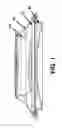
FIG. 2 is a sectional front view of an insulated container body assembly, according to one embodiment of the present invention.
FIG. 2A is the exploded view of the treated inner stainless steel container of an insulated container body assembly, according to one embodiment of the present invention.
FIG 2B is the exploded view of the outer plastic body of an insulated container body assembly, according to one embodiment of the present invention is a sectional view of an insulated body assembly, according to one embodiment of the present invention.
FIG 2C illustrates points/joints where the outer plastic body, insulation material, treated inner stainless steel container and plastic top lid are sealed by using spin welding technique and insert moulding technique, according to one embodiment of the present invention.
DETAILED DESCRIPTION OF DRAWINGS
The various embodiments herein provide a re-heatable and washable container with insulation properties. The container comprises a body assembly (FIG. 2) and a lid assembly (FIG. 1). The body assembly comprises of at least three layer of an outer plastic body (7), an insulation middle layer (83) and an inner stainless steel (SS) container (60); Wherein the inner stainless steel is insert molded between plastic ring and the other two layers. The inner SS container is wrapped around by a fabric consisting of Polypropylene filled with 20% minerals and nonwoven polyester fabric acting as an insulation material. The nonwoven polyester fabric is enclosed in between the outer plastic body and the inner SS container and is completely sealed using spin welding technique owing to which the insulation material does not come in contact with water or air and the material's shelf life remains almost constant. The said Polypropylene filled with minerals provides high mechanical stiffness, thermal stability, and dimensional stability over wide range of the temperature to the product. The lid assembly comprises of a plastic top lid (10), an inner lid (30) and a bowl (20) with non-woven polyester fabric (53) acting as insulation. The nonwoven polyester fabric is sandwiched between the plastic top lid, the inner lid and the bowl and can withstand at least 100° C. temperature. In the body assembly, the outer plastic body and the inner plastic ring (63) is joined together using a spin welding technique. Also the plastic top lid, the inner lid and the bowl are joined together using the spin welding technique, so that both, the body assembly and the lid assembly becomes absolutely sealed to any particulates, liquids and is dishwasher safe and at the same time re-heatable. The container lid is provided with an inbuilt handle (1) in the top lid and a projection in the inner lid for locking and unlocking of container lid with the container body.
The insulated container body according to the present invention comprises three main components. The three main components are a plastic outer body (73), insert molded inner ring (63) with SS container (60) and an insulation material (83) in between, assembled/joined using spin welding technique to bring plastic-plastic fusion to make the container absolutely sealed from external environment to avoid water seepage between the layers of the body during washing and avoiding unhygienic condition. The insulated container body is provided with a projection in the insert molded inner ring for locking and unlocking with the container lid. It also comprises of two side handles in the outer plastic body for the ease of handling the insulated container. The container lid and container body are designed to be able to lock and unlock easily and to avoid the slippage accidents. The container lid and the container body also have a good fitting which enhances the heat retention of the food. The Container body is capable of accommodating any kind of container lid made up of steel, plastic or glass which may or may not be insulated and may or may not be microwave and dishwasher safe.
FIG. 1 illustrates a sectional front view of an insulated container lid assembly and FIG. 2 illustrates a sectional front view of an insulated container body assembly.. With respect to FIG. 1, the insulated container lid comprises a top lid (10), a bowl (20) and an inner lid (30). The inner lid (30) comprises a small extended rib (32) which insert-ably gets locked with rib (62) of the ring (63). The top lid (10) is welded with the bowl (20) at the location 2 in the top lid and (21) in the bowl with the spin welding technique. The top lid (10) has an inbuilt handle 1 for rotating the insulated lid for locking and unlocking purpose. The top lid (10) is welded with the inner lid (30) at the locations (3) in top lid and (31) in inner lid. The insert molded inner ring (63) is welded with plastic outer body (73) at locations (61) in insert molded ring (63) and (71) in plastic outer body (73).
With respect to FIG. 1), the insulation fabric (53) is placed in between the welded lid assembly of the top lid (10), the bowl (20) and the inner lid (30).
With respect to FIG. 2, the insulation fabric (83) is wrapped around the SS container of the insert molded ring (63) and is enclosed in between the welded assembly of the insert molded plastic ring (63) and outer body (73).
Experimental Data
The present invention passed the standard reliability test wherein the visual parameters were judged after each predetermined wash cycle for physical damages, deformation, distortion, weight gain or loss of the container etc after the container was washed with water having water temperature of 72-degree C for 110 minute using Cascade detergent and dried at a temperature of 60-degree C.
ADVANTAGE OF THE INVENTION
The conventional insulated containers are neither dish washer safe nor they can be used in microwave in technical sense. The present invention provides an insulated container designed and developed in such a way that along with existing function of keeping food warm for longer period of time, it has an added advantage of reheating stored food in a microwave oven, and can be cleaned in a dish-washing machine.
The welding/fusing of plastic-plastic is easier than the other material, since plastic requires low energy and force for assembling. The implementation of spin welding technique eliminates the seepage of water inside the container. The insert moulding of ring with SS container eliminates sharp edge, in turn avoids the arcing issues common in microwave use. The assembly technique makes the product more rigid than the conventional mechanical push/snap fits.
The conventional insulated container uses rigid PU as insulation material, which is non-recyclable, hazardous to environment and non-eco-friendly. The present invention uses non-woven polyester based fabric as an insulation medium, which is recyclable and nonhazardous to environment.
The spin welding technique requires advance machineries designed to suit this specific product application. The production and assembly process requires more time than the conventional products.
Claims
1. A re-heatable and washproof container with insulation properties comprising:
a body assembly (FIG. 2), wherein the body assembly comprises at-least three layers;
an outer plastic body (73), wherein the outer plastic layer is made up of polypropylene filled with at least 20% carbonate based mineral filler;
a middle layer (83), wherein the middle layer is made up of a nonwoven polyester fabric;
an inner treated stainless steel (SS) container (60), wherein the inner treated stainless steel (SS) container is insert molded between a fused layer of plastic ring, the outer plastic body and the middle layer;
a lid assembly (FIG. 1), wherein the lid assembly comprises a plastic top lid (10), an inner lid (30) and a bowl (20) with nonwoven polyester fabric (53) acting as an insulation wherein the top lid (10) is radially fused with the inner lid (30) and the bowl (20);
wherein, an extended rib (32) on the lid assembly is insert-ably locked in a corresponding rib (62) on the plastic ring in the body assembly by rotating in clockwise direction.
2. The container as claimed in claim 1, wherein the non-woven polyester fabric (83) in said body assembly (FIG. 2) is enclosed in between the outer plastic body (73) and the inner treated SS container (60); wherein the enclosure is completely sealed by fusing outer plastic body with the plastic ring (63), wherein the plastic ring (63) is placed on top of the outer plastic body (73) and the middle layer (83) by spin welding.
3. The container as claimed in claim 1, wherein the treated stainless steel (SS) container (60) is inserted in between the outer plastic body (73) and the middle layer (83) by using insert moulding technique (82).
4. The container as claimed in claim 1, wherein the plastic top lid (10), the inner lid (30) and the bowl (20) are sealed by using a plastic to plastic fusion using the spin welding technique (51 and 52).
5. The container as claimed in claim 1, wherein the mineral comprises calcium carbonate.
6. The container as claimed in claim 1, wherein the body assembly sustains a temperature range of 40-50° C.
7. The container as claimed in claim 1, wherein the body assembly has a heat deflection temperature of 110° C.
8. The container as claimed in claim 1, wherein a fusion temperature has been maintained at a pre-determined temperature at least in between 135 to 155° C. to make the welding leak-proof for the lid and body assembly .
9. The container as claimed in claim 1, wherein the spin welding technique is performed at a pre-determined pressure range at least in between 1.5 to 4 Pressure Bar and variable spindle rotational speed at least in between 150 to 350 RPM to achieve the leak proof
Images & Drawings included:



Sources:
- United States Patent and Trademark Office - verify current appl. status at the USPTO↗
Recent applications in this class:
- » 20240174832 2024-05-30
METHOD FOR PREPARING HIGHLY STRETCHABLE CIP/PDMS COMPOSITE, HIGHLY STRETCHABLE CIP/PDMS COMPOSITE PREPARED THEREBY, AND HIGHLY STRETCHABLE EM NOISE SUPPRESSOR INCLUDING THE SAME - » 20230312866 2023-10-05
ISOLATION FILM, METHOD OF MANUFACTURING ISOLATION FILM, AND UHF RFID TAG USING ISOLATION FILM - » 20140107259 2014-04-17
PROCESS FOR MANUFACTURING A SURFACE-TREATED COMPACTED MATERIAL PROCESSABLE ON A SINGLE SCREW PLASTICS CONVERSION EQUIPMENT - » 20130190440 2013-07-25
Method for producing polymer molded article, and polymer molded article - » 20120232204 2012-09-13
Laser-transparent polyesters with inorganic salts - » 20080033091 2008-02-07
Stabilisation of aqueous solutions of homopolymers and copolymers of N-vinylpyrrolidones - » 20060036026 2006-02-16
Resin composition and manufacturing method therefor