Sports Balls with tracker
US20180050239A1
2018-02-22
15/242,790
2016-08-22
Abstract:
The present invention is a device and system for a new type of sport ball or gadget ball that turns various basketballs or other athletic balls into smart products. The ball will have internal mechanisms that are digital in nature and will help translate information about the ball and/or its position in space to referees or officials. The current invention is a ball that can be used in team play and multiple game modes for recording play by play actions between players and teams.
Interested in similar patents?
Get notified when new applications in this technology area are published.
Classification:
A63B43/004 » CPC main
Balls with special arrangements electrically conductive, e.g. for automatic arbitration
A63B2243/00 » CPC further
Specific ball sports not provided for in -
A63B37/0003 » CPC further
Solid balls; Marbles Rigid hollow balls; Golf balls
A63B43/002 » CPC further
Balls with special arrangements with special configuration, e.g. non-spherical
A63B2225/50 » CPC further
Miscellaneous features of sport apparatus, devices or equipment Wireless data transmission, e.g. by radio transmitters or telemetry
A63B2220/836 » CPC further
Measuring of physical parameters relating to sporting activity; Special sensors, transducers or devices therefor characterised by the position of the sensor Sensors arranged on the body of the user
A63B2220/833 » CPC further
Measuring of physical parameters relating to sporting activity; Special sensors, transducers or devices therefor characterised by the position of the sensor Sensors arranged on the exercise apparatus or sports implement
A63B2243/007 » CPC further
Specific ball sports not provided for in -; Rugby; American football American football
A63B2243/0025 » CPC further
Specific ball sports not provided for in - Football
A63B2243/0037 » CPC further
Specific ball sports not provided for in - Basketball
A63B2243/0095 » CPC further
Specific ball sports not provided for in - Volleyball
A63B2220/12 » CPC further
Measuring of physical parameters relating to sporting activity; Positions Absolute positions, e.g. by using GPS
A63B2244/00 » CPC further
Sports without balls
A63B71/0605 » CPC further
Games or sports accessories not covered in groups -; Indicating or scoring devices for games or players, or for other sports activities Decision makers and devices using detection means facilitating arbitration
A63B43/00 IPC
Balls with special arrangements
A63B71/06 IPC
Games or sports accessories not covered in groups - Indicating or scoring devices for games or players, or for other sports activities
A63B37/00 IPC
Balls
A63B37/00 IPC
Solid balls; Marbles Rigid hollow balls;
A63B41/00 » CPC further
Hollow inflatable balls
Description
CROSS-REFERENCES TO RELATED APPLICATIONS (IF ANY)
None
BACKGROUND
1. Field of the Invention
The invention relates to a sports ball device in particular, a ball that can be used to track a sporting events.
2. Description of Prior Art
Sports are very big in the United States, from little league all the way to the pros. Since the beginning, people have been looking for better ways to train for and keep track of a game, some way to automatically track the ball being used.
Sports franchising in the US is a large and regularly growing industry with over 860 businesses or franchises active in the industry each year. These franchises or businesses consist of those that are in major league baseball, the NFL, the NBA, as well as minor-league teams, which support these larger industries.
The keeping of statistics and reporting them as well as assistance in officiating is still needed in sports. Especially give the large amount of sports participation.
There is still room for improvement in the art.
SUMMARY OF THE INVENTION
The present invention is a device and system for a new type of sport ball or gadget ball that turns various basketballs or other athletic balls into smart products.
The objective is to have a ball with internal mechanisms that are digital in nature and will help translate information about the ball and/or its position in space to referees or officials.
Another objective is to improve team accuracy as well as game officiating.
The current invention is a ball that can be used in team play and multiple game modes for recording play by play actions between players and teams. This includes steals, turnovers, time of possession and score. These stats can be recorded using the ball and one or more sensors like wristband/fingerband that can be attached to each player. These statistics can be shared on all social network platforms.
The current invention is more efficient, effective, accurate and functional than the current art.
BRIEF DESCRIPTION OF THE DRAWINGS
Without restricting the full scope of this invention, the preferred form of this invention is illustrated in the following drawings:
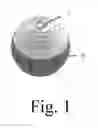
FIG. 1 shows the current invention and its main components;
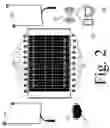
FIG. 2 shows sensors on a playing field;
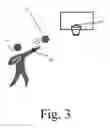
FIG. 3 displays sensors on a player's wrist;
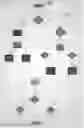
FIG. 4 shows a flowchart of the start of a game; and
FIG. 5 displays a flowchart of the application tracking a game.
DESCRIPTION OF THE PREFERRED EMBODIMENT
There are a number of significant design features and improvements incorporated within the invention.
The present invention is a device and system for a new type of sport ball or gadget ball that turns various basketballs or other athletic balls into smart products. The device, as shown if FIG. 1, is a sports ball with a electronic tracking and signing unit 5 that is within the ball 10. Any type of sports ball can be used, such as a basketball, football, soccer ball, volley ball or even a golf ball. The system would even work well with a hockey puck.
The smart ball's design features are that it is has a node the uses long lasting battery support and low energy components for maximum longevity and has wireless connectivity such as a bluetooth which allows it to contact to the sensors 50 as well as a smartphone 30 or computer device 40. It would have a durable rubberized outer shell with inner cage for support for an inflated ball like a basketball or football. It is design to be the proper certified game size and weight, regulation standard for basketball.
The object will have internal mechanisms that are digital in nature and will help translate information about the ball 10 and/or its position in space. This information can go to a computering device such as a smartphone 30 or computer 40 and to referees or officials. The object then of the ball is to improve team accuracy as well as game officiating.
The smart ball 10 can be used in team play and multiple game modes for recording play by actions between players and teams. Statistics such as steals, turnovers, time of possession, score—these stats can be recorded using the cyber-ball/gadget ball/smart ball and one or more sensors 50. These sensors 50 can be placed on or worn by the players 60 and would be place around the field or court (depending on the sport being played) in a grid pattern as shown in FIG. 2 for a football field. The sensors 50 can be worn by the players 60 like wristband or fingerbands that can be attached to each player 60 or even woven into a player's uniform as shown in FIG. 3. Each player 60 would have a unique identifier assigned to their node 10 so that the player 60 can be easily identified by the system. The players' sensors and wristbands can even display their stats for the players to review.
The ball 10 and the sensor 60 will send out signals to a receiving device 70. The receiving device 70 can be a computering device such as a computer 40 or smartphone 30. Using a programming application the is stored in non-transitory memory and run on the computing device information about the game can be received and computed using the location of the ball 10 and the players 60 as well as programmed information about the rules of the game that is being played.
For example, the sensors 50 can placed on the rim of the basketball court to measure if a shot goes in and whether or not it is a three point shot by measuring the distance the shot was from the basket and the trajectory of the ball as it was shot. In football, the system could tell if someone crosses the goal line even if that person cannot be seen by instance replay using sensors at the goal line. In soccer, it can tell if a player is offsides by seeing if the attacker is in front of the ball and the defenders. In baseball, the system can call strikes and balls with properly placed sensors.
They system will calculate and keeps teams and players' stats which can be available in real time.
Operations:
In the preferred embodiment, the user would hit or start bouncing the ball 10 to activate the Bluetooth censor. It would sync up with the sensors 50 and with the computering device to track the game and the ball 10 movements. It would compile the statistics based on the game being played, its rules and the actions of the ball 10. It would go into suspend mode or turn itself off after a set time of inactivity.
As shown in FIG. 4, the program computer application (app) stored in non-transitory memory is started 110. Next the type of game is selected 120 and whether or not it is a team game 130, 140. The rules of the game are loaded into the system and the names of the players are stored with their unique sensors. The game is started. The application keeps track of the game's play-by-play. The games' statistics are available for display while the game is ongoing and after it ends. The application ends when the game is over.
FIG. 5 displays a sample process for a game. In this example, it is a solo basketball game to the score of 32 points. It starts 200 and sees if the player has the ball 210 based on the unit 5 and the unique sensor 50 assigned to the player 60. Does the player 60 turns the ball over 210 or shoot the ball 215. If the player 50 turns the ball over, the player's time of possession is recorded 220, the play is recorded as a turnover 221 and as a steal 222. The data is stored 240. If it is a shot 215, the time of possession is recorded 217. If it goes in 216 it records the score for either 2 points or 3 points 230 and the data is stored 240. If it doesn't go in 218 the player 60 misses the shot 235 and it goes back to start 200. After the data is stored 240, the application will check to see if either player has reached a score of thirty-two 250. If yes, 252 then the games ends 260. If no 251, then it sees if the player 60 has the ball 205.
Advantages
The invention allows stats that can be viewed using the application and shared across social networks. The system is more affordable than similar products in the market. It can keep score and other valuable stats that can be used strategically and can track a game with a Live feed, displaying in words play-by-play what is going on. The information provided by the system and ball can provide useful information to help referees in a game, such as determining who last touched the ball in hard to determine situations or if a player was offsides in football or soccer. It even allows players in pick-up games or games with no referees or stat keepers track their own stats in the gym and keeps games accurate.
Although the present invention has been described in considerable detail with reference to certain preferred versions thereof, other versions are possible. Therefore, the point and scope of the appended claims should not be limited to the description of the preferred versions contained herein.
As to a further discussion of the manner of usage and operation of the present invention, the same should be apparent from the above description. Accordingly, no further discussion relating to the manner of usage and operation will be provided. With respect to the above description, it is to be realized that the optimum dimensional relationships for the parts of the invention, to include variations in size, materials, shape, form, function and manner of operation, assembly and use, are deemed readily apparent and obvious to one skilled in the art, and all equivalent relationships to those illustrated in the drawings and described in the specification are intended to be encompassed by the present invention.
Therefore, the foregoing is considered as illustrative only of the principles of the invention. Further, since numerous modifications and changes will readily occur to those skilled in the art, it is not desired to limit the invention to the exact construction and operation shown and described, and accordingly, all suitable modifications and equivalents may be resorted to, falling within the scope of the invention.
Claims
That which is claimed is:1. A device comprising:
a ball with a node with a communication function.
2. The device as recited in claim 1, further comprising:
where the communication function is bluetooth.
3. The device as recited in claim 1, further comprising:
where the ball communicates with a plurality of sensors.
4. The device as recited in claim 3, further comprising:
where a plurality of sensors are worn by a player.
5. The device as recited in claim 4, further comprising:
where each player has a plurality of sensors.
6. The device as recited in claim 4, further comprising:
where the sensors are unique to that player.
7. The device as recited in claim 5, further comprising:
where the sensors are unique to each player.
8. The device as recited in claim 1, further comprising:
where the ball communicates data to a computer device.
9. The device as recited in claim 8, further comprising:
where the data is the location of the ball.
10. The device as recited in claim 8, further comprising:
where the data about the game.
11. The device as recited in claim 8, further comprising:
where computering device communicates with a plurality of sensors.
12. The device as recited in claim 8, further comprising:
where computering device has data in non-transitory memory about the rules of the game.
13. The device as recited in claim 12, further comprising:
comparing the rules of the game against the movement and location of the ball and sensors.
14. The device as recited in claim 13, further comprising:
calculating statistics and scores based on the data received.
15. The device as recited in claim 1, further comprising:
having the ball be one of a set of a basketball, football, soccer ball, volley ball, golf ball or hockey puck.
16. A device comprising:
a ball with a node with a communication function where the communication function is bluetooth where the ball communicates with a plurality of sensors.
17. The device as recited in claim 16, further comprising:
where a plurality of sensors are worn by a player.
18. The device as recited in claim 17, further comprising:
where the sensors are unique to that player.
19. The device as recited in claim 1, further comprising:
where the ball communicates data to a computer device.
Images & Drawings included:
Sources:
- United States Patent and Trademark Office - verify current appl. status at the USPTO↗
Recent applications in this class:
- » 20250018251 2025-01-16
SYSTEMS AND METHODS FOR TRACKING SPORTS BALLS CONFIGURED WITH ELECTRONIC COMPONENTS - » 20250010145 2025-01-09
SPORTS BALL WITH SUSPENSION SYSTEM - » 20240359063 2024-10-31
Ball Tracking and Method of Tracking Ball Location During Play - » 20240359062 2024-10-31
Wireless Golf Ball Method of Manufacture - » 20240245959 2024-07-25
GOLF BALL WITH INTEGRATED ELECTRONICS - » 20240157202 2024-05-16
METHOD AND SMART BALL FOR GENERATING AN AUDIO FEEDBACK FOR A USER INTERACTING WITH THE SMART BALL - » 20240042284 2024-02-08
METHOD FOR INCORPORATING A TRACKING DEVICE WITHIN A BODY OF ELASTOMERIC MATERIAL - » 20240001203 2024-01-04
Sports ball with suspension system - » 20230338782 2023-10-26
SMART SPORTS EQUIPMENT AND INTEGRATED PLATFORM - » 20230135276 2023-05-04
GAME BALL TRACKING SYSTEM