Shelf Tag Apparatus, Systems, and Methods for Inventory Picking and Tracking
US20180068258A1
2018-03-08
15/469,479
2017-03-24
Abstract:
The present invention is directed to systems and methods of shelf tag apparatus, systems, and processes facilitating inventory picking and inventory tracking. An exemplary system comprises a server module and a shelf tag. The server module has an inventory database, the inventory database configured to store position information of defined regions of shelving, shelf tag to defined region pairing information, and inventory identifier to defined region pairing information, and portable computer to inventory identifier pairing information.
The shelf tag comprises a processor, memory, a wireless network adapter, and a pick indicator. The server module provides an interface to receive and store defined region to shelf tag pairing information in the inventory database. The server module provides an interface to receive and store portable computer to order pairing information in the inventory database. The server module is configured to receive an order, retrieve an inventory identifier for an entry in the order, and retrieve the defined region corresponding to the inventory identifier. The server module is configured to send a control signal to the shelf tag corresponding to the defined region, the pick indicator activating a pick indicator message in response to said control signal.
Interested in similar patents?
Get notified when new applications in this technology area are published.
Classification:
G06Q10/087 » CPC main
Administration; Management; Logistics, e.g. warehousing, loading, distribution or shipping; Inventory or stock management, e.g. order filling, procurement or balancing against orders Inventory or stock management, e.g. order filling, procurement, balancing against orders
G06K7/10386 » CPC further
Methods or arrangements for sensing record carriers, e.g. for reading patterns by electromagnetic radiation, e.g. optical sensing; by corpuscular radiation sensing by radiation using wavelengths larger than 0.1 mm, e.g. radio-waves or microwaves the interrogation device being adapted for miscellaneous applications the interrogation device being adapted for being moveable the interrogation device being of the portable or hand-handheld type, e.g. incorporated in ubiquitous hand-held devices such as PDA or mobile phone, or in the form of a portable dedicated RFID reader
G06Q10/08 IPC
Administration; Management Logistics, e.g. warehousing, loading, distribution or shipping; Inventory or stock management, e.g. order filling, procurement or balancing against orders
G06K7/10 IPC
Methods or arrangements for sensing record carriers, e.g. for reading patterns by electromagnetic radiation, e.g. optical sensing; by corpuscular radiation
Description
FIELD OF THE INVENTION
The invention relates generally to order picking and inventory, and more particularly, to apparatus, systems, and methods for a shelf tag for order picking and inventory tracking.
BACKGROUND
The order picking operation is one of the key steps in the fulfillment process. It consists of taking and collecting inventory of specified quantities to complete a customer's order prior to shipment. In various types of order picking, the order picker(s) move about the warehouse to shelving within the warehouse in order to collect the inventory necessary for one or more orders. There are often errors in order picking and inventory tracking due to the harried activity and difficulty in locating the inventory. Those difficulty and errors, along with other factors, contribute to the time and error rate in order picking. This invention addresses these and other issues.
SUMMARY
The present invention is directed to systems and methods of shelf tag apparatus, systems, and processes facilitating inventory picking and inventory tracking. An exemplary system comprises a server module and a shelf tag. The server module has an inventory database, the inventory database configured to store position information of defined regions of shelving, shelf tag to defined region pairing information, and inventory identifier to defined region pairing information, and portable computer to inventory identifier pairing information.
The shelf tag comprises a processor, memory, a wireless network adapter, and a pick indicator. The server module provides an interface to receive and store defined region to shelf tag pairing information in the inventory database. The server module provides an interface to receive and store portable computer to order pairing information in the inventory database. The server module is configured to receive an order, retrieve an inventory identifier for an entry in the order, and retrieve the defined region corresponding to the inventory identifier. The server module is configured to send a control signal to the shelf tag corresponding to the defined region, the pick indicator activating a pick indicator message in response to said control signal.
These and other features, aspects, and advantages of the invention will become better understood with reference to the following description, appended claims, and accompanying drawings.
BRIEF DESCRIPTION OF THE DRAWINGS
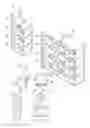
FIG. 1 depicts a diagram of an embodiment of a system according to the current invention as it may exist in operation;
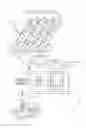
FIG. 2 depicts a diagram of an embodiment of a system according to the current invention as it may exist in operation;
FIG. 3 depicts a representative inventory item;
FIG. 4 depicts an embodiment of a shelf tag according to the current invention;
FIG. 5A depicts a representative shelf tag deployment within a facility;
FIG. 5B depicts an alternate representative shelf tag deployment within a facility;
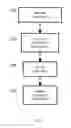
FIG. 6 depicts a flowchart of an inbound inventory process according to the current invention;
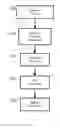
FIG. 7 depicts a flowchart of an outbound inventory process according to the current invention;
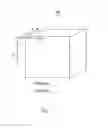
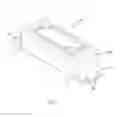
FIGS. 8A and 8B depicts a housing configuration of an embodiment of a system according to the current invention;
FIGS. 8C and 8D depicts the housing configuration of FIGS. 8A and 8B in various states;
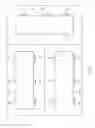
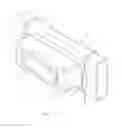
FIGS. 9A and 9B depicts an alternate housing configuration of an embodiment of a system according to the current invention; and
FIG. 10 depicts a housing configuration as it may exist in usage.
DETAILED DESCRIPTION
Detailed descriptions of the preferred embodiment are provided herein. It is to be understood, however, that the present invention may be embodied in various forms. Therefore, specific details disclosed herein are not to be interpreted as limiting, but rather as a basis for the claims and as a representative basis for teaching one skilled in the art to employ the present invention in virtually any appropriately detailed system, structure or manner.
The current invention is directed to apparatus, systems, and methods of a shelf tag for use in inventory picking and inventory tracking. FIGS. 1 and 2 depict a block diagram of embodiments of systems according to the current invention as it may exist in operation, where a customer 08 initiates an order 38 to the system for processing. The depicted system includes a server 12 having a server module 13 which includes an inventory database 30. The inventory is stored on shelving 42 within the facility. Shelf tags 20 are disposed at defined regions 40 within the shelving 42. A worker 16 employs a portable computer 17 having a server module 15 to facilitate picking the inventory.
Shelving 42 is operable to store inventory, such as pallets, carton, boxes, or the like. Common shelving 42 includes multiple parallel vertical levels having a configured height, where inventory may be stored on each vertical level. Each vertical level has a total width x. The shelving 42 is segmented into defined regions 40. As illustrated, each vertical level is further divided horizontally to present a plurality of compartments 40. As used within this specification, each compartment 40 is defined region 40, although virtual or physical segmenting of shelving 42 is within the scope of this invention for a defined region 40. That is to say that the virtual segmenting may or may not coincide with the physical segmenting. Each compartment 40 has a defined width, height, and depth. It should again be noted that FIG. 2 is not to scale and that various shelving 42 can be placed within the facility spaced apart at varying distances causing workers to traverse various walkways 04 to access the necessary compartments 40.
FIG. 3 illustrates a representative inventory item 06. Inventory items 06 can include items such as finished goods (those goods ready for sale to customers), work in process (materials and components that have begun their transformation to finished goods), raw materials (materials and components scheduled for use in making a product), or other goods. The items may be boxed, loose, or in other forms. Particular inventory items can have a given area, volume, weight, weight per unit volume, or other associated dimensional or weight measures. Distinct inventory items can have inventory identifiers such as stock keeping unit (SKU) or other identifier known in the art.
An illustrated embodiment includes a server 12. In exemplary configuration, a server module 13 is disposed on the server 12. The server 12 is a computer operable to carry out the instructions of the server module 13, process orders 38, and other operations. As used in the present disclosure, the term computer is intended to encompass any suitable processing device. For example, although FIG. 1 illustrates a single server 12, the environment may be implemented using one or more servers 12, including a server pool. Indeed, a server and client system may be any computer or processing device such as, for example, a blade server, general-purpose personal computer (PC), Macintosh, workstation, UNIX-based workstation, mobile phone, tablet, or any other suitable device. In other words, the present disclosure contemplates computers other than general purpose computers, as well as computers without conventional operating systems.
The computer includes a processor and memory for storing data and program instructions. Memory may include any memory or database and may take the form of volatile or non-volatile memory including, without limitation, magnetic media, optical media, random access memory (RAM), read-only memory (ROM), removable media, or any other suitable local or remote memory component. Memory may store various objects or data, including source code, object code, classes, applications, databases, repositories storing inventory, shelving, and any other appropriate information including any parameters, variables, algorithms, instructions, rules, constraints, or references thereto associated with the purposes of server 12. Further, a computer may be adapted to execute various operating systems, including Linux, UNIX, Windows, Mac OS, or other suitable operating system.
Server 12 is one that stores one or more applications, where at least a portion of the applications may be hosted applications executed via requests and responses sent to users or clients and communicably coupled to the illustrated environment of FIG. 1. In some instances, the server 12 may comprise a web server or be communicably coupled with a web server accessed and operated over network 18.
The portable computer 17 is a computer, as previously disclosed, with a portable form factor that can be readily moved about a facility, such as a tablet or smartphone. In exemplary configuration, a portable computer module 15 is disposed on a portable computer 17. In exemplary operation, a portable computer module 15 is assigned an identifier and associated with a worker 16.
In exemplary configurations, the system includes specialized storage in the form of an inventory database 30 configured to store inventory and shelving 42 description data. In exemplary configuration, shelving content data, inventory data, user data, are received and stored. One skilled in the art would appreciated that the data may reside in one or more databases, tables, or computers. Representative suitable database systems include MySQL, PostgreSQL, SQLite, Microsoft SQL Server, Oracle, or dBASE. In certain configurations, the inventory database 30 or portions thereof are distributed or synchronized.
In preparation for runtime, the inventory database 30 in memory is initialized and populated. Exemplary databases include a table having rows, “slices,” or other data structures or formats created to store the inventory data. Based on the received shelving configuration, the databases are initialized and pre-populated. General shelving 42 information such as the x axis minimum position, the x axis maximum position, the y axis minimum position, and the y axis maximum position are received and stored. Compartment 40 identifiers are assigned, and the compartment 40 identifier, compartment 40 position, and compartment 40 dimensions, and other information is stored.
FIG. 4 illustrates a representative shelf tag 20. Certain embodiments of systems include one or more shelf tags 20 for association with a compartment 40 of the shelving 42. Each shelf tag 20 is secured to a compartment 40 and paired with the compartment 40. An exemplary shelf tag 20 includes a processor, memory, network adapter, a screen 22, and inputs 24, and a fastener 68 enclosed in housing. A suitable network adapter is wired or wireless one, enabling communication with the server 12, a worker's portable computer 17, or other shelf tags 20. The screen 22 is operable to display output from the shelf tag 20. The shelf tag 20 fastener 68 is operable to secure the shelf tag 20 to the associated compartment 40. Suitable fasteners 68 include hook and loop, standoffs, hangers, and the like.
Communication among computers 12 17 and shelf tags 20 is facilitated by a network 18. Network 18 may also include one or more wide area networks (WANs), local area networks (LANs), personal area networks (PANs), mesh networks, all or a portion of the Internet, and/or any other communication system or systems at one or more locations. Network 18 may be all or a portion of an enterprise or secured network, while in another instance at least a portion of the network 18 may represent a connection to the Internet. Further, all or a portion of network 18 may comprise either a wireline or wireless link. In other words, network 18 encompasses any internal or external network, networks, sub-network, or combination thereof operable to facilitate communications between various computing components inside and outside the illustrated environment. The network 18 may communicate by, for example, Bluetooth, Zigbee, WiFi, cellular, Internet Protocol (IP) packets, Frame Relay frames, Asynchronous Transfer Mode cells, voice, video, data, and other suitable information between network addresses. Various communications can occur over the network 18. For example, a server 12 may directly communicate with a shelf tag 20, a server 12 may directly communicate with a portable computer 17, a portable computer 17 may directly communicate with a shelf tag 20, a server 12 may communicate with a shelf tag 20 with a portable computer 17 as an intermediary.
Certain embodiments implement an improved version of the Bluetooth protocol. Select extracts of the Bluetooth protocol are annexed and incorporated by reference. Bluetooth low energy employs two multiple access schemes: Frequency Division Multiple Access (FDMA) and Time Division Multiple Access (TDMA). Forty physical channels, separated by 2 MHz, are used in the FDMA scheme. Three of these channels are used as advertising channels, and the remaining 37 are used as data channels. The physical channel is sub-divided into time units known as events. Data is transmitted between low energy devices in packets that are positioned in these events. There are two types of events: advertising and connection events. The advertising channel carries the device's discovery and connection establishment information. After a connection is established, a data channel provides link control data and payload for higher level protocols and further action.
In common operation, a shelf tag 20 acts as an advertiser and a server 12, portable computer 17, or another shelf tag 20 act as the receiver. Bluetooth devices use the advertising procedure and scanning procedure to discover nearby devices, to be discovered by devices in a given area, or to form a connection with another Bluetooth device. The discovery procedure and connection procedure are both asymmetrical. A first Bluetooth device needs to listen for devices advertising scannable or connectable advertising events, while another Bluetooth device is actively broadcasting scannable or connectable advertising events over the advertising broadcast physical channel. An advertisement transmission has a minimum transmission time of about 3 milliseconds.
Advertising intervals can be set in a range of 20 milliseconds to 10 seconds. It specifies the interval between consecutive advertising packets. The existing Bluetooth protocol employs a common advertising interval for devices in the same environment, limiting the number of successful connections where there are a high number of advertisers, without resorting to retransmission, which requires additional power or CPU cycles. Certain configurations of the current invention employ a varying advertising interval for the shelf tags 20 in the same environment. More specifically, among a plurality of shelf tags deployed to an environment, a first shelf tag 20 or set of shelf tags 20 are configured with a first configured advertising interval and a second shelf tag 20 or set of shelf tags 20 are configured with a second advertising interval, resulting in effective prioritized connections without additional battery or CPU cycles.
Certain embodiments of the shelf tags 20 are powered by batteries. In certain configurations, the battery level is transmitted by the shelf tag 20 over the network. Certain embodiments of the shelf tag 20 include a housing 60 arrangement for battery access. FIGS. 8A-8D illustrate a first housing 60 configuration. The housing 60 has an upper portion 70, a lower portion 72, a proximal end 74, and a distal end 76. The housing 60 bounds an interior section of the shelf tag 20. The housing 60 further includes a tray 62 dimensioned for slidable travel from the proximal end 74 of the housing 60 to the distal end 76 of the housing 60. The tray 62 includes a recess dimensioned for receipt of one or more batteries 02. The tray 62 optionally further includes an access tab 67 on its proximal end 74. The proximal end 74 of the housing 60 includes a flange 78 on the extending outwardly and from the lower end 72 of the housing 60, whereby the tray 62 may slidably travel past it. The housing 60 includes a mount 69 in the lower section 72 of the housing 60 for receipt of a fastener 68. The illustrated mount 69 is an aperture disposed in the flange 78. In use of this housing 60 configuration, the user inserts batteries 02 in the recess of the tray 62 and pushes the access tab 67 such that the tray 67 slides from the open position of FIG. 8C to the position of FIG. 8D to a completely closed position. FIG. 10 shows the housing 60 mounted to shelving 42 with a fastener 68 applied to the mount 69.
FIGS. 9A and 9B illustrate a second housing 60 configuration. The housing 60 has an upper portion 70, a lower portion 72, a proximal end 74, and a distal end 76. The housing 60 bounds an interior section of the shelf tag 20. The interior section of the housing 60 is dimensioned for receipt of one or more batteries 02. The interior section of the housing 60 further includes one or more secured spring contacts 64. The spring contacts 64 are tension biased, providing an opposing force to a battery 02 in contact with it. The housing 60 further includes a removable access door 66 on its proximal end 74. The proximal end 74 of the housing 60 includes a flange 78 on the extending outwardly and from the lower end 72 of the housing 60, whereby the access door 66 may slidably travel past it. The housing 60 includes a mount 69 in the lower section 72 of the housing 60 for receipt of a fastener 68. The illustrated mount 69 is an aperture disposed in the flange 78. In use of this housing 60 configuration, the user inserts batteries 02 in the interior section of the housing 60, engaging the battery 02 pole against the spring contact 64, loading it, and engages the access door 66 to enclose the battery 02 therein. FIG. 10 shows the housing 60 mounted to shelving 42 with a fastener 68 applied to the mount 69.
In certain embodiments, the processor of the shelf tag 20 is implemented with an instruction set for picking and inventory operations. Representative instructions include, but are not limited to, increment local inventory, decrement local inventory, transmit local inventory count, display local inventory count, and display pick indicator alerts.
The illustrated shelf tag 20 includes a user interface 24 for worker 16 interaction, such as picking and inbound or outbound inventory operations. The user interface comprises may include a plurality of configurable customizable frames or views having interactive fields, pull-down lists, and buttons operated by the user. For example, the user interface may provide interactive elements that allow a user to select from a list of commands, descriptors, or attributes for input into a data field displayed in it. The user interface contemplates any suitable user interface, such as a combination of a text interface, web browser, and command line interface that processes information in the platform and efficiently presents the results to the user visually. An exemplary user interface includes a pick indicator 27. The pick indicator 27 is an element which indicate pick activity to the worker 16 at the compartment 40 with which the shelf tag 40 is associated. Representative suitable pick indicators 27 include a display, light, speaker, or other pick indicators, enabling light signals, text messages, insignia messages, flash sequences, video messages, audio messages, and other pick indicator messages. Representative light messages include turning on or off different colors, or a flash sequence. Representative text messages include an inventory identifier such as a SKU and quantity. Representative video or insignia messages include a depiction of the inventory. Representative audio messages include an inventory identifier such as a SKU and quantity.
A pick indicator 27 is activated in response to a control signal from the server module 13. In other configurations, a pick indicator 27 is activated in response to a control signal from the portable computer module 15. It should be understood that certain processes within this specification can be performed by either the server module 13 or the portable computer module 15. The control signal can include pick indicator 27 instructions and display information. In certain configurations, a control signal includes an on/off signal. In certain configurations, a control signal includes pick indicator message text for display.
An exemplary user interface 24 includes button inputs 24 which provide confirmation of inbound inventory and outbound inventory. The illustrated input buttons 24 set includes an inventory increment button 24 (shown as “+”), an inventory decrement button 24 (shown as “−”), and a confirm pick button 24 (shown as check mark). Upon worker 16 engagement with the inputs 24, the shelf tag 20 stores the event input. In certain configurations, the local inventory count is incremented or decremented in local memory, such as a local portions of the inventory database 30, or the input is transmitted to the server 12 for inventory updates to the inventory.
The local inventory database 30 or portions thereof may be queried via the user interface 24, via a portable computer 17, via the server 12, or other computers over the network. For example, server 12 may synchronize with the local inventory database 30 of the shelf tag 20. In certain configurations, the server 12 directly synchronizes with the shelf tag 20. In other configurations, the server 12 synchronizes with the shelf tag 20, with the portable computer 17 as an intermediary. In certain configurations, the synchronization is bi-directional. In other configurations, the server 12 data of the inventory database 30 is the master copy or the shelf tag 20 data of the inventory database 30 is the master copy. The server 12 may query one or more local inventory databases 30 of shelf tags 20 for comparison with its inventory database for the compartment for inventory analysis, shrinkage analysis, and the like. It is within the scope of this invention to trigger synchronization upon inventory addition or removal from the compartment 40, upon interaction with a portable computer module 15, upon interaction with a server module 15, upon a configured time or interval, or other suitable triggers.
The system is setup for operation. FIG. 6 depicts an exemplary process for inbound inventory processing. At step 110 inventory is received at the facility. At step 120, the inventory type is information received. At step 130, the inventory is placed on the shelving. At step 140, the inventory database is updated. More consideration will be given to each of the steps below.
The shelving 42 is deployed in the facility. A particular facility will have a need for a number of units of storage for a particular location. Accordingly, it will deploy a selected number of shelves 42 having a selected number of vertical levels, a selected number of horizontal columns, and a compartment 40 volume. The system is deployed to the facility. The inventory database 30 is initialized, with the shelving compartment 40 identifier, compartment 40 positions, compartment 40 dimensions, inventory identifiers, and other information being stored. A shelf tag 20 is deployed to each compartment 40. The shelf tag 20 to compartment 40 association is stored in the inventory database 30.
At step 110 inventory is received at the facility. The inventory is segregated by type. At step 120, the inventory identifiers are type(s) retrieved for each type of inventory. The designated compartment 40 for the inventory identifiers is retrieved. In certain processes, volume or weight measure of the particular inventory is received and stored. At step 130, the inventory is placed in the shelving 42 in the compartments 40 designated for the corresponding inventory identifier. At step 140, the local inventory count is updated.
FIG. 7 depicts an exemplary process for outbound inventory processing. At step 210, an order is received. At step 220, the inventory positions for the order are received. At step 230, the pick list is generated. At step 240, the inventory is picked. At step 250, the inventory database is updated. More consideration will be given to each of the steps below.
At step 210, an order requesting merchandise is received. A customer 08 places an order over the network 18. The order 38 includes a list of items requested from inventory. At step 230, the pick list 38 is generated. As illustrated, the pick list is the same as the order 38. The order 38 contains the quantity and item type of inventory to be retrieved.
At step 220, the positions for the items in the order 38 are received. The server module 13 retrieves the order 38 and parses the items and retrieves the associated item identifiers from the inventory database 30. The server module 13 further retrieves the compartment 40 information for the associated item identifiers, including the compartment 40 position. In certain configurations, the weight and/or volume measures are retrieved for the associated item identifiers and displayed individually or in total. To illustrate, the calculate the total volume of an order for display to a worker 16 or calculate the total weight of an order for display to a worker 16. In certain configurations, display is conditioned upon a threshold volume or weight. The server module 13 transmits the compartment 40 position to the portable computer module 15 receiving the order 38. The server module 13 transmits or portable computer module 15 transmits control signals to the shelf tags 20 corresponding to the compartment 40 having the associated item identifiers for the order 38. In response, the shelf tag 20 activates the pick indicator 27, as illustrated in FIGS. 3 and 5B. Exemplary pick indicators 27 alerts are customized according to the identifier of the portable computer module 15. For example, where the pick indicator 27 is a light, the pick indicator 27 message's color or flash sequence may be unique to the portable computer module 15 associated with the order 38. For example, where the pick indicator 27 message is a text message, the pick indicator 27 message's text message may be unique to the portable computer module 15 associated with the order 38. It can include retrieval instructions such as “SKU nnn, retrieve n items.”
At step 240, the inventory is picked. After the worker 16 removes the inventory from the compartment 40, the worker 16 presses the inventory pick confirmation button 24, updating the local inventory count. Periodically, the local inventory count may be compared with the remote inventory count.
While the foregoing detailed description has disclosed several embodiments of the invention, it is to be understood that the above description is illustrative only and not limiting of the disclosed invention. It will be appreciated that the discussed embodiments and other unmentioned embodiments may be within the scope of the invention.
Insofar as the description above and the accompanying drawing disclose any additional subject matter that is not within the scope of the single claim below, the inventions are not dedicated to the public and the right to file one or more applications to claim such additional inventions is reserved.
Claims
What is claimed is:1. A shelf tag system facilitating inventory picking and inventory tracking, said system comprising:
a shelf tag comprising a processor, memory, a wireless network adapter, and an inventory database;
said inventory database configured to store shelf tag to defined region pairing information;
said inventory database configured to store position information of defined regions of shelving,
said inventory database configured to store inventory information associated with said defined region of shelving;
whereby said shelf tag is affixed to a defined region.
2. The shelf tag of claim 1, wherein said wireless network adapter is a WiFi radio configured with the WiFi protocol.
3. The shelf tag of claim 1, wherein said wireless network adapter is a cellular radio configured with the cellular protocol.
4. The shelf tag of claim 1, wherein said wireless network adapter is a Bluetooth radio configured with the Bluetooth protocol.
5. The shelf tag of claim 1, wherein said wireless network adapter is a Bluetooth radio configured with the Bluetooth protocol having a first advertising interval;
a second similarly configured shelf tag wherein said wireless network adapter is a Bluetooth radio configured with the Bluetooth protocol having a second advertising interval.
6. The shelf tag of claim 1, wherein said shelf tag includes a battery.
7. The shelf tag of claim 6, wherein said shelf tag stores the current battery level.
8. The shelf tag of claim 6, wherein said shelf tag transmits the current battery level.
9. The shelf tag of claim 1, further comprising a detachable mount.
10. The shelf tag of claim 1, wherein said shelf tag includes housing for battery access, the housing bounding an interior section of said shelf tag;
said housing further comprising a tray dimensioned for slidable receipt in said interior section;
said tray including a recess dimensioned for receipt of a battery; and
a flange extending outwardly from the lower section of the housing including a mount.
11. The shelf tag of claim 1, wherein said shelf tag includes housing for battery access, the housing bounding an interior section of said shelf tag;
said housing further comprising an interior section dimensioned for receipt of a battery;
a battery spring contact secured in said interior section, said battery spring contact mounted with bias towards the exterior of said housing; and
a flange extending outwardly from the lower section of the housing including a mount.
12. The shelf tag of claim 1, wherein said shelf tags further includes an inventory pick confirmation input.
13. The shelf tag of claim 1, wherein said shelf tag transmits an inventory decrement signal upon an inventory pick confirmation input.
14. The shelf tag of claim 12, wherein said shelf tag is configured to synchronize inventory databases on an inventory confirmation input.
15. The shelf tag of claim 1, wherein said shelf tag is configured to synchronize inventory databases on a portable computer module inquiry.
16. The shelf tag of claim 1, wherein said shelf tag is configured to synchronize inventory databases on a server computer module inquiry.
17. The shelf tag of claim 16, wherein said server computer module inquiry is communicated from said server computer module to said portable computer module to said shelf tag.
18. The shelf tag of claim 1, wherein said shelf tag is configured to receive a pick indicator message from a portable computer module.
19. The shelf tag of claim 1, wherein said shelf tag is configured to receive a pick indicator message from a server computer module.
20. The shelf tag of claim 19, wherein said pick indicator message is communicated from said server computer module to said portable computer module to said shelf tag.
21. The shelf tag of claim 1, wherein said inventory database is configured for receipt of the weight information of inventory items.
22. The shelf tag of claim 1, wherein said inventory database is configured for receipt of the dimensional information of inventory items.
23. A method of facilitating inventory picking and inventory tracking, the steps comprising:
providing a shelf tag, said shelf comprising a processor, memory, a wireless network adapter, and an inventory database;
said inventory database configured to store shelf tag to defined region pairing information;
said inventory database configured to store position information of defined regions of shelving,
said inventory database configured to store inventory within said defined region of shelving;
affixing said shelf tag to said defined region.
24. The method of claim 23, said wireless network adapter is a Bluetooth radio configured with the Bluetooth protocol having a first advertising interval;
providing a second similarly configured shelf tag wherein said wireless network adapter is a Bluetooth radio configured with the Bluetooth protocol having a second advertising interval.
25. The method of claim 23, wherein said shelf tag includes a battery and said shelf tag periodically stores the current battery level.
26. The method of claim 23, wherein said shelf tag includes a battery and said shelf tag periodically transmits the current battery level.
27. The method of claim 23, wherein the weight information of inventory items is received and stored in said inventory database.
28. The method of claim 27, wherein the aggregate weight of inventory items of an order is calculated.
29. The method of claim 28, wherein said aggregate weight of inventory items of an order is conditionally displayed upon a threshold value.
weight information of inventory items is received and stored in said inventory database.
30. The method of claim 23, wherein the dimensional information of inventory items is received and stored in said inventory database.
31. The method of claim 30, wherein the aggregate dimensional information of inventory items of an order is calculated.
32. The method of claim 31, wherein said aggregate dimensional information of inventory items of an order is conditionally displayed upon a threshold value.
Images & Drawings included:





Sources:
- United States Patent and Trademark Office - verify current appl. status at the USPTO↗
Similar patent applications:
Recent applications in this class:
- » 20250173675 2025-05-29
SUGGESTING A RECIPE TO A CUSTOMER OF AN ONLINE CONCIERGE SYSTEM BASED ON ITEMS LIKELY TO BE AVAILABLE - » 20250173674 2025-05-29
DELIVERY SYSTEM - » 20250173673 2025-05-29
SUPPLY AND INVENTORY PREDICTIONS IN SUPPLY CHAIN NETWORKS - » 20250173672 2025-05-29
SIMULATION SERVICE MODEL FOR INVENTORY OPTIMIZATION - » 20250173671 2025-05-29
ARTIFICIAL INTELLIGENCE WAREHOUSE MANAGEMENT TRANSSHIPMENT SYSTEM - » 20250173670 2025-05-29
TECHNIQUES FOR PASSIVE DETECTION OF A STOCK ITEM USING A LOW ENERGY WIRELESS TAG AND REAL-TIME FEEDBACK - » 20250173669 2025-05-29
LOGICAL COMPOSITE DEVICES IN COMMUNICATION NETWORK INVENTORIES - » 20250165921 2025-05-22
MEDICAL CABINET COMMUNICATION SYSTEM AND METHODS - » 20250165920 2025-05-22
SYSTEMS AND METHODS FOR ADDRESSING CROSS-PEGGING IN A MULTI-LEVEL SEARCH - » 20250165919 2025-05-22
DYNAMIC INVENTORY TRACKING AND DISPENSING SYSTEM