Medical overtube
US20180078282A1
2018-03-22
15/824,481
2017-11-28
✅ Patent granted
US 10,314,663 B2
2019-06-11
-
-
Julianna N Harvey | Christina Negrellirodriguez
Scully, Scott, Murphy & Presser, P.C.
2037-11-28
Abstract:
A medical overtube includes a multi-lumen tube provided with a plurality of lumens through which medical devices are to be passed; a braided tube which covers an outer side of the multi-lumen tube and is made of braided fibers; and an outer tube that covers an outer side of the braided tube, wherein a through hole is formed in the multi-lumen tube or the outer tube, the through hole is configured to connect a space, which is covered by the outer tube and the multi-lumen tube and in which the braided tube is disposed, to an exterior.
Assignee:
- OLYMPUS CORPORATION 10,282 🇯🇵 Tokyo, Japan
Applicant:
Interested in similar patents?
Get notified when new applications in this technology area are published.
Classification:
A61B17/3423 » CPC main
Surgical instruments, devices or methods, e.g. tourniquets; Trocars; Puncturing needles; Details of tips or shafts, e.g. grooves, expandable, bendable; Multiple coaxial sliding cannulas, e.g. for dilating; Cannulas Access ports, e.g. toroid shape introducers for instruments or hands
A61B17/34 IPC
Surgical instruments, devices or methods, e.g. tourniquets Trocars; Puncturing needles
A61B17/00234 » CPC further
Surgical instruments, devices or methods, e.g. tourniquets for minimally invasive surgery
A61B34/70 » CPC further
Computer-aided surgery; Manipulators or robots specially adapted for use in surgery Manipulators specially adapted for use in surgery
A61B34/71 » CPC further
Computer-aided surgery; Manipulators or robots specially adapted for use in surgery; Manipulators specially adapted for use in surgery Manipulators operated by drive cable mechanisms
A61B34/74 » CPC further
Computer-aided surgery; Manipulators or robots specially adapted for use in surgery; Manipulators specially adapted for use in surgery Manipulators with manual electric input means
A61B90/03 » CPC further
Instruments, implements or accessories specially adapted for surgery or diagnosis and not covered by any of the groups - , e.g. for luxation treatment or for protecting wound edges Automatic limiting or abutting means, e.g. for safety
A61B90/06 » CPC further
Instruments, implements or accessories specially adapted for surgery or diagnosis and not covered by any of the groups - , e.g. for luxation treatment or for protecting wound edges Measuring instruments not otherwise provided for
A61L2/206 » CPC further
Methods or apparatus for disinfecting or sterilising materials or objects other than foodstuffs or contact lenses; Accessories therefor using chemical substances; Gaseous substances, e.g. vapours Ethylene oxide
A61M25/005 » CPC further
Catheters; Hollow probes characterised by structural features with embedded materials for reinforcement, e.g. wires, coils, braids
A61M25/0012 » CPC further
Catheters; Hollow probes; Making of catheters or other medical or surgical tubes with embedded structures, e.g. coils, braids, meshes, strands or radiopaque coils
A61M25/0015 » CPC further
Catheters; Hollow probes; Making of catheters or other medical or surgical tubes Making lateral openings in a catheter tube, e.g. holes, slits, ports, piercings of guidewire ports; Methods for processing the holes, e.g. smoothing the edges
A61B18/1482 » CPC further
Surgical instruments, devices or methods for transferring non-mechanical forms of energy to or from the body by heating by passing a current through the tissue to be heated, e.g. high-frequency current; Probes or electrodes therefor having a long rigid shaft for accessing the inner body transcutaneously in minimal invasive surgery, e.g. laparoscopy
A61B2017/00314 » CPC further
Surgical instruments, devices or methods, e.g. tourniquets for minimally invasive surgery mounted on or guided by flexible, e.g. catheter-like, means; Steerable; Constructional details of the flexible means Separate linked members
A61B2017/00323 » CPC further
Surgical instruments, devices or methods, e.g. tourniquets for minimally invasive surgery mounted on or guided by flexible, e.g. catheter-like, means; Steerable; Steering mechanisms Cables or rods
A61B2017/00477 » CPC further
Surgical instruments, devices or methods, e.g. tourniquets Coupling
A61B2017/00929 » CPC further
Surgical instruments, devices or methods, e.g. tourniquets; Material properties isolating electrical current
A61B2018/00077 » CPC further
Surgical instruments, devices or methods for transferring non-mechanical forms of energy to or from the body; Mechanical features of the instrument of device; Material properties; Electrical conductivity high, i.e. electrically conducting
A61B2018/00083 » CPC further
Surgical instruments, devices or methods for transferring non-mechanical forms of energy to or from the body; Mechanical features of the instrument of device; Material properties; Electrical conductivity low, i.e. electrically insulating
A61B2018/1412 » CPC further
Surgical instruments, devices or methods for transferring non-mechanical forms of energy to or from the body by heating by passing a current through the tissue to be heated, e.g. high-frequency current; Probes or electrodes therefor; Electrodes having a specific shape Blade
A61B2034/301 » CPC further
Computer-aided surgery; Manipulators or robots specially adapted for use in surgery; Surgical robots for introducing or steering flexible instruments inserted into the body, e.g. catheters or endoscopes
A61B2034/302 » CPC further
Computer-aided surgery; Manipulators or robots specially adapted for use in surgery; Surgical robots specifically adapted for manipulations within body cavities, e.g. within abdominal or thoracic cavities
A61B2034/306 » CPC further
Computer-aided surgery; Manipulators or robots specially adapted for use in surgery; Surgical robots; Details of wrist mechanisms at distal ends of robotic arms Wrists with multiple vertebrae
A61B2090/034 » CPC further
Instruments, implements or accessories specially adapted for surgery or diagnosis and not covered by any of the groups - , e.g. for luxation treatment or for protecting wound edges; Automatic limiting or abutting means, e.g. for safety; Abutting means, stops, e.g. abutting on tissue or skin abutting on parts of the device itself
A61B2217/005 » CPC further
General characteristics of surgical instruments; Auxiliary appliance with suction drainage system
A61M2025/0019 » CPC further
Catheters; Hollow probes Cleaning catheters or the like, e.g. for reuse of the device, for avoiding replacement
A61B34/32 » CPC further
Computer-aided surgery; Manipulators or robots specially adapted for use in surgery; Surgical robots operating autonomously
A61M25/00 IPC
Probes; Catheters; Dilators; Drainage appliances for wounds
A61M25/00 IPC
Catheters; Hollow probes
A61B34/37 » CPC further
Computer-aided surgery; Manipulators or robots specially adapted for use in surgery; Surgical robots Master-slave robots
A61B34/00 IPC
Computer-aided surgery; Manipulators or robots specially adapted for use in surgery
A61B17/00 IPC
Surgery
A61B17/00 IPC
Surgical instruments, devices or methods, e.g. tourniquets
B25J13/02 » CPC further
Controls for manipulators Hand grip control means
A61B90/50 » CPC further
Instruments, implements or accessories specially adapted for surgery or diagnosis and not covered by any of the groups - , e.g. for luxation treatment or for protecting wound edges Supports for surgical instruments, e.g. articulated arms
A61M2039/082 » CPC further
Tubes, tube connectors, tube couplings, valves, access sites or the like, specially adapted for medical use; Tubes; Storage means specially adapted therefor Multi-lumen tubes
B32B3/266 » CPC further
Layered products comprising a layer with external or internal discontinuities or unevennesses, or a layer of non-planar form ; Layered products having particular features of form characterised by a particular shape of the outline of the cross-section of a continuous layer; characterised by a layer with cavities or internal voids ; characterised by an apertured layer characterised by an apertured layer, the apertures going through the whole thickness of the layer, e.g. expanded metal, perforated layer, slit layer regular cells
A61B90/00 IPC
Instruments, implements or accessories specially adapted for surgery or diagnosis and not covered by any of the groups - , e.g. for luxation treatment or for protecting wound edges
A61B17/29 » CPC further
Surgical instruments, devices or methods, e.g. tourniquets; Surgical forceps Forceps for use in minimally invasive surgery
A61B34/30 » CPC further
Computer-aided surgery; Manipulators or robots specially adapted for use in surgery Surgical robots
A61L2/20 IPC
Methods or apparatus for disinfecting or sterilising materials or objects other than foodstuffs or contact lenses; Accessories therefor using chemical substances Gaseous substances, e.g. vapours
A61B18/14 IPC
Surgical instruments, devices or methods for transferring non-mechanical forms of energy to or from the body by heating by passing a current through the tissue to be heated, e.g. high-frequency current Probes or electrodes therefor
B32B3/26 IPC
Layered products comprising a layer with external or internal discontinuities or unevennesses, or a layer of non-planar form ; Layered products having particular features of form characterised by a particular shape of the outline of the cross-section of a continuous layer; characterised by a layer with cavities or internal voids ; characterised by an apertured layer
A61B18/00 IPC
Surgical instruments, devices or methods for transferring non-mechanical forms of energy to or from the body
A61M39/08 IPC
Tubes, tube connectors, tube couplings, valves, access sites or the like, specially adapted for medical use Tubes; Storage means specially adapted therefor
A61B18/1492 » CPC further
Surgical instruments, devices or methods for transferring non-mechanical forms of energy to or from the body by heating by passing a current through the tissue to be heated, e.g. high-frequency current; Probes or electrodes therefor having a flexible, catheter-like structure, e.g. for heart ablation
A61M2025/0004 » CPC further
Catheters; Hollow probes having two or more concentrically arranged tubes for forming a concentric catheter system
H05K999/99 » CPC further
dummy group dummy group
H05K999/99 » CPC further
dummy group dummy group
A61B46/10 » CPC main
Surgical drapes specially adapted for instruments , e.g. microscopes
B25J3/00 » CPC further
Manipulators of master-slave type, i.e. both controlling unit and controlled unit perform corresponding spatial movements
A61B2218/007 » CPC further
Details of surgical instruments, devices or methods for transferring non-mechanical forms of energy to or from the body having means for irrigation and/or aspiration of substances to and/or from the surgical site Aspiration
Description
CROSS-REFERENCE TO RELATED APPLICATIONS
This application is a Continuation Application of International Application No. PCT/JP2016/063786 filed on May 9, 2016, which claims priority to Provisional Application No. 62/168,987 filed on Jun. 1, 2015. The Contents of International Application No. PCT/JP2016/063786 and Provisional application No. 62/168,987 are hereby incorporated herein by reference in their entirety.
TECHNICAL FIELD
The present invention relates to a medical overtube.
BACKGROUND ART
A three-layer-structure medical overtube that includes an elongated multi-lumen tube having a plurality of through holes through which medical devices are to be passed, a braided tube that covers an outer side of the multi-lumen tube and is composed of braided fibers, and an outer tube that covers an outer side of the braided tube is well known (for example, refer to PTL 1).
CITATION LIST
Patent Literature
{PTL 1} Japanese Translation of PCT International Application, Publication No. 2011-509718
SUMMARY OF INVENTION
An aspect of the present invention provides a medical overtube that includes a multi-lumen tube provided with a plurality of lumens through which medical devices are to be passed; a braided tube which covers an outer side of the multi-lumen tube and which is made of braided fibers; and an outer tube that covers an outer side of the braided tube, wherein a through hole is formed in the multi-lumen tube or the outer tube, the through hole is configured to connect a space, which is covered by the outer tube and the multi-lumen tube and in which the braided tube is disposed, to an exterior.
BRIEF DESCRIPTION OF DRAWINGS
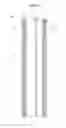
FIG. 1 is a longitudinal sectional view which shows a medical overtube according to a first embodiment of the present invention and which is taken along B-B in FIG. 2.
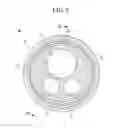
FIG. 2 is a lateral sectional view which shows the medical overtube illustrated in FIG. 1 and which is taken along A-A in FIG. 1 at the position of a through hole.
FIG. 3 is a longitudinal sectional view which shows a first modification of the medical overtube illustrated in FIG. 1 and which is taken along B-B in FIG. 4.
FIG. 4 is a lateral sectional view which shows the medical overtube illustrated in FIG. 3 and which is taken along A-A in FIG. 3 at the position of a through hole.
FIG. 5 is a longitudinal sectional view which shows a second modification of the medical overtube illustrated in FIG. 1 and which is taken along B-B in FIG. 6.
FIG. 6 is a lateral sectional view which shows the medical overtube illustrated in FIG. 5 and which is taken along A-A in FIG. 5 at the position of a through hole.
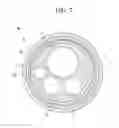
FIG. 7 is a lateral sectional view which shows a third modification of the medical overtube illustrated in FIG. 1 and which is taken at the position of a through hole.
DESCRIPTION OF EMBODIMENT
A medical overtube 1 according to an embodiment of the present invention will now be described with reference to the drawings.
As illustrated in FIGS. 1 and 2, the medical overtube 1 according to this embodiment has a multi-lumen tube 3 which has a plurality of lumens 2 penetrating in the longitudinal direction and which is composed of a flexible material, a braided tube 4 composed of braided fibers and disposed so as to cover the outer side of the multi-lumen tube 3 around the entirety thereof, and an outer tube 5 disposed so as to cover the outer side of the braided tube 4 around the entirety thereof.
The lumens 2 of the multi-lumen tube 3 are configured to allow insertion of medical devices, such as an endoscope, an optical fiber, a treatment tool, and the like. The multi-lumen tube 3 is composed of a highly airtight resin material.
The braided tube 4 is a tube formed by braiding resin fibers or metal fibers, and can transmit torsional torque about the longitudinal axis.
The outer tube 5 is a highly airtight resin tube with a smooth surface and has a small wall thickness. Because the outer surface of the braided tube 4 is covered with the outer tube 5, friction occurring during insertion into the body is reduced, and the insertability is improved.
The space between the multi-lumen tube 3 and the braided tube 4 and the space between the braided tube 4 and the outer tube 5 are put in a hermetically sealed state by bonding them by an adhesive 6 at the two ends in the longitudinal direction of the medical overtube 1.
The medical overtube 1 according to this embodiment is equipped with a through hole 7, which is located near the proximal end of the outer tube 5 and penetrates through the outer tube 5 in the radial direction. The through hole 7 causes a cylindrical space, which is formed between the outer surface of the multi-lumen tube 3 and the inner surface of the outer tube 5 and in which the braided tube 4 is disposed, to be open to the atmosphere in a radially outward direction.
The functions of the medical overtube 1 according to this embodiment having the above-described structure will now be described.
When the medical overtube 1 according to this embodiment is being inserted into a body cavity of a patient, the multi-lumen tube 3, the braided tube 4, and the outer tube 5 bend to follow the shape of the body cavity. Since the outer tube 5 has a smooth surface, friction that occurs during insertion is reduced, and the medical overtube 1 can be smoothly inserted.
Medical devices, such as an endoscope and a treatment tool, are inserted into the plurality of lumens 2 of the multi-lumen tube 3 so that the affected area can be treated with the treatment tool while being observed with the endoscope.
In order to rotate the field of view of the endoscope during treatment of the affected area, torsional torque about the longitudinal axis is applied to the proximal end of the medical overtube 1. Since the medical overtube 1 according to this embodiment is equipped with the braided tube 4 that can transmit the torsional torque, the torsional torque applied to the proximal end can be transmitted to the distal end, and the medical devices protruding from the distal end openings of the lumens 2 can be simultaneously rotated without changing the relative position thereof.
In order to sterilize the medical overtube 1 according to this embodiment, the medical overtube 1 is placed in a hermetically sealable processing chamber, and the inside of the processing chamber is vacuum-suctioned to evacuate air. Since the braided tube 4 is composed of braided fibers, air is contained therein. Moreover, the space in which the braided tube 4 is disposed is sealed at the distal end portion and the proximal end portion by using the adhesive 6.
In this embodiment, because the through hole 7 that penetrates the outer tube 5 in the radial direction is provided, the air inside the space in which the braided tube 4 is disposed is evacuated through the through hole 7 by vacuum suction. As a result, the space in which the braided tube 4 is disposed is prevented from expanding even when the pressure is decreased by vacuum suction, and rupturing of the outer tube 5 can be reliably prevented. Moreover, since the through hole 7 is provided on the proximal end side of the outer tube 5, the through hole 7 stays out of the body cavity, and entry of body fluids into the space in which the braided tube 4 is disposed can be prevented.
When ethylene oxide gas is supplied to the processing chamber in such a state, the medical overtube 1 can be sterilized with highly concentrated ethylene oxide gas. The highly concentrated ethylene oxide gas supplied also reaches, through the through hole 7, the space in which the braided tube 4 is disposed. As a result, the space in which the braided tube 4 is disposed can also be sterilized.
As illustrated in FIGS. 3 and 4, in this embodiment, a cylindrical cover portion 9 that extends from an operation unit 8, which is attached to the proximal end of the medical overtube 1, toward the distal end up to a position at which the cylindrical cover portion 9 covers the opening (opening portion) of the through hole 7 may be provided. The cover portion 9 is disposed so as to leave a space in the radial direction with respect to the outer surface of the outer tube 5.
In this manner, when the medical overtube 1 is being sterilized in a sterilizing pack, the opening of the through hole 7 in the outer tube 5 can be prevented from becoming closed by the film that constitutes the sterilizing pack. In other words, although the film is disposed to cover the cover portion 9, the space formed between the cover portion 9 and the outer tube 5 allows the air to be evacuated therethrough, and ethylene oxide gas can be supplied to the space in which the braided tube 4 is disposed.
In this embodiment, the through hole 7 is formed in the outer tube 5, In another embodiment, as illustrated in FIGS. 5 and 6, a through hole 10 that allows the outer surface of the multi-lumen tube 3 and one of the lumens 2 to be in communication with each other may be formed. Since the opening of the through hole 10 is disposed inside the lumen 2, there are advantages in that the opening of the through hole 10 is prevented from becoming closed by the film of the sterilizing pack, and sterilization can be reliably carried out.
As illustrated in FIG. 7, instead of providing the through hole 10 in one of the lumens 2 through which medical devices are passed, a through hole 12 may be provided in a dedicated evacuation lumen 11. The evacuation lumen 11 may be any lumen as long as the distal end opening at the distal end of the medical overtube 1 is closed and the proximal end opening at the proximal end of the medical overtube 1 is open to the atmosphere.
In this manner, body fluids are prevented from entering the evacuation lumen 11, and thus entry of body fluids into the space in which the braided tube 4 is disposed can be prevented.
The inventor has arrived at the following aspects of the present invention.
An aspect of the present invention provides a medical overtube that includes a multi-lumen tube provided with a plurality of lumens through which medical devices are to be passed; a braided tube which covers an outer side of the multi-lumen tube and which is made of braided fibers; and an outer tube that covers an outer side of the braided tube, wherein a through hole is formed in the multi-lumen tube or the outer tube, the through hole is configured to connect a space, which is covered by the outer tube and the multi-lumen tube and in which the braided tube is disposed, to an exterior.
According to this aspect, torsional torque applied to a proximal end of the medical overtube can be transmitted to a distal end of the medical overtube by the braided tube disposed between the multi-lumen tube and the outer tube, and the medical devices that have been passed through the lumens of the multi-lumen tube can be rotated simultaneously while keeping the relative position.
In order to sterilize the medical overtube in this case, the medical overtube is placed in the processing chamber, vacuum suction is carried out to evacuate air inside the processing chamber, and then the inside of the processing chamber is filled with ethylene oxide gas so as to conduct a sterilization process with highly concentrated ethylene oxide gas. During vacuum suction, the pressure inside the processing chamber is reduced. However, because the space, which lies between the outer tube and the multi-lumen tube and in which the braided tube is disposed, is connected to the exterior through the through hole formed in the multi-lumen tube or the outer tube, the air inside this space is evacuated to the exterior through the through hole, and thereby expansion and rupture of the outer tube can be prevented.
In the aspect described above, the through hole may be provided to penetrate through the outer tube in a radial direction.
In the aspect described above, a cover portion that covers an opening of the through hole may be provided at a radially outer side of the outer tube so that a space between the opening and the cover portion is made in the radial direction.
In this manner, even when the pressure is reduced by vacuum suction performed prior to the sterilization process, because the space that lies between the outer tube and the multi-lumen tube and in which the braided tube is disposed is connected to the exterior through the through hole formed in the outer tube, the air inside the space is evacuated to the exterior through the through hole, and expansion and rupture of the outer tube can be prevented.
Under this condition, even when the medical overtube is sterilized in a sterilizing pack, the cover portion prevents closure of the through hole by the film that constitutes the sterilizing pack. Thus, air inside the space in which the braided tube is disposed can be more reliably evacuated to the exterior.
Alternatively, in the aspect described above, the through hole may be provided to penetrate from an outer surface of the multi-lumen tube to one of the lumens.
In this manner, even when the medical overtube is sterilized in a sterilizing pack, air inside the space in which the braided tube is disposed is evacuated to the exterior through the through hole that penetrates one of the lumens. Since the through hole does not have an opening in the outer surface of the outer tube, closure of the through hole by the film that constitutes the sterilizing pack can be prevented.
In the aspect described above, the multi-lumen tube may be provided with an evacuation lumen having a closed distal end opening and an open proximal end opening, and the through hole can be provided so as to penetrate from the outer surface of the multi-lumen tube to the evacuation lumen.
In this manner, even when the medical overtube is inserted into the body, the evacuation lumen, which has a closed distal end opening, is prevented from becoming contaminated with body fluids. Moreover, since no medical devices are to be passed through the evacuation lumen, contamination inside the lumen caused by insertion and withdrawal of the medical devices can be prevented as well. Thus, entry of substances, such as body fluids, into the space in which the braided tube is disposed can be prevented.
An advantageous effect offered by the aforementioned aspects is that the medical overtube remains undamaged and can maintain in a good shape despite vacuum suction in an EOG sterilization process.
REFERENCE SIGNS LIST
- 1 medical overtube
- 2 lumen
- 3 multi-lumen tube
- 4 braided tube
- 5 outer tube
- 7, 10, 12 through hole
- 9 cover portion
- 11 evacuation lumen
Claims
1. A medical overtube comprising:
a multi-lumen tube provided with a plurality of lumens through which medical devices are to be passed;
a braided tube which covers an outer side of the multi-lumen tube and which is made of braided fibers; and
an outer tube that covers an outer side of the braided tube,
wherein a through hole is formed in the multi-lumen tube or the outer tube, the through hole is configured to connect a space, which is covered by the outer tube and the multi-lumen tube and in which the braided tube is disposed, to an exterior.
2. The medical overtube according to claim 1, wherein the through hole is provided to penetrate through the outer tube in a radial direction.
3. The medical overtube according to claim 2, wherein a cover portion that covers an opening of the through hole is provided at a radially outer side of the outer tube so that a space between the opening and the cover portion is made in the radial direction.
4. The medical overtube according to claim 1, wherein the through hole is provided to penetrate from an outer surface of the multi-lumen tube to one of the lumens.
5. The medical overtube according to claim 4, wherein the multi-lumen tube is provided with an evacuation lumen having a closed distal end opening and an open proximal end opening, and
the through hole is provided so as to penetrate from the outer surface of the multi-lumen tube to the evacuation lumen.
Images & Drawings included:




Sources:
- United States Patent and Trademark Office - verify current appl. status at the USPTO↗
Similar patent applications:
- » 20200100813
Medical overtube device - » 20220313071
MEDICAL OVERTUBE - » 20190069764
MEDICAL OVERTUBE - » 20220265126
OVERTUBE AND MEDICAL DEVICE USING THIS OVERTUBE - » 20070167676
Overtube and medical procedure via natural orifice using the same - » 20190059705
OVERTUBE AND MEDICAL SYSTEM - » 20200015797
Overtube and medical system - » 20170367564
OVERTUBE AND MEDICAL MANIPULATOR SYSTEM - » 20070167675
Overtube and medical procedure via natural orifice using the same - » 20110071354
OVERTUBE AND MEDICAL PROCEDURE VIA NATURAL ORIFICE USING THE SAME
Recent applications in this class:
- » 20250268623 2025-08-28
FORCE FIT EYE CANNULA WITH AUGMENTED SURFACE - » 20250248738 2025-08-07
REMOVABLE, ADJUSTABLE-LENGTH, SNAP-IN PORTAL SAVER, DECOUPLED FROM DERMAL FIXATION - » 20250248737 2025-08-07
FLEXIBLE ACCESS SUPPLEMENTATION TUBES FOR ENDOSCOPIC EXPOSURE AND RETRACTION - » 20250248736 2025-08-07
CARDIAC PACING - » 20250241678 2025-07-31
CANNULA ASSEMBLY WITH DEPLOYABLE CAMERA - » 20250213272 2025-07-03
TROCAR POSITIONING APPARATUS AND METHODS FOR USE - » 20250204952 2025-06-26
ACCESS PORT DEVICE - » 20250204951 2025-06-26
METHODS AND DEVICES OF ACCESS SHEATH SYSTEMS - » 20250186081 2025-06-12
RETENTION ANCHOR FOR SURGICAL ACCESS DEVICES - » 20250186080 2025-06-12
SURGICAL ASSISTING DEVICE
Recent applications for this Assignee:
- » 20250288303 2025-09-18
MEDICAL DEVICE, AND ATTACHMENT METHOD FOR MEDICAL DEVICE - » 20250288189 2025-09-18
ENDOSCOPE SYSTEM AND ENDOSCOPE - » 20250281255 2025-09-11
MEDICAL MANIPULATOR AND MEDICAL MANIPULATOR - » 20250281254 2025-09-11
MEDICAL MANIPULATOR AND MEDICAL MANIPULATOR SYSTEM - » 20250281172 2025-09-11
MEDICAL SYSTEM AND SUTURE DEVICE - » 20250281033 2025-09-11
HEAT INVASION OBSERVATION APPARATUS, ENDOSCOPE SYSTEM, HEAT INVASION OBSERVATION SYSTEM, AND HEAT INVASION OBSERVATION METHOD - » 20250281030 2025-09-11
MEDICAL MANIPULATOR AND MEDICAL MANIPULATOR SYSTEM - » 20250275748 2025-09-04
ULTRASOUND PROBE, ULTRASOUND TRANSDUCER UNIT, AND ULTRASOUND ENDOSCOPE - » 20250268475 2025-08-28
ENDOSCOPE SYSTEM - » 20250268462 2025-08-28
ENDOSCOPE CONTROL DEVICE