Device for manually lifting a load with a lever for a cart, suitcase and the like
US20180079440A1
2018-03-22
15/560,780
2016-03-22
✅ Patent granted
US 10,315,680 B2
2019-06-11
WO; PCT/FR2016/000055; 20160322
WO; WO2016/151206; 20160929
Joseph M Rocca | Conan D Duda
Vorys, Sater, Seymour and Pease LLP | Vincent M DeLuca
2036-03-22
Abstract:
Device for manually lifting a load with a lever for a cart, suitcase and the like, making it easier to ascend and descend staircases and various obstacles, said device comprising two parts:—a first part comprising: a frame (1) secured to wheels (2), the wheels (2) and the handles (3) being fixed to the frame (1),—a second part comprising: a load support (4) secured to wheels (5), the wheels (5) and a load (12) being mounted in a fixed manner on the load support (4), the second part being able to slide with respect to the first part by the action of a telescopic lever arm (10) in order to ascend a step of a staircase in two phases, the telescopic lever arm (10) being fixed to the handles (3) by an articulation (9), a second articulation (8) connecting the telescopic lever arm (10) to a transmission (6) which is in turn connected by a third articulation (7) to the load support (4) of the second part.
Applicant:
Interested in similar patents?
Get notified when new applications in this technology area are published.
Classification:
A45C5/14 IPC
Rigid or semi-rigid luggage with built-in rolling means
A45C13/26 IPC
Details; Accessories Special adaptations of handles
A45C5/146 » CPC further
Rigid or semi-rigid luggage with built-in rolling means retractable
B62B5/06 » CPC further
Accessories or details specially adapted for hand carts Hand moving equipment, e.g. handle bars
B66F9/06 » CPC further
Devices for lifting or lowering bulky or heavy goods for loading or unloading purposes movable, with their loads, on wheels or the like, e.g. fork-lift trucks
A45C2013/267 » CPC further
Details; Accessories; Special adaptations of handles for wheeled luggage the handle being slidable, extractable and lockable in one or more positions
B62B5/02 » CPC main
Accessories or details specially adapted for hand carts providing for travelling up or down a flight of stairs
B62B1/02 » CPC further
Hand carts having only one axis carrying one or more transport wheels; Equipment therefor in which the wheel axis is disposed between the load and the handles
A45C13/262 » CPC further
Details; Accessories; Special adaptations of handles for wheeled luggage
B62B5/023 » CPC further
Accessories or details specially adapted for hand carts providing for travelling up or down a flight of stairs using an upwards pushing device
Description
The present invention relates to a device for manually lifting a load with a lever for being used for a cart, a suitcase and the like.
Experience has shown that a user currently encounters difficulties when ascending and descending staircases and various obstacles with a cart or a suitcase.
The device of the invention, which solves these disadvantages, is remarkable in that the manual effort made by the user will be significantly reduced when ascending and descending staircases and various obstacles.
The present invention will be described in detail in the following with reference made to the attached drawings given only by way of example in which:
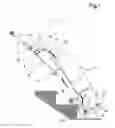
FIG. 1 shows a lateral view of a device according to the invention showing the confrontation of various steps at visible angles.
FIG. 2 shows a lateral view of the device according to the invention,
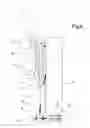
FIG. 3 shows a front view of the device according to the invention,
FIG. 4 shows a front view of the device according to the invention, and
FIG. 5 shows a front view of the device according to the invention with the largest load,
FIG. 6 shows a lateral view of the device according to the invention with the largest load and showing details of the embodiment.
FIG. 1 shows that the device has two parts:
a first part comprising: a frame 1 integral with the wheels 2, wherein the wheels 2 and the handles 3 are fixed to the frame 1,
a second part comprising: a load support 4 integral with the wheels 5, the wheels 5 and a load 12 which is mounted in a fixed manner on the load support 4.
The second part can slide relative to the first part by the action of a telescopic lever arm 10. The action of ascending a staircase step with the device according to the invention is made in two phases in the following manner:
during the first phase by turning the telescopic lever arm 10 upward from an initial low position following a circular movement according to arrow F1, wherein the second part slides upward relative to the first part and ascends a staircase step,
and then, during the second phase, by turning the telescopic lever arm 10 downward following a circular movement according to the arrow F2 until the initial low position of this telescopic lever arm, the first part ascends for its part onto the same staircase step.
The telescopic lever arm 10 is fixed to the handles 3 by an articulation 9. A second articulation 8 connects the telescopic lever arm 10 to a transmission 6 which is connected for its part by a third articulation 7 to the load support 4 of the second part.
FIG. 1 shows that during the phase 2, by turning the telescopic lever arm 10 downward according to arrow F to its initial low position the wheels 5 move the second part in a movement of translation according to arrow G so that the first part can reach an angle visible on the staircase edge in order to facilitate the ascent of the first part.
FIG. 2 shows that the device comprises a joining pin 13 with a spring 14 blocking the two parts and allowing the device to move with its four wheels 2 and 5 on a plane surface.
Referring again to FIG. 1, it can be seen that the joining pin 13 is released by a cable 15.
It can be seen in FIGS. 5 and 6 that the telescopic arm 10 is fixed to the frame 1 parallel to a removable load 12 which is greater, allowing the telescopic lever arm 10 to be turned up and down following a circular movement according to the arrow F without being hindered by the removable load 12.
The rotary handle 11, a user aid for manipulating the telescopic lever arm 10 according to arrow F, can be seen on all the figures.
Claims
1. A device for manually lifting a load with a lever for a cart, suitcase and the like, facilitating the ascent and descent of staircases and various obstacles, comprising:
a first part comprising: a frame (1) integral with the wheels (2), wherein the wheels (2) and the handles (3) are fixed to the frame (1),
a second part comprising: a load support (4) integral with the wheels (5), wherein the wheels (5) and a load (12) are mounted in a fixed manner on the load support (4) and the second part slides relative to the first part by the action of a telescopic lever arm (10) in order to ascend a staircase step in two phases,
wherein the telescopic lever arm (10) is fixed to the handles (3) by an articulation (9), wherein the second articulation (8) connects the telescopic lever arm (10) to a transmission (6) which is connected for its part by a third articulation (7) to the loading support (4) of the second part.
2. The device for manually lifting a load with a lever for a cart, suitcase and the like according to claim 1, further comprising a joining pin (13) with a spring (14) blocking the two parts and allowing the device to move with its four wheels (2 and 5) on a plane surface.
3. A process for using a device for manually lifting a load with a lever as set forth in claim 1, the method comprising:
during a first phase the second part slides upward relative to the first part and ascends the staircase step by turning the telescopic lever arm (10) upward in a circular movement starting from an initial low position,
and during a second phase the first part ascends for its part onto the same step by turning the telescopic lever arm (10) downward in a hemi circular movement to the initial low position of this telescopic arm.
4. A process according to claim 3, wherein by turning the telescopic lever arm (10) downward according to the arrow (F2) to the initial base position of this telescopic arm during the second phase the wheels (5) move the second part along a movement of translation according to the arrow (G) so that the first part can reach an angle visible on the step edge in order to facilitate the ascent of the first part.
5. A process for using a device for manually lifting a load with a lever as set forth in claim 2, the method comprising:
during a first phase the second part slides upward relative to the first part and ascends the staircase step by turning the telescopic lever arm (10) upward in a circular movement starting from an initial low position,
and, during a second phase the first part ascends for its part onto the same step by turning the telescopic lever arm (10) downward in a hemi circular movement to the initial low position of this telescopic arm.
6. A process according to claim 5, wherein by turning the telescopic lever arm (10) downward according to the arrow (F2) to the initial base position of this telescopic arm during the second phase the wheels (5) move the second part along a movement of translation according to the arrow (G) so that the first part can reach an angle visible on the step edge in order to facilitate the ascent of the first part.
Images & Drawings included:



Sources:
- United States Patent and Trademark Office - verify current appl. status at the USPTO↗
Similar patent applications:
Recent applications in this class:
- » 20230081979 2023-03-16
System and method for electrically assisting in removal of deceased humans up and down stairs and into a vehicle - » 20210380154 2021-12-09
Stair climber for caskets - » 20210114646 2021-04-22
SUITCASE AND HAND TRUCK FOR ASCENDING AND DESCENDING STAIRS - » 20200290662 2020-09-17
System and method for electrically assisting in removal of deceased humans up and down stairs and into a vehicle - » 20200198681 2020-06-25
FOLDING STAIR-CLIMBING TROLLEY - » 20190315385 2019-10-17
Tool support - » 20190291765 2019-09-26
DEVICE FOR MANUALLY LIFTING A LOAD WITH A LEVER FOR A CART, SUITCASE AND THE LIKE - » 20190126967 2019-05-02
FURNITURE DOLLY WITH IN-LINE WHEELS - » 20180339723 2018-11-29
Hand truck assembly - » 20170183023 2017-06-29
Automatic Balancing Variable Configuration Articulated Tracked Transporter