High performance liquid chromatography method for polypeptide mixtures
US20180080909A1
2018-03-22
15/559,428
2015-04-28
✅ Patent granted
US 10,330,650 B2
2019-06-25
WO; PCT/CN2015/077690; 20150428
WO; WO2016/172855; 20161103
Brian J. Sines
Gokalp Bayramoglu
2035-09-12
Abstract:
The present invention relates to a high performance liquid chromatography method for polypeptide mixtures. Specifically, the method including the following steps: step (1): preparing a solution of the glatiramer acetate to be tested; step (2): performing gradient elution on a sample to be tested with an anion exchange liquid chromatography, a cation exchange liquid chromatography, or a reversed-phase liquid chromatography; step (3): determining a peak area corresponding to each component of the glatiramer acetate, comparing the peak area with to a peak area of a reference substance to determine whether the content of each component of the sample to be tested is in a qualified range.
Inventors:
- Jiancheng Yuan 10 🇨🇳 Shenzhen, China
- Guotao LI 2 🇨🇳 Shenzhen, China
- Yangming TANG 2 🇨🇳 Shenzhen, China
- Gang HE 11 🇨🇳 Shenzhen, China
- Anjin TAO 3 🇨🇳 Shenzhen, China
Assignee:
- HYBIO PHARMACEUTICAL CO., LTD. 8 🇨🇳 Shenzhen, China
Applicant:
Interested in similar patents?
Get notified when new applications in this technology area are published.
Classification:
G01N21/33 » CPC further
Investigating or analysing materials by the use of optical means, i.e. using sub-millimetre waves, infrared, visible or ultraviolet light; Systems in which incident light is modified in accordance with the properties of the material investigated; Colour; Spectral properties, i.e. comparison of effect of material on the light at two or more different wavelengths or wavelength bands; Investigating relative effect of material at wavelengths characteristic of specific elements or molecules, e.g. atomic absorption spectrometry using ultra-violet light
G01N30/8631 » CPC further
Investigating or analysing materials by separation into components using adsorption, absorption or similar phenomena or using ion-exchange, e.g. chromatography or field flow fractionation; Column chromatography; Signal analysis; Detection of slopes or peaks; baseline correction Peaks
B01D15/36 IPC
Separating processes involving the treatment of liquids with solid sorbents ; Apparatus therefor; Selective adsorption, e.g. chromatography characterised by the separation mechanism involving ionic interaction
B01D15/362 » CPC further
Separating processes involving the treatment of liquids with solid sorbents ; Apparatus therefor; Selective adsorption, e.g. chromatography characterised by the separation mechanism involving ionic interaction; Ion-exchange Cation-exchange
B01D15/363 » CPC further
Separating processes involving the treatment of liquids with solid sorbents ; Apparatus therefor; Selective adsorption, e.g. chromatography characterised by the separation mechanism involving ionic interaction; Ion-exchange Anion-exchange
A61K38/03 » CPC further
Medicinal preparations containing peptides Peptides having up to 20 amino acids in an undefined or only partially defined sequence; Derivatives thereof
B01D15/325 » CPC further
Separating processes involving the treatment of liquids with solid sorbents ; Apparatus therefor; Selective adsorption, e.g. chromatography characterised by the separation mechanism; Bonded phase chromatography Reversed phase
G01N33/68 IPC
Investigating or analysing materials by specific methods not covered by groups -; Biological material, e.g. blood, urine ; Haemocytometers; Chemical analysis of biological material, e.g. blood, urine; Testing involving biospecific ligand binding methods; Immunological testing involving proteins, peptides or amino acids
C07K1/18 » CPC further
General methods for the preparation of peptides, i.e. processes for the organic chemical preparation of peptides or proteins of any length; Extraction; Separation; Purification by chromatography Ion-exchange chromatography
G01N30/34 » CPC main
Investigating or analysing materials by separation into components using adsorption, absorption or similar phenomena or using ion-exchange, e.g. chromatography or field flow fractionation; Column chromatography; Conditioning of the fluid carrier; Flow patterns; Control of physical parameters of the fluid carrier of fluid composition, e.g. gradient
B01D15/32 IPC
Separating processes involving the treatment of liquids with solid sorbents ; Apparatus therefor; Selective adsorption, e.g. chromatography characterised by the separation mechanism Bonded phase chromatography
G01N30/86 IPC
Investigating or analysing materials by separation into components using adsorption, absorption or similar phenomena or using ion-exchange, e.g. chromatography or field flow fractionation; Column chromatography Signal analysis
G01N30/88 » CPC further
Investigating or analysing materials by separation into components using adsorption, absorption or similar phenomena or using ion-exchange, e.g. chromatography or field flow fractionation; Column chromatography Integrated analysis systems specially adapted therefor, not covered by a single one of the groups -
G01N33/6803 » CPC further
Investigating or analysing materials by specific methods not covered by groups -; Biological material, e.g. blood, urine ; Haemocytometers; Chemical analysis of biological material, e.g. blood, urine; Testing involving biospecific ligand binding methods; Immunological testing involving proteins, peptides or amino acids General methods of protein analysis not limited to specific proteins or families of proteins
G01N2030/8831 » CPC further
Investigating or analysing materials by separation into components using adsorption, absorption or similar phenomena or using ion-exchange, e.g. chromatography or field flow fractionation; Column chromatography; Integrated analysis systems specially adapted therefor, not covered by a single one of the groups - analysis specially adapted for the sample biological materials involving peptides or proteins
C07K1/20 » CPC further
General methods for the preparation of peptides, i.e. processes for the organic chemical preparation of peptides or proteins of any length; Extraction; Separation; Purification by chromatography Partition-, reverse-phase or hydrophobic interaction chromatography
C07K14/00 » CPC further
Peptides having more than 20 amino acids; Gastrins; Somatostatins; Melanotropins; Derivatives thereof
G01N1/18 IPC
Sampling; Preparing specimens for investigation; Devices for withdrawing samples in the liquid or fluent state with provision for splitting samples into portions
G01N33/00 IPC
Investigating or analysing materials by specific methods not covered by groups -
G01N30/74 » CPC further
Investigating or analysing materials by separation into components using adsorption, absorption or similar phenomena or using ion-exchange, e.g. chromatography or field flow fractionation; Column chromatography; Detectors specially adapted therefor Optical detectors
Description
CROSS REFERENCE TO RELATED APPLICATIONS
This application is the national phase entry of International Application No. PCT/CN2015/077690, filed on Apr. 28, 2015, the entire contents of which are incorporated herein by reference.
TECHNICAL FIELD
The present invention relates to the field of biological medicines, especially to a high performance liquid chromatography method for polypeptide mixtures.
BACKGROUND OF THE INVENTION
Glatiramer acetate (GA) is a synthetic peptide mixture (relative molecular weight: 4700-11000 Daltons), a random polymer consisting of four kinds of amino acids: L-alanine, L-glutamic, L-tyrosine and L-lysine, with a length of 45-100 amino acids. The molar ratios of each kind of amino acids are approximately 0.392-0.462, 0.129-0.153, 0.086-0.100 and 0.300-0.374. This drug is manufactured by the Israeli TEVA pharmaceutical factory (TEVA) with a trade name of Copaxone®. It was approved for the treatment of multiple sclerosis by FDA in 1996, and there are two kinds of products, water needle and freeze-dried powder needle, both of which are administered by subcutaneous injection.
Glatiramer acetate is a copolymer with high continuity, the structure of the glatiramer acetate is as follows:
(Glu,Ala,Lys,Tyr)x.xCH3COOH
(C5H9NO4.C3H7NO2.C6H14N2O2.C9H11NO3)x.xC2H4O2 CAS-147245-92-9
For the manufacturers imitating the drug, the compositional differences between the imitation of glatiramer acetate and the control group of the glatiramer acetate can only be examined based on some of the inherent properties of the drug.
The difference between a sample and a commercial product (reference substance) is examined by gradient elution in an anion exchange liquid chromatography, a cation liquid chromatography and/or a reversed-phase liquid chromatography in the present invention based on the electric charge, polar or nonpolar character of the sample in different buffer solutions.
As the glatiramer acetate is a copolymer with high continuity, it is difficult to clarify the various components with only one separation method. A size exclusion method is used in the prior art for a simple separation and analysis (dividing a single peak into several components, and then collecting and analyzing the components). Thus, the prior art is very tedious. It is very necessary to develop an analytical method for an effective separation of the components of the glatiramer acetate.
SUMMARY OF THE INVENTION
The present invention relates to a method performing linear or stepped gradient elution on a glatiramer acetate with a high-performance liquid chromatography and determining whether the content of each component of the glatiramer acetate is qualified.
The method comprising the following steps:
step (1): preparing a solution of the glatiramer acetate to be tested;
step (2): performing gradient elution on a sample to be tested with an anion exchange liquid chromatography, a cation exchange liquid chromatography, or a reversed-phase liquid chromatography;
step (3): determining a peak area corresponding to each component of the glatiramer acetate, comparing the peak area with to a peak area of a reference substance to determine whether the content of each component of the sample to be tested is in a qualified range.
The elution gradient in step (2) is as follow.
The chromatographic conditions used in the anion exchange liquid chromatography in step (2) are as follows.
carboxyl-bonded polystyrene-divinylbenzene particle with a particle diameter of 1.7-10 μm is used as a packing material for a chromatographic column;
a solution containing 10-50 mM tris(hydroxymethyl)aminomethane hydrochloride is used as mobile phase A, wherein pH of the mobile phase A is adjusted to 10-12 with a NaOH solution;
a solution containing 10-50 mM tris(hydroxymethyl)aminomethane hydrochloride and 0.5-1.5 M NaCl is used as mobile phase B, wherein pH of the mobile phase B is adjusted to 8-10 with a hydrochloric acid solution;
injection volume is 5-50 uL, the concentration of the sample is 1-20 mg/mL;
a flow rate is 0.5-1.5 mL/min, the time for the gradient elution is 50-250 min;
different forms of elution gradients are used in gradient elution;
column temperature is 25-50° C.;
the elution gradient is as follow:
a total time of the gradient elution is divided into N steps uniformly for gradient elution sequentially, wherein 2≦N≦20; in the first N−1 steps, the proportion of the mobile phase A is gradually reduced from 100% to 50%, and the proportion of the mobile phase B is gradually increased from 0 to 50%; in the N-th step, the proportion of the mobile phase A is 100%, and the proportion of the mobile phase B is 0;
preferably, 5≦N≦15, more preferably, 8≦N≦12, most preferably, N=10.
The chromatographic conditions used in the cation exchange liquid chromatography in step (2) are as follows:
tertiary ammonium-bonded polystyrene-divinylbenzene particle with a particle diameter of 1.7-10 μm is used as a packing material for a chromatographic column;
a solution containing 10-50 mM 2-(N-morpholino) ethanesulfonic acid and 0.5-5 mM EDTA is used as mobile phase A, wherein pH of the mobile phase A is adjusted to 4-6 with a NaOH solution;
a solution containing 10-50 mM 2-(N-morpholino) ethanesulfonic acid, 0.5-5 mM EDTA, and 1-2.5 M NaCl is used as mobile phase B, wherein pH of the mobile phase B is adjusted to 5-7 with a hydrochloric acid solution;
injection volume is 5-50 uL, the concentration of the sample is 1-20 mg/mL;
a flow rate is 0.5-1.5 mL/min, the time for the gradient elution is 50-250 min;
the elution gradient is that different forms of elution gradients are used in gradient elution;
column temperature is 25-50° C.;
the elution gradient is as follows:
a total time of the gradient elution is divided into N steps uniformly for gradient elution sequentially, wherein 2≦N≦20; in the first N−1 steps, the proportion of the mobile phase A is gradually reduced from 100% to 0%, and the proportion of the mobile phase B is gradually increased from 0 to 100%; in the N-th step, the proportion of the mobile phase A is 90%, and the proportion of the mobile phase B is 10%;
preferably, 5≦N≦15, more preferably, 8≦N≦12, most preferably, N=10.
The chromatographic conditions used in the reversed-phase liquid chromatography in step (2) are as follows:
C18-bonded, C12-bonded, C8-bonded, or C4-bonded silica particle with a particle diameter of 1.7-10 μm is used as a packing material for a chromatographic column;
acetonitrile is used as mobile phase A;
a solution containing 30-80 mM ammonium sulfate is used as mobile phase B, wherein pH of the mobile phase B is adjusted to 2-3 with a phosphoric acid solution; or 0.1% trifluoroacetic solution is used as the mobile phase B;
injection volume is 5-50 uL, the concentration of the sample is 1-20 mg/mL;
a flow rate is 0.5-1.5 mL/min, the time for the gradient elution is 50-250 min;
the elution gradient is that different forms of elution gradients are used in gradient elution;
column temperature is 25-50° C.;
the gradient elution is as follows:
a total time of the gradient elution is divided into N steps uniformly for gradient elution sequentially, wherein 2≦N≦20; in the first N−1 steps, the proportion of the mobile phase A is gradually increased from 5% to 40%, and the proportion of the mobile phase B is gradually reduced from 95% to 60%; in the N-th step, the proportion of the mobile phase A is 90%, and the proportion of the mobile phase B is 10%;
preferably, 5≦N≦15, more preferably, 8≦N≦12, most preferably, N=10.
The detection analysis in step (3) uses an ultraviolet detector to detect a wavelength of 260-280 nm.
When the fluorescence detector is used, its excitation wavelength is 230 nm and its emission wavelength is 300 nm.
BRIEF DESCRIPTION OF THE DRAWINGS
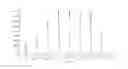
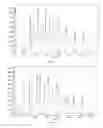
FIG. 1-1 is a chromatographic analysis diagram of a test sample in embodiment 1.
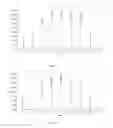
FIG. 1-2 is a chromatographic analysis diagram of a test sample in embodiment 2.
FIG. 1-3 is a chromatographic analysis diagram of a test sample in embodiment 3.
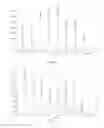
FIG. 1-4 is a chromatographic analysis diagram of a test sample in embodiment 4.
FIG. 1-5 is a chromatographic analysis diagram of a test sample in embodiment 5.
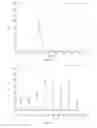
FIG. 2-1 is a chromatographic analysis diagram of a test sample in embodiment 7.
FIG. 2-2 is a chromatographic analysis diagram of a test sample in embodiment 8.
FIG. 2-3 is a chromatographic analysis diagram of a test sample in embodiment 9.
FIG. 2-4 is a chromatographic analysis diagram of a test sample in embodiment 10.
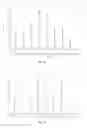
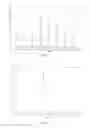
FIG. 3-1 is a chromatographic analysis diagram of a test sample in embodiment 12.
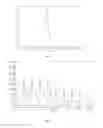
FIG. 3-2 is a chromatographic analysis diagram of a test sample in embodiment 13.
FIG. 3-3 is a chromatographic analysis diagram of a test sample in embodiment 14.
FIG. 3-4 is a chromatographic analysis diagram of a test sample in embodiment 15.
FIG. 3-5 is a chromatographic analysis diagram of a test sample in embodiment 16.
DETAILED DESCRIPTION OF THE INVENTION
Embodiment 1
A Waters 2695 high performance liquid chromatography and a 2475 multiwavelength fluorescence detector are used. The excitation wavelength (Ex) is 230 nm and the emission wavelength (Em) is 300 nm. The chromatographic column has a length of 150 mm and a diameter of 4.6 mm. The packing material for the chromatographic column is polystyrene-divinylbenzene particles with a particle diameter of 3 μm. The mobile phase A is 20 mM tris(hydroxymethyl)aminomethane hydrochloride, the pH of which is adjusted to 11.2 with a NaOH solution. The mobile phase B is 20 mM tris(hydroxymethyl)aminomethane hydrochloride containing 1 M NaCl, the pH of which is adjusted to 9.8 with a hydrochloric acid solution. The proportions of the mobile phase A and mobile phase B are set according to the following Table 1. Mobile phase solutions are added to dissolve commercial glatiramer acetate product (hereinafter referred to as “reference substance”) and pre-production glatiramer acetate sample (hereinafter referred to as “test sample”), respectively, to obtain a solution with a glatiramer acetate concentration of 20 mg/mL for examination. The injection volume is 25 μL. The flow rate is 0.8 mL/min. The column temperature is 30° C. The proportions of each component are shown in Table 2. The chromatographic analysis diagram of a test sample is shown in FIG. 1-1.
| TABLE 1 |
| Proportions of mobile phase A and mobile |
| phase B in embodiment 1 |
| Time | Mobile phase | Mobile phase |
| (min) | A (%) | B (%) |
| 0 | 100 | 0 |
| 15 | 100 | 0 |
| 15.1 | 97.5 | 2.5 |
| 30 | 97.5 | 2.5 |
| 30.1 | 95 | 5 |
| 45 | 95 | 5 |
| 45.1 | 90 | 10 |
| 60 | 90 | 10 |
| 60.1 | 87.5 | 12.5 |
| 75 | 87.5 | 12.5 |
| 75.1 | 85 | 15 |
| 90 | 85 | 15 |
| 90.1 | 80 | 20 |
| 105 | 80 | 20 |
| 105.1 | 70 | 30 |
| 120 | 70 | 30 |
| 120.1 | 50 | 50 |
| 135 | 50 | 50 |
| 135.1 | 100 | 0 |
| 140 | 100 | 0 |
| TABLE 2 |
| Comparisons and analyses of compositions of anion |
| exchanges between three batches of reference |
| substances and three batches of test samples |
| Batch | Component proportions of each elution peak (%) |
| number | 1 | 2 | 3 | 4 | 5 | 6 | 7 | 8 |
| Reference | 4.55 | 33.58 | 20.55 | 16.08 | 11.37 | 6.89 | 5.54 | 1.45 |
| Substance 1 | ||||||||
| Reference | 3.38 | 35.15 | 21.16 | 16.08 | 11.06 | 6.69 | 5.15 | 1.32 |
| Substance 2 | ||||||||
| Reference | 4.05 | 33.39 | 20.28 | 16.19 | 11.51 | 7.41 | 5.68 | 1.48 |
| Substance 3 | ||||||||
| Test sample 1 | 1.63 | 27.94 | 20.52 | 17.62 | 13.38 | 8.99 | 7.83 | 2.08 |
| Test sample 2 | 3.77 | 29.51 | 19.87 | 17.14 | 12.73 | 8.49 | 6.89 | 1.59 |
| Test sample 3 | 3.85 | 31.63 | 20.48 | 17.05 | 11.97 | 7.81 | 5.91 | 1.29 |
Embodiment 2
A Waters 2695 high performance liquid chromatography and a 2475 multiwavelength fluorescence detector are used. The excitation wavelength (Ex) is 230 nm and the emission wavelength (Em) is 300 nm. The chromatographic column has a length of 150 mm and a diameter of 4.6 mm. The packing material for the chromatographic column is polystyrene-divinylbenzene particles with a particle diameter of 5 μm. The mobile phase A is 10 mM tris(hydroxymethyl)aminomethane hydrochloride, the pH of which is adjusted to 10 with a NaOH solution. The mobile phase B is 10 mM tris(hydroxymethyl)aminomethane hydrochloride containing 1.5 M NaCl, the pH of which is adjusted to 8 with a hydrochloric acid solution. The proportions of the mobile phase A and mobile phase B are set according to the following Table 1. Mobile phase solutions are added to dissolve the reference substance or the test sample, respectively, to obtain a solution of 20 mg/mL for examination. The injection volume is 15 μL. The flow rate is 0.5 mL/min. The column temperature is 25° C. A chromatographic analysis diagram of a test sample is shown in FIG. 1-2.
Embodiment 3
A Waters 2695 high performance liquid chromatography and a 2489 multiwavelength fluorescence detector are used. The wavelength is 275 nm. The chromatographic column has a length of 150 mm and a diameter of 4.6 mm. The packing material for the chromatographic column is polystyrene-divinylbenzene particles with a particle diameter of 10 μm. The mobile phase A is 50 mM tris(hydroxymethyl)aminomethane hydrochloride, the pH of which is adjusted to 12 with a NaOH solution. The mobile phase B is 50 mM tris(hydroxymethyl)aminomethane hydrochloride containing 0.5 M NaCl, the pH of which is adjusted to 10 with a hydrochloric acid solution. The proportions of the mobile phase A and mobile phase B are set according to the following Table 1. Mobile phase solutions are added to dissolve the reference substance or the test sample, respectively, to obtain a solution of 10 mg/mL for examination. The injection volume is 50 μL. The flow rate is 15 mL/min. The column temperature is 50° C. A chromatographic analysis diagram of a test sample is shown in FIG. 1-3.
Embodiment 4
A Waters 2695 high performance liquid chromatography and a 2489 multiwavelength fluorescence detector are used. The wavelength is 275 nm. The chromatographic column has a length of 150 mm and a diameter of 4.6 mm. The packing material for the chromatographic column is polystyrene-divinylbenzene particles with a particle diameter of 3 The mobile phase A is 30 mM tris(hydroxymethyl)aminomethane hydrochloride, the pH of which is adjusted to 10 with a NaOH solution. The mobile phase B is 30 mM tris(hydroxymethyl)aminomethane hydrochloride containing 1 M NaCl, the pH of which is adjusted to 8 with a hydrochloric acid solution. The proportions of the mobile phase A and mobile phase B are set according to the following Table 3. Mobile phase solutions are added to dissolve the reference substance or the test sample, respectively, to obtain a solution of 10 mg/mL for examination. The injection volume is 25 μL. The flow rate is 0.8 mL/min. The column temperature is 40° C. A chromatographic analysis diagram of a test sample is shown in FIG. 1-4.
| TABLE 3 |
| Proportions of mobile phase A and mobile |
| phase B in embodiment 4 |
| Time | Mobile phase | Mobile phase |
| (min) | A (%) | B (%) |
| 0 | 100 | 0 |
| 15 | 95 | 5 |
| 30 | 92.5 | 7.5 |
| 45 | 90 | 10 |
| 60 | 87.5 | 12.5 |
| 75 | 85 | 15 |
| 90 | 80 | 20 |
| 105 | 70 | 30 |
| 120 | 50 | 50 |
| 135 | 100 | 0 |
| 150 | 100 | 0 |
Embodiment 5
A Waters 2695 high performance liquid chromatography and a 2475 multiwavelength fluorescence detector are used. The excitation wavelength (Ex) is 230 nm and the emission wavelength (Em) is 300 nm. The chromatographic column has a length of 150 mm and a diameter of 4.6 mm. The packing material for the chromatographic column is polystyrene-divinylbenzene particles with a particle diameter of 3 The mobile phase A is 20 mM tris(hydroxymethyl)aminomethane hydrochloride, the pH of which is adjusted to 11.2 with a NaOH solution. The mobile phase B is 20 mM tris(hydroxymethyl)aminomethane hydrochloride containing 1 M NaCl, the pH of which is adjusted to 9.8 with a hydrochloric acid solution. The proportions of the mobile phase A and mobile phase B are set according to the following Table 4. Mobile phase solutions are added to dissolve the reference substance or the test sample, respectively, to obtain a solution of 20 mg/mL for examination. The injection volume is 25 μL. The flow rate is 1 mL/min. The column temperature is 30° C. A chromatographic analysis diagram of a test sample is shown in FIG. 1-5. It can be seen that the components of the samples cannot be effectively separated under the elution condition.
| TABLE 4 |
| Proportions of mobile phase A and mobile |
| phase B in embodiment 5 |
| Time | Mobile phase | Mobile phase |
| (min) | A (%) | B (%) |
| 0 | 100 | 0 |
| 10 | 100 | 0 |
| 30 | 0 | 100 |
| 40 | 0 | 100 |
| 41 | 100 | 0 |
| 55 | 100 | 0 |
Embodiment 6
A Waters 2695 high performance liquid chromatography and a 2498 multiwavelength fluorescence detector are used. The wavelength is 275 nm. The chromatographic column has a length of 150 mm and a diameter of 4.6 mm. The packing material for the chromatographic column is polystyrene-divinylbenzene particles with a particle diameter of 3 μm. The mobile phase A is 20 mM tris(hydroxymethyl)aminomethane hydrochloride, the pH of which is adjusted to 11.2 with a NaOH solution. The mobile phase B is 20 mM tris(hydroxymethyl)aminomethane hydrochloride containing 1 M NaCl, the pH of which is adjusted to 9.8 with a hydrochloric acid solution. The proportions of the mobile phase A and mobile phase B are set according to the following Table 6. Mobile phase solutions are added to dissolve the reference substance or the test sample, respectively, to obtain a solution of 20 mg/mL for examination. The injection volume is 25 μL. The flow rate is 0.8 mL/min. The column temperature is 30° C. The proportions of each component are shown in Table 6.
| TABLE 5 |
| Proportions of mobile phase A and mobile |
| phase B in embodiment 6 |
| Time | Mobile phase | Mobile phase |
| (min) | A (%) | B (%) |
| 0 | 100 | 0 |
| 10 | 100 | 0 |
| 10.1 | 97 | 3 |
| 15 | 97 | 3 |
| 15.1 | 93 | 7 |
| 20 | 93 | 7 |
| 20.1 | 90 | 10 |
| 30 | 90 | 10 |
| 30.1 | 85 | 15 |
| 40 | 85 | 15 |
| 40.1 | 80 | 20 |
| 50 | 80 | 20 |
| 50.1 | 75 | 25 |
| 60 | 75 | 25 |
| 60.1 | 70 | 30 |
| 75 | 70 | 30 |
| 75.1 | 65 | 35 |
| 85 | 65 | 35 |
| 85.1 | 60 | 40 |
| 95 | 60 | 40 |
| 95.1 | 55 | 45 |
| 105 | 55 | 45 |
| 105.1 | 50 | 50 |
| 120 | 50 | 50 |
| 120.1 | 100 | 0 |
| 140 | 100 | 0 |
| TABLE 6 |
| Comparisons and analyses of compositions of anion exchanges between three |
| batches of reference substances and three batches of test samples |
| Batch | Component proportions of each elution peak (%) |
| number | 1 | 2 | 3 | 4 | 5 | 6 | 7 | 8 | 9 | 10 |
| Reference | 3.32 | 32.16 | 19.55 | 16.94 | 10.95 | 6.02 | 5.21 | 2.26 | 1.96 | 1.63 |
| Substance 1 | ||||||||||
| Reference | 4.02 | 34.51 | 20.86 | 15.38 | 10.06 | 6.51 | 4.56 | 1.32 | 1.59 | 1.20 |
| Substance 2 | ||||||||||
| Reference | 3.65 | 32.99 | 19.88 | 15.79 | 11.11 | 7.01 | 5.28 | 1.48 | 1.67 | 1.13 |
| Substance 3 | ||||||||||
| Test sample 1 | 2.33 | 26.61 | 20.19 | 17.29 | 13.05 | 8.66 | 7.50 | 1.75 | 1.48 | 1.16 |
| Test sample 2 | 3.39 | 29.13 | 19.49 | 16.76 | 12.35 | 8.11 | 6.51 | 1.59 | 1.52 | 1.14 |
| Test sample 3 | 3.44 | 31.22 | 20.07 | 16.64 | 11.56 | 7.4 | 5.50 | 1.60 | 1.27 | 1.29 |
Cation Exchange Liquid Chromatography (Embodiments 7-10)
Embodiments 7
A Waters 2695 high performance liquid chromatography and a 2475 multiwavelength fluorescence detector are used. The excitation wavelength (Ex) is 230 nm and the emission wavelength (Em) is 300 nm. The chromatographic column has a length of 250 mm and a diameter of 4.6 mm. The packing material for the chromatographic column is tertiary ammonium-bonded polystyrene-divinylbenzene particles with a particle diameter of 5 μm. The mobile phase A is 20 mM 2-(N-morpholino) ethanesulfonic acid containing 1 mM EDTA, the pH of which is adjusted to 5.2 with a NaOH solution. The mobile phase B is 20 mM 2-(N-morpholino) ethanesulfonic acid containing 2 mM EDTA and 2 M NaCl, the pH of which is adjusted to 5.8 with a NaOH solution. The proportions of the mobile phase A and mobile phase B are set according to the following Table 7. Mobile phase solutions are added to dissolve the reference substance or the test sample, respectively, to obtain a solution of 20 mg/mL for examination. The injection volume is 25 μL. The flow rate is 1 mL/min. The column temperature is 30° C. A chromatographic analysis diagram of a test sample is shown in FIG. 2-1.
| TABLE 7 |
| Proportions of mobile phase A and mobile |
| phase B in embodiment 7 |
| Time | Mobile phase | Mobile phase |
| (min) | A (%) | B (%) |
| 0 | 90 | 10 |
| 15 | 90 | 10 |
| 15.1 | 80 | 20 |
| 30 | 80 | 20 |
| 30.1 | 70 | 30 |
| 45 | 70 | 30 |
| 45.1 | 60 | 40 |
| 60 | 60 | 40 |
| 60.1 | 50 | 50 |
| 75 | 50 | 50 |
| 75.1 | 40 | 60 |
| 90 | 40 | 60 |
| 90.1 | 30 | 70 |
| 105 | 30 | 70 |
| 105.1 | 20 | 80 |
| 120 | 20 | 80 |
| 120.1 | 0 | 100 |
| 135 | 0 | 100 |
| 135.1 | 90 | 10 |
| 150 | 90 | 10 |
| TABLE 8 |
| Comparison and analyses of compositions of anion exchanges between three |
| batches of reference substances and three batches of test samples |
| Batch | Component proportions of each elution peak (%) |
| number | 1 | 2 | 3 | 4 | 5 | 6 | 7 | 8 | 9 |
| Reference | 7.55 | 10.55 | 13.24 | 14.98 | 15.00 | 13.02 | 10.16 | 7.42 | 8.08 |
| Substance 1 | |||||||||
| Reference | 6.73 | 10.57 | 13.40 | 15.11 | 15.06 | 13.02 | 9.98 | 7.44 | 8.70 |
| Substance 2 | |||||||||
| Reference | 7.36 | 10.13 | 12.64 | 14.42 | 14.67 | 13.06 | 10.26 | 7.89 | 9.57 |
| Substance 3 | |||||||||
| Test sample 1 | 5.84 | 8.13 | 11.18 | 13.69 | 14.72 | 13.68 | 11.24 | 9.08 | 12.44 |
| Test sample 2 | 6.80 | 9.38 | 12.16 | 14.20 | 14.76 | 13.25 | 10.47 | 8.06 | 10.93 |
| Test sample 3 | 7.06 | 9.40 | 12.38 | 14.54 | 14.96 | 13.15 | 10.26 | 7.83 | 1.44 |
Embodiments 8
A Waters 2695 high performance liquid chromatography and a 2489 multiwavelength fluorescence detector are used. The wavelength is 275 nm. The chromatographic column has a length of 250 mm and a diameter of 4.6 mm. The packing material for the chromatographic column is tertiary ammonium-bonded polystyrene-divinylbenzene particle with a particle diameter of 10 μm. The mobile phase A is 10 mM 2-(N-morpholino) ethanesulfonic acid containing 0.5 mM EDTA, the pH of which is adjusted to 4 with a NaOH solution. The mobile phase B is 10 mM 2-(N-morpholino) ethanesulfonic acid containing 5 mM EDTA and 2 M NaCl, the pH of which is adjusted to 7 with a NaOH solution. The proportions of the mobile phase A and mobile phase B are set according to the following Table 7. Mobile phase solutions are added to dissolve the reference substance or the test sample, respectively, to obtain a solution of 20 mg/mL for examination. The injection volume is 15 μL. The flow rate is 1 mL/min. The column temperature is 25° C. A chromatographic analysis diagram of a test sample is shown in FIG. 2-2.
Embodiments 9
A Waters 2695 high performance liquid chromatography and a 2475 multiwavelength fluorescence detector are used. The excitation wavelength (Ex) is 230 nm and the emission wavelength (Em) is 300 nm. The chromatographic column has a length of 250 mm and a diameter of 4.6 mm. The packing material for the chromatographic column is tertiary ammonium-bonded polystyrene-divinylbenzene particle with a particle diameter of 5 μm. The mobile phase A is 50 mM 2-(N-morpholino) ethanesulfonic acid containing 1 mM EDTA, the pH of which is adjusted to 5.2 with a NaOH solution. The mobile phase B is 20 mM 2-(N-morpholino) ethanesulfonic acid containing 2 mM EDTA and 2 M NaCl, the pH of which is adjusted to 5 with a NaOH solution. The proportions of the mobile phase A and mobile phase B are set according to the following Table 7. Mobile phase solutions are added to dissolve the reference substance or the test sample, respectively, to obtain a solution of 10 mg/mL for examination. The injection volume is 50 μL. The flow rate is 1 mL/min. The column temperature is 30° C. A chromatographic analysis diagram of a test sample is shown in FIG. 2-3.
Embodiments 10
A Waters 2695 high performance liquid chromatography and a 2475 multiwavelength fluorescence detector are used. The excitation wavelength (Ex) is 230 nm and the emission wavelength (Em) is 300 nm. The chromatographic column has a length of 250 mm and a diameter of 4.6 mm. The packing material for the chromatographic column is tertiary ammonium-bonded polystyrene-divinylbenzene particle with a particle diameter of 5 μm. The mobile phase A is 20 mM 2-(N-morpholino) ethanesulfonic acid containing 1 mM EDTA, the pH of which is adjusted to 5.2 with a NaOH solution. The mobile phase B is 20 mM 2-(N-morpholino) ethanesulfonic acid containing 2 mM EDTA and 2 M NaCl, the pH of which is adjusted to 5.8 with a NaOH solution. The proportions of the mobile phase A and mobile phase B are set according to the following Table 9. Mobile phase solutions are added to dissolve the reference substance or the test sample, respectively, to obtain a solution of 20 mg/mL for examination. The injection volume is 25 μL. The flow rate is 1 mL/min. The column temperature is 30° C. A chromatographic analysis diagram of a test sample is shown in FIG. 2-4. It can be seen that the components of the samples cannot be effectively separated under the elution condition.
| TABLE 9 |
| Proportions of mobile phase A and mobile |
| phase B in embodiment 10 |
| Time | Mobile phase | Mobile phase |
| (min) | A (%) | B (%) |
| 0 | 100 | 0 |
| 20 | 100 | 0 |
| 55 | 0 | 100 |
| 70 | 0 | 100 |
| 71 | 100 | 0 |
| 90 | 100 | 0 |
Embodiments 11
A Waters 2695 high performance liquid chromatography and a 2489 multiwavelength ultraviolet detector are used. The wavelength is 275 nm. The chromatographic column has a length of 250 mm and a diameter of 4.6 mm. The packing material for the chromatographic column is tertiary ammonium-bonded polystyrene-divinylbenzene particle with a particle diameter of 5 The mobile phase A is 30 mM 2-(N-morpholino) ethanesulfonic acid containing 3 mM EDTA, the pH of which is adjusted to 5 with a NaOH solution. The mobile phase B is 10 mM 2-(N-morpholino) ethanesulfonic acid containing 2 mM EDTA and 2 M NaCl, the pH of which is adjusted to 6 with a NaOH solution. The proportions of the mobile phase A and mobile phase B are set according to the following Table 10. Mobile phase solutions are added to dissolve the reference substance or the test sample, respectively, to obtain a solution of 20 mg/mL for examination. The injection volume is 25 μL. The flow rate is 1 mL/min. The column temperature is 35° C. The proportions of each component are shown in Table 11.
| TABLE 10 |
| Proportions of mobile phase A and mobile |
| phase B in embodiment 11 |
| Time | Mobile phase | Mobile phase |
| (min) | A (%) | B (%) |
| 0 | 100 | 0 |
| 10 | 100 | 0 |
| 10.1 | 97.5 | 2.5 |
| 15 | 97.5 | 2.5 |
| 15.1 | 93 | 7 |
| 20 | 93 | 7 |
| 20.1 | 90 | 10 |
| 30 | 90 | 10 |
| 30.1 | 87.5 | 12.5 |
| 40 | 87.5 | 12.5 |
| 40.1 | 83 | 17 |
| 50 | 83 | 17 |
| 50.1 | 80 | 20 |
| 60 | 80 | 20 |
| 60.1 | 75 | 25 |
| 75 | 75 | 25 |
| 75.1 | 70 | 30 |
| 85 | 70 | 30 |
| 85.1 | 65 | 35 |
| 95 | 65 | 35 |
| 95.1 | 60 | 40 |
| 105 | 60 | 40 |
| 105.1 | 55 | 45 |
| 115 | 55 | 45 |
| 115.1 | 50 | 50 |
| 125 | 50 | 50 |
| 125.1 | 100 | 0 |
| 140 | 100 | 0 |
| TABLE 11 |
| Comparison and analyses of compositions of anion exchanges between three |
| batches of reference substances and three batches of test samples |
| Batch | Component proportions of each elution peak (%) |
| number | 1 | 2 | 3 | 4 | 5 | 6 | 7 | 8 | 9 | 10 | 11 |
| Reference | 7.03 | 10.03 | 11.72 | 14.46 | 14.00 | 12.28 | 9.12 | 6.9 | 7.56 | 4.68 | 2.00 |
| Substance 1 | |||||||||||
| Reference | 5.98 | 9.82 | 12.65 | 14.36 | 14.31 | 12.27 | 9.23 | 6.69 | 7.95 | 4.02 | 2.73 |
| Substance 2 | |||||||||||
| Reference | 6.58 | 9.35 | 11.86 | 13.64 | 13.89 | 12.28 | 9.48 | 7.11 | 8.79 | 3.98 | 3.04 |
| Substance 3 | |||||||||||
| Test sample 1 | 5.06 | 7.35 | 10.40 | 12.91 | 13.94 | 12.90 | 10.46 | 8.30 | 11.66 | 4.56 | 2.46 |
| Test sample 2 | 6.02 | 8.60 | 11.83 | 13.42 | 13.98 | 12.47 | 9.69 | 7.28 | 1015 | 3.78 | 3.24 |
| Test sample 3 | 26.28 | 8.62 | 11.60 | 13.76 | 14.18 | 12.37 | 9.48 | 7.05 | 9.66 | 3.96 | 3.06 |
Examples of Reversed-Phase Liquid Chromatography (Embodiments 12-17)
Embodiments 12
An Agilent 1260 high performance liquid chromatography and a multiwavelength ultraviolet detector are used. The wavelength is 275 nm. The chromatographic column has a length of 250 mm and a diameter of 4.6 mm. The packing material for the chromatographic column is C18-bonded silica particle with a particle diameter of 3 The mobile phase A is acetonitrile. The mobile phase B is 50 mM ammonium sulfate, the pH of which is adjusted to 2.5 with a phosphoric acid solution. The proportions of the mobile phase A and mobile phase B are set according to the following Table 12. Mobile phase solutions are added to dissolve the reference substance or the test sample, respectively, to obtain a solution of 20 mg/mL for examination. The injection volume is 25 μL. The flow rate is 1 mL/min. The column temperature is 30° C. The proportions of each component are shown in Table 13, and a chromatographic analysis diagram of a test sample is shown in FIG. 3-1.
| TABLE 12 |
| Proportions of mobile phase A and mobile |
| phase B in embodiment 12 |
| Time | Mobile phase | Mobile phase |
| (min) | A (%) | B (%) |
| 0 | 5 | 95 |
| 5 | 5 | 95 |
| 5.1 | 12.5 | 87.5 |
| 20 | 12.5 | 87.5 |
| 20.1 | 15 | 85 |
| 35 | 15 | 85 |
| 35.1 | 17.5 | 82.5 |
| 50 | 17.5 | 82.5 |
| 50.1 | 20 | 80 |
| 65 | 20 | 80 |
| 65.1 | 22.5 | 78.5 |
| 80 | 22.5 | 78.5 |
| 80.1 | 25 | 75 |
| 95 | 25 | 75 |
| 95.1 | 30 | 70 |
| 110 | 30 | 70 |
| 110.1 | 40 | 60 |
| 125 | 40 | 60 |
| 125.1 | 5 | 95 |
| 135 | 5 | 95 |
| TABLE 13 |
| Comparison and analyses of compositions of anion |
| exchanges between three batches of reference substances |
| and three batches of test samples |
| Batch | Component proportions of each elution peak (%) |
| number | 1 | 2 | 3 | 4 | 5 | 6 | 7 | 8 |
| Reference | 7.08 | 9.49 | 16.27 | 22.84 | 20.86 | 12.98 | 8.58 | 1.91 |
| Substance 1 | ||||||||
| Reference | 6.35 | 8.63 | 15.37 | 22.72 | 21.82 | 14.21 | 8.93 | 1.97 |
| Substance 2 | ||||||||
| Reference | 6.35 | 9.49 | 16.56 | 23.02 | 20.75 | 13.21 | 8.53 | 2.09 |
| Substance 3 | ||||||||
| Test sample 1 | 4.60 | 7.08 | 14.35 | 22.56 | 23.00 | 15.68 | 10.52 | 2.21 |
| Test sample 2 | 2.42 | 5.15 | 13.41 | 23.71 | 24.41 | 16.80 | 11.48 | 2.62 |
| Test sample 3 | 1.13 | 3.65 | 10.13 | 21.17 | 25.17 | 18.98 | 16.40 | 3.37 |
Embodiments 13
An Agilent 1260 high performance liquid chromatography and a multiwavelength ultraviolet detector are used. The wavelength is 275 nm. The chromatographic column has a length of 250 mm and a diameter of 4.6 mm. The packing material for the chromatographic column is C8-bonded silica particle with a particle diameter of 10 μm. The mobile phase A is acetonitrile. The mobile phase B is 0.1% trifluoroacetic solution. The proportions of the mobile phase A and mobile phase B are set according to the following Table 12. Mobile phase solutions are added to dissolve the reference substance or the test sample, respectively, to obtain a solution of 10 mg/mL for examination. The injection volume is 50 μL. The flow rate is 1 mL/min. The column temperature is 50° C. A chromatographic analysis diagram of a test sample is shown in FIG. 3-2.
Embodiments 14
An Agilent 1260 high performance liquid chromatography and a multiwavelength ultraviolet detector are used. The wavelength is 275 nm. The chromatographic column has a length of 250 mm and a diameter of 4.6 mm. The packing material for the chromatographic column is C4-bonded silica particle with a particle diameter of 10 μm. The mobile phase A is acetonitrile. The mobile phase B is 30 mM ammonium sulfate solution, the pH of which is adjusted to 2 with a phosphoric acid solution. The mobile phase A and mobile phase B are set as Table 12. Mobile phase solutions are added to dissolve the reference substance or the test sample, respectively, to obtain a solution of 20 mg/mL for examination. The injection volume is 15 μL. The flow rate is 0.5 mL/min. The column temperature is 25° C. A chromatographic analysis diagram of a test sample is shown in FIG. 3-3.
Embodiments 15
An Agilent 1260 high performance liquid chromatography and a multiwavelength ultraviolet detector are used. The wavelength is 275 nm. The chromatographic column has a length of 250 mm and a diameter of 4.6 mm. The packing material for the chromatographic column is C4-bonded silica particle with a particle diameter of 3 μm. The mobile phase A is acetonitrile. The mobile phase B is 80 mM ammonium sulfate solution, the pH of which is adjusted to 3 with a phosphoric acid solution. The mobile phase A and mobile phase B are set as Table 12. Mobile phase solutions are added to dissolve the reference substance or the test sample, respectively, to obtain a solution of 20 mg/mL for examination. The injection volume is 25 μL. The flow rate is 0.5 mL/min. The column temperature is 50° C. A chromatographic analysis diagram of a test sample is shown in FIG. 3-4.
Embodiments 16
A Waters 2695 high performance liquid chromatography and a 2475 multiwavelength fluorescence detector are used. The excitation wavelength (Ex) is 230 nm and the emission wavelength (Em) is 300 nm. The chromatographic column has a length of 250 mm and a diameter of 4.6 mm. The packing material for the chromatographic column is C18-bonded silica particle with a particle diameter of 3 μm. The mobile phase A is acetonitrile. The mobile phase B is 0.1% trifluoroacetic solution. The proportions of the mobile phase A and mobile phase B are set according to the following Table 14. Mobile phase solutions are added to dissolve the reference substance or the test sample, respectively, to obtain a solution of 20 mg/mL for examination. The injection volume is 50 μL. The flow rate is 1 mL/min. The column temperature is 30° C. A chromatographic analysis diagram of a test sample is shown in FIG. 3-5. It can be seen that the components of the samples cannot be effectively separated under the elution condition.
| TABLE 14 |
| Proportions of mobile phase A and mobile |
| phase B in embodiment 16 |
| Time | Mobile phase | Mobile phase |
| (min) | A (%) | B (%) |
| 0 | 100 | 0 |
| 15 | 100 | 0 |
| 35 | 0 | 100 |
| 45 | 0 | 100 |
| 46 | 100 | 0 |
| 55 | 100 | 0 |
Embodiments 17
A Waters 2695 high performance liquid chromatography and a 2475 multiwavelength fluorescence detector are used. The excitation wavelength (Ex) is 230 nm and the emission wavelength (Em) is 300 nm. The chromatographic column has a length of 250 mm and a diameter of 4.6 mm. The packing material for the chromatographic column is C18-bonded silica particle with a particle diameter of 3 μm. The mobile phase A is acetonitrile. The mobile phase B is 0.1% trifluoroacetic solution. The proportions of the mobile phase A and mobile phase B are set according to the following Table 15. Mobile phase solutions are added to dissolve the reference substance or the test sample, respectively, to obtain a solution of 20 mg/mL for examination. The injection volume is 50 μL. The flow rate is 1.5 mL/min. The column temperature is 30° C. The proportions of each component are shown in Table 16.
| TABLE 15 |
| Proportions of mobile phase A and mobile |
| phase B in embodiment 17 |
| Time | Mobile phase | Mobile phase |
| (min) | A (%) | B (%) |
| 0 | 100 | 0 |
| 15 | 100 | 0 |
| 15.1 | 90 | 10 |
| 30 | 90 | 10 |
| 30.1 | 80 | 20 |
| 45 | 80 | 20 |
| 45.1 | 70 | 30 |
| 60 | 70 | 30 |
| 60.1 | 60 | 40 |
| 75 | 60 | 40 |
| 75.1 | 55 | 55 |
| 85 | 55 | 55 |
| 85.1 | 50 | 50 |
| 100 | 50 | 50 |
| 100.1 | 100 | 0 |
| 120 | 100 | 0 |
| TABLE 16 |
| Comparison and analyses of compositions of anion |
| exchanges between three batches of reference substances |
| and three batches of test samples |
| Batch | Component proportions of each elution peak (%) |
| number | 1 | 2 | 3 | 4 | 5 | 6 |
| Reference | 8.83 | 11.24 | 18.02 | 24.59 | 22.61 | 14.72 |
| Substance 1 | ||||||
| Reference | 8.17 | 10.45 | 17.19 | 24.54 | 23.61 | 16.03 |
| Substance 2 | ||||||
| Reference | 8.10 | 11.24 | 18.31 | 24.77 | 22.50 | 14.96 |
| Substance 3 | ||||||
| Test sample 1 | 6.72 | 9.20 | 16.47 | 24.68 | 25.12 | 17.80 |
| Test sample 2 | 4.77 | 7.50 | 15.76 | 26.06 | 26.76 | 19.15 |
| Test sample 3 | 5.29 | 6.94 | 13.42 | 24.46 | 27.62 | 22.27 |
The embodiments mentioned above indicate that the present invention is effective and feasible in analyzing the content of each component of the glatiramer acetate. Thus, the present invention could be used in the study of comparative analysis and qualification uniformity of the glatiramer acetate product.
It is to be noted that the above embodiments only intend to help the person skilled in the art to understand the spirit of the present invention, but not to limit the scope of the present invention.
Claims
We claim:1. (canceled)
2. A method for performing linear or stepped gradient elution on a glatiramer acetate with a high-performance liquid chromatography and determining whether the content of each component of the glatiramer acetate is qualified, the method comprising the following steps:
step (1): preparing a solution of the glatiramer acetate to be tested;
step (2): performing gradient elution on a sample to be tested with an anion exchange liquid chromatography; and
step (3): determining a peak area corresponding to each component of the glatiramer acetate, comparing the peak area with a peak area of a reference substance to determine whether the content of each component of the sample to be tested is in a qualified range;
wherein in step (2), chromatographic conditions for the anion exchange liquid chromatography are as follows:
carboxyl-bonded polystyrene-divinylbenzene particle with a particle diameter of 1.7-10 μm is used as a packing material for a chromatographic column;
a first solution containing 10-50 mM tris(hydroxymethyl)aminomethane hydrochloride is used as mobile phase A, wherein pH of the mobile phase A is adjusted to 10-12 with a NaOH solution;
a second solution containing 10-50 mM tris(hydroxymethyl)aminomethane hydrochloride and 0.5-1.5 M NaCl is used as mobile phase B, wherein pH of the mobile phase B is adjusted to 8-10 with a hydrochloric acid solution;
an injection volume is 5-50 uL, the concentration of the sample is 1-20 mg/mL;
a flow rate is 0.5-1.5 mL/min, the time for the gradient elution is 50-250 min;
gradient of the gradient elution is as follows:
a total time of the gradient elution is divided into N steps uniformly for gradient elution sequentially, wherein 2≦N≦20,
in the first N−1 steps, the proportion of the mobile phase A is gradually reduced from 100% to 50%, and the proportion of the mobile phase B is gradually increased from 0 to 50%,
in the N-th step, the proportion of the mobile phase A is 100%, and the proportion of the mobile phase B is 0; and
a column temperature is 25-50° C.
3. A method for performing linear or stepped gradient elution on a glatiramer acetate with a high-performance liquid chromatography and determining whether the content of each component of the glatiramer acetate is qualified, the method comprising the following steps:
step (1): preparing a solution of the glatiramer acetate to be tested;
step (2): performing gradient elution on a sample to be tested with a cation exchange liquid chromatography; and
step (3): determining a peak area corresponding to each component of the glatiramer acetate, comparing the peak area with to a peak area of a reference substance to determine whether the content of each component of the sample to be tested is in a qualified range;
wherein in step (2), chromatographic conditions for the cation exchange liquid chromatography are as follows:
tertiary ammonium-bonded polystyrene-divinylbenzene particle with a particle diameter of 1.7-10 μm is used as a packing material for a chromatographic column;
a first solution containing 10-50 mM 2-(N-morpholino) ethanesulfonic acid and 0.5-5 mM EDTA is used as mobile phase A, wherein pH of the mobile phase A is adjusted to 4-6 with a NaOH solution;
a second solution containing 10-50 mM 2-(N-morpholino) ethanesulfonic acid, 0.5-5 mM EDTA, and 1-2.5 M NaCl is used as mobile phase B, wherein pH of the mobile phase B is adjusted to 5-7 with a hydrochloric acid solution;
an injection volume is 5-50 uL, the concentration of the sample is 1-20 mg/mL;
a flow rate is 0.5-1.5 mL/min, the time for the gradient elution is 50-250 min;
gradient of the gradient elution is as follows:
a total time of the gradient elution is divided into N steps uniformly for gradient elution sequentially, wherein 2≦N≦20,
in the first N−1 steps, the proportion of the mobile phase A is gradually reduced from 100% to 0%, and the proportion of the mobile phase B is gradually increased from 0 to 100%,
in the N-th step, the proportion of the mobile phase A is 90%, and the proportion of the mobile phase B is 10%; and
a column temperature is 25-50° C.
4. A method for performing linear or stepped gradient elution on a glatiramer acetate with a high-performance liquid chromatography and determining whether the content of each component of the glatiramer acetate is qualified, the method comprising the following steps:
step (1): preparing a solution of the glatiramer acetate to be tested;
step (2): performing gradient elution on a sample to be tested with a reversed-phase liquid chromatography; and
step (3): determining a peak area corresponding to each component of the glatiramer acetate, comparing the peak area with to a peak area of a reference substance to determine whether the content of each component of the sample to be tested is in a qualified range;
wherein in step (2), chromatographic conditions for the reversed-phase liquid chromatography are as follows:
C18-bonded, C12-bonded, C8-bonded, or C4-bonded silica particle with a particle diameter of 1.7-10 μm is used as a packing material for a chromatographic column;
acetonitrile is used as mobile phase A;
a first solution containing 30-80 mM ammonium sulfate is used as mobile phase B, wherein pH of the mobile phase B is adjusted to 2-3 with a phosphoric acid solution; or 0.1% trifluoroacetic solution is used as the mobile phase B;
an injection volume is 5-50 uL, the concentration of the sample is 1-20 mg/mL;
a flow rate is 0.5-1.5 mL/min, the time for the gradient elution is 50-250 min;
gradient of the gradient elution is as follows:
a total time of the gradient elution is divided into N steps uniformly for gradient elution sequentially, wherein 2≦N≦20,
in the first N−1 steps, the proportion of the mobile phase A is gradually increased from 5% to 40%, and the proportion of the mobile phase B is gradually reduced from 95% to 60%,
in the N-th step, the proportion of the mobile phase A is 90%, and the proportion of the mobile phase B is 10%; and
a column temperature is 25-50° C.
5. The method according to claim 2, wherein a detection analysis in step (3) uses an ultraviolet detector to detect a wavelength of 260-280 nm; wherein when a fluorescence detector is used, an excitation wavelength of the fluorescence detector is 230 nm and an emission wavelength of the fluorescence detector is 300 nm.
6. The method according to claim 3, wherein a detection analysis in step (3) uses an ultraviolet detector to detect a wavelength of 260-280 nm; wherein when a fluorescence detector is used, an excitation wavelength of the fluorescence detector is 230 nm and an emission wavelength of the fluorescence detector is 300 nm.
7. The method according to claim 4, wherein a detection analysis in step (3) uses an ultraviolet detector to detect a wavelength of 260-280 nm; wherein when a fluorescence detector is used, an excitation wavelength of the fluorescence detector is 230 nm and an emission wavelength of the fluorescence detector is 300 nm.
8. The method according to claim 2, wherein the total time of the gradient elution is divided into N steps uniformly for gradient elution sequentially, wherein 5≦N≦15.
9. The method according to claim 2, wherein the total time of the gradient elution is divided into N steps uniformly for gradient elution sequentially, wherein 8≦N≦12.
10. The method according to claim 2, wherein the total time of the gradient elution is divided into N steps uniformly for gradient elution sequentially, wherein N=10.
11. The method according to claim 3, wherein the total time of the gradient elution is divided into N steps uniformly for gradient elution sequentially, wherein 5≦N≦15.
12. The method according to claim 3, wherein the total time of the gradient elution is divided into N steps uniformly for gradient elution sequentially, wherein 8≦N≦12.
13. The method according to claim 3, wherein the total time of the gradient elution is divided into N steps uniformly for gradient elution sequentially, wherein N=10.
14. The method according to claim 4, wherein the total time of the gradient elution is divided into N steps uniformly for gradient elution sequentially, wherein 5≦N≦15.
15. The method according to claim 4, wherein the total time of the gradient elution is divided into N steps uniformly for gradient elution sequentially, wherein 8≦N≦12.
16. The method according to claim 4, wherein the total time of the gradient elution is divided into N steps uniformly for gradient elution sequentially, wherein N=10.
Images & Drawings included:
Sources:
- United States Patent and Trademark Office - verify current appl. status at the USPTO↗
Recent applications in this class:
- » 20250102478 2025-03-27
Automated Diluter For Calibration Of A Gas Chromatograph In Oilfield Applications - » 20240393298 2024-11-28
MASS SPECTROMETRY-COMPATIBLE PH GRADIENT BUFFER SYSTEM - » 20240393297 2024-11-28
METHOD FOR ANALYZING BY-PRODUCTS OF RNA IN VITRO TRANSCRIPTION - » 20240353380 2024-10-24
AUTOMATED CHROMATOGRAPHY SYSTEMS AND METHODS - » 20240201145 2024-06-20
Volatile pH Gradient Mobile Phase Kit - » 20240118249 2024-04-11
SAMPLE ANALYZER AND SAMPLE ANALYZING SYSTEM - » 20240044851 2024-02-08
METHOD FOR DETECTING CONTENT OF ACTIVE INGREDIENTS OF COMPOUND SOPHORAE FLAVESCENTIS RADIX INJECTION AND FINGERPRINT SPECTRUM THEREOF - » 20240011953 2024-01-11
ANALYSIS OF MOBILE PHASE SUPPLY FROM MOBILE PHASE CONTAINER - » 20240011949 2024-01-11
ANALYSIS OF MOBILE PHASE SUPPLY FROM MOBILE PHASE CONTAINER - » 20230266281 2023-08-24
HIGH THROUGHPUT LIQUID CHROMOTOGRAPHY USING LOW FLOWRATE
Recent applications for this Assignee:
- » 20240398893 2024-12-05
ANTI-CORONAVIRUS POLYPEPTIDE AS WELL AS DERIVATIVE AND APPLICATION THEREOF - » 20210230216 2021-07-29
Method for purifying long chain polypeptide - » 20180370904 2018-12-27
Method for preparing long-chain compound - » 20170298180 2017-10-19
Method for preparing glatiramer acetate - » 20160222059 2016-08-04
Method for preparing eptifibatide - » 20150232503 2015-08-20
Method for preparing exenatide - » 20150051372 2015-02-19
METHOD FOR PURIFYING SOLID-PHASE SYNTHETIC CRUDE LIRAGLUTIDE