Porcelain laminate and procedure for manufacturing it
US20180099482A1
2018-04-12
15/837,128
2017-12-11
✅ Patent granted
US 10,618,256 B2
2020-04-14
-
-
Vishal I Patel
Banner & Witcoff, Ltd.
2037-12-11
Abstract:
The laminate comprises a porcelain sheet with a thickness of two to three millimetres, adhered to a base or support sheet made of MDF or particleboard or high density foam or polyethylene or polypropylene or ABS or foamed PVC or methacrylate or a metal sheet of aluminium or steel, using as the adhesion means a two-component polyurethane or a PUR adhesive, producing a laminate that encompasses the advantages of the nature of the two materials, the porcelain and the base, as well as saving material, and being lighter, having higher thermal and acoustic insulation levels, improved resistance to bending loads and allowing to add additional layers, such as a metal sheet of thickness from 0.1 to 1 mm in order to obtain a greater flatness, or a combination with rubber or elastomer layers to improve the acoustic insulation level.
Applicant:
Interested in similar patents?
Get notified when new applications in this technology area are published.
Classification:
B32B9/04 » CPC main
Layered products comprising a layer of a particular substance not covered by groups - comprising such substance as the main or only constituent of a layer, next to another layer of a
B32B15/04 » CPC further
Layered products comprising a layer of metal comprising metal as the main or only constituent of a layer, next to another layer of a
B32B37/0015 » CPC further
Methods or apparatus for laminating, e.g. by curing or by ultrasonic bonding involving treatment or provisions in order to avoid deformation or air inclusion, e.g. to improve surface quality to avoid warp or curl
B32B37/0053 » CPC further
Methods or apparatus for laminating, e.g. by curing or by ultrasonic bonding characterised by constructional aspects of the apparatus Constructional details of laminating machines comprising rollers; Constructional features of the rollers
B32B37/10 » CPC further
Methods or apparatus for laminating, e.g. by curing or by ultrasonic bonding characterised by the pressing technique, e.g. using action of vacuum or fluid pressure
B32B37/1284 » CPC further
Methods or apparatus for laminating, e.g. by curing or by ultrasonic bonding characterised by using adhesives Application of adhesive
B32B38/162 » CPC further
Ancillary operations in connection with laminating processes; Drying; Softening; Cleaning Cleaning
B32B38/164 » CPC further
Ancillary operations in connection with laminating processes; Drying; Softening; Cleaning Drying
B32B2037/1269 » CPC further
Methods or apparatus for laminating, e.g. by curing or by ultrasonic bonding characterised by using adhesives multi-component adhesive
B32B2038/0016 » CPC further
Ancillary operations in connection with laminating processes; Mechanical treatment, e.g. roughening, deforming, stretching Abrading
B32B2305/022 » CPC further
Condition, form or state of the layers or laminate; Cellular or porous Foam
B32B2305/024 » CPC further
Condition, form or state of the layers or laminate; Cellular or porous Honeycomb
B32B2307/102 » CPC further
Properties of the layers or laminate having particular acoustical properties Insulating
B32B2307/304 » CPC further
Properties of the layers or laminate having particular thermal properties Insulating
B32B2307/308 » CPC further
Properties of the layers or laminate having particular thermal properties Heat stability
B32B2307/546 » CPC further
Properties of the layers or laminate having particular mechanical properties Flexural strength; Flexion stiffness
B32B2307/554 » CPC further
Properties of the layers or laminate having particular mechanical properties Wear resistance
B32B2307/558 » CPC further
Properties of the layers or laminate having particular mechanical properties Impact strength, toughness
B32B2307/714 » CPC further
Properties of the layers or laminate; Other properties Inert, i.e. inert to chemical degradation, corrosion
B32B2309/02 » CPC further
Parameters for the laminating or treatment process; Apparatus details Temperature
B32B2309/08 » CPC further
Parameters for the laminating or treatment process; Apparatus details Dimensions, e.g. volume
B32B2309/12 » CPC further
Parameters for the laminating or treatment process; Apparatus details Pressure
B32B2311/00 » CPC further
Inorganic materials used for the layers, laminate or apparatus components
B32B2311/00 » CPC further
Metals, their alloys or their compounds
B32B2315/02 » CPC further
Other materials containing non-metallic inorganic compounds not provided for in groups - Ceramics
B32B2315/16 » CPC further
Other materials containing non-metallic inorganic compounds not provided for in groups - Clay
B32B2375/00 » CPC further
Polyureas; Polyurethanes
B32B2605/00 » CPC further
Vehicles
B32B2607/00 » CPC further
Walls, panels
Y10T156/1062 » CPC further
Adhesive bonding and miscellaneous chemical manufacture; Methods of surface bonding and/or assembly therefor with cutting, punching, tearing or severing Prior to assembly
Y10T428/2495 » CPC further
Stock material or miscellaneous articles; Structurally defined web or sheet [e.g., overall dimension, etc.] including components having same physical characteristic in differing degree Thickness [relative or absolute]
Y10T428/26 » CPC further
Stock material or miscellaneous articles Web or sheet containing structurally defined element or component, the element or component having a specified physical dimension
Y10T428/269 » CPC further
Stock material or miscellaneous articles; Web or sheet containing structurally defined element or component, the element or component having a specified physical dimension including synthetic resin or polymer layer or component
B32B37/00 IPC
Methods or apparatus for making layered products; Treatment of the layers or of the layered products
B32B37/00 IPC
Methods or apparatus for laminating, e.g. by curing or by ultrasonic bonding
B32B38/16 IPC
Ancillary operations in connection with laminating processes Drying; Softening; Cleaning
B32B38/00 IPC
Ancillary operations in connection with laminating processes
B32B37/12 IPC
Methods or apparatus for laminating, e.g. by curing or by ultrasonic bonding characterised by using adhesives
Description
CROSS-REFERENCE TO RELATED APPLICATIONS
The present application is a Divisional of application Ser. No. 12/711,360, filed Feb. 24, 2010, and claims the benefit of priority to Spanish Application No. 200902148, filed Nov. 11, 2009, and claims the benefit of priority to Spanish Application No. 200901564, filed Nov. 12, 2009, and claims the benefit of priority to Spanish Application No. 200901717, filed Dec. 17, 2009, the content of said applications is incorporated by reference herein.
OBJECT OF THE INVENTION
The object of the present invention is a porcelain laminate and the procedure for manufacturing it, wherein the laminate is formed by a sheet of porcelain stoneware of a small thickness joined to at least one base sheet or laminate.
The present invention is characterized by the nature of the materials combined in it, by the small thickness of the porcelain stoneware layer and by having layers of different nature disposed in a combined manner, to produce a laminate that obtains a synergic effect of the individual characteristics of each of the combined layers.
Therefore, the present invention falls in the field of laminates, and specifically laminates having one of their layers made of ceramic or porcelain stoneware.
The present invention is also characterised by the specific actions and stages required for the sheets that make up the laminate in order to attach them in a resistant and stable manner.
BACKGROUND OF THE INVENTION
Porcelain stonewares are characterised in that they have very low water absorption, are dry pressed, are not enameled and are subjected to a single firing. Their low porosity means that they have a very low water absorption of 0.1%. For this reason, vitrified porcelain can be used to produce pieces that are compact, slip-proof and very resistant to chemical agents, cleaning products and abrasion. Its hardness makes it an outstanding material for use in outdoor cladding, in cold or intensive-use areas.
In addition, it withstands sudden temperature changes, impact and wear well, and is a very hygienic material: its low retention of water and dirt hinders the presence of bacteria in kitchens and bathrooms, and it can also be used in swimming pools and premises where hygiene is essential.
Despite their qualities, the use of porcelain stoneware is limited for several reasons. On one hand, their high price, as they are undoubtedly some of the most expensive products used in cladding, and on the other their relatively high weight, which limits their use in large cladding surfaces. In addition, their use is limited is limited to pieces of moderate size, generally not more than 60 cm.times.60 cm.
Furthermore, some of their characteristics could be improved, such as their thermal and acoustic insulation properties, or their low bending capacity.
It is therefore the object of the present invention to develop a laminate that on one hand improves the price, weight and size limitations and also improves aspects such as thermal insulation, acoustic insulation and resistance to bending, obtaining a laminate as the one object of the present invention.
It is known that it is possible to manufacture porcelain sheets of limited thickness, on the order of 3 mm. However, these sheets are not used on their own, instead being mounted jointly and attached to other sheets of equal thickness, normally employing up to three sheets together to achieve the necessary structural strength, as otherwise, they would be very fragile during handling, installation and even in their use, when attached to a wall or mounted on a floor, as a simple impact could fracture the porcelain stoneware.
The aforementioned assemblies formed by three sheets of porcelain stoneware with thickness on the order of 3 mm have an additional drawback in that they need special tools for machining, requiring to hire a stonecutter.
Therefore, in order to overcome the limitations characteristic of low-thickness porcelain sheets, a laminate has been developed as the one object of the present invention in order to obtain an assembly having the outer appearance of a porcelain stoneware, a much lower weight and allowing to manufacture larger pieces, while having a less cumbersome manufacturing process and improved thermal and acoustic properties, as well as improved bending resistance.
DESCRIPTION OF THE INVENTION
The object of the invention is a porcelain laminate in which at least one of the sheets is made of a porcelain stoneware, and has at least one other sheet or layer which can be referred to as the base or supporting layer.
The thickness of the sheet made of porcelain stoneware ranges from 2 mm to 7 mm. This size is not limiting, but it is illustrative as the thickness of porcelain stoneware when used on their own is from 10 to 15 mm.
Different materials can be used for the support sheet, such as:
-
- MDF (Medium Density Fibreboard);
- Particleboard;
- High density foam;
- Polyethylene, polypropylene, ABS or foamed PVC;
- Methacrylate;
- HPL (High-Pressure Laminate) compact;
- Plywood boards;
- Aluminium or steel plate.
In combination with these base or support sheets, any other sheet of appropriate nature can be used as deemed appropriate to achieve a specific goal. Thus, it is possible to use a sheet of elastomer or rubber or EPDM to provide sound-proofing qualities to the laminate, that is, improving acoustic insulation as well as improving the flexibility of the laminate.
Different support sheets of different thickness will be used depending on the desired goals. Thus, when attempting to provide the laminate assembly with a certain resistance to bending without breaking, the porcelain sheet will be joined to a base or support sheet made of polyethylene.
If a porcelain sheet is joined to a base or support sheet made of wood, particleboard or MDF board, the laminate can be used to make a raised floor.
In addition, as an option and in a complementary manner it is possible to add to the aforementioned laminate a counterface or a sheet on the free face of the base or support sheet. The counterface sheet will be made of metal in order to provide a greater flatness of the laminate.
This metal counterface is used to reinforce the structural characteristics of the laminate, and can be used as a train floor, in addition having structural properties.
To improve the maximum deflection of the laminate, it is possible to add, to a laminate assembly formed by the porcelain sheet, the base or support sheet and the metal counterface or sheet, an additional foam sheet with a thickness from 20 to 70 mm glued in turn to a metal sheet.
It is also possible to use as the support sheet a laminate formed by several sandwich-style sheets consisting of a core of any of the aforementioned materials (MDF, particleboard, foams, polyethylene, methacrylate, HPL or plywood) which is laminated on both faces with corresponding metal sheets, in which the thickness of the metal sheets of either face of the core do not have to be the same.
It is also possible to use for the core material of the laminate a honeycomb-type material consisting of cells, which may be made of metal, aluminium or steel, or plastic, synthetic or cardboard, also having on both faces metal laminates.
In an alternative embodiment, the support sheet can be a laminate formed by a sheet of silicates or fibre cement with metal laminates in at least one of the faces. It is necessary to laminate silicates and fibrocement, as these materials are too fragile to use without laminating.
Another alternative embodiment is to use a sheet of porcelain stoneware to which is adhered a base sheet of any of the aforementioned materials (MDF, particleboard, foams, polyethylene, methacrylate, high-pressure laminate HPL or plywood) or, for example, birch wood, to which can be added another sheet of porcelain or silica quartz, which can be used for example to make partition walls.
The thickness of the base or support sheets can vary depending on the technical and aesthetic features desired. Thus, for the different base sheets the thickness can be in the following ranges:
-
- Polyethylene, polypropylene, ABS or foamed PVC sheets can have a thickness from 2 to 20 mm;
- MDF sheets can have a thickness from 4 or 5 mm to 30 mm, when a decorative effect is desired;
- High density foam sheets can have a thickness from a minimum of 6 mm to a maximum of 70 to 80 mm.
- Methacrylate sheets can have a thickness from 2 to 20 mm;
- HPL compact sheets can have a thickness from 1 to 30 mm;
- Plywood boards can have a thickness from 2 to 50 mm;
- Aluminium sheets can have a thickness from 0.4 to 3 mm and steel sheets from 0.5 to 3 mm;
- Particleboard sheets can have a thickness from 4 to 30 mm.
The result of the combination described above is a laminate with an outer face made of a porcelain sheet having a small thickness, from 2 to 7 mm, joined to a base or support sheet, which provides the following advantages:
-
- The laminate has external properties characteristic of the porcelain stoneware, that is, a high resistance to corrosion, abrasion, chemical attack, low water absorption, high resistance to temperature changes, impact and wear, and is also a very hygienic material as it has been cured at a temperature greater than 1000° C. and has very low porosity.
- The manufacturing costs of the laminate are significantly lower than those of a porcelain plate of the thickness normally used, ranging from 10 to 15 mm.
- The laminate has an improved resistance to bending.
- The laminate has improved thermal and acoustic insulation levels. Acoustic insulation is particularly improved in combination with rubbers or EPDM.
- As the porcelain sheet of the laminate has a small thickness, it can be machined manually with specialised numerical control tools and can be machined with tools used in the wood or metal sector.
- The laminate improves its impact absorption capacity, which is even better than that of Silestone®.
The laminate obtained even has advantages compared to materials such as Silestone®. Silestone is a difficult material to machine, it is fragile against impacts and hot materials can leave marks on it.
To obtain a laminate such as that of the object of the invention, it has been necessary to develop a procedure that allows obtaining the laminate formed by a sheet of porcelain stoneware with a small thickness, on the order of 2 to 7 mm, joined to at least one base or support sheet. This procedure comprises the following stages:
-
- a) Cleaning the face of the porcelain stoneware that will be adhered to the base or support sheet by blowing, cleaning brushes and suction;
- b) Pre-treating the base or support sheet, in a manner depending on its composition:
- If a polyethylene sheet is used as the base sheet, the face of the base or support sheet to be glued can receive the following treatments:
- Crowning;
- Trimming
- c) Applying to the face of the base or support sheet a two-component polyurethane adhesive or a PUR adhesive.
- d) Adhering the porcelain sheet to the base or support sheet by gradually applying pressure. The pressure to apply will depend on the composition of the base or support sheet:
- If the base or support sheet is made of polyethylene, the pressure to apply is on the order of 15 to 20 Kg/cm2;
- If the base or support sheet is made of rubber, the pressure to apply is on the order of 30 Kg/cm2;
- If the base or support sheet is made of high density foam, the pressure to apply is on the order of 5 to 7 Kg/cm2;
- If the base or support sheet is made of methacrylate, the pressure to apply is on the order of 15 to 20 Kg/cm2;
- If the base or support sheet is made of MDF wood, the pressure to apply is on the order of 15 to 25 Kg/cm2;
- The rollers used to apply the pressure on the porcelain sheet have a hardness of 60 to avoid damaging the porcelain stoneware.
- e) Allowing the laminate assembly to rest for 3 or 4 days, preferably under pressure, using for example a metal bench or plate with the same dimensions as the laminate obtained.
If the laminate has a base or support sheet made of aluminium or steel, or if it has a non-metallic support sheet and a metallic counterface or sheet attached to the free face of the base or support sheet, before adhering it to the porcelain sheet or to the base or support sheet the metallic sheet is it is subjected to the following process:
-
- Scraping the metal sheets to a depth of 60 to 120 microns, uni-directionally in a longitudinal sense, so that in addition to cleaning grease, oil and dirt from the surface of the face that will be attached to the central core, one of the faces of the metal sheet is given a certain roughness. Scraping is performed with a grain size suitable for metal sheets.
- Applying a primer, a paint that attaches well to the metal, sealing it to prevent rusting and preparing the surface for the subsequent application of an adhesive.
- The primer must be a paint particularly suitable for adherence to the plastic materials and the adhesives used subsequently, both for two-component polyurethane and for reactive polyurethane adhesives.
- Drying the primer in an oven at a temperature from 60-180° C.
- Applying a special outdoor adhesive that can be of different types, including reactive polyurethane and two-component polyurethane adhesives. Applying the adhesive by the following methods:
- With a roller;
- Spraying it on;
- With a pistol, applying lines or beads in a spiral form.
If the support sheet or assembly is a sandwich-type laminate with a laminate core in at least one of its faces, the manufacturing procedure will depend on the composition of the core.
Thus, if the material used in the laminate employed as support is MDF, particleboard, high density foam, polyethylene or polypropylene, methacrylate, high pressure laminate or plywood, once the laminate or assembly is conformed it is adhered directly to the porcelain sheet.
However, if the core of the support laminate is made of a silicate or fibre cement, the process is as follows:
-
- Adhering a metal sheet to the back face of the porcelain panel;
- Then adhering the silicate or fibre cement sheet;
- Finally adhering another metal sheet.
DESCRIPTION OF THE DRAWINGS
To complete the description made below and to aid a better understanding of its characteristics, the present descriptive memory is accompanied by a set of drawings, the figures of which represent the most significant details of the invention for purposes of illustration only and in a non-limiting sense.
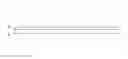
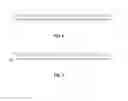
FIG. 1 shows a cross-section view of the laminate object of the invention.
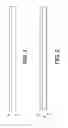
FIG. 2 shows a cross section of a mode of execution in which, in addition to the sheets shown in FIG. 1, there is a metal counterface or sheet adhered to the free face of the base or support sheet.
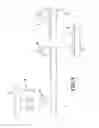
FIG. 3 shows a schematic view of the various stages of the manufacturing process.
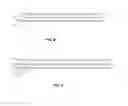
FIG. 4 to FIG. 7 show different embodiments of the laminate.
PREFERRED EMBODIMENT OF THE INVENTION
In view of the figures, a preferred embodiment of the proposed invention is described below.
FIG. 1 shows the basic and essential configuration of the laminate object of the invention, which comprises a porcelain sheet (1) with a small thickness of less than about 7 mm. This value should not be understood in a limiting sense, and is simply meant to illustrate the small thickness of the porcelain sheet; a reasonable thickness will be from 2 to 7 mm. This porcelain sheet (1) is adhered to a base or support sheet (2) that can have any composition, preferably one of the following or a combination thereof:
-
- MDF (Medium Density Fibreboard);
- Particleboard;
- High density foam;
- Polyethylene, polypropylene, ABS or foamed PVC; Methacrylate;
- HPL (High-Pressure Laminate) compact;
- Plywood boards;
- Aluminium or steel plate.
With this configuration, and as previously described, a synergic effect is obtained between the properties of the porcelain sheet (1) and those of the support sheet (2), defining a laminate with a great resistance to abrasion, wear, attack by chemical agents, as well as having an outstanding aesthetic result, while being lighter than a porcelain plate as used to date, increasing its bending resistance, increasing its acoustic insulation properties and being less expensive, as well as easier to machine.
Due to the aforementioned properties it has many applications, ranging from cladding partitions, facades, raised floors or for building ships, train cars, aircrafts, etc.
FIG. 2 shows an embodiment that complements the previous one, consisting of manufacturing a laminate which, in addition to the porcelain sheet (1) and the base or support sheet (2), has a metal sheet or metal counterface (3) with a small thickness, from 0.1 to 1 mm, these values being meant by way of orientation and example to show that the metal sheet has a small thickness.
This metal sheet (3) is used to maintain the flatness of the laminates manufactured. The material used to manufacture the metal sheet (3) or metal counterface (3) is preferably aluminium, steel or stainless steel. The composition of the metal sheet used is also not limiting.
The procedure used to adhere the porcelain sheet (1) to the base or support sheet (2) is as described above, while that used to adhere the base or support sheet (2) to the metal sheet (3) has also been described in the description of the invention.
FIG. 3 shows the different stages required to adhere the porcelain sheet (1) and the base or support sheet (2). These stages are the following:
-
- a) Cleaning (4) the face of the porcelain stoneware that will be adhered to the base or support sheet by blowing, cleaning brushes and suction;
- b) Pre-treating (5) the base or support sheet according to its composition;
- c) Applying (6) to the face of the base or support sheet a two-component polyurethane adhesive or a PUR adhesive;
- d) Adhering (7) the porcelain sheet to the base or support sheet by gradually applying pressure.
- The rollers used to apply the pressure on the porcelain sheet have a hardness of 60, to avoid damaging the porcelain stoneware;
- e) Allowing the laminate assembly to rest (8) for 3 or 4 days, preferably under pressure, using for example a metal bench or plate with the same dimensions as the laminate obtained.
If a polyethylene sheet is used as the base sheet, the face of the base or support sheet to be adhered can receive the following pre-treatment:
-
- Crowning;
- Trimming.
In FIG. 4, it can be observed that a foam sheet (4) and a second metal sheet (5) are adhered to the above-described assembly formed by the porcelain stoneware (1), the base support sheet (2), and the metal sheet or metal counterface (3).
In FIG. 5, it is shown how the base or support sheet consists of a laminate with a core (6) that can be made of any of the aforementioned materials (MDF, particleboard, foams, polyethylene, methacrylate, HPL or plywood) and that is laminated on both faces with corresponding metal sheets (7), wherein the thickness of the metal sheets of either face of the core do not have to be the same.
In FIG. 6, it is observed that the base support sheet is a laminate formed by a sheet of silicates or fibre cement (8) having metal laminate (9) in at least one of the faces.
In FIG. 7, it is observed that the base or support sheet is made of one of the materials (MDF, particleboard, foams, polyethylene, methacrylate, high pressure laminate or plywood) (10) and has an additional sheet or counterface (11) made of porcelain stoneware or silica quartz.
The essence of this invention is not affected by variations in the materials, shape, size and arrangement of its component elements, described in a non-limiting manner that will allow its reproduction by an expert.
Claims
1. Procedure for manufacturing a porcelain laminate comprising:
a sheet of porcelain stoneware with thickness from 2 to 7 mm adhered to a sheet that acts as a base or support;
wherein the procedure comprises the following stages:
Cleaning the face of the porcelain stoneware that will be adhered to the base or support sheet by blowing, cleaning brushes and suction;
Pre-treating the base or support sheet, in a manner depending on its composition:
Applying to the face of the base or support sheet a two-component polyurethane adhesive or a PUR adhesive;
Adhering the porcelain stoneware sheet to the base or support sheet by gradually applying pressure;
Allowing the laminate assembly to rest for 3 or 4 days, preferably under pressure, using for example a metal bench or plate with the same dimensions as the laminate obtained.
2. Procedure for manufacturing the porcelain laminate according to claim 1, characterised in that if a polyethylene sheet is used as the base sheet, the face of the base or support sheet to be glued can receive the following treatment:
Crowning;
Trimming.
3. Procedure for manufacturing the porcelain laminate according to claim 1, characterised in that the gradual pressure to apply to glue the two sheets depends on the composition of the base or support sheet:
If the base or support sheet is made of polyethylene, the pressure to apply is on the order of 15 to 20 Kg/cm2;
If the base or support sheet is made of rubber, the pressure to apply is on the order of 30 Kg/cm2;
If the base or support sheet is made of high density foam, the pressure to apply is on the order of 5 to 7 Kg/cm2;
If the base or support sheet is made of methacrylate, the pressure to apply is on the order of 15 to 20 Kg/cm2;
If the base or support sheet is made of MDF wood, the pressure to apply is on the order of 15 to 25 Kg/cm2.
4. Procedure for manufacturing the porcelain laminate according to claim 1, characterised in that if it has a metal sheet adhered to the base or support sheet, or if the support sheet is a metal sheet, the metal sheet is subjected to the following procedure in order to adhere it:
Scraping the metal sheets to a depth of 60 to 120 microns, uni-directionally in a longitudinal sense, so that in addition to cleaning grease, oil and dirt from the surface of the face that will be attached to the central core, one of the faces of the metal sheet is given a certain roughness. Scraping is performed with a grain size suitable for metal sheets.
Applying a primer, a paint that attaches well to the metal, sealing it to prevent rusting and preparing the surface for the subsequent application of an adhesive. The primer must be a paint particularly suitable for adherence to the plastic materials and the adhesives used subsequently, both for two-component polyurethane and for reactive polyurethane adhesives.
Drying the primer in an oven at a temperature from 60-180° C.
Applying a special outdoor adhesive that can be of different types, including reactive polyurethane and two-component polyurethane adhesives. The adhesive can be applied:
With a roller;
Spraying it on;
With a pistol, applying lines or beads in a spiral form.
5. Procedure for manufacturing the porcelain laminate according to claim 1, characterised in that if the material used in the laminate employed as support is MDF, particleboard, high density foam, polyethylene or polypropylene, methacrylate, high pressure laminate or plywood, once the laminate or assembly is conformed it is adhered directly to the porcelain sheet.
6. Procedure for manufacturing the porcelain laminate according to claim 1, characterised in that if the core of the support laminate is made of a silicate or fibre cement, the process is as follows:
Adhering a metal sheet to the back face of the porcelain panel;
Then, adhering the silicate or fibre cement sheet;
Finally, adhering another metal sheet.
7. Procedure for manufacturing the porcelain laminate according to claim 2, characterised in that if it has a metal sheet adhered to the base or support sheet, or if the support sheet is a metal sheet, the metal sheet is subjected to the following procedure in order to adhere it:
Scraping the metal sheets to a depth of 60 to 120 microns, uni-directionally in a longitudinal sense, so that in addition to cleaning grease, oil and dirt from the surface of the face that will be attached to the central core, one of the faces of the metal sheet is given a certain roughness. Scraping is performed with a grain size suitable for metal sheets.
Applying a primer, a paint that attaches well to the metal, sealing it to prevent rusting and preparing the surface for the subsequent application of an adhesive. The primer must be a paint particularly suitable for adherence to the plastic materials and the adhesives used subsequently, both for two-component polyurethane and for reactive polyurethane adhesives.
Drying the primer in an oven at a temperature from 60-180° C.
Applying a special outdoor adhesive that can be of different types, including reactive polyurethane and two-component polyurethane adhesives. The adhesive can be applied:
With a roller;
Spraying it on;
With a pistol, applying lines or beads in a spiral form.
8. Procedure for manufacturing the porcelain laminate according to claim 3, characterised in that if it has a metal sheet adhered to the base or support sheet, or if the support sheet is a metal sheet, the metal sheet is subjected to the following procedure in order to adhere it:
Scraping the metal sheets to a depth of 60 to 120 microns, uni-directionally in a longitudinal sense, so that in addition to cleaning grease, oil and dirt from the surface of the face that will be attached to the central core, one of the faces of the metal sheet is given a certain roughness. Scraping is performed with a grain size suitable for metal sheets.
Applying a primer, a paint that attaches well to the metal, sealing it to prevent rusting and preparing the surface for the subsequent application of an adhesive. The primer must be a paint particularly suitable for adherence to the plastic materials and the adhesives used subsequently, both for two-component polyurethane and for reactive polyurethane adhesives.
Drying the primer in an oven at a temperature from 60-180° C.
Applying a special outdoor adhesive that can be of different types, including reactive polyurethane and two-component polyurethane adhesives. The adhesive can be applied:
With a roller;
Spraying it on;
With a pistol, applying lines or beads in a spiral form.
Images & Drawings included:
Sources:
- United States Patent and Trademark Office - verify current appl. status at the USPTO↗
Similar patent applications:
Recent applications in this class:
- » 20250144913 2025-05-08
Side Pressure Plate and its Preparation Method - » 20230191748 2023-06-22
Sustainable wearable item and method of manufacturing same - » 20210362471 2021-11-25
Graphitic film-based elastic heat spreaders - » 20180037001 2018-02-08
HEAT DIFFUSION SHEET - » 20170368795 2017-12-28
Heat transport structure and manufacturing method thereof - » 20170334169 2017-11-23
Self-Adhesive Polymer Film Surface Protection System - » 20170225433 2017-08-10
Polymer film coated with a layer of silane coupling agent - » 20170015084 2017-01-19
Graphite-silicon composite and production method thereof - » 20160214349 2016-07-28
Wafer reconfiguration - » 20160101598 2016-04-14
Composite substrate and method for manufacturing same