Electronic card access system, and access card
US20180102004A1
2018-04-12
15/727,004
2017-10-06
✅ Patent granted
US 10,347,060 B2
2019-07-09
-
-
Allyson N Trail
Vorys, Sater, Seymour and Pease LLP | William L. Klima
2037-10-06
Abstract:
An electronic card access system, for example, for managing access control of a venue or facility, and an access card for use with the card access system
Assignee:
- Microcom Corporation 2 🇺🇸 Lewis Center, OH, United States
Applicant:
Interested in similar patents?
Get notified when new applications in this technology area are published.
Classification:
G07C2011/02 » CPC further
Arrangements, systems or apparatus for checking, e.g. the occurrence of a condition, not provided for elsewhere related to amusement parks
G06K7/10297 » CPC further
Methods or arrangements for sensing record carriers, e.g. for reading patterns by electromagnetic radiation, e.g. optical sensing; by corpuscular radiation sensing by radiation using wavelengths larger than 0.1 mm, e.g. radio-waves or microwaves arrangements for handling protocols designed for non-contact record carriers such as RFIDs NFCs, e.g. ISO/IEC 14443 and 18092
G06K7/10782 » CPC further
Methods or arrangements for sensing record carriers, e.g. for reading patterns by electromagnetic radiation, e.g. optical sensing; by corpuscular radiation by scanning of the records by radiation in the optical part of the electromagnetic spectrum; Fixed beam scanning; Relative movement Slot readers
G06K7/1417 » CPC further
Methods or arrangements for sensing record carriers, e.g. for reading patterns by electromagnetic radiation, e.g. optical sensing; by corpuscular radiation using light without selection of wavelength, e.g. sensing reflected white light; Methods for optical code recognition the method being specifically adapted for the type of code 2D bar codes
G06K19/06187 » CPC further
Record carriers for use with machines and with at least a part designed to carry digital markings characterised by the kind of the digital marking, e.g. shape, nature, code with magnetically detectable marking
G06K19/0723 » CPC further
Record carriers for use with machines and with at least a part designed to carry digital markings characterised by the kind of the digital marking, e.g. shape, nature, code; Record carriers with conductive marks, printed circuits or semiconductor circuit elements, e.g. credit or identity cards also with resonating or responding marks without active components with integrated circuit chips the record carrier comprising an arrangement for non-contact communication, e.g. wireless communication circuits on transponder cards, non-contact smart cards or RFIDs
G06K19/12 » CPC further
Record carriers for use with machines and with at least a part designed to carry digital markings characterised by the kind of the digital marking, e.g. shape, nature, code using markings of different kinds or more than one marking of the same kind in the same record carrier, e.g. one marking being sensed by optical and the other by magnetic means at least one kind of marking being used for authentication, e.g. of credit or identity cards the marking being sensed by magnetic means
G06K19/14 » CPC further
Record carriers for use with machines and with at least a part designed to carry digital markings characterised by the kind of the digital marking, e.g. shape, nature, code using markings of different kinds or more than one marking of the same kind in the same record carrier, e.g. one marking being sensed by optical and the other by magnetic means at least one kind of marking being used for authentication, e.g. of credit or identity cards the marking being sensed by radiation
G07C9/00571 » CPC further
Individual registration on entry or exit; Electronically operated locks; Circuits therefor; Nonmechanical keys therefor, e.g. passive or active electrical keys or other data carriers without mechanical keys operated by interacting with a central unit
G07C9/00658 » CPC further
Individual registration on entry or exit; Electronically operated locks; Circuits therefor; Nonmechanical keys therefor, e.g. passive or active electrical keys or other data carriers without mechanical keys operated by passive electrical keys
G07C9/00722 » CPC further
Individual registration on entry or exit; Electronically operated locks; Circuits therefor; Nonmechanical keys therefor, e.g. passive or active electrical keys or other data carriers without mechanical keys operated by passive electrical keys with magnetic components, e.g. magnets, magnetic strips, metallic inserts
G06K7/10 IPC
Methods or arrangements for sensing record carriers, e.g. for reading patterns by electromagnetic radiation, e.g. optical sensing; by corpuscular radiation
G06K7/14 IPC
Methods or arrangements for sensing record carriers, e.g. for reading patterns by electromagnetic radiation, e.g. optical sensing; by corpuscular radiation using light without selection of wavelength, e.g. sensing reflected white light
G07C9/00 IPC
Individual registration on entry or exit
G06K19/07 IPC
Record carriers for use with machines and with at least a part designed to carry digital markings characterised by the kind of the digital marking, e.g. shape, nature, code; Record carriers with conductive marks, printed circuits or semiconductor circuit elements, e.g. credit or identity cards also with resonating or responding marks without active components with integrated circuit chips
G06K19/06 IPC
Record carriers for use with machines and with at least a part designed to carry digital markings characterised by the kind of the digital marking, e.g. shape, nature, code
G07C11/00 IPC
Arrangements, systems or apparatus for checking, e.g. the occurrence of a condition, not provided for elsewhere
Description
FIELD
The present invention is directed to an electronic card access system, for example, for managing access control of a venue or facility, and an access card for use with the card access system.
BACKGROUND
There exist many different systems and equipment for controlling access to a venue or facility such as a theme park. There exists a need to provide an improved controlled access system.
In modern access control, it is common to issue a card which can be tapped or otherwise read to open gates, doors or similar. Most of these cards are issued via an on demand printer. Some cards are issued without a printer, but have a unique text printed on the card, but this text is not machine readable such as a QR, for example. Also this card does not have any identity verification such as a signature which can be used to detect fraud.
The disclosed invention eliminates the need for printing at all, speeding up the issuance, and reducing the cost of implementation.
SUMMARY
The present invention is directed to an improved card access system.
The present invention is direct to a card access system configured to verify payment and identity of a user to control access to a venue or facility.
The present invention is directed to an improved card for use with a card access system.
The present invention is directed to an improved access card having pre-printed or pre-programmed information contained therein.
The present invention is directed to an improved access card having pre-printed or pre-programmed information contained therein, and configured to receive printed or programmed information at an issuance location.
The present invention is directed to an improved access card having pre-printed or pre-programmed information contained therein, and configured to receive printed or programmed information at an issuance location and/or a control access location.
The present invention is directed to an improved access card having pre-printed or pre-programmed information contained therein, and configured to receive printed or programmed information at both an issuance location and a control access location.
BRIEF DESCRIPTION OF DRAWINGS
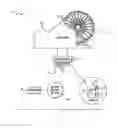
FIG. 1 is a diagrammatic view of a card access system according to the present invention.
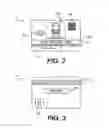
FIG. 2 is a front view of an access card according to the present invention having a number of security features.
FIG. 3 is a rear view of the access card shown in FIG. 2, also having a number of security features.
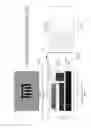
FIG. 4 is a front view of another access card according to the present invention.
FIG. 5 is a top view of the access card shown in FIG. 4.
FIG. 6 is a rear view of the access card shown in FIG. 4.
FIG. 7 is an end view of the access card shown in FIG. 4.
FIG. 8 is a top view of the access card shown in FIG. 4 revealing the RFID inlay located inside card.
DETAILED DESCRIPTION
A card access system 10 is shown in FIG. 1. The card access system 10 can be installed at a venue 12, for example, such as a building, facility, site, park, amusement park, or theme park.
The card access system 10 can be configured to control access to the venue 12 through gates and/or doors. For example, the card access system comprises an entrance gate 14 having multiple terminals 16 can be installed to provide controlled access to the venue 12.
The terminals 16 each comprise a card reader 18 having a card slot 18a. The card reader is integrated into the turnstile 20 having movable access control gate 22. The card reader 18 can have read/write devices and an optionally a printer (e.g. thermal printer) for printing on the access cards 110 and 210 (FIGS. 3-8).
The card access system 10 further comprises an access control center 24 and a database 26. The database 26 can be integrated into the access control center 24 or located at one or more remote locations. The access control center 24 can be located on the premises of the venue 12, and/or located at one or more remote locations.
The terminals 16 can be connected to the access control center 24 via a cable 28, and/or or can be configured to communicate with the access control center 24 wirelessly (e.g. via a Local Area Network (LAN), cellular transmission, satellite link, Internet link, microwave transmission, or other suitable wireless communication system or network).
The access control center can comprise one or more servers configured to receive information from the terminals 16, and communicate and control the terminals to control access through each terminal 16 into the entrance gate 14 of the venue 12.
ACCESS CARD
The card access system 10 further comprises a user being issued an access card 110, as shown in FIGS. 2 and 3. For example, the access card 110 is issued upon the user making payment for admission to the venue 12 at the location of the venue 12, or at one or more remote locations.
The access card 110 is provided with multiple security features to verify the payment and identity of the user to control the user's access to the venue 12. For example, on the front side of the access card 110 (FIG. 2) there exist the following features:
1) an electronic chip 102 configured for containing information and/or providing electronic communication, security, and controlled access using the access card 110;
2) a picture 104 (e.g. black and white or colored picture) of the face of the user;
3) a two-dimensional or matrix barcode 106 containing information and electronically readable by a bar code scanner;
4) a zone or box or strip 108 containing a card identification number;
5) a zone or box or strip 110 of repeating numbers/letters;
6) a zone or box or strip 112 indicating the date or dates of admission to the venue 12;
On the rear side of the access card 110 (FIG. 3) there exist the following features:
7) a zone or box or strip 120 for receiving the signature of the user;
8) a magnetic strip 122 containing information and electronically readable by a magnetic strip reader; and
9) a hologram 124 to indicate the access card 110 is authentic.
The access card 110 can also be provided with a Radio Frequency I.D. (RFID) tag or insert located on a surface or inside the access card 110 (e.g. located between layers of the access card 110 having two or more plys or layers).
The picture 104, barcode 106, card I.D. 108, repeating information 110, and date information 112 can be printed on the access card 110. Some of these features can be pre-printed, printed at a purchase/issuance booth, and/or printed at a terminal 16, and can be both general and/or specific to the user (e.g. user's identification).
Another embodiment of the access card 210 is shown in FIGS. 4-8. The access card 210 is provided with multiple security features to verify the payment and identity of the user to control the user's access to the venue 12. For example, on the front side of the access card 210 (FIG. 4) there exist the following features:
1) a logo 224;
On the rear side of the access card 210 (FIG. 6) there exist the following features:
2) barcode 206;
3) repeated text 210;
4) signature space 220;
5) magnetic stripe 222; and
On the inside of the access card 210 (FIG. 8) is the following feature:
6) RFID inlay 228.
Claims
1. A card access system for managing access control, comprising:
a preprinted card, comprising:
an electronic component having a unique identifier (UID);
printed repeating indicia on one or both sides of the card;
a variable machine readable indicia containing the UID; and
a signature zone
a validation device, comprising:
a transporter configured for moving the card;
an electronic UID reader configured to read the electronic UID;
an indicia reader configured to read the machine readable indicia UID a comparator configured for reading the UID from the electronic component to the machine readable indicia UID;
a communication device configured to communicate the UID, along with a user identity and access rights to a database; and
a card reader configured to read the UID and/or the machine readable indicia at various controlled access points throughout the property,
wherein access is determined by interpreting the database for each UID.
2. The system according to claim 1, wherein the electronic component is an RFID tag.
3. The system according to claim 1, wherein in addition to the UID and user identity, a user validation is also captured and transmitted to the database.
4. The system according to claim 3, wherein the user validation is a user's signature applied to the card.
5. The system according to claim 1, wherein the electronic component is an electronic chip.
6. A card system for managing access control, the system comprising:
a preprinted card, comprising:
an electronic component having a unique identifier (UID);
a printed repeating indicia on one or both sides of the card;
a variable machine readable indicia containing the UID;
a signature zone;
a validation device, comprising:
a transporter configured for moving the card;
an electronic UID reader configured to read the electronic UID;
an indicia capturing device configured to capture an image of the machine readable indicia and transmitting the image to an external vision processor along with the electronic UID;
an external reader configured for reading the machine readable indicia;
a comparator configured for comparing the UID from the electronic component with the machine readable indicia UID;
a communication device configured for communicating results of comparison of the UlDs to a point of issuance;
a reader configured for reading the UID and/or the machine readable indicia UID at various controlled access points throughout the property; and
a database in electronic communication with the reader,
wherein access is determined by the interpreting the database for each UID.
7. The system according to claim 6, wherein the electronic component is an RFID tag.
8. The system according to claim 6, wherein in addition to the UID and user identity, a user validation is also captured and transmitted to the database.
9. The system according to claim 6 where the user validation is a user's signature applied to the card.
Images & Drawings included:

Sources:
- United States Patent and Trademark Office - verify current appl. status at the USPTO↗
Similar patent applications:
- » 17899419
Smart access control system using an electronic card - » 20150019518
Greeting Card with Identifier for Accessing Electronic Version of Image Depicted on Card, System and Method - » 20070060309
Electronic transaction access system and method using a player tracker card - » 20150080113
ELECTRONIC TRANSACTION ACCESS SYSTEM AND METHOD USING A PLAYER TRACKER CARD - » 20150154393
Electronic access-protection system, method of operating a computer system, chip card and firmware component - » 20240086515
Method for accessing secured data stored in an electronic identification (EID) card using match-on-card and machine-readable zone technologies, smart card adapted for the method, and system implementing the method
Recent applications for this Assignee:
- » 20140120327 2014-05-01
LINERLESS MEDIA