Saturable-absorber-based laser system
US20180102624A1
2018-04-12
15/726,486
2017-10-06
✅ Patent granted
US 10,804,674 B2
2020-10-13
-
-
Monique R Peets
Cantor Colburn LLP
2038-06-29
Abstract:
Provided are a saturable absorber including at least one material selected from a group of MXenes, and a Q-switching and mode-locked pulsed laser system using the same.
Inventors:
- Jae Hun Kim 78 🇰🇷 Seoul, South Korea
- Young Min JHON 36 🇰🇷 Seoul, South Korea
- Seok Lee 66 🇰🇷 Seoul, South Korea
- Taikjin Lee 30 🇰🇷 Seoul, South Korea
- Minah SEO 19 🇰🇷 Seoul, South Korea
- Young Tae BYUN 7 🇰🇷 Seoul, South Korea
- Young In Jhon 4 🇰🇷 Seoul, South Korea
- BYUNGHYUCK MOON 3 🇰🇷 Seoul, South Korea
Assignee:
- Korea Institute of Science and Technology 2,066 🇰🇷 Seoul, South Korea
Applicant:
Interested in similar patents?
Get notified when new applications in this technology area are published.
Classification:
C09K11/67 » CPC further
Luminescent, e.g. electroluminescent, chemiluminescent materials containing inorganic luminescent materials containing refractory metals
H01S3/0941 » CPC further
Lasers, i.e. devices using stimulated emission of electromagnetic radiation in the infrared, visible or ultraviolet wave range; Processes or apparatus for excitation, e.g. pumping using optical pumping by coherent light of a laser diode
H01S3/11 » CPC further
Lasers, i.e. devices using stimulated emission of electromagnetic radiation in the infrared, visible or ultraviolet wave range; Controlling the intensity, frequency, phase, polarisation or direction of the emitted radiation, e.g. switching, gating, modulating or demodulating Pulse generation, e.g. Q-switching, mode locking
C09K11/02 IPC
Luminescent, e.g. electroluminescent, chemiluminescent materials Use of particular materials as binders, particle coatings or suspension media therefor
C01C3/08 » CPC further
Cyanogen; Compounds thereof Simple or complex cyanides of metals
C01B32/921 » CPC further
Carbon; Compounds thereof; Carbides; Carbides of single elements Titanium carbide
H01S3/094 IPC
Lasers, i.e. devices using stimulated emission of electromagnetic radiation in the infrared, visible or ultraviolet wave range; Processes or apparatus for excitation, e.g. pumping using optical pumping by coherent light
B82Y20/00 » CPC further
Nanooptics, e.g. quantum optics or photonic crystals
C09K11/025 » CPC further
Luminescent, e.g. electroluminescent, chemiluminescent materials; Use of particular materials as binders, particle coatings or suspension media therefor non-luminescent particle coatings or suspension media
H01S3/06791 » CPC further
Lasers, i.e. devices using stimulated emission of electromagnetic radiation in the infrared, visible or ultraviolet wave range; Construction or shape of optical resonators; Accommodation of active medium therein; Shape of active medium; Construction or shape of active medium; Waveguide lasers, i.e. whereby the dimensions of the waveguide are of the order of the light wavelength; Fibre lasers Fibre ring lasers
H01S3/094003 » CPC further
Lasers, i.e. devices using stimulated emission of electromagnetic radiation in the infrared, visible or ultraviolet wave range; Processes or apparatus for excitation, e.g. pumping using optical pumping by coherent light the pumped medium being a fibre
H01S3/1118 » CPC further
Lasers, i.e. devices using stimulated emission of electromagnetic radiation in the infrared, visible or ultraviolet wave range; Controlling the intensity, frequency, phase, polarisation or direction of the emitted radiation, e.g. switching, gating, modulating or demodulating; Pulse generation, e.g. Q-switching, mode locking; Mode locking; Passive mode locking using a saturable absorber Solid state absorber, e.g. SESAM
H01S3/06712 » CPC further
Lasers, i.e. devices using stimulated emission of electromagnetic radiation in the infrared, visible or ultraviolet wave range; Construction or shape of optical resonators; Accommodation of active medium therein; Shape of active medium; Construction or shape of active medium; Waveguide lasers, i.e. whereby the dimensions of the waveguide are of the order of the light wavelength; Fibre lasers; Constructional details of the fibre, e.g. compositions, cross-section, shape or tapering Polarising fibre; Polariser
H01S3/09415 » CPC further
Lasers, i.e. devices using stimulated emission of electromagnetic radiation in the infrared, visible or ultraviolet wave range; Processes or apparatus for excitation, e.g. pumping using optical pumping by coherent light of a laser diode the pumping beam being parallel to the lasing mode of the pumped medium, e.g. end-pumping
Y10S977/755 » CPC further
Nanotechnology; Nanostructure Nanosheet or quantum barrier/well, i.e. layer structure having one dimension or thickness of 100 nm or less
Y10S977/814 » CPC further
Nanotechnology; Nanostructure; Of specified inorganic semiconductor composition, e.g. periodic table group IV-VI compositions Group IV based elements and compounds, e.g. CxSiyGez, porous silicon
Y10S977/825 » CPC further
Nanotechnology; Nanostructure; Of specified inorganic semiconductor composition, e.g. periodic table group IV-VI compositions Heterojunction formed between semiconductor materials that differ in that they belong to different periodic table groups
Y10S977/951 » CPC further
Nanotechnology; Specified use of nanostructure for electronic or optoelectronic application; Radiation emitter using nanostructure; Electromagnetic energy Laser
H01S3/16 IPC
Lasers, i.e. devices using stimulated emission of electromagnetic radiation in the infrared, visible or ultraviolet wave range characterised by the material used as the active medium Solid materials
B82Y30/00 » CPC further
Nanotechnology for materials or surface science, e.g. nanocomposites
H01S3/1115 » CPC main
Lasers, i.e. devices using stimulated emission of electromagnetic radiation in the infrared, visible or ultraviolet wave range; Controlling the intensity, frequency, phase, polarisation or direction of the emitted radiation, e.g. switching, gating, modulating or demodulating; Pulse generation, e.g. Q-switching, mode locking; Mode locking; Passive mode locking using a saturable absorber
H01S3/1608 » CPC further
Lasers, i.e. devices using stimulated emission of electromagnetic radiation in the infrared, visible or ultraviolet wave range characterised by the material used as the active medium; Solid materials characterised by an active (lasing) ion rare earth erbium
H01S3/067 » CPC further
Lasers, i.e. devices using stimulated emission of electromagnetic radiation in the infrared, visible or ultraviolet wave range; Construction or shape of optical resonators; Accommodation of active medium therein; Shape of active medium; Construction or shape of active medium; Waveguide lasers, i.e. whereby the dimensions of the waveguide are of the order of the light wavelength Fibre lasers
Description
CROSS-REFERENCE TO RELATED APPLICATION
This application claims priority to and the benefit of Korean Patent Application No. 10-2016-0128951, filed on Oct. 6, 2016 and Korean Patent Application No. 10-2017-0120464, filed on Sep. 19, 2017, the disclosure of which is incorporated herein by reference in its entirety.
BACKGROUND
1. Field of the Invention
The present invention relates to a saturable absorber and a laser system based on the saturable absorber, and more particularly, to a new saturable absorber using MXene and a Q-switched and/or mode-locked pulsed laser system using the same.
2. Discussion of Related Art
With use of a saturable absorber, which is a passive element, laser mode-locking, Q-switching, etc. can be easily achieved at low costs. In particular, generation of femtosecond laser pulses using the saturable absorber is very important in terms of practical industrial applicability as well as scholarly importance. Thus, much attention has been recently paid thereto and research has been being conducted thereon. Until now, III-IV group semiconductor materials have been mainly used as saturable-absorber materials, but carbon nanotubes, graphene, black phosphorus, gold nanoparticles, two-dimensional (2D) topological insulators, etc. which are new nanomaterial-based saturable absorber materials have been introduced through active research in recent years. Among these materials, a large number of materials cause a mode-locking phenomenon to occur, and only some of them are used to manufacture femtosecond lasers. However, among the materials, black phosphorus is likely to be oxidized upon reacting with moisture in the air, that is, it has low chemical resistance, and gold nanoparticles are expensive. Furthermore, not all materials from which a mode-locked pulsed laser beam may be generated exhibit outstanding performance. Accordingly, there is a need to develop a new saturable-absorber material.
SUMMARY OF THE INVENTION
One aspect of the present invention provides a new saturable-absorber material, and more particularly, a low-cost saturable-absorber material having high chemical stability and saturable absorption performance.
An aspect of the present invention provides a saturable absorber comprising at least one MXene selected from a group of MXenes. In the present disclosure, the group of MXenes includes two-dimensional (2D) transition metal carbides, nitrides, and carbonitrides, and may be expressed as Mn+1Xn.
Here, M represents a transition metal, X represents C and/or N, and 1≤n≤3. The transition metal M may consist of at least one transition metal, and may have various forms, e.g., a form in which each layer is a mixture of two or more transition metals or a form in which a surface layer and an inner layer are formed of different metals. X may contain C and N, e.g., a mixture of C and N. A surface of the MXene may have one or a mixture of chemical functional groups among —O, —OH, and —F. However, a range of MXene is not limited thereto and may include all the ranges of MXene that have been introduced in a paper or an academic society (for instance, see Nature Review Materials, 2017, 2, 16098). Examples of such a MXene structure may include M4X3, M3X2, M2X, etc.
For example, the saturable absorber may be a stacked MXene structure having a single-layer or multi-layer structure or having a bulk thickness (1 nanometer or greater).
For example, the saturable absorber may be manufactured by drop-casting to achieve a material with a stack structure having a bulk thickness (1 nanometer or greater).
For example, a transition metal of the MXene may include at least one transition metal selected from the group consisting of Sc, Ti, V, Cr, Zr, Nb, Mo, Hf, and Ta or may include two or more types of metals.
For example, only a functional group may be included between layers of the MXene having the multi-layer structure.
For example, a functional group, water, or ions may be included between layers of the MXene having the multi-layer structure.
For example, the MXene may include at least one among Ti2C, Ti3C2, and Ti4C3.
For example, the saturable absorber may include Ti3CN.
For example, the group of MXenes may be available to generate a femtosecond pulsed laser beam by mode locking.
For example, the group of MXenes may be available to generate a femtosecond pulsed laser beam by Q-switching.
For example, the group of MXenes may be available for performing mode-locking and Q-switching on a laser beam with a wavelength ranging from near-infrared to far-infrared region (including a mid-infrared wavelength range).
For example, the saturable absorber may be a compound which is a mixture of the group of MXenes and a polymer.
For example, the polymer may include polyvinyl alcohol (PVA) or polyvinyl pyrrolidone (PVP)
BRIEF DESCRIPTION OF THE DRAWINGS
The patent or application file contains at least one drawing executed in color. Copies of this patent or patent application publication with color drawing(s) will be provided by the Office upon request and payment of the necessary fee.
The above and other objects, features and advantages of the present invention will become more apparent to those of ordinary skill in the art by describing in detail exemplary embodiments thereof with reference to the accompanying drawings, in which:
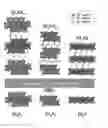
FIG. 1 is a diagram schematically illustrating a method of forming a MXene applicable to an embodiment of the present invention;
FIG. 2 is a diagram illustrating a composition of an original material MAX for forming a group of MXenes applicable to an embodiment of the present invention;
FIG. 3A is a diagram illustrating a structure of a side surface of a stacked MXene applicable to an embodiment of the present invention;
FIG. 3B is a diagram illustrating a side surface of a MXene having a single-layer structure applicable to an embodiment of the present invention;
FIG. 3C is a diagram illustrating a side surface of a MXene having a two-layer structure applicable to an embodiment of the present invention;
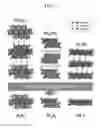
FIG. 4A is a diagram illustrating a case in which there are only chemical groups between layers during stacking of a MXene (direct hydrogen bonds between layers);
FIG. 4B is a diagram illustrating a case in which there are chemical groups and water molecules between layers during stacking of a MXene (indirect hydrogen bonds between layers);
FIG. 5A is a diagram illustrating a structure of Ti3CN MXene;
FIG. 5B a diagram and a photo showing a stacked Ti3CN film attached to a D-type (side-polished) optical fiber;
FIG. 5C is a transmission curve showing a non-linear saturable absorbing behavior of a device of FIG. 5B according to a change in the power of an incident laser beam;
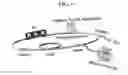
FIG. 6 is a diagram illustrating a mode-locked pulsed laser beam generating device using an MXene (Ti3CN) saturable absorber according to an embodiment of the present invention;
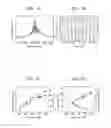
FIGS. 7A to 7D are diagrams illustrating a result of measuring a Q-switched pulsed laser beam obtained using a MXene (Ti3CN) saturable absorber; and
FIGS. 8A to 8D are diagrams illustrating a result of measuring a femtosecond mode-locked pulsed laser beam obtained using a MXene (Ti3CN) saturable absorber.
DETAILED DESCRIPTION OF EXEMPLARY EMBODIMENTS
Hereinafter, technical features of the present invention will be described in detail with reference to the accompanying drawings so that those of ordinary skill in the art can easily understand the invention. The terms or expressions used in the present specification and the claims should not be construed as being limited to as generally understood or as defined in commonly used dictionaries, and should be understood according to the technical idea of the invention, based on the principle that the inventor(s) of the application can appropriately define the terms or expressions to optimally explain the invention. Thus, the embodiments set forth in the present specification and drawings are just exemplary embodiments of the present invention and do not completely represent the technical idea of the present invention. Accordingly, it would be obvious to those of ordinary skill in the art that the above exemplary embodiments are to cover all modifications, equivalents, and alternatives falling within the scope of the invention at the filing date of the present application.
A saturable-absorber material according to an embodiment of the present invention includes at least one selected from a group of MXenes.
FIG. 1 is a diagram schematically illustrating a method of forming a MXene applicable to an embodiment of the present invention. FIG. 2 is a diagram illustrating a composition of an original material MAX for forming a group of MXenes applicable to an embodiment of the present invention.
Referring to FIGS. 1 and 2, the group of MXenes may be a two-dimensional (2D) material obtained by removing an A-layer from a MAX material (Mn+1AXn) by etching (here, n=1 to 3, M represents an early transition metal, e.g., A: Al, Si, P, S, Ga, Ge, As, Cd, In, Sn, Tl, or Pb, and X represents C or N. Both M and X may consist of two or more components.).
FIG. 3A is a diagram illustrating a structure of a side surface of a stacked MXene applicable to an embodiment of the present invention. FIG. 3B is a diagram illustrating a side surface of a MXene having a single-layer structure applicable to an embodiment of the present invention. FIG. 3C is a diagram illustrating a side surface of a MXene having a two-layer structure applicable to an embodiment of the present invention.
FIG. 4A is a diagram illustrating a case in which there are only chemical groups between layers during stacking of a MXene (direct hydrogen bonds between layers). FIG. 4B is a diagram illustrating a case in which there are chemical groups and water molecules between layers during stacking of a MXene (indirect hydrogen bonds between layers).
Referring to FIGS. 3A to 3C, a MXene saturable absorber applicable to the present invention may have various structures having a bulk thickness, e.g., a stacked structure of FIG. 3A, a single-layer structure of FIG. 3B, or a two-layer structure of FIG. 3C.
In this case, generally, the MXene may have a surface having a surface functional group (generally, a mixture of all or some of —O, —OH and —F) other than a bare surface.
For example, referring to FIGS. 4A and 4B, a stacked structure including two or more layers has a form having terminal functional groups (e.g., a surface chemical group of each MXene layer) (see FIG. 4A) rather than a form having nothing between layers. In addition, water or intercalating ions may exist between the layers (see FIG. 4B). That is, only functional groups may exist between MXene layers, or a functional group, water, and ions may exist between multiple saturable absorber layers.
A transition metal of the MXene may include at least one material selected from the group consisting of Sc, Ti, V, Cr, Zr, Nb, Mo, Hf, and Ta or may include two or more types of metals.
X in the MXene may have a form having C or N or a mixture of C and N (which is referred to as a carbon nitride).
FIG. 5A is a diagram illustrating a structure of Ti3CN MXene. FIG. 5B illustrates a diagram and a photo showing a stacked Ti3CN film attached to a D-type (side-polished) optical fiber. FIG. 5C is a transmission curve showing a non-linear saturable absorbing behavior of a device of FIG. 5B according to a change in the power of an incident laser beam. Specifically, FIG. 5C is a non-linear transmission graph showing a variation in the power of an incident laser beam with respect to a Ti3CN MXene saturable absorber according to an embodiment, and illustrates a saturable absorbing behavior of the above-described material. FIG. 6 is a diagram illustrating a mode-locked pulsed laser beam generating device using an MXene (Ti3CN) saturable absorber according to an embodiment of the present invention. Here, PC, EDF, WDM, and LD respectively represent a polarization controller, an Er-doped fiber, wavelength division multiplexing, and a laser diode. The MXene saturable absorber may have various thicknesses, e.g., a single-layer thickness or a multi-layer thickness according to a laser system to which the absorber is applied, or may have a bulk thickness. As illustrated in FIG. 6, for evanescent coupling, a thin MXene film may be provided between ferrules to induce saturable absorption rather than attaching a saturable absorber to a side surface of a D-type optical fiber. Alternatively, the MXene saturable absorber may be used to generate a pulsed laser beam by Q-switching rather than mode locking. Generally, a Q-switching pulsed laser system does not need the polarization controller illustrated in FIG. 6 and may thus not include a polarization controller.
Referring to FIG. 6, a film formed of stacked Ti3CN MXene having a thickness of several tens of nanometers or micrometers according to an embodiment of the present invention may be manufactured by drop-casting, and may be used as a saturable-absorber material for a femtosecond optical fiber laser.
In an embodiment of the present invention, a thin film may be manufactured by mixing stacked Ti3C2 MXene having a thickness of several tens of nanometers or micrometers with polyvinyl alcohol (PVA), and may be used as a saturable-absorber material for a femtosecond optical fiber laser.
FIGS. 7A to 7D are diagrams illustrating a result of measuring a Q-switched pulsed laser beam obtained using an MXene (Ti3CN) saturable absorber. FIG. 7A illustrates an optical spectrum (pump power: 230 mW). FIG. 7B illustrates oscilloscopic traces at a pump power of 194 (top) to 230 mW (bottom). FIG. 7C illustrates average output power and pulse energy. FIG. 7D illustrates a pulse width and a repetition rate plotted as a function of pump power in Q-switched optical fiber lasers using a Ti3 saturable absorber (Ti3CNTx SAs) and Tm—Ho-codoped optical fibers for the generation of 1875-nm laser pulses.
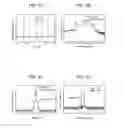
FIGS. 8A to 8D are diagrams illustrating a result of measuring a femtosecond mode-locked pulsed laser beam obtained using an MXene (Ti3CN) saturable absorber. FIG. 8A illustrates an oscilloscope trace. FIG. 8B illustrates an optical spectrum. FIG. 8C illustrates an autocorrelation trace. FIG. 8D illustrates an electrical spectrum of output pulses.
Referring to FIGS. 8A to 8D, a result of measuring the performance of a mode-locked pulsed laser system using the Ti3CN MXene saturable absorber of FIG. 6 reveals that the system can achieve a very short pulse width which is in a femtosecond range and thus the performance thereof is very high (see article entitled “Metallic MXene Saturable Absorber for Femtosecond Mode-Locked Lasers”, Advanced Materials, 2017).
In this case, Ti2C, Ti3C2, Ti4C3, or the like may be used as the MXene, as well as Ti3CN. The MXene may be used solely or in combination with a polymeric material.
In another embodiment, a MXene thin film formed of Mo, Cr, or Sc-based MXene may be manufactured and used as a saturable absorber of a laser system.
In another embodiment, MXene having a form in which not only a chemical functional group but also water and ions are inserted between MXene layers may be used as a saturable absorber of a laser system.
The laser mode-locking and Q-switching may be a laser mode-locking and Q-switching in a range of near-infrared, mid-infrared, or far-infrared.
According to the present invention, a new saturable absorber having improved chemical resistance and saturable absorption capability may be provided by using at least one material selected from a group of MXenes as a saturable absorber.
Furthermore, the MXene saturable absorber can be operated in a wider wavelength range than existing absorbers, and thus a pulsed laser system using the same is capable of generating a femtosecond pulsed laser beam through mode locking or Q-switching at lower costs.
The present invention is not limited to the above-described embodiments and the accompanying drawings and should be defined in the appended claims. Thus, it should be understood that various alternatives, modifications, and changes can be made in the technical idea of the present invention defined in the claims by those of ordinary skill in the art without departing from the technical idea of the invention, and fall within the scope of the invention.
Claims
1. A saturable absorber comprising at least one MXene selected from a group of MXenes.
2. The saturable absorber of claim 1, wherein the surface of the MXene comprises at least one chemical functional group among —O, —OH, and —F.
3. The saturable absorber of claim 1, wherein the saturable absorber comprises MXene having a single-layer structure or a multi-layer structure.
4. The saturable absorber of claim 1, wherein the saturable absorber comprises MXene stacked to a thickness of 1 nm or greater.
5. The saturable absorber of claim 1, wherein the transition metal of the-MXene comprises at least one transition metal selected from the group consisting of Sc, Ti, V, Cr, Zr, Nb, Mo, Hf, and Ta.
6. The saturable absorber of claim 3, wherein only a functional group is included between layers of the MXene having the multi-layer structure.
7. The saturable absorber of claim 3, wherein a functional group, water, or ions are included between layers of the MXene having the multi-layer structure.
8. The saturable absorber of claim 1, wherein the MXene comprises at least one among Ti2C, Ti3C2, and Ti4C3.
9. The saturable absorber of claim 1, wherein the MXene comprises Ti3CN.
10. The saturable absorber of claim 1, wherein the saturable absorber is a compound which is a mixture of MXene and a polymer.
11. A laser system using the saturable absorber of claim 1 to generate a pulsed laser beam by mode locking.
12. A laser system using the saturable absorber of claim 1 to generate a pulsed laser beam by Q-switching.
13. A laser system using the saturable absorber of claim 1 to generate a pulsed laser beam with a wavelength ranging from near-infrared to far-infrared region.
14. The saturable absorber of claim 4, wherein only a functional group is included between layers of the MXene having the multi-layer structure.
15. The saturable absorber of claim 4, wherein a functional group, water, or ions are included between layers of the MXene having the multi-layer structure.
Images & Drawings included:



Sources:
- United States Patent and Trademark Office - verify current appl. status at the USPTO↗
Recent applications in this class:
- » 20250125576 2025-04-17
LASER APPARATUS FOR THE EMISSION OF ULTRA-SHORT LIGHT PULSES AT HIGH ENERGY AND HIGH REPETITION FREQUENCY AND RESPECTIVE OPTOELECTRONIC DEVICE - » 20240429673 2024-12-26
INTRINSICALLY POLARIZED HIGH ENERGY MODE-LOCKED LASER OSCILLATOR OPERATING AT TWO-MICROMETER WAVELENGTH - » 20240079843 2024-03-07
COMPACT MODE-LOCKED LASER MODULE - » 20230402813 2023-12-14
PASSIVE HIGH ENERGY Q-SWITCHED LASER SYSTEM WITH OPTICALLY SYNCHRONIZED MULTI-STAGE/MULTI-PASS AMPLIFICATION - » 20230327392 2023-10-12
A METHOD FOR STABLE AUTOGENERATION OF ULTRASHORT LASER PULSES IN A POLARIZATION MAINTAINING OPTICAL FIBER RING RESONATOR AND THE LASER BASED UPON - » 20230291168 2023-09-14
Femtosecond pulse laser apparatus - » 20230099615 2023-03-30
MODE-LOCKING METHOD SELECTIVELY USING TWO DIFFERENT WAVELENGTHS, AND LASER DEVICE USING THE SAME - » 20230094403 2023-03-30
A method and system for generation of optical pulses of light - » 20220294175 2022-09-15
RADIATION FIELD GENERATING SYSTEM - » 20220209492 2022-06-30
Compact mode-locked laser module
Recent applications for this Assignee:
- » 20250294796 2025-09-18
GATE ALL AROUND FIELD EFFECT TRANSISTOR HAVING MULTIPLE GATE STACK STRUCTURE AND FABRICATION METHOD THEREFOR - » 20250288978 2025-09-18
MULTI-ELEMENT CATALYST INCLUDING INTERMETALLIC ALLOY NANOPARTICLES AND METHOD FOR PREPARING THE SAME - » 20250286083 2025-09-11
METHOD OF MANUFACTURING CATALYST AND ELECTRODE USING SUPERCRITICAL FLUID - » 20250281415 2025-09-11
EXOSOMES EXPRESSING RSVF AND USE THEREOF - » 20250280550 2025-09-04
CAPACITOR AND METHOD FOR MANUFACTURING THE SAME - » 20250278659 2025-09-04
SYSTEM FOR CALCULATING QUANTUM CHEMISTRY BASED ON QUDIT - » 20250250454 2025-08-07
MXene SURFACE-MODIFIED WITH METAL ALKOXIDE AND PREPARATION METHOD THEREOF - » 20250250324 2025-08-07
NOVEL FUSION PROTEIN FOR ELIMINATING NEURODEGENERATIVE DISEASE-CAUSING FACTOR AND USE THEREOF - » 20250246640 2025-07-31
ELECTRODE COMPRISING CERIA NANOTUBE ANTIOXIDANT, AND MEMBRANE-ELECTRODE ASSEMBLY AND FUEL CELL COMPRISING THE SAME - » 20250239968 2025-07-24
THREE-DIMENSIONAL SOLAR POWER GENERATION SYSTEM FOR SMART FARMS