Method for making pots and pans, equipped with a multi-layer coating of non-stick material
US20180116447A1
2018-05-03
15/543,847
2016-02-04
✅ Patent granted
US 10,092,133 B2
2018-10-09
WO; PCT/IT2016/000028; 20160204
WO; WO2016/125199; 20160811
William P Fletcher, III
Shuttleworth & Ingersoll, PLC | Timothy Klima
2036-02-04
Abstract:
A method for making pots and pans, equipped with a multi-layer coating of non-stick material including the forming of multiple layers of coating of an inner surface of a wall delimiting a cooking cavity, performed by cyclical repetition of a step of applying suitable substances and subsequent drying and baking in an oven of said layers of substances applied, at least the final layer of said substances being obtained by using a non-stick substance. The method includes, before the step of applying the substance for forming at least the final layer coating the cooking cavity of the pot, a step of adding as an additive edible oil or grease to the liquid substance to be applied for forming said final layer.
Inventors:
- Vincenzo D. ORLANDO 1 🇮🇹 Parma (PR), Italy
- Giuliano COSTI 1 🇮🇹 Langhirano (PR), Italy
- Vincenzo D. Orlando 1 🇮🇹 Parma, Italy
- Giuliano Costi 1 🇮🇹 Langhirano, Italy
Assignee:
- I.L.L.A. S.P.A. 1 🇮🇹 Noceto (PR), Italy
Applicant:
Interested in similar patents?
Get notified when new applications in this technology area are published.
Classification:
C09D7/63 » CPC further
Features of coating compositions, not provided for in group ; Processes for incorporating ingredients in coating compositions; Additives non-macromolecular organic
A47J36/025 » CPC main
Parts, details or accessories of cooking-vessels; Selection of specific materials, e.g. heavy bottoms with copper inlay or with insulating inlay Vessels with non-stick features, e.g. coatings
B05D7/00 IPC
Processes, other than flocking, specially adapted for applying liquids or other fluent materials to particular surfaces or for applying particular liquids or other fluent materials
A47J36/02 » CPC further
Parts, details or accessories of cooking-vessels Selection of specific materials, e.g. heavy bottoms with copper inlay or with insulating inlay
B05D7/586 » CPC further
Processes, other than flocking, specially adapted for applying liquids or other fluent materials to particular surfaces or for applying particular liquids or other fluent materials; Multilayers; Three layers or more; No clear coat specified each layer being cured, at least partially, separately
B05D3/0254 » CPC further
Pretreatment of surfaces to which liquids or other fluent materials are to be applied; After-treatment of applied coatings, e.g. intermediate treating of an applied coating preparatory to subsequent applications of liquids or other fluent materials by baking After-treatment
B05D1/36 » CPC further
Processes for applying liquids or other fluent materials Successively applying liquids or other fluent materials, e.g. without intermediate treatment
A47J37/10 » CPC further
Baking; Roasting; Grilling; Frying Frying pans, e.g. frying pans with integrated lids or basting devices
B05D7/14 » CPC further
Processes, other than flocking, specially adapted for applying liquids or other fluent materials to particular surfaces or for applying particular liquids or other fluent materials to metal, e.g. car bodies
B05D1/28 » CPC further
Processes for applying liquids or other fluent materials performed by transfer from the surfaces of elements carrying the liquid or other fluent material, e.g. brushes, pads, rollers
A47J27/00 IPC
Cooking-vessels
A47J27/00 IPC
Cooking; Apparatus for making beverages
B05D7/582 » CPC further
Processes, other than flocking, specially adapted for applying liquids or other fluent materials to particular surfaces or for applying particular liquids or other fluent materials; Multilayers; Three layers or more; No clear coat specified all layers being cured or baked together
A47J27/002 » CPC further
Cooking-vessels Construction of cooking-vessels ; Methods or processes of manufacturing specially adapted for cooking-vessels
B05D1/38 » CPC further
Processes for applying liquids or other fluent materials; Successively applying liquids or other fluent materials, e.g. without intermediate treatment with intermediate treatment
B05D5/083 » CPC further
Processes for applying liquids or other fluent materials to surfaces to obtain special surface effects, finishes or structures to obtain an anti-friction or anti-adhesive surface involving the use of fluoropolymers
B05D7/22 » CPC further
Processes, other than flocking, specially adapted for applying liquids or other fluent materials to particular surfaces or for applying particular liquids or other fluent materials to internal surfaces, e.g. of tubes
B05D7/584 » CPC further
Processes, other than flocking, specially adapted for applying liquids or other fluent materials to particular surfaces or for applying particular liquids or other fluent materials; Multilayers; Three layers or more; No clear coat specified at least some layers being let to dry, at least partially, before applying the next layer
B05D2202/00 » CPC further
Substrate
B05D2202/00 » CPC further
Metallic substrate
B05D2401/32 » CPC further
Form of the coating product, e.g. solution, water dispersion, powders or the like the coating being applied in other forms than involving eliminable solvent, diluent or dispersant applied as powders
B05D5/08 » CPC further
Processes for applying liquids or other fluent materials to surfaces to obtain special surface effects, finishes or structures to obtain an anti-friction or anti-adhesive surface
B05D1/02 » CPC further
Processes for applying liquids or other fluent materials performed by spraying
B05D3/02 » CPC further
Pretreatment of surfaces to which liquids or other fluent materials are to be applied; After-treatment of applied coatings, e.g. intermediate treating of an applied coating preparatory to subsequent applications of liquids or other fluent materials by baking
Description
TECHNICAL FIELD
This invention relates to a method for making non-stick pots and pans.
BACKGROUND ART
The prior art for making non-stick pots and pans involves coating the walls of the cooking cavity of the pots and pans by applying and baking in an oven several successive layers of a substance that has anti-friction properties, known as polytetrafluoroethylene (PTFE).
Before the first use of such pots and pans, some manufacturers recommend that users should grease the PTFE coating by wiping it with a wad of cotton soaked with edible oil.
The purpose of the edible oil is to fill the micro-pores of the layer of PTFE and to increase its non-stick capacity, as well as making it even more impermeable to the foods cooked.
Not all users always grease the pot before use. That may be because of a lack of attention or care, or because of a diet-related choice based on extreme attempts to minimise oil and grease consumption in the preparation of foods, which often is also consistent with the decision to purchase the type of pots and pans which are the subject matter of this invention.
Such an omission is the reason for the disadvantage that may be encountered, consisting of the fact that with repeated use, in the pot which has not been initially prepared as indicated above, the layer of non-stick material tends to see its pores gradually saturated with the absorption and infiltration of cooking fluids that in the medium-/long-term may make cleansing of the pot less and less effective, being able to affect its sanitisation, influence the flavour of the foods, and even the outer quality of the appearance of the non-stick layer.
DISCLOSURE OF THE INVENTION
The technical purpose of this invention is to overcome such disadvantages.
As part of that purpose, the primary aim of the invention is to devise a solution that can be implemented in the pot from the time of its production.
BRIEF DESCRIPTION OF THE DRAWINGS
In accordance with that aim, the solution proposed consists of a production method whose technical features are clearly indicated in the claims herein, and whose advantages are more apparent in the detailed description which follows, with reference to the accompanying drawings, which illustrate a preferred embodiment by way of example only and without limiting the scope of the invention, in which:
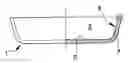
FIG. 1 is a schematic partial cross-section elevation view of a pot;
FIG. 2 is an enlarged detail of the pot of FIG. 1;
FIG. 3 is a schematic block diagram of several essential steps of a method for making a pot of the type illustrated in FIG. 1.
PREFERRED EMBODIMENTS OF THE INVENTION
With reference to the accompanying drawings, in FIG. 1, the numeral 1 denotes a pot of the known type comprising a cooking cavity 2 provided with a thin coating 3 made of non-stick material having its own multi-layer structure.
For the production of such a type of pot or pan equipped with a coating made of non-stick material for the cooking cavity 2, the Applicant applied a production method that comprises forming said coating 3 in multiple layers 4, 5 and 6, which are superposed and applied to the pot 1 one after another [FIG. 2].
In practice, the inner surface 7i of the wall 7 of the cooking cavity 2 of the pot 1 is subjected to forming of the coating 3 which comprises [as schematically illustrated in FIG. 3] the cyclical repetition of a step of application of suitable covering substances, and a subsequent drying and baking in an oven of the substance applied, steps that in sequence are repeated several times, each time using the most suitable materials, depending on the number of layers desired for construction of the coating of the inner cavity 2 of the pot 1.
Application of the covering layers may be performed with various methods, which in themselves are known, including, for example but without limiting, spraying or rolling of suitable liquid substances; or even methods for depositing covering powders.
The invention described above is susceptible of evident industrial application. It may also be modified and adapted in several ways without thereby departing from the scope of the appended claims. Moreover, all details of the invention may be substituted by technically equivalent elements.
In accordance with what is indicated above, it may be highlighted, more particularly—and still being explanatory and non-limiting—that the non-stick material used may be of various types, for example it may be plastic as happens when the non-stick material is in the families of polytetrafluoroethylenes (PTFE), or mineral if for example ceramic materials are used.
Claims
1. A method for making pots and pans, equipped with a multi-layer coating of non-stick material, comprising:
the forming of multiple layers of coating of an inner surface of a wall delimiting a cooking cavity by cyclical repetition of a step of applying suitable covering substances and subsequent drying and baking in an oven of said layers, at least the final layer of said covering substances being obtained by using a non-stick substance; said method comprising, before the step of applying the substance for forming at least the final layer coating the cooking cavity of the pot, a step of adding as an additive edible oil or grease to the substance to be applied for forming said final layer.
2. The method according to claim 1, wherein said step of adding the additive is carried out by mixing in the liquid state.
3. The method according to claim 1, wherein said edible oil or grease is of the vegetable type.
4. The method according to claim 3, wherein said edible oil is olive oil.
5. The method according to claim 4, wherein said step of adding olive oil as an additive is carried out by adding oil in a percentage of between 3% and 8%.
6. The method according to claim 5, wherein said percentage addition of olive oil is equal to 5%.
7. The method according to claim 3, wherein said vegetable oil is selected from the families of seed, corn, peanut oils.
8. The method according to claim 1, wherein said layer of non-stick material is made of a plastic material.
9. The method according to claim 1, wherein said layer of non-stick material is made of a ceramic material.
Images & Drawings included:
Sources:
- United States Patent and Trademark Office - verify current appl. status at the USPTO↗
Recent applications in this class:
- » 20250221566 2025-07-10
PREPARATION METHOD OF LASER TITANIUM KITCHENWARE - » 20250185843 2025-06-12
ANODIZED AND SEASONED COOKING SURFACE AND PRODUCT OF MANUFACTURE FOR SUCH COOKING SURFACES - » 20250176755 2025-06-05
NONSTICK PAN AND MANUFACTURING METHOD THEREOF - » 20250160564 2025-05-22
Process for Manufacture of Non-Stick Pans and Non-Stick Pan - » 20250143508 2025-05-08
BAKEWARE, COOKWARE AND/OR GRILLWARE ITEM, METHOD OF COATING A BAKEWARE, COOKWARE AND/OR GRILLWARE ITEM, CARRIER FOR A COATING DEVICE, AND COATING DEVICE - » 20250134299 2025-05-01
Fluorinated Peek Composite Coating With High Mechanical Performance - » 20250049258 2025-02-13
High-Performance Sol-Gel/Peek Composite Coating - » 20250049257 2025-02-13
LASER TITANIUM KITCHENWARE AND PREPARATION METHOD THEREOF - » 20250040751 2025-02-06
Titanium non-stick pan - » 20250024989 2025-01-23
UNCOATED PRESSED NON-STICK COOKWARE