Method For The Control of Cryogenic Stimulation of Shale Gas Formations
US20180135396A1
2018-05-17
15/815,672
2017-11-16
Abstract:
A method for stimulating a natural gas formation, comprising injecting a liquid cryogen and a proppant into a natural gas formation.
Interested in similar patents?
Get notified when new applications in this technology area are published.
Classification:
E21B43/2405 » CPC further
Methods or apparatus for obtaining oil, gas, water, soluble or meltable materials or a slurry of minerals from wells; Enhanced recovery methods for obtaining hydrocarbons using heat, e.g. steam injection in association with fracturing or crevice forming processes
E21B43/26 » CPC main
Methods or apparatus for obtaining oil, gas, water, soluble or meltable materials or a slurry of minerals from wells; Methods for stimulating production by forming crevices or fractures
E21B43/24 IPC
Methods or apparatus for obtaining oil, gas, water, soluble or meltable materials or a slurry of minerals from wells; Enhanced recovery methods for obtaining hydrocarbons using heat, e.g. steam injection
Description
CROSS-REFERENCE TO RELATED APPLICATION
This patent application claims the benefit of U.S. Provisional Patent Application Ser. No. 62/423,093, entitled “Method for the Control of Cryogenic Stimulation of Shale Gas Formations” filed Nov. 16, 2016, which application is incorporated in its entirety here by this reference.
TECHNICAL FIELD
This invention relates to methods for cryogenically stimulating a shale gas well.
BACKGROUND
Natural gas is the cleanest burning fuel of all common hydrocarbon fuels:
| Pounds of Pollutants Produced per Billion BTU of Energy |
| Pollutant | Natural Gas | Fuel Oil | Coal |
| Carbon Dioxide | 117,000 | 164,000 | 208,000 |
| Carbon Monoxide | 40 | 33 | 208 |
| Nitrogen Oxides | 92 | 448 | 457 |
| Sulfur Dioxide | 0.6 | 1,122 | 2,591 |
| Particulates | 7.0 | 84 | 2,744 |
| Formaldehyde | 0.750 | 0.220 | 0.221 |
| Mercury | 0.000 | 0.007 | 0.016 |
The combustion of natural gas thus results in almost 30% less carbon dioxide than fuel oil, and just under 45% less carbon dioxide than coal—making natural gas the prime replacement fuel for the latter fuels, and the transition fuel to a more environmentally friendly energy economy. (Natural Gas 1998: Issues and Trends, DOE/EIA-0560(98), Table 2, p. 58.)
Moreover, there are abundant domestic reserves of natural gas: as of Jan. 1, 2010 the total natural gas resources of the United States are estimated to be 2,203 TCF. (In the area of electrical generation, the largest single area of fuels consumption, nearly 95% of new generation capacity is natural gas fired. Source: www.naturalgas.org/overview/uses_electrical.asp). This 100+ year supply of strategically secure fuel does not need to be purchased from foreign sources, with the resulting dependence on said foreign sources and the commensurate devaluation of the U.S. dollar.
Indeed, “With rising domestic production, the United States becomes a net exporter of natural gas,” improving the United States' balance of trade/payments. (Annual Energy Outlook 2012, with Projections to 2035, DOE/EIA-0383(2012), June 2012, p 91).
Moreover, “In the IEO2011 Reference case, natural gas is the world's fastest-growing fossil fuel.” Because of its environmentally friendly characteristics, abundant supply, and inexpensive price, natural gas is in the process of becoming the United States'—and the world's—dominant source of energy. Many industry experts are predicting a 50% growth in natural gas consumption in the United States within the next 20 years.
Much of the United States' natural gas supply is “unconventional” gas that is trapped in shale formations. “Shale gas provides largest source of growth in the U.S. natural gas supply,” and “In most U.S. regions natural gas growth is led by shale gas development.”6 This natural gas is currently being extracted by a method known as hydraulic fracturing or hydraulic fracking, whereby a mixture of
-
- Millions of gallons of water per well,
- “Proppant” (typically sand), for holding open the fissures,
- Solvents, lubricants/viscosity inhibitors, and unknown “proprietary” chemicals, are pumped into the shale formation at high pressures (10,000 PSI) to fracture the shale formation and release the natural gas trapped therein.
However, conventional hydraulic fracking is coming increasingly under fire for the following reasons:
-
- Conventional hydraulic fracking uses very large volumes of water that would otherwise be used for human consumption and/or agricultural use. As water—a resource that is vital to human survival—becomes increasingly scarce, this raises serious ethical and strategic questions: how do we balance the allocation of water for human and agricultural use vs. energy extraction.8
- Said water must frequently be transported long distances by convoys of heavy tanker trucks, frequently disturbing residents, causing road damage, etc.
- The addition of “proprietary” solvents and lubricants/viscosity inhibiters into the water renders said water into hazardous waste, which must be stored, trucked away, and processed after hydraulic fracturing is completed. Since the solvents used in conventional hydraulic fracking are water soluble, they are not easily removed, and much of the frack water is simply discharged into so-called disposal wells. Frack water cannot be processed by municipal wastewater processing plants, and evaporative disposal of the water is prohibited for the obvious safety and environmental reasons.
- There is considerable evidence that the residuals of viscosity inhibitors used to increase the lubricity of frack water/“slick water” are causing formation slippage, contributing to earth tremors and settling in areas that have previously been fracked and/or near frack water disposal sites.
- There is increasing concern and evidence that seepage of frack water containing solvents through defects in well casings is polluting ground water supplies. Wells in the neighborhood of conventional fracking operations are becoming unfit for human use.
Citizen and environmental groups across the Nation are beginning to protest the use of conventional hydraulic fracking. Indeed, some local jurisdictions are already attempting to prohibit conventional fracking, thus jeopardizing the development of this vital sector of the United States' energy economy.
Conventional hydraulic fracking had its origin in the extraction of crude oil in marginal production fields, whereby water and solvents were originally pumped into the wells to “float” difficult to extract crude out of the wells. This practice, now enhanced by the application of high pressures to fracture the shale formation, has been carried on by the force of inertia into the realm of natural gas exploration/extraction.
There is, how ever, a significantly better—and more environmentally sound—method of fracturing shale formations for natural gas, one which does not consume nor pollute vital—and increasingly scarce—water supplies: cryogenic well stimulation.
SUMMARY
This invention involves the use of cryogens to perform the shale gas formation fracturing function, whereby liquid cryogens—primarily liquid nitrogen LN2—and sand are injected into the shale formation.
We call this process cryogenic well stimulation or, more simply, cryostim. There are numerous advantages to cryogenic well stimulation
-
- No water is used, freeing up/conserving large quantities of water for human, agricultural, and/or industrial consumption. The importance of a water (and solvent) free well fracturing methodology is clear, especially in these times of diminishing water supplies.
An additional—and potentially extremely significant—advantage is that cryogenic stimulation can be used in arid desert regions where no water is available for conventional hydraulic fracking.
-
- The cryostim process is extremely cost efficient and has a low carbon footprint: The elimination of water from the fracking process means that it does not have to be purchased and transported to the well site, and then as contaminated production water subsequently trucked away and disposed of as hazardous waste at high cost.
- Gaseous nitrogen (GN2) is inert, non-toxic, and universally available as a component of air. It can be liquefied to liquid nitrogen (LN2) and stored as a cryogen at the drilling site, using truck mounted liquefaction systems and cryogenic storage tanks. Convoys of heavy tanker trucks bearing water from distant locations to the drilling site—disturbing residents, cracking roads, etc.—will no longer be required.
- Introduction of the liquid cryogen initially thermally shocks the shale formation, locally fracturing the formation thermally, and allowing the cryogen further penetration into the formation.
- Cryogenic LN2 (or LCO2) has a much lower viscosity than water, and hence significantly greater shale formation penetrating power. Once flashed, its gaseous/vapor states have even lower viscosity, i.e. still greater formation penetrating ability.
- Once the cryogen has begun to penetrate the shale formation, the temperature of the shale formation vaporizes the liquefied cryogen, whose significant expansion within the confined space generates pressure, further penetrating and successively fracturing the formation.
- The liquid-vapor phase transition creates a significant volumetric expansion. Conversely, when the cryogen is confined within the shale formation, the liquid-vapor phase transition and expansion obviously causes the pressure to increase, forcing the cryogen and its expanding vapor still further into the formation to fracture it internally.
Their significantly lower viscosity means that cryogenic LN2 (or LCO2) will not only go into smaller fissures than water, but that it will also penetrate shale formations significantly faster, while simultaneously expanding into GN2 (or GCO2) to fracture the formation and driving itself forward. The energy released by the vaporization of the confined cryogen simultaneously provides both driving and fracturing forces.
Note that water has virtually no coefficient of expansion in its liquid state, and that its higher viscosity also hinders its migration/penetration into the shale formation. The cryogen's volumetric expansion due to the liquid-vapor phase transition will tend to follow the path of least flow resistance, rather than the brute force crushing and liquefaction of formations using water pressure, and is likely to be significantly less geologically intrusive/destabilizing than viscosity enhanced “slick water” hydraulic fracking.
-
- The cryogenic well stimulation procedure is carefully monitored and controlled using patented technology and utilizes repeated cycles, whereby each cycle subjects the fissures generated in the preceding cycle(s) to new cryogenic flow and vaporization/expansion. A detailed understanding of the thermophysical properties of cryogens, their phase transitions, and the monitoring, measurement and control thereof are absolutely critical to this process' efficiency.
- Just as in conventional hydraulic fracturing, sand is used as the proppant: various sizes of the proppant are used to prop open the fractured shale formation, enabling the outflow of the shale gas. The controlled achievement and maintenance of the correct void fraction in combination with fully turbulent flow is not only absolutely essential to generating adequate pressures for formation penetration and fracturing, but also for the delivery of the proppant to the desired shale formation location(s). Otherwise, premature/uncontrolled flashing results in the precipitation of the proppant at/near the inlet of the horizontal sections of the casing, impeding rather than aiding the outflow of production gas.
- No solvents are used that can potentially contaminate ground water.
- No viscosity enhancers are required. Once the desired fracturing of the shale formation is completed, excess cryogens are bled off—and no residual “slick water” lubricants remain in the formation that might cause slippage. This results in what is essentially a “dry” process extraction—which also reduces the costs of post-extraction gas processing.
- After fracturing the formation, excess vaporized/gaseous cryogen (GN2) can simply be released back into the atmosphere with no environmental consequences. Once the gas chromatograph senses significant fractions of methane, the well can be shut in and/or the shale gas release can be diverted into gathering pipelines. Note that nitrogen N2 and carbon dioxide CO2 are common components of natural gas, and that their separation at gas processing facilities is a commonly performed and well-known process.
- There is no contaminated frack water that must be trucked away, treated and/or disposed of.
The injection and return of the cryogenic flow media must be carefully monitored on a mass basis using two-phase cryogenic mass flow instrumentation. The proper down-hole void fractions and liquid mass injection rates and cycling must be maintained for efficient fracturing/penetration of the shale formation to take place.
There is only one identified company in the world that has a long and extensive history of proven expertise and patented two-phase mass flow measurement and control systems. These systems were specifically developed for cryogenic aerospace fueling applications. For example, if a spacecraft's tanks are only partially filled with liquid hydrogen LH2, with significant gaseous/vapor GH2 fractions (“void fraction”), the spacecraft will not have adequate fuel for a successful/safe lift off—as can be seen in films of early launch attempts. Analogously, when fracturing a formation with a cryogen, unmonitored vaporization of the fluid during the injection phase will result in inadequate liquid cryogen expansion down hole, i.e. inadequate liquid-to-vapor expansion, lack of adequate pressure, and an unsuccessfully fractured formation. Thus, this proven and patented aerospace technology is clearly the key element to environmentally sound waterless fracturing process.
During the controlled injection/return process, the correct achievement of the proper void fraction in combination with sustained turbulent flow is absolutely necessary to obtain adequately high pressures to fracture the formation and to insure the delivery and deposition of proppants to the desired target locations.
Thus, a thorough understanding of
-
- The thermophysical properties of cryogens, including the liquid-vapor phase transition and the subsequent vapor expansion,
- The fluid mechanics of cryogenic flow regimes, coupled with
- The ability to carefully and accurately measure and control cryogens their liquid, vapor and 2-phase states, may be necessary for effective cryogenic well stimulation.
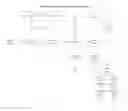
The cryogenic well stimulation system is shown schematically in FIG. 1. During the initial cool-down phase of the cryostim process, the excess GN2 may be routed back to the liquefier for improved liquefaction efficiency, similarly to the vapor reflux from the proppant pre-cooler.
FIG. 1 shows LN2 as the cryogenic well stimulation medium. The same/similar process can also be executed using LCO2 that may be available at the field.
These and other features, aspects, and advantages of the present invention will become better understood with reference to the following description and appended claims.
BRIEF DESCRIPTION OF DRAWINGS
FIG. 1 shows a simplified cryogenic well stimulation schematic; and
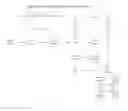
FIG. 2 shows a combined cryostim/generation/sequestration cycle.
DETAILED DESCRIPTION OF THE INVENTION
The detailed description set forth below in connection with the appended drawings is intended as a description of presently-preferred embodiments of the invention and is not intended to represent the only forms in which the present invention may be constructed or utilized. The description sets forth the functions and the sequence of steps for constructing and operating the invention in connection with the illustrated embodiments. It is to be understood, however, that the same or equivalent functions and sequences may be accomplished by different embodiments that are also intended to be encompassed within the spirit and scope of the invention.
A method for the stimulation of shale gas/“unconventional” gas wells via the measurement and control of single and two-phase flow of non-polar cryogens, including (but not limited to) liquid nitrogen and liquid carbon dioxide. The cryogen is liquefied and stored on-site and its injection and reflux continuously controlled during the cryostimulation process. The injected mass flow and void fraction of the two-phase flow is monitored using dielectric-to-density methods. This is a waterless alternative to conventional hydraulic fracturing. In addition to the stimulation of the shale gas well for delivery into the natural gas pipeline system, on-site electrical generation is proposed, with the use of the resultant carbon dioxide for subsequent local fracturing and/or sequestration in depleted wells, for a near net-zero release of carbon dioxide into the atmosphere.
The high efficiency cryogenic well stimulation methodology eliminates the need for water in the shale gas well fracturing process: Water must neither be transported to the well site, nor transported away from the well site to disposal wells. This lowers fracturing costs and eliminates the problem of production water disposal and the related problems of subsidence and earthquakes near disposal wells. This method is of special utility in arid regions where natural gas must be developed.
The primary use of natural gas is electrical power generation. (See Footnote 2.) In those areas where natural gas is “stranded,” i.e. the cost of connection to the pipeline grid is prohibitive; natural gas can be used on site to generate electricity, which is then more economically transported via electrical transmission lines.
Larger gas turbine generators, e.g. from Solar Turbines, and smaller microturbines, e.g. from Capstone Turbines, are commercially available.
Once the initial stimulation of a field is performed using liquid nitrogen LN2, the CO2 generated by the gas turbine electrical generators can be liquefied to LCO2 and used for the subsequent well stimulation in the same gas field. Again, liquid LCO2 does not pose a hazard to the ground water supply: even in the event of seepage, the only result would be carbonated water.
As natural gas wells become depleted, the greenhouse gas CO2 emitted by electrical generation can be sequestered on-site therein. This dry replacement of the extracted natural gas may be geologically more stable than simply leaving a water liquefied and lubricated void after extracting the natural gas contained in the formation.
Distributed generation is also more strategically secure against natural catastrophes, accidental supply interruptions, etc.: the power grid has much better redundancy and failover capability than the natural gas transmission pipeline system—where interruption of even a single transmission pipeline may bring down multiple power plants. Interruptions in electrical supply are quickly and commonly solved by re-routing, and repairs to electrical transmission lines are much more easily and quickly repaired than gas transmission pipelines.
The fully integrated cryogenic well stimulation, electrical generation, and CO2 sequestration process constitutes an extremely desirable and environmentally friendly means of natural gas utilization. It is a logical step in the exploration of natural gas, its utilization to generate electricity, and the “disposal” of the resulting emissions.
Cryogenic well stimulation provides an environmentally sound, high efficiency, means of developing shale gas reserves. It is non-polluting, does not consume water, and does not inject any harmful solvents into the ground.
Cryogenic well stimulation is intended primarily for the extraction of shale gas: since cryogenic temperatures increase the viscosity of crudes, the cryostim process is of limited value in the exploitation of crude oil.
Where an abundant supply of CO2 is available, liquefied carbon dioxide can also be used as the cryostim fluid, providing the dual functions of formation fracturing and CO2 sequestration.
In conclusion we note:
-
- The determination and control of cryogenic single and two-phase mass flowrates and void fractions are absolutely essential for an efficient and environmentally sound cryogenic well stimulation process.
- Use of the cryostim process will—by overcoming many/most of the objections to conventional hydraulic fracking—ensure the continued development of the United States' natural gas reserves and thus lead lower energy costs and eventually to the energy independence of the Nation.
- However, it is important to introduce this environmentally sound method of cryogenic well stimulation quickly, before complete bans on well fracturing become widespread. Bans on conventional fracking will be very difficult to overturn—even with a considerably safer and more environmentally friendly cryogenic fracturing methodology.
- Cryostim technology is applicable world wide—and is of truly exceptional utility in the development of natural gas reserves in arid desert regions. A world-wide cryogenic well stimulation/development service organization can be built up upon this technology, providing considerable service income and employment.
- The combination of cryostim with on-site distributed electrical generation provides the most economical, strategically secure, environmentally friendly means of fossil-fueled electrical generation. The potential ability to sequester the resulting CO2 locally also would solve resulting greenhouse gas emissions problems.
This the next step in natural gas well development/completion and the utilization of natural gas to generate electricity, combined with the sequestration of the resulting greenhouse gas CO2 in an environmentally sound manner.
Claims
What is claimed is:1. A method of cryogenically stimulating a natural gas formation, comprising:
Injecting liquid cryogen and a proppant into a natural gas formation.
Images & Drawings included:

Sources:
- United States Patent and Trademark Office - verify current appl. status at the USPTO↗
Recent applications in this class:
- » 20250163788 2025-05-22
MULTISTAGE COMPLETION TOOL - » 20250154858 2025-05-15
POWER SYSTEM AND METHOD - » 20250137365 2025-05-01
DRILL SPACE UNIT DEVELOPMENT BASED ON ENERGY DELIVERED TO FORMATION - » 20250122789 2025-04-17
Stimulating Hydrocarbon Production in a Subsurface Reservoir - » 20250116180 2025-04-10
STIMULATION JOB DESIGN AND EXECUTION ADVISORS FOR OPTIMAL FRACTURE PERFORMANCE - » 20250101841 2025-03-27
In-reservoir cleanup operations through exothermic reaction following a fracturing operation - » 20250084741 2025-03-13
METHODS FOR HYDRAULIC FRACTURING - » 20250075603 2025-03-06
SCREEN-OUT FLOW DEVICE AND PROCESS - » 20250059867 2025-02-20
DOWNHOLE APPARATUS AND SYSTEM FOR ELECTRIC-BASED FRACTURING - » 20250059866 2025-02-20
SYSTEMS AND METHODS FOR DEPLOYMENT OF ELECTRIC-BASED FRACTURING TOOLS IN VERTICAL WELLS