Raspberry plant named 'PS-10.028-58'
US20180160586P1
2018-06-07
15/732,617
2017-12-05
Abstract:
This invention relates to a new and distinct everbearing variety of raspberry plant named ‘PS-10.028-58’. The new variety is primarily adapted to the growing conditions of the central coast of California and is characterized by the following: mid-season primocane production with medium sized fruit of light-red coloration. Fruit is of consistent conic shape, releases easily from receptacle, is glossy and possesses very good flavor. Foliage is slightly convex, medium green; possessing medium rugosity, weak gloss and equal 3-5 foliates. Primocanes have an absent or very weak waxy coat, medium thorn density of small purple spines and have very weak anthocyanin coloration.
Assignee:
- PLANT SCIENCES, INC. 24 🇺🇸 Watsonville, CA, United States
Interested in similar patents?
Get notified when new applications in this technology area are published.
Classification:
A01H5/08 IPC
Angiosperms, i.e. flowering plants, characterised by their plant parts; Angiosperms characterised otherwise than by their botanic taxonomy Fruits
Description
Latin name of the genus and species of the plant claimed: Rubus idaeus.
Variety denomination: ‘PS-10.028-58’.
CROSS-REFERENCE TO RELATED APPLICATION
This application claims priority to and the benefit of U.S. Provisional Application No. 62/430,475 filed Dec. 6, 2016, the entire disclosure of which is incorporated by reference herein.
BACKGROUND OF THE INVENTION
The present invention relates to a new and distinct fall bearing raspberry variety designated as ‘PS-10.028-58’. This new variety is a result of a controlled cross made in 2010 in Watsonville, Calif. between raspberry variety ‘GRANDEUR’ (patented, U.S. Plant Pat. No. 20,459) as the female parent and raspberry variety ‘04.3891’ (unpatented) as the male parent in an ongoing breeding program. The variety is botanically known as Rubus idaeus.
The seedling resulting from the aforementioned cross was asexually propagated by dormant canes in Santa Cruz County, Calif. and was subsequently selected by the inventor from a controlled breeding plot in Watsonville, Calif. in 2012. After its selection, the new variety was further asexually propagated by dormant canes, roots and non-dormant root shoot cuttings in Santa Cruz County, Calif., San Joaquin County, Calif. and Siskiyou County, Calif. The new variety was then extensively tested over the next several years in fruiting fields in Santa Cruz County, Calif. This propagation has demonstrated that the combination of traits disclosed herein as characterizing the new variety are fixed and remain true to type through successive generations of asexual reproduction.
BRIEF SUMMARY OF THE INVENTION
‘PS-10.028-58’ is primarily adapted to the climate and growing conditions of the central coast of California. This region provides the necessary year-round temperatures required for it to produce and maintain a strong vigorous plant and to remain in fruit production from July through December on primocanes and in the ensuing year from May through July on floricanes. The following traits have been repeatedly observed and are determined to be unique characteristics of ‘PS-10.028-58’, which in combination distinguish this raspberry plant as a new and distinct variety:
-
- 1. Dark purple spines
- 2. High fruit yield
- 3. Light to medium red fruit color
- 4. Absent to very weak primocane glaucosity
- 5. Very good flavor
The raspberry variety that is believed to be most closely related to the new raspberry variety ‘PS-10.028-58’ is the raspberry variety ‘GRANDEUR’ (patented, U.S. Plant Pat. No. 20,459). In comparison to the similar raspberry variety ‘GRANDEUR’, ‘PS-10.028-58’ differs by the following combination of characteristics described in Table 1:
| TABLE 1 | ||
| ‘GRANDEUR’ | ||
| Characteristic | ‘PS-10.028-58’ | (US PP20,459) |
| Primocane waxy coat | Absent to very weak | Absent to very |
| (glaucosity) | weak | |
| Predominate number of leaflets | Equal 3-5 | Always 3 |
| Leaf shape (cross section) | Slightly convex | Flat to slightly |
| convex | ||
| Rugosity | Medium | Strong |
| Color mature fruit | RHS 43A | RHS 42A |
| Light to medium red | Medium red | |
| Thorn tip coloration | N186B | 180C |
| Greyed-purple | Greyed-red | |
| Relative number of pedicel | 22.1 | 16.2 |
| thorns | Many | Medium |
‘PS-10.028-58’ differs from its parents, ‘GRANDEUR’ and ‘04.3891’, by the following combination of characteristics described in Table 2:
| TABLE 2 | |||
| ‘Grandeur’ | |||
| Characteristic | ‘PS-10.028-58’ | (US PP20,459) | ‘04.3891’ |
| Productivity | High | High | Medium |
| Glossiness (fruit) | High | Medium | High |
| Firmness (fruit) | Medium to high | Very high | Medium to |
| low | |||
| Adherence of receptacle | Weak | Very weak | Medium |
| Primocane time of | Medium | Medium | Medium |
| fruiting | |||
| Fruit size | Medium | Medium | Large |
| Flavor | Very good | Good | Good |
For identification, a series of molecular markers have been determined for this new variety.
BRIEF DESCRIPTIONS OF THE DRAWINGS
The accompanying color photographs illustrate the overall appearance of typical specimens of the new raspberry variety, ‘PS-10.028-58’ at various stages of development as true as reasonably possible with color reproductions of this type. Color in the photographs may differ slightly from the color value cited in the detailed botanical description which accurately describes the color of ‘PS-10.028-58’. The depicted plant and plant parts of the new raspberry variety ‘PS-10.028-58’ were taken in Watsonville, Calif. and are approximately 2 to 16 months old:
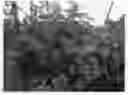
FIG. 1 shows typical primocane foliage and fruit color; foliate and rugosity characteristics of ‘PS-10.028-58’ taken in the month of May 2015;
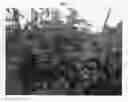
FIG. 2 shows typical gloss, coloration, and drupelet formation of floricane fruit of ‘PS-10.028-58’ taken in the month of May 2015;
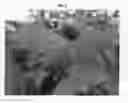
FIG. 3 shows typical harvested fruit of ‘PS-10.028-58’ taken in the month of July 2015;
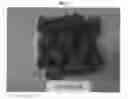
FIG. 4 shows typical dormant cane color characteristics of ‘PS-10.028-58’ taken in the month of January 2013.
DETAILED BOTANICAL DESCRIPTION
‘PS-10.028-58’ has not been observed under all possible environmental conditions. The characteristics of the new variety may vary in detail, depending upon variations in environmental factors, including weather (temperature, humidity and light intensity), day length, soil type, and location.
The aforementioned photographs, together with the following description of the new raspberry variety ‘PS-10.028-58’, unless otherwise noted, are based upon observations taken during the 2016-2017 growing season in Watsonville, Calif. Primocane measurements and ratings were taken from plants of ‘PS-10.028-58’ dug from a nursery located in Siskiyou County, Calif. during the middle of October 2015 and planted approximately 3 to 4 weeks later in Watsonville, Calif. The approximate age of the observed primocane plants is 7 to 8 months. Floricane measurements and ratings were taken from the same planting of ‘PS-10.028-58’ at an approximate age of 16 to 18 months. Yield observations and fruit quality characteristics are averaged from three years of data collected from the 2013 through 2016 production seasons. Flower measurements and characteristics are from secondary flowers unless otherwise noted. Fruit characteristics and measurements are from secondary fruit unless otherwise noted. Foliage characteristics and measurements are from 3-foliate foliage unless otherwise noted.
Color terminology where noted follows The R.H.S. Colour Chart Fifth Edition, Royal Horticultural Society, London, United Kingdom (1966).
The following Tables 3-7 describe fruit, plant, foliage, flower and pest/disease characteristics of the new raspberry ‘PS-10.028-58’ in comparison to the similar raspberry varieties ‘GRANDEUR’ (patented, U.S. Plant Pat. No. 20,459).
| TABLE 3 |
| FRUIT CHARACTERISTICS |
| ‘GRANDEUR’ | ||
| Characteristic | ‘PP-10.028-58’ | (US PP20,459) |
| Color mature fruit | RHS 43A | RHS 42A |
| Light to medium red | Medium red | |
| Color achenes | RHS 159A | RHS 159A |
| Orange-white group | Orange-white | |
| group | ||
| Fruit length (mm) | 25.49 | 22.91 |
| Fruit width (mm) | 22.73 | 20.12 |
| Length/Width ratio | 1.12 | 1.14 |
| Longer than broad | Longer than broad | |
| Seed weight (mg) | 1.68 | 1.75 |
| Drupelets per berry | 131 | 93 |
| Weight of single drupe (g/drupe) | 0.044 | 0.043 |
| Relative size of drupes | Medium | Medium |
| Fruit size | Medium | Medium |
| Predominant shape | Conical | Conical |
| Eveness of color | Even | Even |
| Glossiness | High | Medium |
| Adherence of receptacle | Weak | Very weak |
| Firmness of flesh | Firm | Very firm |
| Firmess of skin | Firm | Very firm |
| Soluble solids (% Brix) | 10.8 | 10.5 |
| Flavor | Very good | Good |
| TABLE 4 |
| PLANT CHARACTERISTICS |
| ‘GRANDEUR’ | ||
| Characteristic | ‘PS-10.028-58’ | (US PP20,459) |
| General: | ||
| Habit | Upright | Upright |
| Size | Medium | Medium |
| Productivity | High | High |
| Self-fruitfulness | Yes | Yes |
| Type of bearing | Everbearing | Everbearing |
| Primocane: | ||
| Color (true) | RHS 145A | RHS 145B |
| Yellow-green group | Yellow-green | |
| group | ||
| Length (cm) | 178.1 | 143.6 |
| Basal diameter (mm) | 13.62 | 21.80 |
| Diameter central 1/3 (mm) | 11.38 | 12.55 |
| Lateral length at central 1/3 (cm) | 28.5 | 43.6 |
| No. fruiting laterals per cane | 15.3 | 17.4 |
| Internode length at central 1/3 | 39.01 | 48.84 |
| (mm) | ||
| Anthocyanin coloration | RHS 59B | RHS 59B |
| Red-purple group | Red-purple group | |
| Anthocyanin intensity | Absent to very weak | Weak |
| Pubescence | Absent | Absent |
| Length of vegetative bud (mm) | 10.34 | 11.01 |
| Strength of waxy coat | Absent to very weak | Absent to very |
| (glaucosity) | weak | |
| Time of flowering | Medium | Medium |
| Time of fruiting | Medium | Medium |
| Length of fruiting season | Long | Long |
| % of total yield | 44% | 50% |
| Flowering period | Late June to | Late June to |
| Late November | Late November | |
| Harvest period | Late July to | Late July to |
| Late December | Late December | |
| Primocane fruit weight (g) | 4.2 | 3.8 |
| Primocane yield (g/plant) | 2,571 | 2,662 |
| Young Shoots: | ||
| Number (per meter) | 15-20 | 15-20 |
| Medium | Medium | |
| Anthocyanin presence | Present | Present |
| Anthocyanin coloration | RHS 179A | RHS 179A |
| Red-purple group | Greyed-red group | |
| Antocyanin intensity | Medium | Medium |
| Thorns: | ||
| Thorn coloration (tip) | RHS N186B | RHS 180C |
| Greyed-purple group | Greyed-red group | |
| Thorn coloration (base) | RHS N186C | RHS 145B |
| Greyed-purple group | Yellow-green | |
| group | ||
| Thorn length at central 1/3 (mm) | 0.70 | 0.76 |
| Thorn base at central 1/3 (mm) | 1.23 | 1.53 |
| Thorn presence | Present | Present |
| Thorn density per cm at central | 5.35 | 3.38 |
| 1/3 | Medium | Medium |
| Thorn texture | Rigid | Rigid |
| Attitude of the tip | Horizontal | Horizontal |
| Floricane: | ||
| Color (true) | RHS 165B | RHS 164A |
| Greyed-orange group | Greyed-orange | |
| group | ||
| Length (cm) | 130.8 | 119.8 |
| Fruiting lateral attitude | Erect | Erect |
| Time bud burst | Medium | Medium |
| Time of flowering | Medium | Medium |
| Time of fruiting | Medium | Medium |
| Length of fruiting season | Medium to long | Medium to long |
| % of total yield | 56% | 50% |
| Flowering period | Late April to | Late April to |
| Late June | Late June | |
| Harvest period | Late May to | Late May to |
| Late July | Late July | |
| Floricane fruit weight (g) | 4.0 | 3.7 |
| Floricane yield (g/plant) | 3,273 | 2,680 |
| TABLE 5 |
| FOLIAGE CHARACTERISTICS |
| ‘GRANDEUR’ | ||
| ‘PS-10.028-58’ | (US PP20,459) | |
| Characteristic | (3 Foliate) | (3 Foliate) |
| General: | ||
| Color of upper surface | RHS 137A | RHS N137A |
| Green group | Green group | |
| Color of lower surface | RHS 192A | RHS 190B |
| Greyed-green group | Greyed-green group | |
| Shape in cross section | Slightly convex | Flat to slightly |
| convex | ||
| Arrangement | Compound | Compound |
| Relief between veins (rugosity) | Medium | Strong |
| Glossiness | Weak | Weak |
| Number of leaflets/leaf | Equal 3-5 | Always 3 |
| Terminal Leaflet: | ||
| Length (mm) | 116.2 | 127.5 |
| Width (mm) | 79.1 | 91.6 |
| Length/Width Ratio | 1.5 | 1.4 |
| Longer than broad | Longer than broad | |
| Size | Medium | Medium to large |
| Shape | Cordate | Cordate |
| Shape of base | Cordate | Cordate |
| Shape of tip | Acuminate | Acuminate |
| Margins | Biserrate | Biserrate |
| Lateral Leaflet: | ||
| Length (mm) | 104.9 | 105.5 |
| Width (mm) | 77.2 | 65.1 |
| Length/width ratio | 1.3 | 1.6 |
| Longer than broad | Longer than broad | |
| Rachis length (mm) | 43.1 | 36.2 |
| Orientation | Opposite | Opposite |
| Arrangement | Compound | Compound |
| Shape | Ovate | Ovate |
| Overlapping | Overlapping | Touching |
| Shape of the base | Rounded | Oblique rounded |
| Shape of the tip | Acuminate | Acuminate |
| Margins | Biserrate | Biserrate |
| Petiole: | ||
| Length (mm) | 61.10 | 59.00 |
| Width (mm) | 4.68 | 3.99 |
| Thorn presence | Yes | Yes |
| Thorn orientation | Erect | Erect |
| Antocyanin coloration of upper | RHS 180B | RHS 184C |
| surface | Greyed-purple group | Greyed-purple group |
| Anthocyanin intensity of upper | Absent to very weak | Weak |
| surface | ||
| Stipule length (mm) | 10.70 | 10.23 |
| Stipule orientation | Erect | Erect to horizontal |
| TABLE 6 |
| FLOWER CHARACTERISTICS |
| ‘GRANDEUR’ | ||
| Characteristic | ‘PS-10.028-58’ | (US PP20,459) |
| Petal color | 155C | 155C |
| White group | White group | |
| Flower diameter (mm) | 21.22 | 22.55 |
| Petal length (mm) | 7.46 | 6.42 |
| Petal width (mm) | 3.10 | 3.11 |
| Petal length/width ratio | 2.40 | 2.06 |
| Mich longer | Much longer | |
| than broad | than broad | |
| No. petals/flower | 5.2 | 5.2 |
| No. sepals/flower | 5.4 | 5.2 |
| Relative number of pedicel | 22.1 | 16.2 |
| thorns | Many | Medium |
| Peduncle anthocyanin presence | Present | Present |
| Peduncle anthocyanin coloration | RHS 184A | RHS 184A |
| Greyed-purple group | Greyed-purple | |
| group | ||
| Peduncle anthocyanin intensity | Absent to very weak | Medium |
| TABLE 7 |
| PEST AND DISEASE REACTIONS |
| ‘GRANDEUR’ | ||
| Characteristic | ‘PS-10.028-58’ | (US PP20.459) |
| Spotted wing drosophila | Susceptible | Susceptible |
| (Drosophila suzukii) | ||
| Two-spotted spider mite | Susceptible | Susceptible |
| (Tetranychus urticae) | ||
| Grey fruit mold | Susceptible | Susceptible |
| (Botrytis cinerea) | ||
| Powdery mildew | Moderately | Moderately |
| (Podosphaera aphanis var. aphanis) | susceptible | susceptible |
| Yellow rust | Moderately | Moderately |
| (Phragmidium rubi-idaie) | resistant | susceptible |
Claims
We claim:1. A new and distinct variety of raspberry plant named ‘PS-10.028-58’, as herein described and illustrated by the characteristics set forth above.
Images & Drawings included:

Sources:
- United States Patent and Trademark Office - verify current appl. status at the USPTO↗
Recent applications in this class:
- » 20240292771 2024-08-29
Campanula plant named 'Twilight' - » 20240251691 2024-07-25
HYDRANGEA PLANT NAMED 'HYLV17520' - » 20240251690 2024-07-25
Vaccinium Plant Named 'BWPBLUE02' - » 20240251689 2024-07-25
BLUEBERRY PLANT NAMED 'FC13-113' - » 20240251688 2024-07-25
BLUEBERRY PLANT NAMED 'FCM14-057' - » 20240237567 2024-07-11
PONGAMIA VARIETIES - » 20240224827 2024-07-04
PELARGONIUM PLANT NAMED 'PEQZ0103' - » 20240215470 2024-06-27
Agapanthus plant named 'Monsapho' - » 20240215469 2024-06-27
plant named ‘LOCORA3519’ - » 20240206359 2024-06-20
CORYLUS PLANT NAMED 'BWM01'
Recent applications for this Assignee:
- » 20240164227 2024-05-16
RASPBERRY PLANT NAMED 'PS-10.062-11' - » 20220349016 2022-11-03
MOLECULAR MARKERS FOR IDENTIFICATION OF DISEASE RESISTANCE AND/OR AGRONOMIC TRAITS IN STRAWBERRY PLANTS AND USES THEREOF - » 20210400859 2021-12-23
Strawberry plant named ‘PEP-12.6010’ - » 20210144896 2021-05-13
RASPBERRY PLANT NAMED 'ENDURANCE' - » 20190327869 2019-10-24
Artichoke plant named 'PS-MSG0677' - » 20180220569 2018-08-02
Rasberry plant named 'PS-09.040-26' - » 20180220568 2018-08-02
Raspberry plant named 'PS-08.095-01' - » 20180220567 2018-08-02
RASPBERRY PLANT NAMED 'PS-08.019-25' - » 20170318717 2017-11-02
Raspberry plant named 'PS-06.024-27' - » 20170006747 2017-01-05
Strawberry plant named 'PE-7.2059'