POWDER PHASE-CHANGE ENERGY-SAVING MATERIAL AND PREPARATION METHOD
US20180163108A1
2018-06-14
15/880,824
2018-01-26
Abstract:
A powdered phase-change energy-saving material includes a carrier and an inorganic phase-change energy-saving material adsorbed onto the carrier. The powdered phase-change energy-saving material includes 35-50 parts by weight of an energy-saving material, 0.1-1 parts by weight of a nucleating agent, 0-15 parts by weight of a modifier, 35-50 parts by weight of water, and 20-25 parts by weight of a carrier. A method for preparing the powdered phase-change energy-saving material includes mixing the nucleating agent, the modifier and water homogeneously to obtain a first mixture, mixing the carrier with the first mixture homogeneously. The time interval between the two mixing operations does not exceed 10 min. the powdered phase-change energy-saving material solves the encapsulation problem and the phase separation problem caused by long-term cycling of phase change.
Interested in similar patents?
Get notified when new applications in this technology area are published.
Classification:
C09K5/063 » CPC main
Heat-transfer, heat-exchange or heat-storage materials, e.g. refrigerants; Materials for the production of heat or cold by chemical reactions other than by combustion; Materials undergoing a change of physical state when used the change of state being from liquid to solid or Materials absorbing or liberating heat during crystallisation; Heat storage materials
C09K5/06 IPC
Heat-transfer, heat-exchange or heat-storage materials, e.g. refrigerants; Materials for the production of heat or cold by chemical reactions other than by combustion; Materials undergoing a change of physical state when used the change of state being from liquid to solid or
Description
FIELD
Disclosure herein generally relates to the field of energy-saving and environmentally-friendly materials. In particular, disclosure herein relates to a powdered phase-change energy-saving material and a preparation method thereof.
BACKGROUND
As growing global energy shortage is becoming more and more serious, the storage and utilization of heat source, which is one of the major energy sources, have become a hot spot of research and development. Thermal energy can be stored in the form of sensible heat, latent heat, and chemical reaction heat.
Phase-change energy-saving materials store and release a large amount of thermal energy by phase change, achieving storage and utilization of energy and effectively solving the mismatch between energy supply and energy demand in space and in time. Such materials are widely used in intermittent and unstable thermal energy management system such as thermal energy management for aerospace high-power components, solar energy utilization, power “peak load shifting”, industrial waste heat recovery and utilization, heat dissipation of electronic devices operating periodically intermittently, heating and air conditioning of energy conservation civil buildings, etc. American NASA Lewis Research Center had successfully made the first space solar heat power generating system in the world that has 2 KW power output by using high-temperature phase-change materials, marking a new stage of such important space power technology.
A phase-change energy-saving material may have a large energy-saving density and can maintain a constant temperature when storing and releasing thermal energy. However, traditional inorganic phase-change energy-saving materials have problems in encapsulation and corrosion, which needs to be solved. In addition, the traditional inorganic phase-change energy-saving material has very limited application scope due to encapsulation constraints.
BRIEF SUMMARY OF THE INVENTION
The objective of the present invention is to overcome the drawbacks in the prior art and to provide a powdered phase-change energy-saving material, which is conveniently encapsulated and used and which does not delaminate that leads to material failure. The objective of the present invention is also to provide a method for making the powdered phase-change energy-saving material.
The objective of the present invention can be achieved by the following technical solution: a powdered phase-change energy-saving material including a carrier and an inorganic phase-change energy-saving material adsorbed onto the carrier; the powdered phase-change energy-saving material is prepared by mixing an energy-saving material, a nucleating agent, a modifier and water with a carrier according to the following parts by weight:
| energy-saving material | 30-50; | |
| nucleating agent | 0.1-5; | |
| modifier | 0-15; | |
| water | 30-50; | |
| carrier | 20-25. | |
The carrier is white carbon black or silica gel powder.
The white carbon black is a generic term for white powder-like X-ray amorphous silicic acid and silicate products, mainly referring to precipitated silica, aerosil and ultrafine silica gels. The white carbon black can also include powdered synthetic silicate, calcium silicate, etc. The white carbon black is a porous substance, whose composition can be represented by SiO2.nH2O, where nH2O exists in the form of surface hydroxyl groups. The white carbon black is soluble in caustic alkali and hydrofluoric acid but insoluble in water, solvents, and acids (except for hydrofluoric acid). The white carbon black is resistant to high temperatures, non-combustible, tasteless, odorless, and has excellent electrical insulation property.
The silica gel powder has an excellent adsorption property and an ideal function of separating isomers and materials having similar property and structure. During the production of raw materials, acid bubbling and aging time is strictly controlled and a high-temperature calcination technology is adopted, so that the silica gel powder has a rigid framework structure and high mechanical strength and can withstand a pressure up to 30 MPa. The silica gel powder has excellent thermal stability and chemical stability, and can selectively adsorb and purify isomers from a multi-component solution.
Therefore, embodiments herein use the white carbon black or the silica gel powder as the carrier to successfully and homogeneously adsorb energy-saving material to obtain the powdered phase-change energy-saving material. The powdered phase-change energy-saving material can ensure stability and reversibility of the energy-saving material Meanwhile, the powdered phase-change energy-saving material is in a powder state at room temperature and can be stored in common plastic or metal containers without corroding the containers. Thereby, the powdered phase-change energy-saving material of the present invention can be conveniently transported and used. As such, the encapsulation problem and the phase separation problem caused by long-term repetitive phase change of the energy-saving material are solved.
The energy-saving material is an inorganic salt, which includes anhydrous calcium chloride, sodium sulfate, and sodium acetate.
The nucleating agent is selected from strontium salts and barium salts.
The modifier is ammonium chloride or sodium chloride, preferably 5-10 parts by weight.
A preparation method for the powdered phase-change energy-saving material is provided. The method includes the following steps: respectively weighing the energy-saving material, the nucleating agent, the modifier and water; mixing and blending the weighed materials homogeneously, adding the carrier, mixing and blending the mixed materials again, wherein the time interval between the two mixing and blending operations cannot exceed 10 min.
Compared with the prior art, the powdered phase-change energy-saving material of the present invention uses the white carbon black or the silica gel powder as the carrier. The white carbon black or the silica gel powder has a relatively large specific surface area and adsorbs the inorganic phase-change energy-saving material through capillaries to obtain the powdered phase-change energy-saving material. Such powdered phase-change energy-saving material, as compared to the traditional phase-change energy-saving materials, can facilitate packaging and using thereof but does not cause delamination that results in ineffectiveness of the energy-saving material.
BRIEF DESCRIPTION OF THE SEVERAL VIEWS OF THE DRAWINGS
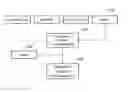
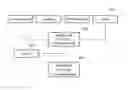
FIG. 1 illustrates a method for preparing the powdered phase-change energy-saving material according to an embodiment.
DETAILED DESCRIPTION OF THE INVENTION
The present invention is described in detail in conjunction with attached drawings and embodiments.
An embodiment for preparing the powdered phase-change energy-saving material is provided. Referring to FIG. 1, at step 100, respectively weighing ingredients including the energy-saving material, the nucleating agent, the modifier, and water. In an embodiment, the ingredients do not include the modifier. At step 200, mixing and blending the ingredients homogeneously to obtain a first mixture. At step 300, weighing the carrier. At step 400, mixing and blending the carrier with the first mixture homogenously. The time interval between the above two mixing and blending operations cannot exceed 10 minutes.
Embodiment 1
4.8 kg of anhydrous calcium chloride, 0.1 kg of strontium chloride and 4.73 kg of de-ionized water are respectively weighed and then mixed homogeneously; then 2 kg of white carbon black is added; the materials are mixed again and encapsulated into a bag; the bag is baked in an oven at a temperature of 50° C. for 1-2 h; and then the powdered phase-change energy-saving material F1 is obtained.
Embodiment 2
4.8 kg of anhydrous calcium chloride, 0.1 kg of strontium chloride and 4.73 kg of de-ionized water are respectively weighed and then mixed homogeneously; then 2 kg of silica gel powder is added; the materials are mixed again and encapsulated into a bag; the bag is baked in an oven at a temperature of 50° C. for 1-2 h; and then the powdered phase-change energy-saving material F2 is obtained.
Embodiment 3
4.8 kg of anhydrous calcium chloride, 0.1 kg of strontium chloride, 0.2 kg of ammonium chloride and 4.73 kg of de-ionized water are respectively weighed and then mixed homogeneously; then 2 kg of silica gel powder is added; the materials are mixed again and encapsulated into a bag; the bag is baked in an oven at a temperature of 50° C. for 1-2 h; and then the powdered phase-change energy-saving material F3 is obtained.
Embodiment 4
4.8 kg of anhydrous calcium chloride, 0.1 kg of strontium chloride, 0.15 kg of ammonium chloride and 4.73 kg of de-ionized water are respectively weighed and then mixed homogeneously; then 2.5 kg of white carbon black is added; the materials are mixed again and encapsulated into a bag; the bag is baked in an oven at a temperature of 50° C. for 1-2 h; and then the powdered phase-change energy-saving material F4 is obtained.
Embodiment 5
3.5 kg of anhydrous calcium chloride, 0.01 kg of nucleating agent, namely strontium chloride, 0.15 kg of modifier, namely ammonium chloride, and 4 kg of water are respectively weighed and then mixed homogeneously; then 2 kg of encapsulating material, namely the white carbon black, is added; the materials are mixed homogeneously again, and the powered phase-change energy-saving material F5 is obtained, wherein the interval between the two mixing operations does not exceed 10 min.
Embodiment 6
4.8 kg of anhydrous calcium chloride, 0.1 kg of strontium chloride, 0.15 kg of potassium chloride, and 4.73 kg of water, and then mixed homogeneously; then 2.5 kg of the carrier, namely silica gel powder, is added; the materials are mixed homogeneously again, and the powered phase-change energy-saving material F6 is obtained, wherein the interval between the two mixing operations does not exceed 10 min.
The properties of the phase-change materials obtained in the above embodiments are respectively as follows:
| Samples |
| Property | F1 | F2 | F3 | F4 | F5 | F6 |
| Phase-change point/ | 30 | 30 | 27.5 | 27.9 | 27.8 | 27.9 |
| ° C. | ||||||
| Latent heat/ | 147 | 147 | 145 | 136 | 129 | 136 |
| (KJ/kg) | ||||||
| Heat conduction | 0.27 | 0.27 | 0.27 | 0.27 | 0.27 | 0.27 |
| coefficient/ | ||||||
| (w/m.k) | ||||||
| Degree of super | 0~2 | 0~2 | 0~2 | 0~2 | 0~2 | 0~2 |
| cooling (° C.) | ||||||
| Number of use | 100 | 100 | 100 | 100 | 100 | 100 |
| Loading and use | Closed | Closed | Closed | Closed | Closed | Closed |
| conditions | plastic or | plastic or | plastic or | plastic or | plastic or | plastic or |
| metal | metal | metal | metal | metal | metal | |
| container | container | container | container | container | container | |
From the above table it can be seen that, by selecting proper encapsulating materials and ratios thereof, the powdered phase-change energy-saving material of the present invention successfully homogeneously adsorbs the inorganic material to the system, ensuring stability and reversibility of the inorganic material; meanwhile, the powdered phase-change energy-saving material of the present invention is in the powder state at room temperature and can be contained in common plastic or metal containers without corroding the containers. The energy-saving material of the present invention is conveniently transported and used, and solves the encapsulation problem and the problem of phase separation caused by long-term cycling of phase changes.
The above embodiments only describe some of the embodiments of the present invention, but cannot be accordingly regarded as any limitation to the patented scope of the present invention. It should be noted that, for those ordinarily skilled in the art, various modifications and improvements can be made on the basis of the concept of the present invention, which all fall within the protection scope of the present invention. Therefore, the protection scope of the present invention should be subject to the claims.
Claims
What is claimed is:1. A powdered phase-change energy-saving material, comprising a carrier and an inorganic phase-change energy-saving material adsorbed onto the carrier,
wherein the powdered phase-change energy-saving material includes an energy-saving material, a nucleating agent, a modifier and water with the following weight parts:
| energy-saving material | 35-50; | |
| nucleating agent | 0.1-5; | |
| modifier | 0-15; | |
| water | 35-50; | |
| carrier | 20-25. | |
2. The powdered phase-change energy-saving material according to claim 1, wherein the carrier is white carbon black, silica gel powder or other hydrophilic porous inorganic materials.
3. The powdered phase-change energy-saving material according to claim 1, wherein the energy-saving material is an inorganic salt, and the inorganic salt includes one or more salts selected from calcium chloride, sodium sulfate, sodium acetate and hydrates thereof.
4. The powdered phase-change energy-saving material according to claim 1, wherein the nucleating agent is selected from strontium salts and barium salts.
5. The powdered phase-change energy-saving material according to claim 1, wherein the modifier includes one or more compounds selected from ammonium chloride, sodium chloride, and potassium chloride, a dose of the modifier is 5-10 parts by weight.
6. A preparation method for the powdered phase-change energy-saving material according to claim 1, wherein the method comprises: respectively weighing the energy-saving material, the nucleating agent, the modifier, and water;
mixing and blending the weighed materials homogeneously to obtain a first mixture;
adding the carrier into the first mixture; and
mixing and blending the carrier and the first mixture to obtain a second mixture, wherein the time interval between the two mixing and blending steps does not exceed 10 min.
Images & Drawings included:
Sources:
- United States Patent and Trademark Office - verify current appl. status at the USPTO↗
Recent applications in this class:
- » 20250171672 2025-05-29
THERMALLY STABLE NANO-ENCAPSULATED PHASE-CHANGE MATERIAL, METHODS FOR PREPARING THE SAME, AND ITS APPLICATIONS - » 20250154399 2025-05-15
HYBRID SALOGEL, METHODS OF MAKING HYBRID SALOGELS, AND SYSTEMS USING HYBRID SALOGELS - » 20250115797 2025-04-10
Curable Composition - » 20250109328 2025-04-03
MULTIFUNCTIONAL MATERIALS FOR COMBINED ELECTROCHEMICAL AND THERMAL ENERGY STORAGE - » 20250066656 2025-02-27
SALT HYDRATE-BASED THERMAL ENERGY STORAGE MATERIAL WITH NEAR-AMBIENT PHASE CHANGE TEMPERATURE - » 20250066655 2025-02-27
Decorative Panel and Decorative Covering - » 20250059424 2025-02-20
NUCLEATION AGENT - » 20240376364 2024-11-14
HEAT STORAGE SHEET, RESIN PELLET, AND MOLDED PRODUCT - » 20240309256 2024-09-19
POLYURETHANE PHASE-CHANGE NANOCAPSULE, PHASE-CHANGE POLYURETHANE POURING SEALANT AND PREPARATION METHOD THEREFOR - » 20240301266 2024-09-12
POLY(HYDROXY)URETHANES FOR ENCAPSULATING PHASE CHANGE MATERIALS AND METHODS OF MAKING THE S