Agricultural machine
US20180177133A1
2018-06-28
15/850,800
2017-12-21
✅ Patent granted
US 10,829,103 B2
2020-11-10
-
-
Edward Tso | Aaron Piggush
Lempia Summerfield Katz LLC
2039-03-01
Abstract:
An agricultural machine for conducting an agricultural working process includes a combustion engine (2), electrical consumers (3-8), a chargeable electrical battery (9) for electrically supplying the consumers (3-8) and a monitor module (10) for monitoring the charging level of the battery (9). It is proposed that some of the electrical consumers (3-8) of the agricultural machine (1) are peripheral consumers (3-8) for providing functions in a parking state of the agricultural machine (1), in which the combustion engine (2) is shut off, that a power management module (11) is provided, which in the parking state of the agricultural machine (1) monitors the charging level of the battery (9) via the monitor module (11) and deactivates at least one peripheral consumer (3-8), when the charging level falls below a threshold level.
Inventors:
- VOLKER BRILL 2 🇩🇪 Schloss Holte, Germany
- CHRISTIAN LAING 2 🇩🇪 HARSEWINKEL, Germany
- Benjamin Heyne 1 🇩🇪 Osnabruck, Germany
- Nermine Khairallah 1 🇩🇪 Bielefeld, Germany
Assignee:
- CLAAS E-Systems KGaA mbH & Co. KG 1 🇩🇪 Guterslog, Germany
- CLAAS E-Systems GmbH 1 🇩🇪 Dissen, Germany
Applicant:
Interested in similar patents?
Get notified when new applications in this technology area are published.
Classification:
A01D69/025 » CPC main
Driving mechanisms or parts thereof for harvesters or mowers electric Electric hybrid systems
B60W30/18054 » CPC further
Purposes of road vehicle drive control systems not related to the control of a particular sub-unit, e.g. of systems using conjoint control of vehicle sub-units, or advanced driver assistance systems for ensuring comfort, stability and safety or drive control systems for propelling or retarding the vehicle; Propelling the vehicle related to particular drive situations at stand still, e.g. engine in idling state
B60W30/1886 » CPC further
Purposes of road vehicle drive control systems not related to the control of a particular sub-unit, e.g. of systems using conjoint control of vehicle sub-units, or advanced driver assistance systems for ensuring comfort, stability and safety or drive control systems for propelling or retarding the vehicle; Propelling the vehicle; Controlling power parameters of the driveline, e.g. determining the required power Controlling power supply to auxiliary devices
B60W10/30 » CPC main
Conjoint control of vehicle sub-units of different type or different function including control of auxiliary equipment, e.g. air-conditioning compressors or oil pumps
B60W30/18 IPC
Purposes of road vehicle drive control systems not related to the control of a particular sub-unit, e.g. of systems using conjoint control of vehicle sub-units, or advanced driver assistance systems for ensuring comfort, stability and safety or drive control systems for propelling or retarding the vehicle Propelling the vehicle
B60L1/00 » CPC further
Supplying electric power to auxiliary equipment of vehicles
A01D69/02 IPC
Driving mechanisms or parts thereof for harvesters or mowers electric
H02J7/0031 » CPC further
Circuit arrangements for charging or depolarising batteries or for supplying loads from batteries with safety or protection devices or circuits using battery or load disconnect circuits
H02J9/002 » CPC further
Circuit arrangements for emergency or stand-by power supply, e.g. for emergency lighting in which a reserve is maintained in an energy source by disconnecting non-critical loads, e.g. maintaining a reserve of charge in a vehicle battery for starting an engine
B60W2050/0094 » CPC further
Details of control systems for road vehicle drive control not related to the control of a particular sub-unit, e.g. process diagnostic or vehicle driver interfaces; Adapting control system settings; Automatic parameter input, automatic initialising or calibrating means; Priority selection of control units
B60W2300/15 » CPC further
Indexing codes relating to the type of vehicle Agricultural vehicles
B60W2510/244 » CPC further
Input parameters relating to a particular sub-units; Energy storage means for electrical energy Charge state
B60W2510/248 » CPC further
Input parameters relating to a particular sub-units; Energy storage means for electrical energy Age of storage means
B60W20/13 » CPC further
Control systems specially adapted for hybrid vehicles; Controlling the power contribution of each of the prime movers to meet required power demand in order to stay within battery power input or output limits; in order to prevent overcharging or battery depletion
B60W30/188 IPC
Purposes of road vehicle drive control systems not related to the control of a particular sub-unit, e.g. of systems using conjoint control of vehicle sub-units, or advanced driver assistance systems for ensuring comfort, stability and safety or drive control systems for propelling or retarding the vehicle; Propelling the vehicle Controlling power parameters of the driveline, e.g. determining the required power
H02J7/00 IPC
Circuit arrangements for charging or depolarising batteries or for supplying loads from batteries
H02J9/00 IPC
Circuit arrangements for emergency or stand-by power supply, e.g. for emergency lighting
B60W50/00 IPC
Details of control systems for road vehicle drive control not related to the control of a particular sub-unit, e.g. process diagnostic or vehicle driver interfaces
B60W10/26 » CPC further
Conjoint control of vehicle sub-units of different type or different function including control of energy storage means for electrical energy, e.g. batteries or capacitors
Description
CROSS REFERENCE TO RELATED APPLICATIONS
This application claims priority to German Patent Application No. DE 102016125397.9, filed Dec. 22, 2016, the entire disclosure of which is hereby incorporated herein by reference.
FIELD OF THE INVENTION
This application is directed to an agricultural machine for conducting an agricultural working process.
BACKGROUND
The known agricultural machine (EP 2 778 003 A1) includes a monitor module for monitoring the charging level of the battery of a hybrid drive for a combine harvester. Here, the electrical consumers are controlled with respect to the charging level of the battery, in order to increase the power efficiency during conducting of the agricultural working process.
During standstill of the agricultural machine, when the combustion engine of the agricultural machine is shut down, the power management becomes a challenge. This is true because in this particular state, charging of the battery by the combustion engine is not possible.
SUMMARY
In order to increase the efficiency of agricultural processes such as harvesting processes, in particular in order to reduce machine downtime to a minimum, it is of important to use the available power in an optimized way. Presently the power management of the electrical power, which is provided by a chargeable battery, is in focus.
In one aspect, an agricultural machine is provided with improved power management in view of the electrical power provided by the electrical battery.
In general, during the parking state of the agricultural machine, the battery is allowed to electrically supply certain electrical consumers, until the charging level of the battery falls below a threshold level. With this overall concept various electrical functions may be provided even during the parking state of the agricultural machine, however, without facing the risk of lacking the electrical power needed for a subsequent electrical start of the combustion engine.
In detail it is proposed that some of the electrical consumers of the agricultural machine are peripheral consumers for providing functions that may be performed in a parking state of the agricultural machine, in which parking state the combustion engine is shut off. It is further proposed that a power management module is provided, which in the parking state of the agricultural machine monitors the charging level of the battery via the monitor module and deactivates at least one peripheral consumer, when the charging level falls below a threshold level.
The parking state of the agricultural machine is presently the state of the agricultural machine, which allows the user to leave the agricultural machine. Here, the parking state includes the standstill of the agricultural machine altogether and the standstill of the combustion engine in particular. In contrast, the agricultural machine may be in a working state, during which the agricultural working process is being conducted, in particular, and during which the combustion engine is running.
Besides the above noted peripheral consumers for providing functions in a parking state of the agricultural machine, the agricultural machine also comprises primary electrical consumers, which provide functions in the working state of the agricultural machine for conducting the agricultural working process. One of those primary consumers is the electrical starter drive for the combustion engine.
The preferred embodiments are directed to a control structure which is well suited for the proposed concept of providing electrical functions in the parking state of the agricultural machine. In one embodiment, the primary electrical consumers and the peripheral electrical consumers are electrically supplied via two separate power circuits, namely a primary power circuit and a peripheral power circuit. With this it is possible to completely separate the primary power circuit from the battery, still allowing the peripheral consumers to be electrically supplied by the battery via the peripheral power circuit.
Various embodiments are directed to preferred strategies for controlling the charging level of the battery in the parking state of the agricultural machine. According to the one preferred embodiment, the threshold level is being set and the peripheral consumers are being deactivated such that it is guaranteed that the charging level of the battery is always still sufficient to electrically start the combustion engine.
According to one embodiment, the deactivation sequence is based on categorizing the peripheral consumers with respect to power consumption. This categorization is a simple way to find the right deactivation sequence even if a large number of peripheral consumers have to be organized.
According to one embodiment, at least one peripheral consumer may be brought into a power saving standby state, out of which the respective consumer may be activated in a time efficient manner. It may be advantageous to keep some peripheral consumers in such a standby state, when the agricultural machine is in the parking state, such that when the user enters the agricultural machine again to conduct an agricultural working process, he does not have to wait for time consuming boot cycles.
BRIEF DESCRIPTION OF THE DRAWINGS
Further details, features, goals and advantages of the present invention shall be described in the following based on the illustration of a preferred embodiment. In the illustration, the figures show the following:
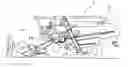
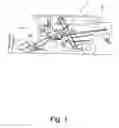
FIG. 1—a schematic diagram of a proposed agricultural machine, which is suitable for conducting a harvesting process and
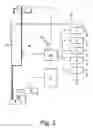
FIG. 2—a schematic diagram of the control structure of the agricultural machine.
DETAILED DESCRIPTION
The agricultural machine 1 shown in FIG. 1 is designed as a combine for performing a harvesting process. However, the proposed solution may be applied to any agricultural machine, as will be noted below.
The proposed agricultural machine 1 serves for conducting an agricultural working process such as an above noted harvesting process. For this, the agricultural machine 1 includes a combustion engine 2 and electrical consumers 3-8, which will be explained later.
As shown in FIG. 2 the agricultural machine 1 includes a chargeable battery 9 for electrically supplying the consumers 3-8. The wording “battery” is to be understood broadly. A battery in this sense may also be an arrangement of two or more batteries or a battery pack that may be charged. Charging of the electrical battery 9 here and preferably takes place by the combustion engine 2 by the combustion engine 2 being provided with an electrical generator.
Depending on the kind of the agricultural machine, the combustion engine 2 may serve for driving different working organs of the agricultural machine 1. It may also serve as the drive for motorized movement of the agricultural machine 1.
Furthermore, the proposed agricultural machine 1 includes a monitor module 10 for monitoring the charging level of the battery 9. The charging level of the battery 9, here and preferably, is represented by the voltage of the battery 9.
Some of the electrical consumers of the agricultural machine 1 are peripheral consumers 3-7, which provide functions in a parking state of the agricultural machine 1. This means that the peripheral consumers 3-7 provide functions at least in the parking state. Depending on the kind of consumer, however, it may well be that this consumer provides its function also in the working state of the agricultural machine 1. In the parking state of the agricultural machine 1 the combustion engine 2 is shut off as noted above.
The peripheral consumer 3-7 providing a function presently means that the peripheral consumer 3-7 is actually performing a task like heating the interior or that the peripheral consumer 3-7 is in a standby mode monitoring to be woken up. In the last noted case the function provided by the peripheral consumer 3-7 is the monitoring process.
In order to prevent the battery 9 from running dead in an uncontrolled way, a power management module 11 is provided, which in the parking state of the agricultural machine 1 monitors the charging level of the battery 9 via the monitor module 10 and deactivates at least one peripheral consumer 3-7 when the charging level falls below a threshold level. As the charging level of the battery 9 here and preferably is represented by the voltage of the battery 9, the threshold is preferably a threshold voltage.
It is to be noted that the possibility of allowing to electrically supply peripheral consumers 3-7 in the parking state of the agricultural machine 1, without running the risk of losing control of the battery power is one of the exceptional advantages of the present embodiments.
Besides the peripheral consumers 3-7, the agricultural machine 1 includes primary electrical consumers 8, only one of which is shown in FIG. 2. Those primary electrical consumers 8 provide functions in the working state of the agricultural machine 1 for conducting the agricultural working process. The primary electrical consumer 8, which is shown in FIG. 2, is the starter drive of the combustion engine 2.
As may be taken from FIG. 2, a primary power circuit 12 is provided for the primary consumers 8, while, separately from the primary power circuit 12, a peripheral power circuit 13 is provided for the peripheral consumers 3-7. Both power circuits 12, 13 may be powered by the battery, as is shown in FIG. 2 as well.
One central component of the control structure in FIG. 2 is a machine control 14, which is coupled to the consumers 3-8 on the one hand and to the power management module 11 on the other hand. The machine control 14 is coupled to various other components such as the motor control of the combustion engine 2. The machine control 14 may be centralized, as shown in FIG. 2 or may be decentralized, than comprising various control modules that communicate with each other. The machine control 14 coordinates the consumers 3-8 as well as the combustion engine 2.
The communication between the machine control 14 and the consumers 3-8 as well as with the power management module 11 is here and preferably realized via a bus system. This bus system is indicated by chain double dotted lines.
When the agricultural machine 1 is in the parking state, the primary power circuit 12 is preferably separated from the battery 9. In FIG. 2, for this separation a power switch 15 is realized, which may be actuated by the machine control 14. Accordingly, the power switch 15 provides the general function of a relay. The same power switch 15 may be actuated via the machine control 14, when a manual emergency switch 16 is being pressed.
From the overall control structure shown in FIG. 2 it becomes clear that in the parking state, due to the open power switch 15, the primary consumers 8 are safely separated from any electrical power. At the same time, the peripheral consumers 3-7 may be electrically supplied via the peripheral power circuit 13.
The proposed solution may be applied for a variety of peripheral consumers 3-7. For example, at least one peripheral consumer 3 may provide a comfort function like an interior heating or the like. In addition or as an alternative at least peripheral consumer 4 may provide a driver assistance function such as a planning function for the working process to be conducted. In addition or as an alternative, at least one peripheral consumer 5, 6 may provide a communication function like off-site diagnostics and/or telematics. In addition or as an alternative, at least one peripheral consumer 7 may provide an access control function like a passive entry function, allowing the user to enter the agricultural machine 1 without having to unlock the respective door lock manually with a mechanical key.
It is of importance for the proposed solution that the threshold level is laid out with respect to the power consumption of the peripheral consumers 3-7. Preferably, the threshold level is set and the peripheral consumers are deactivated such that, in the parking state of the agricultural machine 1, the charging level of the battery 9 is always sufficient to electrically start the combustion engine 2. This guarantees that even if the charging level of the battery 9 is low, the combustion engine 2 may still charge the battery 9 after the combustion engine 2 has been electrically started.
Generally, the threshold level may be a fixed value. However, it is preferred that the threshold level is set by the power management module 11 dependent of the ageing condition of the battery 9 and/or of surrounding conditions such as temperature, humidity or the like. This guarantees a high operational safety in view of electrically starting the combustion engine 2 even in unfavorable surrounding conditions.
In one alternative for the proposed deactivation of peripheral consumers 3-7, in the parking state of the agricultural machine 1, the power management module 11 deactivates a predefined group of peripheral consumers 3-7. Preferably, this group includes those peripheral consumers 3-7 that show an exceptionally high power consumption. In a further preferred embodiment it is provided that, in the parking state of the agricultural machine 1, the power management module 11 deactivates all peripheral consumers 3-7 when the charging level falls below the threshold level.
A further improvement of the optimization of the power management may be realized, when, in the parking state of the agricultural machine 1, the power management module 11 defines a deactivation sequence, in which the peripheral consumers 3-7 are being deactivated during discharging of the battery 9. In a simple embodiment, this deactivation sequence may be based on a predefined and thereby fixed sequence.
A systematic approach for the definition of the deactivation sequence, however, is based on categorizing the peripheral consumers 3-7 with respect to various aspects. Preferably, different categories of consumption are defined for the peripheral consumers 3-7, which categories reflect the power consumption of the respective consumer 3-7. This may be done with respect to the activated state or to the power saving standby state of the respective consumer 3-7. Preferably, the power management module 11 defines the deactivation sequence based on the above noted categories, the respective consumers 3-7 are assigned to. This systematic approach allows the management of a large number of peripheral consumers 3-7 with little effort even if additional consumers 3-7 are being added to the agricultural machine 1.
Each of the peripheral consumers 3-7 may be brought into an activated state, in which they provide their full functional range, while the peripheral consumers 3-7 in the deactivated state do not provide a function and therefore, preferably, do not or hardly consume any electrical power. An example for this is the peripheral consumer 3, which provides the function of an interior heating.
The other peripheral consumers 4-7 each includes an electronic control unit (ECU), which allows to bring the respective consumer 4-7 into different operational states. Preferably, at least peripheral consumer 4-7 may be brought into a power saving standby state in which it preferably keeps just those processes running, that are necessary for a time efficient activation of the consumer 4-7. With this it is possible to switch the consumer 4-7 into its above noted activated state, without having to wait for a time consuming boot cycle. Preferably, the consumer in its standby state consumes reduced electrical power compared to the activated state. It is preferred that in the parking state of the agricultural machine 1 at least one of the peripheral consumers 4-7 is/are being transferred into the standby state by the machine control 14. This may also be provided with a certain time offset, such that the respective consumer 4-7 automatically falls into the standby state after a certain predefined time interval.
It was noted above that the proposed solution may be applied to all kinds of agricultural machines 1. Here and preferably the agricultural machine 1 is a self-propelled agricultural machine, in particular a combine. However, the agricultural machine 1 may well be a field chopper, a tractor or the like. All explanations given for the shown agricultural machine 1 are fully applicable for all other agricultural machines 1.
LIST OF REFERENCE NUMBERS
-
- 1 agricultural machine
- 2 combustion engine
- 3-8 consumers
- 9 battery
- 10 monitor module
- 11 power management module
- 12 primary power circuit
- 13 peripheral power circuit
- 14 machine control
- 15 power switch
- 16 emergency switch
Claims
What is claimed is:1. An agricultural machine for conducting an agricultural working process, comprising:
a combustion engine;
electrical consumers, wherein at least some of the electrical consumers of the agricultural machine comprise peripheral consumers for providing functions in a parking state of the agricultural machine, wherein the combustion engine is shut off;
a chargeable electrical battery for electrically supplying the consumers;
a monitor module for monitoring the charging level of the battery; and
a power management module, which in the parking state of the agricultural machine monitors the charging level of the battery via the monitor module and deactivates at least one peripheral consumer when the charging level falls below a threshold level.
2. An agricultural machine according to claim 1, wherein the consumers comprise a primary electrical consumer, which provide functions in a working state of the agricultural machine for conducting an agricultural working process, and further comprising a primary power circuit for the primary and a peripheral power circuit for the peripheral consumers, wherein the primary and peripheral power circuits are powered by the battery.
3. An agricultural machine according to claim 2, wherein, in the parking state of the agricultural machine, the primary power circuit is separated from the battery.
4. An agricultural machine according to claim 1 wherein at least one peripheral consumer provides a comfort function.
5. An agricultural machine according to claim 1 wherein at least one peripheral consumer provides a driver assistance function.
6. An agricultural machine according to claim 1 wherein at least one peripheral consumer provides a communication
7. An agricultural machine according to claim 1 wherein at least one peripheral consumer provides an access control function.
8. An agricultural machine according to claim 1 wherein the threshold level is set and the peripheral consumers are deactivated such that, in the parking state of the agricultural machine, the charging level of the battery is always sufficient to electrically start the combustion engine.
9. An agricultural machine according to claim 1 wherein the threshold level is set by the power management module depending on the aging condition of the battery.
10. An agricultural machine according to claim 1 wherein the threshold level is set by the power management module depending on surrounding conditions.
11. An agricultural machine according to claim 1 wherein, in the parking state of the agricultural machine, the power management module deactivates a predefined group of peripheral consumers when the charging level falls below the threshold level.
12. An agricultural machine according to claim 1 wherein, in the parking state of the agricultural machine, the power management module deactivates all peripheral consumers when the charging level falls below the threshold level.
13. An agricultural machine according claim 1 wherein, in the parking state of the agricultural machine, the power management module defines a deactivation sequence in which the peripheral consumers are deactivated during discharging of the battery.
14. An agricultural machine according to claim 1 wherein different categories of consumption are defined for the peripheral consumers, which categories reflect the power consumption of the respective peripheral consumer.
15. An agricultural machine according to claim 14, wherein the power management module defines the deactivation sequence based on the categories the peripheral consumers are assigned to.
16. An agricultural machine according to claim 1, wherein the peripheral consumers in an activated state provide their full functional range and wherein the peripheral consumers in a deactivated state do not provide a function.
17. An agricultural machine according to claim 1, wherein at least one peripheral consumer may be brought into a power saving standby state, wherein, in the standby state, the at least one peripheral consumer keeps only those processes running that are necessary for a time efficient activation of the at least one peripheral consumer).
18. An agricultural machine according to claim 17, wherein, in the parking state of the agricultural machine, the at least one peripheral consumer is transferred into the standby state by a machine control.
19. An agricultural machine according to claim 1, wherein the agricultural machine is a self propelled agricultural machine.
20. An agricultural machine according to claim 19 wherein the self-propelled agricultural machine comprises a combine.
Images & Drawings included:
Sources:
- United States Patent and Trademark Office - verify current appl. status at the USPTO↗
Similar patent applications:
- » 20250117866
ENERGY SUPPORT SYSTEM FOR AGRICULTURAL MACHINE, ENERGY SUPPORT METHOD FOR AGRICULTURAL MACHINE, AND AGRICULTURAL MACHINE - » 20230309459
METHOD FOR DETERMINING OUTPUT DATA FROM CROP PLANT CHARACTERISTICS FOR A CROP PLANT, METHOD FOR CONTROLLING OPERATION OF AN AGRICULTURAL MACHINE, AGRICULTURAL MACHINE, AND COMPUTER PROGRAM PRODUCT - » 20250008858
AGRICULTURAL WORK ASSISTANCE SYSTEM, AGRICULTURAL MACHINE, AGRICULTURAL WORK ASSISTANCE DEVICE, METHOD FOR CREATING TRAVELING ROUTE FOR AGRICULTURAL MACHINE - » 20200305337
Method for operating a user terminal of an agricultural machine and agricultural machine - » 20210021443
Method for operating a user terminal of an agricultural machine and agricultural machine - » 20200367484
METHOD FOR OPERATING AN AGRICULTURAL MACHINE AND AGRICULTURAL MACHINE - » 20180338406
METHOD FOR CONTROLLING OPERATION OF A USER CONTROL TERMINAL OF AN AGRICULTURAL MACHINE AND AGRICULTURAL MACHINE - » 20240114818
AGRICULTURAL MACHINE AND AGRICULTURAL MACHINE COMMUNICATION SYSTEM - » 20190101191
AGRICULTURAL MACHINE TRANSMISSION, IN PARTICULAR FOR AN AGRICULTURAL MACHINE OF AN AGRICULTURAL OR COMMUNAL UTILITY VEHICLE - » 20220295682
SCRAPER DEVICE FOR A DISC OF AN AGRICULTURAL MACHINE AND ASSOCIATED AGRICULTURAL MACHINE
Recent applications in this class:
- » 20210059119 2021-03-04
Operational control for agricultural agitator - » 20200245560 2020-08-06
Mower with ganged reel cutting units having automatic clip control in both straight ahead motion and in turns - » 20200060090 2020-02-27
Internal combustion engine with integrated connectivity device - » 20180279555 2018-10-04
Esom 11 - » 20180139903 2018-05-24
BATTERY-ELECTRIC AND INTERNAL-COMBUSTION ENGINE ASSIST HYBRID PROPULSION AND IMPLEMENT DRIVE WORK SYSTEMS - » 20160366824 2016-12-22
Electro-hydraulic drive system - » 20160309653 2016-10-27
Walk-behind mower/trimmer with 360 degree maneuverability - » 20100293911 2010-11-25
Harvester load control system - » 20080289309 2008-11-27
Mower with Hybrid Prime Mover Having Fuel Cell, Brushless Electric Motors for Driving Cutting Units, and Electric/Hydraulic Actuator for Lift and Lower System - » 20080098703 2008-05-01
Hybrid electric lawnmower