Stable liquid formulations of melphalan
US20180193255A1
2018-07-12
15/739,034
2016-06-29
✅ Patent granted
US 10,537,520 B2
2020-01-21
WO; PCT/IB2016/053881; 20160629
WO; WO2017/002030; 20170105
Jennifer A Berrios
Heslin Rothenberg Farley & Mesiti P.C.
2036-06-29
Abstract:
The present invention relates to stable, liquid parenteral formulations of Melphalan or pharmaceutically acceptable salts thereof. Further this invention also describes process of preparing such formulations.
Inventors:
- Kocherlakota Chandrashekhar 17 🇮🇳 Secunderabad, India
- Banda Nagaraju 17 🇮🇳 Hyderabad, India
Assignee:
- LEIUTIS PHARMACEUTICALS PVT. LTD. 13 🇮🇳 Hyderabad, India
- LEIUTIS PHARMACEUTICALS PVT. LTD. 1 🇮🇳 Telangana, India
Applicant:
Interested in similar patents?
Get notified when new applications in this technology area are published.
Classification:
A61K9/0019 » CPC main
Medicinal preparations characterised by special physical form; Galenical forms characterised by the site of application Injectable compositions; Intramuscular, intravenous, arterial, subcutaneous administration; Compositions to be administered through the skin in an invasive manner
A61K47/18 » CPC further
Medicinal preparations characterised by the non-active ingredients used, e.g. carriers or inert additives; Targeting or modifying agents chemically bound to the active ingredient; Organic compounds, e.g. natural or synthetic hydrocarbons, polyolefins, mineral oil, petrolatum or ozokerite containing nitrogen, e.g. nitro-, nitroso-, azo-compounds, nitriles, cyanates Amines; Amides; Ureas; Quaternary ammonium compounds; Amino acids; Oligopeptides having up to five amino acids
A61K9/00 IPC
Medicinal preparations characterised by special physical form
A61K31/198 » CPC further
Medicinal preparations containing organic active ingredients; Acids; Anhydrides, halides or salts thereof, e.g. sulfur acids, imidic, hydrazonic, hydroximic acids; Carboxylic acids, e.g. valproic acid having an amino group the amino and the carboxyl groups being attached to the same acyclic carbon chain, e.g. gamma-aminobutyric acid [GABA], beta-alanine, epsilon-aminocaproic acid, pantothenic acid Alpha-aminoacids, e.g. alanine, edetic acids [EDTA]
A61K47/10 » CPC further
Medicinal preparations characterised by the non-active ingredients used, e.g. carriers or inert additives; Targeting or modifying agents chemically bound to the active ingredient; Organic compounds, e.g. natural or synthetic hydrocarbons, polyolefins, mineral oil, petrolatum or ozokerite containing oxygen, e.g. ethers, acetals, ketones, quinones, aldehydes, peroxides Alcohols; Phenols; Salts thereof, e.g. glycerol; Polyethylene glycols [PEG]; Poloxamers; PEG/POE alkyl ethers
A61K31/00 » CPC further
Medicinal preparations containing organic active ingredients
A61K47/20 » CPC further
Medicinal preparations characterised by the non-active ingredients used, e.g. carriers or inert additives; Targeting or modifying agents chemically bound to the active ingredient; Organic compounds, e.g. natural or synthetic hydrocarbons, polyolefins, mineral oil, petrolatum or ozokerite containing sulfur, e.g. dimethyl sulfoxide [DMSO], docusate, sodium lauryl sulfate or aminosulfonic acids
Description
BACKGROUND OF THE INVENTION
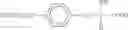
Melphalan, also known as L-phenylalanine mustard, L-PAM, or L-sarcolysin is a phenylalanine derivative of nitrogen mustard. Melphalan is a bifunctional alkylating agent that is active against selected human neoplastic diseases. The molecular formula is C13H18Cl2N2O2 and the molecular weight is 305.20. The structural formula is:
U.S. Pat. No. 4,997,651 to Stephen et al., discloses two-component pharmaceutical formulation of Melphalan comprising freeze-dried Melphalan hydrochloride and a solvent-diluent comprising a citrate, propylene glycol and ethanol.
U.S patent application No. 2013/0131174 to Castillo et al., discloses a solid lyophilized composition of Melphalan hydrochloride having a pH between 4 and 6.
U.S patent application Nos. 2010/0311838, 2014/0213650 and 2014/0221488 disclose parenteral compositions comprising Melphalan and a cyclodextrin derivative.
RU2060031 discloses parenteral lyophilized formulation comprising a Melphalan, polyvinylpyrrolidone, ascorbic acid, glutamic acid, hydrochloric acid and D-mannitol.
The commercial formulation of injectable Alkeran® consists of two components comprising of Melphalan hydrochloride and polyvinylpyrrolidone lyophilized and a diluent comprising a mixture of sodium citrate, water for injection, propylene glycol and ethanol.
The Alkeran® to be infused must be diluted to not more than 0.45 mg/ml in normal saline and infused over 15 minutes.
The reconstitution of the lyophilized product is clinically inconvenient and the lyophilization process is time consuming and often incurs significant expense. Hence, there is a strong need to develop alternate formulations of Melphalan.
The inventors have developed ready to use liquid formulation of Melphalan which overcomes the disadvantages of the formulations reported in prior art.
SUMMARY OF THE INVENTION
One object of the invention provides ready to use liquid parenteral formulation of Melphalan.
Another aspect of the present invention is to provide ready to use liquid parenteral formulation comprising Melphalan, one or more solvents, anti-oxidants and other pharmaceutically acceptable adjuvants thereof.
Yet another aspect of the present invention provides method for preparing ready to use liquid parenteral formulation of Melphalan comprising Melphalan Hydrochloride, one or more solvents, anti-oxidants and other pharmaceutically acceptable adjuvants thereof.
DETAILED DESCRIPTION OF THE INVENTION
In the context of this invention “Melphalan” refers to the pharmaceutically acceptable salts, solvates, hydrates and anhydrous forms thereof, preferably Melphalan Hydrochloride.
As used herein, “ready to use” Melphalan formulations refers to formulations that contain Melphalan in dissolved or solubilized form and are intended to be used as such or upon further dilution in intravenous diluents.
In one embodiment, ready to use liquid parenteral formulations of Melphalan comprise
-
- i. Melphalan,
- ii. one or more solvents,
- iii. anti-oxidants,
optionally other pharmaceutically acceptable adjuvants thereof.
In yet another embodiment, ready to use liquid parenteral formulations of Melphalan comprise
-
- i. Melphalan Hydrochloride,
- ii. one or more solvents selected from the group comprising of dimethylacetamide, polyethylene glycol, ethanol, propylene glycol and glycerine,
- iii. anti-oxidants selected from monothioglycerol, L-cysteine, ascorbic acid and
optionally other pharmaceutically acceptable adjuvants thereof.
The composition according to the present invention is intended to be stored at a temperature of 2-8° C.
Suitable solvents include, but are not limited to dimethylacetamide (DMA), dimethyl sulfoxide (DMSO), N-methylpyrrolidone, dimethylisosorbide, ethanol, propylene glycol, glycerine, polyethylene alcohol, propylene glycol esters, polyethylene glycols and the like. Preferred solvents are dimethylacetamide (DMA), ethanol, polyethylene glycols (PEG), glycerine and propylene glycol.
The pharmaceutical compositions of the present invention also contain one or more anti-oxidants selected from the group, but not limited to butylated hydroxyanisole (BHA), butylated hydroxyl toluene (BHT), citric acid, lactic acid, benzoic acid, tocopherol (Vitamin E), ethylenediaminetetraacetic acid, sodium metabisulfite, sodium bisulfite, monothioglycerol, ascorbic acid and their esters, L-cysteine, parabens, benzyl alcohol, propyl gallate, thioglycolic acid, tartaric acid, phosphoric acid, gluconic acid, thiodipropionic acid, acetonic dicarboxylic acid, amino acids such as histidine, cysteine, tryptophan, tyrosine; chelating agents and the like. Most preferred anti-oxidant is monothioglycerol.
The formulation of the present invention may additionally contain buffers, pH adjusting agents, stabilizers such as, but not limited to citrate buffer, glutamate, dicarboxylic acid, lecithin, di(hydroxyethyl)glycine, sorbitol, bicarbonate, tartrate, benzoate, lactate, gluconate, glycine, TRIS buffer, acetate buffer, boric acid buffer, phosphate buffer, amino acids, meglumine and the like.
Solubility studies were carried out with various solvents at 25° C. temperature, to check the solubility of Melphalan hydrochloride. The data is summarized in table 1:
| TABLE 1 |
| Solubility studies in various solvents |
| Qty of |
| Melphalan | Quantity of solvents |
| Hydro- | PEG- | Propylene |
| chloride | DMA | 400 | Glycol | Ethanol | Result |
| 100 mg | 1.1 mL | — | — | — | Clear |
| 100 mg | 0.5 mL | — | — | 0.5 | mL | Clear |
| 100 mg | — | — | 1 | mL | — | Not Clear |
| 100 mg | — | — | — | 1 | mL | Hazy solution |
| 100 mg | 0.3 mL | — | 0.05 | mL | 0.65 | mL | Clear |
| 100 mg | — | 1.0 mL | 0 | mL | — | Clear after |
| vigorous | ||||||
| mixing | ||||||
| 100 mg | — | 0.9 mL | 0.1 | mL | — | Clear |
| 100 mg | — | 0.7 mL | 0.3 | mL | — | Clear |
| 100 mg | — | 0.5 mL | 0.5 | mL | — | Clear |
| 100 mg | — | 0.2 mL | 0.8 | mL | — | Clear |
| 100 mg | — | 0.1 mL | 0.9 | mL | — | Clear |
In one of the preferred embodiment, ready to use liquid parenteral formulations of Melphalan comprise:
| i. | Melphalan Hydrochloride | 1 to 30% | |
| ii. | dimethylacetamide or polyethylene glycol | 20 to 95% | |
| iii. | ethanol | 0 to 50% | |
| iv. | propylene glycol. | 5 to 50% | |
| v. | monothioglycerol | 0.05 to 5% | |
by weight of the composition.
The invention further relates to a process of preparing liquid formulations of Melphalan. The process comprises:
-
- i. Addition of Melphalan to the manufacturing vessel containing solvent and stirred till a clear solution is obtained.
- ii. Addition of remaining solvents to the above solution and stirred.
- iii. Addition of anti-oxidant to the solution and stirred till a homogenous solution is obtained.
- iv. Filtering and filling the solution in to suitable containers or vials.
Melphalan formulation prepared according to the invention was tested for stability at various stability conditions such as 2-8° C. and 25° C./60% RH for a period of 6 months. Stability data is summarized in table 2.
| TABLE 2 |
| Stability data for the product obtained from Example 5 |
| Condition | 2-8° C. | 25° C./60% RH |
| Time point | Initial | 1M | 3M | 6M | 1M | 3M | 6M |
| Assay By HPLC (%) | 99.2 | 97.8 | 97.7 | 96.8 | 97.2 | 94.0 | 90.1 |
| Total Impurities (% w/w) | 0.17 | 0.24 | 0.32 | 0.75 | 0.89 | 2.26 | 4.33 |
Surprisingly no significant increase in total impurities was observed even at 25° C./65% RH. The inventors have found that liquid pharmaceutical formulation of Melphalan comprising of one or more solvents selected form DMA, Ethanol, PEG and propylene glycol in the presence of an anti-oxidant yields a stable liquid formulation of Melphalan overcoming the disadvantages associated with prior art.
Comparative dilution studies were performed to check the stability of the diluted formulations. Melphalan formulation prepared according to the invention was diluted with 0.9% NaCl to get concentration of 0.45 mg/mL. Alkeran® vial (Batch No: P283) was considered as reference for comparative dilution study. Stability of the diluted product was studied at 0 minutes, 30 mins and 60 min. The stability data of the invention formulation and reference product is summarized in table 3.
| TABLE 3 |
| Comparative dilution study of the invention formulation with reference product |
| Dilution study with 0.9% NaCl |
| Reference product after reconstitution | ||
| Invention formulation after | with diluent, followed by | |
| Formulation | dilution with 0.9% NaCl | dilution with 0.9% NaCl |
| Time point | Initial | 30 min | 60 min | Initial | 30 min | 60 min |
| Assay (%) | 97.3 | 97.6 | 95.2 | 95.6 | 91.1 | 88.2 |
| pH of Solution | 3.51 | 3.48 | 3.48 | 5.83 | 6.06 | 6.35 |
| Osmolality | 352 | 348 | 354 | 1120 | 1119 | 1122 |
| (mOsm/kg) | ||||||
| Related |
| Substances | Impurities % (w/w) |
| Impurity D | 1.23 | 3.31 | 5.35 | 1.11 | 3.67 | 5.73 |
| Impurity G | 0.14 | 0.15 | 0.17 | 0.49 | 0.52 | 0.51 |
| Total Impurities | 1.6 | 3.8 | 5.8 | 1.94 | 5.08 | 7.65 |
Surprisingly Melphalan formulation prepared according to the invention showed better stability profile compared to the reference product.
The following examples further describe certain specific aspects and embodiments of the present invention and demonstrate the practice and advantages thereof.
Example 1
| Ingredients | Qty/vial (mg) | |
| Melphalan Hydrochloride | 20-200 | |
| N,N,Dimethyl acetamide | 350-490 | |
| Ethanol | 200-280 | |
| Propylene glycol | 180-270 | |
| Monothioglycerol | 3-8 | |
Manufacturing Process
Melphalan Hydrochloride was added to the manufacturing vessel containing N, N, Dimethyl acetamide and ethanol and stirred to get a clear solution. Propylene glycol was added, followed by the addition of monothioglycerol and stirred to get homogenous solution. The obtained solution was filtered and filled in vials followed by capping and sealing.
Melphalan formulation prepared according to the invention was tested for stability at various stability conditions such as 2-8° C. and 25° C./60% RH for a period of 6 months. Stability data is summarized in table 4.
| TABLE 4 |
| Stability data for the product obtained from Example 1 |
| Condition | 2-8° C. | 25° C. |
| Time point | Initial | 1M | 3M | 6M | 1M | 3M | 6M |
| Assay By HPLC (%) | 100.3 | 100.3 | 103.3 | 98.3 | 99.5 | 101.1 | 94.4 |
| Total impurities | 0.19 | 0.16 | 0.20 | 0.63 | 0.30 | 1.60 | 4.37 |
| *RT: Relative Retention Time |
Example 2
| Ingredients | Qty/vial (mg) | Qty/vial (mg) | Qty/vial (mg) |
| Melphalan | 20-200 | 20-200 | 20-200 |
| Hydrochloride | |||
| N,N,Dimethyl | 380 | 380 | 380 |
| acetamide | |||
| Ethanol | 240 | 320 | 280 |
| Propylene glycol | 310 | 210 | 260 |
| Monothioglycerol | 2.53 | 5.05 | 5.05 |
Manufacturing Process
Melphalan Hydrochloride was added to the manufacturing vessel containing N,N,dimethyl acetamide and ethanol and stirred to get a clear solution. Propylene glycol was added, followed by the addition of monothioglycerol and stirred to get homogenous solution. The obtained solution was filtered and filled in vials followed by capping and sealing.
Example 3
| Ingredients | Qty/vial (mg) | |
| Melphalan Hydrochloride | 20-200 | |
| Polyethylene glycol | 570 | |
| Ethanol | 240 | |
| Propylene glycol | 210 | |
| Monothioglycerol | 5.05 | |
Manufacturing Process
Melphalan Hydrochloride was added to the manufacturing vessel containing polyethylene glycol and ethanol and stirred to get a clear solution. Propylene glycol was added, followed by the addition of monothioglycerol and stirred to get homogenous solution. The obtained solution was filtered and filled in vials followed by capping and sealing.
Example 4
| Ingredients | Quantity/vial (mg) | |
| Melphalan Hydrochloride | 20-200 | |
| Polyethylene glycol-400 | 490-620 | |
| Propylene glycol | 320-390 | |
| Monothioglycerol | 5.05 | |
Manufacturing Process
Melphalan Hydrochloride was added to the manufacturing vessel containing polyethylene glycol. Propylene glycol was added, followed by the addition of monothioglycerol and stirred to get homogenous solution. The obtained solution was filtered and filled in vials followed by capping and sealing.
Example 5
| Ingredients | Quantity/vial (mg) | |
| Melphalan Hydrochloride | 20-200 | |
| Polyethylene glycol-400 | 590-950 | |
| Propylene glycol | 120-420 | |
| Monothioglycerol | 5-8 | |
Manufacturing Process
Melphalan Hydrochloride was added to the manufacturing vessel containing polyethylene glycol. Propylene glycol was added, followed by the addition of monothioglycerol and stirred to get homogenous solution. The obtained solution was filtered and filled in vials followed by capping and sealing.
Claims
We claim:1. A stable, ready to use liquid parenteral formulation of Melphalan comprising of Melphalan and pharmaceutically acceptable adjuvants thereof.
2. The formulation of claim 1 wherein the pH of the formulation is between 2 to 7.
3. A stable, liquid parenteral formulation comprising:
(i) Melphalan
(ii) one or more solvents
(iii) one or more anti-oxidants and
optionally other pharmaceutically acceptable adjuvants thereof.
4. The stable, liquid parenteral formulation of claim 3 comprising:
(i) Melphalan Hydrochloride
(ii) one or more solvents selected from dimethyl acetamide, polyethylene glycol, ethanol, propylene glycol and glycerine.
(iii) anti-oxidants selected from monothioglycerol, L-cysteine and ascorbic acid.
5. The stable, liquid parenteral formulation of claim 3 comprising:
| (i) | Melphalan Hydrochloride | 1 to 30% |
| (ii) | dimethylacetamide or polyethylene glycol | 20 to 95% |
| (iii) | ethanol | 0 to 50% |
| (iv) | propylene glycol. | 5 to 50% |
| (v) | monothioglycerol | 0.05 to 5% |
by weight of the composition.
Images & Drawings included:
Sources:
- United States Patent and Trademark Office - verify current appl. status at the USPTO↗
Similar patent applications:
- » 16513758
Stable melphalan liquid injectable formulations - » 20200085731
STABLE LIQUID FORMULATIONS OF MELPHALAN
Recent applications in this class:
- » 20250262145 2025-08-21
INJECTABLE AND INHALABLE FORMULATIONS - » 20250255805 2025-08-14
MACROPHAGE-BASED THERAPY - » 20250255804 2025-08-14
LIQUID INJECTABLE COMPOSITIONS OF LURBINECTEDIN - » 20250255803 2025-08-14
INSULIN PREPARATIONS CONTAINING METHIONINE - » 20250255802 2025-08-14
LIQUID PHARMACEUTICAL COMPOSITION - » 20250255801 2025-08-14
Novel Parenteral Composition Comprising Linagliptin or its Salts - » 20250241849 2025-07-31
COMPOSITIONS AND METHODS FOR TREATING IMMUNOLOGICAL DYSFUNCTION - » 20250235398 2025-07-24
HIGH DOSAGE INJECTABLE BEVACIZUMAB FORMULATIONS AND METHODS - » 20250228766 2025-07-17
POLYNUCLEOTIDES ENCODING ANTIBODIES WHICH BIND THE EC3 DOMAIN OF CADHERIN-6 (CDH6) AND POSSESS INTERNALIZATION ABILITY - » 20250228765 2025-07-17
TREATING KNEE JOINT PAIN BY INJECTING RESINIFERATOXIN AT ULTRA LOW DOSES
Recent applications for this Assignee:
- » 20220249362 2022-08-11
Levothyroxine formulations for oral use - » 20210220375 2021-07-22
STABLE READY TO USE CYCLOPHOSPHAMIDE LIQUID FORMULATIONS - » 20200188406 2020-06-18
LIQUID FORMULATIONS OF FOSAPREPITANT - » 20200188368 2020-06-18
Triple combination formulations for antiemetic therapy - » 20200085731 2020-03-19
STABLE LIQUID FORMULATIONS OF MELPHALAN - » 20190240247 2019-08-08
PHARMACEUTICAL FORMULATIONS OF REGADENOSON - » 20190151234 2019-05-23
STABLE LIQUID PHARMACEUTICAL FORMULATIONS OF BENDAMUSTINE - » 20190060217 2019-02-28
Levothyroxine formulations for oral use - » 20180235973 2018-08-23
Liquid formulations of fosaprepitant - » 20180214374 2018-08-02
Stabilized liquid formulation of levothyroxine