Method, a system and computer program products for securely enabling in-network functionality over encrypted data sessions
US20180198761A1
2018-07-12
15/740,893
2016-06-01
✅ Patent granted
US 10,742,611 B2
2020-08-11
WO; PCT/EP2016/062340; 20160601
WO; WO2017/001133; 20170105
Shahriar Zarrineh
Sughrue Mion, PLLC
2036-09-20
Abstract:
A method, a system and computer program products for securely enabling in-network functionality over encrypted data sessions, the method involving establishing an encrypted data session between a client communication application (100) and a server communication application (200) over a communication network; receiving and/or transmitting, by the client communication application (100), in the established encrypted data session, at least one encrypted communication data (D) from/to the server communication application (200) through a computing network element (M); and performing, by the computing network element (M), different actions other than data packet forwarding from one communication application to the other on the encrypted communication data (D). The encrypted communication data (D) has a plurality of data portions, or contexts, (CTX), each encrypted by a context key, and the different actions being specific for the computing network element (M) and for one or more of the contexts (CTX_X).
Inventors:
- Pablo Rodriguez Rodriguez 9 🇪🇸 Madrid, Spain
- Konstantina Papagiannaki 3 🇪🇸 Madrid, Spain
- Ilias LEONTIADIS 2 🇪🇸 Madrid, Spain
- Jeremy BLACKBURN 2 🇪🇸 Madrid, Spain
- David NAYLOR 1 🇪🇸 Madrid, Spain
- Kyle SCHOMP 1 🇪🇸 Madrid, Spain
- Matteo VARVELLO 1 🇪🇸 Madrid, Spain
- Diego LOPEZ 1 🇪🇸 Madrid, Spain
- Peter STEENKISTE 1 🇪🇸 Madrid, Spain
Assignee:
- TELEFONICA DIGITAL ESPAÑA, S.L.U. 23 🇪🇸 Madrid, Spain
- TELEFONICA DIGITAL ESPANA, S.L.U. 36 🇪🇸 MADRID, Spain
Applicant:
Interested in similar patents?
Get notified when new applications in this technology area are published.
Classification:
H04L9/0822 » CPC further
arrangements for secret or secure communications Cryptographic mechanisms or cryptographic ; Network security protocols; Key distribution or management, e.g. generation, sharing or updating, of cryptographic keys or passwords; Key establishment, i.e. cryptographic processes or cryptographic protocols whereby a shared secret becomes available to two or more parties, for subsequent use; Key transport or distribution, i.e. key establishment techniques where one party creates or otherwise obtains a secret value, and securely transfers it to the other(s) using key encryption key
H04L63/105 » CPC further
Network architectures or network communication protocols for network security for controlling access to network resources Multiple levels of security
H04L9/0838 » CPC further
arrangements for secret or secure communications Cryptographic mechanisms or cryptographic ; Network security protocols; Key distribution or management, e.g. generation, sharing or updating, of cryptographic keys or passwords; Key establishment, i.e. cryptographic processes or cryptographic protocols whereby a shared secret becomes available to two or more parties, for subsequent use Key agreement, i.e. key establishment technique in which a shared key is derived by parties as a function of information contributed by, or associated with, each of these
H04L9/3268 » CPC further
arrangements for secret or secure communications Cryptographic mechanisms or cryptographic ; Network security protocols including means for verifying the identity or authority of a user of the system or for message authentication, e.g. authorization, entity authentication, data integrity or data verification, non-repudiation, key authentication or verification of credentials involving certificates, e.g. public key certificate [PKC] or attribute certificate [AC]; Public key infrastructure [PKI] arrangements using certificate validation, registration, distribution or revocation, e.g. certificate revocation list [CRL]
H04L63/0428 » CPC further
Network architectures or network communication protocols for network security for providing a confidential data exchange among entities communicating through data packet networks wherein the data content is protected, e.g. by encrypting or encapsulating the payload
H04L63/0435 » CPC further
Network architectures or network communication protocols for network security for providing a confidential data exchange among entities communicating through data packet networks wherein the data content is protected, e.g. by encrypting or encapsulating the payload wherein the sending and receiving network entities apply symmetric encryption, i.e. same key used for encryption and decryption
H04L63/061 » CPC further
Network architectures or network communication protocols for network security for supporting key management in a packet data network for key exchange, e.g. in peer-to-peer networks
H04L63/166 » CPC further
Network architectures or network communication protocols for network security; Implementing security features at a particular protocol layer at the transport layer
H04L9/08 IPC
arrangements for secret or secure communications Cryptographic mechanisms or cryptographic ; Network security protocols Key distribution or management, e.g. generation, sharing or updating, of cryptographic keys or passwords
H04L9/32 IPC
arrangements for secret or secure communications Cryptographic mechanisms or cryptographic ; Network security protocols including means for verifying the identity or authority of a user of the system or for message authentication, e.g. authorization, entity authentication, data integrity or data verification, non-repudiation, key authentication or verification of credentials
H04L63/0281 » CPC main
Network architectures or network communication protocols for network security for separating internal from external traffic, e.g. firewalls Proxies
H04L9/0869 » CPC further
arrangements for secret or secure communications Cryptographic mechanisms or cryptographic ; Network security protocols; Key distribution or management, e.g. generation, sharing or updating, of cryptographic keys or passwords; Generation of secret information including derivation or calculation of cryptographic keys or passwords involving random numbers or seeds
Description
TECHNICAL FIELD
The present invention is directed, in general, to the field of Internet security. In particular, the invention relates to methods and systems for securely enabling in-network functionality over encrypted data sessions.
In present invention, ‘middleboxes’ are computing network elements that run “inside” a network, sitting logically between the endpoints (a client application and a server application) of communication sessions. A client application (e.g., a web browser) can connect to a server application (e.g., a web server) via one or more middleboxes that add value beyond basic data transport. Users own/manage client applications and content providers own/manage servers applications. The entire communication, across all parties, is a data session; connections link individual hops in the data session (e.g., a TCP connection between the client application and a middlebox).
Present invention focuses on application level middleboxes, also called proxies or in-path services, which has access to application data. These middleboxes may perform functions like intrusion detection, content filtering, caching, data compression and parental control, among others.
BACKGROUND OF THE INVENTION
Transport Layer Security (TLS) is the standard protocol for providing authenticity and confidentiality on top of TCP connections. Today, it is used to provide a secure version of traditional protocols (e.g., IMAP, SMTP, XMPP, etc.); in particular, the usage of HTTP over TLS is commonly known as HTTPS. Each TLS connection begins with a handshake between a server and a client. In this handshake, the Public Key Infrastructure (PKI) suite is used to authenticate the server (and eventually the client) and to generate cryptographic keys to create a secure channel over which data are transmitted.
TLS has seen wide adoption and is currently carrying a significant fraction of the overall HTTP traffic (Facebook™, Google™ and Twitter™ use it by default). TLS makes the fundamental assumption that all functionality resides solely at the endpoints, and is thus unable to utilize the many in-network services that optimize network resource usage, improve user experience, and protect clients and servers from security threats. Reintroducing such in-network functionality into secure TLS sessions today is done through hacks, in many cases weakening overall security.
Four solutions aiming to insert middleboxes in TLS sessions are at present known:
-
- Custom root certificate: This solution consists of installing a custom root certificate on a client, allowing the middlebox to create a certificate for itself purporting to be the intended server. The middlebox then connects to the server and passes the data from one connection to the other. Contrary to present invention, in this solution, there is no mechanism for authenticating the middlebox. Even worse, the middlebox is completely transparent to the server. On the client, only a deep inspection of the certificate chain would reveal the presence of a forged certificate. Moreover, the client has no guarantees beyond the first hop. While the connection to the middlebox is encrypted, the client cannot verify that TLS is being used from the middlebox to the server, whether additional middleboxes are present, or whether the endpoint of the session is even the intended server. Also, middleboxes get full read/write access to the data stream. In one hand, many middleboxes only need selective access to the data stream. In the other hand, clients should be empowered with control on what data to share or not. Finally, endpoints (and middleboxes) cannot detect in-flight modifications.
- “I'm a proxy” certificate flag: A 2014 IETF draft from Ericsson™ and AT&T™ that proposes using the X.509 Extended Key Usage extension to indicate that the certificate belongs to a proxy [1]. Upon receiving such a certificate during a TLS handshake protocol, the client agent would omit the domain name check (presumably after securing user permission) and establish a TLS session with the proxy, which would in turn open a connection with the server. Based on client preferences, the client agent might only accept proxy certificates for certain sessions. In this case, the client has no guarantees beyond the first hop, and middleboxes get full read/write access to the data stream. Moreover, in this solution, endpoints (and middleboxes) cannot either detect in-flight modifications.
- Pass Session Key Out-of-Band: Another IETF draft, this one from Google™ assumes that the client maintains a persistent TLS connection with the proxy and multiplexes multiple sessions over that connection. After establishing an end-to-end TLS connection with the server (which the proxy blindly forwards), the client passes the session key to the proxy before transmitting data on the new connection [2]. Again, the user agent can selectively grant the proxy access on a per-connection basis based on user preference. This solution suffers in that middleboxes get also full read/write access to a TLS session. Compared to the solutions above, this approach limits a middlebox access to the TLS session specifically indicated by the client. However, within a TLS session a middlebox still gets full read/write access. Moreover, the server is unaware that trusted middleboxes are added to a secure session at the consent of both endpoints, and endpoints (and middleboxes) cannot either detect in-flight modifications.
- Ship a Custom Browser: This solution consists of modifying the browser itself to accept certificates from certain trusted proxies. This is the approach Viasat™ is taking for its Exede® satellite Internet customers. In this solution, there is neither a mechanism for authenticating the middlebox, being the middlebox transparent to the server. On the client, only a deep inspection of the certificate chain would reveal the presence of a forged certificate. Moreover, the client has neither guarantee beyond the first hop. While the connection to the middlebox is encrypted, the client cannot verify that TLS is being used from the middlebox to the server, whether additional middleboxes are present, or whether the endpoint of the session is even the intended server. Middleboxes get also full read/write access to the data stream. In one hand, many middleboxes only need selective access to the data stream. In the other hand, clients should be empowered with control on what data to share or not. Also, this solution requires custom browser installation, and endpoints (and middleboxes) cannot either detect in-flight modifications.
SUMMARY OF THE INVENTION
Embodiments of the present invention provide according to a first aspect a method for securely enable in-network functionality over encrypted data sessions. The method comprises: establishing an encrypted data session between two communication applications, a client communication application and a server communication application, over a communication network; receiving and/or transmitting, by the client communication application, in said established encrypted data session, encrypted communication data from/to said server communication application through at least one computing network element; and performing, by a computing network element, different actions other than data forwarding from one communication application to the other on the encrypted communication data.
According to the proposed method, the encrypted communication data include a plurality of data portions, also termed as contexts, each one being encrypted and authenticated via context keys. Moreover, the different actions are specific for the computing network element and for one or more of the plurality of contexts of the encrypted communication data.
The context keys are computed according to an embodiment by means of a pseudo random function (PRF) to which both communication applications contribute with half of a shared secret, or context key material, the shared secret being used to generate the PRF. Alternatively, this operation can be moved to the client only.
The different actions the computing network element can perform may comprise read and/or write permissions on the one or more contexts of the encrypted communication data.
According to an embodiment, the computing network element negotiates, with both communication applications, before performing the different actions on the one or more contexts, a symmetric key using any standard key exchange protocol. Then, each communication application generates, for each one of the one or more contexts of the encrypted communication data to which the computing network element has rights to, half of the shared secret for the PRF, and sends to the computing network element the corresponding half of the shared secret in encrypted form using said negotiated symmetric key. Finally, the computing network element computes the context keys using PRF; context keys are used to decrypt communication data and perform the different actions the computing network element has rights to.
In addition, the computing network element may provide to both of the two communication applications its own certificate. In this case, the two communication applications will verify the received certificate of the computing network element before contributing to the computation of the context keys.
According to an embodiment, the encrypted data session is a Transport Layer Security, TLS, session. Alternatively, the encrypted data session is an OpenStack message passing session.
Other embodiments of the invention, according to other aspects, that are disclosed herein also include a system and software programs to perform the method embodiment steps and operations summarized above and disclosed in detail below. More particularly, a computer program product is one embodiment that has a computer-readable medium including computer program instructions encoded thereon that when executed on at least one processor in a computer element causes the processor to perform the operations indicated herein as embodiments of the invention.
Present invention provides endpoints of a data session explicit knowledge and control over which functional elements are part of the session. Moreover, present invention allows users and content providers to dynamically choose which data portions of content are exposed to in-network services (e.g., HTTP headers vs. content), and to protect the authenticity and integrity of data while still enabling access to certain in-network services by separating read and write permissions. Present invention is incrementally deployable.
BRIEF DESCRIPTION OF THE DRAWINGS
The previous and other advantages and features will be more deeply understood from the following detailed description of embodiments, with reference to the attached, which must be considered in an illustrative and non-limiting manner, in which:
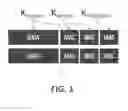
FIG. 1 is a graphical representation showing how Kreaders, Kwriters and Kendpoints are used.
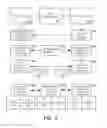
FIG. 2 is an example of the mcTLS handshake protocol proposed by present invention. Shading indicates a difference from TLS handshake protocol.
FIG. 3 is a Flowchart illustrating system elements and use for securely enabling in-network functionality over encrypted data sessions.
FIG. 4 illustrates a context slicing strategy example that may be used by the proposed method.
DETAILED DESCRIPTION OF THE INVENTION AND OF SEVERAL EMBODIMENTS
Present invention provides a mechanism to explicitly and securely enable in-network functionality over encrypted data sessions. Although the mechanism is presented in the context of TLS, since TLS is the standard protocol to secure data sessions on the Internet, the proposed mechanism is broad and could be applied to other technologies like OpenStack, IPsec (layer 3) and tcpcrypt (layer 4). OpenStack is an open-source cloud computing software platform; the ideas here described could be used to enable in-cloud functionality while ensuring secure message passing. IPsec stands for Internet Protocol Security and it is a protocol suite for securing Internet Protocol (IP) communications by authenticating and encrypting each IP packet of a communication session. Accordingly, the ideas here described could be adopted to introduce in-network functionalities. Similarly, tcpcrypt introduces the same idea to TCP packets, and also could be extended with the ideas above.
Accordingly, now it will be described mcTLS, a modification of TLS incorporating the teachings of present invention to enable explicit and secure in-network functionality over TLS data sessions.
The term “context keys” as used herein refer to a set of symmetric encryption and message authentication code (MAC) keys for controlling who can read and write the data sent in a context, or data portion, CTX_X, of a communication data D. Communication applications 100, 200 can associate each context CTX_X with a purpose and access permissions for each middlebox M. For instance, web browsers/servers could use one context CTX_X for HTTP headers and another for content.
As in TLS, in mcTLS it is also distinguishable between a record and a handshake protocol. Now both these protocols will be explained in more detail.
Record Protocol
Controlling Read Access:
-
- Each context CTX_X has its own reader context key (called Kreaders). Possession of this context key constitutes read access so mcTLS can prevent a middlebox M from reading a context CTX_X by withholding that context's reader key.
Controlling Write Access:
-
- To control write access, mcTLS takes the following “endpoint-writer-reader” approach to MACs. Each mcTLS record carries three keyed MACs, generated with the MAC keys from Kendpoints, Kwriters (shared by endpoints 100, 200 and writers (middleboxes M having write access for a context CTX_X)), and Kreaders (shared by endpoints 100, 200, writers and readers (middleboxes M having only read access for a context CTX_X).
- Each context CTX_X has its own Kwriters and Kreaders but there is only one Kendpoints for the data session since the endpoints 100, 200 have access to all contexts CTX.
Generating MACs:
-
- When an endpoint 100, 200 assembles a record, it generates three MACs: one with Kreaders, one with Kwriters, and one with Kendpoints.
- When a writer modifies a record, it generates MACs with Kwriters and Kreaders and simply forwards the original Kendpoints MAC.
- When a reader forwards a record, it leaves all three MACs unmodified.
Checking MACs:
-
- When an endpoint 100, 200 receives a record, it checks the Kwriters MAC to confirm that no illegal modifications were made and it checks the Kendpoints MAC to find out if any legal modifications were made (if the communication application cares).
- When a writer receives a record, it checks the Kwriters MAC to verify that no illegal modifications have been made.
- When a reader receives a record, it uses the Kreaders MAC to check if any third party modifications have been made.
It has to be noted that with the endpoint-writer-reader MAC scheme, readers cannot detect illegal changes made by other readers. The problem is that a shared context key cannot be used by an entity to police other entities at the same privilege level. Because all readers share Kreaders (so that they can detect third party modifications), all readers are also capable of generating valid Kreaders MACs.
There are two options for fixing this: (a) readers and writers/endpoints 100, 200 share pairwise symmetric keys; writers/endpoints 100, 200 compute and append a MAC for each reader, or (b) endpoints 100, 200 and writers append digital signatures rather than MACs; unlike Kwriters MACs, readers can verify these signatures.
This is only an issue when there are more than two readers for a context CTX_X, and readers not detecting reader modifications should generally not be a problem (reader modifications are still detectable at the next writer or endpoint 100, 200). The benefits seem insufficient to justify the additional overhead of (a) or (b), but they could be implemented as optional modes negotiated during the handshake protocol.
FIG. 1 illustrates how Kreaders, Kwriters and Kendpoints are used.
Handshake Protocol
The mcTLS handshake protocol is very similar to the TLS handshake protocol. First the details of context key generation will be explained and then the handshake itself.
Context Key Generation:
-
- In TLS, the endpoints agree on a master secret, used to compute a pseudo-random function (PRF), which generates the session key. mcTLS endpoints 100, 200 establish a master secret and use it to generate Kendpoints as in classic TLS; Kendpoints is used for end-to-end MACs, for securely exchanging partial context secret between the client 100 and the server 200, and for authenticating the handshake via encrypting the Finished message. Additionally, each endpoint 100, 200 independently generates a partial context secret, which is passed to the PRF to generate KCwriters and KCreaders (at the client 100) and KSwriters and KSreaders (at the server 200) for each context CTX_X. At the end of the handshake protocol, middleboxes M compute Kwriters=PRF (KCwriters KSwriters, “writer keys”, randc+rands) and Kreaders=PRF (KCreaders KSreaders, “reader keys”, randc+rands), where PRF (secret, label, seed) is defined in TLS RFC [3], and randc/rands are random values exchanged at the beginning of TLS handshake. Note that though it is described as one key for simplicity, Kreaders is really four keys (just like the “session key” in TLS): an encryption key for data in each direction and a MAC key for data in each direction. Likewise, Kwriters is really one MAC key for each direction.
Handshake Protocol:
-
-
FIG. 2 illustrates the steps of a mcTLS handshake protocol, highlighting the differences from TLS. The messages shown are mcTLS records so mcTLS has the same 2-RTT “shape” as TLS.
- 1. Client Hello. Like TLS, a mcTLS session begins with a ClientHello message (step 201). In mcTLS, the ClientHello carries a MiddleboxListExtenstion, which includes a list of the middleboxes M1, M2 to include in the data session (mechanisms for building this list are outside the scope of this patent) and a list of context keys, their purposes (strings meaningful to the communication application), and each middlebox's M1, M2 access permissions for every context CTX_X. The client 100 opens a TCP connection with the first middlebox M1 and sends the ClientHello (step 201); the middlebox M1 opens a TCP connection with the next hop in the list, forwards the ClientHello, and so on.
- 2. Certificate & Public Key Exchange. As in TLS, the server 200 responds with its certificate (step 202), and, if the certificate message does not contain enough data for the chosen cipher suite, the server 200 sends an additional key exchange message (step 203). In this step, middleboxes M1, M2 do the same: they send their certificates (steps 205, 206) (and possibly key exchange message) to both the client 100 and the server 200. This step is only needed if the client 100 and server 200 request certificates from the middleboxes M1, M2 and happens in parallel with the ServerCertificate and ClientKeyExchange messages.
- 3. Key Generation. The endpoints 100, 200 generate (steps 207, 208), pre-master-secret material and partial context key material for each context CTX_X. In step 5, middleboxes M1, M2 combine these partial context key materials to compute the context keys. This approach serves two purposes: it provides contributory key agreement and it ensures that a middlebox M only gains access to a context CTX_X if the client 100 and server 200 both agree.
- 4. Key Exchange. First, the client 100 (steps 210-212) and server 200 (steps 214-216) exchange the pre-master-secret material using any of the standard key agreement mechanisms supported by TLS. Next, for each context CTX_X, the endpoints 100, 200 send KCreaders and KSreaders to readers and KCwriters and KSwriters to writers. This context key material is sent encrypted under a symmetric key resulting from any standard key exchange protocol. These messages are forwarded to the opposite endpoint so that they can be included in the hash of the handshake messages that is verified at the end of the handshake protocol. The endpoints 100, 200 exchange all partial context key materials encrypted under Kendpoints. The server 200 in an embodiment may choose to avoid this overhead by asking the client 100 to generate the full context key material.
- 5. Finished. The mcTLS handshake protocol concludes with the exchange of ChangeCipherSpec and Finished messages (steps 213 and 217), just like TLS. Receipt of the ChangeCipherSpec message prompts middleboxes M1, M2 to compute the context keys. All handshake messages, including those sent to middleboxes M1, M2, are included in the Finished hash. Verifying the hash ensures that both endpoints 100, 200 observe the same sequence of handshake messages.
-
FIG. 2 illustrates the steps of a mcTLS handshake protocol, highlighting the differences from TLS. The messages shown are mcTLS records so mcTLS has the same 2-RTT “shape” as TLS.
Contributory Context Keys:
A context key is computed as Key=PRF (secret, label, seed) where secret=KC+KS, label=“a string”, and seed=randc+rands. This approach has several advantages; first, client communication application 100 and server communication application 200 both contribute in the creation of a context key which implies that they both agree on the privileges to share with a middlebox M. Second, by using a concatenation operation, instead of XOR operation for instance, the server communication application 200 cannot force Key=0 by choosing KS=KC (since a server communication application 200 sees KC before committing to KS). Though is not clear why a server communication application 200 would try to force a weak key, this is further protection for example to a potential attack.
Client Context Key Distribution Mode
One concern about deploying TLS is that the handshake protocol is computationally demanding, limiting the number of new connections per second servers can process. Similar to TLS, in mcTLS, authentication of the endpoints 100, 200 in the data session is optional. Another burdensome mcTLS operation for servers' applications 200 is generating and encrypting the partial shared secret for distribution to middleboxes M. Alternatively, this operation can be moved to the client only: context keys are generated from the master secret and the client communication application 100 encrypts and distributes them to middleboxes M. This reduces the server load, but it has the disadvantage that agreement about middlebox permissions is not enforced.
It has to be noted that this does not sacrifice contributory key agreement in the sense that both endpoints contribute randomness. The client communication application 100 generates the full context secrets from the secret it shares with the server; if client/server key exchange was contributory, the context keys inherit this benefit. Choosing a handshake mode is left to content providers, who can individually decide how to make this control-performance tradeoff; server communication application 200 indicates its choice to the client communication application 100 in the ServerHello message.
With reference now to FIG. 3 therein it is illustrated a high level diagram of an embodiment of present invention for securely enabling in-network functionality over encrypted data sessions. At first (step 301), a client communication application 100 installed in a client computing device (not illustrated) contacts the server communication application 200 installed in a server (not illustrated), exchanging a list of trusted middleboxes M it would like to insert in the data session path. This list can be provided by an operator or found in alternative ways. Present invention does not restrict any specific mechanism. The server 200 responds with its certificate (step 302). Once a middlebox M1 is selected (more than one may be selected) from said list of trusted middleboxes M, the selected middlebox M1 authenticates with both (step 305), the client communication application 100 and the server communication application 200, while regular authentication between server communication application 200 and client communication application 100 continues. Client communication application 100 and server communication application 200 then agree on the privileges the middlebox M1 should receive by defining a set of context CTX_X and context keys (steps 306-307). Finally, Client communication application 100 and server communication application 200 start exchanging data (e.g. communication data D) using the appropriate contexts CTX_X defined above (steps 308-310). FIG. 4 illustrates a possible context slicing strategy that may be used by the proposed method.
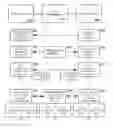
There are two ways to think about contexts CTX_X: as portions of the communication data to be transferred or as a configuration of middlebox permissions. For example, supposing a client communication application 100 wants to transfer a document consisting of three portions, CTX_A, CTX_B, and CTX_C via two middleboxes M1, M2. For instance, CTX_A and CTX_B could be two subsets of HTTP headers, while CTX_C could be the HTTP content being transferred. Middlebox M1 should have read access to the entire document and middlebox M2 should read CTX_A, write CTX_B, and have no access to CTX_C, e.g., for privacy reasons middlebox M2 should not be able to read the HTTP content being transferred. The communication application could allocate one context key for each context CTX_X and assign the appropriate permissions (FIG. 4 left), or it could create one context key for each combination of permissions and use the appropriate context key when sending each context CTX_X of the document (FIG. 4 right).
Present invention enables lawful interception of encrypted traffic by mean of contributory context keys. While contributory context keys are not a requirement, for example a competitor approach could enable control to only one endpoint, multiple contexts keys are required to enable selective data access to middleboxes M. One drawback of using multiple context keys is an increase in the number of bytes transferred on the wire, compared to a classic end-to-end approach. Accordingly, unauthorized use of such feature can be detected by traffic inspection. A client communication application 100 running the competitor protocol under inspection can be instrumented to report the content transferred, along with the cipher used and the count of bytes received from the wire. If re-encrypting the received content with the same cipher originates a different byte count from the number of bytes received from the wire, the usage of multiple encryption contexts was likely detected.
The proposed invention may be implemented in hardware, software, firmware, or any combination thereof. If implemented in software, the functions may be stored on or encoded as one or more instructions or code on a computer-readable medium.
Computer-readable media includes computer storage media. Storage media may be any available media that can be accessed by a computer. By way of example, and not limitation, such computer-readable media can comprise RAM, ROM, EEPROM, CD-ROM or other optical disk storage, magnetic disk storage or other magnetic storage devices, or any other medium that can be used to carry or store desired program code in the form of instructions or data structures and that can be accessed by a computer. Disk and disc, as used herein, includes compact disc (CD), laser disc, optical disc, digital versatile disc (DVD), floppy disk and Blu-ray disc where disks usually reproduce data magnetically, while discs reproduce data optically with lasers. Combinations of the above should also be included within the scope of computer-readable media. Any processor and the storage medium may reside in an ASIC. The ASIC may reside in a user terminal. In the alternative, the processor and the storage medium may reside as discrete components in a user terminal.
As used herein, computer program products comprising computer-readable media including all forms of computer-readable medium except, to the extent that such media is deemed to be non-statutory, transitory propagating signals.
The scope of the present invention is defined in the following set of claims.
REFERENCES
- [1] S. Loreto, J. Mattsson, R. Skog, et al. Explicit Trusted Proxy in HTTP/2.0. Internet-Draft draft-loreto-httpbis-trusted-proxy20-01, IETF Secretariat, February 2014.
- [2] R. Peon. Explicit Proxies for HTTP/2.0. Internet-Draft draft-rpeon-httpbis-exproxy-00, IETF Secretariat, June 2012.
- [3] https://tools.ietf.org/html/rfc5246
Claims
1. A method for securely enabling in-network functionality over encrypted data sessions, the method comprising:
establishing an encrypted data session between two communication applications, a client communication application and a server communication application, over a communication network;
receiving and/or transmitting, by the client communication application, in said established encrypted data session, encrypted communication data (D) from/to said server communication application through at least one computing network element (M); and
performing, by said at least one computing network element (M), different actions other than communication data forwarding from one communication application to the other on said encrypted communication data (D),
wherein said encrypted communication data (D) comprises a plurality of data portions, or contexts, (CTX), each one (CTX_X) being encrypted and authenticated via context keys, and said different actions being specific for said at least one computing network element (M) and for one or more of said plurality of contexts (CTX_X) of the encrypted communication data (D).
2. The method of claim 1, wherein the context keys being generated by both of the communication applications by means of a pseudo random function.
3. The method of claim 2, wherein each communication application generates half of a shared secret, the shared secret being used to generate the pseudo random function.
4. The method of claim 1, comprising:
negotiating, by the computing network element (M), with both of the two communication applications, before performing the different actions on the one or more contexts (CTX_X), a symmetric key using a key exchange protocol;
generating, by both of the two communication applications, for each one of the one or more contexts (CTX_X) of the encrypted communication data (D) to which the computing network element (M) has rights to, said context keys, wherein each of the two communication applications generates half of a shared secret for generating a pseudo random function, the pseudo random function being used for generating the context keys;
sending, by both of the two communication applications, to the computing network element (M), the corresponding half of the shared secret in encrypted form using said symmetric key negotiated with the computing network element (M); and
computing, by the computing element (M), the context keys using the pseudo random function, the computed context keys being used to decrypt the encrypted communication data (D) to perform the different actions.
5. The method of claim 4, wherein the computing network element (M) in addition to negotiating the symmetric key provides to both of the two communication applications an own certificate, the two communication applications verifying the received certificate of the computing network element (M) before generating the context keys.
6. The method of claim 1, wherein the different actions comprise read and/or write permissions of the computing network element (M) on the one or more contexts (CTX_X) of the encrypted communication data (D).
7. The method of claim 1, wherein the encrypted data session is a Transport Layer Security, TLS, session.
8. The method of claim 1, wherein the encrypted data session is an OpenStack message passing session.
9. A system for securely enabling in-network functionality over encrypted data sessions, comprising:
two communication applications, a client communication application and a server communication application, said client communication application running in a client computing device and being configured to establish an encrypted data session with said server communication application over a communication network and to receive and/or transmit at least one encrypted communication data (D) from/to said server communication application over at least one computing network element (M); and
said at least one computing network element (M) comprising one or more processors for performing different actions other than data packet forwarding from one communication application to the other on said at least one encrypted communication data (D),
wherein said one or more processors are configured for performing for each encrypted data session established between said two communication applications said different actions on one or more of a plurality of data portions, or contexts, (CTX) of the encrypted communication data (D) according to an algorithm implementing the method of claim 1.
10. A computer program product tangibly embodied in a non-transitory machine-readable storage medium, including instructions configured to cause a computing network element (M) to:
perform different actions other than data packet forwarding on at least one encrypted communication data (D) transmitted and/or received by a client communication application to/from a server communication application, over a communication network, wherein said at least one encrypted communication data (D) comprises a plurality of data portions, or contexts, (CTX), each one (CTX_X) being encrypted by a context key, and wherein said different actions being specific for said at least one computing network element (M) and for one or more of said plurality of contexts (CTX_X) of the encrypted communication data (D).
11. The computer program product of claim 10, wherein the context keys being generated by both of the communication applications by means of a pseudo random function, wherein each communication application generates a half of a shared secret for generating the pseudo random function.
12. The computer program product of claim 11, comprising:
negotiating with the communication applications, before performing the different actions on the one or more contexts (CTX_X), a symmetric key using a key exchange protocol;
receiving from both of the two communication applications the corresponding half of the shared secret in encrypted form using said negotiated symmetric key; and
computing the context keys using the pseudo random function, the computed context keys being used to decrypt the encrypted communication data (D) to perform the different actions.
13. The computer program product of claim 10, wherein the different actions comprises read and/or write permissions of the computing network element (M) on the one or more contexts (CTX_X) of the encrypted communication data (D).
Images & Drawings included:


Sources:
- United States Patent and Trademark Office - verify current appl. status at the USPTO↗
Recent applications in this class:
- » 20250279984 2025-09-04
Systems and methods for a Hypertext Transfer Protocol Secure (HTTPS) proxy service - » 20250274438 2025-08-28
TRACKING DATA-PATH READINESS OF SECURITY SERVICES INSERTED IN MIDDLE MILE AND CLOUD GATEWAYS - » 20250274437 2025-08-28
METHODS AND SYSTEMS FOR OPERATING A PROXY SERVER - » 20250267127 2025-08-21
Systems and Methods for Uploading Streamed Objects to a Cloud Storage System - » 20250260672 2025-08-14
VALIDATION OF ZTNA CONFIGURATION FOR A MULTI-TENANT PROXY ENVIRONMENT - » 20250260671 2025-08-14
CLOUD-BASED ZERO TRUST NETWORK ACCESS SERVICE - » 20250260670 2025-08-14
MULTI-HOP SOCKS5 PROXY - » 20250254149 2025-08-07
Systems and methods for processing network communications - » 20250254148 2025-08-07
Friction Free Download Over a Web Proxy - » 20250240277 2025-07-24
ADAPTIVE RATE LIMITER BASED ON TRANSACTIONAL HEURISTICS AND ARTIFICIAL INTELLIGENCE
Recent applications for this Assignee:
- » 20240338484 2024-10-10
Method and System for Data Anonymization - » 20240281945 2024-08-22
METHOD FOR DETECTING SYNTHETIC CONTENT IN VIDEOS - » 20240107305 2024-03-28
SYSTEMS AND METHODS FOR MANAGING INCOMING CALLS IN THE METAVERSE - » 20220225226 2022-07-14
Method and system for packet data network service slicing over a network infrastructure for real-time IP services - » 20210083877 2021-03-18
System and a method for user authentication and/or authorization - » 20200403799 2020-12-24
Method and system for inter-DLT networks trust enhancement - » 20200382952 2020-12-03
Method, device and system for secure connection in wireless communications networks - » 20200259791 2020-08-13
Method and system for controlling internet browsing user security - » 20200235921 2020-07-23
METHOD AND SYSTEM FOR RECOVERING CRYPTOGRAPHIC KEYS OF A BLOCKCHAIN NETWORK - » 20200104483 2020-04-02
RISK COMPUTATION FOR SOFTWARE EXTENSIONS