Control system for electric bicycles
US20180222548A1
2018-08-09
15/424,888
2017-02-06
✅ Patent granted
US 10,040,509 B1
2018-08-07
-
-
Joseph M Rocca | Michael R Stabley
2037-03-03
Abstract:
An electric bicycle includes two pedals, a motor, a battery providing power to the motor, a first detection member for detecting acceleration of the electric bicycle and trading acceleration of the pedals, and a controller. The controller receives the acceleration of the electric bicycle and the treading acceleration of the pedals from the first detection member, and then controls output of the motor and the battery. When the treading acceleration of the pedals is larger than the acceleration of the electric bicycle, the controller concludes that the resistance from outside to the electric bicycle increases, the controller increases output of the motor and the battery. When the treading acceleration of the pedals is smaller than the acceleration of the electric bicycle, the controller concludes that the resistance from outside to the electric bicycle decreases, the output of the motor and the battery is reduced.
Applicant:
Interested in similar patents?
Get notified when new applications in this technology area are published.
Classification:
B60Y2200/13 » CPC further
Type of vehicle; Road Vehicles Bicycles; Tricycles
B60Y2200/91 » CPC further
Type of vehicle; Vehicles comprising electric prime movers Electric vehicles
H04M1/0202 » CPC further
Substation equipment, e.g. for use by subscribers; Constructional features of telephone sets Portable telephone sets, e.g. cordless phones, mobile phones or bar type handsets
H04W4/80 » CPC further
Services specially adapted for wireless communication networks; Facilities therefor Services using short range communication, e.g. near-field communication [NFC], radio-frequency identification [RFID] or low energy communication
B62M6/50 » CPC main
Rider propulsion of wheeled vehicles with additional source of power, e.g. combustion engine or electric motor; Rider propelled cycles with auxiliary electric motor; Control or actuating devices therefor characterised by detectors or sensors, or arrangement thereof
B62K11/10 » CPC further
Motorcycles, engine-assisted cycles or motor scooters with one or two wheels; Frames characterised by the engine being over or beside driven rear wheel
B62M6/90 » CPC further
Rider propulsion of wheeled vehicles with additional source of power, e.g. combustion engine or electric motor; Accessories, e.g. power sources; Arrangements thereof Batteries
B62J6/02 » CPC further
Arrangement of optical signalling or lighting devices on cycles; Mounting or supporting thereof; Circuits therefor Headlights
B62J6/04 » CPC further
Arrangement of optical signalling or lighting devices on cycles; Mounting or supporting thereof; Circuits therefor Rear lights
B62J6/00 IPC
Arrangement of optical signalling or lighting devices on cycles; Mounting or supporting thereof; Circuits therefor
B62J11/00 » CPC further
Supporting arrangements specially adapted for fastening specific devices to cycles, e.g. supports for attaching maps
H04W4/00 IPC
Services specially adapted for wireless communication networks; Facilities therefor
H04M1/02 IPC
Substation equipment, e.g. for use by subscribers Constructional features of telephone sets
Description
BACKGROUND OF THE INVENTION
1. Fields of the Invention
The present invention relates to an electric bicycle, and more particularly, to a control system for an electric bicycle.
2. Descriptions of Related Art
One of the conventional electric bicycle control systems known to applicant comprises a body, a rear wheel unit removably connected to the bicycle frame, a detection module connected to a transmission part of the bicycle so as to detect the operation of the transmission part and generate operational signals, a driving module, multiple driving units, a power module and a control module. The driving module includes a driving unit connected to the body and including multiple driving members. The driving units are connected to the driving members and rotatably connected to the rear wheel unit. The power module is electrically connected to the driving module and the detection module. The control module is electrically connected to the driving module, the detection module and the power module. The control module receives the operational signals and calculates a driving signal which is sent to the driving unit. The driving unit then drives the driving members according to the driving signal and drives the driving units. The driving units drive the rear wheel unit to move the bicycle.
However, the conventional control system only adjusts the internal resistance of the transmission in the bicycle. Only torque and speeds of gears are involved in the control system. The conventional control system cannot monitor and adjust the whole momentum of the bicycle. When different riders of different weights operate the bicycle, the conventional control system cannot respond properly.
Besides, the conventional control system cannot properly provide or adjust the assistance power to the bicycle when the bicycle is operated along roads of different inclinations.
The obvious shortcomings of the conventional control system are that the riders still have to tread hard on ascent roads. When the bicycle is operated on downhill roads, the assistance force from the control system cannot be properly reduced, so that the rider has to brake frequently.
The present invention intends to provide a control system for an electric bicycle to improve the shortcomings mentioned above.
SUMMARY OF THE INVENTION
The present invention relates to an electric bicycle and comprises two pedals, a motor and a battery which provides power to the motor. A control system includes a first detection member detects acceleration of the electric bicycle and trading acceleration of the pedals. A controller receives the acceleration of the electric bicycle and the treading acceleration of the pedals from the first detection member, and sends signals to the motor and the battery so as to control output of the motor and the battery.
When the treading acceleration of the pedals is larger than the acceleration of the electric bicycle, the controller concludes that the resistance from outside to the electric bicycle increases, the controller increases output of the motor and the battery. When the treading acceleration of the pedals is smaller than the acceleration of the electric bicycle, the controller concludes that the resistance from outside to the electric bicycle decreases, the controller reduces output of the motor and the battery.
Preferably, the treading acceleration of the pedals is composed of a first component force that has the same direction as the treading acceleration of the pedals, and a second component force that is perpendicular to the direction as the treading acceleration of the pedals. A comparison between a ratio of the first component force to the second component force and the acceleration of the electric bicycle is made, the controller increases or reduces output of each of the motor and the battery according to the comparison.
Preferably, a second detection member is connected to the controller and detects speed and travel distance of the electric bicycle. The controller receives the speed and the travel distance of the electric bicycle. When the speed of the electric bicycle is over 32 km per hour, the two respective outputs of the motor and the battery are stopped.
Preferably, a monitor is connected to the controller, and the controller monitors the battery and displays result of the battery on the monitor. The monitor further displays the speed and the travel distance of the electric bicycle detected by the second detection member.
Preferably, the monitor is wirelessly connected to the controller.
Preferably, the controller includes a motor control interface which is electrically connected to the motor.
Preferably, the controller is electrically connected to a headlight and a taillight. The headlight includes a light sensor which detects brightness of environment, the controller changes output to the headlight according to the detected brightness of environment.
Preferably, the controller includes a blue-tooth transmitting unit which is wirelessly connected to a smart phone.
The primary object of the present invention is to provide a control system for an electric bicycle, wherein the control system adjust the output of the motor and the battery according to detected resistance applied to the electric bicycle.
The present invention will become more obvious from the following description when taken in connection with the accompanying drawings which show, for purposes of illustration only, a preferred embodiment in accordance with the present invention.
BRIEF DESCRIPTION OF THE DRAWINGS
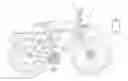
FIG. 1 shows the control system of the present invention is wirelessly connected to a smart phone;
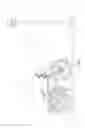
FIG. 2 shows the block diagram of the control system of the present invention;
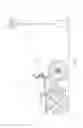
FIG. 3 shows the first and second component forces of the treading acceleration of the pedals;
FIG. 4 shows the curves of the output of the motor of the control system of the present invention;
FIG. 5 shows that the light sensor detects the brightness of the environment and the controller controls the headlight, and
FIG. 6 shows another situation that the light sensor detects the brightness of the environment and the controller controls the headlight.
DETAILED DESCRIPTION OF THE PREFERRED EMBODIMENT
Referring to FIGS. 1 to 3, the electric bicycle 1 comprises two pedals 11, a motor 12 and a battery 13 which provides power to the motor 12. The control system of the present invention comprises a first detection member 15 for detecting acceleration of the electric bicycle 1 and trading acceleration of the pedals 11. A controller 2 receives the acceleration of the electric bicycle 1 and the treading acceleration of the pedals 11 from the first detection member 15, and sends signals to the motor 12 and the battery 13 to control output of the motor 12 and the battery 13.
When the treading acceleration of the pedals 11 is larger than the acceleration of the electric bicycle 1, the controller 2 concludes that the resistance from outside to the electric bicycle 1 increases, so that the controller 2 increases output of the motor 12 and the battery 13. Therefore, the rider does not need to tread hard to move the electric bicycle 1 forward. On the contrary, when the treading acceleration of the pedals 11 is smaller than the acceleration of the electric bicycle 1, the controller 2 concludes that the resistance from outside to the electric bicycle 1 decreases, so that the controller 2 reduces output of the motor 12 and the battery 13. In this situation, the consumption of the battery 13 is stopped so that the power of the battery 13 is saved and can be used when needed.
As shown in FIG. 3, when the pedals 11 are tread in the direction represented by the solid arrowhead marked in front of the pedals 1, the electric bicycle 1 moves forward in the direction represented by the hollow arrowhead (Y axis). The treading acceleration of the pedals 11 is composed of a first component force (arrowhead ZY) that has the same direction (Y axis) as the treading acceleration of the pedals 11, and a second component force (arrowhead ZX) that is perpendicular to the direction as the treading acceleration of the pedals 11. A comparison between a ratio of the first component force to the second component force and the acceleration of the electric bicycle 1 is made, and the controller 2 increases or reduces output of each of the motor 12 and the battery 13 according to the comparison.
Furthermore, a second detection member 14 is connected to the front wheel 19 by a cable 141. The second detection member 14 further is connected to the controller 2 and detects speed and travel distance of the electric bicycle 1. The controller 2 receives the speed and the travel distance of the electric bicycle 1. When the speed of the electric bicycle 1 is over 32 km per hour, the two respective outputs of the motor 12 and the battery 13 are stopped to avoid the electric bicycle 1 from being operated at exceeded speed.
A monitor 18 is connected to the controller 2, wherein the controller 2 monitors the battery 13 and displays result of the battery 13 on the monitor 18. The monitor 18 further displays the speed and the travel distance of the electric bicycle 1 detected by the second detection member 14. The monitor 18 is wirelessly connected to the controller 2. The controller 2 includes a motor control interface 21 which is electrically connected to the motor 12.
The controller 2 further includes a processing unit 23 which includes basic processing data such as the weight of the electric bicycle 1. The processing unit 23 calculates the acceleration of the electric bicycle 1, the treading acceleration of the pedals 11, the speed, the travel distance of the electric bicycle 1, and the treading force 231.
Assume the kinetic energy of the electric bicycle 1, after the rider applies a treading force to the electric bicycle 1, changes from Ek0 to Ek, the work that the trading force makes is W=ΔEK=EK−EK0=Fd, wherein the
Fd = mad = mad = ma ( v 2 2 - v 1 2 2 a ) = mv 2 2 2 - mv 1 2 2 = Δ E K , wherein d = ( v 2 2 - v 1 2 2 a ) , v 2 2 = v 1 2 + 2 ad ,
m is the weight of the electric bicycle 1, v1 and v2 respectively represent the initial speed and the final speed of the electric bicycle 1, a is the acceleration of the electric bicycle 1, d is the travel distance that the electric bicycle 1 travels. F is the value of the trading force 231. By the equation above, the treading force 231 is obtained. When the value of the treading force 231 is larger than 25 Nm, this means that the resistance to the electric bicycle 1 increases, so that the controller 2 commands the motor 12 and the battery 13 to increase their outputs. The curves of the output of the motor 12 are disclosed in FIG. 4. When the electric bicycle 1 is operated on a flat road, and the treading force 231 is larger than 25 Nm, as shown in the top of the curve in FIG. 4, the output of the motor 12 is gradually increased, and the speed is maintained between 25 to 32 km per hour. When the electric bicycle 1 is operated on an uphill road, and the treading force 231 is larger than 25 Nm, as shown in the middle portion of FIG. 4, the output of the motor 12 is increased stage by stage to maintain the speed between 25 to 32 km per hour. When the electric bicycle 1 is operated on a downhill road, the electric bicycle 1 accelerates due to gravity without treading, when the controller 2 acknowledges that the speed is over 32 km per hour, the output of the motor 12 and the battery 13 will be stopped to avoid over-speeding. The curve is disclosed on the lower portion of FIG. 4.
As shown in FIGS. 5 and 6, the controller 2 is electrically connected to a headlight 16 and a taillight 17, wherein the headlight 16 includes a light sensor 161 which detects brightness of environment. The controller 2 changes output to the headlight 16 according to the detected brightness of environment as shown in FIGS. 5 and 6. Besides, the controller 2 includes a blue-tooth transmitting unit 22 which is wirelessly connected to a smart phone 3 which records the information such as speed, travel distance, riding time, the rider's weight and other physiological information.
The advantages of the present invention are that the controller 2 receives the acceleration of the electric bicycle 1 and the treading acceleration of the pedals 11 from the first detection member 15, and sends signals to the motor 12 and the battery 13 to control output of the motor 12 and the battery 13 so as to assist the rider to operate the electric bicycle easily regardless of the conditions of the road.
The proper response of the motor 12 and the battery 13 according to the road conditions saves the electric power of the battery 13 and prolong the life of use of the motor 12.
While we have shown and described the embodiment in accordance with the present invention, it should be clear to those skilled in the art that further embodiments may be made without departing from the scope of the present invention.
Claims
1. An electric bicycle (1) comprising:
two pedals (11), a motor (12) and a battery (13) which provides power to the motor (12);
a control system having a first detection member (15) for detecting acceleration of the electric bicycle (1) and treading acceleration of the pedals (11), the treading acceleration of the pedals (11) composed of a first component force that has the same direction as the treading acceleration of the pedals (11), and a second component force that is perpendicular to the direction as the treading acceleration of the pedals (11), and
a controller (2) receiving the acceleration of the electric bicycle (I) and the treading acceleration of the pedals (11) from the first detection member (15), and a comparison between a ratio of the first component force to the second component force and the acceleration of the electric bicycle (1) being made, the controller (2) sending signals to the motor (12) and the battery (13) according to the comparison so as to control output of the motor (12) and the battery (13), when the treading acceleration of the pedals (11) is larger than the acceleration of the electric bicycle (1), the controller (2) concludes that the resistance from outside to the electric bicycle (1) increases, the controller (2) increases output of the motor (12) and the battery (13), when the treading acceleration of the pedals (11) is smaller than the acceleration of the electric bicycle (1), the controller (2) concludes that the resistance from outside to the electric bicycle (1) decreases, the controller (2) reduces output of the motor (12) and the battery (13).
2. (canceled)
3. The electric bicycle as claimed in claim 1, wherein a second detection member (14) is connected to the controller (2) and detects speed and travel distance of the electric bicycle (1), the controller (2) receives the speed and the travel distance of the electric bicycle (1), when the speed of the electric bicycle (1) is over 32 km per hour, the two respective outputs of the motor (12) and the battery (13) are stopped.
4. The electric bicycle as claimed in claim 3, wherein a monitor (18) is connected to the controller (2), the controller (2) monitors the battery (13) and displays result of the battery (13) on the monitor (18), the monitor (18) displays the speed and the travel distance of the electric bicycle (1) detected by the second detection member (14).
5. The electric bicycle as claimed in claim 4, wherein the monitor (18) is wirelessly connected to the controller (2).
6. The electric bicycle as claimed in claim 1, wherein the controller (2) includes a motor control interface (21) which is electrically connected to the motor (12).
7. The electric bicycle as claimed in claim 1, wherein the controller (2) is electrically connected to a headlight (16) and a taillight (17), the headlight (16) includes a light sensor (161) which detects brightness of environment, the controller (2) changes output to the headlight (16) according to the detected brightness of environment.
8. The electric bicycle as claimed in claim 7, wherein the controller (2) includes a blue-tooth transmitting unit (22) which is wirelessly connected to a smart phone (3).
Images & Drawings included:



Sources:
- United States Patent and Trademark Office - verify current appl. status at the USPTO↗
Similar patent applications:
- » 20230234671
ELECTRIC BICYCLE, CONTROL SYSTEM OF ELECTRIC BICYCLE AND CONTROL METHOD THEREOF - » 20220227454
INTELLIGENT ELECTRIC BICYCLE CONTROL SYSTEM - » 20150345620
Bicycle gear changing control apparatus, electrically assisted system, and bicycle gear changing control method - » 20200092128
Controlling system for electric bicycle and method thereof - » 20120316710
Bicycle electrical component control system - » 20180326868
Control system for electric bicycles - » 20180257739
Speed control system for electric bicycles - » 20140209400
Electromechanical control system of electric bicycle integrating smart mobile device and cloud services - » 20170247082
Electric bicycle derailleur control system - » 20220194517
CONTROL SYSTEM FOR ELECTRIC BICYCLE
Recent applications in this class:
- » 20250263148 2025-08-21
Method for Operating a Drive Assembly of an Electric Bicycle - » 20250256804 2025-08-14
DETECTION SYSTEM, DETECTION METHOD, AND COMPUTER-READABLE STORAGE MEDIUM - » 20250187700 2025-06-12
RIDING VEHICLE AND RIDING VEHICLE MOTION ANALYSIS METHOD - » 20250153803 2025-05-15
SENSOR SYSTEM FOR DETERMINING AN EXERTION OF FORCE ON A PEDAL, DRIVE UNIT, SENSOR UNIT, AND METHOD FOR ADJUSTING AN ASSISTANCE POWER OF A DRIVE UNIT - » 20250153802 2025-05-15
DRIVE UNIT FOR AN ELECTRIC BICYCLE, COMPRISING TWO SIGNAL TRANSMITTERS TAKING INTO ACCOUNT ELASTIC DEFORMATION, AND CONTROL METHOD - » 20250145247 2025-05-08
DRIVE SYSTEM FOR AN ELECTRIC BICYCLE, WITH CALCULATION OF A TORQUE AT THE BOTTOM BRACKET SPINDLE FOR CONTROLLING THE ASSISTANCE POWER - » 20250136240 2025-05-01
CONTROL DEVICE FOR HUMAN-POWERED VEHICLE - » 20250128785 2025-04-24
Drive Arrangement for a Bicycle - » 20250121911 2025-04-17
CONTROL DEVICE FOR HUMAN-POWERED VEHICLE - » 20250121910 2025-04-17
ELECTRIC POWER-ASSIST BICYCLE AND ELECTRIC ENERGY MANAGEMENT METHOD FOR ELECTRIC POWER-ASSIST BICYCLE