Metal powders and use thereof
US20180223396A1
2018-08-09
15/942,980
2018-04-02
✅ Patent granted
US 10,513,758 B2
2019-12-24
-
-
Colleen P Dunn | Anthony M Liang
Buchanan Ingersoll & Rooney P.C.
2038-06-21
Abstract:
A new pre-alloyed metal based powder, intended to be used in surface coating of metal parts. The powder is deposited using e.g. laser cladding or plasma transfer arc welding (PTA), or thermal spray (e.g. HVOF). The powder is useful for reducing friction and improving wear reducing properties of the deposited coating. Such coatings may also improve machinability. As friction or wear reducing component, inclusions of manganese sulphide or tungsten sulphide in the pre-alloyed powder may be used.
Inventors:
- Senad Dizdar 6 🇸🇪 Hoganas, Sweden
- Owe MARS 9 🇸🇪 Hoganas, Sweden
- Philippe SZABO 2 🇫🇷 Saint Martin d'Heres, France
- Thierry CALMES 2 🇫🇷 Pouilly le Monial, France
Assignee:
- HOGANAS AB (PUBL) 79 🇸🇪 Hoganas, Sweden
- HÖGANÄS AB (Publ) 45 🇸🇪 Höganäs, Sweden
Applicant:
Interested in similar patents?
Get notified when new applications in this technology area are published.
Classification:
B22F1/00 IPC
Metallic powder; Treatment of metallic powder, e.g. to facilitate working or to improve properties
B22F9/08 IPC
Making metallic powder or suspensions thereof using physical processes starting from liquid material by casting, e.g. through sieves or in water, by atomising or spraying
B22F9/082 » CPC further
Making metallic powder or suspensions thereof using physical processes starting from liquid material by casting, e.g. through sieves or in water, by atomising or spraying atomising using a fluid
C22C1/0433 » CPC further
Making alloys by powder metallurgy Nickel- or cobalt-based alloys
C22C33/02 IPC
Making ferrous alloys by powder metallurgy
C22C19/05 » CPC further
Alloys based on nickel or cobalt based on nickel with chromium
C22C33/0221 » CPC further
Making ferrous alloys by powder metallurgy; Using a mixture of prealloyed powders or a master alloy comprising S or a sulfur compound
C22C38/02 » CPC further
Ferrous alloys, e.g. steel alloys containing silicon
C22C38/44 » CPC further
Ferrous alloys, e.g. steel alloys containing chromium with nickel with molybdenum or tungsten
C22C33/0285 » CPC further
Making ferrous alloys by powder metallurgy characterised by the range of the alloying elements with at least one alloying element having a minimum content above 5% with Cr, Co, or Ni having a minimum content higher than 5%
C23C4/08 » CPC further
Coating by spraying the coating material in the molten state, e.g. by flame, plasma or electric discharge characterised by the coating material; Metallic material containing only metal elements
C22C19/07 » CPC main
Alloys based on nickel or cobalt based on cobalt
C23C24/10 IPC
Coating starting from inorganic powder by application of heat or pressure and heat with intermediate formation of a liquid phase in the layer
C23C4/131 » CPC further
Coating by spraying the coating material in the molten state, e.g. by flame, plasma or electric discharge characterised by the method of spraying Wire arc spraying
C22C38/34 » CPC further
Ferrous alloys, e.g. steel alloys containing chromium with more than 1.5% by weight of silicon
C22C38/58 » CPC further
Ferrous alloys, e.g. steel alloys containing chromium with nickel with more than 1.5% by weight of manganese
C22C1/04 IPC
Making alloys by powder metallurgy
C22C19/03 » CPC further
Alloys based on nickel or cobalt based on nickel
C22C30/00 » CPC further
Alloys containing less than 50% by weight of each constituent
C22C19/058 » CPC further
Alloys based on nickel or cobalt based on nickel with chromium without Mo and W
C23C24/106 » CPC further
Coating starting from inorganic powder by application of heat or pressure and heat with intermediate formation of a liquid phase in the layer; Coating with metallic material, i.e. metals or metal alloys, optionally comprising hard particles, e.g. oxides, carbides or nitrides Coating with metal alloys or metal elements only
C22C38/18 IPC
Ferrous alloys, e.g. steel alloys containing chromium
B23K35/0255 » CPC further
Rods, electrodes, materials, or media, for use in soldering, welding, or cutting characterised by mechanical features, e.g. shape for use in welding
B23K35/308 » CPC further
Rods, electrodes, materials, or media, for use in soldering, welding, or cutting characterised by the composition or nature of the material; Selection of soldering or welding materials proper with the principal constituent melting at less than 1550 degrees C; Fe as the principal constituent with Cr as next major constituent
B23K35/3033 » CPC further
Rods, electrodes, materials, or media, for use in soldering, welding, or cutting characterised by the composition or nature of the material; Selection of soldering or welding materials proper with the principal constituent melting at less than 1550 degrees C Ni as the principal constituent
B23K35/3046 » CPC further
Rods, electrodes, materials, or media, for use in soldering, welding, or cutting characterised by the composition or nature of the material; Selection of soldering or welding materials proper with the principal constituent melting at less than 1550 degrees C Co as the principal constituent
B23K35/3053 » CPC further
Rods, electrodes, materials, or media, for use in soldering, welding, or cutting characterised by the composition or nature of the material; Selection of soldering or welding materials proper with the principal constituent melting at less than 1550 degrees C Fe as the principal constituent
B23K35/3086 » CPC further
Rods, electrodes, materials, or media, for use in soldering, welding, or cutting characterised by the composition or nature of the material; Selection of soldering or welding materials proper with the principal constituent melting at less than 1550 degrees C; Fe as the principal constituent with Cr as next major constituent containing Ni or Mn
C22C38/22 IPC
Ferrous alloys, e.g. steel alloys containing chromium with molybdenum or tungsten
C22C38/38 IPC
Ferrous alloys, e.g. steel alloys containing chromium with more than 1.5% by weight of manganese
C22C38/40 IPC
Ferrous alloys, e.g. steel alloys containing chromium with nickel
B23K35/30 IPC
Rods, electrodes, materials, or media, for use in soldering, welding, or cutting characterised by the composition or nature of the material; Selection of soldering or welding materials proper with the principal constituent melting at less than 1550 degrees C
B23K35/02 IPC
Rods, electrodes, materials, or media, for use in soldering, welding, or cutting characterised by mechanical features, e.g. shape
C23C4/129 » CPC further
Coating by spraying the coating material in the molten state, e.g. by flame, plasma or electric discharge characterised by the method of spraying Flame spraying
C23C4/134 » CPC further
Coating by spraying the coating material in the molten state, e.g. by flame, plasma or electric discharge characterised by the method of spraying Plasma spraying
Description
CROSS REFERENCE TO RELATED APPLICATIONS
The present application is a divisional of U.S. application Ser. No. 14/651,839, filed on Jun. 12, 2015, which is a U.S. national stage of International Application No. PCT/EP2013/076326, filed on Dec. 12, 2013, which claims the benefit of European Application No. 12197170.9, filed on Dec. 14, 2012. The entire contents of each of U.S. application Ser. No. 14/651,839, International Application No. PCT/EP2013/076326, and European Application No. 12197170.9 are hereby incorporated herein by reference in their entirety.
FIELD OF THE INVENTION
The present invention relates to a new pre-alloyed metal based powder, intended to be used in surface coating of metal parts. The powder is deposited using e.g. laser cladding or plasma transfer arc welding (PTA), or thermal spray (e.g. HVOF). The powder is useful for reducing friction and improving wear reducing properties of the deposited coating. Such coatings may also improve machinability. As friction or wear reducing component, inclusions of manganese sulphide or tungsten sulphide in the pre-alloyed powder may be used.
BACKGROUND
Thermal surfacing i.e. thermal spray coating and overlay welding powder grades are widely used for coating of component surfaces against wear and corrosion. Fe-, Ni- and Co-based grades are known to radically improve life time of wear- and/or corrosion exposed components. However, there is still a large number of applications where component life times need to be improved. In addition, high prices and limited availability of Ni and Co on the world market also calls for longer life time improvement. Finally, development of new coating deposition methods like laser cladding, cold spraying and high velocity spraying open new possibilities for alloying, more accurate control of coating process and higher automation, thereby calling for additional types of powders.
A potential approach to improve friction and wear properties may be to incorporate solid lubricant to thermal surfacing grades so that the deposited coating includes friction and wear reducing substances while maintaining acceptable levels of corrosion resistance and hardness.
Solid lubricants are soft solid phase materials which are capable of reducing friction and wear between two surfaces sliding against each other without the need for a liquid media. Materials to be considered as solid lubricants need to meet at least the following criteria: adhere contacting surfaces—stickiness: low shear strength—low intrinsic friction; low hardness—low abrasivity and thermochemical stability for the intended environment. Examples of solid lubricants are; talc, graphite, manganese sulphide (MnS), molybdenum disulphide (MoS2), or tungsten disulphide (WS2). Use of solid lubricants may provide advantages in: stability at extremely low or high temperatures; stability in extreme environments, such as cold or hot environments, or environments having high radiation levels; mechanical design issues (lighter design, reduced critical velocity) or able to carry extreme loads.
For a long time, the use of solid lubricants in thermal surfacing has been a difficult proposition, the reason being that numerous solid lubricants are metal sulphides and that even trace amounts of sulphur in welds can lead to cracking and/or corrosion.
Skarvelis et al; ASME J. Tribol. 132 (2010) 031302-1-031302-8, Surf. & Coat. Techn. 203 (2009) 1384-1394, and Trib. Int. 42 (2009) 1765-1770 describe the use of mixing MnS powder with a metal powder and using the resulting powder mix in e.g. PTA (plasma transferred arc welding).
Solid lubricants, however may have high friction coefficient compared to that of oil or grease; finite wear life for solid lubricant films when renewal is not possible; no or limited cooling capacity compared to oil or grease, or tendency to clogging caused by debris and residual particles.
SUMMARY OF THE INVENTION
Surprisingly, the inventors have noticed that solid lubricants, when present as inclusions in a pre-alloyed metal powder, display a better lubricating effect than when the solid lubricant is present as a powder component in a powder mixture.
The present invention relates to a metal powder which is pre-alloyed with a solid lubricant (e.g. MnS or WS2), and the use of the metal powder for coating the surface of a substrate. The main benefit of using a solid lubricant according to the invention is longer life time in wear- and/or corrosion exposed components.
FIGURES
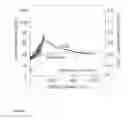
FIG. 1 Friction coefficient (COF) and wear in a coating made by using a MnS-powder pre-mixed with a metal alloy powder.
FIG. 2 Friction coefficient (COF) and wear in a coating made by using a pre-alloyed metal powder having inclusions of MnS.
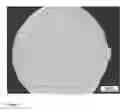
FIG. 3 SEM micrograph of a particle of 1525−30 SP570+5% MnS prealloyed powder. Dark grey areas are inclusions containing of MnS.
FIG. 4 Slider on sheet wear. Slider on stainless steel sheet tribocontact, normal load 10N, sliding velocity 0.36 m/s, dry (not lubricated). Y-axis shows coefficient of friction, and X-axis shows sliding distance.
DETAILED DESCRIPTION
The present inventors have shown that manganese sulphide, MnS, is a suitable solid lubricant. The results show a potential for friction and wear reduction by Mn and S which is prealloyed to metal powder. The powder pre-alloyed with Mn and S is especially well suited for weld cladding methods, such as laser cladding or PTA. In addition, thermal spray, e.g. flame spray, HVOF, HVAF, coldspray, plasma spray, and the like may also be suitable applications.
Machinability assessed through plane grinding of test is unaltered for alloyed grades made from pre-alloyed metal powder having MnS inclusions, compared to metal alloys without solid lubricant inclusions.
All percentages herein are % by weight.
In one aspect, the invention provides a composition of a pre-alloyed metal powder which comprises manganese sulphide (MnS) or tungsten sulphide (WS2) inclusions. The term “pre-alloyed”, as used herein, denotes a metal powder, the powder particles of which have inclusions of e.g. MnS and/or WS2, i.e. Mn and/or W, and S, have been included in the melt when preparing the pre-alloyed powder.
Metal powder alloys suitable for use according to the present invention are typically nickel, iron, or cobalt based.
Consequently, one embodiment of the invention is a composition of a pre-alloyed nickel based metal powder alloy, containing or consisting of C, 0.05-0.4%; Si, 2.0-3.1; B, 0.6-1.5; Cr, 2.6-3.6; Fe, 1.2-2.5; Al, 0.2-0.7; inclusions of MnS, 4-15%; the balance being Ni.
A further embodiment of the invention is a composition of a pre-alloyed cobalt based metal powder alloy, containing or consisting of C, 0.05-0.4%; Si, 2.0-3.1; B, 0.6-1.5; Cr, 2.6-3.6; Fe, 1.2-2.5; Al, 0.2-0.7; inclusions of MnS, 4-15%; the balance being Co.
A further embodiment of the invention is a composition or a pre-alloyed iron based metal powder containing or consisting of 1-1.3% C, 1-1.3%; Cr, 22-27%; Mn, 4-5%; Ni, 3-5%; Si, 3-4%; Mo, 1.5-2.5%; inclusions of MnS 4-15%; the balance being Fe.
A further embodiment of the invention is a composition of a pre-alloyed nickel based metal powder alloy, containing or consisting of C, 0.05-0.2%; Si, 2.2-2.9; B, 0.8-1.3; Cr, 2.8-3.45; Fe, 1.4-2.3; Al, 0.3-0.5; inclusions of MnS, 4-15%; the balance being Ni.
A further embodiment of the invention is a composition of a pre-alloyed cobalt based metal powder alloy, containing or consisting of C, 0.05-0.2%; Si, 2.2-2.9; B, 0.8-1.3; Cr, 2.8-3.45; Fe, 1.4-2.3; Al, 0.3-0.5; inclusions of MnS, 4-15%; the balance being Co.
A further embodiment of the invention is a composition or a pre-alloyed iron based metal powder containing or consisting of 1.2% C, 1.2%; Cr, 25%; Mn, 4.5%; Ni, 4%; Si, 3.3%; Mo, 2%; inclusions of MnS 4-15%; the balance being Fe.
In one embodiment, the amount of MnS and/or WS2 in the form of inclusions is 4-8%, or 5-8%, by weight.
The prealloyed nickel, iron, or cobalt based powder is preferably produced by water or gas atomization of a melt which includes Mn or W, S and other alloying elements chosen from the group consisting of C, Si, B, Cr, Fe, Al, Ni, Co, and V.
The particle size of the pre-alloyed powder alloy is typically from 10 m to 800 m, or from 10 m to 200 m, or preferably from 15-150 m, or 50-150 m.
The solid lubricant (e.g. MnS or WS2) is present as inclusions. These inclusions are made by adding the solid lubricant (e.g. MnS or WS2) to the molten metal as is, or alternatively, FeS may be mixed with appropriate amounts of FeMn and then adding to the molten metal.
In one aspect, the invention provides a method for surface coating metal parts, by way of deposition techniques such as laser cladding or PTA (plasma transferred arc); thermal spray methods such as HVOF (high velocity oxy fuel spray), HVAF (high velocity acetylene fuel spray) or plasma spray; or by slurry methods such as centrifugal casting, with the above mentioned metal powder.
In one embodiment, the invention provides the use according to the above, wherein said metal powder contains 4-10%, or 4-8%, or 5-7% by weight of MnS or WS2 as inclusions.
In a further aspect, the invention also provides metal parts produced by the above mentioned suitable for coating by the powder according to the invention for dry friction contacts in machinery, such as, e.g., industrial valves, sheet metal forming (SMF) tools, transport rollers in iron works, paper knives, and glass moulds.
EXAMPLES
Example 1
Preparation of Pre-Alloyed Powder
A metal powder was prepared as follows; a metal powder with the following composition; C, 0.05-0.2%; Si, 2.2-2.9%; B, 0.8-1.3%; Cr, 2.8-3.45%; Fe, 1.4-2.3%; Al, 0.3-0.5%; MnS, 4-15%; the balance being Ni, was prepared by atomisation of a melt containing the elements above in said amounts. The resulting powder contains MnS as inclusions in a matrix of metal alloy. This powder is herein denoted “Powder A”.
Example 2
Preparation of pre-mixed powder was done by mixing a pre-alloyed metal powder with the following composition; C, 0.05-0.2%; Si, 2.2-2.9%; B, 0.8-1.3%; Cr, 2.8-3.45%; Fe, 1.4-2.3%; Al, 0.3-0.5%, with 5 wt % MnS powder in a common powder mixer. This powder is herein denoted “Powder B”.
Example 3
Application of Powder by Deposition Using PTA
Pre-alloyed or pre-mixed powder was applied to test samples as follows; Powder A was deposited onto S235JRG (base structural steel) substrate plates by PTA (plasma transfer arc) with parameters set to allow for a dilution of 5-15%.
Example 4
Powder B was spread by hand on substrate as a powder before fusing with the substrate.
Example 5
Powder according to the invention was also applied to substrate by laser cladding. Solid lubricant (MnS) inclusions appeared in coatings from powder A and from powder B. The coating from Powder A appears to result in finer inclusion sizes of MnS than those from Powder B.
Example 6
Wear Testing
Wear testing was performed, and shows the beneficial effects of Powder A in a metal surface coating layer or clad. The specimens were hardfaced rectangular blocks where the base metal was commonly used low carbon structural steel (EN 5235 JRG, ASTM A570 Gr.36) and the surface layer was at least 1 mm thick in the as finished measure. The test surface had a ground finish with surface roughness of Ra 0.3-0.4 μm, prepared by both plane grinding. The counters Ø60/CR100×17 rings are made of AISI 316L (EN X2CrNiMo17 12 2) or AISI 304L (EN X2CrNi19-9) stainless steel. The friction test was unlubricated i.e. dry, and the test samples were carefully cleaned and degreased by ethanol prior to testing. Wear testing was analogous to the testing described in standard ASTM G77. The test maximum Hertzian contact pressure was 180 MPa, angular velocity was 0.36 m/s and the total sliding distance was 594 m.
Example 7
Slider on Sheet Wear Testing
Slider on sheet wear testing was performed, and shows the beneficial effects of Powder A in a metal surface coating layer or clad. The specimens were cylindrical rings ø50/CR5 mx 10 mm where the base metal was commonly used low carbon structural steel (EN S235 JRG, ASTM A570 Gr.36) and the surface layer was at least 0.5 mm thick in the as finished measure. The test surface had a ground finish with surface roughness of Ra 0.3-0.4 μm, prepared by both OD grinding. The counters sheets 1000×1000×1.5 mm were made of AISI 316L (EN X2CrNiMo17 12 2) stainless steel. The friction test was unlubricated i.e. dry, and the test samples were carefully cleaned and then degreased by ethanol prior to testing. The test normal load was 10 N, sliding velocity was 0.36 m/s and the total sliding distance was 3 m. Results are shown in FIG. 4.
Example 8
Corrosion Testing
Outcome of salt spray corrosion testing according to ISO 16701 was performed. The parts were macrophotographed at each interval, after 12, 15, 30 and 39 days. Subsequently, a SEM (scanning electron microscopy) investigation was done. Coating layers from Powder B exhibited an array of 50 μm rust hills after 39 days. The rust initiation was distinguished at 12 days' stop. Coating layers from Powder A achieved a similar type of rust but the number of the rusty hills was much fewer, and the sizes of these were smaller. Quantification of the results may be made by pixelizing the SEM-micrographs, using image analysis software such as Adobe Photoshop.
Embodiments
1. Water or gas atomized metal powder containing or consisting of C, 0.05-0.2%; Si, 2.2-2.9; B, 0.8-1.3; Cr, 2.8-3.45; Fe, 1.4-2.3; Al, 0.3-0.5; inclusions of MnS, 4-15%; the balance being Ni, said powder being suitable for thermal surfacing.
2. Water or gas atomized metal powder containing or consisting C, 0.05-0.2%; Si, 2.2-2.9; B, 0.8-1.3; Cr, 2.8-3.45; Fe, 1.4-2.3; Al, 0.3-0.5; inclusions of MnS, 4-15%; the balance being Co, said powder being suitable for thermal surfacing.
3. Water or gas atomized metal powder containing or consisting of 1.2% C, 1.2%; Cr, 25%; Mn, 4.5%; Ni, 4%; Si, 3.3%; Mo, 2%; inclusions of MnS 4-15%; the balance being Fe, said powder being suitable for thermal surfacing.
4. Metal powder according to any one of embodiments 1-3, wherein the amount of MnS is 4-8%, or 5-7%, by weight.
5. Metal powder according to any one of embodiments 1-4, wherein the particle size of the prealloyed powder alloy is from 45 μm to 200 mm, or from 50-150 μm.
6. Method for surface coating metal parts, by way of laser cladding or PTA (plasma transferred arc), with a metal powder according to any one of embodiments 1-5, thereby producing a metal coated component.
7. Metal coated component produced by the method according to embodiment 6.
8. Metal coated component according to embodiment 7, wherein the component is chosen from the group consisting of industrial valves, sheet metal forming (SMF) tools, transport rollers in iron works, paper knifes, and glass moulds.
Claims
1. Water or gas atomized metal powder comprising:
C, 1-1.3%;
Cr, 22-27%;
Mn, 4-5%;
Ni, 3-5%;
Si, 3-4%;
Mo, 1.5-2.5%;
inclusions of MnS 4-15%;
the balance comprising Fe,
said powder being suitable for thermal surfacing.
2. The water or gas atomized metal powder of claim 1, wherein the power consists of:
C, 1-1.3%;
Cr, 22-27%;
Mn, 4-5%;
Ni, 3-5%;
Si, 3-4%;
Mo, 1.5-2.5%;
inclusions of MnS 4-15%;
the balance consisting of Fe.
3. The water or gas atomized metal powder of claim 1, wherein the power comprises:
C, 1.2%;
Cr, 25%;
Mn, 4.5%;
Ni, 4%;
Si, 3.3%;
Mo, 2%;
inclusions of MnS 4-15%;
the balance comprising Fe.
4. The water or gas atomized metal powder of claim 1, wherein the power consists of:
C, 1.2%;
Cr, 25%;
Mn, 4.5%;
Ni, 4%;
Si, 3.3%;
Mo, 2%;
inclusions of MnS 4-15%;
the balance being Fe.
5. The water or gas atomized metal powder of claim 1, wherein the amount of MnS is 4-8% by weight.
6. The water or gas atomized metal powder of claim 1, wherein the amount of MnS is 5-7% by weight.
7. The water or gas atomized metal powder of claim 1, wherein the particle size of the prealloyed powder alloy is from 45 μm to 200 mm.
8. The water or gas atomized metal powder of claim 1, wherein the particle size of the prealloyed powder alloy is from 50-150 μm.
9. Method for surface coating metal parts, by way of laser cladding or PTA (plasma transferred arc), with a metal powder according to claim 1, thereby producing a metal coated component.
10. Metal coated component produced by the method according to claim 9.
11. Metal coated component according to claim 10, wherein the component is chosen from the group consisting of industrial valves, sheet metal forming (SMF) tools, transport rollers in iron works, paper knifes, and glass moulds.
Images & Drawings included:

Sources:
- United States Patent and Trademark Office - verify current appl. status at the USPTO↗
Similar patent applications:
- » 20150307968
Metal powders and use thereof - » 20150093280
Metal powder and use thereof - » 20220363911
Method for Obtaining Coloured Metal-Containing Powder, the Powder Obtained Thereof and its Use as Metallic Pigment - » 20170252854
Noble-metal powder and the use thereof for producing components - » 10174826
Nitrogen-containing metal powder, production process thereof, and porous sintered body and solid electrolytic capacitor using the metal powder - » 20060230877
Nitrogen-containing metal powder, production process thereof, and porous sintered body and solid electrolytic capacitor using the metal powder - » 20230119904
IRON-BASED METALLIC GLASS ALLOY POWDER AND USE THEREOF IN COATING - » 20160001371
MAGNETIC COMPONENT, AND SOFT MAGNETIC METAL POWDER USED THEREIN AND MANUFACTURING METHOD THEREOF - » 20150104664
MAGNETIC COMPONENT, AND SOFT MAGNETIC METAL POWDER USED THEREIN AND MANUFACTURING METHOD THEREOF - » 20050238268
Motor having a high carbon shaft and powder metal bearing and method of using and manufacturing thereof
Recent applications in this class:
- » 20250257428 2025-08-14
MAGNETIC WIRE, COMPOSITE MAGNETIC WIRE, METHOD FOR MANUFACTURING MAGNETIC WIRE, AND METHOD FOR MANUFACTURING COMPOSITE MAGNETIC WIRE - » 20250171881 2025-05-29
MINERAL WOOL SPINNERS - » 20240287651 2024-08-29
Co-BASED SUPERELASTIC ALLOY MATERIALS, PLATE MATERIALS AND WIRE MATERIALS COMPRISING Co-BASED SUPERELASTIC ALLOY MATERIALS, Co-BASED SUPERELASTIC ALLOY MATERIALS MANUFACTURING METHODS, STENTS, GUIDE WIRES, AND HIP IMPLANTS - » 20240026496 2024-01-25
Cobalt-tungsten alloy and method of fabricating the same - » 20240018630 2024-01-18
WEAR AND CORROSION RESISTANT ALLOY COMPOSITIONS - » 20230183840 2023-06-15
Wroughtable, Chromium-Bearing, Cobalt-Based Alloys with Improved Resistance to Galling and Chloride-Induced Crevice Attack - » 20230106938 2023-04-06
POWDER MADE OF A COBALT-CHROMIUM ALLOY - » 20230101301 2023-03-30
High carbon content cobalt-based alloy - » 20230094413 2023-03-30
Cobalt-based alloy product and method for producing cobalt-based alloy product - » 20230070692 2023-03-09
Co-based alloy material, co-based alloy product, and method for manufacturing said product
Recent applications for this Assignee:
- » 20240117478 2024-04-11
STAINLESS STEEL POWDER FOR PRODUCING DUPLEX SINTERED STAINLESS STEEL - » 20240043965 2024-02-08
NEW POWDER, METHOD FOR ADDITIVE MANUFACTURING OF COMPONENTS MADE FROM THE NEW POWDER AND ARTICLE MADE THEREFROM - » 20230339789 2023-10-26
Continuous Backwash Iron Media Reactor, A Wastewater Remediation Plant, and a Method of Remediating Wastewater - » 20230250519 2023-08-10
Iron based powder - » 20230249248 2023-08-10
MnAl alloy, particles thereof, and method for production - » 20230091911 2023-03-23
WEAR-RESISTANT IRON-BASED ALLOY COMPOSITIONS COMPRISING CHROMIUM - » 20220234919 2022-07-28
IRON-COMPRISING CONCENTRATE FOR PREPARATION OF IN SITU REMEDIATION SOLUTION - » 20220165463 2022-05-26
Solid composite material comprising nanoparticles and an alloy based on manganese, aluminum and optionally carbon, and method for producing the same - » 20220041449 2022-02-10
Pure iron containing compound - » 20220041449 2022-02-10
Pure iron containing compound