Reversible Flying Fingernail Game Disc
US20180229148A1
2018-08-16
15/897,738
2018-02-15
Abstract:
The present disclosure is directed to a flying disc including a top disc and a bottom disc. The top disc includes a first base and a first plurality of elements attached to and extending from the first base, and the first base defines a first plane and the first plurality of elements form a first acute angle with the first plane. The bottom disc includes a second base and a second plurality of elements extending from the second base, and the second base defines a second plane and the first plurality of elements form a second acute angle with the first plane. Ends of the first plurality of elements are affixed to ends of the second plurality of elements.
Interested in similar patents?
Get notified when new applications in this technology area are published.
Description
BACKGROUND
People have long enjoyed recreational use of flying toys. Many popular games involve passing such devices from player to player by hand or by using another device such as a stick.
SUMMARY
The present disclosure is directed to aerodynamic flying toys with disc-like or circular shapes that can be used in games. For example, the players can toss them into the air, with a spinning motion, towards a target, as a form of sport or recreation. One or more implementations can provide one or more of the following advantages: provide a smaller, lightweight and easy grip for people with, for example, smaller hands or compromised grip strength, such as arthritis; provide a game disc which is symmetrical, reversible and can be thrown with equal results by either right-handed or left-handed players; or provide fingernail shapes attached at an angle to the central circle which can enable airflow throughout the game disc creating stability during flight. In some implementations, the flying disc can be used with one or more attachments and decorations on the inside or outside, including, but not limited to, bands, magnets, lights, technology chip, stickers, jewels, paint colors, scoring numbers, letters, or symbols. In addition, games using the flying disc can include accessories, included, but not limited to, targets of different sizes and shapes for games indoors and outdoors. In some implementations, a drone accessory can be used to pick-up and retrieve the discs due to the smaller and lightweight nature of the flying disc. Using a drone would be fun for most players especially for players handicapped with limited movement capabilities.
The details of one or more embodiments of the invention are set forth in the accompanying drawings and the description below. Other features, objects, and advantages of the invention will be apparent from the description and drawings, and from the claims.
DESCRIPTION OF DRAWINGS
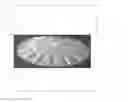
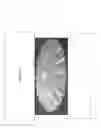
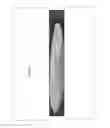
FIGS. 1A-C are an example flying disc from different angles.
Like reference symbols in the various drawings indicate like elements.
DETAILED DESCRIPTION
FIGS. 1A-C illustrate an example flying disc 100 having aerodynamic capabilities. For example, the flying disc 100 can be used in games that involve one or more players where they throw, toss, spin, slide, bounce or roll the flying disc 100. As illustrated, the flying disc 100 includes a top disc 102 affixed to a bottom disc 108. Both the top disc 102 and the bottom disc 108 include a base 104 and a plurality of elements 106 radially extending from circumferentially spaced portions of the base 104. Each base 104 is substantially circular and aligned along an axis through the centers of each base 104. In some implementations, each base 104 has a width that is a couple millimeters.
The plurality of elements 106 extend at an acute angle (e.g., less 20°) from a plane formed by the base 104. The radially outwardly projecting elements 106 can form an arc such as the form of simulated fingernail. When the discs 104 and 108 are aligned and relatively rotated, the tip portions of the plurality of elements slightly overlap. In some implementations, the tip portions may be the same, thicker, thinner, or any combination thereof than a base portion affixed to the base 104. In summary, the plurality of elements 106 may be more or less in number, may slope at a greater or lesser angle, and may taper more or less in width and thickness without departing from the scope of the disclosure. The elements 106 of the top disc 102 are affixed to the elements 106 of the bottom disc 108. The elements 106 may be affixed using adhesives, silicone, rubber, tapes, screws, clamps, elastic bands, or other fasteners. Once affixed, the base 104 of the top disc 104 and the base 104 of the bottom disc 108 are separated by, for example, less than 1 inch. In some implementations, the flying disc 100 can be four inches across and twelve and three quarter inches around, however, other sizes and shapes may be used without departing from the scope of the disclosure. In other words, other shapes and thicknesses of the base 104 may be used, such as, square, triangle, oval, oblong, star, or other geometrical shapes.
In general, the flying disc 100 can be made from an injection molded process made of, for example, ABS plastic. However, the disc 100 may be manufactured of any material which is lightweight enough to be tossed, while rigid enough to maintain its structural integrity such as, but not limited to Ingeo, a compostable, corn based material.
A number of embodiments of the invention have been described. Nevertheless, it will be understood that various modifications may be made without departing from the spirit and scope of the invention. Accordingly, other embodiments are within the scope of the following claims.
Claims
What is claimed:1. A flying disc, comprising:
a top disc comprising a first base and a first plurality of elements attached to and extending from the first base, wherein the first base defines a first plane and the first plurality of elements form a first acute angle with the first plane;
a bottom disc comprising a second base and a second plurality of elements extending from the second base, wherein the second base defines a second plane and the first plurality of elements form a second acute angle with the first plane; and
wherein ends of the first plurality of elements are affixed to ends of the second plurality of elements.
2. The flying disc of claim 1, wherein the first acute angle equals the second acute angle.
3. The flying disc of claim 1, wherein each of the first plurality of elements and the second plurality of elements are arcuate.
4. The flying disc of claim 1, wherein the ends of the first plurality of elements and the ends of the second plurality of elements are affixed using an adhesive.
5. The flying disc of claim 1, wherein each of the first plurality of elements and the second plurality of elements are separated from adjacent elements.
6. The flying disc of claim 1, wherein the top disc and bottom disc comprises flexible material.
7. The flying disc of claim 1, wherein longitudinal axes of the first plurality of elements is offset from longitudinal axes of the second plurality of elements.
Images & Drawings included:

Sources:
- United States Patent and Trademark Office - verify current appl. status at the USPTO↗
Recent applications in this class:
- » 20250153066 2025-05-15
DISC AMUSEMENT DEVICE - » 20250090973 2025-03-20
TOY WATER BALL - » 20250041755 2025-02-06
Reusable Water Balloon Toy - » 20240424421 2024-12-26
Flying Disc(s) with Handle - » 20240390814 2024-11-28
PROJECTILE PART FORMING A SMALL TOY TO BE THROWN BY HAND - » 20240350937 2024-10-24
ASSEMBLED ELECTRIC TOY GUN HAVING FUNCTION OF RAPIDLY CONNECTING AND TERMINATING ELECTRIC SIGNAL - » 20240342625 2024-10-17
Soft Toy Projectile Launcher & Method of Use Thereof - » 20240299858 2024-09-12
TOY FOR DEMONSTRATING ARM STRENGTH - » 20240261697 2024-08-08
LIGHT-EMITTING FLYING DISC - » 20240252947 2024-08-01
FLYING DISC