Citrus tree named 'RBB7-34'
US20180235124P1
2018-08-16
15/530,627
2017-02-10
Abstract:
The present invention relates to a new and distinct cultivar of citrus tree named ‘RBB7-34’. This triploid cultivar arose from a cross of the seed parent ‘LB8-9’ with pollen from a tetraploid selection of ‘Hamlin’ sweet orange that arose from colchicine treated embryogenic callus. ‘RBB7-34’ produces fruit that resemble Navel orange in size, shape and with the presence of a navel on the blossom end of the fruit, but with greatly enhanced internal and external pigmentation compared with ordinary Navel orange cultivars grown in the humid, sub-tropical Florida climate. Fruit of RBB7-34 are seedless even under intensive cross pollination pressure.
Interested in similar patents?
Get notified when new applications in this technology area are published.
Classification:
A01H6/78 IPC
Angiosperms, i.e. flowering plants, characterised by their botanic taxonomy Rutaceae, e.g. lemons or limes
Description
Latin name of the genus and species of the plant claimed: Citrus reticulata x Citrus sinensis.
Cultivar denomination: ‘RBB7-34’.
BACKGROUND OF THE INVENTION
The present invention relates to a new and distinct cultivar of citrus tree named ‘RBB7-34’. This triploid cultivar arose from a cross of the seed parent ‘LB8-9’ (U.S. Plant Pat. No. 21,356), which is a hybrid of ‘Clementine’ x ‘Minneola’ tangelo) with pollen from a tetraploid selection of ‘Hamlin’ sweet orange that arose from colchicine treated embryogenic callus. Embryo rescue and culture were performed to recover a seedling plant in vitro from the under-developed embryo that typically results from interploid hybridization in citrus. A small shoot from the resulting in vitro seedling was then grafted to an etiolated Carrizo citrange rootstock seedling, acclimated, then grown out in the greenhouse for a few years and finally planted in the field near Lake Alfred, Fla. The tree was first selected and propagated by top-working to a few pre-existing rootstock seedling hybrids directly in the same field; these top-worked trees fruited and produced true to type fruit.
SUMMARY OF THE INVENTION
The following are the most outstanding and distinguishing characteristics of ‘RBB7-34’. The cultivar is triploid, in contrast to the diploid condition of ordinary Navel orange. It produces fruit that resemble Navel orange in size, shape and with the presence of a navel on the blossom end of the fruit (−70% of the fruit), but with greatly enhanced internal and external pigmentation, compared with ordinary Navel orange cultivars grown in the humid, sub-tropical Florida climate (see FIGS. 4-7). RBB7-34 fruit more closely resemble fruit of Navel orange grown in a Mediterranean climate. In addition to improved color, RBB7-34 fruit also have substantially higher ° Brix and titratable acidity, compared to ordinary Navel orange cultivars grown in the same block and harvested at the same time (° Brix/acid=15.2-16.6/1.0 vs. 10.2/0.6, in December 2013). Though not quantified, RBB7-34 fruit have more obvious and pleasant flavor and aroma than ordinary Navel fruit, as well. They mature in the same season as the ‘Glen’ Navel orange, probably the most widely planted Navel cultivar in Florida, usually in December through January. Though Navels are usually seedless, they can possess some seeds under high mixed cross pollination conditions. The fruit of RBB7-34 are seedless even under intensive cross pollination pressure.
BRIEF DESCRIPTION OF THE DRAWINGS
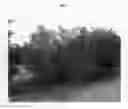
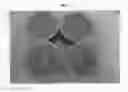
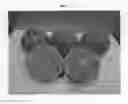
‘RBB7-34’ is illustrated by the accompanying photographs which show some aspects of the tree's form, foliage, and fruit. The colors shown are as true as can be reasonably obtained by conventional photographic procedures.
FIG. 1—Shows the overall mature plant growth and fruiting habit in December 2013. The tree was beginning to show the effects of citrus greening disease, or HLB, which was spreading rapidly through the orchard at this time.
FIG. 2—Shows a young tree (˜2 years) grown in a pot under open hydroponics management and in an enclosed structure. The photo was taken January 2017. The budwood source was very juvenile, as can be seen by the presence of conspicuous thorns. More mature budlines that have been developed are less thorny. The foliar characteristics are typical of those observed in triploid citrus, with thicker leaves and rougher texture resulting from larger oil glands, as opposed to the those commonly found on typical diploid navel orange trees.
FIG. 3—Shows a cluster of mature fruit and leaves on another young tree (˜2 years) tree grown in a pot under open hydroponics management and in an enclosed structure. The photo was taken January 2017. The budwood source was very juvenile, as can be seen by the presence of conspicuous thorns, as well as the more coarse texture of the fruit rind, typical characteristics of vigorous juvenile orange trees. The foliar characteristics are typical of those observed in triploid citrus, with thicker leaves and rougher texture resulting from larger oil glands, as opposed to the those commonly found on typical diploid navel orange trees.
FIG. 4—Shows a close-up of the mature fruit, ‘Glen’ Navel left, characterized by pale green-yellow-orange color, and RBB7-34 right, characterized by deeper orange color. Photo taken December 2013.
FIG. 5—Shows a close-up of the blossom, or navel, end of the mature fruit, ‘Glen’ Navel left, characterized by pale green-yellow-orange color, and RBB7-34 right, characterized by deeper orange color. Note the conspicuous navel structure of each. Photo taken December 2013.
FIG. 6—Shows a close-up of the mature fruit cut equatorially, ‘Glen’ Navel left, characterized by pale yellow-orange flesh color and a few seeds, and RBB7-34 right, characterized by deeper orange color and the absence of seeds. Photo taken December 2013.
FIG. 7—Shows an additional close up of the mature fruit cut equatorially upfront, and 3 other fruit showing external color and appearance. Photo taken January 2014.
DETAILED BOTANICAL DESCRIPTION
The following detailed description sets forth the distinctive characteristics of ‘RBB7-34’. The present botanical description is that of the cultivar grown as a 7 year-old tree growing on ‘Carrizo’ rootstock in Lake Alfred, Fla. The colors (except those in common terms) are described from RHS Colour Chart published by The Royal Horticultural Society in London (second edition), in association with the Flower Council of Holland.
- Phenotypic description of ‘RBB7-34’
- Classification:
-
- Botanical.—Citrus reticulutu x Citrus sinensis.
- Common name.—Mandarange.
-
- Parentage:
-
- Female parent.—‘LB8-9’ (U.S. Plant Pat. No. 21,356) mandarin hybrid.
- Male parent.—‘Hamlin’ sweet orange 4x, unreleased, unpatented breeding parent from the UF-CREC citrus breeding program.
-
- Tree:
-
- Ploidy.—Triploid.
- Size.—Medium.
- Height.—3.1 m.
- Tree spread.—3.2 to 3.8 m.
- Vigor.—Moderate vigorous.
- Density.—Canopies are moderately dense.
- Form.—Round-shaped with mostly lateral branches growing at low to medium angles. Branches with fruit exhibited drooping.
- Growth habit.—Upright and lateral growth with low-medium angle.
-
- Trunk:
-
- Trunk diameter.—15 cm in diameter at 30 cm above from ground.
- Trunk texture.—Rough with thorns.
- Trunk bark color.—RHS N199A (greyed-brown); irregularly striated with RHS N189A (greyed-green).
-
- Branches:
-
- Crotch angle.—First crotch from 35- to 40-degree angle, middle crotch formed 120-degree angle.
- Branch length.—3 m from the first crotch to the tip of the branch.
- Branch texture.—Relatively rough with small thorns or spines.
- Branch color (shoots from previous flush, hardened, and 4 to 5 mm in diameter.—): RHS 138A (green).
-
- Leaves:
-
- Size (lamina average).—Length: 88.8 mm Width: 53.2 mm L/W ratio: 1.67.
- Thickness.—Slightly thicker than regular and average mandarin leaves when compared to commercial mandarin hybrids, typical of triploid citrus hybrid plants.
- Type.—Simple.
- Shape.—Elliptical.
- Apex.—Retuse.
- Base.—Acute to sub-obtuse.
- Margin.—Entire and slightly undulate.
- Surface.—Upper surface: Glabrous Lower surface: Medium veins that are pinnately netted.
- Color.—Upper surface (adaxial): RHS 137A (green) Lower surface (abaxial): RHS 146B (yellow-green).
- Petiole.—Shape: Brevipetiolate (shorter than leaf lamina); junction between petiole and lamina is articulate. Width (petiole wing): Very narrow Shape (petiole wing): Obovate Length: 15 to 17 mm Width: 3.6 to 3.9 mm Color: RHS 137A (green).
-
- Flowers and flower buds:
-
- Type.—Hermaphrodite.
- Bearing.—Flowers grown from leaf axillaries and leaf terminals in single flower and in small clusters of 1-3 flowers; most single flowers grown from leaf axillaries; each flower branch consists of 6 to 14 flowers.
- Flower diameter.—Fully open flower with average diameter of 38.2 to 38.6 mm.
- Flower depth.—Typical flower with average depth of 16.2 mm.
- Flower blooming period.—First bloom observed: Feb. 20, 2012 Full bloom observed: Feb. 25, 2012.
- Flower bud size.—Length: Initial visible flower bud with 2.8 mm in length; mature flower bud with 20 mm in length. Diameter: Initial visible flower bud with 3.0 mm in diameter; mature flower bud with 20 mm in diameter.
- Flower bud shape.—Initial visible flower bud: Round ball shape Mature flower bud: Elongated olive shape.
- Flower bud color.—Initial visible flower bud: RHS 138B (green) Mature flower bud: RHS NN155C (white) with RHS 151C (yellow-green) spots distributed at tip of the flower bud.
- Flower petals.—Shape: Flat spatula shaped Apex shape: Smooth acute shaped Base shape: Even obtuse Color: Upper surface with RHS NN155C (white); lower surface with RHS NN155B (white) with RHS 151C yellow-green) spots distributed toward to the petal apex. Margin: Smooth.
- Flower sepal.—Number: 5 per flower Shape: Delta shaped with acute angle at apex. Length: 3.8 mm Width: 3.6 mm Apex shape: Triangle-shaped Margin: Smooth Color: Upper surface with RHS 145D (yellow-green); lower surface with RHS 145C (yellow-green).
- Fragrance.—Moderately fragrant.
- Flower pedicel.—Length: 7.2 to 7.8 mm Diameter: 1.5 to 1.7 mm Color: RHS 145B (yellow-green).
- Reproductive organs.—Fertility: Appears self-fertile. Stamen length: 13.6 to 13.8 mm Anther length: 3.6 mm Anther Width: 1.2 to 1.4 mm Anther color: RHS 22D (yellow-orange) Anther filament length: 10 to 11.2 mm Pollen amount: Low Pollen color (general): RHS 16A (yellow-orange) Pistil number: 1 Pistil length: 13.2 to 13.5 mm Pistil color: RHS 145D (yellow-green) Style length: 9 mm Style diameter: 1.8 to 1.9 mm Style color: RHS 145D (yellow-green) Ovary shape: Oval-shaped Ovary diameter: 3.9 mm Ovary color: RHS 143C (green).
-
- Fruit:
-
- Size.—Uniform.
- Average height.—73.1 to 75 mm.
- Average width.—79.1 to 81.5 mm.
- Average weight (per individual fruit).—238.5 g.
- Shape.—Round.
- Shape (cross-section): Round.
- Apex.—Truncated, 70% of the fruit appear to have navel.
- Base cavity diameter.—6.8 to 7.0 mm.
- Base.—No neck.
- Harvesting.—First pick around December 20th based on season and rootstock; last pick around late January though fruit continue to hold on the tree for a longer time (based on season and rootstock).
- Fruit stem (short stem connecting the fruit).—Length: 7.9 to 9.9 mm Diameter: 4.0 to 5.0 mm Color: RHS 195A (greyed-green) with RHS 197A (greyed-green) strip.
-
- Rind:
-
- Adherence.—Albedo (mesocarp) to flesh (endocarp) is medium-strong, similar to regular navel sweet orange, and is evenly distributed from base to apex.
- Thickness.—2.7 to 3.4 mm.
- Texture.—Smooth.
- Color.—Flavedo (epicarp): Ranges from RHS 23A (yellow-orange) to RHS 24B (orange) Albedo (mesocarp): RHS 18C (yellow-orange).
- Stylar end.—Slightly open and 70% of the fruit have navel.
- Rind oil cell density.—206 oil cells/square cm.
-
- Flesh:
-
- Number of segments.—Average between 11 to 12 segments per fruit.
- Segment walls.—Medium-soft with sufficient strength to maintain integrity as separated.
- Juice.—Abundant.
- Color.—Uniformly RHS 23A (yellow-orange).
- Texture.—Medium-soft.
- Vesicles.—Length: 12.2 to 13.3 mm Diameter (thickness): 3.5 to 4 mm.
- Eating quality (tested at Mid-December).—Soluble solids (average): 15.2 to 15.4 Brix Acidity (average): 1.0 to 1.2 Ratio: 12.7.
-
- Seeds:
-
- Type.—Seedless.
-
Claims
What is claimed is:1. A new and distinct citrus tree called ‘RBB7-34’ as illustrated and described herein.
Images & Drawings included:



Sources:
- United States Patent and Trademark Office - verify current appl. status at the USPTO↗
Recent applications in this class:
- » 20240292771 2024-08-29
Campanula plant named 'Twilight' - » 20240251691 2024-07-25
HYDRANGEA PLANT NAMED 'HYLV17520' - » 20240251690 2024-07-25
Vaccinium Plant Named 'BWPBLUE02' - » 20240251689 2024-07-25
BLUEBERRY PLANT NAMED 'FC13-113' - » 20240251688 2024-07-25
BLUEBERRY PLANT NAMED 'FCM14-057' - » 20240237567 2024-07-11
PONGAMIA VARIETIES - » 20240224827 2024-07-04
PELARGONIUM PLANT NAMED 'PEQZ0103' - » 20240215470 2024-06-27
Agapanthus plant named 'Monsapho' - » 20240215469 2024-06-27
plant named ‘LOCORA3519’ - » 20240206359 2024-06-20
CORYLUS PLANT NAMED 'BWM01'