Autofocus lens system
US20180239063A1
2018-08-23
15/953,762
2018-04-16
✅ Patent granted
US 10,222,514 B2
2019-03-05
-
-
Christle I Marshall
Additon, Higgins & Pendleton, P.A.
2038-04-16
Abstract:
An autofocus lens system includes no conventional moving parts and has excellent speed and low power consumption. The system includes a small electronically-controlled focusing-module lens. The focusing-module lens includes two adjustable polymeric surfaces (e.g., two adjustable-surface lenses in a back-to-back configuration). The curvature of the surfaces can be adjusted to change focus. The performance of the autofocus lens system is extended by adding a conventional first and second lens, or lens group, on either side of the focusing-module lens. What results is an autofocus lens system with excellent near field and far field performance.
Assignee:
- HAND HELD PRODUCTS, INC. 675 🇺🇸 Fort Mill, SC, United States
Applicant:
Interested in similar patents?
Get notified when new applications in this technology area are published.
Classification:
G02B7/282 » CPC further
Mountings, adjusting means, or light-tight connections, for optical elements; Systems for automatic generation of focusing signals Autofocusing of zoom lenses
G02B15/00 » CPC further
Optical objectives with means for varying the magnification
G02B7/28 IPC
Mountings, adjusting means, or light-tight connections, for optical elements Systems for automatic generation of focusing signals
G06K7/14 IPC
Methods or arrangements for sensing record carriers, e.g. for reading patterns by electromagnetic radiation, e.g. optical sensing; by corpuscular radiation using light without selection of wavelength, e.g. sensing reflected white light
G02B7/32 » CPC further
Mountings, adjusting means, or light-tight connections, for optical elements; Systems for automatic generation of focusing signals using parallactic triangle with a base line using active means, e.g. light emitter
G02B3/00 IPC
Simple or compound lenses
G06K7/1413 » CPC further
Methods or arrangements for sensing record carriers, e.g. for reading patterns by electromagnetic radiation, e.g. optical sensing; by corpuscular radiation using light without selection of wavelength, e.g. sensing reflected white light; Methods for optical code recognition the method being specifically adapted for the type of code 1D bar codes
G02B3/0081 » CPC main
Simple or compound lenses having one or more elements with analytic function to create variable power
G02B26/0875 » CPC further
Optical devices or arrangements for the control of light using movable or deformable optical elements for controlling the direction of light by means of one or more refracting elements
G02B5/005 » CPC further
Optical elements other than lenses Diaphragms
G06K7/10 IPC
Methods or arrangements for sensing record carriers, e.g. for reading patterns by electromagnetic radiation, e.g. optical sensing; by corpuscular radiation
G02B5/00 IPC
Optical elements other than lenses
G02B26/08 IPC
Optical devices or arrangements for the control of light using movable or deformable optical elements for controlling the direction of light
G02B3/14 » CPC further
Simple or compound lenses; Fluid-filled or evacuated lenses of variable focal length
G06K7/10811 » CPC further
Methods or arrangements for sensing record carriers, e.g. for reading patterns by electromagnetic radiation, e.g. optical sensing; by corpuscular radiation by scanning of the records by radiation in the optical part of the electromagnetic spectrum; Special measures in relation to the object to be scanned; Multidistance reading Focalisation
G02B9/00 » CPC further
Optical objectives characterised both by the number of the components and their arrangements according to their sign, i.e. + or -
G02B7/08 » CPC further
Mountings, adjusting means, or light-tight connections, for optical elements for lenses with mechanism for focusing or varying magnification adapted to co-operate with a remote control mechanism
G02B7/09 » CPC further
Mountings, adjusting means, or light-tight connections, for optical elements for lenses with mechanism for focusing or varying magnification adapted for automatic focusing or varying magnification
Description
CROSS-REFERENCE TO RELATED APPLICATIONS
The present application claims the benefit of U.S. patent application Ser. No. 15/440,357 for an Autofocus Lens System filed Feb. 23, 2017 (and published Jun. 8, 2017 as U.S. Patent Application Publication No. 2017/0160441), now U.S. Pat. No. 9,952,356, which claims the benefit of U.S. patent application Ser. No. 14/979,818 for an Autofocus Lens System filed Dec. 28, 2015 (and published May 12, 2016 as U.S. Patent Publication No. 2016/0131894), now U.S. Pat. No. 9,581,809, which claims the benefit of U.S. patent application Ser. No. 14/264,173 for an Autofocus Lens System for Indicia Readers filed Apr. 29, 2014 (and published Oct. 29, 2015 as U.S. Patent Publication No. 2015/0310243), now U.S. Pat. No. 9,224,022. Each of the foregoing patent applications, patent publications, and patents is hereby incorporated by reference in its entirety.
FIELD OF THE INVENTION
The present invention relates to indicia readers and, more particularly, to an autofocus optical system that extends the range of distances at which indicia may be read.
BACKGROUND
Indicia readers (e.g., barcode scanners, OCR scanners) fall into two main classes based on their barcode-reading technology, namely (i) linear scanners (e.g., laser scanners, 1D imagers) and (ii) 2D scanners (e.g., 2D imagers, page scanners).
Laser scanners use fast moving mirrors to sweep a laser beam across a linear barcode. The bars and spaces of the barcode are recognized based on their respective reflectivity. In other words, the light areas and dark areas of the barcode reflect light back toward the scanner differently. This difference can be sensed by the scanner's photo-detector (e.g., photodiode) and converted into an electronic signal suitable for decoding.
Imaging scanners were developed to read advanced codes by adapting technology used in digital cameras. Imaging scanners take a picture of the entire barcode, and a processor running image processing algorithms recognizes and decodes the barcode. This digital approach overcomes many of the laser scanner's limitations.
Imaging scanners are more reliable than laser scanners, which use fast-moving parts. Imaging scanners can be configured to process all barcodes within a field of view and do not require separate scans for each barcode. Sophisticated decoding algorithms eliminate the need to align the imaging scanner with the barcode. Imaging scanners can also scan poor quality or damaged barcodes faster and more reliably than laser scanners. Further, the imaging scanner is more versatile and can be configured to address new codes or new modes of operation, such as document-capture. In view of these advantages, many users prefer the imaging scanner. The imaging scanner, however, lacks the extended scan range associated with laser scanners.
Extended scan ranges are important in warehouse environments, where barcoded containers may be stacked on high shelves. Operators may be limited in their access to barcodes and must scan over a range of distances. In these situations, scanning ranges can be 10 centimeters to 10 meters. This multi-order-of-magnitude range requirement places stringent demands on the imaging scanner.
The range of imaging scanners is limited by the scanner's imaging optics (e.g., lens). The quality of a barcode image is crucial for proper scans. Images that are unfocused images can render a barcode unreadable.
The range of distances over which a barcode can be decoded is known as the working-distance range. In fixed-lens systems (i.e., no moving parts), this working-distance range is the distance between the nearest focused objects and the farthest focused objects within the field of view (i.e., depth of field). The depth of field is related to the lens's f-number. A lens with a high f-number has a large depth of field. High f-number lenses, however, collect less light. Imaging scanners must collect sufficient light to prevent noisy images. These scanners, therefore, need a lens with both a low f-number and the ability to produce sharp images over a wide range of working distances. Fixed lenses, therefore, are not used for imaging scanners intended for extended range applications (e.g., warehouses).
Autofocus (i.e., AF) lenses may be used in imaging scanners that need both near and far scanning capabilities. Typically, focus is achieved in an autofocus lens by mechanically moving the lens. These mechanically-tuned autofocus lenses provide range to imaging scanners but also have some limitations.
The moving parts in mechanical autofocus lens systems may have reliability issues. The mechanical autofocus lens systems can be bulky because of the extra components required for motion (e.g., actuators, tracks, and linkages). These motion components also consume power at a rate that may limit their compatibility with battery-powered scanners. The mechanical motion of the lens or lenses can be slow and may hinder their use in applications that require fast focus (e.g., scanning in moving environments). Finally, the cost of these mechanical autofocus lens systems can be high because of the number and precision of the required mechanical parts.
Therefore, a need exists for an imaging-scanner autofocus lens system that has (i) a large focus range, (ii) a small size, (iii) low power consumption, and (iv) reduced mechanical complexity.
SUMMARY
Accordingly, in one aspect, the present invention embraces an autofocus lens system for an imaging scanner. The autofocus lens system uses a first lens (or lens group including a plurality of lenses), a second lens (or lens group including a plurality of lenses), and a focusing-module lens to focus a barcode onto an image sensor. The first lens is fixedly positioned along an optical axis. The second lens is fixedly positioned along the optical axis. The focusing-module lens is fixedly positioned along the optical axis between the first and second lenses. The lenses together create a real image of indicia. The focusing-module lens is used to change the focus of the autofocus lens system. Focus is adjusted by adjusting the optical power of the focusing-module lens. The optical power of the focusing-module lens is controlled by electronically adjusting the curvature of two adjustable surfaces.
In an exemplary embodiment, the autofocus lens system has a focusing-module lens with a clear aperture diameter that is smaller than the diameter of either the first lens or the second lens. The focusing-module lens defines the aperture stop for the autofocus lens system.
In another exemplary embodiment, this focusing-module lens has a diameter between 1.3 and 1.7 millimeters (e.g., about 1.5 millimeters).
In another exemplary embodiment, the autofocus lens system has a working distance of 10 centimeters or greater.
In another exemplary embodiment, the autofocus lens system has a response time of 2 milliseconds or less (e.g., less than about 1 millisecond).
In another exemplary embodiment, the autofocus lens system consumes 20 milliwatts of power or less.
In another exemplary embodiment, the autofocus lens system has an f-number of 7 or less.
In another exemplary embodiment, the focusing-module lens includes two adjustable-surface lenses positioned in close proximity to one another.
In still another exemplary embodiment, the focusing-module lens may include two contiguous adjustable surfaces. Here, the focusing-module lens includes (i) a first transparent deformable membrane having a ring-shaped piezoelectric film contiguously positioned on the first transparent deformable membrane's outer surface, (ii) a second transparent deformable membrane having a ring-shaped piezoelectric film contiguously positioned on the second transparent deformable membrane's outer surface, and (iii) a flexible polymer contiguously positioned between the first transparent deformable membrane and the second transparent deformable membrane. In this way, the flexible polymer is in contact with the inner surfaces of both the first transparent deformable membrane and the second transparent deformable membrane. The transparent deformable membrane can be fabricated from glass, quartz, sapphire or other semi-rigid transparent material. The two adjustable surfaces of the focusing-module lens may, in some embodiments, be electronically controlled independently.
In another aspect, the present invention embraces an active autofocus system for an imaging scanner including the foregoing autofocus lens system. In this active autofocus system, a range finder senses the range of a barcode through transmitted and received radiation and creates a range signal representing the sensed range. A processor generates a control signal based on the comparison of the range signal with a lookup table stored in memory. The lookup table contains focus settings associated with various range-signal values. A controller responds to the control signal by creating electronic autofocus signals to adjust the autofocus lens system to achieve focus of a real image of a 1D or 2D barcode.
The foregoing illustrative summary, as well as other exemplary objectives and/or advantages of the invention, and the manner in which the same are accomplished, are further explained within the following detailed description and its accompanying drawings.
BRIEF DESCRIPTION OF THE DRAWINGS
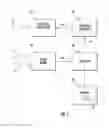
FIG. 1 schematically depicts a block diagram of an active autofocus system.
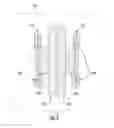
FIG. 2 graphically depicts a perspective view of a cutaway layout of an adjustable-surface lens.
FIG. 3a graphically depicts a side-view cross-section of an adjustable-surface lens with no voltage applied (i.e., the “off” state).
FIG. 3b graphically depicts a side-view cross-section of an adjustable-surface lens with a voltage applied (i.e., the “on” state).
FIG. 4 schematically depicts an embodiment of an autofocus lens system.
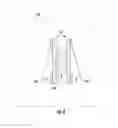
FIG. 5 graphically depicts a first embodiment of a focusing-module lens with two adjustable-surface lenses in close proximity.
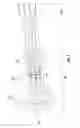
FIG. 6 graphically depicts a second embodiment of a focusing-module lens.
FIG. 7 schematically depicts an exemplary embodiment of an autofocus lens system.
DETAILED DESCRIPTION
The present invention embraces an autofocus lens system for an imaging scanner that extends the range of distances over which barcodes may be read. In this regard, an exemplary autofocus lens system for an imaging scanner includes (i) a first lens (e.g., first positive lens), fixedly positioned along an optical axis, (ii) a second lens (e.g., second positive lens) for creating a real image of a barcode, the second lens fixedly positioned along the optical axis, and (iii) and a focusing-module lens fixedly positioned along the optical axis between the first lens and the second lens, the focusing-module lens formed from two adjustable surfaces, wherein the optical power of the adjustable surfaces is controlled electronically to achieve focus.
Imaging scanners require good images to properly decode barcodes. The image sensors used in these devices deliver high-quality images only when the light impinging on the sensor (i) is focused and (ii) has an intensity above the sensor's noise level (i.e., a high signal-to-noise ratio).
To achieve high signal-to-noise ratio (SNR) images, the lens of an imaging scanner should gather light efficiently (i.e., have a high throughput). The entrance pupil is the image of the lens system's aperture-stop as seen through the front lens and is an indicator of the throughput. A large entrance pupil implies that the lens system will have high throughput. Long range scans are especially susceptible to low SNR images. This is due to path loss. The light reflected from the barcode spreads out over long ranges and less is captured by the scanner imaging lens. Illumination sources may help to improve the signal to noise ratio (i.e., SNR) of images, but a high throughput imaging lens is still extremely important.
Imaging scanners used in diverse environments (e.g., warehouses) should read barcodes at various ranges in both the near field and far field (e.g., 10 centimeters to 10 meters). In other words, the imaging scanner's lens must be able to create sharp barcode images over a wide range of working distances.
Fixed-focus lenses, with no focusing motion, are not used in imaging scanners requiring wide scanning ranges. These lenses typically have low throughput and may not be able to focus on a barcode that is close to the scanner.
Lenses with focusing motion can extend the scanner's working-distance range. The focusing motion moves the lens to a point where the light rays from a barcode converge onto the image sensor and produce a sharp real image. While this focusing movement can be accomplished manually, it is more practical for scanners to use an automatic-focus (i.e., autofocus) system.
Autofocus systems use (i) optimal focus information and (ii) a positioner (e.g., an actuator or piezoelectric) to positioning the real image. A passive autofocus system might use a processor running image-processing algorithms to determine the focus quality. The processor uses this information to send signals to actuators that position the lens. Alternatively, an active autofocus system uses a range finder to ascertain the distance between the object and the front lens of the system (i.e., the working distance). This range information can then be used to adjust the lens position for optimal focus. Because of its simplicity, the active autofocus scheme is well suited for imaging scanners.
The range finder in an active autofocus system can use one or more sensors to create a range signal. A processor running a process can compare the range signal with a stored lookup table to generate a corresponding control signal. The control signal can be interpreted by control electronics (e.g., a controller) to drive the lens system's positioning devices.
A block diagram of an active autofocus system is shown in FIG. 1. Here, a range-finder 20 senses the range (i.e., working distance) of a barcode through some transmitted radiation 5 and received radiation 15 (e.g., optical signals). The range finder 20 creates a range signal 25 and then sends this range signal 25 to a processor 10. The processor 10 runs an algorithm to compare the value of the range signal 25 with a lookup table 32 stored in memory 30. The lookup table 32 contains focus settings for various range signals 25. Once the focus settings corresponding to the measured range are determined, the processor 10 sends a control signal 35 to the autofocus controller 40. Based on this signal, the autofocus controller 40 sends electronic autofocus signals 45 to the autofocus lens system 50. The autofocus signals 45 cause the autofocus lens system 50 to change the imaging system's focus. When the adjustment of the autofocus lens system 50 is complete, the light from the barcode 55 is well focused onto the imaging scanner's image sensor.
Autofocus functionality relies on an adjustable lens parameter to focus the barcode. In traditional autofocus systems, focus is achieved by changing the position of a lens (or lenses forming a lens group) in relation to the image sensor. The autofocus signals 45 drive motors or actuators that move the lens (or lenses). In other words, the focus is controlled mechanically by changing the position of a lens or a lens group.
Mechanical autofocus systems can be bulky and slow for imaging scanner applications. A typical mechanical autofocus system can take 60 milliseconds to reach focus. Actuators in these systems can also draw a relatively large amount of power. Typical systems may draw around 450 milliwatts, which reduces battery life.
Focus can be adjustable non-mechanically as well. Lens curvature (i.e., lens power) may be changed to adjust focus. Lenses made from an adjustable surface (i.e., adjustable-surface lenses) can be used in autofocus lens systems for imaging scanners. Adjustable-surface lenses are compact, fast, reliable, cost-effective, and energy efficient.
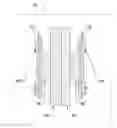
A perspective half-section view of a lens made from a single adjustable surface is shown in FIG. 2. The glass support 105 is a support element made of a transparent rigid material such as glass. The top element is a thin glass membrane 110, including an actuating element, such as a ring-shaped piezoelectric film 120. The glass membrane is supported on its edges by a silicon support 115 made from some MEMS (i.e., micro-electro-mechanical systems) manufacturing technology. Sandwiched between the glass support 105 and the glass membrane 110 is a flexible transparent polymeric material 130.
The adjustable-surface lens 100 relies on a change in the polymeric surface's curvature as a result of an applied voltage. A side-view cross-section of the adjustable-surface lens 100 and its off/on operation are shown in FIG. 3a and FIG. 3b respectively. As depicted in FIG. 3a, when no voltage is applied to the ring-shaped piezoelectric film 120, the light beam 101 passes through the clear polymer 130 with no alteration (i.e., zero optical power). On the other hand, as shown in FIG. 3b, when a voltage is applied to the piezoelectric film 120, the shape of the glass membrane 110 and the contiguous polymer 130 are curved (e.g., spherically or near spherically). When a voltage is applied to the adjustable-surface lens 100, the light beam 101 is focused to a point behind the lens.
Focusing the small adjustable-surface lens 100 is achieved by changing the shape of the adjustable surface. This change is caused by a mechanical strain exerted by the ring-shaped piezoelectric film (i.e., piezo-ring) 120 because of an applied voltage. This strain alters the shape of the glass membrane 110, and, more importantly, also changes the shape of the flexible polymer 130 that is contiguous to this layer. In this way, the adjustable surface's optical power is controlled, and the position of the focus is adjusted.
The adjustable-surface lens 100 is well suited for imaging scanners. The adjustable-surface lens 100 can be fabricated using advanced semiconductor manufacturing techniques (i.e., MEMS technology), and therefore can be very cost effective. The adjustable-surface lens 100 is small and can be conveniently integrated within an imaging scanner. Adjusting the optical surface is very fast (e.g., 2 milliseconds) and draws very little power (e.g., 20 milliwatts), allowing for fast acquisition and long-life battery operation.
The adjustable-surface lens 100 has some limitations that must be accommodated for in order to use this component for imaging scanner applications. The adjustable-surface lens 100 has a very small clear aperture (e.g., 1.55 millimeters) and leads to a high f-number with a long focal length (e.g., f/10). The range of optical powers is limited (e.g., 0 to +10 diopters), resulting in a working distance range (e.g., 10 centimeters to infinity).
To overcome the limitation of the adjustable-surface lens's small aperture, other lenses may be added along the optical axis 140. An embodiment of this autofocus lens system is shown in FIG. 4. As depicted, the light from a barcode 55 is focused onto the image sensor 155 by three ideal lenses that help to form the autofocus lens system 50. A first lens 142 and a second lens 144, both with positive power, are positioned on either side of the adjustable-surface lens 100, which has negative power. Both the first and second lenses have apertures larger than the aperture stop of the system (i.e., the adjustable-surface lens 100). The first lens 142 forms a large entrance pupil by magnifying the aperture stop. The larger entrance pupil improves the lens system's throughput. The second lens 144 forms a real image of the object (e.g., barcode) onto the image sensor 155. A focusing-module lens 150 uses adjustable optical power to adjust the focus position along the optical axis 140 so that, regardless of the barcode distance, the focus position coincides with the image sensor 155.
To achieve focus for all ranges, the focusing-module lens 150 must be able to adjust its optical power sufficiently. The three-lens configuration shown in FIG. 4 has excellent throughput but lacks performance when a single adjustable-surface lens 100 is used. In other words, when a single adjustable-surface lens 100 is used, the autofocus lens system 50 cannot accommodate close scans (e.g., 10-centimeter scans). The pupil magnification, while needed for throughput, reduces the adjustable-surface lens's ability to focus on objects in the near field. To extend the focus range requires optical power beyond what a single adjustable-surface lens 100 can provide.
To increase the effective optical power, a focusing-module lens 150 may be formed using two adjustable optical surfaces placed in close proximity. The optical powers of the two adjustable surfaces are additive so the overall power of the focusing-module lens 150 may be doubled.
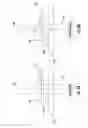
One exemplary embodiment of the two adjustable surface focusing-module lens 150 uses two adjustable-surface lenses 100 placed in close proximity (e.g., back-to-back) as shown in FIG. 5. The back-to-back adjustable-surface lenses form an effective lens with two adjustable polymeric surfaces to control the optical power (i.e., instead of just one lens). An advantage of this embodiment is that the adjustable-surfaces lenses 100 have already been reduced to practice and are commercially available, such as from poLight AS. In this regard, this application incorporates entirely by reference U.S. Pat. No. 8,045,280 (poLight AS).
Alternatively, a focusing-module lens 150 with two adjustable surfaces integrated into a single device can be utilized. As shown in FIG. 6, this alternative embodiment includes a flexible polymer 130 sandwiched between two transparent deformable membranes 110, each with its own ring-shaped piezoelectric film 120. Each transparent deformable membrane 110 can be fabricated from glass, quartz, and/or sapphire). This embodiment would allow for the same focusing power as the first embodiment and would also offer more simplicity and compactness.
In both embodiments, the electronically controlled optical powers on the adjustable polymeric surfaces summate, thereby forming a focusing-module lens 150 with a larger available optical power range (e.g., 0-20 diopters). When this two-surface focusing-module lens 150 is used in the three lens configuration shown in FIG. 4, the higher optical power range and the pupil magnification combine to form an autofocus lens system 50 with excellent focus range and small f-number. Such an autofocus lens system is well suited for imaging scanner applications.
A practical embodiment of the autofocus lens system 50 is shown in FIG. 7. Here, two positive lens groups 142, 144, including a plurality of lenses, are fixedly positioned along the optical axis 140. A focusing-module lens 150, which includes two adjustable-surface lenses 100, is fixed between the two lens groups. No moving parts along the optical axis are required for focusing. A voltage applied to each adjustable surface's ring-shaped piezoelectric film 120 is enough to focus the barcode onto the image sensor 155.
The resulting autofocus lens system 50 is smaller, faster, consumes less power, and is more cost effective than other mechanically-tuned autofocus lenses for imaging scanners. The autofocus lens system 50, based on the architecture described here, can focus on indicia both in the near-field (e.g., 10 centimeters) and far-field (e.g., 10 meters or greater).
The possible applications for this auto-focus lens system 50 need not be limited to imaging scanners. Any application requiring a narrow field of view (e.g., about 10 degrees to 15 degrees) and a wide focus range (e.g., 10 centimeters to infinity) could benefit from this lens configuration. For example, applications like license-plate imagers or long range facial-recognition would be suitable for this type of lens.
This application incorporates entirely by reference the commonly assigned U.S. Pat. No. 7,296,749 for Autofocus Barcode Scanner and the Like Employing Micro-Fluidic Lens; U.S. Pat. No. 8,328,099 for Auto-focusing Method for an Automatic Data Collection Device, such as an Image Acquisition Device; U.S. Pat. No. 8,245,936 for Dynamic Focus Calibration, such as Dynamic Focus Calibration using an Open-Loop System in a Bar Code Scanner; and U.S. Pat. No. 8,531,790 for Linear Actuator Assemblies and Methods of Making the Same.
To supplement the present disclosure, this application incorporates entirely by reference the following commonly assigned patents, patent application publications, and patent applications:
- U.S. Pat. No. 6,832,725; U.S. Pat. No. 7,128,266;
- U.S. Pat. No. 7,159,783; U.S. Pat. No. 7,413,127;
- U.S. Pat. No. 7,726,575; U.S. Pat. No. 8,294,969;
- U.S. Pat. No. 8,317,105; U.S. Pat. No. 8,322,622;
- U.S. Pat. No. 8,366,005; U.S. Pat. No. 8,371,507;
- U.S. Pat. No. 8,376,233; U.S. Pat. No. 8,381,979;
- U.S. Pat. No. 8,390,909; U.S. Pat. No. 8,408,464;
- U.S. Pat. No. 8,408,468; U.S. Pat. No. 8,408,469;
- U.S. Pat. No. 8,424,768; U.S. Pat. No. 8,448,863;
- U.S. Pat. No. 8,457,013; U.S. Pat. No. 8,459,557;
- U.S. Pat. No. 8,469,272; U.S. Pat. No. 8,474,712;
- U.S. Pat. No. 8,479,992; U.S. Pat. No. 8,490,877;
- U.S. Pat. No. 8,517,271; U.S. Pat. No. 8,523,076;
- U.S. Pat. No. 8,528,819; U.S. Pat. No. 8,544,737;
- U.S. Pat. No. 8,548,242; U.S. Pat. No. 8,548,420;
- U.S. Pat. No. 8,550,335; U.S. Pat. No. 8,550,354;
- U.S. Pat. No. 8,550,357; U.S. Pat. No. 8,556,174;
- U.S. Pat. No. 8,556,176; U.S. Pat. No. 8,556,177;
- U.S. Pat. No. 8,559,767; U.S. Pat. No. 8,559,957;
- U.S. Pat. No. 8,561,895; U.S. Pat. No. 8,561,903;
- U.S. Pat. No. 8,561,905; U.S. Pat. No. 8,565,107;
- U.S. Pat. No. 8,571,307; U.S. Pat. No. 8,579,200;
- U.S. Pat. No. 8,583,924; U.S. Pat. No. 8,584,945;
- U.S. Pat. No. 8,587,595; U.S. Pat. No. 8,587,697;
- U.S. Pat. No. 8,588,869; U.S. Pat. No. 8,590,789;
- U.S. Pat. No. 8,593,539; U.S. Pat. No. 8,596,542;
- U.S. Pat. No. 8,596,543; U.S. Pat. No. 8,599,271;
- U.S. Pat. No. 8,599,957; U.S. Pat. No. 8,600,158;
- U.S. Pat. No. 8,600,167; U.S. Pat. No. 8,602,309;
- U.S. Pat. No. 8,608,053; U.S. Pat. No. 8,608,071;
- U.S. Pat. No. 8,611,309; U.S. Pat. No. 8,615,487;
- U.S. Pat. No. 8,616,454; U.S. Pat. No. 8,621,123;
- U.S. Pat. No. 8,622,303; U.S. Pat. No. 8,628,013;
- U.S. Pat. No. 8,628,015; U.S. Pat. No. 8,628,016;
- U.S. Pat. No. 8,629,926; U.S. Pat. No. 8,630,491;
- U.S. Pat. No. 8,635,309; U.S. Pat. No. 8,636,200;
- U.S. Pat. No. 8,636,212; U.S. Pat. No. 8,636,215;
- U.S. Pat. No. 8,636,224; U.S. Pat. No. 8,638,806;
- U.S. Pat. No. 8,640,958; U.S. Pat. No. 8,640,960;
- U.S. Pat. No. 8,643,717; U.S. Pat. No. 8,646,692;
- U.S. Pat. No. 8,646,694; U.S. Pat. No. 8,657,200;
- U.S. Pat. No. 8,659,397; U.S. Pat. No. 8,668,149;
- U.S. Pat. No. 8,678,285; U.S. Pat. No. 8,678,286;
- U.S. Pat. No. 8,682,077; U.S. Pat. No. 8,687,282;
- International Publication No. 2013/163789;
- International Publication No. 2013/173985;
- International Publication No. 2014/019130;
- U.S. Patent Application Publication No. 2008/0185432;
- U.S. Patent Application Publication No. 2009/0134221;
- U.S. Patent Application Publication No. 2010/0177080;
- U.S. Patent Application Publication No. 2010/0177076;
- U.S. Patent Application Publication No. 2010/0177707;
- U.S. Patent Application Publication No. 2010/0177749;
- U.S. Patent Application Publication No. 2011/0169999;
- U.S. Patent Application Publication No. 2011/0202554;
- U.S. Patent Application Publication No. 2012/0111946;
- U.S. Patent Application Publication No. 2012/0138685;
- U.S. Patent Application Publication No. 2012/0168511;
- U.S. Patent Application Publication No. 2012/0168512;
- U.S. Patent Application Publication No. 2012/0193407;
- U.S. Patent Application Publication No. 2012/0193423;
- U.S. Patent Application Publication No. 2012/0203647;
- U.S. Patent Application Publication No. 2012/0223141;
- U.S. Patent Application Publication No. 2012/0228382;
- U.S. Patent Application Publication No. 2012/0248188;
- U.S. Patent Application Publication No. 2013/0043312;
- U.S. Patent Application Publication No. 2013/0056285;
- U.S. Patent Application Publication No. 2013/0070322;
- U.S. Patent Application Publication No. 2013/0075168;
- U.S. Patent Application Publication No. 2013/0082104;
- U.S. Patent Application Publication No. 2013/0175341
- U.S. Patent Application Publication No. 2013/0175343;
- U.S. Patent Application Publication No. 2013/0200158;
- U.S. Patent Application Publication No. 2013/0256418;
- U.S. Patent Application Publication No. 2013/0257744;
- U.S. Patent Application Publication No. 2013/0257759;
- U.S. Patent Application Publication No. 2013/0270346;
- U.S. Patent Application Publication No. 2013/0278425;
- U.S. Patent Application Publication No. 2013/0287258;
- U.S. Patent Application Publication No. 2013/0292474;
- U.S. Patent Application Publication No. 2013/0292475;
- U.S. Patent Application Publication No. 2013/0292477;
- U.S. Patent Application Publication No. 2013/0293539;
- U.S. Patent Application Publication No. 2013/0293540;
- U.S. Patent Application Publication No. 2013/0306728;
- U.S. Patent Application Publication No. 2013/0306730;
- U.S. Patent Application Publication No. 2013/0306731;
- U.S. Patent Application Publication No. 2013/0306734;
- U.S. Patent Application Publication No. 2013/0307964;
- U.S. Patent Application Publication No. 2013/0313324;
- U.S. Patent Application Publication No. 2013/0313325;
- U.S. Patent Application Publication No. 2013/0313326;
- U.S. Patent Application Publication No. 2013/0327834;
- U.S. Patent Application Publication No. 2013/0341399;
- U.S. Patent Application Publication No. 2013/0342717;
- U.S. Patent Application Publication No. 2014/0001267;
- U.S. Patent Application Publication No. 2014/0002828;
- U.S. Patent Application Publication No. 2014/0008430;
- U.S. Patent Application Publication No. 2014/0008439;
- U.S. Patent Application Publication No. 2014/0021256;
- U.S. Patent Application Publication No. 2014/0025584;
- U.S. Patent Application Publication No. 2014/0027518;
- U.S. Patent Application Publication No. 2014/0034723;
- U.S. Patent Application Publication No. 2014/0034734;
- U.S. Patent Application Publication No. 2014/0036848;
- U.S. Patent Application Publication No. 2014/0039693;
- U.S. Patent Application Publication No. 2014/0042814;
- U.S. Patent Application Publication No. 2014/0049120;
- U.S. Patent Application Publication No. 2014/0049635;
- U.S. Patent Application Publication No. 2014/0061305;
- U.S. Patent Application Publication No. 2014/0061306;
- U.S. Patent Application Publication No. 2014/0061307;
- U.S. Patent Application Publication No. 2014/0063289;
- U.S. Patent Application Publication No. 2014/0066136;
- U.S. Patent Application Publication No. 2014/0067692;
- U.S. Patent Application Publication No. 2014/0070005;
- U.S. Patent Application Publication No. 2014/0071840;
- U.S. Patent Application Publication No. 2014/0074746;
- U.S. patent application Ser. No. 13/367,978 for a Laser Scanning Module Employing An Elastomeric U-Hinge Based Laser Scanning Assembly, filed Feb. 7, 2012 (Feng et al.);
- U.S. patent application Ser. No. 13/400,748 for a Laser Scanning Bar Code Symbol Reading System Having Intelligent Scan Sweep Angle Adjustment Capabilities Over The Working Range Of The System For Optimized Bar Code Symbol Reading Performance, filed Feb. 21, 2012 (Wilz);
- U.S. patent application Ser. No. 13/736,139 for an Electronic Device Enclosure, filed Jan. 8, 2013 (Chaney);
- U.S. patent application Ser. No. 13/750,304 for Measuring Object Dimensions Using Mobile Computer, filed Jan. 25, 2013;
- U.S. patent application Ser. No. 13/771,508 for an Optical Redirection Adapter, filed Feb. 20, 2013 (Anderson);
- U.S. patent application Ser. No. 13/780,158 for a Distraction Avoidance System, filed Feb. 28, 2013 (Sauerwein);
- U.S. patent application Ser. No. 13/780,196 for Android Bound Service Camera Initialization, filed Feb. 28, 2013 (Todeschini et al.);
- U.S. patent application Ser. No. 13/780,271 for a Vehicle Computer System with Transparent Display, filed Feb. 28, 2013 (Fitch et al.);
- U.S. patent application Ser. No. 13/780,356 for a Mobile Device Having Object-Identification Interface, filed Feb. 28, 2013 (Samek et al.);
- U.S. patent application Ser. No. 13/784,933 for an Integrated Dimensioning and Weighing System, filed Mar. 5, 2013 (McCloskey et al.);
- U.S. patent application Ser. No. 13/785,177 for a Dimensioning System, filed Mar. 5, 2013 (McCloskey et al.);
- U.S. patent application Ser. No. 13/792,322 for a Replaceable Connector, filed Mar. 11, 2013 (Skvoretz);
- U.S. patent application Ser. No. 13/852,097 for a System and Method for Capturing and Preserving Vehicle Event Data, filed Mar. 28, 2013 (Barker et al.);
- U.S. patent application Ser. No. 13/895,846 for a Method of Programming a Symbol Reading System, filed Apr. 10, 2013 (Corcoran);
- U.S. patent application Ser. No. 13/902,110 for a System and Method for Display of Information Using a Vehicle-Mount Computer, filed May 24, 2013 (Hollifield);
- U.S. patent application Ser. No. 13/902,144, for a System and Method for Display of Information Using a Vehicle-Mount Computer, filed May 24, 2013 (Chamberlin);
- U.S. patent application Ser. No. 13/902,242 for a System For Providing A Continuous Communication Link With A Symbol Reading Device, filed May 24, 2013 (Smith et al.);
- U.S. patent application Ser. No. 13/912,262 for a Method of Error Correction for 3D Imaging Device, filed Jun. 7, 2013 (Jovanovski et al.);
- U.S. patent application Ser. No. 13/912,702 for a System and Method for Reading Code Symbols at Long Range Using Source Power Control, filed Jun. 7, 2013 (Xian et al.);
- U.S. patent application Ser. No. 13/922,339 for a System and Method for Reading Code Symbols Using a Variable Field of View, filed Jun. 20, 2013 (Xian et al.);
- U.S. patent application Ser. No. 13/927,398 for a Code Symbol Reading System Having Adaptive Autofocus, filed Jun. 26, 2013 (Todeschini);
- U.S. patent application Ser. No. 13/930,913 for a Mobile Device Having an Improved User Interface for Reading Code Symbols, filed Jun. 28, 2013 (Gelay et al.);
- U.S. patent application Ser. No. 13/933,415 for an Electronic Device Case, filed Jul. 2, 2013 (London et al.);
- U.S. patent application Ser. No. 13/947,296 for a System and Method for Selectively Reading Code Symbols, filed Jul. 22, 2013 (Rueblinger et al.);
- U.S. patent application Ser. No. 13/950,544 for a Code Symbol Reading System Having Adjustable Object Detection, filed Jul. 25, 2013 (Jiang);
- U.S. patent application Ser. No. 13/961,408 for a Method for Manufacturing Laser Scanners, filed Aug. 7, 2013 (Saber et al.);
- U.S. patent application Ser. No. 13/974,374 for Authenticating Parcel Consignees with Indicia Decoding Devices, filed Aug. 23, 2013 (Ye et al.);
- U.S. patent application Ser. No. 14/018,729 for a Method for Operating a Laser Scanner, filed Sep. 5, 2013 (Feng et al.);
- U.S. patent application Ser. No. 14/019,616 for a Device Having Light Source to Reduce Surface Pathogens, filed Sep. 6, 2013 (Todeschini);
- U.S. patent application Ser. No. 14/023,762 for a Handheld Indicia Reader Having Locking Endcap, filed Sep. 11, 2013 (Gannon);
- U.S. patent application Ser. No. 14/035,474 for Augmented-Reality Signature Capture, filed Sep. 24, 2013 (Todeschini);
- U.S. patent application Ser. No. 14/047,896 for Terminal Having Illumination and Exposure Control filed Oct. 7, 2013 (Jovanovski et al.);
- U.S. patent application Ser. No. 14/035,474 for Augmented-Reality Signature Capture, filed Sep. 24, 2013 (Todeschini);
- U.S. patent application Ser. No. 14/050,515 for Hybrid-Type Bioptical, filed Oct. 10, 2013 (Edmonds et al.);
- U.S. patent application Ser. No. 14/053,175 for Imaging Apparatus Having Imaging Assembly, filed Oct. 14, 2013 (Barber) U.S. patent application Ser. No. 14/055,234 for Dimensioning System, filed Oct. 16, 2013 (Fletcher);
- U.S. patent application Ser. No. 14/055,353 for Dimensioning System, filed Oct. 16, 2013 (Giordano et al.);
- U.S. patent application Ser. No. 14/055,383 for Dimensioning System, filed Oct. 16, 2013 (Li et al.);
- U.S. patent application Ser. No. 14/053,314 for Indicia Reader, filed Oct. 14, 2013 (Huck);
- U.S. patent application Ser. No. 14/058,762 for Terminal Including Imaging Assembly, filed Oct. 21, 2013 (Gomez et al.);
- U.S. patent application Ser. No. 14/062,239 for Chip on Board Based Highly Integrated Imager, filed Oct. 24, 2013 (Toa et al.);
- U.S. patent application Ser. No. 14/065,768 for Hybrid System and Method for Reading Indicia, filed Oct. 29, 2013 (Meier et al.);
- U.S. patent application Ser. No. 14/074,746 for Self-Checkout Shopping System, filed Nov. 8, 2013 (Hejl et al.);
- U.S. patent application Ser. No. 14/074,787 for Method and System for Configuring Mobile Devices via NFC Technology, filed Nov. 8, 2013 (Smith et al.);
- U.S. patent application Ser. No. 14/082,468 for Encoded Information Reading Terminal with Wireless Path Selection Capability, filed Nov. 18, 2013 (Wang et al.);
- U.S. patent application Ser. No. 14/087,190 for Optimal Range Indicators for Bar Code Validation, filed Nov. 22, 2013 (Hejl);
- U.S. patent application Ser. No. 14/093,484 for System for Capturing a Document in an Image Signal, filed Dec. 1, 2013 (Showering);
- U.S. patent application Ser. No. 14/093,487 for Method and System Operative to Process Color Image Data, filed Dec. 1, 2013 (Li et al.);
- U.S. patent application Ser. No. 14/093,490 for Imaging Terminal Having Image Sensor and Lens Assembly, filed Dec. 1, 2013 (Havens et al.);
- U.S. patent application Ser. No. 14/093,624 for Apparatus Operative for Capture of Image Data, filed Dec. 2, 2013 (Havens et al.);
- U.S. patent application Ser. No. 14/094,087 for Method and System for Communicating Information in an Digital Signal, filed Dec. 2, 2013 (Peake et al.);
- U.S. patent application Ser. No. 14/101,965 for High Dynamic-Range Indicia Reading System, filed Dec. 10, 2013 (Xian);
- U.S. patent application Ser. No. 14/107,048 for Roaming Encoded Information Reading Terminal, filed Dec. 16, 2013 (Wang et al.);
- U.S. patent application Ser. No. 14/118,400 for Indicia Decoding Device with Security Lock, filed Nov. 18, 2013 (Liu);
- U.S. patent application Ser. No. 14/138,206 for System and Method to Store and Retrieve Identifier Associated Information, filed Dec. 23, 2013 (Gomez et al.);
- U.S. patent application Ser. No. 14/143,399 for Device Management Using Virtual Interfaces, filed Dec. 30, 2013 (Caballero);
- U.S. patent application Ser. No. 14/147,992 for Decoding Utilizing Image Data, filed Jan. 6, 2014 (Meier et al.);
- U.S. patent application Ser. No. 14/150,393 for Indicia-reader Having Unitary Construction Scanner, filed Jan. 8, 2014 (Colavito et al.);
- U.S. patent application Ser. No. 14/153,111 for Indicia Reading Terminal Including Frame Quality Evaluation Processing, filed Jan. 13, 2014 (Wang et al.);
- U.S. patent application Ser. No. 14/153,142 for Imaging Apparatus Comprising Image Sensor Array having Shared Global Shutter Circuitry, filed Jan. 13, 2014 (Wang);
- U.S. patent application Ser. No. 14/153,182 for System and Method to Manipulate an Image, filed Jan. 13, 2014 (Longacre et al.);
- U.S. patent application Ser. No. 14/153,213 for Apparatus Comprising Image Sensor Array and Illumination Control, filed Jan. 13, 2014 (Ding);
- U.S. patent application Ser. No. 14/153,249 for Terminal Operative for Storing Frame of Image Data, filed Jan. 13, 2014 (Winegar);
- U.S. patent application Ser. No. 14/154,207 for Laser Barcode Scanner, filed Jan. 14, 2014 (Hou et al.);
- U.S. patent application Ser. No. 14/154,915 for Laser Scanning Module Employing a Laser Scanning Assembly having Elastomeric Wheel Hinges, filed Jan. 14, 2014 (Havens et al.);
- U.S. patent application Ser. No. 14/158,126 for Methods and Apparatus to Change a Feature Set on Data Collection Devices, filed Jan. 17, 2014 (Berthiaume et al.);
- U.S. patent application Ser. No. 14/159,074 for Wireless Mesh Point Portable Data Terminal, filed Jan. 20, 2014 (Wang et al.);
- U.S. patent application Ser. No. 14/159,509 for NMS Text Messaging for Hand Held Indicia Reader, filed Jan. 21, 2014 (Kearney);
- U.S. patent application Ser. No. 14/159,603 for Decodable Indicia Reading Terminal with Optical Filter, filed Jan. 21, 2014 (Ding et al.);
- U.S. patent application Ser. No. 14/160,645 for Decodable Indicia Reading Terminal with Indicia Analysis Functionality, filed Jan. 22, 2014 (Nahill et al.);
- U.S. patent application Ser. No. 14/161,875 for System and Method to Automatically Discriminate Between Different Data Types, filed Jan. 23, 2014 (Wang);
- U.S. patent application Ser. No. 14/165,980 for System and Method for Measuring Irregular Objects with a Single Camera filed Jan. 28, 2014 (Li et al.);
- U.S. patent application Ser. No. 14/166,103 for Indicia Reading Terminal Including Optical Filter filed Jan. 28, 2014 (Lu et al.);
- U.S. patent application Ser. No. 14/176,417 for Devices and Methods Employing Dual Target Auto Exposure filed Feb. 10, 2014 (Meier et al.);
- U.S. patent application Ser. No. 14/187,485 for Indicia Reading Terminal with Color Frame Processing filed Feb. 24, 2014 (Ren et al.);
- U.S. patent application Ser. No. 14/200,405 for Indicia Reader for Size-Limited Applications filed Mar. 7, 2014 (Feng et al.);
- U.S. patent application Ser. No. 14/342,544 for Imaging Based Barcode Scanner Engine with Multiple Elements Supported on a Common Printed Circuit Board filed Mar. 4, 2014 (Liu et al.);
- U.S. patent application Ser. No. 14/342,551 for Terminal Having Image Data Format Conversion filed Mar. 4, 2014 (Lui et al.); and
- U.S. patent application Ser. No. 14/345,735 for Optical Indicia Reading Terminal with Combined Illumination filed Mar. 19, 2014 (Ouyang).
In the specification and/or figures, typical embodiments of the invention have been disclosed. The present invention is not limited to such exemplary embodiments. The use of the term “and/or” includes any and all combinations of one or more of the associated listed items. The figures are schematic representations and so are not necessarily drawn to scale. Unless otherwise noted, specific terms have been used in a generic and descriptive sense and not for purposes of limitation.
Claims
1. A method of manufacturing an adjustable-surface lens of an autofocus lens system, the method comprising:
providing a first transparent deformable membrane having a ring-shaped piezoelectric film contiguously positioned on the first transparent deformable membrane's outer surface;
providing a second transparent deformable membrane having a ring-shaped piezoelectric film contiguously positioned on the second transparent deformable membrane's outer surface; and
contiguously positioning a flexible polymer between the first transparent deformable membrane and the second transparent deformable membrane, wherein the flexible polymer is attached to the respective inner surfaces of the first transparent deformable membrane and the second transparent deformable membrane.
2. The method of claim 1, wherein the first transparent deformable membrane and the second transparent deformable membrane transparent each comprises glass, quartz, or sapphire.
3. The method of claim 1, comprising providing a first positive lens fixedly positioned along an optical axis.
4. The method of claim 3, wherein the first lens is a lens group comprising a plurality of lenses.
5. The method of claim 3, comprising providing a second positive lens fixedly positioned along the optical axis.
6. The method of claim 5, wherein the second lens is a lens group comprising a plurality of lenses.
7. The method of claim 1, comprising:
providing a first positive lens fixedly positioned along an optical axis;
providing a second positive lens fixedly positioned along the optical axis; and
positioning the adjustable-surface lens between the first positive lens and the second positive lens along the optical axis.
8. The method of claim 1, comprising providing electrical connection on the ring-shaped piezoelectric films.
9. A method of manufacturing an adjustable-surface lens of an autofocus lens system, the method comprising:
attaching contiguously a ring shaped piezoelectric film to a transparent deformable membrane on the transparent deformable membrane's outer surface;
attaching contiguously a flexible transparent polymeric material to an inner surface of the transparent deformable membrane; and
providing a rigid support contiguous to the flexible transparent polymeric material and opposite to the transparent deformable membrane.
10. The method of claim 9, wherein the transparent deformable membrane comprises glass, quartz, or sapphire.
11. The method of claim 9, comprising providing a first positive lens fixedly positioned along an optical axis.
12. The method of claim 11, wherein the first lens is a lens group comprising a plurality of lenses.
13. The method of claim 11, comprising providing a second positive lens fixedly positioned along the optical axis.
14. The method of claim 13, wherein the second lens is a lens group comprising a plurality of lenses.
15. The method of claim 9, comprising providing electrical connection on the ring-shaped piezoelectric film.
16. A focusing-module lens, comprising:
two adjustable surfaces, wherein the optical power of the adjustable surfaces is controlled electronically to achieve focus;
a first transparent deformable membrane having a ring-shaped piezoelectric film contiguously positioned on the first transparent deformable membrane's outer surface;
a second transparent deformable membrane having a ring-shaped piezoelectric film contiguously positioned on the second transparent deformable membrane's outer surface; and
a flexible polymer contiguously positioned between the first transparent deformable membrane and the second transparent deformable membrane, whereby the flexible polymer is in contact with an inner surface of the first transparent deformable membrane and an inner surface of the second transparent deformable membrane.
17. The focusing-module lens of claim 16, wherein the focusing-module lens has a clear aperture with a diameter of between 1.3 millimeters and 1.7 millimeters.
18. The focusing-module lens of claim 16, wherein the first transparent deformable membrane and the second transparent deformable membrane transparent each comprise glass, quartz, or sapphire.
19. The focusing-module lens of claim 16, wherein the focusing-module lens has a focusing response time of 2 milliseconds or less.
20. The focusing-module lens of claim 16, wherein the focusing-module lens consumes 20 milliwatts or less.
Images & Drawings included:

Sources:
- United States Patent and Trademark Office - verify current appl. status at the USPTO↗
Similar patent applications:
- » 20170160441
Autofocus lens system - » 20150310243
Autofocus lens system for indicia readers - » 20160131894
Autofocus lens system - » 20100194966
Interchangeable lens camera system having autofocusing function - » 20060280491
Autofocus lens apparatus and camera system with the same - » 20110141341
Autofocusing optical system using tunable lens system - » 20190151992
LASER MARKING SYSTEM WITH THROUGH-THE-LENS AUTOFOCUS - » 10659197
Autofocus lens apparatus and image pickup system - » 20170324895
Autofocus system for a high speed periodically modulated variable focal length lens
Recent applications in this class:
- » 20250180788 2025-06-05
LENS, LENS GROUP, METHOD FOR ADJUSTING DIOPTER OF LENS GROUP, AND HEAD MOUNTED DISPLAY DEVICE - » 20240361500 2024-10-31
WAVEFRONT MANIPULATOR AND OPTICAL DEVICE - » 20240230962 2024-07-11
Imaging System with Optimized Extended Depth of Focus - » 20240184020 2024-06-06
Optical apparatus with structure for liquid invariant performance - » 20240134090 2024-04-25
Imaging system with optimized extended depth of focus - » 20220179130 2022-06-09
Imaging system with optimized extended depth of focus - » 20220128741 2022-04-28
Microlens array device used to project at least two patterns for improving control of projecting light - » 20220066073 2022-03-03
Control of dynamic lenses - » 20210389509 2021-12-16
Optical apparatus with structure for liquid invariant performance - » 20200003933 2020-01-02
Control of dynamic lenses
Recent applications for this Assignee:
- » 20230087928 2023-03-23
Indicia reader for size-limited applications - » 20230004077 2023-01-05
Integrated illumination-aimer imaging apparatuses - » 20220400357 2022-12-15
Methods and apparatuses for automatically commissioning locators - » 20220334347 2022-10-20
Housing of an image capturing device - » 20220086313 2022-03-17
Housing of an image capturing device - » 20220050199 2022-02-17
Systems, methods, and apparatuses for alerting users to maintain physical distancing - » 20220016293 2022-01-20
Systems and methods for monitoring disinfection of a device - » 20210400183 2021-12-23
Apparatuses, computer-implemented methods, and computer program products for flicker reduction in a multi-sensor environment - » 20210385374 2021-12-09
Systems and methods for operating an imaging device - » 20210365650 2021-11-25
Scanning apparatus and modular power source