Method for preparing a catalyst-containing ceramic filter for off-gas or exhaust gas cleaning
US20180250665A1
2018-09-06
15/760,278
2016-09-28
✅ Patent granted
US 10,682,639 B2
2020-06-16
WO; PCT/EP2016/073100; 20160928
WO; WO2017/055344; 20170406
Haytham Soliman
Blank Rome LLP
2036-09-28
Abstract:
A catalyst-containing ceramic dust filter for off-gas or exhaust gas cleaning is prepared by a method comprising the steps of making a water-based impregnation slurry, which comprises a catalytically effective amount of at least one catalytically active metal and an oxide support, to form a catalytically active metal oxide support, impregnating the filter substrate with the impregnation slurry, spraying from the inside to control the amount of liquor while leaving the outer few millimeters of the filter wall dry, and drying the impregnated filter. The impregnated filter is preferably dried by using microwave energy.
Assignee:
- Haldor Topsoe A/S 178 🇩🇰 Kgs. Lyngby, Denmark
- Haldor Topsoe A/S 285 🇩🇰 Lyngby, Denmark
Applicant:
Interested in similar patents?
Get notified when new applications in this technology area are published.
Classification:
B01J37/346 » CPC main
Processes, in general, for preparing catalysts; Processes, in general, for activation of catalysts; Irradiation by, or application of, electric, magnetic or wave energy, e.g. ultrasonic waves ; Ionic sputtering; Flame or plasma spraying; Particle radiation making use of electric or magnetic fields, wave energy or particle radiation of electromagnetic wave energy of microwave energy
B01D53/864 » CPC further
Separation of gases or vapours; Recovering vapours of volatile solvents from gases; Chemical or biological purification of waste gases, e.g. engine exhaust gases, smoke, fumes, flue gases, aerosols,; Chemical or biological purification of waste gases; General processes for purification of waste gases; Apparatus or devices specially adapted therefor; Catalytic processes Removing carbon monoxide or hydrocarbons
B01D53/8628 » CPC further
Separation of gases or vapours; Recovering vapours of volatile solvents from gases; Chemical or biological purification of waste gases, e.g. engine exhaust gases, smoke, fumes, flue gases, aerosols,; Chemical or biological purification of waste gases; General processes for purification of waste gases; Apparatus or devices specially adapted therefor; Catalytic processes; Removing nitrogen compounds; Nitrogen oxides Processes characterised by a specific catalyst
B01D53/8668 » CPC further
Separation of gases or vapours; Recovering vapours of volatile solvents from gases; Chemical or biological purification of waste gases, e.g. engine exhaust gases, smoke, fumes, flue gases, aerosols,; Chemical or biological purification of waste gases; General processes for purification of waste gases; Apparatus or devices specially adapted therefor; Catalytic processes Removing organic compounds not provided for in -
B01D53/944 » CPC further
Separation of gases or vapours; Recovering vapours of volatile solvents from gases; Chemical or biological purification of waste gases, e.g. engine exhaust gases, smoke, fumes, flue gases, aerosols,; Chemical or biological purification of waste gases of engine exhaust gases by catalytic processes Simultaneously removing carbon monoxide, hydrocarbons or carbon making use of oxidation catalysts
B01J35/0006 » CPC further
Catalysts, in general, characterised by their form or physical properties Catalysts containing parts with different compositions
B01J37/0213 » CPC further
Processes, in general, for preparing catalysts; Processes, in general, for activation of catalysts; Impregnation, coating or precipitation; Impregnation Preparation of the impregnating solution
B01J37/0236 » CPC further
Processes, in general, for preparing catalysts; Processes, in general, for activation of catalysts; Impregnation, coating or precipitation Drying, e.g. preparing a suspension, adding a soluble salt and drying
F01N3/2066 » CPC further
Exhaust or silencing apparatus having means for purifying, rendering innocuous, or otherwise treating exhaust for rendering innocuous by thermal or catalytic conversion of noxious components of exhaust characterised by methods of operation; Control specially adapted for catalytic conversion ; Methods of operation or control of catalytic converters Selective catalytic reduction [SCR]
B01D2255/20707 » CPC further
Catalysts; Metals or compounds thereof; Transition metals Titanium
B01D53/94 » CPC further
Separation of gases or vapours; Recovering vapours of volatile solvents from gases; Chemical or biological purification of waste gases, e.g. engine exhaust gases, smoke, fumes, flue gases, aerosols,; Chemical or biological purification of waste gases of engine exhaust gases by catalytic processes
B01J35/04 » CPC further
Catalysts, in general, characterised by their form or physical properties; Solids Foraminous structures, sieves, grids, honeycombs
B01D53/86 IPC
Separation of gases or vapours; Recovering vapours of volatile solvents from gases; Chemical or biological purification of waste gases, e.g. engine exhaust gases, smoke, fumes, flue gases, aerosols,; Chemical or biological purification of waste gases; General processes for purification of waste gases; Apparatus or devices specially adapted therefor Catalytic processes
F01N3/20 IPC
Exhaust or silencing apparatus having means for purifying, rendering innocuous, or otherwise treating exhaust for rendering innocuous by thermal or catalytic conversion of noxious components of exhaust characterised by methods of operation; Control specially adapted for catalytic conversion ; Methods of operation or control of catalytic converters
B01D2255/1023 » CPC further
Catalysts; Noble metals or compounds thereof; Platinum group metals Palladium
B01D2255/20723 » CPC further
Catalysts; Metals or compounds thereof; Transition metals Vanadium
B01D2257/404 » CPC further
Components to be removed; Nitrogen compounds Nitrogen oxides other than dinitrogen oxide
B01D2257/502 » CPC further
Components to be removed; Carbon oxides Carbon monoxide
B01J35/00 IPC
Catalysts, in general, characterised by their form or physical properties
B01D2257/708 » CPC further
Components to be removed; Organic compounds not provided for in groups - Volatile organic compounds V.O.C.'s
B01J37/34 IPC
Processes, in general, for preparing catalysts; Processes, in general, for activation of catalysts Irradiation by, or application of, electric, magnetic or wave energy, e.g. ultrasonic waves ; Ionic sputtering; Flame or plasma spraying; Particle radiation
B01J37/02 IPC
Processes, in general, for preparing catalysts; Processes, in general, for activation of catalysts Impregnation, coating or precipitation
B01J23/44 » CPC further
Catalysts comprising metals or metal oxides or hydroxides, not provided for in group of noble metals of the platinum group metals Palladium
B01J23/22 » CPC further
Catalysts comprising metals or metal oxides or hydroxides, not provided for in group of arsenic, antimony, bismuth, vanadium, niobium, tantalum, polonium, chromium, molybdenum, tungsten, manganese, technetium or rhenium; Vanadium, niobium or tantalum Vanadium
B01J21/063 » CPC further
Catalysts comprising the elements, oxides, or hydroxides of magnesium, boron, aluminium, carbon, silicon, titanium, zirconium, or hafnium; Silicon, titanium, zirconium or hafnium; Oxides or hydroxides thereof Titanium; Oxides or hydroxides thereof
B01D53/8634 » CPC further
Separation of gases or vapours; Recovering vapours of volatile solvents from gases; Chemical or biological purification of waste gases, e.g. engine exhaust gases, smoke, fumes, flue gases, aerosols,; Chemical or biological purification of waste gases; General processes for purification of waste gases; Apparatus or devices specially adapted therefor; Catalytic processes; Removing nitrogen compounds Ammonia
B01D2255/915 » CPC further
Catalysts; Physical characteristics of catalysts Catalyst supported on particulate filters
B01J21/06 IPC
Catalysts comprising the elements, oxides, or hydroxides of magnesium, boron, aluminium, carbon, silicon, titanium, zirconium, or hafnium Silicon, titanium, zirconium or hafnium; Oxides or hydroxides thereof
B01D2255/20776 » CPC further
Catalysts; Metals or compounds thereof; Transition metals Tungsten
B01D2258/0291 » CPC further
Sources of waste gases; Other waste gases; Flue gases from waste incineration plants
Description
The present invention relates to a novel method for preparing a catalyst-containing ceramic filter for off-gas or exhaust gas cleaning. More particularly, the invention provides a catalytic ceramic filter for the removal of dust and particulate matter in a process off-gas or an engine exhaust gas. The catalytic ceramic filter is in particular useful in the cleaning of process gas or raw gas from industrial processes involving combustion, like the production of minerals, glass, cement, waste incineration, or from coal fired boilers and engines.
Ceramic filters in the shape of filter candles are used in many industries for removal of particulate matter from process gases. They constitute one of the most efficient types of dust collectors available, and they can achieve collection efficiencies of more than 99% for particulates. The filters can be made from various ceramic materials which comprise ceramic fibres made of alkali and alkaline earth silicates or alumino silicates.
Waste gas from industrial processes, such as municipal waste incinerators, is filtered to remove contaminants like dioxins, furans, nitrous oxides, dust, soot and other toxic and noxious substances, thereby enabling the waste gases to be more safely released into the atmosphere. Traditionally, gaseous pollutants have been removed by a process of gas scrubbing by injecting a reactant particulate material into the waste gas, said material reacting chemically and/or physically with the gaseous pollutants to produce a particulate reaction product. The waste gas containing the reaction product is then filtered through a barrier filter, such as a textile, a metal or a ceramic medium, with the reaction product and any solid pollutants being retained as a dust cake on the surface of the filter. This has the disadvantage that it involves handling and injection of a powder or slurry reactant material and the subsequent removal of the dust cake from the surface of the filter. The dust cake is usually removed by back-pulsing clean air under pressure through the filter which results in an increase in energy requirements for cleaning and for filtration because the dust cake presents a pressure drop penalty as it provides a more impermeable layer to the gas flow, thereby requiring extra energy to pull clean gas through the cake and filter. Furthermore, after cleaning there is no build-up of reactant material at the surface of the filter, which in use would provide a reactant bed for the removal of pollutants. This enables pollutants to more readily pass untreated through the filter until the reactant layer can be built up again.
Particle-containing process gases very often contain a plurality of pollutants, e.g. NOx, volatile organic compounds (VOC), SO2, CO and NH3, in concentrations that have to be reduced depending on local legislation. For this purpose, several conventional methods are available.
The abatement of gaseous contaminants, such as NOx, VOC, CO and NH3, can be effectively carried out by contact with a catalyst. In particular, vanadium oxide-based catalysts are commonly used as catalysts for NOx reduction by selective reduction of NOx with NH3 in stationary and automotive applications.
This catalyst is active both in the removal of hydrocarbons (VOC) and of NOx by combined oxidation and selective catalytic reduction (SCR) reaction with NH3.
It is well-known that vanadium oxide is an active oxidation catalyst. Compared to the precious metal catalysts, such as the Pd catalyst, the vanadium oxide catalyst is less selective in the formation of CO2, and some amounts of CO are produced during the oxidation reactions. CO is not capable of being oxidized to CO2 at a feasible reaction rate by contact with the vanadium oxide catalyst. Instead it requires presence of a different catalyst, e.g. a noble metal catalyst like Pd or Pt, or a base metal catalyst like a CuMn catalyst. Thus it has turned out that when providing the filter with a vanadium oxide catalyst and with a very small amount of palladium, no emission of CO resulting from incomplete catalytic combustion of VOCs is observed.
Typically, the filter substrate has the form of a hollow cylinder. The catalyst is typically loaded onto the ceramic filter substrate by impregnating the filter substrate with a slurry comprising a catalytic metal supported on an inorganic oxide support, e.g. by dipping the filter in the slurry or by spraying the slurry on the filter from the outer and/or the inner side of the filter. Once the slurry has been applied, the resulting filter is dried. The impregnation and drying processes are rather challenging because, once wet, the ceramic filter substrate loses most of its mechanical properties and becomes rather difficult to handle.
The amount of catalyst that is loaded onto the filter has a direct impact on the catalytic performance of the resulting filter. Being able to target the catalyst load also ensures that no excess of catalyst is loaded, whereby the overall production cost of the catalytic filter is reduced. This is especially relevant in cases where noble metals, such as Pd, are used as catalyst, due to their high cost.
According to the present invention, the slurry containing the catalyst is applied by spraying it onto the ceramic filter from the inner side thereof. Moreover, the amount of slurry applied is defined on the basis of the catalytic performance required. In any case, in the method of the present invention the outer few millimeters of the total filter thickness are not impregnated, but instead left dry. By doing so, the mechanical properties of the filter during the impregnation and drying processes are significantly enhanced due to this dry outer shell of the filter.
The terms “outer side” and “inner side” as used herein refer to the flow side of the filter facing the unfiltered exhaust gas and to the flow side facing the filtered off- or exhaust gas, respectively.
Now it has surprisingly been found that the drying of the impregnation slurry advantageously can be accomplished by the use of microwave energy. This finding, in combination with the partial impregnation of the filter, giving a dry outer shell, and the targeting of the catalyst load, forms the basis of the present invention.
The drying of a coated catalyst substrate using microwave energy to affix the precious metal(s) to the support is e.g. known from U.S. Pat. No. 7,601,671 B2 describing a drying method for exhaust gas catalysts. The method, however, mandatorily requires a subsequent calcination of the dried slurry-coated catalyst substrate, which is not required according to the present invention.
In EP 1 214 971 B1, a catalyst for the removal of dioxin is disclosed. Microwave drying is mentioned in connection with the preparation of the catalyst, but calcination of the dried catalyst is necessary. This also holds true for the Pd-containing hydrogenation catalyst disclosed in EP 2 570 470 A1.
A coil-shaped ceramic filter element for an exhaust gas filter is described in US 2010/0034981 A1. The filter element is impregnated with a ceramic slurry and then dried. The drying can be effected by microwaves, but a subsequent sintering step is mandatory.
CN 103804016 A describes an engineering ceramic and a preparation method thereof. The solid raw materials are mixed under certain vacuum and temperature conditions, and the formed blank is dried using microwaves. Thereby, more than 400 pore passages per square inch in the honeycomb ceramic can be achieved, and the contact area of gas in a catalytic converter is more than 2000 m2 on average.
Finally, US 2007/0098914 describes a microwave process for porous ceramic filters with passivation and catalyst coatings. In the process it is necessary to perform several successive microwave treatments.
The present invention relates to a method of preparing a catalyst-containing ceramic dust filter for off-gas or exhaust gas cleaning, said method comprising the steps of
-
- preparing a water-based impregnation slurry, which comprises a catalytically effective amount of at least one catalytically active metal and an oxide support, to form a catalytically active metal oxide support,
- impregnating the filter substrate with the impregnation slurry, spraying from the inner side to control the amount of liquor while leaving the outer few millimeters of the filter wall dry, and
- drying the impregnated filter.
Preferably the filter is dried by using microwave energy.
It is preferred that the at least one catalytically active metal comprises a combined SCR and oxidation catalyst and a precious metal comprising catalyst.
Further it is preferred that the combined SCR and oxidation catalyst comprises an oxide of vanadium, tungsten or molybdenum and titania and that the precious metal comprising catalyst is a palladium catalyst.
Preferably the invention is applied to a ceramic candle filter suitable for the removal of particulate matter in form of soot, ash, metals and metal compounds, together with hydrocarbons and nitrogen oxides being present in process off-gases or engine exhaust gases. The candle filter comprises a combined SCR and oxidation catalyst arranged at least on the dispersion side and/or within the wall of the filter; and a palladium-comprising catalyst arranged mostly on the permeation side of the filter and/or within the wall of the filter facing the permeation side.
The combined SCR and oxidation catalyst preferably comprises a vanadium oxide and titania. It is further preferred that the palladium-comprising catalyst also comprises a vanadium oxide and titania.
The term “a vanadium oxide” refers to:
vanadium(II)oxide (vanadium monoxide), VO; or
vanadium(III)oxide (vanadium sesquioxide or trioxide), V2O3; or
vanadium(IV)oxide (vanadium dioxide), VO2; or
vanadium(V)oxide (vanadium pentoxide), V2O5.
Preferably, vanadium oxide for use in the invention comprises or consists of vanadium(V)oxide (vanadium pentoxide), V2O5.
The term “titania” refers to titanium dioxide (TiO2).
The catalytically active form of palladium is palladium in the metallic and/or oxidic form.
The shortage V/Ti and Pd/V/Ti shall mean a catalyst consisting of a vanadium oxide and titania and a catalyst consisting of palladium, a vanadium oxide and titania, respectively. The presence of palladium is only necessary if CO removal is needed or for enhancing the selectivity towards CO2 in the oxidation of VOCs, e.g. toluene.
It is also preferred that the vanadium oxide/titania catalyst is additionally dispersed on the permeation side of the filter together with the palladium comprising catalyst.
Preferably, the palladium comprising catalyst contains palladium in an amount of between 20 and 1000 ppm/weight of the filter.
These catalysts are preferred for the following reasons: The Pd/V/Ti catalyst has i) dual functionality (removal of NOx and removal of CO and VOC, volatile organic compounds); ii) an S-tolerance; and iii) a lower SO2 oxidation activity compared to other catalyst compositions, e.g. Pt-based catalysts.
If the applied catalyst-containing impregnation slurry is dried by traditional convection heating from either the inner side or the outer side, humidity will migrate into the ceramic material towards the opposite side, i.e. the warm side, resulting in a non-uniform catalyst distribution, which would compromise the catalytic performance. In contrast thereto, it is possible to dry the whole filter thickness at the same rate by using microwave energy. This latter approach is in fact well-known to provide very fast and effective volumetric drying rates. By microwave drying, the liquid transport during drying in the filter wall is avoided, and a uniform catalyst distribution is obtained. Having the catalyst well-distributed also ensures an optimal usage of catalyst material, thus enabling the achievement of the best ratio between cost and performance for the resulting catalytic filter.
The resulting catalyst-containing filter will be constituted by an inner shell of filter wall containing the catalyst and an outer shell of filter not containing the catalyst. The fact that the outer shell does not contain the catalyst also provides a very effective physical barrier against dust particles which otherwise, if in direct contact with the catalyst, might deactivate it.
According to the present invention, a catalyst-containing ceramic filter for off-gas or exhaust gas cleaning is prepared by disposing a water-based impregnation slurry, which comprises a catalytically effective amount of at least one catalytically active metal and an oxide support, upon the filter and drying the impregnation slurry and the filter using microwave energy to affix the catalytically active metal to the oxide support and the catalyst substrate.
The water-based impregnation slurry as disposed comprises small, i.e. typically micrometer-sized catalytically active metal particles. As used herein, disposing the impregnation slurry onto the substrate contemplates spraying the slurry from the inner side of the filter.
Advantageously, the process of drying the impregnation slurry and the substrate is effectively shortened by the present microwave drying, and at the same time the quality of the product is improved by ensuring a uniform distribution of catalyst. Impregnation slurry drying by conventional convection means takes a long time (i.e. several hours) depending on the temperature utilized. The higher the temperature is, the shorter the drying time becomes. However, the higher the temperature is, the higher is also the transport of catalyst material to the drying zone, hence a higher maldistribution of catalyst. When using microwave energy, drying only takes a few minutes.
In addition, the present microwave drying method advantageously avoids migration of catalyst while ensuring a uniform catalyst distribution.
Another advantageous aspect of the method according to the invention is that by keeping the outer shell of the ceramic filter dry by partial impregnation, the mechanical properties of the impregnated filter is improved, rendering the production process more easy and minimizing the amount of filters that may get broken during the production process.
In the following, the invention will be further illustrated by a specific example.
EXAMPLE
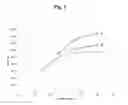
The plot shown in the appended FIG. 1 shows the SCR catalyst activity as a function of temperature for various ceramic filter elements as follows:
| Element | Treatment | |
| A | Shell impregnated. Dried in microwave oven - 25 cm | |
| (according to the invention) | ||
| B | Shell impregnated. Dried at room temperature - 40 cm | |
| C | Shell impregnated. Burned directly at 300° C. - 40 cm | |
As can be deduced from the plot in FIG. 1, the element dried with microwaves according to the invention is clearly the best.
FIG. 2 shows the catalyst distribution in the element as a function of the distance from the outer surface (in mm) for an element treated according to the invention (element A), and
FIG. 3 shows the catalyst distribution in the element as a function of the distance from the outer surface (in μm) for an element dried by direct burning at 300° C. (element C).
Claims
1. A method of preparing a catalyst-containing ceramic dust filter for off-gas or exhaust gas cleaning, said method comprising the steps of
preparing a water-based impregnation slurry, which comprises a catalytically effective amount of at least one catalytically active metal and an oxide support, to form a catalytically active metal oxide support,
impregnating the filter substrate with the impregnation slurry, spraying from the inside to control the amount of liquor while leaving the outer few millimeters of the filter wall dry, and
drying the impregnated filter.
2. The method according to claim 1, wherein the impregnated filter is dried by using microwave energy.
3. The method according to claim 1, wherein the at least one catalytically active metal comprises a combined selective catalytic reduction (SCR) and oxidation catalyst and a precious metal comprising catalyst.
4. The method according to claim 3, wherein the combined SCR and oxidation catalyst comprises a vanadium oxide and titania.
5. The method according to claim 3, wherein the precious metal comprising catalyst is a palladium catalyst.
6. The method according to claim 5, wherein the palladium catalyst is combined with a vanadium oxide and titania.
7. The method according to claim 5, wherein the vanadium oxide/titania catalyst is additionally dispersed on the permeation side of the filter together with the palladium catalyst.
8. The method according to claim 5, wherein the palladium catalyst contains palladium in an amount of between 20 and 1000 ppm/weight of the filter.
Images & Drawings included:


Sources:
- United States Patent and Trademark Office - verify current appl. status at the USPTO↗
Recent applications in this class:
- » 20210023546 2021-01-28
Microwave synthesis of iron oxide catalysts for cold start NOremoval - » 20200276573 2020-09-03
Carbon based materials as solid-state ligands for metal nanoparticle catalysts - » 20190176140 2019-06-13
EXHAUST GAS CATALYST FOR INTERNAL COMBUSTION ENGINES - » 20140011665 2014-01-09
Rapid synthesis of fuel cell catalyst using controlled microwave heating - » 20080249340 2008-10-09
Hydro-Oxidation of Hydrocarbons Using a Catalyst Prepared by Microwave Heating - » 20070012183 2007-01-18
Method and apparatus for the continuous preparation of porous materials and mixed metal oxides using continuous stirred reactors - » 15715008 2018-07-10
Method of making palladium nanoparticles
Recent applications for this Assignee:
- » 20250128244 2025-04-24
SHELL IMPREGNATED CATALYST AND PROCESS FOR PRODUCING A SHELL IMPREGNATED CATALYST BODY - » 20250121344 2025-04-17
ENDOTHERMIC REACTIONS HEATED BY RESISTANCE HEATING - » 20250091862 2025-03-20
CHEMICAL SYNTHESIS PLANT - » 20230032787 2023-02-02
ENDOTHERMIC REACTION OF A FEED GAS HEATED BY RESISTANCE HEATING - » 20220328858 2022-10-13
Solid oxide cell stack with a pressure difference between anode and cathode compartments - » 20220298428 2022-09-22
HALIDES REMOVAL WASHING SYSTEM FOR A HYDROCARBON STREAM - » 20220280904 2022-09-08
Multiple-bed catalytic reactor comprising a mixing device - » 20220212155 2022-07-07
Catalytic reactor with floating particle catcher - » 20220048854 2022-02-17
PROCESS FOR THE PRODUCTION OF UREA FORMALDEHYDE CONCENTRATE - » 20220048853 2022-02-17
Process for the production of urea formaldehyde concentrate